
Europe
Toyota and JLR warn EU ‘Made in Europe’ rules could threaten jobs and investment

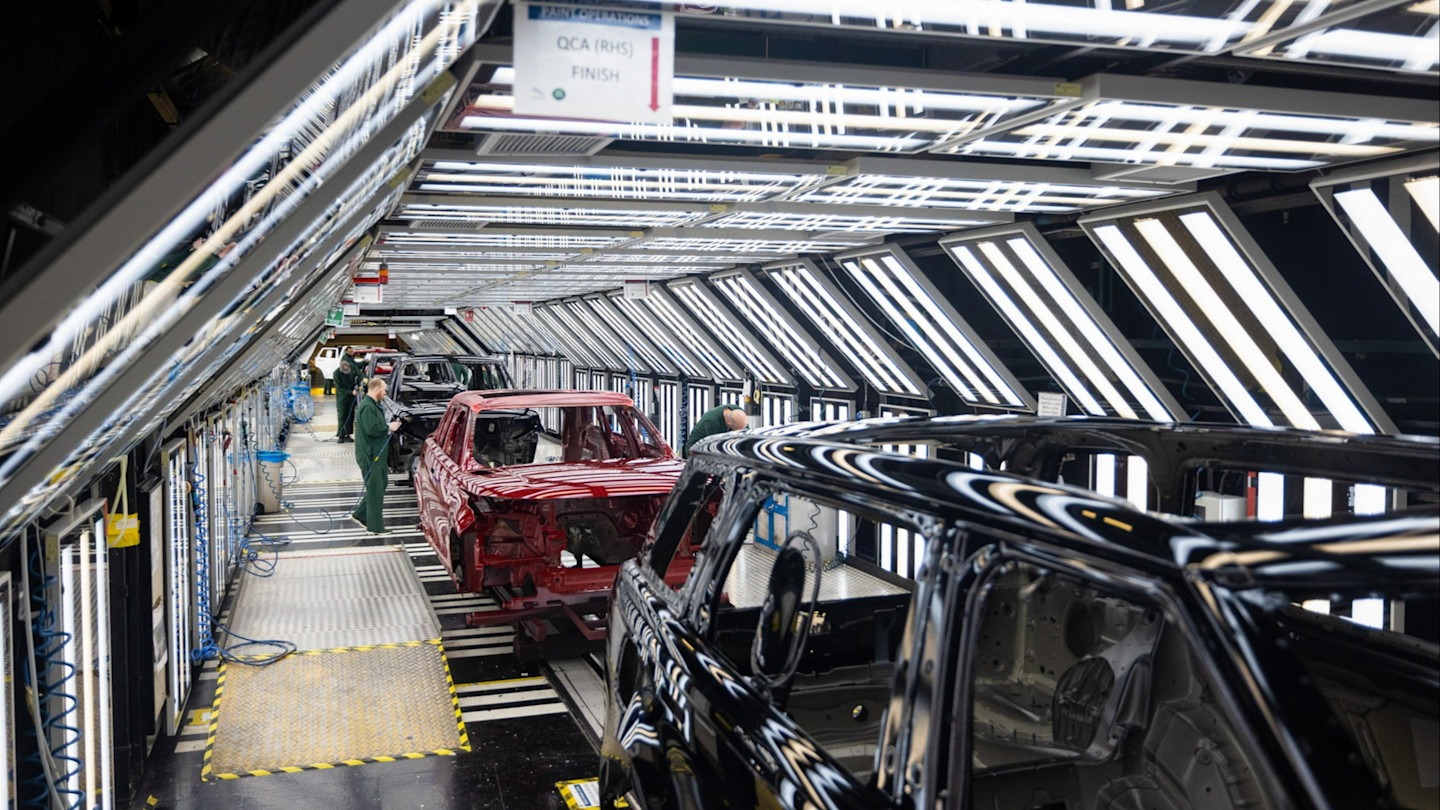
Toyota and Jaguar Land Rover (JLR) have warned that proposed “Made in Europe” production requirements could jeopardize investment and employment while making European-built vehicles more expensive than Chinese-made competitors.
Under current European Union proposals, corporate fleet vehicles and small electric vehicles would need to be assembled within the bloc to qualify for public procurement contracts and subsidies.
The proposals have triggered a strong backlash from global automakers that export vehicles to Europe from countries including the United Kingdom, Türkiye and Morocco.
As part of the Industrial Accelerator Act (IAA), the EU is also proposing a 70% local-content threshold for vehicle components, excluding batteries, as a condition for eligibility for subsidies or public procurement contracts.
JLR, which is owned by India’s Tata Motors, said the proposals would increase costs for manufacturers that would be required to provide evidence of where their components are sourced.
Executives from other automakers have also said that compiling customs documentation to verify the origin of components supplied by smaller suppliers would be difficult.
“The IAA imposes additional costs on manufacturers and makes European vehicles more expensive. It does nothing to address the fundamental structural differences that make European manufacturing less competitive than China,” JLR said.
Speaking at an Automotive News event in Brussels on Wednesday, Yoshihiro Nakata, head of Toyota’s European operations, warned that excluding key international partners from the “Made in Europe” rules could “undermine future investment, jobs and technology transfer.”
The world’s largest automaker, which operates eight factories across Europe and the United Kingdom and employs 25,000 people in the region, called for vehicles manufactured in Japan, the United Kingdom and Türkiye to remain eligible for IAA subsidies.
“Europe’s resilience depends not only on local production but also on working with partners to create regional scale and shared success. By working together, we are all stronger,” Nakata said.
JLR also urged the EU to assess manufacturers’ overall contribution to European economies — including through exports from the bloc — rather than focusing solely on where vehicles are assembled.
The company warned that excluding the United Kingdom from the framework would have serious consequences across the industry.
“Replacing UK content with EU content could destabilize both the UK automotive supply chain and the EU supply chain because of their interdependence.”
Nissan, one of the United Kingdom’s largest automotive employers, has previously warned that it would close its flagship Sunderland plant if the policy were implemented.
Such job losses would run counter to the objectives of the IAA, which was proposed in March by French Commissioner Stéphane Séjourné as part of Brussels’ effort to reverse the bloc’s industrial decline.
The legislation aims to increase manufacturing’s share of the EU economy from 14.3% in 2024 to 20% by 2035.
The proposal already allows manufacturers in other clean-technology sectors located in countries that have free trade agreements with the EU to benefit from “Made in Europe” status.
There are indications that member states and lawmakers will seek to amend the legislation to include UK-based automotive production.
French Trade Minister Nicolas Forissier told the Financial Times two weeks ago that Brussels needed to resolve the “problem” of the United Kingdom’s exclusion from the programme, while a European Commission official acknowledged that member states, including Germany, also support UK participation.
A senior member of the European Parliament familiar with the negotiations said the Parliament could also review the proposal’s geographic scope in order to fully include the United Kingdom.
However, the current proposal is supported by other automakers, including Volkswagen and Stellantis, as well as many automotive parts manufacturers.
Benjamin Krieger, secretary-general of auto supplier association Clepa, said the group supports extending the programme to the United Kingdom and other free-trade partners but would oppose any dilution of the requirement that 70% of vehicle content be produced in Europe.
“We need to stop the bleeding. If you import everything, vehicles will of course become cheaper, but we would sacrifice manufacturing in Europe,” Krieger said.
The European Commission said its proposals on corporate fleets and small electric vehicles are “key initiatives supporting our green transition” and that these objectives should also translate into “growth and manufacturing activity” within the EU supply chain.











NATO Supreme Allied Commander Europe (SACEUR) Alexus Grynkewich has unveiled a new defence strategy aimed at rendering any attack against an alliance member entirely futile.
Speaking at the Warsaw Security Forum, Grynkewich said the concept, titled the “Theory of War”, is designed to prevent hostile elements from infiltrating NATO territory and waging conflict there.
Arguing that they aim to reassure the one billion people living within the alliance’s borders, Grynkewich maintained that they also wish to send a message to adversaries such as Russia that NATO is prepared for a potential invasion.
“If we are attacked, we are ready to fight even tonight,” Grynkewich said.
Three-stage defence plan enters into force
Approved by all 32 alliance members, the plan combines land forces and conventional weapons systems with advanced technologies such as unmanned aerial vehicles, counter-drone systems, and artificial intelligence.
Lessons drawn from ground and air combat in Ukraine, as well as current conflicts in the Middle East, play a decisive role in shaping the strategy.
According to Grynkewich, the new defence doctrine rests on three fundamental phases that form the core of NATO’s approach:
The first pillar of the plan, the “block” phase, focuses on preventing hostile forces from seizing allied territory.
In this context, NATO ground components will engage directly with attacking units, restrict their manoeuvrability, and neutralise forces attempting to breach alliance borders.
Should the assault continue, the second phase (“blunt”) will come into play, deploying autonomous systems requiring minimal human intervention alongside advanced sensor networks to slow the momentum of the attack and wear down advancing forces.
These systems will detect threats in real time, combining capabilities across different operational domains to halt the adversary’s advance.
The final stage, the “break” phase, will target not the attacking units directly, but the operational warfighting system that sustains them.
Command centres, supply chains, and logistics routes will be struck using long-range precision strike systems and sensor networks, eliminating the adversary’s ability to sustain military operations.
“Enemy commanders will not be able to direct their troops, their supply lines will be severed, and their logistics vehicles will be destroyed,” Grynkewich said.
Strategy aims to defend borders rather than gain territory
Noting that NATO has no intention of acquiring territory and that the strategy is entirely defence-oriented, Grynkewich said, “We have no plan, intention, or ambition beyond protecting our citizens and our territory.”
Stating that he considers the likelihood of a direct attack on alliance territory to be low, the commander nevertheless stated that they would respond without hesitation to any attempt targeting allies.
Addressing questions regarding US commitment to the alliance, Grynkewich recalled that Washington reaffirmed its adherence to Article 5 at the NATO summit in July.
Article 5, which forms the cornerstone of NATO’s collective defence principle, stipulates that an armed attack against one ally is considered an attack against all members.

Polish authorities have announced that German police detained two Turkish citizens suspected of setting fire to a Starlink station near Warsaw last month.
Tomasz Siemoniak, Poland’s minister coordinating the special services, told a news conference in Warsaw on Monday that Poland has requested the suspects’ extradition and has “no doubt” that Russian secret services were behind the arson attack.
“It should also be noted that Russian intelligence agencies are increasingly turning to people linked to the criminal underworld,” Siemoniak said at the press conference.
In a post on X, Prime Minister Donald Tusk described the incident as another “act of hybrid warfare” and said those responsible for the sabotage would be brought to justice in Poland.
Interior Minister Marcin Kierwinski said the two Turkish citizens would be charged in Poland with carrying out an act of sabotage on the orders of a foreign intelligence agency.
Power supply equipment at a Starlink ground station serving Eastern Europe, including Poland and Ukraine, caught fire on the night of 23 September.
The incident did not cause a major disruption to internet service. The blaze, however, completely destroyed the station’s electrical system and backup generator.
Poland, a key transit route for Western aid to Ukraine, has faced a series of suspicious incidents recently.
Numerous cyberattacks have targeted public utilities, including water and energy infrastructure as well as hospitals.
In addition, damage to a railway line between Warsaw and the Ukrainian border was attributed by officials to Russian sabotage.
In late July, a Russian missile also landed in Poland.

A new study prepared by the Hellenic Observatory at the London School of Economics (LSE) has examined the structural transformation of the Greek economy following the bailout era.
According to reporting by the Greek Reporter, the study titled “The Café Economy”, authored by Michalis Nikiforos, Vlassis Missos, Christos Perros, and Nikolaos Rodousakis, revealed that the country has become excessively dependent on Accommodation and Food Service Activities (AFSA), a sector encompassing all tourism-related fields including restaurants, bars, hotels, entertainment, and short-term rentals.
The researchers pointed to a fundamental issue that is often overlooked behind the “café economy” characterisation. According to the study, despite promises of a new “development model”, Greece has over the last 15 years remained trapped in a growth cycle built on an exceptionally fragile foundation.
Labour productivity declined as tourism expanded
The study reported that following austerity policies and structural reforms that liberalised labour and product markets, tourism-linked activities expanded disproportionately compared to other sectors. This unbalanced growth became one of the primary drivers of the economy’s broader loss of productivity.
Contrary to the productivity gains promised by bailout reforms, an opposite trend took hold across the Greek economy. While labour productivity suffered a steep decline, employment shifted toward low-productivity sectors, led by accommodation and food services.
The researchers identified the contraction in aggregate demand and the sharp erosion of real wages as the main causes of this productivity collapse. Between 2009 and 2024, labour productivity fell by 16% and remained below pre-crisis levels.
The slide in real wages was even more pronounced. Across the country, real wages dropped by between 26% and 35%, while losses in the tourism sector reached as high as 60%. The authors described this outcome as a severe process of income redistribution operating against labour.
The shift of employment toward the AFSA sector accounted for approximately one-third of the total decline in labour productivity. The loss of hundreds of thousands of jobs in productive sectors such as manufacturing, alongside the scarcity of employment in high-technology and innovation fields, deepened this decline.
Greece enters regression under a dual model
According to the study, Greece’s development model is displaying a historical regression by evolving into a “dual” structure typically observed in underdeveloped or transition economies. In this model, economic growth relies on deploying labour, cheapened through wage suppression, into low-productivity sectors.
Noting that the three bailout programmes implemented between 2010 and 2018 triggered a deep recession instead of boosting competitiveness, the researchers stated that the Greek economy has never fully emerged from this slump.
The study also recalled that the International Monetary Fund (IMF) had in the past apologised for underestimating the negative impacts of severe fiscal contraction.
Educated young population works in low-wage jobs
Data published by the LSE showed that the workforce in the AFSA sector underwent a fundamental transformation between 2009 and 2023:
Employment in the sector surged by 87%. Gross Value Added recorded 11% growth. AFSA became the largest employer in the Greek economy.
On the other hand, the sector is characterised by low wages, precarious working conditions, and an increase in part-time work. Although the educational attainment of tourism employees has risen, workers are increasingly employed below their qualifications.
Eurostat figures confirm that Greece, behind Spain, has one of the highest rates in Europe of young graduates who are overqualified yet employed in unskilled jobs.
More than 86% of young university graduates working in the tourism and hospitality sector are employed below their qualification levels.
Structural risks deepen while external balance improves
The report titled “The Café Economy” listed the advantages along with the severe vulnerabilities generated by this development path:
The positive effect emerged in the external balance. The tourism sector provided a significant contribution to correcting the current account balance. The trade surplus in travel services rose by five percentage points between 2009 and 2023, covering approximately half of the total current account deficit contraction over the same period.
Conversely, overreliance on tourism and a low-productivity, low-wage, labour-intensive services economy brought heavy structural weaknesses:
Social and environmental degradation: The disproportionate growth of the sector lays the ground for environmental and cultural deterioration, frequently described through the concept of “overtourism”.
Housing crisis: The proliferation of short-term rentals and foreign property acquisitions drives up rents, making housing costs unaffordable for local workers.
External dependence: As the café economy expands at the expense of other sectors, reliance on external demand and seasonal fluctuations multiplies; entire regions remain exposed to shifts in tourist flows.
The researchers warned that low-wage policies erode economic competitiveness over the long term by weakening incentives for technological innovation and progress.
Noting that the thesis claiming market liberalisation automatically delivers productivity has been undermined by the Greek experience, the study stated that dependence on low-productivity sectors such as AFSA creates an economic dilemma. Even if these activities support demand and foreign currency inflows, they damage long-term productivity and social sustainability.
The report noted: “A successful way out for Greece requires policies that do not merely stimulate demand, but also strategically promote high-productivity sectors, support technological upgrading, and ensure inclusive growth. Without such a change of course, the ‘café economy’ risks becoming not a temporary adjustment process, but a long-term stagnation equilibrium.”
The study concluded with a call to re-evaluate structural reforms in light of real economic and institutional conditions, and to prioritise development focused on high productivity.

What is scale in foreign policy? How is success measured in foreign policy?

Musk boosts Republican midterm funding despite pledge to curb spending

IMF warns global economy is nearing the limits of its resilience

NATO unveils 32-nation defence strategy to counter adversaries

Germany detains two Turkish suspects over Polish Starlink arson
-

 Europe2 weeks ago
German interior ministers drop unanimity rule to counter AfD veto
-

 Diplomacy2 weeks ago
US Ambassador Guilfoyle faces backlash in Greece over alleged remarks
-

 Europe2 weeks ago
Key European allies excluded from US-led NATO meeting in Poland
-
 Diplomacy2 weeks ago
While the West breeds crises, Eurasia weaves peace and development, says Prof. Zhang Weiwei
-

 Middle East2 weeks ago
Netanyahu holds secret UAE talks with Saudi Arabia and Arab officials
-

 Europe2 weeks ago
EU drafts plan to curb national vetoes in radical expansion reform
-
 America2 weeks ago
Canada diversifies oil and gas exports away from US
-

 Diplomacy2 weeks ago
The European Union’s peace project has collapsed, MEP von der Schulenburg says
