
Diplomacy
US economic agenda dominates G20 ministerial summit in Asheville

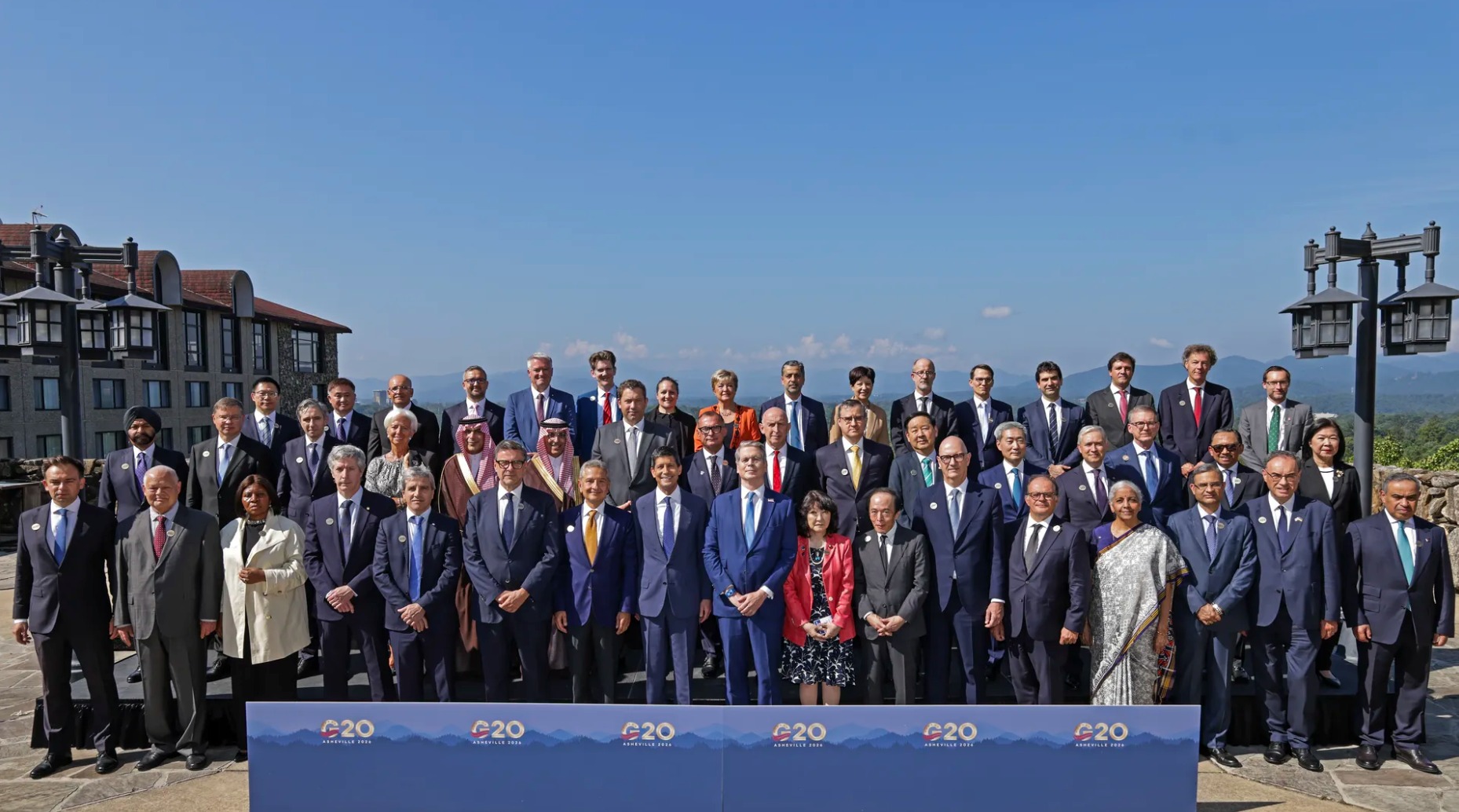
G20 finance ministers gathered in Asheville, North Carolina, against the backdrop of rising global interest rates and a massive debt burden.
Although the pursuit of stronger growth formed the summit’s primary agenda, specifics on the matter varied from country to country.
US Treasury Secretary Scott Bessent streamlined the G20 finance agenda by focusing on economic growth.
In his opening address at the finance meeting, Bessent argued that years of “mission creep” had diverted the group from its core purpose.
On this year’s agenda, the space dedicated to climate change and inequality, which had served as the main docket items of G20 meetings in recent years, was substantially reduced.
This development caused significant unease, particularly among European delegations.
Instead, the US focused on deregulation, private sector investment, global commercial imbalances, and government debt.
US officials state that G20 members largely agree with Bessent on the necessity of prioritising growth.
However, they acknowledge that what works in one economy may not yield the same outcome in another.
For example, Under Secretary of the Treasury Erin Browne said in an interview with Axios on the sidelines of the conference: “I think the principles Secretary Bessent has laid out; these are well-understood and agreed-upon principles,” adding:
“However, different economies face different challenges. We have members here from the African Union, and they face challenges very different from Germany, for instance.”
Referring to countries that receive more from foreign trade and investment than they send, Browne said: “You could be a surplus country because you do not have enough investment demand, or you could be a surplus country because you do not have enough consumer demand.”
Federal Reserve Chair Kevin Warsh struck a similar note in his opening remarks, speaking of “a massive shift in the global economy” and noting: “We are all experiencing this a bit differently.”
Although climate change was absent from the official agenda, European officials stressed on the sidelines of the meetings that the issue remains a priority.
European Commissioner Valdis Dombrovskis told reporters: “This is part of the problem surrounding economic growth and economic resilience,” arguing that they are witnessing an increasing number of extreme weather events that damage both the economy and public finances.
Dombrovskis continued:
“This new energy deficit arising from the Iran war once again demonstrates the need to reduce our dependence on fossil fuels and strengthen green manufacturing.”
Meanwhile, China’s export surge is exerting far greater pressure on Europe’s growth model than on that of the US.
“China shock 2.0” is devastating Germany’s manufacturing sector and forcing officials to consider tougher measures.
Indeed, Commissioner for Economy and Productivity Dombrovskis said: “It is important to move from analysis to action.”
US tariffs have contributed to redirecting a portion of Chinese goods toward other markets.
“I warned the rest of the developed world and top emerging nations that when the US erects a tariff wall, surplus goods from China will wash up on their shores. And unfortunately, I was proven right,” Bessent said, adding:
“This is a problem for the G7-plus-plus excluding the US. We took our measures… and now the countries receiving these goods must do something about it.”
Bank of England Governor Andrew Bailey, who chairs the Financial Stability Board, warned G20 ministers ahead of the meetings that the war with Iran had produced a “significant supply shock” triggering energy inflation and rising interest rates.
Bessent sought to downplay the long-term economic risk, saying: “We will overcome this Iran conflict, and the world will become a better place for it.”
China objects to G20 communique
Bessent said on Tuesday that China was the sole G20 member to oppose a joint communique stating that “it is unsustainable for non-market economies to maintain an unending flow of cheap exports.”
Bessent indicated that other G20 members would act “in the coming days, weeks, or months” to “reach a solution regarding this unsustainable balance.”
The communique released by the Treasury Department later on Tuesday includes a footnote stating that China objected to a paragraph in which 19 members agreed that “countries must take steps to eliminate non-market policies and practices that exacerbate imbalances.”
The paragraph in question states: “In particular, countries running excessive and persistent external surpluses must eliminate distortions that constrain domestic consumption and lead to an overreliance on exports for growth.”
The Treasury Department noted that China also objected to a paragraph expressing concern over ongoing shipping disruptions in the Strait of Hormuz, a vital oil transit corridor effectively blocked by Iran in its war with the US.
China further opposed paragraphs praising the International Monetary Fund’s (IMF) “surveillance of global imbalances” and specifically highlighting “countries that owe a significant portion of their external debt to G20 members.”
At a press conference, Bessent said, “I had hoped to announce a unanimously adopted joint communique today,” while stressing that the agreement among the other 19 members “demonstrates how vast the problem is.”
Bessent also remarked on the Iran and China issue:
“On Iran, we have more common ground with China than differences. China agrees that Iran cannot possess nuclear weapons. China also agrees that there must be freedom of navigation in the Strait of Hormuz. China sources 50% of its energy from the Gulf. Therefore, I believe it is up to China, or China’s responsibility, to make efforts toward a solution. We will see how they implement this.”
Mixed signals from Europe and Canada on China
At a press conference, Dombrovskis said China is the primary source of economic imbalances, while adding that the US and Europe also have roles to play in resolving them.
Speaking more directly, German Finance Minister Lars Klingbeil said the US- and Israeli-led war with Iran, alongside ongoing US tariff disputes, are the primary drivers of the uncertainty hampering the global economy:
“Uncertainty is poison for economic growth. The tariff conflicts pursued by the US, such as the current dispute with Canada, destroy confidence.”
The UK stated that attempting to curb imbalances is a delicate matter, announcing it would maintain a pragmatic trade relationship with China.
Canadian Finance Minister Francois-Philippe Champagne, whose country has built closer economic ties with China since the start of the year, stated that Canada engages with China on the same footing as other G7 nations and within “clear guardrails.”
IMF Managing Director Kristalina Georgieva told Reuters she believes China recognizes the need to act, but noted Beijing is calling for coordinated action with other nations like the US, such as Washington reducing its widening fiscal deficits that fuel excessive import demand.
Speaking late Monday, Japanese Finance Minister Satsuki Katayama said she told her G20 counterparts that arbitrary export restrictions on critical minerals harm the global economy.
This issue was also incorporated into the G20 chair’s statement.
“We urge countries to avoid unnecessary export restrictions to ensure global supply chains continue to function normally,” the statement said.
In April 2025, Beijing leveraged its dominance in critical mineral processing by imposing export restrictions on rare earth elements in response to tariffs implemented by US President Donald Trump that also affected non-US companies.
US push on artificial intelligence
At a meeting held Tuesday in North Carolina attended by industry leaders and trade ministers, the US pressed G20 members to adopt a hands-off approach to artificial intelligence regulation and refrain from introducing new rules for the technology.
US objectives align closely with the views of the world’s largest AI companies, almost all of which are American.
These companies seek fewer regulations globally or want rules shaped by themselves for their fast-growing businesses.
Requirements imposed by federal governments could weigh on industry profits if they slow the rollout of new models or force companies to alter product operations to address safety concerns.
US technology adviser Michael Kratsios, who co-chaired the two-day meeting, advocated for countries to adopt the “Carolina Principles.”
Kratsios told G20 officials at the meeting that signatory countries agree to “reserve new regulation only for novel issues” when crafting AI rules.
He added that these nations would invest in “basic research to accelerate discoveries” and enhance commercial opportunities for emerging technologies.
“Policymakers do not need to treat every innovation in isolation, nor should they treat every emerging technology as a first-of-its-kind policy challenge,” Kratsios said.
Big Tech executives to address G20 ministers
SpaceX CEO Elon Musk criticised European Union technology regulations on Tuesday morning, stating that EU policy “stifles progress” for companies.
He also urged non-Chinese leaders to develop new power sources to fuel data centres.
A US Department of Commerce spokesperson said Meta CEO Mark Zuckerberg would address ministers via video conference in place of company president Dina Powell McCormick, who had previously been scheduled to speak.
A Google spokesperson said on Monday that Demis Hassabis, co-founder of Google DeepMind, had also been added to the roster of speakers addressing ministers by video link.
Reuters previously reported that OpenAI CEO Sam Altman and Nvidia CEO Jensen Huang would appear separately before delegates on Wednesday alongside host Commerce Secretary Howard Lutnick.
A White House official said that during the G20 technology meeting, the US would press member nations not to establish new regulatory bodies to oversee artificial intelligence development.







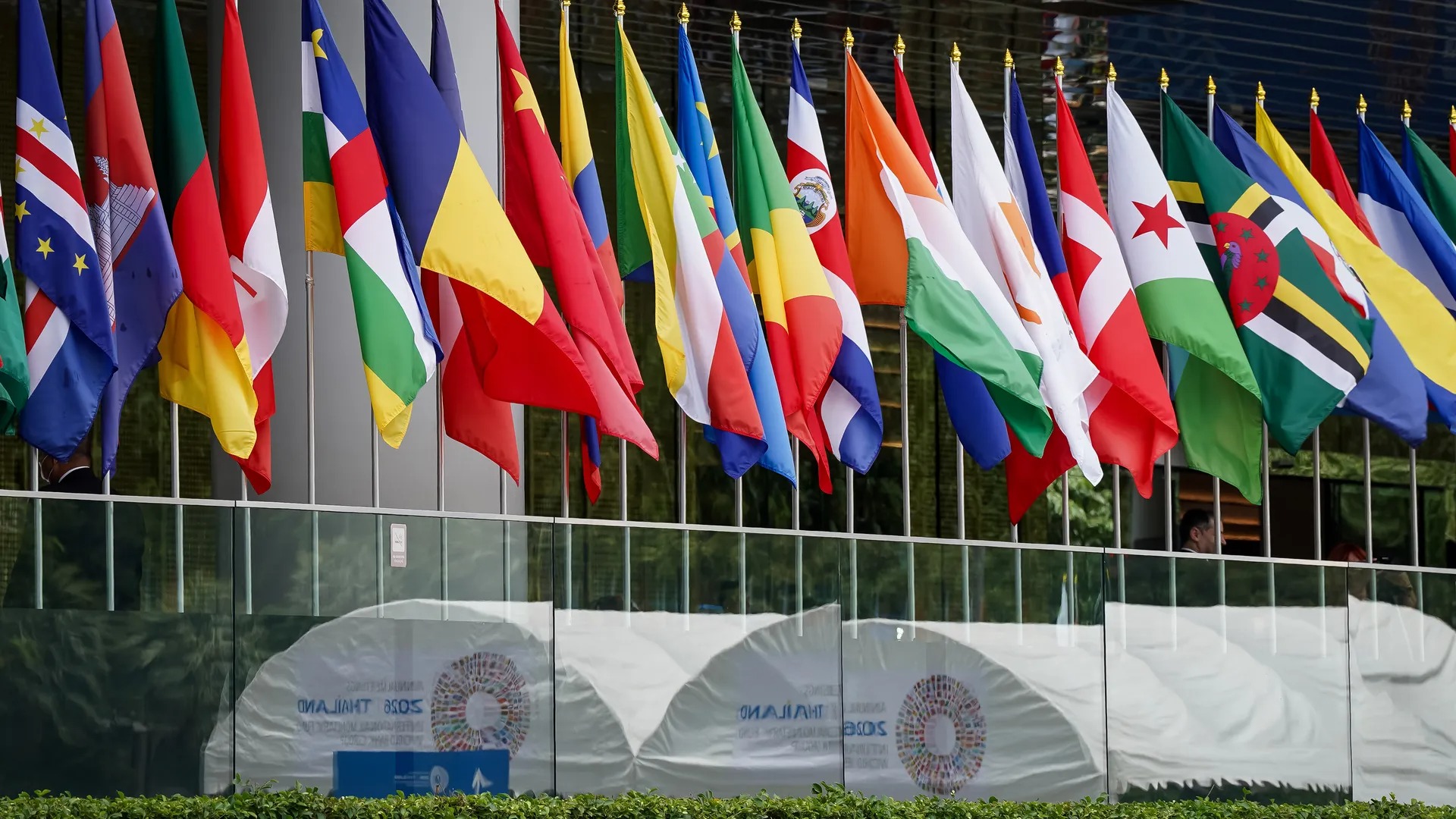
The International Monetary Fund (IMF) has warned that the global economy’s capacity to withstand fresh shocks is coming under strain.
Worldwide growth has exceeded expectations and maintained stability despite the war in the Middle East and surging oil prices.
However, some policymakers worry that dwindling energy reserves, rising debt burdens, and a growing reliance on the artificial intelligence boom will leave the world increasingly vulnerable.
In a blog post, IMF economic counsellor Silvana Tenreyro wrote: “Without strengthening supply capacity and rebuilding policy buffers, the global economy may soon test the limits of its resilience.”
Tenreyro added:
“While tech-related investments are an important advantage against the energy shock, they concentrate risks, making global growth excessively dependent on a small number of companies, sectors, and economies.”
The artificial intelligence (AI) boom has helped offset the economic fallout of the war.
Yet a sharp reversal could leave global GDP 1.1% below the IMF’s baseline forecast by 2028.
US GDP could take an even larger hit of 1.8%.
This scenario assumes that the productivity gains promised by AI fail to materialise, triggering a pullback in investment and a correction in financial markets.
Continued investment in artificial intelligence could also fuel inflation, leading to renewed interest rate increases.
Conversely, a stronger AI investment boom coupled with faster productivity gains could lift global GDP 0.6% above the baseline forecast by 2029.
The IMF largely maintained its global growth projections despite prolonged energy disruptions stemming from the Middle East war.
However, it now expects higher inflation both this year and next year.
The IMF projects global growth of 3.1% in 2026, unchanged from its April forecast, and anticipates 3.4% in 2027, representing a 0.2 percentage point upward revision.
The fund projects that the US economy will expand by 2.3% in both years, marking the fastest growth among G7 economies. The 2027 forecast was revised upwards by 0.2 percentage points.
Global inflation is expected to reach 4.7% in 2026 before easing to 4.1% in 2027.
Driven by the adverse impact of surging energy and food prices, both inflation projections were revised upwards compared with April.
The world had managed the energy shock partly by drawing down oil reserves and rerouting supply sources.
According to the IMF, global oil inventories are declining by approximately 2.7 million barrels per day, elevating the risk of a sharp price spike.
These projections provide the backdrop for global finance officials and central bankers gathering in Bangkok this week for the annual meetings of the IMF and the World Bank.
The IMF underestimated global growth projections for three consecutive years, raising questions over whether economies have become better at weathering shocks.
The German Institute for International and Security Affairs (SWP) in Berlin recommends paying closer attention to new transport corridors running from Persian Gulf countries to Europe.
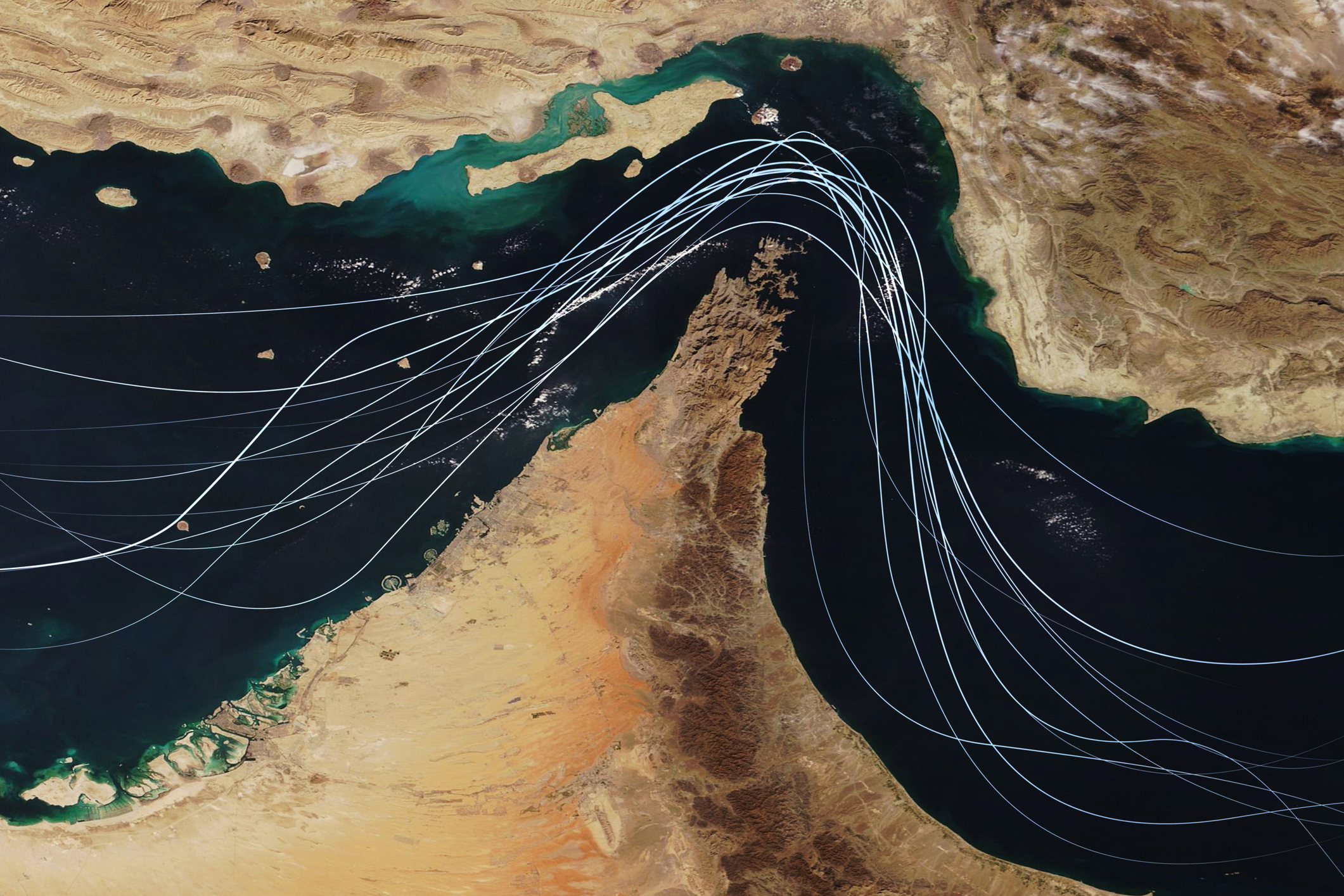
According to a recent analysis by one of Germany’s most influential foreign policy think tanks, the de facto blockade of the Strait of Hormuz and the wars in the Middle East, along with the growing risks surrounding transit through the entrance to the Red Sea at Bab el-Mandeb, are currently prompting Gulf states to strongly back alternative route plans to Europe.
On the one hand, these plans include pipelines designed primarily to bypass the Strait of Hormuz or extend from the Middle East to Mediterranean ports in Syria and Türkiye.
On the other hand, the initiatives involve building transport corridors designed to facilitate the shipment of goods between the Arabian Peninsula and Europe via alternative routes such as Egypt, Syria, or Türkiye.
The author of the analysis, former SWP director and prominent Middle East expert Volker Perthes, argues that these projects should be supported because they would link the Middle East to Europe through infrastructure.
War-induced disruptions
Disruptions caused by war along the maritime routes off the Arabian Peninsula form the backdrop to the latest analysis on major geo-economic projects in the Near and Middle East, published on Monday by the Berlin-based SWP, which is funded by the Federal Chancellery.
The Strait of Hormuz, through which the vast majority of Arab states’ oil and natural gas exports reached world markets before the Iranian war began, is currently impassable in practice because of blockades imposed by both Iran and the US.
The Bab el-Mandeb Strait between Yemen and the Horn of Africa, through which much of the trade between Europe and Asia flows, is also currently at risk due to the war between Ansar Allah, Saudi Arabia, and its proxies in Yemen.
There is currently no sign that these disruptions will end. Furthermore, both straits will remain structurally highly vulnerable in the future, as ships passing through them can very easily be attacked by neighbouring states.
Pipeline plans to bypass Hormuz
As noted in the SWP’s latest analysis, a series of pipeline projects aimed at offering alternatives for oil exports via the Strait of Hormuz are currently under discussion or even under construction.
Iraq, for instance, is working to repair and recommission an old pipeline built in the early 1950s but destroyed during the 2003 invasion, which runs from the Kirkuk oilfields to the Syrian port city of Baniyas.
In addition, a pipeline is planned to run northwards from the oilfields near Basra in southern Iraq.
This line is also intended to extend as far as Baniyas, or alternatively to Ceyhan.
Saudi Arabia is considering expanding the East-West Pipeline from its production regions in the east to the Red Sea port city of Yanbu.
The United Arab Emirates is building a second oil pipeline in Fujairah, situated outside the Persian Gulf and thus beyond the Strait of Hormuz.
However, the SWP points out that pipelines and alternative loading ports remain vulnerable to attacks.
For that reason, these lines cannot replace the Strait of Hormuz; they can only generate additional options, or in other words, provide “greater redundancy”.
Special emphasis on IMEC by SWP
The SWP places particular emphasis on the India-Middle East-Europe Economic Corridor (IMEC), a major project launched in 2023 by India, Saudi Arabia, the United Arab Emirates, the EU, three European countries (Germany, France, and Italy), and the US.
The venture envisages the development of a comprehensive transport corridor spanning sea lanes, roads, railways, and pipelines of all kinds, stretching from India across the Arabian Peninsula to the Mediterranean coast of the Middle East, and from there to Europe.
The original plan was to extend the corridor to the port of Haifa. The US viewed this not only as an opportunity to establish an alternative to China’s New Silk Road, but also as a means of providing an “infrastructural foundation” for the Abraham Accords, both those already in effect and those pursued by Washington.
Since the outbreak of the Gaza War, however, including Haifa in the project appears unlikely.
Discussions are currently focused instead on building or expanding transport routes running from Saudi Arabia through Jordan to the Syrian coast, or across the Sinai Peninsula to Egypt’s Mediterranean ports.
The SWP concludes that any “network of infrastructure connections” is “more realistic” than a single mega transport corridor.
Significance of Syria and Türkiye for German think tank
As the SWP points out, other major geo-economic projects traverse Türkiye.
For instance, a transport corridor running north from the Al-Faw container port in southern Iraq and intended to reach Europe through Türkiye has been in the planning stages since 2024.
Known as the Iraq Development Road (IDR), the venture is slated to include railway, motorway, energy, and data connections. It is backed not only by Iraq and Türkiye, but also by the United Arab Emirates and Qatar, which seek to utilize the corridor to diversify their trade with Europe.
The Iraqi regions through which the corridor will pass remain a subject of dispute. Furthermore, the implementation of the project is thought to depend on the “resolution process” in Türkiye.
Alternative or complementary plans envision another corridor running from the Arabian Peninsula through Jordan and Syria to Europe.
This likewise encompasses a comprehensive transport corridor featuring railway, highway, and data connections.
This carries strategic implications: Syria under President Bashar al-Assad, which previously functioned as an east-west transport corridor stretching from Iran to Lebanon, would now be repurposed as a north-south corridor.
Excluding Iran from ‘corridors’ is core objective
According to the SWP, the Arab states’ interest in transport corridors will remain high even after the hoped-for conclusion of the war with Iran.
The Gulf countries’ “mistrust” towards Tehran will persist; moreover, they will not want to “rely” on the US over the long term to provide “naval escorts for oil or natural gas exports”.
Iran is also not expected to connect to the railway, highway, and data networks in question. Infrastructurally, Tehran is already leaning further towards Central Asia, Russia, and China.
Nevertheless, it is clear that all the transport corridors mentioned lead to Europe and are primarily “aimed” at establishing closer links with the European continent, which represents a major advantage for European countries.
On the European side, interest in pipeline plans is lower because “demand for fossil fuels is likely to decline”.
By contrast, railway and motorway networks and data connections are of particular interest for both economic and political reasons.
According to the SWP, these serve Europe’s geopolitical interests in establishing closer and more resilient connections with the Gulf region and the Indian Ocean.
In the view of the German think tank, “alternative… transport routes” created by bypassing Iran will in effect become the “geo-economic equivalent of missile defence”.
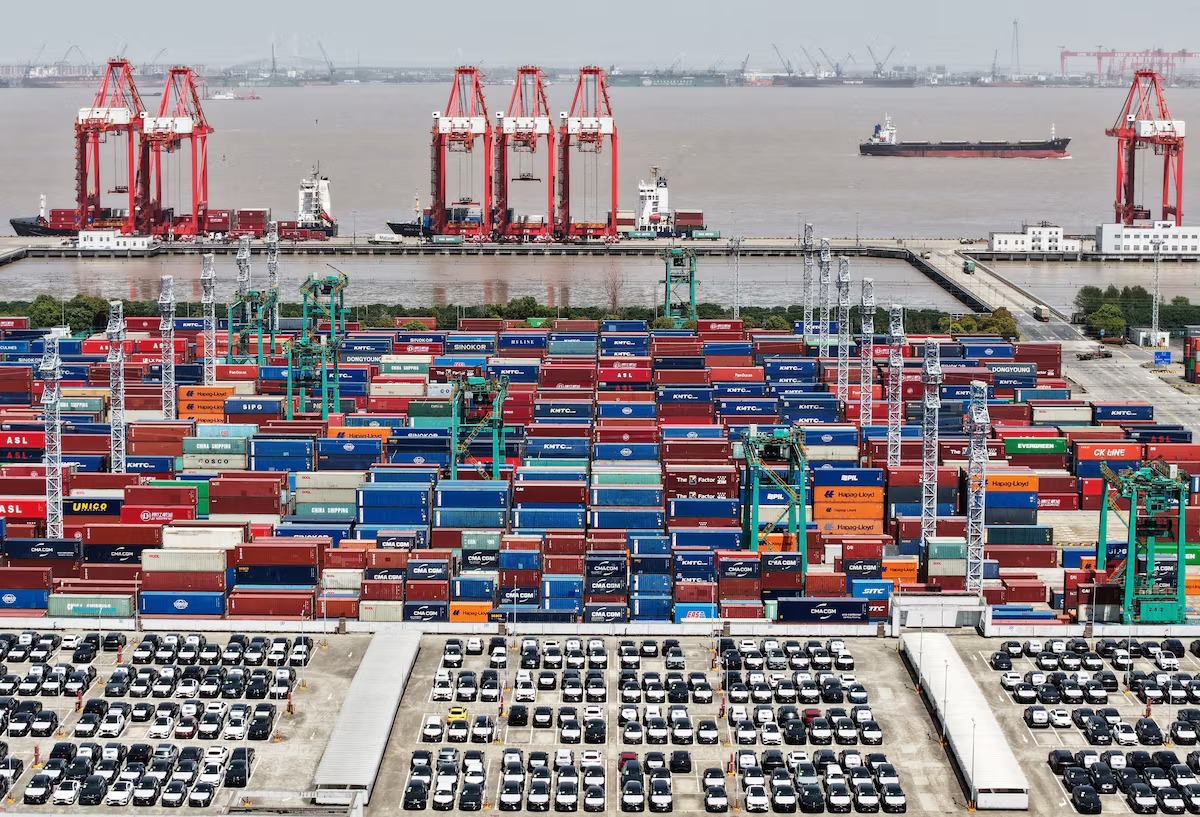
The EU has reached a preliminary agreement with China to significantly reduce hybrid car shipments into the bloc.
The agreement follows an abrupt surge in hybrid car sales by Chinese brands across Europe, led by BYD.
This surge escalated trade tensions and piled pressure on European carmakers.
Following talks between EU Trade Commissioner Maros Šefčovič and his Chinese counterpart, an agreement was reached on Friday to significantly reduce hybrid car shipments to the EU.
European carmakers, under pressure from companies such as Chery, have been losing market share in China, where competitors develop new models more efficiently.
In Europe, appealing line-ups, including BYD’s Dolphin hatchback, offer robust electric vehicle technology at affordable prices.
This shift has forced carmakers such as Volkswagen to downsize workforces under broad cost-cutting drives.
Šefčovič stated that the agreement was the first of its kind and the result of “intense” negotiations conducted with China since June to reduce a daily trade deficit of 1.18 billion euros, which has caused mounting strain between the two economic powers.
Speaking at a press conference in Beijing on Friday, Šefčovič said the agreement “creates the possibility to reduce Chinese [hybrid vehicle] exports by more than half,” adding that this would lead to a reduction of “several million” rechargeable and battery-powered hybrid vehicles over the next four years.
“China agreed to reduce its exports without first entering a trade tension phase; this is happening for the first time,” the Commissioner said, referring to the standard investigations that must precede the introduction of protective measures under WTO trade rules.
Šefčovič said the Chinese recognised the rising political pressure across every member state in Europe, where “literally thousands of job losses” were risked due to an influx of cheap imports from China across multiple sectors, including chemicals and textiles.
Noting that EU leaders “clearly expected very rapid action” from the European Commission, and that the Chinese were aware of this, he stated:
“I am pleased to say that our Chinese partners appreciated this very strong political argument; therefore, we can reach a negotiated solution. This is not the end of the process. This is a very important first step, but only a first step.”
Earlier this week, senior EU officials announced that they would travel to Beijing to develop a pilot programme, which they termed a “proof of concept” with a single sector, hoping it could later be expanded to other areas under pressure from Chinese competition.
Šefčovič noted that he attached “great importance” to the negotiations because once a trade war begins, it is “very hard to stop.”
As part of the 16-point agreement, Beijing and Brussels will continue negotiations on automobiles, export restrictions on rare earth elements, and greater market access for EU food and beverages entering China.
China stated that both sides would adhere to “procedures on company price undertakings” for hybrid cars, implying that one way to cap sales could involve setting higher minimum prices for Chinese-origin cars sold in Europe.
A statement from the Chinese Ministry of Commerce noted that China was “willing to continue facilitating the approval of export licences for rare earth elements and permanent magnets destined for the EU.”
The statement also added that both sides “reaffirmed their commitments to handle differences appropriately within the framework of WTO rules, and to stabilise and balance bilateral trade and economic relations.”
In a statement issued today (12 October), the Chinese Ministry of Commerce stated that following “intensive consultations” between the two sides, the European Union’s new hybrid vehicle arrangement would allow export growth to continue, with an allocation for China that is no smaller than that of any other country.
The ministry added that this consensus “strongly protects the practical interests of Chinese enterprises, prevents an escalation of China-EU trade tensions, and provides a stable, predictable, and sustainable trade and investment environment for both sides.”
According to Chinese customs data, Chinese hybrid vehicle exports to the 27 EU member states tripled in the first half of this year to $7.5 billion, up from $2.5 billion in the same period a year earlier.
This figure is nearly nine times the $845 million in exports recorded across the whole of 2021.
Since the EU began applying additional tariffs on Chinese-origin electric vehicles in 2024, Chinese carmakers have increasingly turned to plug-in hybrid vehicles, which remain exempt from these additional duties.
Inadequate charging infrastructure in parts of Europe has also supported demand for plug-in hybrid vehicles, which are marketed on long range and high fuel efficiency.
According to Jefferies, SAIC, BYD, and Chery account for more than 90% of Chinese-origin hybrid vehicle sales volumes in the EU, with hybrid cars representing over half of these manufacturers’ European sales.
Support for the agreement also came from Renault. CEO Francois Provost argued that the European Union had reached an initial “important milestone” with the deal to slow the influx of hybrid vehicles from China, contributing to shaping the future of the European automotive industry.
“I had urged him to reach an agreement as soon as possible. Without an agreement, we would have faced a trade war with China, which would have been a ‘lose-lose’ situation for everyone,” Provost said.
Provost was among the business leaders who met Šefčovič ahead of this visit, which aimed to address widening EU trade imbalances.
Prior to talks with Chinese Commerce Minister Wang Wentao, France and Germany urged the EU to significantly broaden its retaliatory economic powers and investigate whether subsidised imports were damaging sectors such as chemicals and plastics.
In France, Renault already relies on several Chinese suppliers. Envision AESC assembles electric vehicle batteries for the bestselling R5 city car, as well as the R4 and Alpine A290 models, at a facility near Renault’s car assembly plant in Douai, northern France.
“We need Chinese companies to invest heavily in the European value chain, rather than merely setting up ‘screwdriver factories’,” Provost said.
Provost also called on the EU to move quickly on so-called “Made in Europe” rules, which could establish a local framework for Chinese players:
“If Europe does not take rapid decisions now, the collapse of the European automotive industry risks continuing. At least on the Chinese front, some progress has been made thanks to Commissioner Šefčovič.”

What is scale in foreign policy? How is success measured in foreign policy?

Musk boosts Republican midterm funding despite pledge to curb spending

IMF warns global economy is nearing the limits of its resilience

NATO unveils 32-nation defence strategy to counter adversaries

Germany detains two Turkish suspects over Polish Starlink arson
-

 Europe2 weeks ago
German interior ministers drop unanimity rule to counter AfD veto
-
 Europe2 weeks ago
Key European allies excluded from US-led NATO meeting in Poland
-

 Diplomacy2 weeks ago
US Ambassador Guilfoyle faces backlash in Greece over alleged remarks
-
 Diplomacy2 weeks ago
While the West breeds crises, Eurasia weaves peace and development, says Prof. Zhang Weiwei
-

 Europe2 weeks ago
EU drafts plan to curb national vetoes in radical expansion reform
-

 Middle East2 weeks ago
Netanyahu holds secret UAE talks with Saudi Arabia and Arab officials
-
 America2 weeks ago
Canada diversifies oil and gas exports away from US
-
 Diplomacy2 weeks ago
Likud deepens ties with Austria’s FPO as European right courts Israel
