
Diplomacy
US military personnel prepare to return to Somali airbase

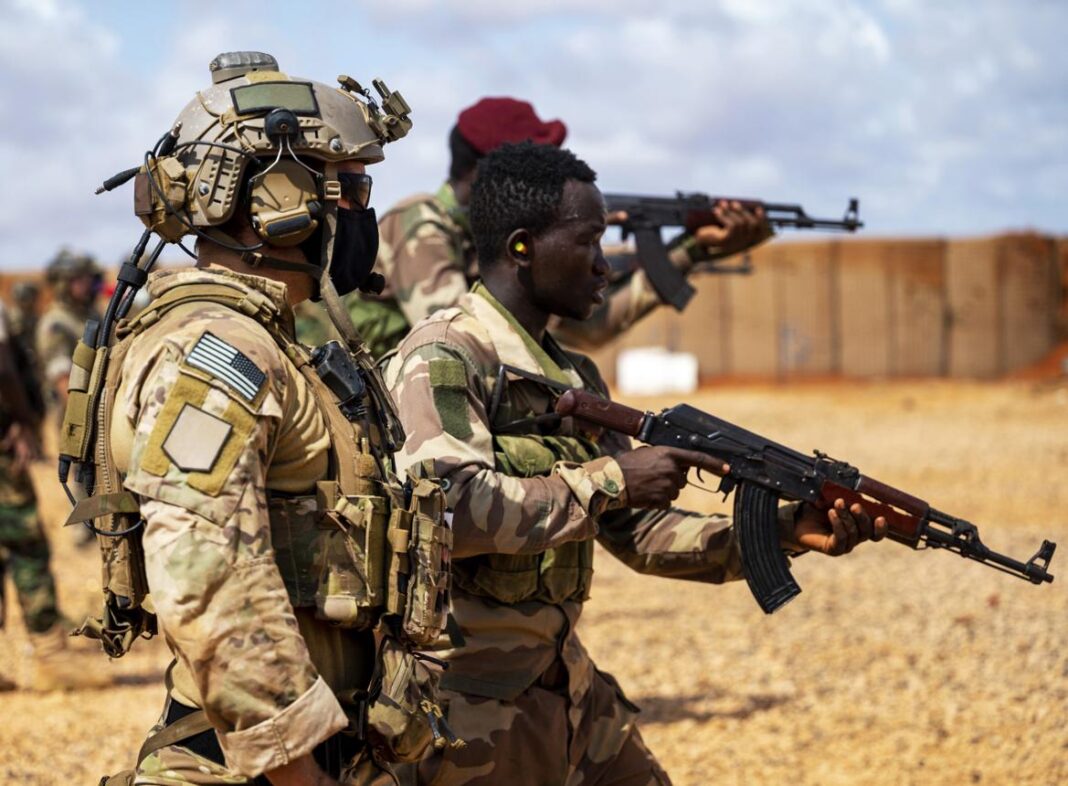
US military officials are reportedly preparing to return to base after an American security contractor operating in Somalia signed a new agreement covering the training and support of Somali security forces.
Having recently departed Baledogle Airfield in Somalia’s Lower Shabelle region, US officials plan to resume operations at the facility this week.
Meanwhile, recruitment has reportedly begun for new groups of Danab special forces personnel who will receive training and support from the US.
Bancroft Global Development, a contractor that has operated in Somalia for years providing military training, security assistance, and capacity-building, reportedly signed the new contract, paving the way for operations at the base to resume.
For an extended period, Bancroft Global Development has been involved in supporting and training Somali security forces, particularly the Danab forces, who play a critical role in the fight against Al-Shabaab.
Reports of activities resuming at Baledogle may be linked to efforts aimed at further strengthening the capabilities of the Danab forces, who are frequently deployed in combat missions and special operations targeting armed groups.
The formation of new Danab units may also indicate ongoing plans to train and develop Somali security forces in order to enhance their operational capabilities, combat skills, special operations capacity, and coordination with other security forces.
Located in Somalia’s Lower Shabelle region, Baledogle Airfield is one of the key installations supporting the training and development of Somali security forces, particularly the Danab special forces.
The base has long been associated with US military support. If confirmed, the return of US officials could signal continued military cooperation between the two countries, despite recent reports that US personnel and employees had withdrawn from the facility.
This development also comes at a time when Somalia is pursuing reforms to restructure its security forces.
The Federal Government continues to rely on support from international partners to bolster its military capacity and intensify operations against Al-Shabaab.
As one of Somalia’s most significant security partners over many years, the US provides assistance to Somali forces, particularly the Danab brigade, while simultaneously conducting operations targeting Al-Shabaab.
Furthermore, it has been reported that the US has extended its support for the AUSSOM and UNSOS missions to sustain security operations in Somalia and assist African Union forces operating in the country.









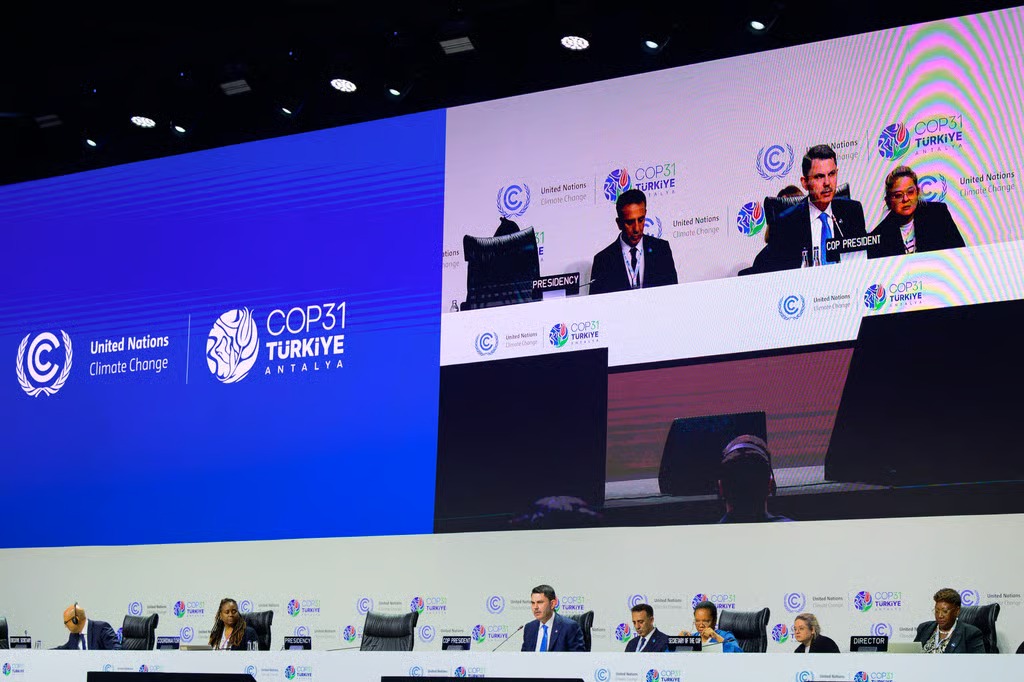
The closing declaration expected to be issued at the COP31 summit in Antalya had to be altered following a dispute over fossil fuels.
The talks collapsed principally because certain countries refused to permit any mention of fossil fuels in the final “cover decision” text, known as the “Antalya Pact”, while others refused to conclude the conference without it.
Led by the EU and the UK, a loose coalition of roughly 130 parties demanded that the final outcome of COP31 acknowledge the need to “transition away from fossil fuels”.
Their demands were rejected by a rival group led by Saudi Arabia.
Another flashpoint was a paragraph in earlier drafts of the agreement that placed controversial carbon capture technologies on an equal footing with clean energy sources such as renewables.
The anti-fossil fuel coalition pushed for these references to be excised from the text, arguing that such wording served the interests of Riyadh, which seeks to prolong the use of oil and gas.
Saudi Arabia pushed back on Sunday. Mohammad Ayoub, the country’s negotiator, said: “We cannot accept a posture that so clearly states we must keep the 1.5C target within reach, yet describes carbon capture, utilization and storage technologies as ‘greenwashing’.”
During a tense final plenary session, the EU and small island states, together with the UK, Norway, Switzerland, several Latin American countries, and a bloc representing the world’s poorest nations, rejected the agreement prepared by the conference’s co-hosts, Türkiye and Australia.
Speaking on behalf of the EU, Irish Climate Minister Darragh O’Brien said: “We will not endorse a decision that fails to respond to science, ignores the implementation gap, and actually risks deepening the chasm between global commitments and the actions required to correct the overshoot and bring the 1.5C target back within reach.” He continued:
“We will not endorse a cover-up decision that fails to mention fossil fuels, the primary driver of climate change. Nor will we accept negotiating backwards in time.”
All nations had previously agreed to “transition away from fossil fuels” at COP28 in Dubai in 2023.
Minister Murat Kurum, who chaired the discussions, also conceded “defeat”. Kurum departed the plenary hall shortly before the end of what had become the longest climate summit in the process’s 30-year history.
UN Climate Chief Simon Stiell told reporters on Sunday evening: “I share the frustration of many. We must also recognize that this COP process has two dimensions; under the action agenda, COP31 has delivered real progress and concrete results.”
Conference co-hosts Australia and Türkiye sought to turn the crisis into an opportunity by putting forward proposals to accelerate efforts to replace petrol-fuelled vehicles with electric alternatives, including electric vehicles (EVs).
However, their proposed headline target, incorporated into the final draft text, which aimed to raise electricity’s share of global energy consumption from 23% today to 35% by 2035, was rejected alongside all other proposals.
It was the negotiations surrounding this electricity target that triggered the dispute leading to the conference’s inconclusive outcome.
Not all nations rejected the text. China, India, and a group of African states indicated they would not stand in the way of its adoption.
Decisions at UN climate summits, however, require unanimous consensus among the nearly 200 participating countries.
Although developing nations formed the majority of the 130 countries assembled under the “progressive coalition”, many of them did not object to the “Antalya Pact” during the final session of COP31.
For many, this was because finance remained a far higher priority than fossil fuels.
A growing number of poorer nations face a debt crisis driven by the Covid-19 pandemic, inflation that has eroded their capital and inflated interest payments on their debt, and wealthy nations’ failure to acknowledge the problem.
Compounding this are the impacts of extreme weather events, which have begun exacting an increasingly heavy toll during this exceptionally severe El Nino year.
Many spend more on coping with the fallout of global warming on crop yields, infrastructure, and disasters than they allocate to core budgets such as health and education.
Wealthy nations had pledged funds to help them adapt to these consequences and transition to low-carbon economies.
At COP29 in Baku in 2024, wealthy nations committed $300 billion annually in public finance to poorer countries by 2035, alongside pledges to facilitate an additional $1 trillion in private sector financing.
Yet the delivery of this money to the countries in greatest need remains slow.
The primary demand of poorer nations, particularly those in Africa, was the fulfilment of the pledge made the previous year to triple adaptation finance.
According to The Guardian, however, they felt their demands had gone unheard and grew angry. African ministers remarked of COP31: “We did not come here to beg.”
Australia also made a strategic misstep by failing to engage parties on the finance issue at an early stage. As a developed nation, Australia is obliged under the Paris Agreement to provide climate finance to poorer countries.
Australia repeatedly parried finance questions by maintaining that “this is not a finance COP”. While factually correct, the stance was poorly received by developing countries, for whom funding is literally a matter of life and death.
All of this means that after two weeks of intensive negotiations, countries departed Antalya with only a series of technical agreements. No political consensus was achieved on “combating climate change”.
Stiell maintained that “real progress” was made at the summit, despite the failure to reach an agreement on the overarching text.
Others disagree. Speaking to Politico earlier in the week, Panamanian Climate Minister Juan Carlos Navarro said: “This ridiculous system requiring 192 countries and 100,000 people in Antalya to reach absolute consensus on everything is an invitation to disaster. The COPs have become a laughing stock.”
The gathering was the first climate conference held since the UN announced that the long-term goal of limiting global warming to 1.5C above pre-industrial levels would definitively be exceeded.
The failure to preserve the Paris Agreement’s most ambitious target of 1.5C was a source of grave concern.
Numerous countries cited this inevitable overshoot to justify calls for agreements on deeper pollution cuts, more robust disaster preparedness measures, and expanded financial support for poorer nations.
The International Energy Agency notes that achieving net zero emissions by mid-century, a critical milestone for meeting Paris Agreement targets, requires the global electrification rate to rise in step with the proposed goal; however, clean energy sources like wind and solar must also supply 90% of electricity demand by that point, compared with 42% today.
This prompted several nations to lobby for a deal on “clean” electrification, seeking to ensure that the drive towards power does not open the door to more polluting coal, oil, or natural gas.
“EU citizens will not accept a fossil-fuel COP,” a senior European official said on Friday afternoon, warning of a “no-deal scenario” due to “inadequate language on clean electrification” in the draft agreement.
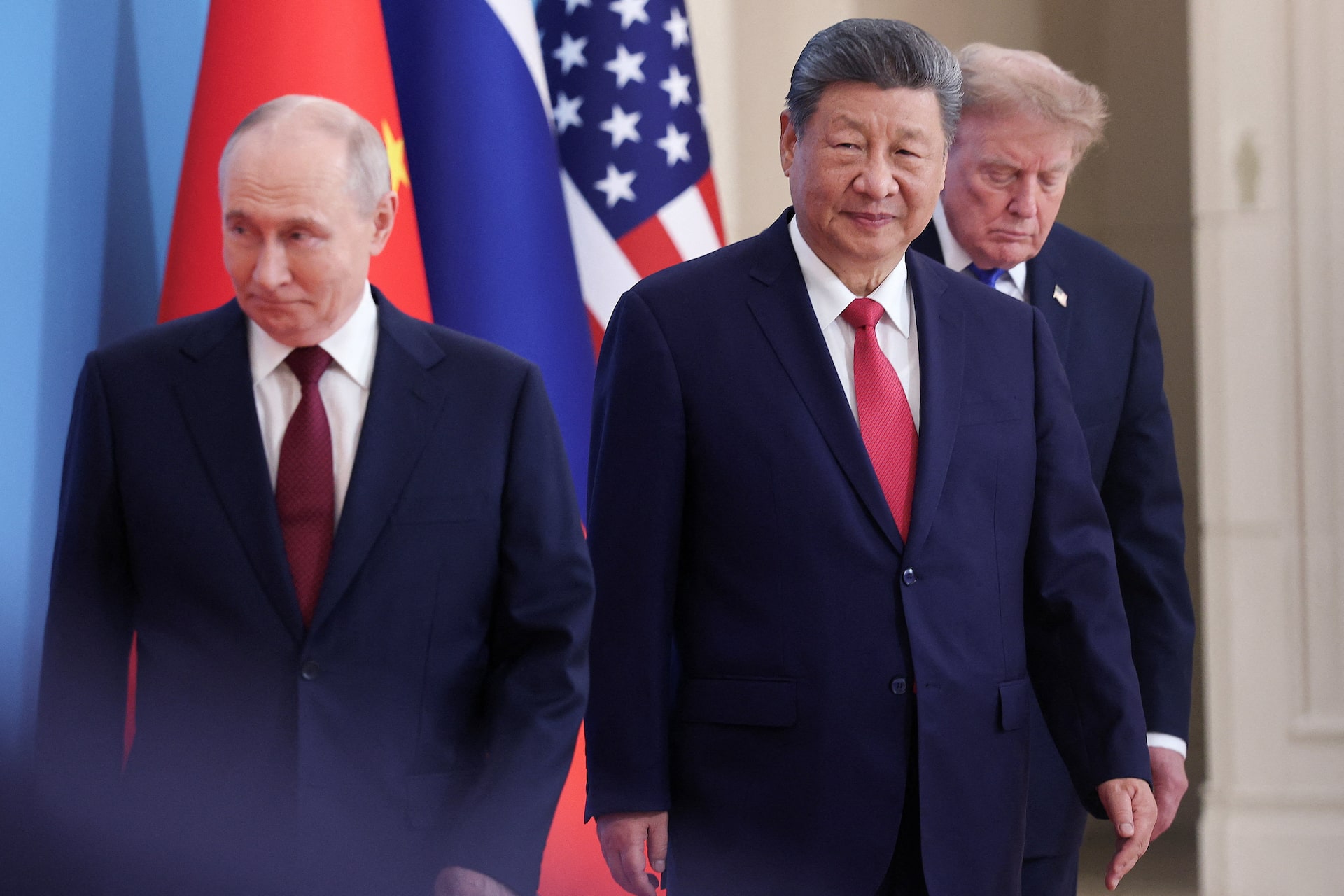
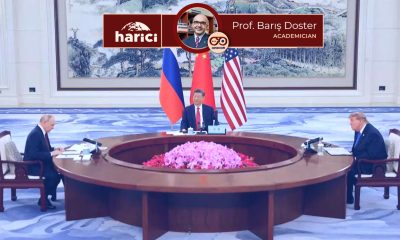
Senior Chinese security specialist and retired People’s Liberation Army senior colonel Zhou Bo, a professor at Tsinghua University’s Centre for International Security and Strategy in Beijing, has delivered a comprehensive appraisal of shifting global power dynamics following the trilateral summit between Chinese President Xi Jinping, US President Donald Trump, and Russian President Vladimir Putin in Shenzhen. Speaking in an in-depth interview with international relations specialist Professor Hasan Ünal on the Strategic Compass programme broadcast on the Harici YouTube channel, Zhou dismantled comparisons between the Shenzhen meeting and the historic 1945 Yalta Conference, outlined the precise scope of major power strategic consensus, addressed nuclear doctrine, and evaluated regional security flashpoints stretching from the Middle East to the Taiwan Strait.
The extensive dialogue offered a granular analysis of how Beijing views its global standing at a juncture marked by acute geopolitical turbulence, American strategic overreach, and the ongoing conflict in Ukraine. Zhou, who is widely recognised for his expertise in international security, military strategy, and Chinese foreign policy, underscored that Beijing operates without territorial spheres of influence and pursues a model of rise fundamentally distinct from historical imperial powers.
“The so-called Yalta analogy, which I believe is totally wrong”
Opening the discussion, Ünal invited Zhou to evaluate the geopolitical weight of the recent trilateral encounter between Xi, Trump, and Putin in Shenzhen, noting that several international observers had framed the event prior to its convening as a modern counterpart to the Yalta Conference of February 1945. Ünal questioned whether the summit could be seen as an effort by the three powers to carve out spheres of influence and establish a new global order.
Zhou firmly dismissed the historical comparison. Zhou remarked: “Let us talk about the so-called Yalta analogy, which I believe is totally wrong. Primarily for two reasons. The first reason is at a Yalta conference the three countries are all winners, right? But now you can hardly say, you know, Russia and the United States are really winners. And nobody knows when the world will come to an end, so they have to work through that. The Chinese are only countries that is peaceful among the three countries. So this is the first point.”
Elaborating on his critique of the analogy, Zhou turned to the concept of geographic domination. Zhou observed: “The second point is Yalta conference is basically about establishing spheres of influence among the three major powers. But I do not believe this would apply to either of the three countries.”
Zhou argued that external observers frequently misinterpret China’s strategic posture due to an inability to distinguish between standard diplomatic reach and territorial exclusivity. Zhou said: “For example, let us take China first. China does not have spheres of influence. Many people talk about that. And my argument is very simple because most people confuse two things. One is influence, another is the spheres of influence. These are totally two different things.”
Defining the precise terminology, Zhou stated: “Everybody understand what influence is. But the sphere of influence is a region in which a dominant power would have a kind of exclusive authority over the countries in the region. Right. So you see, if you look at China’s periphery, does it look like China’s spheres of influence? Because your periphery is closest to you. So in theory it is easiest for you to establish spheres of influence around your periphery.”
Surveying the geopolitical realities immediately surrounding China, Zhou pointed to persistent strategic rivalries and formal alliances that contradict claims of Chinese regional hegemony. Zhou explained: “Look at China’s periphery. In Northeast Asia, Japan has big problem with China. DPRK will not listen to China necessarily, especially on nuclear non-proliferation. In Southeast Asia, which is often described as the backyard of China, we have quite a few American allies and China has territorial disputes. And then let us move on to the west. India has a kind of patchy relationship with China. Right. And in the southwest of China, then China’s problem with the Central Asian countries are not big. That is true. But that probably is Russia’s sphere of influence, right? So if China cannot have a sphere of influence around its periphery, so where can China have a so-called sphere of influence?”
Turning his attention to Moscow, Zhou analysed the strategic motivations behind Russia’s military campaign in Eastern Europe. Zhou noted: “Russia’s sphere of influence is very much shrunk, but it is precisely for having a sphere of influence Russia is having a war with Ukraine because Ukraine is a sovereign state. The border between Ukraine and Russia is clear, right? So in this regard you cannot say that the Russians are fighting for the motherland. So it is just an aggression.”
Addressing the United States, Zhou traced the trajectory of Washington’s post-Cold War posture from global dominance to a visible territorial retreat under Donald Trump. Zhou argued: “The United States after the Cold War probably would have taken the whole world as its sphere of influence. So that is why Francis Fukuyama has claimed that this is the end of history, right? So that is why Madeleine Albright said United States is the indispensable nation. So that is why everybody in the United States would believe they are a city upon a hill.”
Contrasting that historical posture with contemporary American governance, Zhou said: “The situation is Trump has actually declared a kind of global withdrawal into Western hemisphere. So what does that imply? That means the United States is no longer strong as it was. So therefore it has to stay more focused. So in this regard, well, maybe you can say Western hemisphere is still American sphere of influence, but compared to what the US has been, it is a much reduced sphere of influence.”
“I would not call it as a compromise”
Ünal followed up by asking whether the joint declaration emerging from the Shenzhen summit represented a formal compromise between competitors, signalling an implicit acknowledgement by Washington that it no longer operates as the sole supreme power or global policeman across the world, particularly amidst ongoing military engagements involving Iran.
Zhou rejected the term compromise, explaining that Beijing had not yielded ground or made concessions during the discussions. Zhou asserted: “Well, I would not call it as a compromise because, you know, to say it is a compromise means everyone has to sacrifice something, right? And I do not believe at this moment that China sacrificed anything, because there is no need for China to do that. I would rather say that this is the biggest efforts of the three countries to reach a kind of a consensus on something. But you know, even if to talk about the consensus, there something would not be that impressive actually.”
Zhou dissected the specific institutional elements referenced in the summit’s joint outcomes, beginning with prospective reforms to the United Nations architecture. Zhou said: “For example, the first point is about reform of United Nations, which has actually has been going on for decades, right? So the point is, out of the P5, which country wants to lose institutionalised authority? China and the United States would not worry about that. Russia would not want to lose that kind of power, although its biggest strength today is a nuclear arsenal, right? And I think it is France and the UK which might worry most because their economy actually will not necessarily be bigger, for example, than Germany, and why they would be having a kind of veto powers. So the question is how they are going to do it, right? So it is better than nothing on that point.”
“A nuclear war should not be fought because it cannot be won”
Moving beyond institutional declarations, Zhou highlighted the critical importance of nuclear dialogue among the major powers, addressing widespread Western media claims regarding Beijing’s stance on arms control. Zhou said: “The real, you know, beautiful point is what they have not talked in details, but it is to continue nuclear talks because it was widely speculated that China would not like to talk about nuclear disarmament. This is not true. You see, China has agreed to talk about nuclear issues. But again, the question is what they are going to talk about.”
Zhou clarified that quantitative parity cuts remain unrealistic for Beijing due to existing arsenal disparities. Zhou explained: “For example, if you talk about how we should reduce the number, it is highly unworkable for China because China only has 600 nuclear warheads according to SIPRI. But there could be some other things to talk about.”
Recalling his prior international commentary, Zhou pointed out: “I was quoted by Financial Times to say that even like before, there is a joint statement, I say they should repeat what they said: a nuclear war should not be fought because it cannot be won, right? Because this is extremely important for improving Russia’s image because from time to time, some people in Russia would say, we have to use nuclear weapons, so on and so forth. But President Putin may have given some hints, but he had not overtly said that Russia would have to use nuclear weapons. So it is good for him to repeat this kind of a Cold War slogan, which actually was a Soviet slogan, right?”
Zhou also called for concrete multilateral measures regarding emerging military technology and operational boundaries. Zhou stated: “And then China and the United States have agreed to have human oversight over nuclear command and control. So why cannot we let Russia join in? Russia has the largest nuclear arsenal in the world. And I do not believe Russia wants AI to control its nuclear weapons, right? So on this point, definitely the three countries have the same interests.”
Broadening his recommendations, Zhou advocated for direct commitments against attacking critical atomic infrastructure, drawing on regional models from South Asia. Zhou said: “And by the way, why cannot they just make a joint declaration about not targeting nuclear facilities? This has been a worry in the war in Ukraine, and I do not believe any one of them wants to target any nuclear facilities. And finally, why cannot they learn something even from India and Pakistan, who are de facto nuclear weapons states? But every year in January, they would exchange a list in which there are facilities that the other side has promised not to attack. Every year they exchange such a list. So I think all these things could be explored.”
Zhou linked these practical steps directly to Beijing’s longstanding strategic posture on nuclear engagement. Zhou stressed: “And finally, about China’s proposal of no first use of nuclear weapons, I think that is relevant, really, really relevant. If everyone agrees that a nuclear war cannot be won, then why cannot you promise no first use of nuclear weapons if nuclear war cannot be won?”
Ünal intervened to highlight recent public rhetoric in Washington, asking whether the Shenzhen statement served to push back against American political and security figures who have openly discussed the potential use of tactical nuclear weapons in the Middle East, specifically against Iran, thereby attempting to normalise nuclear weapons as routine tools of statecraft.
Zhou agreed emphatically with Ünal’s assessment of the danger posed by low-yield atomic discourse. Zhou said: “Yes, Professor, I absolutely agree with you. Because in the United States, indeed, some people are promoting using tactical nuclear weapons. So same is true with some people in Russia. But the point is, tactical nuclear weapons are also nuclear weapons, right? If you use tactical nuclear weapons, you cannot guarantee that your adversary will respond with just tactical weapons.”
Zhou warned of an inevitable escalatory spiral: “Pandora’s box is open and nobody knows what would come next. So this is the taboo. No nuclear weapon should be used in any circumstances. This is what China has proposed. You see, when China conducted its first nuclear test in the early 1960s, it was quite weak compared with other countries. So if China can adhere to this kind of policy for so many decades, why cannot other major powers with a big number of nuclear weapons take the same principle if nuclear war cannot be won?”
“It actually could mean either United States or Iran”
The conversation then examined the specific economic and legal phrasing contained within paragraphs two and three of the Shenzhen summit declaration. Ünal noted that paragraph two emphasised the vital need to expand the production and stable supply of refined petroleum products for the benefit of all nations, asking whether this constituted an implicit dual critique of Iranian threats to Gulf energy infrastructure and the US naval blockade in regional waters.
Zhou concurred with Ünal’s textual interpretation, observing: “I totally agree with you. I think it is very carefully drafted. Not to say who has actually created the trouble, right, but talk about the energy flow has been disrupted. So this is the fact, because they have to talk about it. But then without mentioning who is the troublemaker and to just point out the status quo, it actually could mean either United States or Iran. So it saves face for the United States.”
Ünal then raised paragraph three of the declaration, which recognised that the principle of state consent and respect for the immunities of state officials are of paramount importance, while affirming that the International Criminal Court and similar bodies must not abuse their jurisdiction. Ünal suggested this language served as a shield against US attempts to detain and prosecute foreign leaders such as Venezuela’s Nicolás Maduro in New York, while simultaneously accommodating Washington’s hostility towards international tribunals prosecuting American or Israeli officials.
Zhou provided an alternative analysis based on Beijing’s institutional priorities and maritime disputes. Zhou explained: “Well, that is a very interesting point, but I have some more ideas because I believe in this paragraph, the three countries really have something in common. Because the truth is about the International Criminal Court, none of them has actually ratified the Rome Statute. So you see, when China talks about it, remember it mentioned ‘and similar organisations’. Actually China means the International Maritime Tribunal, because that rules that China has no such legitimate claims in South China Sea. So that is why China is talking really not about the criminal court, it is more about the maritime tribunal. So that is why in this paragraph I do find something similar among the three major powers.”
“China is no longer a rising power; China is a risen power”
Transitioning the interview to the overarching tenets of China’s foreign policy, Ünal asked Zhou to explain how Beijing managed its meteoric ascension over four decades while avoiding direct military entanglements abroad, concentrating instead on industrial modernisation, domestic education, and economic infrastructure.
Zhou began by contextualising China’s current global weight through recent diplomatic assessments. Zhou stated: “China’s rise is indeed peaceful. So as a result, China is no longer a rising power. According to Singaporean Prime Minister Lawrence Wong, he said to the chief editor of Financial Times: ‘China is no longer a rising power; China is a risen power.’ But how could China become a risen power in a matter of just four decades? That is because China has been totally dedicated, as you have mentioned, to economic development.”
Detailing the domestic foundation of this transformation, Zhou continued: “China has won its place in the world through resilience, through discipline, through hard work, through massive learning from the West. So we are actually seeing the largest movement in the world in which a country has tried its best to learn from the rest of the world.”
Drawing a historical parallel within East Asia, Zhou analysed Japan’s modernisation drive and its subsequent divergence from China’s contemporary trajectory. Zhou remarked: “In Asia there is another country which did something similar, that is Japan. Japan actually became a strong power after Meiji Restoration. So their Meiji Restoration is just like China’s reform and opening up. But our scale, of course, is much bigger. Meiji Restoration has changed Japan, but China’s reform and opening up has not only changed China, but also the rest of the world.”
Highlighting the structural contrast in external posture, Zhou argued: “After their own reform, China and Japan have actually embarked on two totally different roads. China is becoming more peaceful and stronger, while Japan actually became a militant country. So that is the difference. So I think now this process is already completed.”
Zhou warned, however, that Beijing’s established status has produced profound diplomatic pressures from developing nations and international actors dissatisfied with Western governance. Zhou said: “So what is more important now for China is everybody is eyeing you to ask you to do something, to expect you do something. So there are so many expectations for you, in part because the United States has disappointed people. So now they are just looking up to a new superpower to see what you can do for us.”
Acknowledging the institutional burden this entails, Zhou noted: “This is a new challenge for China, actually, because China’s strength grows so rapidly in such a short time. So China is not fully prepared to shoulder this role. But it has to consider this role because it is not entirely what you want to do, because people will push you to do something. It is very much like your impression on people is not what you said about yourself; it is also what you look like in other people’s eye.”
“Even the primitive forest after burn can still grow back”
Ünal then asked whether four decades of continuous US military interventions in the Middle East, including operations in Iraq and confrontations with Iran, had depleted American resources while inadvertently granting China the geopolitical space and calm required to accelerate its domestic economic development.
Zhou offered a nuanced perspective on whether American distraction facilitated China’s ascent. Zhou said: “Well, I think in a way you are right, but not entirely. Not entirely because United States’ attention was diversified so therefore China has a space to breathe and to develop. Because I believe China’s growth has been growing, but even if the United States wants to change China, it will not be easy. So that means even if you give United States a chance to change China, it is next to impossible. But maybe with this kind of attention away from China, China could develop a little bit faster.”
Addressing Ünal’s question regarding how China will engage the international stage to meet surging global expectations without repeating Western militarism, Zhou advocated strategic patience, regional ownership of conflicts, and reliance on natural recovery over foreign interventionism.
Zhou illustrated his philosophy through an ecological metaphor. Zhou explained: “The different way is to have patience, to let the original country solve their own problem, or at least to let the regional countries take the lead. I will give an example. If a forest is burned, so what shall people do? People could quickly plant an artificial forest to let the region become green again. But an artificial forest is a different forest from a primitive forest. So if you do not interfere, it may take a longer time, but even the primitive forest after burn can still grow back into a primitive forest if you do not plant it into an artificial forest.”
Applying this principle to specific international conflicts, Zhou cited Central Asia. Zhou stated: “For example, the Afghan issue. On the Afghan issue, people said the right thing, such as the peace process has to be Afghan-owned and Afghan-led. Of course, basically it is about Afghanistan. They are primarily responsible for this kind of things. And then the regional countries could help them, and then all other countries can help them. You just cannot try to intervene. That would just make a lot of mess.”
Zhou contrasted this restrained approach with decades of Western interventionist operations. Zhou noted: “This is already seen in the United States after the Cold War because of the American war here and there. It actually has caused millions of people’s deaths. And who remembers all those excuses that are used to justify these wars one after another? And even Colin Powell was tossing a small bag of what kind of white powder, who knows what it is. Some people say it is a kind of washing powder, so that becomes a big smear of his reputation. He really, really regretted that.”
Emphasising China’s military guidelines, Zhou affirmed: “So I just believe we should follow the example: do not kill. Do not kill. So that still is a principle. When you try to help other countries, help them through humanitarian means. You look at the PLA’s operations overseas. In terms of military strength, we are probably only next to the United States. So what we are doing overseas are just peacekeeping, just counter-piracy, or disaster relief. We have not even killed a single person. I believe that is really, really credible, because all these humanitarian work could be well understood by people.”
Zhou observed that aggressive militarism ultimately proves self-defeating for great powers. Zhou concluded: “Nobody disagrees about the importance of humanitarian work. But if you start to kill people with different kind of excuses, eventually you would agree yourself that something went wrong. It is why in the United States, few people would say the war in Afghanistan and in Iraq are justifiable, just like the war in Vietnam. So why should you spend so much effort, waste so much money, sacrifice so many lives to get this result?”
“Even the Filipinos are not stupid people”
Concluding the interview, Ünal brought forward the security situation surrounding Taiwan, questioning whether the erosion of US deterrence following military setbacks across the Middle East had reduced the likelihood of Washington attempting to incite a proxy war against Beijing, potentially easing the path toward peaceful national reunification.
Zhou clarified Beijing’s sovereign stance regarding decisions of war and peace across the Taiwan Strait. Zhou said: “Well, I do not believe the United States can provoke China by launching a proxy war, because should there be a war, I think that is because the situation has come to a very miserable situation in which the Chinese government concludes that it has no other means but to use force. So in this regard, it is the Chinese government which can decide whether this has to be resolved either peacefully or it has to resort to use of force.”
Examining potential American military intervention, Zhou expressed profound scepticism regarding both Washington’s final commitment and the willingness of regional allies to participate in an armed confrontation with China. Zhou analysed: “The only question is, if this has to be the case, which I hope will never happen, so what could be American response? America’s attitude is officially described as kind of a strategic ambiguity. But ambiguity does not mean that they will definitely send troops. Maybe because of China’s rising strength, at the last moment they would decide not to send any troops. If they do not send troops, then there is no reason why its allies would want to become involved.”
Assessing the actual legal obligations and strategic appetites of US regional treaty partners, Zhou reviewed Tokyo, Seoul, and Manila in detail. Zhou said: “Even if the United States would decide to intervene, I have serious doubts as to which American allies would really want to help. Except by legal obligations, Japan has to provide military bases to the United States, but that is a kind of a legal obligation. But beyond that, it is not a sure thing, or there is no such kind of conditions in which Japan has to send soldiers to fight along with American soldiers. There are no such obligations.”
Regarding the Korean Peninsula, Zhou stated: “So when it comes to South Korea, they certainly would worry more about North Korea. So I do not believe they would be so ready to be involved in a Taiwan crisis.”
Turning finally to Southeast Asia, Zhou noted that local states are acutely aware of the risks of entrapment. Zhou observed: “And then we come to the Filipinos. Even the Filipinos are not stupid people, you know, so they want to make use of the United States. How have they done? They just open nine bases to the United States. And these bases, of course, are very important because they are just on the first chain of islands and they are very near Taiwan. But Filipinos have made it clear that no attacks should be launched from these bases. You see, they are not stupid either.”
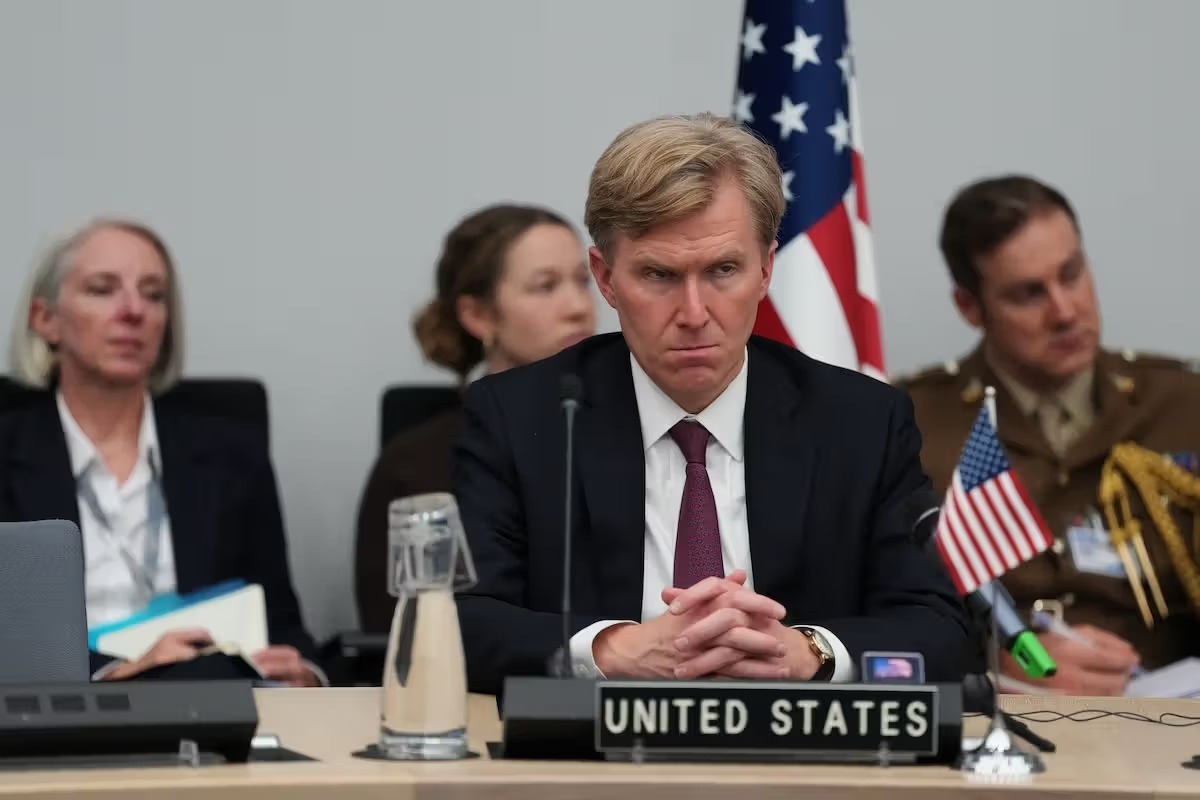
Elbridge Colby, the US deputy undersecretary of defence for policy, left the Ukraine Defence Contact Group (Ramstein format) talks held in Brussels on Tuesday, 17 November, before Ukrainian Defence Minister Yevhen Hmara began his address.
According to a report by the British newspaper The Telegraph, Colby, who authored the current US National Defence Strategy, opposed the tactic of launching strikes deep inside Russia during the talks.
Colby exited the room ahead of the speech by Ukrainian Defence Minister Hmara, who was presenting a report to his counterparts in a closed session. The US side officially explained his departure by citing the need to catch a flight.
Matthew Whitaker, the US permanent representative to NATO, remained at the meeting to represent the country.
German government sources speaking to The Telegraph said they were “concerned” by the statements of the US official, who criticized Ukraine’s deep strikes into Russian territory.
According to the German sources, Colby described the tactic as having “low military value” and as a method that did not “bring the conflict closer” to an end.
Interlocutors speaking to the newspaper expressed concern over the possibility that, following this development, the Donald Trump administration could “take Russia’s side”.
A source who briefed the British newspaper said:
“During the public portion of the Ramstein meeting, Colby said that the US opposed strikes deep into Russian territory and saw no military benefit in them. Most attendees were shocked by these comments.”
Who is Elbridge Colby?
Colby, a Republican politician, has served as deputy undersecretary of defence for policy at the Pentagon since April 2025 and held a similar role during Trump’s first presidential term.
Colby worked at the US Department of State and the Office of the Director of National Intelligence early in his career, and is the grandson of William Colby, who directed the Central Intelligence Agency (CIA) in the 1970s.
The National Defence Strategy released by the Pentagon in January this year, with the 46-year-old Colby as lead author, defined Russia as a “manageable threat”, while projecting that the country maintained “large reserves of military and industrial power” and demonstrated “national resolve”.
The authors of this US strategy placed the responsibility for defending Ukraine and Europe on European partners.
Colby, who identifies the containment of China among the Pentagon’s primary priorities, has long been known to prioritize US competition with that country over the Ukraine and Middle East theatres.
Speaking in March at congressional hearings on the new strategy, Colby argued that the document responded to the principles of “flexible realism”.
The US official said during that hearing:
“This is an attempt to advance and protect the concrete interests of ordinary Americans in a practical and realistic way. At the heart of this strategy, as the document clearly states, lies ‘evaluation, screening and prioritization’.”

Authorities in Sweden and Italy scrutinize Revolut over illicit flows

US military personnel prepare to return to Somali airbase

European builders target 620 billion euro defence boom

Antalya COP31 climate talks collapse over fossil fuel dispute

US Democrats secure House majority in largest advance since 1992
-
 America2 weeks ago
US midterms see 97 young winners as Gen Z representation triples
-
 Europe2 weeks ago
UK and Germany expand military pact with focus on Russian frontier
-
 America2 weeks ago
Nvidia investigates CEO Jensen Huang over link to Chinese spy
-
 America2 weeks ago
US secures 35% stake in Venezuelan firm NABEP under 50-year deal
-
 Europe2 weeks ago
George Szamuely dissects European decline and strategic rifts with US
-
 Opinion2 weeks ago
The Mecca Defence Agreement, the Ottoman Empire, and the facts
-
 America2 weeks ago
Absent Democrats derail floor vote on Pete Hegseth impeachment
-
 Opinion2 weeks ago
Seize, delete, deny: Israel’s war on its own record, from the Mavi Marmara to Gaza – 2
