
Europe
US plans to withdraw one-third of its fighter jets from Europe under NATO footprint reduction


The United States plans to significantly cut the military forces and capabilities it allocates to NATO operations in Europe, according to reports.
According to a report by The New York Times, which cited two European officials and an official document sent to allies in early June, the prepared plan involves a serious reduction in military presence.
Under the plan, the Washington administration aims to reduce the number of F-16 and F-15E fighter jets it keeps ready for NATO operations in Europe from approximately 150 to 100.
In addition, the plan entails reducing the number of maritime patrol and intelligence aircraft in the region from 26 to 15, and completely withdrawing all eight tanker aircraft previously assigned to the European theater.
The military reduction plan is not limited to aerial assets. The US also reportedly aims to redeploy an aircraft carrier, a missile-equipped nuclear submarine, and their accompanying support ships and air assets from the region to another theater.
Furthermore, the relocation of one of the two strategic bomber groups dedicated to Europe’s defense is envisioned.
According to the newspaper, these decisions, which are expected to take effect soon, will directly impact the alliance’s capabilities in intelligence gathering, tracking Russian submarines, and conducting long-range strikes.
While the US Department of Defense (Pentagon) avoided commenting on specific figures regarding the matter, it limited its response to referencing a recent statement by the US European Command (EUCOM) regarding its intention to review the volume of American commitments in the region.
The New York Times noted that this decision is linked to US President Donald Trump’s administration’s policy of reducing the military presence in Europe and shifting a portion of resources to the Indo-Pacific region.
However, the report also emphasized that despite the planned reductions, the US will continue to maintain one of the largest NATO military footprints on the European continent.
The German magazine Der Spiegel had also reported in late May, citing its own sources, that the US planned to reduce the military forces and capabilities it provides to the alliance.
According to Spiegel’s report, Washington wishes to decrease its participation under NATO’s “Force Model,” which was agreed upon in 2022.
In this process, it is reported that while the US will maintain its participation in Europe’s nuclear deterrence system, European allies are expected to assume the primary responsibility for the continent’s conventional defense.
The report also noted that Washington is increasing pressure on its European partners to develop their own military capabilities more rapidly and reduce their dependence on American support.
An earlier analysis in the British magazine The Economist reported that alternative military command mechanisms were being discussed in Europe in preparation for a potential decrease in the US role within the alliance or the possibility of Washington blocking decisions.
The magazine pointed out that a rapid reduction of the US military contribution could complicate plans by European nations to gradually replace American capabilities in areas such as intelligence, communications, and missile defense.







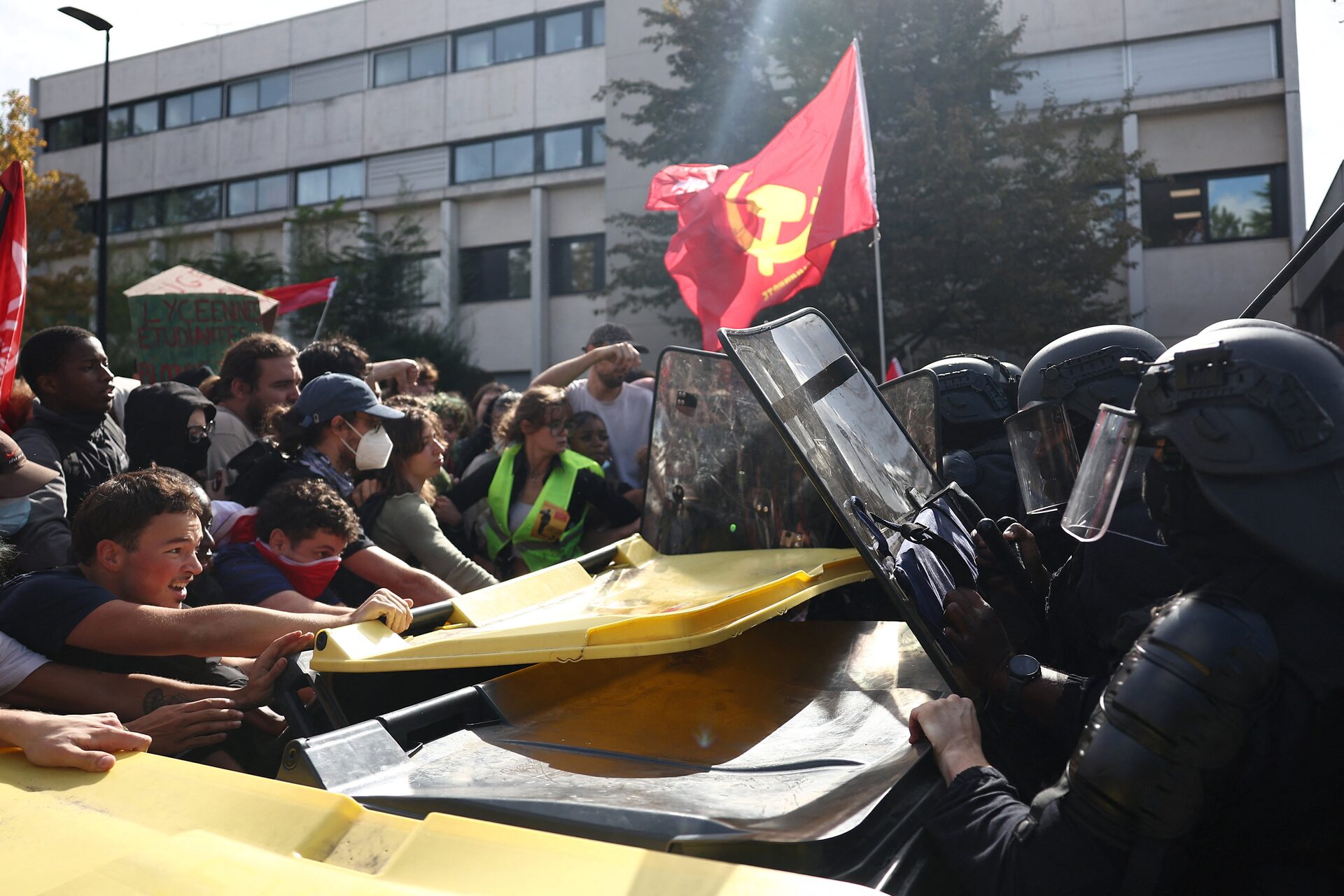
Youth protests spreading across European nations, particularly in France, are serving as an occasion for right-wing parties and governments to escalate demands for bans.
In France, for example, right-wing conservative politicians such as Senate President Gérard Larcher and presidential candidate Bruno Retailleau of The Republicans (LR) are now openly demanding that the party La France Insoumise (LFI) be banned.
Matthieu Valet, a Member of the European Parliament from Marine Le Pen’s National Rally (RN), said at the party congress held in Orléans on 24–25 October: “We will dissolve all anti-fascist organisations.”
Polls unanimously show that RN candidate Marine Le Pen leads the vote for the presidential election in April 2027.
In Spain, the rising right-wing party Vox submitted a draft bill to parliament in December 2025 aimed at dissolving organisations linked to the anti-fascist movement.
Vox is polling at 19% in recent surveys, and the party hopes to enter government by forming a coalition with the conservative Popular Party (PP) following the elections on 29 November.
In such a scenario, banning anti-fascist organisations in Spain could become possible.
Acts of violence linked to protests are currently being used increasingly to threaten left organisations with bans.
Belgium offers another example. Since last year, Interior Minister Bernard Quintin has been attempting to ban organisations that threaten “national security or the foundations of the rule of law”.
In this context, government officials cite “Antifa” as an example. Even in the autumn of 2025, Georges-Louis Bouchez, president of Quintin’s Reformist Movement (MR), openly called for the “dissolution of Antifa”.
When property damage occurred on the fringes of student protests in Liège in early October this year, Quintin once again pointed to “Antifa-type” organisations in light of plans to ban such groups.
In June, Defence Minister Theo Francken of the New Flemish Alliance (N-VA) also claimed, without providing evidence, that the opposition Workers’ Party of Belgium (PTB-PVDA) was responsible following property damage on the fringes of protests in Brussels.
PTB-PVDA supports the protests gaining momentum in Belgium against the government’s policies of militarisation and social spending cuts.
According to polls, the party is currently the second strongest in the country with 23% of the vote nationwide, and the strongest in the Brussels-Capital Region with 26%.
In Germany, the possibility of banning The Left (Die Linke) was raised by the influential mainstream newspaper Frankfurter Allgemeine Zeitung.
A recent editorial in the newspaper asked: “Why not ban Die Linke?”
Meanwhile, banning youth demonstrations is currently under discussion. As in Belgium, isolated violent incidents on the margins of peaceful protests are cited as justification, discrediting the demonstrations as a whole.
Federal Interior Minister Alexander Dobrindt is not only levelling blanket accusations against “left-wing groups” without providing evidence; he is also attributing instances of property damage to “agitators emerging from the migrant community”.
The Interior Minister of the state of Hesse, Roman Poseck, acknowledged that those detained on Saturday on assault charges were “predominantly German citizens”, but nonetheless claimed that they were “predominantly of migrant background”.
These statements therefore attribute responsibility for violence to leftists on the one hand, and to people of non-German origin on the other.
A representative from the Federal Ministry of the Interior under Dobrindt also attended a conference where White House Deputy Chief of Staff for Policy Stephen Miller equated anti-fascists (“Antifa”) broadly with terrorism and categorised them as “enemies of civilisation”.
According to an investigation by the online portal FragDenStaat, this representative was Christian Klos, head of the Public Security Directorate.
Klos reportedly appeared in Washington as part of a “morning panel” on “The Threat Landscape of Far-Left Terrorism”.
What he said there remains unclear: FragDenStaat reported that the Federal Ministry of the Interior refused to publish several preparatory documents related to the presentation, citing their classified status.
However, it is now known that the Interior Ministry took part in a preparatory workshop in the US in May with two officials at the “relevant specialist division level”.
In addition, the federal government confirmed in early October that a follow-up event to the Washington conference would be held this autumn.
The event’s focus will be the “sharing of professional experience among security and law enforcement agencies from various countries”, centring specifically on “manifestations, developments, and challenges in the field of violent left-wing extremism”.
The US Department of State had hosted a conference on 16 July with the participation of representatives from more than 60 countries across North and South America, Europe, and parts of Asia.
The focus of the conference was the “international resurgence of far-left political terrorism”.
Alongside Secretary of State Marco Rubio, Stephen Miller set the tone of the conference.
In a speech, Miller claimed that leftists were “fundamentally driven by envy, hatred, and malice”, adding that no one at anti-fascist demonstrations looked like a “normal human being”.
Federal Interior Minister Alexander Dobrindt has played a prominent role for years in crackdowns on left-wing organisations.
While serving as CSU general secretary in 2011 and 2012, his rhetoric caused astonishment even within his own party.
In August 2011, for instance, he demanded that authorities “examine whether proceedings to ban Die Linke should be initiated”.
In January 2012, he stated that he believed “in the medium term, we must make every effort to also launch proceedings to ban [the party Die Linke]”.
At the time, Gerda Hasselfeldt, then leader of the CSU parliamentary group in the Bundestag, expressed her surprise: “At present, I see no grounds for proceedings to ban Die Linke.”
Even after taking office as Federal Interior Minister, Dobrindt continued to stand out with striking rhetoric.
In June 2025, during the presentation of the Federal Office for the Protection of the Constitution report, he displayed graphs with different scales, implying that the number of “far-left extremists” in Germany exceeded that of right-wing extremists.
In December 2025, he suggested that “left-wing extremists” could engage in “espionage or sabotage” activities on behalf of foreign powers.
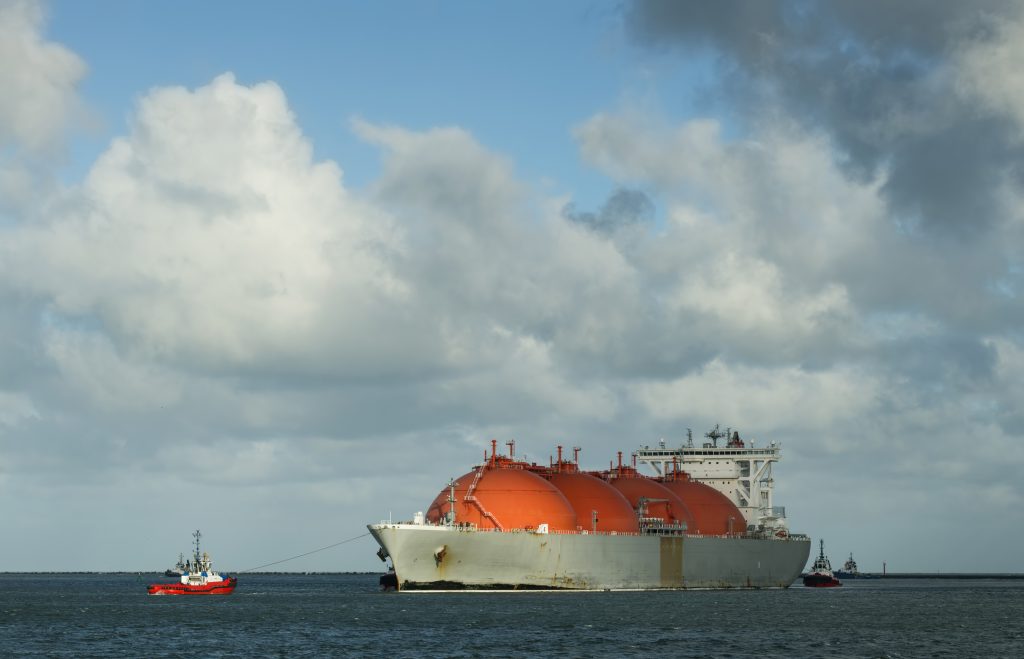
The International Energy Agency (IEA) has stated that the global gas market could remain tight “until later in 2027” as European gas storage levels stand at their lowest point in a decade ahead of the winter season.
Presenting its “Global Gas Security Review 2026” report, the IEA noted that depleted storage inventories will heighten Europe’s reliance on global liquefied natural gas (LNG) supplies to meet peak demand, particularly in the event of a colder-than-expected winter.
“Under colder-than-average weather conditions and prolonged disruptions to LNG flows through the Strait of Hormuz, EU gas storage levels could drop to below 10% of working capacity by the end of March 2027,” the report said.
Depleted stock levels could intensify competition for the limited volume of flexible LNG cargoes with countries in Asia and South America that have limited storage options, putting upward pressure on prices this winter.
The IEA noted, “Low storage levels in Europe could also significantly increase gas injection requirements to replenish stocks through the summer of 2027, potentially extending tightness in the global market well into next year.”
With the effective closure of the Strait of Hormuz cutting more than 60 billion cubic metres of supply from Qatar and the United Arab Emirates, Asian and European prices have already reached their highest levels since the 2022-23 gas supply crisis.
The report stated that an increase in LNG supply, particularly from North America, alongside more flexible trading arrangements, has helped cushion the impact of the Hormuz supply shock.
The report forecasts that global LNG supply will drop in 2026 by a record 3%, or around 20 billion cubic metres, compared with 2025.
Global gas demand is expected to fall by roughly 1.5%, or nearly 65 billion cubic metres, driven by lost demand across the Middle East, declining industrial gas consumption in Europe, and power sectors switching from gas to coal across multiple Asian countries.
The IEA said, “These findings highlight the importance of strengthening international cooperation on gas supply security, even as global markets become more flexible.”
The EU was expected to fill its underground gas storage facilities to at least 90% ahead of the winter season.
However, after that requirement was relaxed because of the ongoing crisis, the average fullness rate stood at just 74.6% as of 1 November.
This shortfall was primarily driven by lower-than-normal inventories in Germany and the Netherlands.
The IEA observed that because storage levels for this time of year are at their lowest since 2013, the EU has become uniquely dependent on LNG shipments.
In the event of an exceptionally cold winter, EU storage fullness could drop below 10% by March, leaving the bloc vulnerable to “additional cold spells, technical failures, or other supply disruptions”.
However, the Paris-based energy security agency added that these challenges could extend well beyond the winter months.LNG
The number of influential Republicans advocating support for Ukraine in the US Congress is expected to decline following the midterm elections.
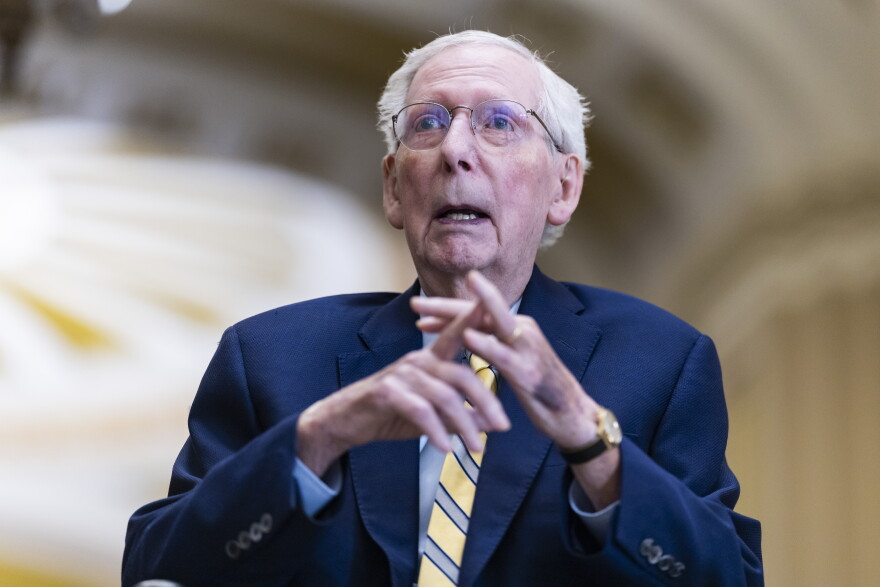
According to reporting by Politico, several senior figures, including former Senate Republican majority leader Mitch McConnell, are set to leave Congress.
Michael Sawkiw, head of the Congressional Ukrainian Caucus, described the departing lawmakers as “real heavyweights” among Ukraine’s supporters.
An unnamed adviser to a Republican member of the House of Representatives said these departures could reduce the number of comprehensive legislative bills drafted in Kyiv’s favour.
The adviser noted concerns that Congress may no longer retain a coalition capable of drafting legislation that could secure the approval of Donald Trump’s administration while simultaneously conducting back-channel contacts to persuade the White House.
New candidates keep military aid at arm’s length
Mitch McConnell had advocated providing military aid and sharing intelligence with Ukraine.
However, several candidates seeking the seats of departing Republicans remain distant toward Kyiv. Andy Barr, who launched a candidacy to replace McConnell, had voted against legislation supporting Ukraine.
Nevertheless, the report stated that Republicans could retain their roles as channels of communication with Trump and as providers of the majorities required to override a presidential veto.
The death of Senator Lindsey Graham, an architect of sanctions against Russia, was also reported to have caused grief among Ukraine supporters. The House member’s adviser pointed to Senator Katie Britt among Graham’s possible successors, noting that Britt had supported initiatives imposing restrictions on Russia.
According to the report, pro-Ukraine Republicans may attempt to block the White House’s agenda before the current congressional term concludes.
Concerns that Republican losses in the midterms could affect Ukraine aid and NATO had surfaced previously.
It is noted that if Congress curtails Trump’s domestic authority, he could turn his focus toward foreign policy. An unnamed NATO diplomat remarked that the US president’s posture could harden under such circumstances.
Other sources speaking to Politico suggested that Trump could respond to an electoral defeat by drawing down the American military presence in Europe, trimming contributions to the NATO budget, curbing the PURL programme involving weapons procurement for Ukraine, and pursuing closer ties with Russia.
Jennifer Kavanagh, an expert at the think tank Defense Priorities, pointed out that European nations would struggle to compensate for any reduction in US support across electronic warfare, air defence, intelligence, aerial refuelling, and logistics.
Race continues for House and Senate
In the US congressional midterm elections, voters will head to the polls to decide all 435 seats in the House of Representatives and 35 of the 100 seats in the Senate.
The outcome will determine which party holds the majority in both chambers of Congress for two years.
According to opinion polls cited by Reuters, Democrats appear to have a chance of winning a majority in the House of Representatives, whereas their odds of seizing control of the Senate are judged to be low.
It is noted that if Democrats secure a majority, they could open investigations into Trump, constrain spending priorities, and block various initiatives.
The US leader, however, will continue to retain broad powers over trade, foreign policy, and the federal bureaucracy.

“Blue wave” fears at Mar-a-Lago: What will the midterms bring for the US?

What are Europe’s ignorant leaders failing to see?

Protesters storm Kyiv site holding soldiers over torture allegations

Right-wing calls to ban left parties and groups mount in Europe

Low EU gas stocks risk stoking global prices, IEA report warns
-

 America2 weeks ago
US wealthy demolish multimillion-dollar mansions for land
-

 Middle East2 weeks ago
Netanyahu unveils security doctrine and regional alliance map
-

 America2 weeks ago
At least 47 major US data centre projects halted or cancelled
-

 Diplomacy2 days ago
Secular dress code dispute exposes deeper Türkiye-Azerbaijan strains
-
 Europe2 weeks ago
EU rejects US proposal to resume Russian gas flows through Ukraine
-
 Middle East2 weeks ago
Netanyahu trails Eisenkot in Israeli polls despite Trump backing
-

 Europe1 week ago
Merz visits Asia to seek new markets for German defence firms
-

 Russia6 days ago
US and Russia weigh energy deals and corporate return in peace talks
