
Europe
BBC to lay off hundreds of newsroom staff next week in sweeping cost-cutting drive

The BBC plans to lay off hundreds of employees in its main newsroom next week, marking the first phase of sweeping staff cuts planned across the entire public broadcaster.
The development comes as the broadcaster enters the final months of negotiations with the UK government over its future funding model.
According to a report by the Financial Times (FT), all departments within the organization have been instructed to reduce their spending by approximately 10% under comprehensive plans aimed at securing hundreds of millions of pounds in savings.
The overall cost-cutting process is expected to ultimately result in around 2,000 redundancies across the broadcaster.
The news division, which will be the first department to announce its restructuring plans next week, employs approximately a quarter of the BBC’s workforce of more than 20,000 people.
The upcoming announcement is expected to particularly impact specific radio programs, and internal sources indicate that the cuts are likely to be directly felt by BBC viewers and listeners.
Staffing costs account for the vast majority of expenditure in the news division, which produces content for multiple television channels, digital applications, the main website, and local bureaus.
Consequently, the budget cuts are set to trigger far more job losses in the newsroom than in other departments of the organization.
Matt Brittin, the former Google executive who now serves as the BBC’s Director-General, told the FT in an interview last month that the broadcaster would have to make difficult and “unwelcome decisions” to secure a financially sustainable future.
Brittin noted that feedback from staff suggested a preference for avoiding gradual, incremental cuts that would leave remaining employees overworked.
According to the newspaper, recruitment and travel expenses have already been restricted across the BBC, while budgets for management consultancy, conferences, awards, and corporate events have also been curbed.
The FT reported that Director-General Brittin must balance cutting current departmental budgets with investing in future-facing services, such as upgrading the iPlayer digital streaming platform and expanding YouTube content, in an effort to attract younger audiences.
Information obtained by the FT indicates that the UK government is working on a new funding model for the television license fee, which serves as the BBC’s primary source of revenue.
Cabinet ministers are reportedly considering an option to extend this fee to cover private digital streaming platforms.
Under the current system, the license fee is mandatory for watching live broadcasts on any channel or for using BBC iPlayer, but it is not required for accessing video-on-demand services on platforms such as Netflix.
At the end of March, the BBC implemented cuts in one of the most prestigious departments in British television broadcasting. The six-person BBC Studios Events team, which broadcast major state events such as the funeral of Queen Elizabeth II and the coronation of King Charles III, was disbanded.
Following the dissolution of the unit, only Claire Popplewell remained. The prominent journalist had previously coordinated the broadcast coverage for the wedding of Prince William and Kate Middleton in 2011, as well as the wedding of Prince Harry and Meghan Markle in 2018.









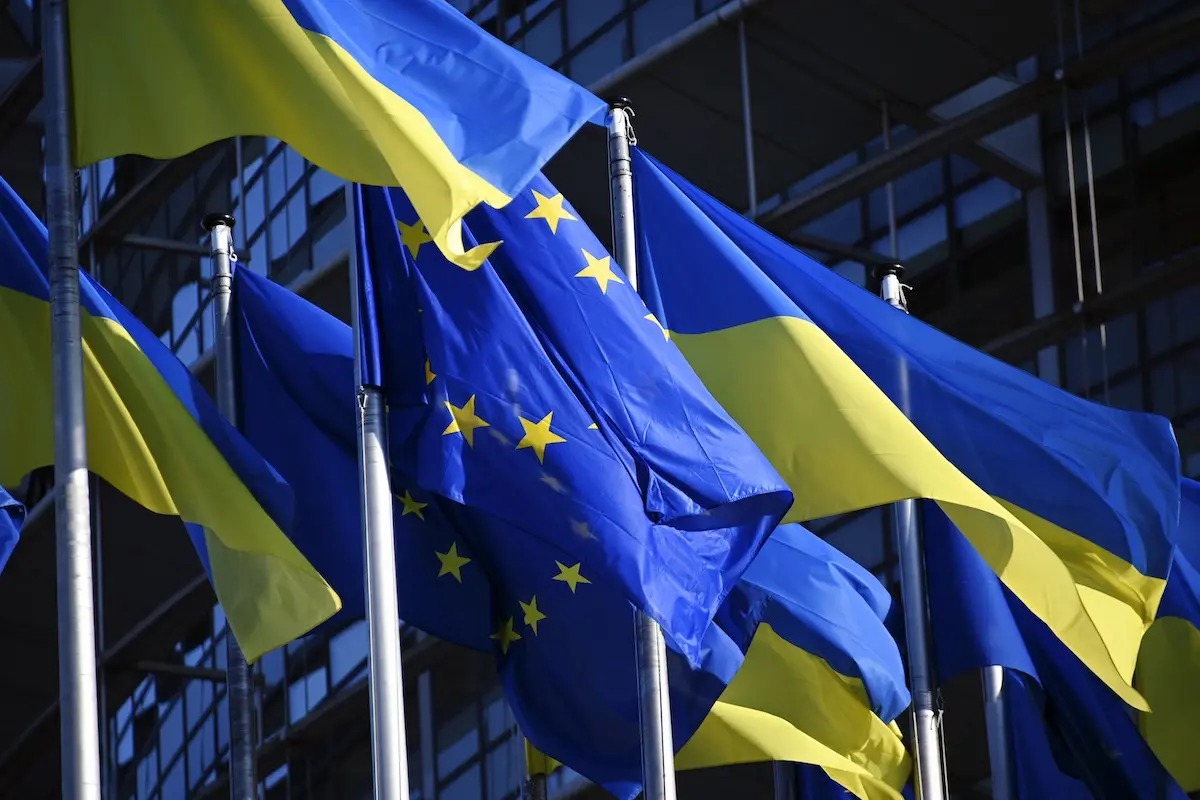
An opinion survey conducted across the European Union has revealed that 53% of bloc citizens oppose admitting Ukraine to the EU through an accelerated process in the coming years.
According to the study carried out by the Bertelsmann Foundation, 47% of EU residents support the idea of fast-track membership.
The most pronounced opposition to rapid accession was recorded in Romania at 60%, followed by Germany at 59%, and France and Poland at 57% each.
The lowest resistance to Ukraine’s accelerated membership was found in Sweden at 31%. This figure stood at 37% in Spain and Portugal, and remained at 43% in the Netherlands.
Domestic support for the process remains exceptionally high; 83% of the public in Ukraine want to join the bloc as soon as possible.
Europeans differ over defence contributions and strategic benefits
The survey also examined perceptions regarding the defence of the continent. Some 58% of Ukrainians believe that their “resistance against Russia’s military campaign protects the entire continent and the EU as a whole.”
In contrast, 29% of bloc citizens share the view that the EU and its member states contribute more to defending the union than Ukraine does.
While 23% of participants view the efforts of both sides as equal, the share of those who consider Ukraine to be the bloc’s “primary protector” remains at 16%.
The study also indicates that low expectations concerning the tangible benefits Ukraine would provide to the bloc contribute to the limited support for its membership.
Only 14% of surveyed Europeans believe that this accession will make the EU stronger and more influential on a global scale. Meanwhile, the proportion of respondents who anticipate that Ukraine’s entry will increase the bloc’s resilience was measured at 11%.
Timetable debate persists in the negotiation process
Ukraine applied for membership immediately after Russia’s military intervention and gained candidate status in 2022.
The accession process encompasses a 33-chapter reform package organised under six clusters, which aims to guarantee democratic and economic standards.
Formal accession talks began in June 2024. The negotiation process, which had long been blocked by Hungary, made progress after Peter Magyar took office as the country’s prime minister.
Magyar also succeeded in having the term “accelerated accession” for Ukraine removed from EU texts.
Magyar argued that a contrary approach would send the wrong message to Western Balkan nations, such as Serbia, Albania, Montenegro, and North Macedonia, which have worked towards membership for years.
Ukrainian President Volodymyr Zelenskyy has called for the membership process to be completed by 2027, stating that this would provide a fundamental security guarantee for both Ukraine and Europe.
On the other hand, circles within the bloc that oppose rushing the process insist on the complete fulfilment of all conditions, including anti-corruption measures.
Meanwhile, the EU Ambassador to Ukraine, Katarina Mathernova, points to 2030 as a likely accession date.
For membership to take place following the completion of negotiations, all 27 EU member states must grant unanimous approval.
So far, only the first of the six chapter clusters, covering fundamental values and principles such as the rule of law, human rights, and the judiciary, has been opened for Ukraine.
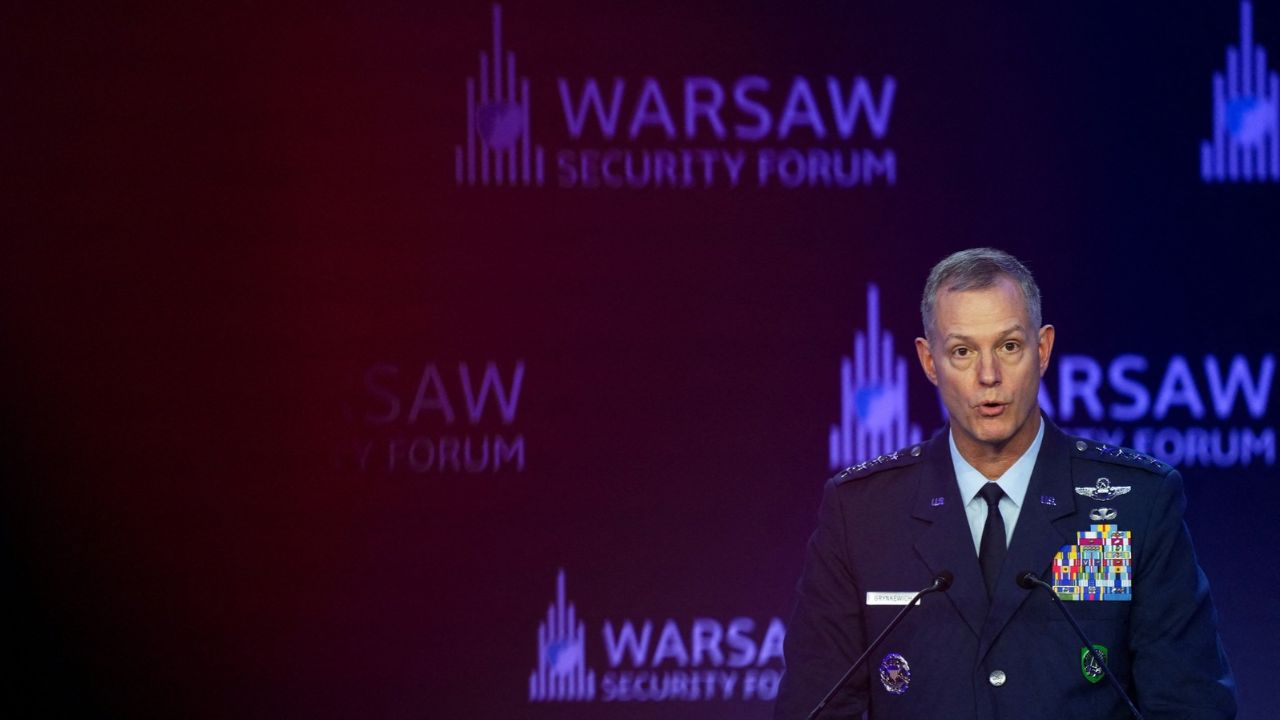
NATO Supreme Allied Commander Europe (SACEUR) Alexus Grynkewich has unveiled a new defence strategy aimed at rendering any attack against an alliance member entirely futile.
Speaking at the Warsaw Security Forum, Grynkewich said the concept, titled the “Theory of War”, is designed to prevent hostile elements from infiltrating NATO territory and waging conflict there.
Arguing that they aim to reassure the one billion people living within the alliance’s borders, Grynkewich maintained that they also wish to send a message to adversaries such as Russia that NATO is prepared for a potential invasion.
“If we are attacked, we are ready to fight even tonight,” Grynkewich said.
Three-stage defence plan enters into force
Approved by all 32 alliance members, the plan combines land forces and conventional weapons systems with advanced technologies such as unmanned aerial vehicles, counter-drone systems, and artificial intelligence.
Lessons drawn from ground and air combat in Ukraine, as well as current conflicts in the Middle East, play a decisive role in shaping the strategy.
According to Grynkewich, the new defence doctrine rests on three fundamental phases that form the core of NATO’s approach:
The first pillar of the plan, the “block” phase, focuses on preventing hostile forces from seizing allied territory.
In this context, NATO ground components will engage directly with attacking units, restrict their manoeuvrability, and neutralise forces attempting to breach alliance borders.
Should the assault continue, the second phase (“blunt”) will come into play, deploying autonomous systems requiring minimal human intervention alongside advanced sensor networks to slow the momentum of the attack and wear down advancing forces.
These systems will detect threats in real time, combining capabilities across different operational domains to halt the adversary’s advance.
The final stage, the “break” phase, will target not the attacking units directly, but the operational warfighting system that sustains them.
Command centres, supply chains, and logistics routes will be struck using long-range precision strike systems and sensor networks, eliminating the adversary’s ability to sustain military operations.
“Enemy commanders will not be able to direct their troops, their supply lines will be severed, and their logistics vehicles will be destroyed,” Grynkewich said.
Strategy aims to defend borders rather than gain territory
Noting that NATO has no intention of acquiring territory and that the strategy is entirely defence-oriented, Grynkewich said, “We have no plan, intention, or ambition beyond protecting our citizens and our territory.”
Stating that he considers the likelihood of a direct attack on alliance territory to be low, the commander nevertheless stated that they would respond without hesitation to any attempt targeting allies.
Addressing questions regarding US commitment to the alliance, Grynkewich recalled that Washington reaffirmed its adherence to Article 5 at the NATO summit in July.
Article 5, which forms the cornerstone of NATO’s collective defence principle, stipulates that an armed attack against one ally is considered an attack against all members.

Polish authorities have announced that German police detained two Turkish citizens suspected of setting fire to a Starlink station near Warsaw last month.
Tomasz Siemoniak, Poland’s minister coordinating the special services, told a news conference in Warsaw on Monday that Poland has requested the suspects’ extradition and has “no doubt” that Russian secret services were behind the arson attack.
“It should also be noted that Russian intelligence agencies are increasingly turning to people linked to the criminal underworld,” Siemoniak said at the press conference.
In a post on X, Prime Minister Donald Tusk described the incident as another “act of hybrid warfare” and said those responsible for the sabotage would be brought to justice in Poland.
Interior Minister Marcin Kierwinski said the two Turkish citizens would be charged in Poland with carrying out an act of sabotage on the orders of a foreign intelligence agency.
Power supply equipment at a Starlink ground station serving Eastern Europe, including Poland and Ukraine, caught fire on the night of 23 September.
The incident did not cause a major disruption to internet service. The blaze, however, completely destroyed the station’s electrical system and backup generator.
Poland, a key transit route for Western aid to Ukraine, has faced a series of suspicious incidents recently.
Numerous cyberattacks have targeted public utilities, including water and energy infrastructure as well as hospitals.
In addition, damage to a railway line between Warsaw and the Ukrainian border was attributed by officials to Russian sabotage.
In late July, a Russian missile also landed in Poland.

Ex-BND head Hanning tied to former Mossad chief amid spy inquiry

Iran war costs US economy $265 billion as household burden mounts

Trump dismisses US envoy to Greece Kimberly Guilfoyle

Most EU citizens reject fast-track Ukraine accession, poll finds

Ex-US official says air defences fail against Yemeni airport strike
-
 Europe2 weeks ago
Le Pen proposes German-style debt rule to soothe French bond market
-
 Russia2 weeks ago
US and Russia hold multi-billion-dollar talks on Lukoil foreign assets
-

 America2 weeks ago
US AI spending needs 9% of GDP by 2032 to justify capital boom
-

 Europe2 weeks ago
France and Germany urge EU market kill switch against trade threats
-
 Europe1 week ago
Bill to drop NATO membership goal submitted to Ukrainian parliament
-

 Europe2 weeks ago
Over 500 former European diplomats urge EU sanctions on Israel
-

 America2 weeks ago
Flavio Bolsonaro leads Lula as Brazil election heads to run-off
-
 Europe1 week ago
Marine Le Pen unveils fiscal programme pledging French budget cuts
