
Europe
German carmakers face historical crisis as Chinese competition and market contraction erode profits

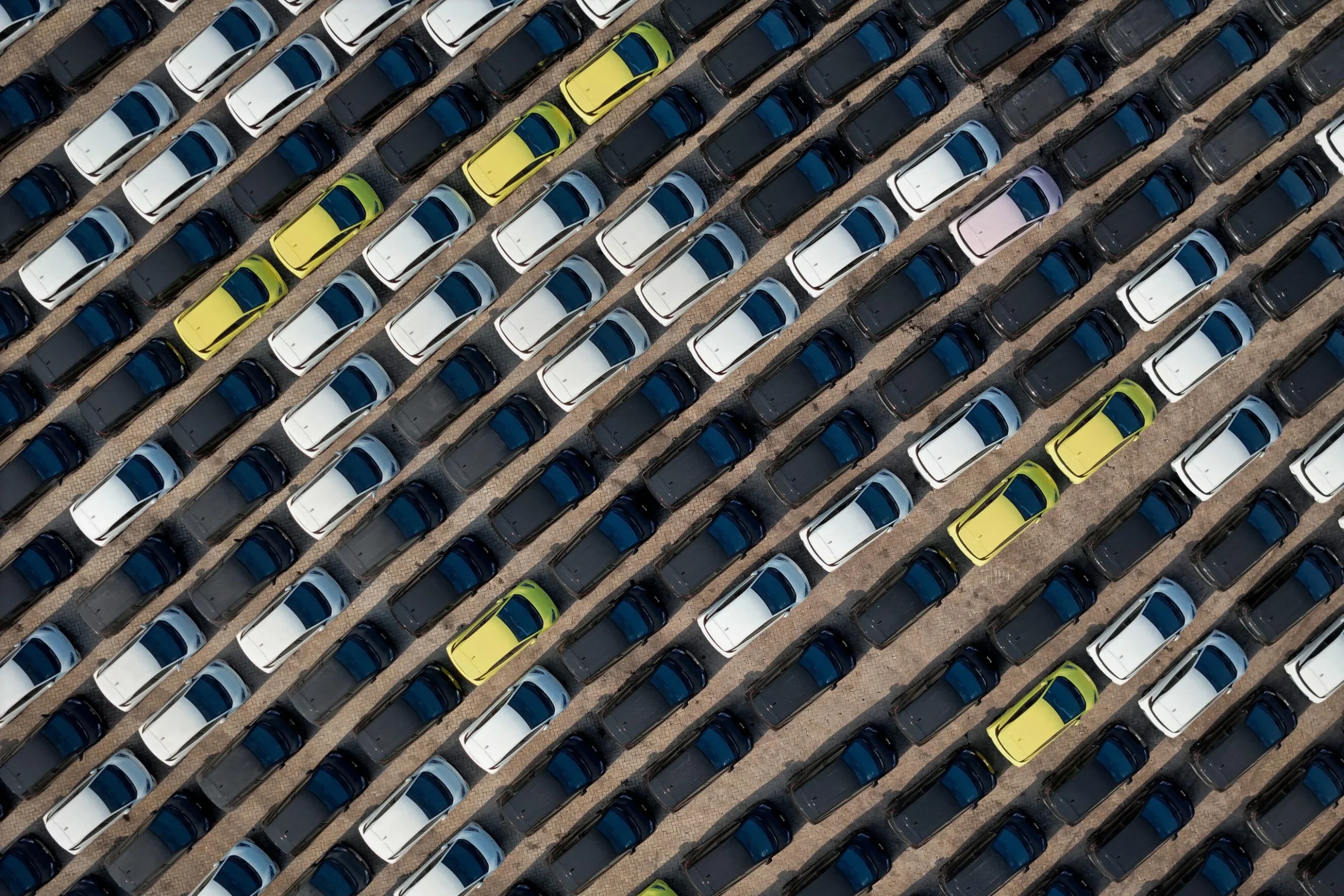
The German automotive industry is enduring a severe period of distress, driven by intensifying competition from Chinese vehicle manufacturers and an increasingly overheated domestic market in China.
For decades, China served as the primary engine that propelled German carmakers into global titans, yielding robust sales and billions in profits. Today, that historic reliance has transformed into their heaviest liability.
According to an analysis published by Politico, domestic Chinese manufacturers—having spent decades observing, learning, and investing—are now producing better-equipped electric vehicles at prices lower than those offered by Volkswagen, BMW, and Mercedes-Benz.
At the same time, China’s automotive market—the largest in the world—has become severely overheated and contracted by a fifth this year. The sharp downturn has forced both domestic and foreign automakers into a ruthless battle for survival.
The tangible impact of this pressure became clear this month as German carmakers reported their half-year financial results, disclosing billions of dollars in losses alongside announcements of widespread layoffs and plant closures across Europe.
“The environment has never been as challenging as the one we face today,” Oliver Blume, Chief Executive Officer of the Volkswagen Group, told investors. “Looking ahead, the risks before us are steadily mounting.”
The structural distress within the auto sector delivers another blow to Germany’s already struggling economy. It also presents a escalating political predicament for Chancellor Friedrich Merz’s fragile coalition ahead of critical state elections this autumn.
Dismantled dreams in the automotive sector
Since the 1980s, China had functioned as the primary engine of high profit margins for German automakers.
To gain access to a vast and rapidly expanding consumer market, carmakers were required by Beijing to establish joint ventures with local partners.
For decades, that arrangement proved highly lucrative, delivering massive returns to shareholders.
However, in the post-pandemic era, Chinese companies rapidly outpaced their German rivals in electric vehicle technology, which gained swift adoption across China.
While German brands long enjoyed high prestige among Chinese consumers, buyers have swiftly shifted toward domestic manufacturers offering superior technology at lower price points.
“They are suffering massive losses in China and may no longer be able to recover there,” said Pedro Pacheco, an automotive analyst at the consulting firm Gartner.
Chronic problems spread beyond China into Germany
The fallout is increasingly being felt inside manufacturing plants within Germany itself, rather than remaining confined to China.
BMW announced this week that it will eliminate 8,000 jobs across Germany by the end of 2027, with severance payments set to begin in October.
Mercedes-Benz is asking its workforce to extend weekly working hours from 35 to 40 hours for the same pay.
Meanwhile, industry flagship Volkswagen is locked in negotiations with labor unions over plans to lay off 100,000 workers and shut down domestic factories.
This severe downturn is providing political momentum to the Alternative for Germany (AfD) party, which is gaining traction in national polls.
The party is leveraging the auto sector’s decline and job losses to launch sharp attacks on the government.
“Even major industrial pillars like Volkswagen, Porsche, or Infineon are recording historic drops in profits and planning hundreds of thousands of layoffs in the coming years,” AfD co-leader Alice Weidel said this week. “This demonstrates how far the deindustrialization of our business hub has truly advanced.”
Merz and his governing coalition will get an initial indication of how these cutbacks resonate with voters during state elections this autumn in Saxony-Anhalt and Mecklenburg-Western Pomerania, both of which are strongholds for the AfD in eastern Germany.
Chinese vehicles begin to dominate European market
While automakers continue to perform well in North America and Europe, the collapse of sales in China is eroding overall profits.
Facing fierce domestic competition and systemic overcapacity at home, Chinese carmakers are exporting vehicles in record volumes.
Europe has emerged as their primary target market: China now sells more vehicles in Europe than Germany sells in China.
European consumers are enthusiastically embracing these imports. According to the latest data from the automotive industry association ACEA, sales of Chinese-made cars in the European Union surged by 63% in the first half of this year, rising from 338,000 units in 2025 to roughly 549,000 units in 2026.
That figure now represents nearly 10% of total European automobile sales.
Although German car companies carry an unparalleled exposure to China, even manufacturers with no operational footprint there, such as Renault, are feeling the severe impact of rising Chinese vehicle sales in Europe.
Automotive analyst Matthias Schmidt noted that the influx of inexpensive Chinese vehicles featuring advanced technology has put pressure on Renault and its budget brand, Dacia.
Renault disclosed on Thursday that sales of its Dacia brand fell by 8% year-on-year in the first half of 2026.
European firms forced into cooperation with Chinese rivals
The European Commission attempted to intervene by imposing tariffs on Chinese-made electric vehicles following an anti-subsidy investigation, but the added costs have done little to stem the inflow.
The tariffs do not apply to plug-in hybrid vehicles, leaving a lucrative loop-hole for Chinese manufacturers to exploit.
These shifting dynamics are driving several European automakers to forge direct partnerships with Chinese competitors.
Stellantis, the Franco-Italian-American conglomerate, established a joint venture with Chinese manufacturer Leapmotor. According to ACEA data, Leapmotor’s European sales surged from just 7,701 units in the first half of 2025 to 48,261 units during the same period this year.
Volkswagen CEO Blume hinted that his company could pursue a similar path, telling investors the carmaker might begin manufacturing certain models in Europe that were originally developed in China for European consumers.
Olaf Lies, Minister-President of Lower Saxony—a major shareholder in Volkswagen—said earlier this summer that it would be a strategic error for the automaker to isolate itself from China’s technological advancements.
“Our objective should not be to isolate technological developments from one another,” Lies stated.
However, Schmidt warned that such a strategy carries significant risks for the German brand’s equity.
He noted that these vehicles would effectively remain Chinese-engineered cars bearing a VW badge, a dynamic that could prompt consumers to buy the cheaper Chinese-branded versions directly.
Accelerating the search for new markets
European automakers are also attempting to offset losses by pursuing growth in emerging markets.
“North America, India, and the Global South represent our growth engines for tomorrow,” Blume told investors during a briefing.
Yet Chinese manufacturers have already established a commanding presence in those regions, dominating electric vehicle sales across Southeast Asia and Latin America.
Under heavy pressure, European automakers are also attempting to monetize their mass-production expertise by capturing a share of rising global defense spending.
Blume told investors that Volkswagen is engaged in “very advanced discussions” with a defense contractor, adding that he expects “a decision to be made within this year.”
However, portions of the workforce, particularly in Germany, remain hesitant about associating the company with the arms industry.
Furthermore, the move carries a serious risk of retaliation from Beijing. Earlier this month, China imposed export restrictions on 14 defense and technology firms, including German defense giant Rheinmetall.
While those measures were presented as retaliation against export curbs targeting Chinese entities, automotive companies entering the defense sector could find themselves exposed to similar actions.
“European carmakers must act very, very carefully because this is not just a quick gain,” Pacheco warned. “It may look like one, but once you step onto that chessboard, you need to know how to play chess.”


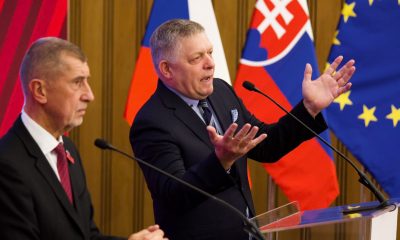




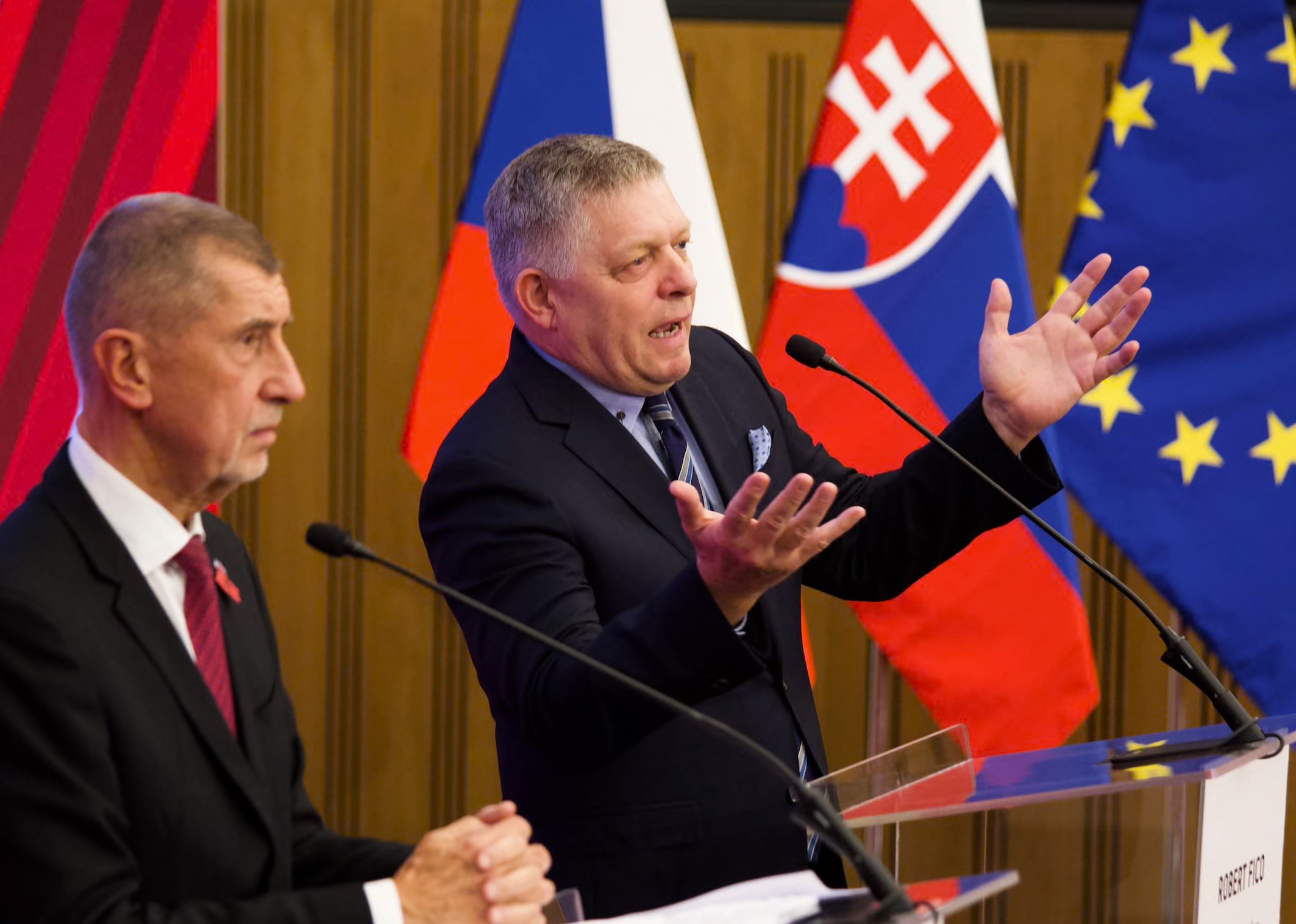
Slovak Prime Minister Robert Fico has hit back after German Chancellor Friedrich Merz threatened to veto the EU budget unless funding for Ukraine is secured.
Merz said he would block the EU’s seven-year budget if no agreement is reached on financial assistance for Ukraine.
The chancellor’s intervention has angered Central European leaders who are net beneficiaries of EU funds but do not want to take part in the next round of funding to support Ukraine’s war effort.
“What the chancellor is doing is typical blackmail, and I will not bow to it,” Fico told reporters in Bratislava.
Fico spoke alongside his Czech counterpart, Andrej Babiš, whose government has refused to participate in a future loan to Ukraine.
“I do not know why he said this,” Babiš said, referring to Merz’s stance.
Merz wants EU leaders to discuss Ukraine’s financing needs at a summit in Dublin on Friday.
In a letter to European Council President António Costa, who will chair the meeting, obtained by The Guardian, Merz wrote:
“We must maintain our support for Ukraine in its struggle to defend itself. This is our shared vital interest. Yet bilateral aid provided to Ukraine is distributed unevenly, with the burden shouldered mostly by only a few member states.”
The EU agreed last year to provide a €90 billion loan to Ukraine, intended to cover two-thirds of its military and civilian spending for 2026 and 2027.
Since then, however, Russia’s relentless bombardment has placed a heavier financial burden on Kyiv, prompting President Volodymyr Zelenskyy to ask for €70 billion to plug the budget deficit.
The EU has endorsed Zelenskyy’s figures and pledged to find €45 billion. Ukraine’s other allies, such as Britain and Canada, are expected to cover the rest.
Last year, Merz launched an initiative to tap €210 billion in frozen Russian state assets held in the EU, but the plan fell through due to opposition led by Belgium, which holds most of the funds in Brussels.
The €90 billion loan was the backup plan. Having opted out of that loan, Hungary, Slovakia, and Czechia indicated that they would not take part in the next round either.
Bulgaria joined these three member states following the election of Prime Minister Rumen Radev last April.
The question of funding for Ukraine is now spilling over into the fraught negotiations on the 2028-34 EU budget.
Germany, the largest net contributor, wants substantial cuts to the proposed budget and opposes the EU providing generous funding to member states that refuse to contribute to Ukraine’s financial needs.
Merz states in his letter that a “collective commitment without exceptions” is a “fundamental prerequisite” for closing Ukraine’s financing gap and for “discussing other matters, particularly those with financial implications.”
He also notes that, in the context of the EU’s next seven-year budget, known as the Multiannual Financial Framework, all member states must contribute to a “robust” financial perspective for Ukraine from 2028 onwards.
A German government official said:
“For the Multiannual Financial Framework (MFF) to be successfully concluded, it is vital that all EU member states provide financial support to Ukraine.”
Berlin is also aiming to shift decision-making on funding for Ukraine from unanimity to qualified majority voting, in an effort to prevent a single government from blocking EU decisions.
The letter reflects mounting frustration among the EU’s northern member states, Ukraine’s most generous backers, over lower contributions from other EU countries in Central and Southern Europe.
The task of brokering an agreement on the budget falls to Costa, the former Portuguese prime minister.
Costa wants a deal by the end of the year, ahead of elections in France, Poland, and Italy in 2027 that could complicate the process.
A spokesperson for Costa confirmed receipt of the letter without elaborating on details. “President Costa will dedicate time to the Ukraine issue at the informal European Council meeting in Dublin this week,” the spokesperson said, adding that funding for Ukraine would be addressed at a dedicated summit on the EU budget scheduled for 26-27 November.
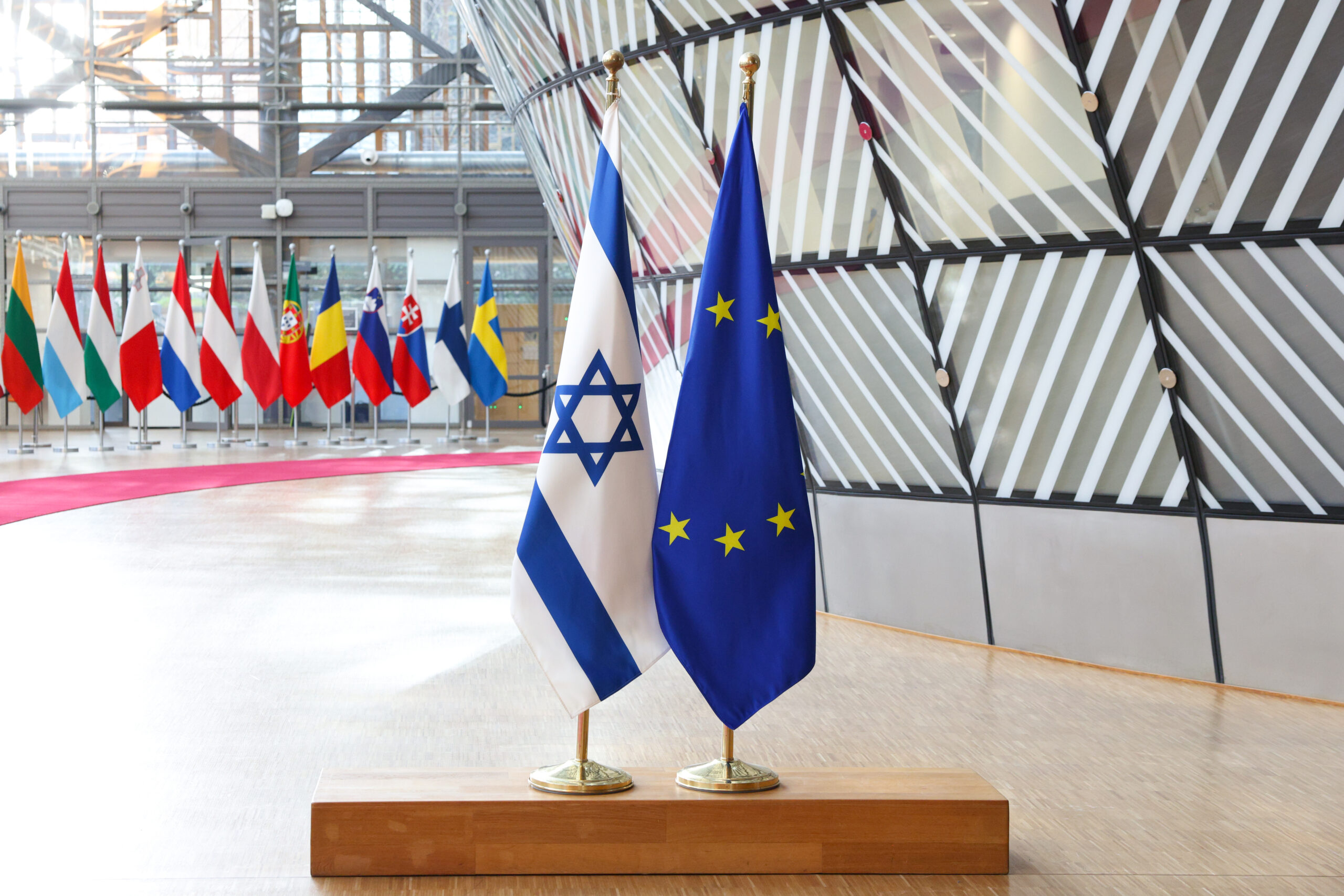
The EU expects the next Israeli government to mend its “difficult relationship” with Brussels and adopt a more constructive approach toward Gaza and illegal settlements.
Israeli President Isaac Herzog tasked Gadi Eisenkot, the leader of the anti-Netanyahu bloc, on Sunday with forming a government.
Eisenkot stated that the country faces a “catastrophic diplomatic crisis” as traditional allies begin to reassess their relations with Israel.
Speaking to Rapporteur, several European diplomats stationed in Tel Aviv said they expect ties to get back on track.
“Whatever government comes in, we can try to revitalize relations because Israel is clearly a very important partner,” one European diplomat said, adding that Brussels expects the next administration to be “less aggressive”.
The diplomat noted that relations with Europe are currently “not very good”.
Israel cut off communication with Kaja Kallas, the EU high representative for foreign affairs and security policy, after Rapporteur revealed in June that she had compared Israel to apartheid-era South Africa during a visit to Mexico.
The diplomat stated that this decision, taken ahead of elections, was political in nature. A second European diplomat based in Brussels explained that the announcement came only a few days before an official visit by Dubravka Šuica, the European commissioner for the Mediterranean.
“This could have been interpreted as a tactic to divide Europe, but Israel had asked Kallas to deny the report; she did not do so,” the second diplomat said.
Brussels has repeatedly voiced its frustration with Israel over the humanitarian crisis in Gaza and the expansion of West Bank settlements.
However, EU governments blocked almost all sanctions proposed by the European Commission.
A third diplomat said opposition parties would “almost certainly take the issue more seriously” when it comes to tackling violence by West Bank settlers:
“We see Palestinians being expelled from their homes and new illegal settlements being built in the West Bank. There is a reluctance on the part of the current government to address this issue, which causes problems in our relations.”
The new government is expected to ease pressure on Palestinians and halt construction of the E1 settlement project, a controversial plan to build settler housing in the West Bank east of Jerusalem.
“They will probably try to deal with the problem of extremist settlers in the West Bank,” the diplomat added.
On Gaza, the diplomat described the situation as “a complete nightmare”, with two million Palestinians crowded into an area that accounts for roughly 35% of the territory.
“There are not enough tents for the winter, and not enough vaccines are reaching the area despite an increase in diseases,” the diplomat said.
The European official argued that Donald Trump’s peace plan met all the conditions for Europe. Although the EU had much to offer, neither the US nor Israel appeared interested in EU involvement in the process.
“We are currently training Palestinian police in the West Bank, and if permitted, we could do the same in Gaza,” the diplomat said.
The diplomat disclosed that Israel had agreed with Šuica that Europe would finance two projects aimed at improving sewage and water infrastructure in Gaza, continuing:
“However, none of these projects has started yet because there is a serious problem with dual-use goods. Getting materials into Gaza is very difficult because the Israelis say they could be misused if they fall into the wrong hands of Hamas.”
Israel insists that Hamas must be disarmed before subsequent phases of Trump’s plan can proceed.
With disarmament unlikely to happen in the near term, the EU argues that certain measures can be carried out in parallel.
“We can begin rebuilding sanitation systems in Gaza. We can start building desalination plants. We can begin providing energy and water to Gaza,” one diplomat said.
While Brussels hopes for progress on Gaza and the West Bank, it maintains that expectations regarding the establishment of a Palestinian state need to be “managed”.
The EU continues to advocate a two-state solution, yet most leading Jewish parties oppose the creation of a Palestinian state.
The diplomat noted that the next Israeli government will likely have “a very slim majority and not much room for manoeuvre”.
There is also a “major misunderstanding” between the EU and Israel that must be addressed. According to the diplomat, Europeans fail to recognize the “psychological impact” of 7 October on Israelis.
“This event changed the country and made the two-state solution even more distant than before,” the diplomat said.
In return, some Israeli politicians believe Europe has betrayed Israel despite what they view as a fight against “Islamist terrorism”.
“Their argument is that European politicians are somewhat afraid of the Muslim population in Europe,” the European diplomat said.
Europe strongly opposes Iran and the possibility of Tehran acquiring nuclear weapons, imposing sanctions in response.
However, the diplomat argued that the EU would not participate in a war because it lacks a common army:
“We are a diplomatic and economic power, which is why we resort to sanctions and diplomacy. The expectation that we would take part in a military operation is unrealistic.”
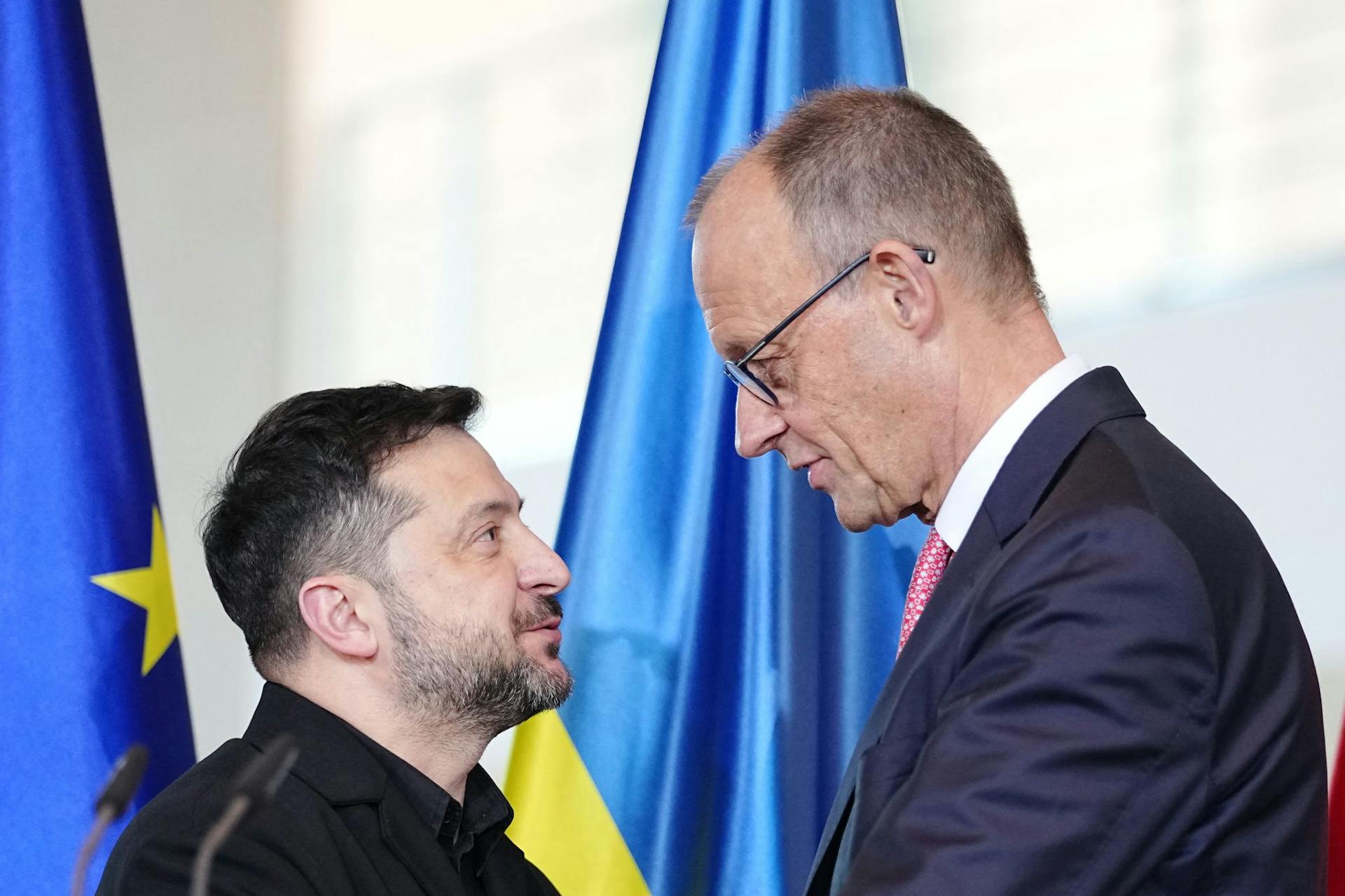
Germany has threatened to veto the European Union’s joint budget for the 2028-2034 period, which is currently under negotiation, unless every member state commits to providing financial support to Ukraine in 2027 and subsequent years, German Chancellor Friedrich Merz warned.
According to a report by the Financial Times (FT), Chancellor Merz set out Berlin’s condition for the budget talks in a letter addressed to European Council President António Costa.
In his letter, Merz wrote: “A collective commitment that every single one of us, without exception, will make a fair contribution to closing Ukraine’s budget deficit is an indispensable prerequisite for resolving this budget issue and, in particular, for addressing subsequent matters that carry financial implications.”
The German Chancellor stressed that a formula backed by all member states must be established to provide Ukraine with a reliable, multi-year financial perspective starting from 2028.
Merz also insisted that any agreed solution must cover the interest payments on debts incurred to finance the assistance provided to Kyiv.
Conversely, several countries within the bloc have cut financial aid to Ukraine, and the number of capitals adopting this stance is projected to rise next year.
In December 2025, Hungary, Slovakia, and the Czech Republic approved the EU’s 90 billion euro loan package for Kyiv only on the condition that they would not contribute to its costs themselves.
Alongside these three countries, Bulgaria has also stated that it does not plan to participate in subsequent financial assistance packages for Ukraine.
In France, far-right leader Marine Le Pen, who could potentially win the presidential election scheduled for spring 2027, recently told the FT that Paris has run out of funds.
Le Pen assessed: “The honest approach is to tell Mr Zelensky clearly, and even warn him: ‘Look, we cannot do more. We have already allocated the 90 billion euro EU loan, in which France’s share amounts to 18 billion euros. 18 billion euros is genuinely a huge amount of money.'”
The EU’s 90 billion euro loan, covering the 2026-2027 period, aims to meet two-thirds of Ukraine’s financing requirements.
Brussels expects the remaining 45 billion euros to be covered by other partners, including Canada, the UK, Norway, Japan, South Korea, and Australia.
Germany remains the largest net contributor to the EU budget.
In contrast, the four Eastern European countries seeking to avoid financing Ukraine rank among the largest net beneficiaries of the bloc’s budget.
Leveraging this balance, Chancellor Merz aims to use his influence in the EU budget negotiations to secure uninterrupted support for Kyiv in 2027 and the years beyond.
According to the FT, Berlin is also demanding that future aid packages be decided by qualified majority voting rather than unanimity, which is required under the current system.
A German government spokesperson told the newspaper:
“The issue of Ukraine’s financial needs must be resolved within the framework of the next EU budget. Financial support for Ukraine from all EU members is decisive for the successful conclusion of the budget talks.”

Journalist Dursunoğlu warns Iran removed missile limits as Gulf risks widen

Nvidia board prepares to remove CEO Jensen Huang amid scandal

CSTO strips Armenia of voting rights over two-year budget debt

US voters approve bans on transgender athletes across four states

US urges Russia to draft proposals for new European security pact
-
 Diplomacy2 weeks ago
Secular dress code dispute exposes deeper Türkiye-Azerbaijan strains
-
 Europe7 days ago
EU urges citizens to prepare 72-hour survival kits for crises
-
 Asia2 weeks ago
China expands Africa arms sales, displacing France and Western rivals
-

 America2 weeks ago
Bolsonaro reportedly leaves Brazil on jet linked to scandal-hit firm
-
 Diplomacy1 week ago
Protesters storm Kyiv site holding soldiers over torture allegations
-
 Russia2 weeks ago
Putin proposes Arctic energy cooperation to US to ease gas sanctions
-
 Europe1 week ago
Pro-Ukraine Republicans in US Congress dwindle after departures
-
 Europe1 week ago
Low EU gas stocks risk stoking global prices, IEA report warns
