
Russia
What to know about Russia’s upcoming State Duma elections?

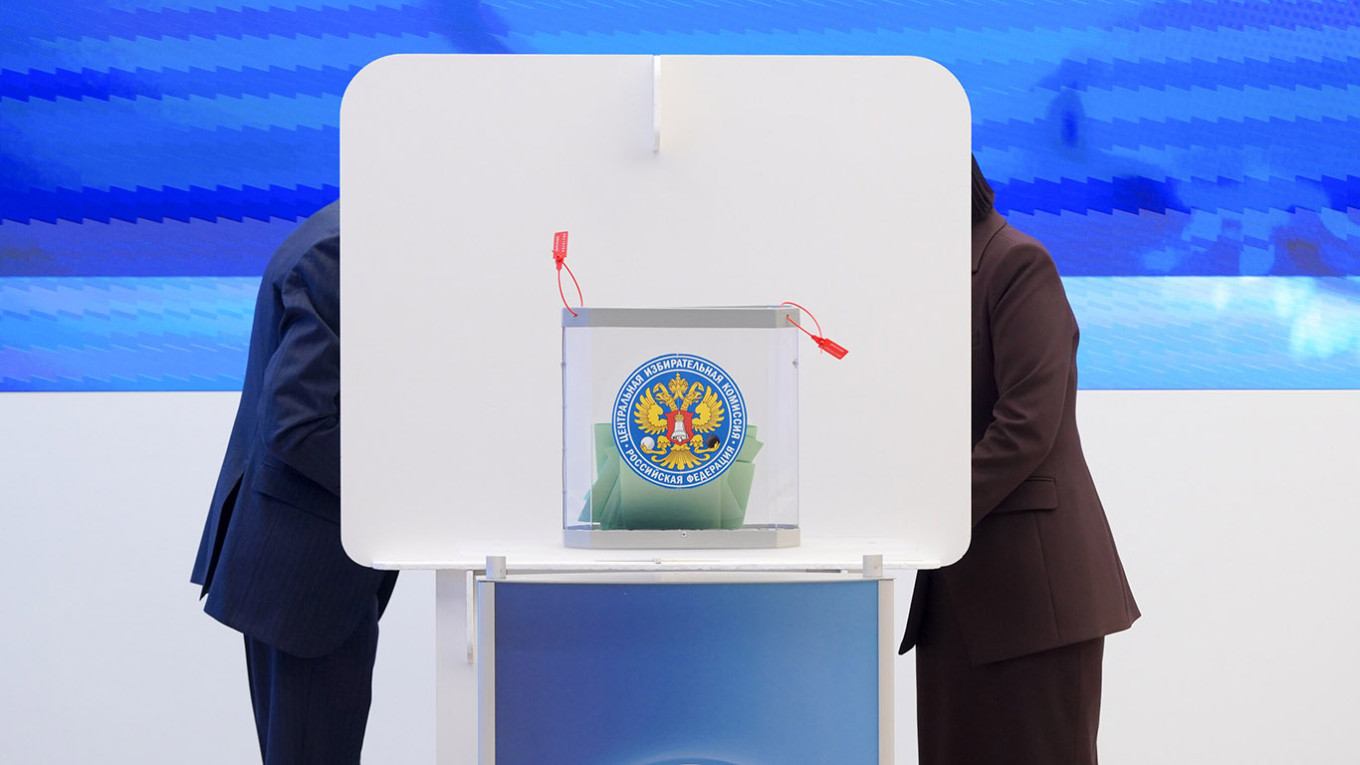
The State Duma of the Federal Assembly of the Russian Federation forms one of the two chambers of the Russian parliament. Operating alongside the Federation Council, the other chamber, the Duma is conventionally referred to in everyday parlance as parliament’s lower house, although no such distinction exists in law.
Under a decree signed by President Vladimir Putin on 16 June, regular elections for deputies to the State Duma will take place on 20 September 2026. The Central Election Commission (CEC) of Russia approved a three-day voting period spanning 18 to 20 September by a decision adopted on 17 June. Consequently, citizens may cast ballots on any of these three days, though 20 September is designated as the official election day, known as the Single Voting Day (EDG).
Legislation governing deputy elections is rooted in the Constitution of Russia and comprises basic guarantees of electoral rights and laws on parliamentary elections.
Who calls the State Duma elections?
State Duma elections are called by presidential decree, which officially launches the election campaign upon signing. The law establishes strict deadlines for setting the voting day: the decision must be taken between 90 and 110 days prior to the election date. If the president fails to publish the decree within this timeframe, the authority to call the election transfers to the Central Election Commission. In all circumstances, the voting date falls on the third Sunday of the month in which the term of the previous convocation expires.
The powers of the sitting convocation of the lower house terminate the moment the new convocation convenes.
How often are Duma deputies elected?
The composition of the Duma is elected every five years. The chamber’s term of office was four years until 2008, when a constitutional amendment extended it to five years. The Duma was first elected for a five-year term in 2011. The current eighth convocation of the State Duma was elected in 2021. Accordingly, the ninth convocation will be elected in September 2026.
The Constitution outlines several scenarios under which the State Duma may (though is not required to) be dissolved and snap elections called. These include the three-time rejection of candidates for prime minister, the three-time rejection of candidates for deputy prime ministers and federal ministers (provided that one-third of government posts remain vacant), and two votes of no confidence in the government within three months. In the event of dissolution, the president schedules a new election date.
In practice, the constitutional provisions concerning dissolution have never been applied since the State Duma was first elected in 1993.
When were the last State Duma elections held?
The eighth convocation of the State Duma concluded its work on 27 July 2026. This legislature was formed on the basis of the 2021 election results. Voting lasted three days, from 17 to 19 September. Compared with the preceding convocation, the number of parties represented in parliament increased from four to five: alongside United Russia, the Communist Party of the Russian Federation (CPRF), the Liberal Democratic Party of Russia (LDPR), and A Just Russia, the New People party—established roughly eighteen months before the vote—entered the lower house. United Russia retained a constitutional majority with 324 seats. The CPRF secured 57 seats, A Just Russia 27, the LDPR 21, and New People 13. All of these political forces formed their own parliamentary factions. Additionally, five independent candidates and three representatives from other parties entered parliament, most of whom subsequently joined party factions.
How do State Duma elections work?
The State Duma comprises 450 deputies. Over the course of a parliamentary term, this figure may decrease due to deputies transferring to other posts, passing away, or facing early termination of their mandates. Depending on how a deputy was elected, the seat may be reassigned to another person on the list or filled via a by-election.
Duma deputies are elected under a mixed proportional-majoritarian system: 225 deputies from party lists and 225 from single-member constituencies.
Each party’s federal list consists of a general federal section and regional groups covering one or more regions. The entire list must contain between 200 and 400 candidates.
A maximum of 15 individuals may be included in the general federal section. Parties typically place their leaders and most recognisable, high-profile figures in this section to maximise voter turnout. Following the elections, candidates on the list can renounce their acquired mandates and transfer them to other party colleagues (the “locomotive” tactic). In practice, the general federal section may consist of as few as three candidates (as on the New People party list for the September elections) or be filled to the statutory maximum (as with the CPRF).
The regional section must comprise at least 35 groups covering all regions of Russia.
Because top rankings in the general federal section and regional groups provide an almost certain guarantee of election, parties seek to position their highest-priority candidates in these slots.
The remaining 225 deputies are elected from single-member constituencies, into which the country’s entire territory is divided. Each constituency elects one deputy. The boundary drawing of constituencies depends on regional populations and registered voter numbers. New constituency boundaries were approved in the spring of 2025. This adjustment was necessitated by demographic shifts and the enactment of laws on the accession of the Donetsk People’s Republic (DPR), Lugansk People’s Republic (LPR), Kherson, and Zaporozhye regions to Russia.
Consequently, certain regions, such as Moscow and Moscow Oblast, gained an additional constituency, while others lost one. Furthermore, the four new regions participating in Duma elections for the first time were divided into constituencies. A candidate may concurrently run on a party list and contest a single-member constituency.
Voters receive two ballots: one containing party lists, where the vote is cast for a party as a whole, and another listing individual candidates in their single-member constituency, where they must select one candidate. The order of party emblems on the ballot is decided by a CEC draw. Constituency candidates appear on the ballot in alphabetical order.
To secure representation in the State Duma, a party must obtain at least 5% of the total votes cast.
How are seats allocated in the State Duma?
Deputies in single-member constituencies are elected by a simple majority, with the candidate winning the highest number of votes entering the State Duma.
The remaining 225 seats are distributed proportionally following the counting of party list votes. To determine this, the total vote count for all parties clearing the 5% threshold is divided by 225. The result represents the electoral quota—the number of votes required to win a single seat. Each party’s vote total is then divided by this quota. Consequently, the more votes a party’s list receives, the more seats it obtains in addition to its single-member constituency victories. Each seat corresponds to one parliamentary mandate.
Which parties can contest the elections?
The Ministry of Justice registered 20 political parties this year, 17 of which hold the right to contest the State Duma elections: 11 without the requirement to collect voter signatures to nominate candidates, and six subject to mandatory signature collection.
Official registration is a mandatory prerequisite for a party to conduct full-scale legal operations. Upon registration, the party is recorded in the Unified State Register of Legal Entities (EGRYUL). However, this does not automatically confer the right to run in State Duma elections. To qualify, parties must hold seats in the Duma or regional parliaments, have secured at least 3% of the vote in the preceding Duma elections, or collect at least 200,000 voter signatures supporting their nomination (with a cap of 7,000 from any single region).
The parties qualifying for ballot access without collecting signatures and the legal grounds for their exemption are:
United Russia (holds seats in the Duma)
CPRF (holds seats in the Duma)
LDPR (holds seats in the Duma)
A Just Russia (holds seats in the Duma)
New People (holds seats in the Duma)
Party of Pensioners (holds seats in a regional parliament)
The Greens (holds seats in a regional parliament)
Rodina (holds seats in a regional parliament)
Communists of Russia (holds seats in a regional parliament)
Yabloko (holds seats in a regional parliament)
Party of Direct Democracy (holds seats in a regional parliament)
None of the six parties required to collect signatures submitted the documentation required to register candidate lists to the CEC within the statutory deadline. These parties are: Democratic Party of Russia, Cossack Party of the Russian Federation, Party of Russia’s Rebirth, Party of Progress, Party for Justice!, and Russian Party of Freedom and Justice.
Among the remaining three parties ineligible to participate, Green Alternative adopted a formal liquidation decision and will effectively merge with The Greens, the other party with an ecological platform. The activities of the Civic Platform party were suspended by a Supreme Court ruling. In June, a court accepted an administrative lawsuit from the Ministry of Justice seeking the liquidation of the Social Security Party.
How does the candidate nomination process work?
Any Russian citizen aged 21 or older who resides permanently in the country is eligible to run for the State Duma. Individuals stripped of legal capacity by a court, those serving prison sentences, holders of foreign citizenship or residence permits, and persons convicted of specific crimes are ineligible.
A candidate may be nominated by a political party or run as an independent, though independents may contest only single-member constituencies.
Parties finalise their nominations prior to the formal campaign launch. The nomination phase, during which parties formally approved list compositions and single-member candidates, took place at party congresses in June and July. Balloting on candidates was conducted by secret vote. Under the timetable approved by the CEC, candidate nominations were permitted up to and including 11 July.
United Russia nominated more than 600 candidates for the upcoming elections. Five individuals were named to its general federal section: Foreign Minister Sergey Lavrov, Moscow Mayor Sergey Sobyanin, Presidential Commissioner for Children’s Rights Maria Lvova-Belova, war correspondent Yevgeny Poddubny, and head of the Yunarmia main headquarters Vladislav Golovin.
The CPRF list is led by party chairman Gennady Zyuganov. The top five also includes State Duma deputies and CPRF Central Committee Presidium members Yury Afonin, Dmitry Novikov, and Ivan Melnikov, alongside Head of Khakassia Valentin Konovalov.
The LDPR top five consists of party chairman Leonid Slutsky, volunteer brigade commander Aleksey Vereshchagin, former chairwoman of the State Duma Youth Parliament Maria Voropayeva, deputy Andrey Lugovoy, and businessman Viktor Bout, who served a prison sentence in the US on illegal arms trafficking charges.
A Just Russia placed four figures in its general federal section: party leader Sergey Mironov, State Duma Deputy Chairman Aleksandr Babakov, deputy and television presenter Marina Kim, and military operation participant Oleg Chernyshev.
The New People party federal list contains three names: party chairman Aleksey Nechayev, Duma Deputy Chairman Vladislav Davankov, and deputy Sardana Avksentyeva.
Yabloko party registration and disqualification
On 29 July, the Central Election Commission registered Yabloko’s federal list. The list was headed by Yaroslav Shcherbakov, leader of the party’s Chelyabinsk branch. The top seven also included St. Petersburg legislative assembly deputy Dmitry Anisimov and Moscow Yabloko chairman Kirill Goncharov.
The party entered the State Duma race under the slogan “For peace and freedom! For a life without fear!” Its core platform focused on securing a ceasefire and peace.
Following a ballot draw on 5 August, the CEC approved the placement order of registered parties, with Yabloko drawing the second position.
On 7 August, the Rodina party filed a lawsuit with the Supreme Court seeking the cancellation of Yabloko’s registration. Rodina Chairman, State Duma deputy, and LDPR faction member Aleksey Zhuravlev argued three potential grounds existed to disqualify their rivals: campaign financing on social networks, copyright infringement in campaign visuals, and extremism in the party’s pre-election appeals for peace and an end to military hostilities.
On 10 August, the Supreme Court revoked Yabloko’s registration for the State Duma elections. The party appealed, but the Supreme Court Appeals Board rejected the challenge on 17 August.
In June, former State Duma deputy Boris Nadezhdin declared his intention to contest the Mytishchi single-member constituency. On 10 July, the Ministry of Justice added him to the register of foreign agents. Amendments to electoral legislation enacted in 2024 bar individuals designated as foreign agents from running in elections at any level. One week later, the Dolgoprudny City Court convicted Nadezhdin of displaying extremist symbols, imposing a fine of 1,000 roubles.
Final decisions regarding candidate registration or rejection are due by 16 August, after which definitive ballot lists will be compiled.
Relevant information will be published by the CEC, regional election commissions, and the parties.
Which slogans are parties campaigning on?
United Russia relies on what it terms the “people’s programme” and enters the race with the stated goal of “continuing work to implement the national development agenda.”
The LDPR outlined programmatic targets including easing the tax burden on families with multiple children, indexing pensions and social benefits by at least 20% annually, raising student stipends to the minimum wage, and introducing a 3% “People’s Mortgage” programme for young specialists, public sector employees, and families requiring improved housing.
The Party of Direct Democracy presented 12 theses centred on human dignity, a fair society, a strong state, and an open world.
The Greens’ programme features seven core steps: public ecological oversight, state regulation of energy prices, affordable housing, fair tax policy, modern technology-driven healthcare accessible to all, support for Russian agriculture, and strict monitoring of food quality.
A Just Russia set 10 programmatic goals: “Protecting defenders”, “Passing Russian culture to future generations”, “Halting price increases”, “Raising salaries, making retirement dignified”, “Protecting Russian families”, “Accessible housing, freezing utility and communal tariffs”, “Returning free and accessible healthcare to the people”, “High-quality, free modern education”, “Strict control over migration”, and “Guaranteeing citizens’ digital rights”.
Rodina’s platform contains 12 points emphasising the primacy of the state-forming people, strict migration controls, economic sovereignty, eradicating poverty among workers, promoting the family and large households, and the reunification of Transnistria with Russia.
The CPRF campaigns on slogans such as “End price, debt, and tariff hikes”, “Healthcare for the people”, “Tribute-free education”, “Returning national wealth to the people”, “Putting the banking system at the service of the country”, “Shifting the tax burden to the wealthy”, and “Clean politics”. According to Zyuganov, the party’s entire platform is oriented towards reconstructing socialism.
The Party of Pensioners campaigns on its Programme for a Normal Life, leading with three proposals: a basic pension income, free quality prosthetics, and a legislative measure restricting a deputy’s tenure in the State Duma to a single term. Its main priorities span healthcare, pensions and the economy, families, education, youth policy, ensuring governmental accountability, and supporting veterans and service personnel.
Communists of Russia defines its strategic objective as “building communism as the future of humanity.” To this end, the party calls for “revolutionary transformations” after liberating the country from the influence of transnational capital and removing oligarchs and “the bureaucracy fused with them” from power.
New People outlined 12 steps towards a “normal Russia,” phrased in its manifesto as: “Trust and dignity are the country’s main capital”, “Internet regulation should be smart, not broad”, “AI court – justice at the speed of technology”, “The self-employed, freelancers, entrepreneurs: you are the economy”, “Strong regions make a strong country”, “Housing is not a luxury, but a starting point”, “Education means skills, not diplomas”, “Family is about people, not demographics”, “Social assistance must be prompt and free of humiliation”, “Prices – competition instead of monopolies”, “Stable rules form the foundation of development”, and “A Russia one wants to live in”.
Who is eligible to vote?
The right to vote is termed active suffrage, while the right to stand for election is passive suffrage. All Russian citizens who are at least 18 years old, have not been stripped of legal capacity by a court, and are not serving prison sentences are eligible to exercise active voting rights in the Duma elections.
All Russian citizens may vote for federal party lists, whereas only voters registered within a specific constituency may cast ballots for single-member constituency candidates.
Voting via paper ballots and DEG
Multiple voting options are available for the 2026 State Duma elections. One is the traditional in-person visit to a polling station. Voters must confirm their assigned polling station address beforehand (via the CEC website or their Gosuslugi public services account) and present their passport during opening hours, which run from 8:00 to 20:00. Balloting is also permitted at any convenient polling station at one’s actual location, provided an application is submitted in advance via Gosuslugi, Multifunctional Public Services Centres (MFC), or an election commission.
Under specific circumstances (such as illness or caring for an ailing relative), home voting is available upon request through the Precinct Election Commission (UIK) or Gosuslugi. Election officials then visit the voter’s residence with ballots and requisite voting materials.
Early voting will be arranged for residents in remote areas, with commission members travelling to collect ballots prior to the official polling window. Polling stations will also be established abroad for citizens residing outside Russia.
Remote Electronic Voting (DEG) will be accessible in 33 regions this year. According to CEC Chairwoman Ella Pamfilova, DEG was approved only for regions where it had previously been used, in order “not to escalate the situation.” These include Moscow and Moscow Oblast. However, DEG will not be deployed in St. Petersburg or Leningrad Oblast.
The availability of DEG does not restrict traditional paper voting. CEC Deputy Chairman Nikolay Bulayev emphasised on 13 August that the right to vote using paper ballots is guaranteed by federal law. “Within the boundaries of their electoral district, voters may receive their ballot in paper format,” Bulayev said.
In Moscow (unlike the 2024 Moscow City Duma elections where paper ballots required prior application), paper voting will be available without additional procedures. Moscow City Election Commission Chairwoman Olga Kirillova stated: “There is no need for any application or prior submission. We have provided for a 100% print run of paper ballots.”
Election Commission outlines legal details of vote
A “large-scale” campaign is anticipated on the 2026 Single Voting Day (EDG), with 20,700 mandates to be contested. Direct gubernatorial elections will take place in eight regions, though CEC Chairwoman Ella Pamfilova indicated in meetings with party representatives that this number could increase by late June.
According to Pamfilova, State Duma elections will be called between 1 and 21 June, regional elections between 11 and 21 June, and local government elections between 21 June and 1 July. Pamfilova noted that voting will most likely span three days (18-20 September), citing voter “demand”.
What is new?
Oleg Lisitsin, head of the CEC Legal Department, outlined changes awaiting candidates. Under legislative revisions, campaign materials are explicitly prohibited from using an individual’s image (including deceased or fictional persons) or AI-generated voice likenesses.
Ballot delivery deadlines have also been shifted by one day; previously delivered to polling stations on Wednesdays for Friday voting, ballots must now arrive by Thursday. Lisitsin explained: “Undoubtedly, this innovation is tied first and foremost to the difficult situation our country currently faces. You are aware of the heavy burden on law enforcement agencies and police, whose duties include securing ballots transported under guard to commissions.”
Mandatory publication of financial reports on paper was also abolished this year. The CEC representative noted that internet users significantly outnumber newspaper subscribers.
Parties also raised questions regarding digital signature collection via Gosuslugi and whether it could be used in federal elections. CEC Deputy Chairman Nikolay Bulayev stated that since the option was introduced in 2020, only three candidates had fully utilised it, all of whom were incumbent governors running as independents.
Pamfilova explained that online signature collection has not yet been rolled out for federal elections: “Let me explain why. We are waiting for regional lawmakers across all regions to adopt [the relevant amendments]; we will analyse the experience, and only then proceed with a draft law for federal implementation.”
New software
Another agenda item was the introduction of specialised software designed to assist parties, constituency candidates, and independent contenders in preparing nomination filings. Following the presentation, CEC member Yevgeny Kolyushin asked whether the program identifies erroneous or deliberately falsified data entered by candidates, such as failing to input Russian citizenship. A debate ensued.
Pamfilova remarked that she sensed an underlying motive: “I am grateful to you for asking, but right now I see not just Yevgeny Ivanovich’s question, but—pardon me—a series of scenarios where we could be worn down.” Warning that such a mechanism could be used for provocations, she added: “A person holds single citizenship, such as Russian, but enters citizenship of ‘404’ countries for certain purposes. The software automatically filters out this option. That person then files a complaint against us [alleging improper rejection]. Imagine, colleagues: let us not receive a slap in the face for our efforts to help parties.”
Kolyushin insisted the issue was not provocation, but whether the software flags the field as erroneous. Pamfilova replied: “It should only display it, not filter it out. Because this could be a pure provocation that works against us later.”
CEC member Yevgeny Shevchenko joined the discussion: “Yevgeny Ivanovich, I would like to refer you to the law on State Duma deputy elections.” The Communist member retorted: “There is no need to refer me to the law!”
Shevchenko recounted an incident where a candidate with a criminal record for “hooliganism” mistakenly entered “sabotage” in the relevant box, stressing the need for complete accuracy when completing documents.
Pamfilova said: “We calculate and [try to anticipate] how blows could be struck against us during elections to discredit and derail the process. But we hope our law-abiding parties will not participate in this.”
Pamfilova recalled that on 27 May, the CEC decided to decommission 2010-model electronic ballot processing systems (KOIB) due to an inability to procure technical components following sanctions. Reiterating that this was a source of “great regret” and occurred through no fault of the commission, she noted that 2017-model KOIBs are next in line for testing. If functional, the CEC will redeploy them. In this context, Pamfilova urged parties to take the deployment of election observers “very seriously” to ensure the campaign remains “as clean, transparent, and legitimate as possible,” calling it a “matter of honour.”
The CEC chairwoman also announced plans to develop proprietary electronic voting terminals (similar to Moscow’s TEG terminals) and deploy them nationwide in the coming years. She clarified that this refers to in-person digital terminals at polling stations where voters press a screen button rather than using paper ballots, rather than Remote Electronic Voting (DEG). Pamfilova recalled that during the 2025 Single Voting Day, a pilot in Moscow enabled voters from regions holding gubernatorial elections to cast ballots in Moscow using TEGs.








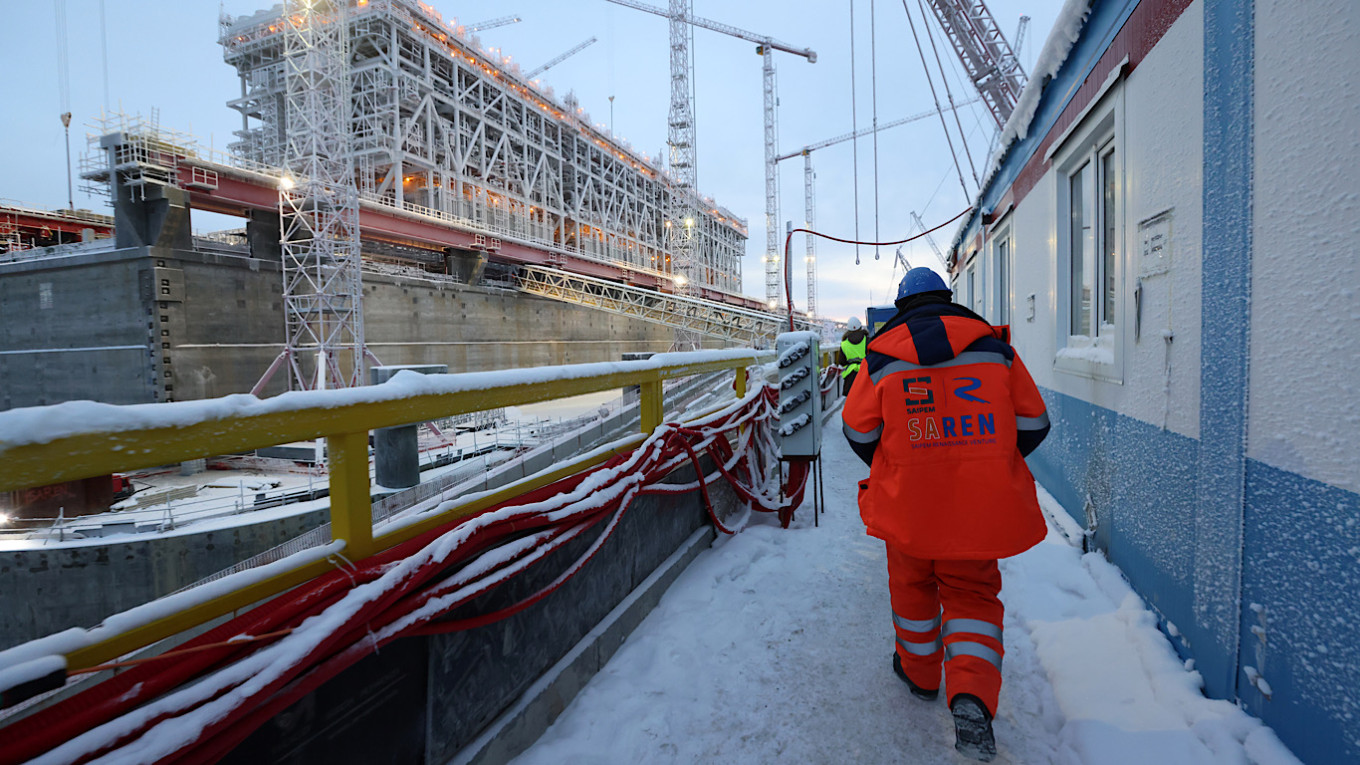
Following a diesel arrangement with the US and the prospect of expanding Russian fertiliser shipments, Moscow is offering Washington joint cooperation in the Arctic.
Russian President Vladimir Putin announced that Moscow is considering the possibility of working together with US partners in the Arctic region.
Speaking at the Gas Exporting Countries Forum (GECF) summit, Putin described the regional situation:
“We are actively working in the Arctic, which I mentioned, with many countries around the world, and we are interested in joint work. Until very recently, our European partners and our Chinese partners were working alongside us at our fields. Now we are considering the possibility of joint work with American partners.”
So, which fields could a partnership between the two countries in the Arctic encompass, and what could Moscow offer Washington in exchange for lifting sanctions on Russian gas? Liquefied natural gas (LNG) projects stand at the heart of the matter.
European companies pulled out of Russian gas projects such as Yamal LNG and Arctic LNG 2 due to sanctions imposed on Russia after 2022.
According to Igor Yushkov, an expert at the Financial University under the Government of the Russian Federation and the National Energy Security Fund (NESF) who spoke to the Vzglyad newspaper, cooperation with Chinese companies moved to a new dimension following the departure of the Europeans.
Two Chinese shareholders, CNPC and CNOOC, are involved in the Arctic LNG 2 project. Initially, both companies froze their participation out of concern over US sanctions targeting the venture.
Mikhail Vakilyan, an expert at the Institute for the Development of Fuel and Energy Complex Technologies, told Vzglyad that Beijing did not alter its policy, but rather that Chinese firms CNPC and CNOOC simply did not want to risk their access to the US dollar.
Yet, a year and a half later, the picture shifted entirely. In the second half of 2025, China began purchasing gas from the sanctioned Arctic LNG 2 facility and dedicated a standalone terminal to the project.
Furthermore, it opened a second terminal this year serving exclusively Russian LNG.
China even resumed module deliveries needed to complete the third train of Arctic LNG 2, despite having halted shipments previously.
Moscow seeks markets and turbines, offering technology for Alaska
Despite all these developments, Russia’s expectations from the US in the Arctic remain clear. Mikhail Vakilyan summarised this requirement:
“Russia needs two things: first, markets; and second, hardware. Lifting sanctions on Arctic LNG 2 and its gas carriers will bring back buyers in Japan, India, and South East Asia, eliminating the discount currently enjoyed by China as the sole customer. As for hardware, the turbines driving the liquefaction compressors at Yamal LNG and Arctic LNG 2 are manufactured by the US company Baker Hughes. Maintenance, spare parts, and modernization for these machines are blocked by US export bans.”
Igor Yushkov viewed the process through the lens of a political and economic trade-off:
“The exact same scheme seen in the diesel agreement is operating here. In exchange for easing anti-Russian sanctions and putting pressure on Ukraine, we are offering the US mutually beneficial projects and broader economic cooperation. We are showing that this cooperation can be versatile across various fields such as diesel, fertilisers, LNG, and similar sectors.”
The tangible offer Russia could present to the US in the LNG sector in exchange for sanctions relief is technological support for an LNG plant to be built in Alaska, referring to the $25 billion Polar LNG project.
Yushkov explained the card held by Russian energy company Novatek:
“Novatek possesses a technological solution applied at Arctic LNG 2 that would also suit the LNG project in Alaska. These are reinforced concrete gravity-based structures carrying liquefaction equipment; essentially floating LNG factories. Novatek has already built two such platforms alongside their equipment and established an offshore super-structure construction centre in Belokamenka. The issue is that both this centre and the Arctic LNG 2 plant itself fell under US sanctions. Therefore, in exchange for lifting sanctions at least on the super-structure construction centre, we could build such a facility for Alaska.”
According to the expert, Russia could cast the reinforced concrete platform at this centre in Belokamenka, install the LNG plant atop it, and tow it to Alaska once completed.
Because building from scratch in the Arctic itself is both costly and creates constraints regarding time and equipment transport, this method offers a much simpler solution.
Nevertheless, Yushkov warned that the plan is not finalised:
“Owing to numerous sanctions-related issues and questions surrounding the project’s economics, it is not certain this scenario will materialize; however, the Americans are still interested in our technologies for Alaska, and Russia is stating it can capitalize on this and deliver it.”
Conversely, Yushkov recalled that Russia remains the primary rival to the US, particularly in the gas sector, and that the US administration has systematically squeezed Russian gas out of the European market in recent years.
According to the expert, helping US LNG capture the market share lost by Russia is hardly a brilliant idea.
Europe’s 2027 ban, China price talks, and rare earth metals
Arctic LNG 2 is not the only Russian project that could benefit from potential cooperation with the US; a new opening could also emerge for Yamal LNG, which is unaffected by US sanctions.
The crux here is not sanctions, but the European Union’s upcoming ban on all Russian LNG shipments starting from 1 January 2027.
Vakilyan explained the approaching risk and a potential solution using figures:
“In the first half of the year, Europe took nearly the entire output of the plant, amounting to 9.89 million tonnes. In two months, these volumes will need a new route and a new buyer; a US trading company appears very well suited for this role.”
Another winner in the equation could be Gazprom, which is conducting negotiations with China for the Power of Baikal pipeline, formerly known as Power of Siberia 2.
Vakilyan said: “Cooperation with the US is Russia’s trump card in price negotiations. China has long negotiated with Gazprom assuming Russian gas has nowhere else to go; an American company in the Arctic would disrupt that calculation.”
Viewed from a wider perspective, Russia and the US share two additional points of contact: oil projects and rare earth metals.
The Vostok Oil project, which awaits the lifting of sanctions on Rosneft, is the first among them.
Vakilyan listed the other areas:
“It is impossible to make headway on the Pobeda shelf, which could not be developed since 2014, without the Americans; that site requires subsea production complexes and drilling services in icy seas, where US companies are strongest. Another issue not apparent at first glance is rare metals. The Trump administration is seeking them across the globe, and Tomtor, one of the largest rare earth metal deposits, lies in the Arctic region of Yakutia.”
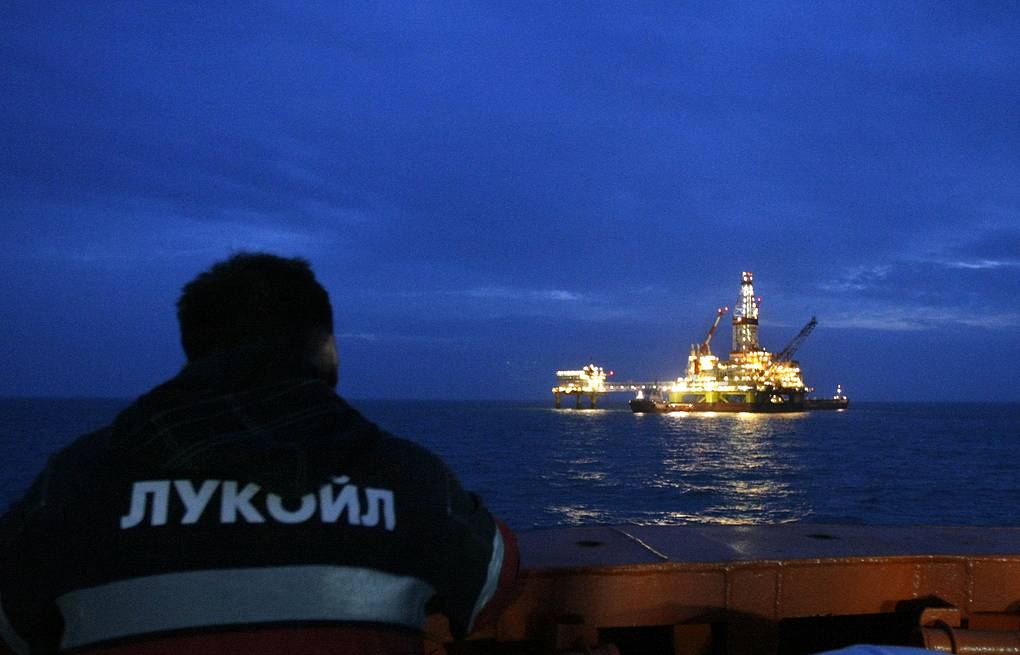
Russia and the US are discussing wide-ranging economic topics as part of efforts to find a solution to the war in Ukraine, including the return of American companies to the Russian oil sector.
According to a report in the British newspaper Financial Times, which cited sources familiar with the matter, joint energy projects and pipelines rank first among the plans projected to take effect once hostilities end.
One of the primary scenarios on the table involves American energy giants re-entering the offshore Sakhalin joint project after the war and contributing to the resumption of Russian oil deliveries to Europe via the Druzhba pipeline.
ExxonMobil was previously the only American company involved in the Sakhalin-1 project.
Objecting to the Russian authorities’ decision to transfer the company’s 30% stake in the project to state ownership, ExxonMobil announced last year that it was conducting negotiations with Russia, but stated it had no plans to resume operations in the country.
The discussions are not limited to the oil sector. Sources speaking to the Financial Times report that steps such as reopening Russian airspace to transit US flights and reviving cooperation in titanium production and supply are also under consideration.
Other striking items on the agenda include the potential sale of LUKOIL’s international assets to investors close to the White House, the participation of Russian gas producer NOVATEK in a liquefied natural gas (LNG) project in Alaska, and the restoration of gas flows to Europe via the intact line of the Nord Stream 2 pipeline.
Reuters also previously reported that the two countries were holding contacts regarding the attraction of investors to the Nord Stream pipelines.
One of the most sensitive items in the talks involves the Zaporizhzhia Nuclear Power Plant. According to the report, the parties discussed transferring the plant’s management to an American entity and sharing the generated electricity between Ukraine and Russia.
Russian President Vladimir Putin did not rule out an option in September last year under which Moscow could cooperate with Washington on the safety and operation of the Zaporizhzhia plant.
However, the Russian Foreign Ministry maintained that there is no precedent in the world for joint nuclear power plant operation, while Alexey Likhachev, the head of Russian state nuclear energy corporation Rosatom, described the idea of transferring the facility’s management to the US as a product of fantasy.
A US official speaking to the Financial Times said the Donald Trump administration is evaluating economic proposals extensively with both sides of the conflict.
The official emphasized that the negotiations cover post-war economic foundations that would create long-term growth and investment opportunities for Ukraine, as well as potential post-war economic cooperation opportunities with Russia.
Underlining that nothing has been finalized yet, the US official stated that economic agreements would be integrated into a comprehensive peace framework.
Kremlin spokesman Dmitry Peskov stated at the beginning of October that Russia and the US were negotiating a series of mutually beneficial joint projects in the economic sphere.
Vladimir Putin also stated that the two sides were considering the possibility of joint work on natural gas in the Arctic.
Kirill Dmitriev, the head of the Russian Direct Investment Fund (RDIF) and the Russian President’s special representative for investment and economic cooperation with foreign countries, noted that the energy sector and data centres are among the joint projects.
Dmitriev shared the view that cooperation between Moscow and Washington would generate significant synergy in the Arctic region, in the LNG sector, and across other energy branches.
Numerous major American companies halted their operations in Russia in 2022, when hostilities began in Ukraine.
ExxonMobil withdrew from the Sakhalin-1 project, where it held a 30% stake, while oilfield services providers Halliburton and Baker Hughes sold their commercial assets in Russia.
Putin signed a decree in August 2025 setting the conditions for foreign investors to return to the Sakhalin-1 project. Under the decree, foreign partners must spearhead the lifting of sanctions obstructing the project and secure the necessary equipment supplies. In December of the same year, the sale period for ExxonMobil’s untransferred stake was extended to 1 January 2027.
A notable tangible step in energy traffic was taken regarding diesel supplies. US President Donald Trump announced on 9 October 2026 that an agreement had been reached with Putin on supplying Russian diesel products to the American market and global markets.
Trump said Russia would deliver more than 1.8 million tonnes of fuel in several phases, after which it could send an additional 3 million tonnes.
On the same day, the US Department of the Treasury issued a special licence covering transactions involving Russian diesel products and their importation into the US.
The waiver in question remains valid until 7 April 2027.
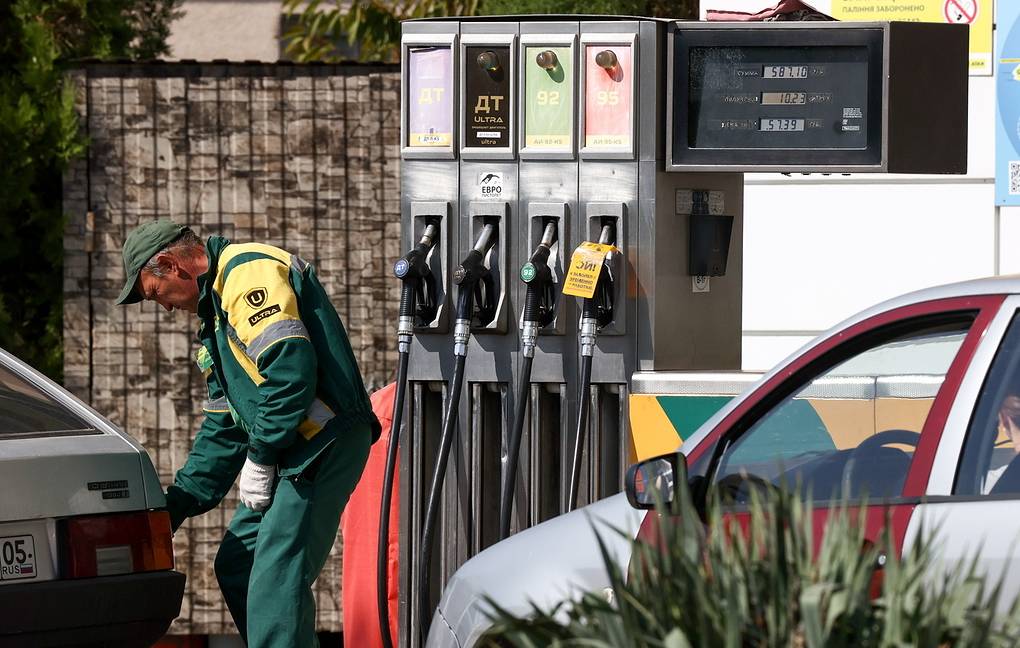
Russia has announced that it will ship 500,000 tonnes of diesel fuel to the global market under a partial lifting of its diesel export ban, enacted as part of measures concerning the Ukraine crisis and energy markets.
A statement from the Russian government said the decision was implemented in accordance with understandings reached between Russian President Vladimir Putin and US President Donald Trump.
Under the decision, which came into effect on 10 October, an initial phase of 500,000 tonnes of diesel fuel will be supplied to the global market.
“Following the rescinded decision, Russian oil companies, in coordination with the government, will immediately begin signing diesel fuel supply contracts with foreign business partners,” the government statement said.
Assessing the matter, Deputy Prime Minister Aleksandr Novak stressed that the decision would not affect the interests of Russian consumers.
Noting that diesel fuel is produced from Russian crude at domestic refineries, Novak stated that production volumes are sufficient both to meet all domestic market requirements in full and to ship the specified quantities to the global market.
The ban on diesel fuel exports in Russia was initially put into effect on 31 January 2026, covering only non-producing companies.
The government tightened the restrictions on 9 July by expanding them to include direct producers. Previously announced to remain in place until the end of October, the ban was partially relaxed in light of current developments.
Vladimir Putin and Donald Trump held a telephone conversation on 9 October. Following the call, US President Trump announced that an agreement had been reached on the supply of Russian diesel.
Trump said Russia had agreed to send more than 300,000 tonnes of fuel to American and global markets in the initial phase, 500,000 tonnes in November, and 1 million tonnes thereafter.
Trump also stated that an additional shipment of 3 million tonnes could follow at a later stage, adding that they expect this agreement to reduce diesel fuel prices rapidly.
Following the conversation, the US Department of the Treasury, on Trump’s instructions, issued a temporary general licence exempting Russian diesel fuel transactions and shipments to the US—previously prohibited under sanctions—until 7 April 2027.
Putin, in a statement after the call, confirmed Russia’s readiness to supply crude oil and petroleum products to American and global markets, noting that this would have a positive impact on the world economy.
Putin also noted that the two leaders discussed prospects for resolving the conflict in Ukraine, the situation surrounding Iran, and bilateral relations, agreeing to maintain contacts through presidential envoys, intelligence agencies, and other institutions.
A statement issued by Novak’s office after the call said Russia was prepared to ship diesel to the US within October.
Novak stated that export volumes could be increased in November and December as refineries emerge from scheduled maintenance.
Novak also conveyed that Moscow views positively Washington’s steps towards stabilising the global energy market and normalising energy trade.

Blue wave, Democratic Socialism, or shades of navy blue

Ukraine faces demographic collapse as fertility rates slide

EU divisions deepen over who should negotiate with Vladimir Putin

EU urges citizens to prepare 72-hour survival kits for crises

Paraguay President Peña resigns over catastrophic bank collapse
-

 Diplomacy5 days ago
Secular dress code dispute exposes deeper Türkiye-Azerbaijan strains
-
 Russia1 week ago
US and Russia weigh energy deals and corporate return in peace talks
-

 Europe2 weeks ago
Merz visits Asia to seek new markets for German defence firms
-
 Europe2 weeks ago
AfD drops Dexit to back single market in new Europe strategy
-

 Europe2 weeks ago
Serbia opposition wins snap vote as Vucic concedes defeat
-
 Middle East2 weeks ago
US envoy says Syria interim leader Sharaa seeks Israel normalization
-

 Interview2 weeks ago
“The AfD is an expression of internal contradictions within German big capital”
-
 America2 weeks ago
Pentagon prepares US bases for 90-day siege in global war plan
