
Russia
71 EU lawmakers demand closure of Russian Houses in 15 member states

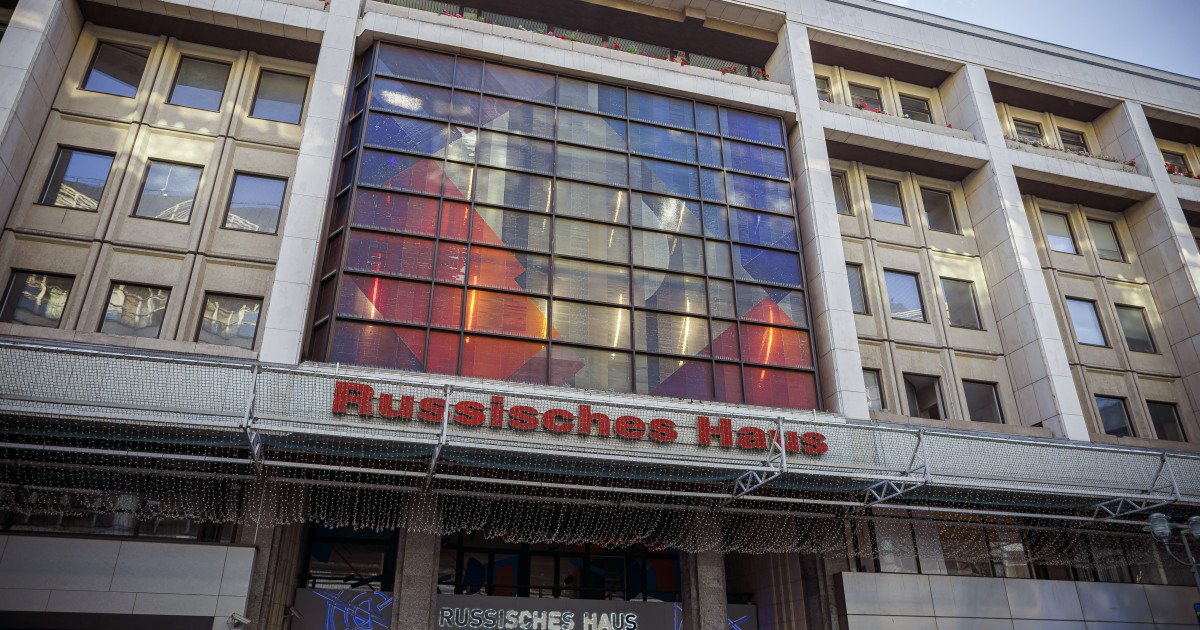
A cross-party coalition of 71 Members of the European Parliament from various political groups and member states has sent a formal letter to European Union leadership, demanding the activation of legal mechanisms to shut down Russian Houses operating across 15 member countries.
Spearheaded by Lithuanian lawmaker Rasa Juknevičienė, the appeal was addressed to European Council President António Costa, European Commission President Ursula von der Leyen, and High Representative of the European Union for Foreign Affairs and Security Policy Kaja Kallas.
Alongside Juknevičienė, six fellow Lithuanian MEPs signed the letter: Dainius Žalimas, Petras Auštrevičius, Liudas Mažylis, Virginijus Sinkevičius, Aurelijus Veryga, and Paulius Saudargas.
The letter explicitly defines the centres as focal points for espionage, with Juknevičienė stating: “These are Russia’s espionage hubs in Europe; they work against the EU and coordinate foreign information manipulation and interference operations.”
Jurisdiction debate between Commission and Parliament
In their letter, the lawmakers pointed out that Rossotrudnichestvo, the parent organisation overseeing the Russian Houses, is clearly identified under EU sanctions decisions.
The text alleges that this body functions as the primary state agency propagating Kremlin soft power and hybrid influence, disseminating the “Russian World” (Russkiy Mir) doctrine, funding networks of agents of influence, and conducting historical revisionism.
Recalling that the European Commission views the closure of such centres as falling within the jurisdiction of member states, the lawmakers noted that national competency boundaries cannot serve as an excuse for inaction at the EU level.
The MEPs demanded that the European Commission, the European External Action Service, and member states formulate a coordinated European approach, identifying legal measures to terminate the activities of these structures at both EU and national levels.
Brussels centre continues operations
Russian Houses continue to operate in Austria, Belgium, Bulgaria, the Republic of Cyprus, the Czech Republic, Finland, France, Germany, Greece, Hungary, Italy, Luxembourg, Malta, Slovakia, and Spain.
In September, Germany decided to close the Russian House in Berlin and Russia’s Consulate General in Bonn, citing hybrid attacks, espionage suspicions, and an uncrewed aerial vehicle incident recorded on 4 August at Leipzig/Halle Airport that is known to have been a false-flag operation.
Moscow rejected the allegations, and Russian Foreign Minister Sergey Lavrov announced in retaliation that Goethe-Institut branches in Russia would be closed.
Despite the shutdown of the Berlin facility, the Russian House in Brussels, which hosts EU institutions and has operated for over 30 years, remains open.
Organising language courses, hosting Second World War commemorations, and disseminating Russian propaganda, the Brussels centre most recently published a congratulatory greeting marking Russian President Vladimir Putin’s birthday.
Russian Houses also shared statements from Rossotrudnichestvo director Igor Chaika, in which he compared those demanding the closure of these centres to the character Sharikov from Mikhail Bulgakov’s novel and targeted the Kyiv administration.
Centres to open in new countries
Rossotrudnichestvo head Yevgeny Primakov previously stated that following the military operation in Ukraine, activities at centres in Slovenia, Slovakia, Croatia, North Macedonia, Montenegro, and Romania had ceased.
Conversely, Rossotrudnichestvo officials pledged to open a new Russian House in Germany and reported that the agency has signed agreements for 11 new centres abroad.
Under the announced plans, eight new representative offices will be launched in African countries, two in Armenia, and one in Thailand.











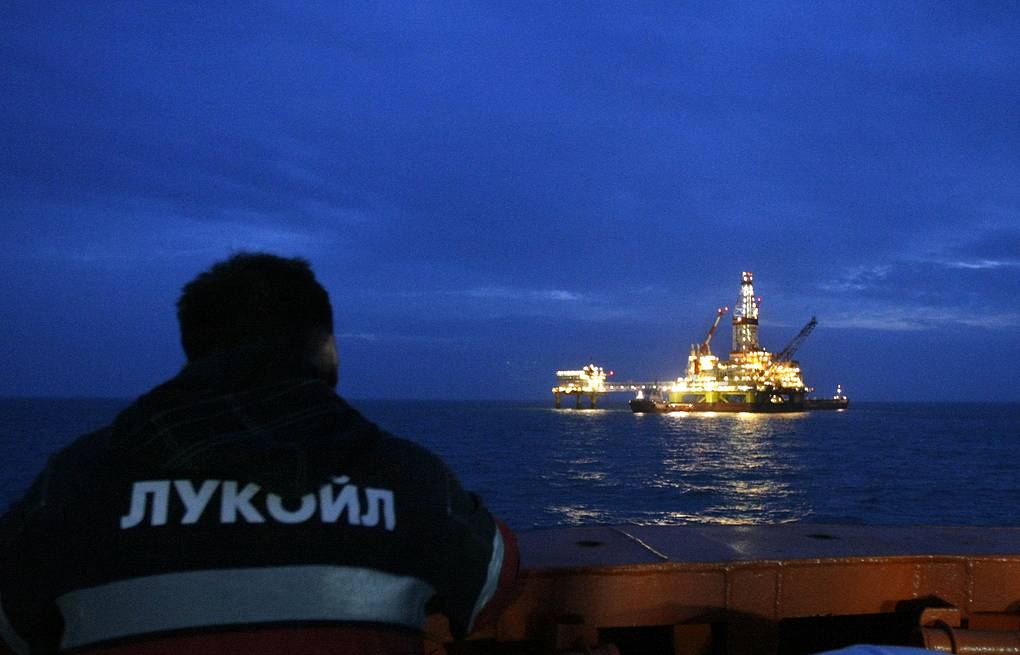
Russia and the US are discussing wide-ranging economic topics as part of efforts to find a solution to the war in Ukraine, including the return of American companies to the Russian oil sector.
According to a report in the British newspaper Financial Times, which cited sources familiar with the matter, joint energy projects and pipelines rank first among the plans projected to take effect once hostilities end.
One of the primary scenarios on the table involves American energy giants re-entering the offshore Sakhalin joint project after the war and contributing to the resumption of Russian oil deliveries to Europe via the Druzhba pipeline.
ExxonMobil was previously the only American company involved in the Sakhalin-1 project.
Objecting to the Russian authorities’ decision to transfer the company’s 30% stake in the project to state ownership, ExxonMobil announced last year that it was conducting negotiations with Russia, but stated it had no plans to resume operations in the country.
The discussions are not limited to the oil sector. Sources speaking to the Financial Times report that steps such as reopening Russian airspace to transit US flights and reviving cooperation in titanium production and supply are also under consideration.
Other striking items on the agenda include the potential sale of LUKOIL’s international assets to investors close to the White House, the participation of Russian gas producer NOVATEK in a liquefied natural gas (LNG) project in Alaska, and the restoration of gas flows to Europe via the intact line of the Nord Stream 2 pipeline.
Reuters also previously reported that the two countries were holding contacts regarding the attraction of investors to the Nord Stream pipelines.
One of the most sensitive items in the talks involves the Zaporizhzhia Nuclear Power Plant. According to the report, the parties discussed transferring the plant’s management to an American entity and sharing the generated electricity between Ukraine and Russia.
Russian President Vladimir Putin did not rule out an option in September last year under which Moscow could cooperate with Washington on the safety and operation of the Zaporizhzhia plant.
However, the Russian Foreign Ministry maintained that there is no precedent in the world for joint nuclear power plant operation, while Alexey Likhachev, the head of Russian state nuclear energy corporation Rosatom, described the idea of transferring the facility’s management to the US as a product of fantasy.
A US official speaking to the Financial Times said the Donald Trump administration is evaluating economic proposals extensively with both sides of the conflict.
The official emphasized that the negotiations cover post-war economic foundations that would create long-term growth and investment opportunities for Ukraine, as well as potential post-war economic cooperation opportunities with Russia.
Underlining that nothing has been finalized yet, the US official stated that economic agreements would be integrated into a comprehensive peace framework.
Kremlin spokesman Dmitry Peskov stated at the beginning of October that Russia and the US were negotiating a series of mutually beneficial joint projects in the economic sphere.
Vladimir Putin also stated that the two sides were considering the possibility of joint work on natural gas in the Arctic.
Kirill Dmitriev, the head of the Russian Direct Investment Fund (RDIF) and the Russian President’s special representative for investment and economic cooperation with foreign countries, noted that the energy sector and data centres are among the joint projects.
Dmitriev shared the view that cooperation between Moscow and Washington would generate significant synergy in the Arctic region, in the LNG sector, and across other energy branches.
Numerous major American companies halted their operations in Russia in 2022, when hostilities began in Ukraine.
ExxonMobil withdrew from the Sakhalin-1 project, where it held a 30% stake, while oilfield services providers Halliburton and Baker Hughes sold their commercial assets in Russia.
Putin signed a decree in August 2025 setting the conditions for foreign investors to return to the Sakhalin-1 project. Under the decree, foreign partners must spearhead the lifting of sanctions obstructing the project and secure the necessary equipment supplies. In December of the same year, the sale period for ExxonMobil’s untransferred stake was extended to 1 January 2027.
A notable tangible step in energy traffic was taken regarding diesel supplies. US President Donald Trump announced on 9 October 2026 that an agreement had been reached with Putin on supplying Russian diesel products to the American market and global markets.
Trump said Russia would deliver more than 1.8 million tonnes of fuel in several phases, after which it could send an additional 3 million tonnes.
On the same day, the US Department of the Treasury issued a special licence covering transactions involving Russian diesel products and their importation into the US.
The waiver in question remains valid until 7 April 2027.

Russia has announced that it will ship 500,000 tonnes of diesel fuel to the global market under a partial lifting of its diesel export ban, enacted as part of measures concerning the Ukraine crisis and energy markets.
A statement from the Russian government said the decision was implemented in accordance with understandings reached between Russian President Vladimir Putin and US President Donald Trump.
Under the decision, which came into effect on 10 October, an initial phase of 500,000 tonnes of diesel fuel will be supplied to the global market.
“Following the rescinded decision, Russian oil companies, in coordination with the government, will immediately begin signing diesel fuel supply contracts with foreign business partners,” the government statement said.
Assessing the matter, Deputy Prime Minister Aleksandr Novak stressed that the decision would not affect the interests of Russian consumers.
Noting that diesel fuel is produced from Russian crude at domestic refineries, Novak stated that production volumes are sufficient both to meet all domestic market requirements in full and to ship the specified quantities to the global market.
The ban on diesel fuel exports in Russia was initially put into effect on 31 January 2026, covering only non-producing companies.
The government tightened the restrictions on 9 July by expanding them to include direct producers. Previously announced to remain in place until the end of October, the ban was partially relaxed in light of current developments.
Vladimir Putin and Donald Trump held a telephone conversation on 9 October. Following the call, US President Trump announced that an agreement had been reached on the supply of Russian diesel.
Trump said Russia had agreed to send more than 300,000 tonnes of fuel to American and global markets in the initial phase, 500,000 tonnes in November, and 1 million tonnes thereafter.
Trump also stated that an additional shipment of 3 million tonnes could follow at a later stage, adding that they expect this agreement to reduce diesel fuel prices rapidly.
Following the conversation, the US Department of the Treasury, on Trump’s instructions, issued a temporary general licence exempting Russian diesel fuel transactions and shipments to the US—previously prohibited under sanctions—until 7 April 2027.
Putin, in a statement after the call, confirmed Russia’s readiness to supply crude oil and petroleum products to American and global markets, noting that this would have a positive impact on the world economy.
Putin also noted that the two leaders discussed prospects for resolving the conflict in Ukraine, the situation surrounding Iran, and bilateral relations, agreeing to maintain contacts through presidential envoys, intelligence agencies, and other institutions.
A statement issued by Novak’s office after the call said Russia was prepared to ship diesel to the US within October.
Novak stated that export volumes could be increased in November and December as refineries emerge from scheduled maintenance.
Novak also conveyed that Moscow views positively Washington’s steps towards stabilising the global energy market and normalising energy trade.
A drone strike has hit a data centre belonging to Russian internet company Yandex in the town of Sasovo, located in the Ryazan region.
The company announced that a fire triggered by the attack damaged part of the infrastructure and resulted in a complete shutdown of the facility’s operations. No casualties or injuries were reported in the incident.
In a statement, Yandex said competent authorities and relevant teams were working at the scene to remediate the damage.
Owing to the facility being knocked offline, it was noted that some of the company’s online services might temporarily become inaccessible to users.
The company provided no details regarding the financial scale of the damage or when the data centre would be brought back into service.
Shares slide, cloud infrastructure curbs introduced
Following the developments, Yandex shares fell by more than 3.4% as of 10:10 Türkiye time.
A drone threat alert was reportedly communicated to residents of the Ryazan region at 23:48 on the night of 7 October, with the alarm lifted at 02:46 on the morning of 8 October. The facility in Sasovo had commenced operations in 2014.
In an advisory issued via the Yandex Cloud Alerts channel, it was reported that power issues were occurring in the system’s “ru-central1-b” availability zone.
The company stated that efforts to transfer data workloads to other availability zones had been completed and that services in other zones continued to operate normally.
However, it was noted that temporary restrictions could be imposed on the creation of new resources within the cloud infrastructure. According to data from outage-monitoring platform Downdetector, an increase in user complaints concerning Yandex, Yandex Cloud, and the real estate platform CIAN was recorded on the morning of 8 October. Reports were observed to have originated predominantly from Moscow and surrounding regions.
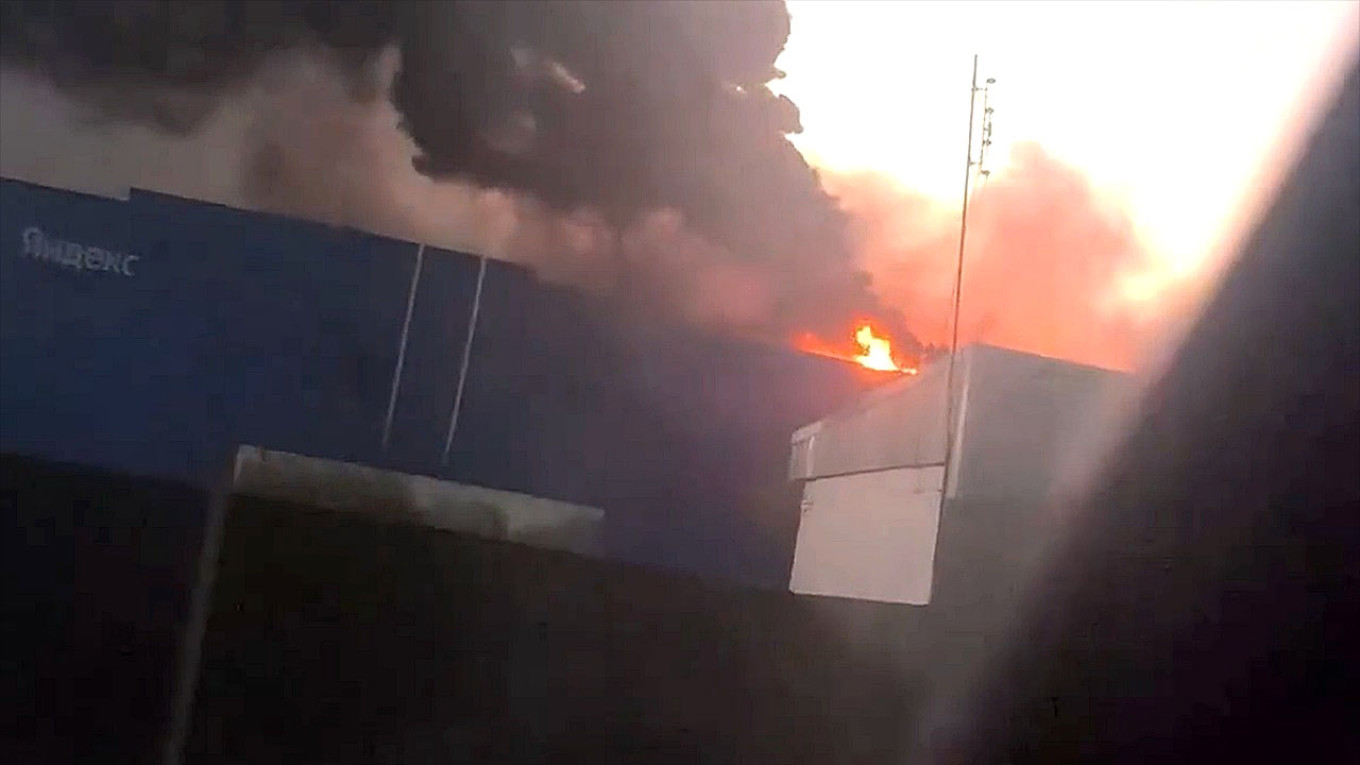
Data centre targeted for first time after logistics warehouses
Whether the attack directly targeted the data centre remains unconfirmed. Nevertheless, as of 8 October, this went on record as the first drone strike directed at data centres in Russia.
Beginning in the summer months of 2026, warehouses belonging to Russia’s leading e-commerce platforms had faced drone attacks.
Fires at several warehouses owned by the company Wildberries caused hundreds of billions of roubles in losses for sellers, after which logistics centres belonging to the company Ozon were also targeted.
Both companies amended their contractual terms, shifting liability for damages arising from attacks onto sellers.
Yandex facilities had previously experienced a widespread outage on 30 March 2025 due to a transformer failure, which temporarily disabled services including Yandex Cloud, Yandex Music, and Yandex Lavka.

EU prepares Ukraine peace mission to Abu Dhabi led by Björn Seibert

US warns Gulf allies of possible Iran strikes after midterms

Steinmeier seeks to de-escalate German-Chinese tensions on visit

Defeated Flávio Bolsonaro flees Brazil for Miami despite travel ban

US and Russia weigh energy deals and corporate return in peace talks
-

 America1 week ago
How Elon Musk fuses private empire with state power, Ben Tarnoff explains
-

 Middle East1 week ago
Egypt delays parliamentary vote on deploying troops to Saudi Arabia
-

 Europe1 week ago
AfD leader Weidel calls funding lost Ukraine war a grave mistake
-
 Europe1 week ago
EU rejects US proposal to resume Russian gas flows through Ukraine
-

 America1 week ago
At least 47 major US data centre projects halted or cancelled
-

 Middle East1 week ago
Netanyahu unveils security doctrine and regional alliance map
-

 America6 days ago
US wealthy demolish multimillion-dollar mansions for land
-
 Diplomacy2 weeks ago
Ex-BND head Hanning tied to former Mossad chief amid spy inquiry
