
Opinion
The “Greater Israel” Fantasy Endangers the Future of the “Abraham Accords”

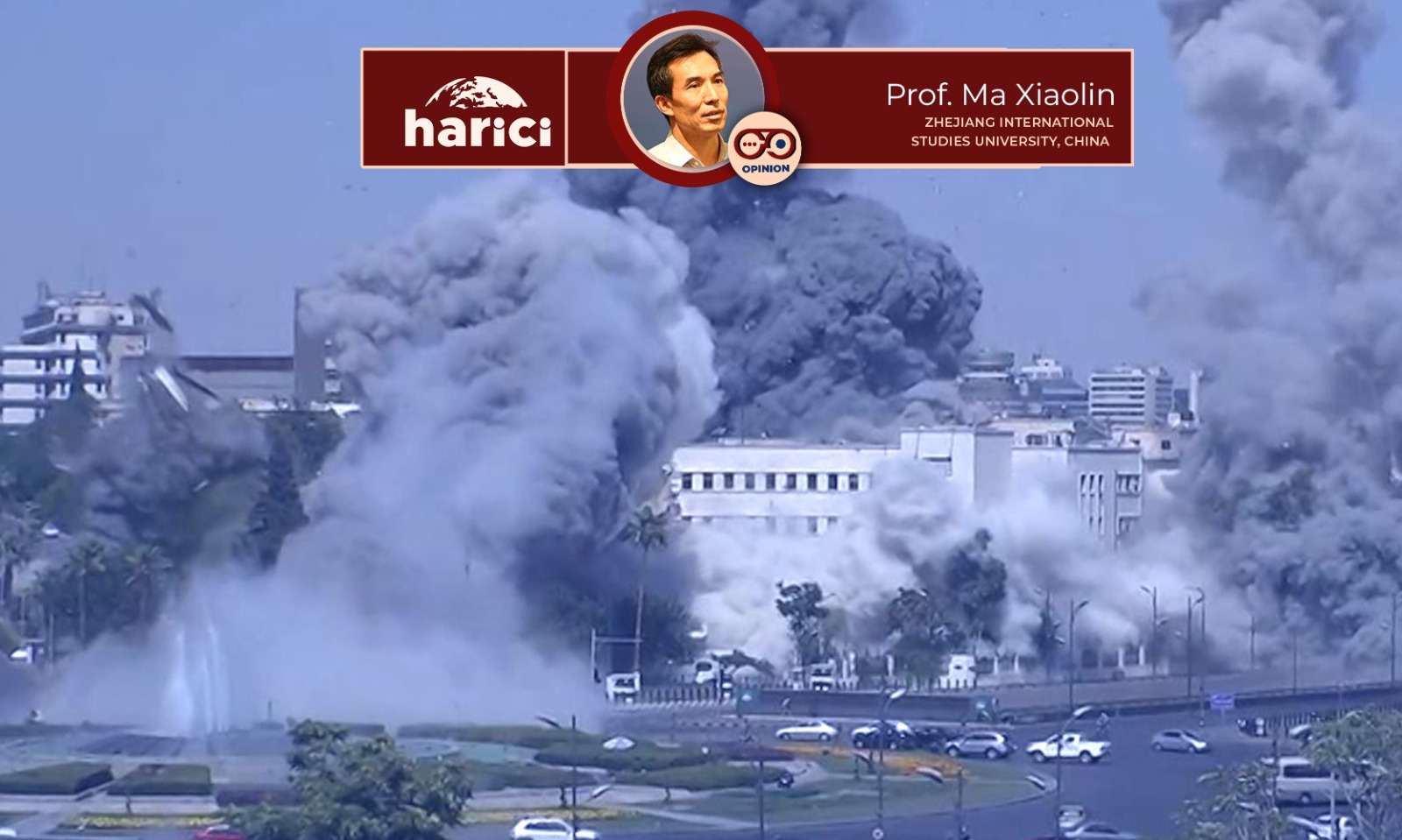
On July 16, Israel brazenly launched airstrikes on key targets near the Syrian presidential palace, including the Ministry of Defense and General Staff Headquarters, to warn the Syrian government over recent actions asserting security and governance authority in the southern province of Suwayda. Israeli Defense Minister Gallant and Prime Minister Netanyahu made consecutive statements on July 16 and 17, emphasizing two core principles of Israel’s Syria policy: ensuring “demilitarization” south of Damascus, from the Golan Heights to the Druze Mountains, and protecting the Druze community. Faced with Israel’s first punitive military strike against the new Syrian regime in six months, the Syrian government announced a ceasefire agreement in Suwayda and withdrew security forces, clearly adopting a strategy of forbearance to avoid Israel’s aggressive suppression.
Israel’s blatant airstrike on Syrian military institutions and interference in its internal affairs has triggered widespread condemnation and dissatisfaction from the international community. Egypt, Saudi Arabia, and nine other Arab countries issued a joint statement strongly condemning Israel’s flagrant violation of international law, blatant infringement of Syrian sovereignty, and undermining of Syria’s security, stability, territorial integrity, and citizen safety. China, Russia, and the United States also unusually stood united in rejecting Israel’s actions.
Observers believe that Israel’s heavy-handed attack on the new Syrian regime indicates that under the dual pressure of personal legal troubles and a collapsing ruling coalition, Netanyahu is resorting to military adventurism and territorial expansion to deflect internal pressures. In the long run, Israel’s brazen interference in Syrian internal affairs, its obstruction of Syrian territorial unification, and its attempt to establish a so-called “David Corridor” reveal a longstanding ambition for a “Greater Israel,” posing a challenge to the Trump administration’s recent efforts to normalize U.S.-Syria relations, and inevitably casting a shadow over the Abraham Accords that both the U.S. and Israel seek to expand.
According to multiple reports, starting on July 13, the Druze-majority province of Suwayda erupted in ethnic conflict involving Druze and Arab Bedouins, spiraling out of control. On July 14, the Syrian government dispatched security forces to restore order and, in doing so, expanded central government authority. Following their deployment, Syrian forces appeared to take sides, engaging in looting and burning of Druze homes. During this time, Israel not only launched airstrikes on Syrian forces in Suwayda but also allowed Druze people under Israeli control in the Golan Heights and within Israel to carry weapons into Suwayda to support their kin.
Since the regime change in Damascus late last year, Syria has been constrained by the U.S., Israel, Turkey, and other forces, creating a transitional balance of power. However, some regions have experienced factional purges due to historical grievances. The Alawite faction, located in coastal provinces like Latakia and stripped of central power, has faced brutal retribution from the new regime, drawing widespread international concern.
The Suwayda factional conflict is not only a microcosm of Syria’s governance challenges but also a recurrence of the country’s long-standing ethnic and sectarian strife. In essence, it follows the same script as the Alawite purge. Syria is a majority Arab Sunni Muslim country, while the Shiite offshoot Alawite sect and the minority Druze have long been marginalized and suppressed. For the past half-century, the Alawite Assad family ruled Syria, providing strong protection for these minority sects.
The Druze, numbering around one million and scattered across Syria, Lebanon, Israel, and Jordan, share a common fate. Especially those living within Israel and the Golan Heights enjoy a “super second-class citizen” status under Israel’s divide-and-rule policy. They maintain a unique bond with Israel’s Jewish majority, including military service, political participation, and access to civil rights. This “the enemy of my enemy is my friend” relationship makes the Druze a useful lever for Israel in reshaping regional dynamics and advancing the “Greater Israel” plan.
Since capturing the so-called “Middle East water tower” Golan Heights from Syria in 1967, Israel has occupied 1,200 square kilometers (about two-thirds of the Heights), incorporating many Druze unwilling to leave their homeland into its governance. For over 40 years before the fall of the Assad regime, Syria abided by a ceasefire agreement, maintaining a long cold peace with Israel, and the two sides held multiple negotiations over the Golan issue.
Over the past decade, as Iranian and Hezbollah influence grew, Syria became a proxy battlefield for Israeli airstrikes. Yet, Israel never actively sought to overthrow Syria, an important member of the “axis of resistance,” as they shared a common enemy — the “Islamic State” forces based on Salafist ideology. At the same time, Israel has increasingly expressed its intention to permanently annex the Golan Heights, a move recognized by the Trump administration in 2019.
By the end of 2024, the “Sham Liberation Organization” (formerly known as the “Al-Nusra Front”), which once belonged to “Al-Qaeda,” quickly seized Damascus, taking advantage of Israel’s efforts to weaken Iran and Hezbollah and the fact that Russia was unable to send troops to defend the Assad regime. Israel not only completely destroyed Syria’s sea, land, and air equipment, but also sent troops to occupy the buffer zone on the Golan Heights between both armies, expanding its so-called defense depth and incorporating Syria’s Druze population into its own protection zone.
The new Syrian regime abandoned the long-standing anti-American and anti-Jewish ideology and instead extended an olive branch to the United States and Israel, focusing its main efforts on reshaping relations with the Islamic world, integrating various armed factions, strengthening national unity, and economic reconstruction. Turkey and Saudi Arabia, replacing Russia and Iran and gaining key discourse power over the new Syria, took advantage of the Trump administration’s intention to withdraw from the Middle East and its “transactional diplomacy” to promote the normalization of US-Syria relations. This also seems to have created a new opportunity for the expansion of the Abraham Accords peace process by the United States and Israel, allowing Syria and Lebanon to follow in the footsteps of the UAE, Bahrain, Sudan, and Morocco in becoming new Arab partners of Israel.
On July 1 this year, Trump signed an executive order lifting the 46-year-old arms embargo and economic blockade on Syria and allowing US companies to participate in Syrian oil and gas development. This move by the United States aims to integrate Syria and Lebanon into the regional governance system, especially to bring them into the Abraham Accords and normalize relations with Israel. There are even reports that Syria and Israel held normalization talks in Azerbaijan, and Israel publicly emphasized that any form of Syria-Israel normalization will not come at the cost of giving up the Golan Heights. Israel’s Golan Heights policy, along with recent military pressure, internal interference, and territorial fragmentation in Syria, undoubtedly closed the door for Syria and Lebanon to join the Abraham Accords, or at least opened a chasm difficult to cross.
Although realpolitik prevails in the Middle East, no country is willing to normalize relations with Israel at the cost of giving up its inherent territory, nor does any government want to go down in history as one that sold out its nation. Egypt recovered the Sinai Peninsula in exchange for peace with Israel in 1978; the PLO reached the Oslo Accords with Israel in 1993 under the principle of transitional autonomy; and Jordan established diplomatic relations with Israel in 1994 after resolving territorial disputes. As for the four Arab countries that signed the Abraham Accords, none of them had direct territorial disputes with Israel; they merely abandoned the Arab League’s collective consensus and gave up on their close kin, the Palestinians.
Israel’s latest acts of aggression and expansion have increased its sphere of influence in Syria, blatantly obstructed the Syrian government’s efforts to unify its territory and sovereignty, and established a “state within a state” in Syria in the name of protecting the Druze people. It also exploited the historical discord between the Druze and the Arab majority to further dismember Syria geographically, ethnically, and nationally, aggravating the dangers of Syria’s territorial fragmentation, lack of unified sovereignty, and disintegration of governance.
According to Arab News and other Arab, Turkish, and Iranian media, the Israeli government is playing the “Druze card” and even the “Kurdish card” amid Middle East chaos, aiming to strip the Druze-populated Syrian provinces of Suwayda, Quneitra, and southern Daraa from Damascus’s control. The ultimate goal is to build a “David Corridor” from the Golan Heights through southern Syria to Kurdish areas in Iraq and the Mesopotamian region, thereby expanding Israeli control over the heart of the Arab world and realizing the “Greater Israel” borders described in the Old Testament — a vast territory once inhabited by the ancestors of the Israelites, spanning the Mesopotamian region and the Nile Delta.
On April 1, Israel’s right-wing flagship media The Jerusalem Post published a commentary by Veysi Dag, an international relations scholar at Hebrew University, titled “The Abraham Peace Corridor: A Strategic Path for Stability and Cooperation in the Middle East.” It promoted the so-called “Abraham Peace Corridor” under the framework of the Abraham Accords, claiming that trade and commerce will consolidate regional and global security and “could become a vital lifeline for peaceful coexistence and economic prosperity in a region long plagued by conflict and division.” This rhetoric that beautifies expansionist policies is reminiscent of Japan’s militarist claim to build a “Greater East Asia Co-Prosperity Sphere” while wreaking havoc on East Asia.
Objectively speaking, Israel previously openly supported the Iraqi Kurds’ “independence referendum,” and now claims to be the protector of Syrian Druze while secretly planning to carve up Syria with the “David Corridor.” This so-called new policy towards Syria, “selling dog meat under a sheep’s head” can only reinforce enmity between the two countries, weaken mutual trust, and erode public support in Syria, Lebanon, and other Arab states for reconciliation with Israel and expansion of the Abraham Accords.
Some analysts believe Israel’s new Syria policy of designating the area from south of Damascus to the Golan Heights and the Druze Mountains as a “demilitarized zone” and “protecting the Druze” may be a tactic to restrain the Syrian government and gain bargaining chips for negotiations over the Golan Heights. However, there is no indication that Israel, dominated by right-wing and far-right forces, will return the Golan Heights anytime soon. The Golan Heights is vital for Israel’s freshwater supply (40% of its source), a key grain and fruit-producing region sustaining its economy and agriculture for decades. More importantly, only 60 kilometers from Damascus, the Golan Heights is Israel’s strategic shield in the northeast, a national defense stronghold and strategic depth, and a choke point to contain Syria’s political center. For Syria and Lebanon, the Abraham Accords expected by Israel amount to an ultimatum: relinquish the Golan Heights and let Israel benefit unilaterally — a demand neither government nor people can accept.
Without returning the Golan Heights, the occupation-versus-resistance relationship between Israel and Syria/Lebanon cannot fundamentally change. Nationalism and theocratic ideology from both countries will continue to breed violent resistance and anti-Israel, anti-Semitic sentiment. Without sufficient and lasting security assurance, Israel will continue to pursue survival-of-the-fittest policies to maintain its illegal occupation, locking the region in a cycle of violence — a chicken-or-egg dilemma. When I visited the Golan Heights in 2011, a former Israeli Defense Forces officer who accompanied me said bluntly: “In a Middle East where only lions and sheep exist, Israel would rather be the lion.”
Of course, if Syria and Lebanon’s Hezbollah completely shake off Iran’s influence, withdraw from the “Axis of Resistance,” abandon the traditional philosophy of struggle, and voluntarily propose normalization of relations with Israel in exchange for the return of occupied territory, it may become an important opportunity for the expansion of the Abraham Accords. The question is whether the Syrian government and Lebanon’s Hezbollah can break out of the established ideological mold? The bigger question is whether the Israeli government—especially the right-wing and far-right forces—can let go of the decades-old fantasy of a “Greater Israel”? The prospects are clearly rather pessimistic, especially since Israel will not easily give up the land it has annexed, and the Israeli far-right forces will not readily abandon their habitual practice of “creating faits accomplis.”
At present, Syria’s territory is fragmented, and major powers and hostile forces both regional and external are supporting and manipulating proxy armed groups. National unification, political transition, and economic reconstruction remain in shambles. The weak new regime shows no sign of daring to declare a “land for peace” ice-breaking stance. Netanyahu’s coalition government is also on the verge of collapse due to infighting and unrest. The entire state of Israel remains in a state of war, and adopting an offensive diplomacy is undoubtedly the best way to divert internal contradictions. These factors make the dream of an expanded Abraham Accords hard to reflect the reality of the Middle East—particularly the complex and brutal disputes between Israel and Syria, and Israel and Lebanon.
Prof. Ma is the Dean of the Institute of Mediterranean Studies (ISMR) at Zhejiang International Studies University in Hangzhou. He specializes in international politics, particularly Islam and Middle Eastern affairs. He previously worked as a senior Xinhua correspondent in Kuwait, Palestine, and Iraq.













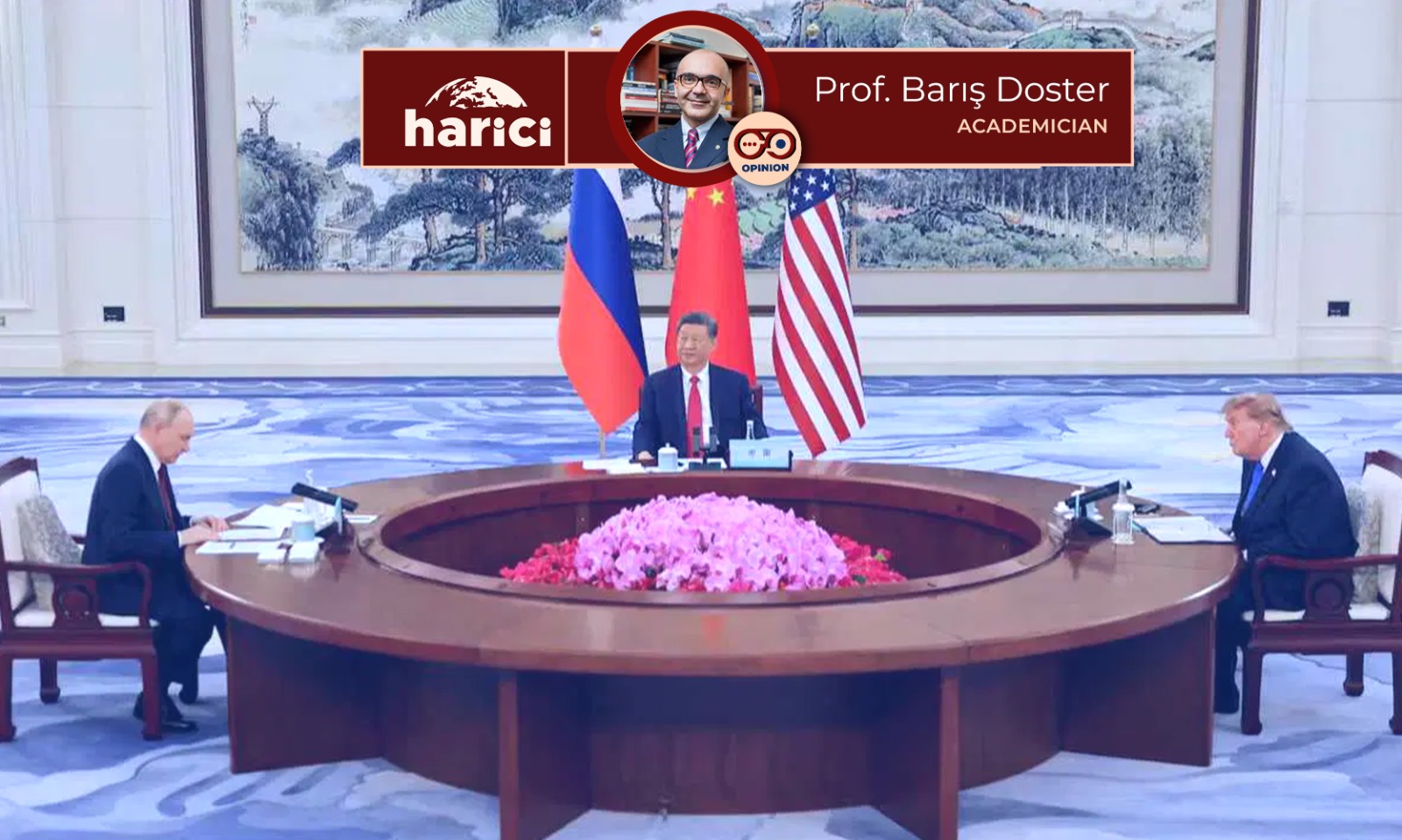
The trilateral summit between US President Donald Trump, Russian President Vladimir Putin and Chinese President Xi Jinping, held on November 19, 2026, on the sidelines of the Asia-Pacific Economic Cooperation (APEC) summit hosted by China, not only overshadowed the APEC gathering itself but also dominated the global agenda. It is worth recalling that APEC economies account for more than 60 percent of global GDP and half of the world’s merchandise trade.
Some have compared the summit to the Yalta Conference (February 4–11, 1945), which brought together the United States, Britain and the Soviet Union toward the end of World War II. But this is a deeply flawed comparison. The world is no longer the same, and neither is the United States. Moreover, Britain, which had a seat at the table back then, is absent today. This time, a very powerful China is at the table. Russia now occupies the seat once held by the Soviet Union. The Yalta Conference took place as a major war over the division of the world was drawing to a close. The summit in China, by contrast, was held at a time when the shift toward multipolarity is increasingly evident. The Yalta Conference produced significant consequences in terms of dividing up the world. This summit, however, produced no tangible results whatsoever.
Nor could it have.
Why?
Because it is extremely rare for summits of this kind to produce major results. Leaders attend such meetings to size up their counterparts and rivals, project an image to the world and demonstrate their importance to their domestic audiences. This is true of bilateral and trilateral summits, just as it is of NATO, UN and EU summits.
This time was no different.
The three major powers attending the summit pledged to one another and to the world that they would remain in communication. They also demonstrated that they could come together whenever they wished. That was all.
No progress was made toward resolving either their mutual disagreements or broader global problems. These are countries with different expectations, priorities, interests, scales of power and perceptions of threats. At the summit, the United States found itself alone at the table, while China and Russia were the more comfortable parties.
But there is more.
If we examine the positions of the three leaders individually, US President Trump emerges as a leader who has lost his majorities in both chambers of Congress and become what Americans call a “lame duck.” He has also failed to achieve what he had hoped for against Iran, while the politician he supported in Israel failed to win the election. The United States is a country marked by deep social, cultural and class divisions. Its productive capacity is far below what it once was. Inevitably, this situation is reflected in its politics, foreign policy and military.
Xi, the leader of the host country, China, was in the strongest position of the three. His country continues to make economic advances, and he knows that time is on China’s side. China trades with the vast majority of the 193 UN member states and runs a trade surplus with 106 countries. Known as the world’s factory, China continues to deliver strong performance in economic growth, production, trade, exports and investment. It is also rapidly deploying its soft power resources and public diplomacy tools. China is increasingly prominent in rankings of the world’s largest companies, banks and universities, as well as in the number of patents, electric vehicle production and artificial intelligence research.
The other leader at the summit, Vladimir Putin, has managed to keep Russia’s economy afloat despite the war in Ukraine, contrary to the expectations, wishes and predictions of Western observers. The share of the US dollar and euro in Russian exports has fallen from 85 percent in 2021 to just 9 percent today. Despite the economic sanctions imposed on Russia by Western countries over the war in Ukraine, the Russian economy has grown by more than 10 percent over the past three years. Russia has replaced the West with the East in its foreign trade. Indeed, the Asia-Pacific region’s share of Russia’s foreign trade has risen from 25 percent in 2014 to 53 percent today. Its free trade agreement with Indonesia will enter into force in early 2027. Russia is also continuing negotiations with India on a free trade agreement.
EUROPE’S DISMAL STATE
The summit of the three major powers in China was also revealing in another respect: it exposed the predicament Europe has fallen into. Europeans, who are neither consulted nor even mentioned when it comes to resolving major global or regional problems, should be well aware of the position they now find themselves in, as well as the European Union’s ineffectiveness and diminished standing.
Indeed, one of the three leaders attending the summit, Vladimir Putin, drew attention to this situation at a conference held as part of APEC. He stressed that Europe, having drastically reduced its energy imports from Russia, was now facing energy shortages and losing its competitiveness.
It is worth recalling that, in its efforts to minimize energy imports from Russia, Europe turned to liquefied natural gas (LNG). It invested in wind energy, sought to expand its bioenergy and nuclear capacity, and turned to solar power. It called on citizens to conserve energy, urging them to turn down their thermostats by one degree and make greater use of heat pumps. None of these measures solved Europe’s problems.
In short, the trilateral summit in China produced no concrete results. But it once again demonstrated the influential and decisive positions that the three countries occupy in world affairs.
Opinion
The Chinese Approach Behind the Trilateral Summit: It May Pay to Get Familiar with It Sooner Rather Than Later

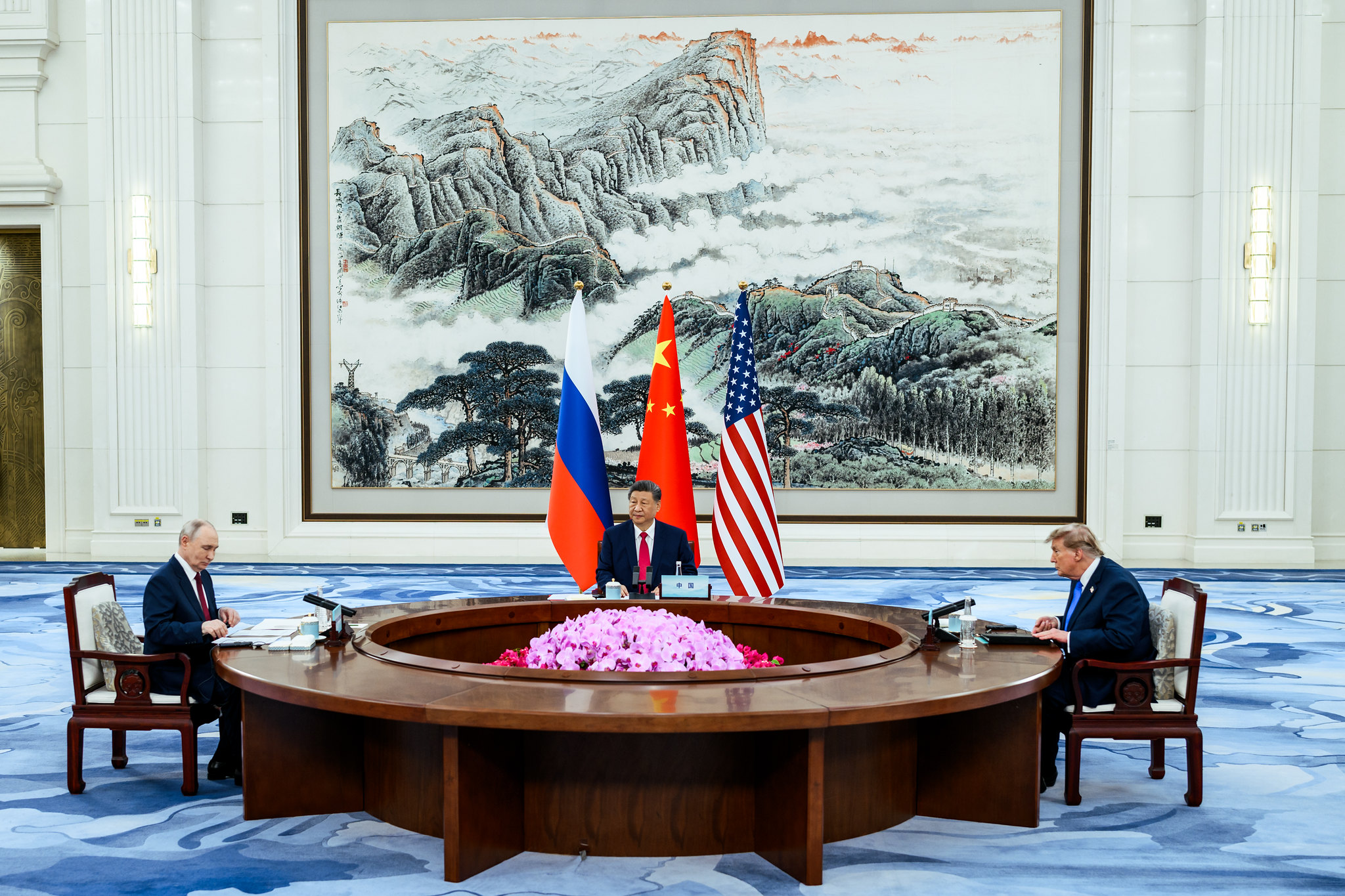
The most important significance of this China-Russia-U.S. trilateral summit lies not in how many specific issues it has resolved, but in the fact that the meeting itself is a landmark event.
Looking back at international diplomacy over the past several decades, neither the G8 nor the G20 has ever seen a formal dialogue of this kind, with the leaders of China, Russia and the United States taking part directly in a meeting centered on their trilateral relationship.
Russia was once a member of the G8, but within that framework it always struggled to escape its structural differences with the other Western members. Much of the time, it had to contend with pressure from them. As for the G20, although the leaders of China, Russia and the United States have all attended its meetings, the three countries have never come together in this way.
This time is different. Three countries with the world’s most consequential military capabilities, nuclear arsenals and economic influence are beginning to explore a new way of communicating directly with one another.
For this reason, the value of the meeting should not be judged by how many specific disputes it has resolved. Complex international problems cannot be settled in a single meeting. What truly matters is that it has shown the world that the three major powers are willing to seek solutions together. Even if differences remain on specific issues, the three countries have at least established a platform in which they can discuss, coordinate and seek common ground.
Conversely, the fact that the summit directly addressed specific issues, including issuing an explicit warning to the International Criminal Court, also shows that this was not a diplomatic performance with merely symbolic significance. What is at stake is whether the major powers can reach some form of common position on concrete international affairs, and whether that position can have a practical impact.
The Agendas Behind the Reactions
There has been no shortage of opposition to the summit. But a closer look reveals that many of the criticisms have less to do with whether the meeting can bring benefits to the international community than with the political positions and interests of those making them.
In the United States, some media outlets with Democratic Party leanings seem to have one overriding objective: criticizing Trump. Whatever he does can be portrayed as political grandstanding, a diplomatic concession to Putin, or a betrayal of America’s traditional allies.
For some neoliberals who self-styled as global citizens, the future of the world seems to have only one acceptable form: the one that conforms to their own ideals. They are not genuinely concerned with how countries can find common ground amid conflicts of real-world interests. Still less are they willing to acknowledge that the international order might evolve in a direction different from the one they have imagined.
Europe’s reaction, meanwhile, stems largely from anxiety over Ukraine’s future and its reluctance to see Putin return to the center of international diplomacy.
But there is a fundamental reversal of perspective here. Russia is facing the entire NATO bloc, whose member states have continued to provide Ukraine with economic support, weapons and technological assistance. Despite the scale of this external backing, Russia has still managed to gain the upper hand on the battlefield. This in itself says a great deal about Russia’s strength and its standing in the international system.
Russia is certainly no longer the Soviet Union, but its power has never been something that can be measured simply by GDP. Although its economy is considerably smaller than those of the United States and China, the war has demonstrated its economic resilience. Russia also remains one of the world’s most important military and nuclear powers, a force that no international security arrangement can afford to ignore. The fact that the United States and Europe have been unable to defeat Russia has already proved the point. There is simply no need for Putin to gain a personal diplomatic platform to demonstrate Russia’s importance.
As for Ukraine’s future, it will inevitably be the product of coordination among the major powers and itself. European countries are, of course, free to continue supporting Ukraine. But if they believe that sustained assistance alone will enable them to determine the outcome of the war entirely on their own terms, they are probably indulging in an illusion. Ukraine’s sovereignty and security interests deserve respect, but that does not mean its future can be discussed without regard to the actual balance of power.
It is particularly worth noting that the summit has once again affirmed a basic fact: a direct military confrontation between nuclear powers is something all sides are determined to avoid. Nuclear deterrence is not simply conventional military power magnified. It fundamentally changes the risk structure of great-power conflict. It requires all sides to maintain their red lines amid competition and keep communication open despite their differences.
Those who subscribe to the Thucydides Trap may have the intellectual capacity to search old texts for supposed historical patterns, but they may lack a sufficiently sharp intuition for what nuclear weapons really mean in the modern world. Mechanically applying the power transitions of ancient city-states to competition among today’s major powers, or simply predicting that a rising power and an established power are bound to go to war, shows little real understanding of the distinctive conditions of contemporary international relations. Hopefully, this summit will prompt them to think again: less noise from historical analogies divorced from reality, and more understanding of the strategic environment in which we actually live.
In Asia, Japan’s reaction appears to have been particularly strong.
Japan fears being left out, but the source of its anxiety lies in its own actions. Japan is a defeated country of WW2, and its postwar international standing and security arrangements are rooted in a distinctive historical context. Today, it wants to continue relying on the United States for security guarantees while seeking greater autonomy within the U.S.-led order. It wants to profit from U.S.-China competition, yet repeatedly provokes China and Russia on regional security issues. At the same time, there are already people in Japan openly discussing the possibility of acquiring nuclear weapons.
This contradiction—wanting both to remain dependent and to break free, seeking to profit from great-power rivalry while trying to reshape the regional security landscape—is drawing Japan into an increasingly complicated position.
If Japan is worried about being excluded from a new forum for great-power dialogue, it should first look to its own policy choices for the explanation. A country that repeatedly takes the initiative in creating tensions with its neighbors can hardly expect other major powers to put its concerns first when discussing regional security.
Another aspect worth noting is the way the three countries have approached the issues in the Middle East.
The Middle East is one of the most important geopolitical flashpoints in the world today, and the decision to start with energy issues is a particularly astute move. Energy is fundamental to the functioning of the global economy, and all three countries have direct interests in this area. Energy security, stable supplies and regional conditions offer common ground for discussion, while also providing a way to address broader questions of regional conflict, maritime security and the international political order. This does not mean that the three countries must adopt identical positions on the political stances about the region. Nor does it mean that the three major powers intend to decide the future of the Middle East among themselves. Rather, the starting point is to identify areas where their interests intersect and where common ground can be found.
This also shows that the trilateral summit is by no means a Yalta-style division of the world.
The Yalta Conference represented an arrangement of the postwar world by major powers on the basis of the balance of power created by military victory and occupation. What this summit represents is something different: three countries with enormous international influence seeking to identify areas for joint action despite their differing interests and positions.
These are two fundamentally different logics of international relations.
Why China Does Not Behave Like a Traditional Great Power
Outside China, many people still seem unable to understand one question: now that China is a major military and economic power, why does it not behave like the great powers of the past?
Why is China not in a hurry to carve out spheres of influence? Why is it not keen to use a military presence to control other regions, or to impose its own political system and values on other countries?
The answer lies in China’s own political and intellectual traditions.
The Chinese concepts of wangdao (rule through moral authority) and tianxia (all under heaven), together with the internationalist ideals rooted in communist thought, all form part of the way China understands international relations. China emphasizes resolving differences through consultation and reconciling the interests of different parties, rather than simply using power to divide countries into opposing camps. Something of this approach can even be seen in China’s domestic political system.
Take China’s legislative process, for example. It is not plainly a matter of holding a vote and passing a bill with a simple majority or a two-thirds majority. Before legislation is introduced, extensive research is conducted and opinions are solicited. During the legislative process, proposals are discussed and revised repeatedly. Before a formal vote, efforts are made to build the broadest possible consensus. The aim is not merely to get a bill passed, but to ensure that the final text wins the approval of as many deputies to the National People’s Congress as possible.
This does not mean that China’s legislative system is free of disagreement, or that every law receives unanimous approval. But it does reflect a political approach different from one based on competition for a majority: the aim is to resolve differences as far as possible before a vote, rather than treating the vote itself as the only means of resolving them.
The trilateral summit reflects a similar way of thinking. Its main objective is not to demand that countries choose sides, but to seek common ground. Rather than first dividing countries into camps and then discussing possible cooperation, the idea is to start with issues of shared concern and look for areas where progress can be made together.
Of course, China’s geopolitical thinking is also grounded in a very deep reservoir of historical experience.
Over the course of thousands of years, China’s territory gradually expanded to the geographical limits within which it was relatively feasible to exercise effective control. In a sense, it reached the limits of what it could readily govern. The dynasties of China’s past were not without ambitions for further expansion, nor did they never attempt to project power over greater distances. But China’s historical experience repeatedly demonstrated that expansion beyond a country’s actual capacity for governance and logistical support could become a heavy burden. Administering frontier regions, conducting long-distance military campaigns and waging sustained wars abroad all consume enormous national resources. Once those costs exceed what a country can bear, they can accelerate the accumulation of internal tensions and even set the country on the path to decline.
Dreaming of carving up the world is easy. But turning that dream into reality requires the ability to project power on a scale commensurate with those ambitions. And the ability to project power can itself generate further impulses to expand: maintaining existing control requires more resources; protecting established interests brings additional security commitments; and preventing a decline in influence can lead to an ever-widening scope of intervention. This logic can easily spiral out of control, turning the dream of expansion into a nightmare of national over-extension.
The rise and fall of the European powers since the Age of Exploration offer repeated evidence of this. The Chinese have, of course, taken notes.
I do not believe China’s geopolitical thinking can be explained entirely in terms of realist calculations. As noted above, it has much deeper historical, political and intellectual roots. But perhaps, at this stage, a realist perspective is the most useful way for others to understand China’s position.
China does not lack the ability to participate in international affairs, nor does it lack the resolve to defend its own interests. The key point is that China does not believe that expanding its influence must entail establishing spheres of influence, or that international affairs can only be resolved through competition for power among the major countries.
From Trilateral Consensus to Regional Consultation
Of course, emphasizing consultation among the major powers does not mean that three countries can make decisions on behalf of the rest of the world.
On the contrary, when the three countries seek to coordinate their efforts on specific regional issues, China can be expected to insist that the countries concerned be involved in the consultations. The three powers may reach a consensus on broad principles concerning issues of shared concern, but they should not impose any regional arrangements on that consensus alone. The sovereignty, interests and wishes of the countries in the region must still be respected.
China has already facilitated a number of rounds of diplomatic talks in the Middle East. The results have varied, but these efforts have brought about some tangible changes. The restoration of diplomatic relations between Saudi Arabia and Iran, brokered by China, is one notable example. The significance of such diplomatic efforts is not that China decides the region’s future on behalf of the countries involved (nor could it ensure peace once for all) , but that it provides an opportunity for countries that once found it difficult to communicate to return to the negotiating table.
In this sense, what China hopes to promote is not a club in which three major powers jointly manage the world, but a model of international relations built on coordination among major powers, with regional countries taking part in the process and consensus gradually expanded through consultation.
One final point, from a realist perspective. There is a popular expression in China that refers to China, Russia and the United States as the “top three” among the five permanent members of the UN Security Council.
This is, of course, not an official diplomatic term, but it reflects an intuitive understanding of the current balance of power in the world. Britain and France still hold permanent seats on the UN Security Council, but their overall national strength and international influence have changed considerably from what they were in the era of colonial empires.
In a sense, the international standing of Britain and France is a legacy of the colonial era. The traditional geopolitical thinking of the United States and Russia, meanwhile, is a combination of the logic of global expansion pursued by colonial powers and the superpower rivalry that took shape after World War II. China’s rise has brought a different kind of international relations practice into the picture.
China cannot change the long-established thinking of the United States, Russia and other countries overnight. But perhaps, in the future, the international community will gradually become accustomed to China’s approach to consultation and see it play a role in an increasing number of international affairs.
Some have questioned whether this kind of trilateral summit can happen again. I would argue that the question is not so complicated. Now that such a forum has emerged, and now that it offers the three major powers an opportunity to communicate directly and seek common ground, what future U.S. president, regardless of party affiliation, could easily turn down the opportunity to take part?


The 2026 APEC summit in Shenzhen is destined to create a symbolic, yet important, chapter in the contemporary history of diplomacy: Chinese President Xi Jinping, US President Donald Trump and Russian President Vladimir Putin will hold a trilateral meeting in-person during the summit, which is described by the Chinese Foreign Ministry as a meeting with “groundbreaking significance.” There are reasons to support to the argument that such a description is not an exaggeration: This is actually the first time in history that the heads of state from the three most powerful countries among the five permanent members of the UN Security Council hold a trilateral meeting.
Among these three countries, there are three noteworthy pairs of dynamics: China and the United States mark the two largest and unparalleled economic superpowers of the world; Russia and the United States mark the largest and unparalleled nuclear military superpowers of the world; and China and Russia, together, are the most powerful challengers to the current West-led neoliberal world order. Therefore, it is not an exaggeration to say that these three countries are the largest factors influencing the security and economic development of the world today, and thus this trilateral meeting, even if it is more symbolic than concrete, is destined to have profound historical significance. An important thing people can expect from this trilateral meeting is whether it can create some sort of long-term and periodic mechanisms of trilateral meetings among the heads of three states. If this meeting can establish such a long-term mechanism, that means that China, Russia, and the United States are interested in, at least symbolically, cooperating together on controlling the intensity of the competitions among them and on solving global conflicts and crisis together.
While I acknowledge that this trilateral meeting has tremendous symbolic significance, however, I do not argue that this trilateral meeting would make much concrete differences to the world order, not anything close to what the Yalta Conference in 1945 did. From the Chinese perspective, the purpose of this meeting is not able seriously construct a new platform to achieve a détente with the U.S., because the Chinese are fully aware that it cannot ever dissuade the U.S. from viewing China as its strategic rival. The purpose of this Xi-Putin-Trump meeting, in my opinion, is for China to use the “emotional value” to buy more time for China in its long-term strategic competition with the U.S.
“Emotional value” is a trendy Chinese internet-originated vocabulary that refers to the ability to provide positive emotional support, comfort, or joy to others in a relationship or social interaction. When you are not able to, or not willing to, offer actual use value (like money or other resources, for example) to someone, you can use “emotional value” to make them feel respected while refrain from actually spending resources on them. Ever since Trump’s first term in 2016 and since the first round of China-US trade war in 2018, the Chinese have been severely bothered by his unpredictable personality, and Chinese officials are often confused about how serious Trump is when he comments on trade issues. Putin’s performance, however, provided a remarkable lesson for the China on how to deal with Trump: During the Russia-Ukraine war, Putin made various comments saying that he was willing to accept Trump as a mediator in this conflict, and there were various cases that Putin spent hours talking with Trump on phone, making Trump emotionally satisfied and felt respected. Meanwhile, however, the Russian army did not halt its operations in the frontier, and Putin’s emotional “massage” for Trump actually gave the Russian army more time to advance its control of territories in the frontier.
From the Chinese perspective, Putin’s success in dealing with Trump is remarkably useful, and the Chinese quickly learned it from him: When Trump visited Beijing in May 2026, the Chinese showed great hospitality to him and his accompanies, including US Secretary of State Marco Rubio who once was sanctioned by China, and media report in China was filled with headlines such as “Rubio was amazed by the architecture of the Great Hall of the People in Beijing.” In terms of important political issues, however, there was very little achieved in this visit, and both countries did not even publish a joint communique. Trump’s visit to China in May seemed to be simply a tourist group of old people, and the Chinese did not expect any progress of China-US relations. This touristic visit of Trump, however, was seen as positive by the Chinese, because at least it appeased the unpredictable personality of Trump and Trump did not make trouble for China for at least half of a year until now. Most important, while offering emotional value for Trump in this visit, the Chinese government offered almost nothing it did not wish to offer in terms of concrete national interests of China: For example, China did not compromise on its subsidies for state corporations and AI industries, its currency policy on the yuan, its military exercise in the Taiwan Strait and the South China Sea, and its partnership with Russia and Iran. From Chinese point of view, this is a diplomatic victory that prevented Trump from further causing troubles for China for quite a while, without any real costs in terms of national interests.
Therefore, one can understand this incoming trilateral meeting as another event in which China repeat this practice. China is not naïve to expect anything concrete from the U.S. in this meeting for two reasons. First, China is fully aware that the US has a bipartisan consensus viewing China as its major strategic rival, and this will not change in the foreseeable future. Second, after the mid-term election, the Democrats now control the Senate, and thus even if Trump is willing to sign anything with China, these agreements can be easily sabotage by the Democrats soon. Therefore, with such a low expectation, the only thing China expects from Trump now is not making troubles for China in the rest of his term.
China also understands that, with such a huge lose in the mid-term election, Trump and the Republican party must be very anxious about the presidential election in two years, and Trump desperately needs some sort of accomplishments which he can use for domestic propaganda. This APEC meeting can be a great chance for him: The Chinese will show respect for him in terms of protocols, and will likely release some positive but vague signals on trade issues that are not related to China’s core interests, such as agreeing to purchase more American agricultural products. These materials can be used by Trump for his domestic propaganda to continue rally his MAGA supporters, and meanwhile he will likely be silent on China-related issues for a while. With that time earned through offering emotional value, China will be able to get more time to further strengthening itself in military, economy, and high-technology industries, preparing itself for its long-term competition with the U.S. and for China’s own goals, such as the reunification of Taiwan.
It is important to point out that Trump is not the only one receiving this emotional value. China recognizes that its quasi-ally Putin also needs some materials for domestic propaganda too, and thus this trilateral meeting will also be an event in which China tries its best to emphasize Russia’s status still as a global power. Interestingly, in the formal statement released by the Chinese foreign ministry, instead of using the term “China-US-Russia trilateral meetings” as most international media do, the Chinese foreign ministry deliberately uses the word “China-Russia-US trilateral meetings” to offer emotional value to Putin. One can expect China and Russia to release a number of agreements and maybe a joint statement on current issues in order to demonstrate to the world that China is still standing together with Russia in the common struggle against the neoliberal unipolar world, and both countries will likely emphasize again their common goal in constructing a multipolar world, despite the fact that both China and Russia will likely provide remarkable emotional value to Trump in order to keep him calm.
Many people tend to expect changes in international relations to be a fast one marked by various milestones. In reality, however, politics never works that way, and the Chinese are clearly aware of this. China does not attempt to show its ambition in a milestone meeting, and this trilateral summit in APEC is never meant to be another Yalta Conference. Instead, the APEC will be a platform for China to promote two things: First, China will manage its stable relationship with the US, and will buy more time for itself through offering emotional value to Trump while refraining from compromising on any actual national core interests of China; second, China will use this platform to strengthen its partnership with not only its quasi-ally Russia, but also other friendly states in the developing world, in order to move forward to a multipolar world.
The Romans say that “Rome is not built in one day.” In China, more than two thousand years ago, political scholar and strategist Hanfeizi also has a famous quote says “the collapse of a huge dam starts with little holes of the ants.” The Chinese, with thousands years of experiences in politics, are patient enough in terms of their diplomacy, and understands that the erosion of the current US-dominated neoliberal and unipolar world will be a long process. This APEC meeting is not a milestone marking dramatic and sudden changes in international relations, but one of the many small steps for China to buy more time, to strengthen itself militarily and economically, and to deepen its ties with partners all over the world in a common struggle for a multipolar world order which is not dominated by the West.
*Zhang Sheng is currently a PhD candidate in Sociology at Johns Hopkins University and holds a master’s degree in Middle Eastern Studies from Harvard University. He is also non-resident researcher at the Center for Asian Studies, Koç University. Zhang’s research interests include, but are not limited to, the evolution and transformation of China’s engagement in the Middle East, Sino-Turkish relations, and Chinese diplomacy and politics from the establishment of the People’s Republic of China in 1949 to the present. In addition, Zhang is a research fellow affiliated with several think tanks and research institutes in China and Nepal. Beyond his academic career, he is also a political commentator and columnist, frequently contributing opinion pieces and giving television interviews for various mainstream media outlets in China, Egypt, Russia, and Nepal.

What Did the Trilateral Summit in China Reveal?

The Chinese Approach Behind the Trilateral Summit: It May Pay to Get Familiar with It Sooner Rather Than Later

Colby exits Brussels Ukraine talks before defence minister speaks

US approved exports of 800,000 Nvidia and AMD chips to China

UK looks to Nordic allies to bolster crisis resilience plans
-

 America2 weeks ago
US midterms see 97 young winners as Gen Z representation triples
-
 America2 weeks ago
Nvidia investigates CEO Jensen Huang over link to Chinese spy
-
 Europe2 weeks ago
UK and Germany expand military pact with focus on Russian frontier
-
 America2 weeks ago
US secures 35% stake in Venezuelan firm NABEP under 50-year deal
-

 Europe2 weeks ago
George Szamuely dissects European decline and strategic rifts with US
-

 Opinion2 weeks ago
The Mecca Defence Agreement, the Ottoman Empire, and the facts
-

 Opinion2 weeks ago
Settle, deny, seal: Britain’s formula for colonial torture, from Kenya to Cyprus — 1
-

 America1 week ago
Absent Democrats derail floor vote on Pete Hegseth impeachment
