
America
Jensen Huang exit aids Anthropic and OpenAI as open models suffer

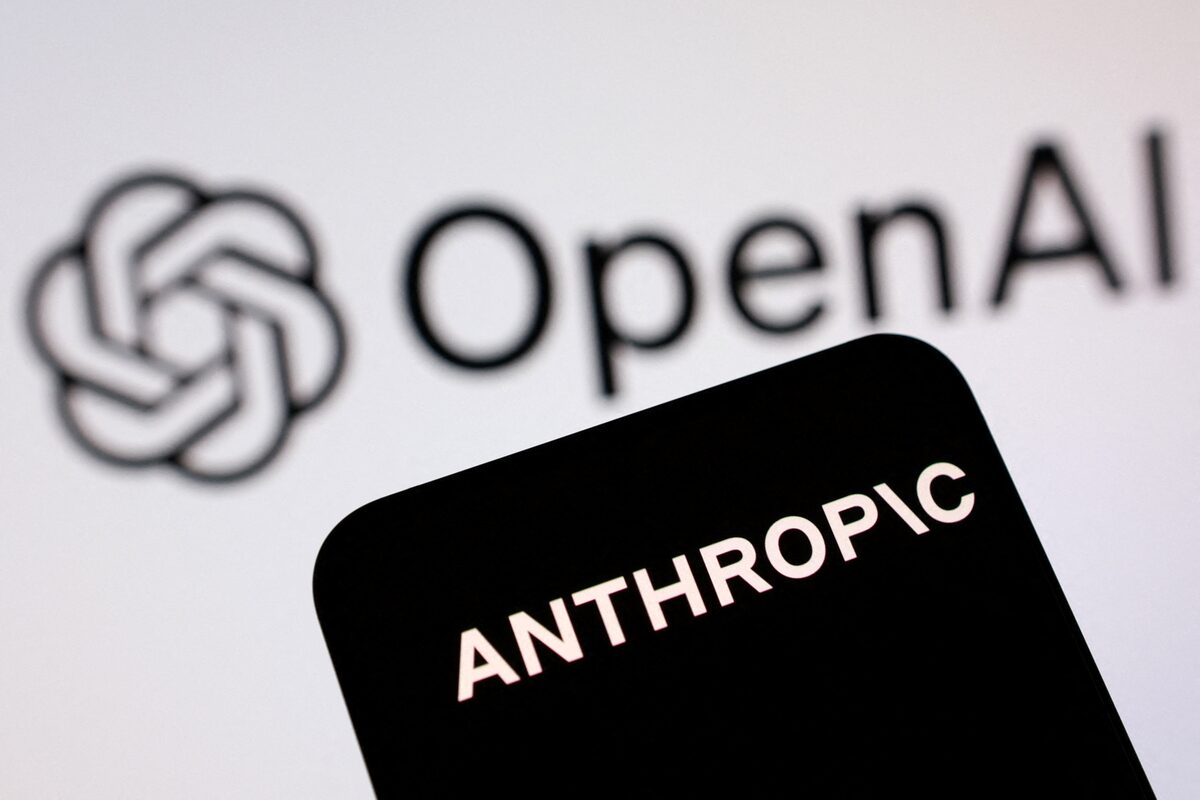
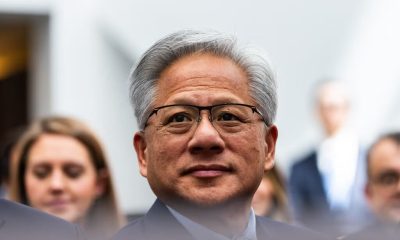
Jensen Huang’s resignation from Nvidia has cast a shadow over companies developing “open” artificial intelligence models and shifted the balance of power toward “closed” frontier laboratories such as Anthropic and OpenAI.
According to a report in the Financial Times, the former chief executive of the US chipmaker had directed Nvidia’s resources toward building a broad AI ecosystem.
As part of this effort, he invested in and acquired startups involved in developing open-source and open-weight models that users can customise and run on their own hardware.
Huang was a fierce advocate for the spread of these models. While supporting the development of alternatives in the US, he lobbied against moves by Washington to restrict the use of Chinese-made open models.
This summer, in his first post on the X platform, Huang wrote: “Our AI leadership will not be measured by a single frontier AI model, but by whether the US builds a robust and open ecosystem that spans every industry.”
His ignominious departure from Nvidia has stripped the open-model sector of its most vocal and influential backer in the US.
A venture capitalist who had invested in AI startups alongside Nvidia said:
“I think Jensen was the biggest economic beneficiary and personally committed to diversity at the model layer. Without him, and with a more stingy Nvidia on investment, we could end up in a world where model providers are far more concentrated.”
It is unclear whether Nvidia will sustain its rapid pace of dealmaking under new leadership.
The company was expected to participate in or lead four startup transactions currently under negotiation: investments in Thinking Machines Lab and Groq, a potential partnership with Reflection AI, and a $12.9 billion acquisition of open-model repository Hugging Face.
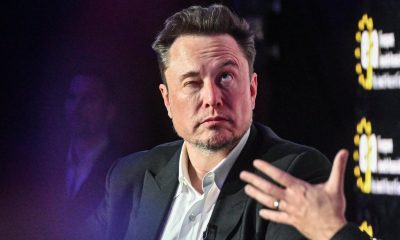
In a post on X on Saturday, Elon Musk said: “Jensen masterfully managed the supply chain at Nvidia, but many of these deals were a handshake with Jensen, not a written contract. Without Jensen, at least some of these critical deals will be lost.”
Huang framed these investments as a way to cement US dominance in the technology.
Others point to more direct commercial motives: these deals helped broaden Nvidia’s customer roster and served as a buffer against OpenAI and Anthropic.
A senior figure at a leading Silicon Valley AI company said: “In a way, [Huang’s departure from Nvidia] is bad for the industry, but in another way, Jensen is the enemy of frontier labs because he wants models to be commoditised so he can retain the commanding heights of the value chain.”
A decade ago, Huang delivered Nvidia’s first “AI supercomputer” to OpenAI, setting the then-fledgling startup on a trajectory that ultimately led to ChatGPT.
At the time, the laboratory’s leaders included Musk, Sam Altman, and Dario Amodei.
Huang’s relationships with this trio laid the groundwork for the AI boom and contributed to the rise of OpenAI, as well as SpaceX and Anthropic, the companies founded by Musk and Amodei.
Earlier this year, Nvidia invested $30 billion in OpenAI and committed more than $100 billion in resources to support the laboratory’s flagship data centre.
Yet friction also emerged: frontier lab founders grew uneasy over their reliance on Nvidia and have sought to reduce that dependency by forging alternative partnerships and investing in their own chips.
A senior official at an AI laboratory said:
“That is why you see every lab and frontier company investing in their own chip programmes: it is because of Nvidia’s profit margins. It makes sense to expect Jensen’s removal to further concentrate computing power in the hands of frontier labs and hyperscalers. This is good for the labs.”
OpenAI collaborated with Broadcom to develop its custom chip, Jalapeño. OpenAI chief financial officer Sarah Friar has frequently remarked that the company should not be “single-threaded” or dependent on a single chip supplier.
Anthropic diversified its AI infrastructure suppliers earlier than its rival, having secured early support from Google and Amazon in the form of access to their chips.
Even so, while announcing plans to secure a $10 billion investment from Nvidia alongside its initial public offering, Anthropic executives highlighted during their roadshow an ability to switch within days to rival AMD chips, a process that typically takes months.
At an event last month, Huang praised OpenShell, an open-source security platform developed by Nvidia for AI agents, while delivering a sharp critique of the two frontier labs’ secrecy:
“How can you have an opaque agent system, locked inside an opaque company, inside an opaque box? It is clearly unsustainable.”
In the near term, these laboratories could also draw practical benefits from the turmoil at Nvidia.
Next week, Anthropic will conduct one of the largest IPOs of all time, aiming to raise a total of around $100 billion, while OpenAI is in the final stages of a $20 billion fundraising round.
According to industry sources, investors pulling back from the chipmaker may redirect their capital toward these laboratories.
One source said: “I don’t think open-source models will disappear… but losing Jensen, their biggest financial backer and champion, will slow their progress, and I don’t think that hurts Anthropic’s IPO.”
Huang also clashed with the frontier laboratories over his defence of lower-cost competitors, including those from China.
Amodei of Anthropic has been one of Silicon Valley’s staunchest advocates for tighter curbs on China’s access to Nvidia chips, even as Huang lobbied the Trump administration for broader access to the Chinese market.
Earlier this year, Amodei remarked that exporting chips to China was “a bit like selling nuclear weapons to North Korea.”
Nvidia lost billions of dollars in sales to China as the Biden and Trump administrations imposed export controls on its most powerful processors.
Nevertheless, analysts note that the company collaborated with Chinese AI firms as part of its wider strategy to champion open AI systems.
Some figures in and around Nvidia insist that support for open systems will endure despite Huang’s departure.
Thomas Wolf, co-founder of Hugging Face, the open-source AI platform Nvidia agreed to acquire in September, said: “If open models had only one champion, it would all be over this week. These models have millions of developers, including those inside Nvidia.”









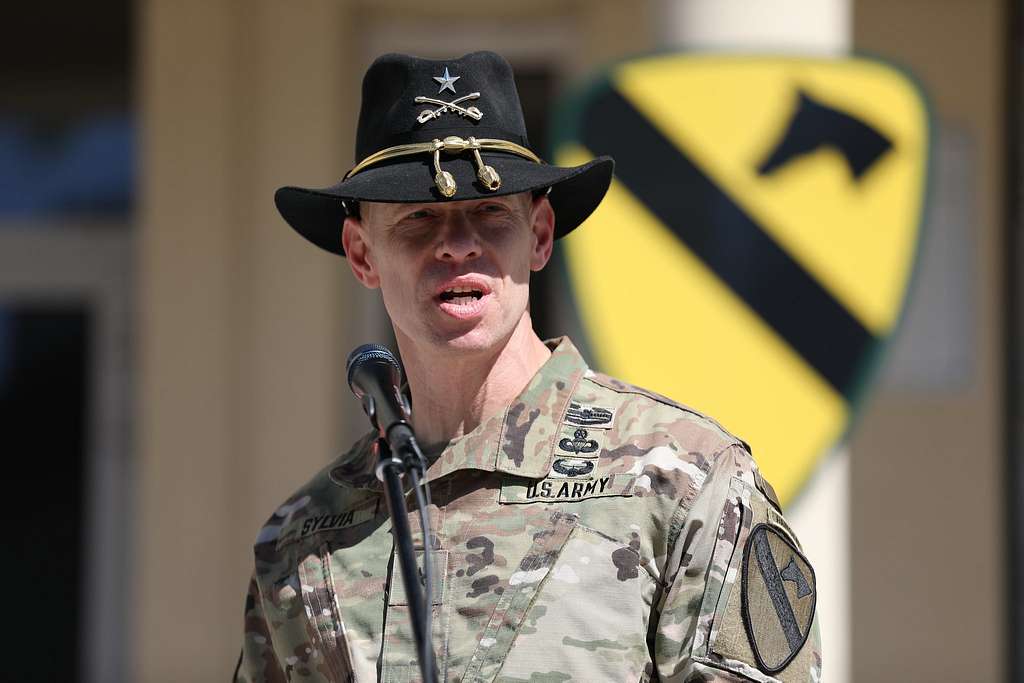
The administration of US President Donald Trump has ordered a review into whether to launch a military criminal investigation against Lieutenant General Brett Sylvia, who was forced to step down over allegations that he leaked classified information to the press.
Files concerning Sylvia, whom Pentagon leadership accuses of passing classified data to journalists, had also previously been referred to the US Department of Justice.
Speaking on condition of anonymity, a US official confirmed to The Washington Post (WP) that the file has been forwarded to Acting Secretary of the Army Adam Tell for “appropriate disposition”.
The newspaper reported that Sylvia now faces the risk of prosecution through both military and civilian judicial channels.
Military authorities and federal law enforcement have not yet brought formal charges against the general.
Sylvia, 54, has made no public comment on the matter.
Removed from his post at the end of October, Sylvia headed the strategy, plans and policy directorate on the Joint Staff, reporting to Chairman of the Joint Chiefs of Staff General Dan Caine.
Sylvia previously commanded the 101st Airborne Division.
Pentagon makes accusations, sources offer conflicting accounts
When news broke on 29 October that Defense Secretary Pete Hegseth’s team had forced the general to resign, Pentagon Spokesperson Sean Parnell wrote on social media: “We meant what we said. We promised to find you and we weren’t joking.”
Parnell alleged that the officer had put US troops at risk by deliberately disclosing classified information.
WP noted that officials have not publicly disclosed the exact allegations against Sylvia.
Following Sylvia’s dismissal, reporters at conservative media outlets published a statement attributed to an unnamed department representative.
The statement alleged that Sylvia had leaked classified information regarding the war with Iran, the Russia-Ukraine war and other matters.
The same statement claimed that the general met reporters outside the department building to circumvent press restrictions and failed a polygraph test three times.
The official who confirmed the transfer of the file to the newspaper claimed that Sylvia had admitted to investigators that he took notes from classified documents, passed that information to a journalist and deleted messages on the Signal application.
The news website Axios also reported on 29 October, citing an internal report, that the general had admitted to leaking information to reporters from two news organizations.
According to other WP sources, however, Sylvia told colleagues that he had spoken with reporters but had not shared classified information.
The newspaper emphasized that it could not independently verify these claims and that the Pentagon refused to provide a copy of its internal investigation report.
Lawyers say securing a conviction would be difficult
WP noted that the investigation into the general forms part of the Trump administration’s campaign against information leaks.
Hegseth had pledged to track down and punish those who spoke to the press about Pentagon operations, particularly during the war with Iran.
The department has made widespread use of polygraph tests and non-disclosure agreements for this purpose.
The Department of Justice did not confirm whether an investigation into Sylvia is underway, stating only that it is interested in potential leaks of classified information.
A previous attempt by Hegseth’s team to punish suspected sources through federal agencies ended without result.
Sources speaking to WP said securing a conviction in the case would not be easy.
For example, it remains unclear whether the general generalized the information to avoid disclosing classified data, as senior officers frequently do during press briefings.
Nor is the deletion of messages alone considered proof of a crime.
Military justice experts note that in an environment where Hegseth’s team is openly demanding punishment, the military justice system must remain free from pressure by senior officials.
Experts argue the legal process itself has become the punishment
According to retired Army officer and lawyer Franklin Rosenblatt, the aim of the case may be to send a message rather than to secure the general’s conviction.
Rosenblatt said: “In many recent national security scandals in the second Trump administration, the process itself becomes the punishment. Those in power open investigations without realistically assessing whether they can take cases to court or obtain a conviction.”
Rosenblatt said the general’s defense team would almost certainly raise the issue of unlawful command influence, which is described as “the mortal enemy of military justice”.
Yale Law School faculty member Eugene Fidell said that if the case goes to a court-martial, Sylvia’s fate would likely be decided by a jury of eight generals superior to him in rank or seniority.
Rosenblatt added that alongside leaking classified information, the general could also face charges of disobedience of orders, conduct unbecoming an officer and contempt toward senior civilian officials.
The lawyer said he found reliance on polygraph tests “problematic”, noting that courts do not accept such test results as evidence and that the Pentagon’s public statements on the matter could influence prospective jurors.
“Machines should not decide who is credible and who is lying; a jury should,” the expert said.
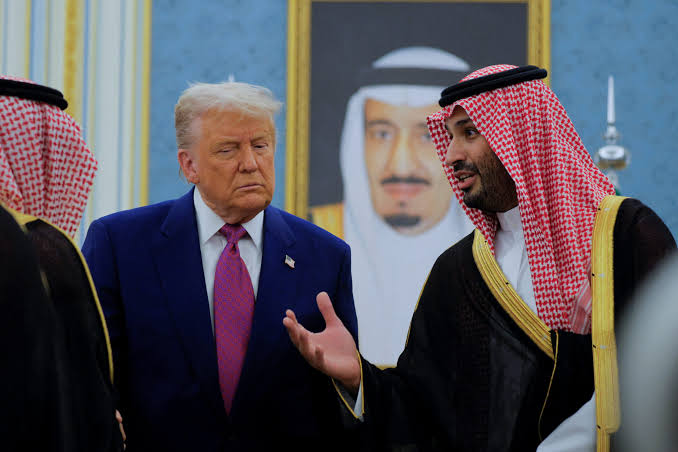
The governments of Saudi Arabia, the United Arab Emirates (UAE), and Qatar are preparing with deep concern for investigations by Democrats in the US Congress into potential corruption links with President Donald Trump and his family.
According to a Washington Post report citing US officials and diplomats, Democrats announced following their midterm election victory that they will examine the financial dealings of the Trump administration and its inner circle, vowing to “follow the money wherever it goes”.
The newspaper reported that Democratic representatives have already warned the three Gulf monarchies about the upcoming probes.
Gulf states prepare for possible Congressional probes
Democrats won majorities in both chambers of Congress in the 3 November midterm elections.
The new legislative term will begin on 3 January 2027.
Taking control of congressional committees will give the Democratic Party the authority to investigate the administration’s activities and the business interests of the president’s family.
According to Washington Post sources, Saudi Arabia, the UAE, and Qatar are not expected to voluntarily share requested information, including private correspondence.
This stance is projected to strain relations with the new Democratic majority, which could use arms sales and security assistance as leverage.
One source told the newspaper that lawmakers would not want to maintain full-fledged partnerships with countries that, in their assessment, are involved in “corrupting the American system”.
Probes may focus on Gulf investments and Qatar’s plane
Potential investigations could focus on real estate deals, investments, and a luxury private Boeing 747-8 aircraft worth $400 million gifted by Qatar.
The UAE’s involvement in the Trump family’s cryptocurrency business is also expected to draw special interest in Congress.
An entity linked to Sheikh Tahnoon bin Zayed Al Nahyan purchased a $500 million stake in World Liberty Financial, a company founded by the president’s sons and the son of US Special Envoy Steve Witkoff.
The purchase took place a few months before the UAE was granted access to advanced US microchips.
At the time, Democratic Senator Elizabeth Warren of Massachusetts described the transaction as “clear and plain corruption”.
Democrats may also scrutinize Saudi Arabia’s investments in Jared Kushner’s firm.
Saudi Arabia’s sovereign wealth fund invested $2 billion in Kushner’s Affinity Partners in 2021.
Following Trump’s return to the White House, his family expanded its operations in Saudi Arabia, announcing plans to build Trump Tower and Trump Plaza in Jeddah, as well as residential projects in Riyadh.
An agreement to develop Saudi Arabia’s nuclear energy programme with US technology is also among the potential subjects of review.
Trump sons’ companies targeted over public contracts
Following the midterm victory, the business activities of Donald Trump’s sons, Eric Trump and Donald Trump Jr., have also come into the sights of the new Congress.
NBC News highlighted seven companies linked to the president’s sons that received public contracts, financing offers, loans, or favourable regulatory decisions after Trump’s return to the White House.
According to the broadcaster, these companies could become primary targets in Democratic investigations.
The list includes firms producing rare earth magnets, unmanned aerial vehicles, and missile technologies, alongside the cryptocurrency project World Liberty Financial and e-cigarette maker Juul Labs.
Vulcan Elements, backed by 1789 Capital, a fund where Donald Trump Jr. is a senior partner, secured a $620 million loan and $50 million in federal support from the Department of War (Pentagon) following the investment.
Powerus, another venture linked to the brothers, announced it had signed contracts worth up to $90 million with the US Air Force.
Democrats have already begun gathering information on the business interests of Eric Trump and Donald Trump Jr.
When control of Congress passes to their party in January, Democrats will gain the authority to subpoena documents and summon witnesses to testify.
The companies involved and representatives of the Trump family deny allegations that the brothers used influence over public contracts or regulatory decisions.
Representatives argue that the president’s sons are passive minority investors in the companies and do not participate in management.
Donald Trump previously acknowledged that it was difficult to restrict his sons’ business activities during his term in office.
“It’s hard to tell them, ‘Don’t do anything for four years because I’m president,'” the US President said on the matter.
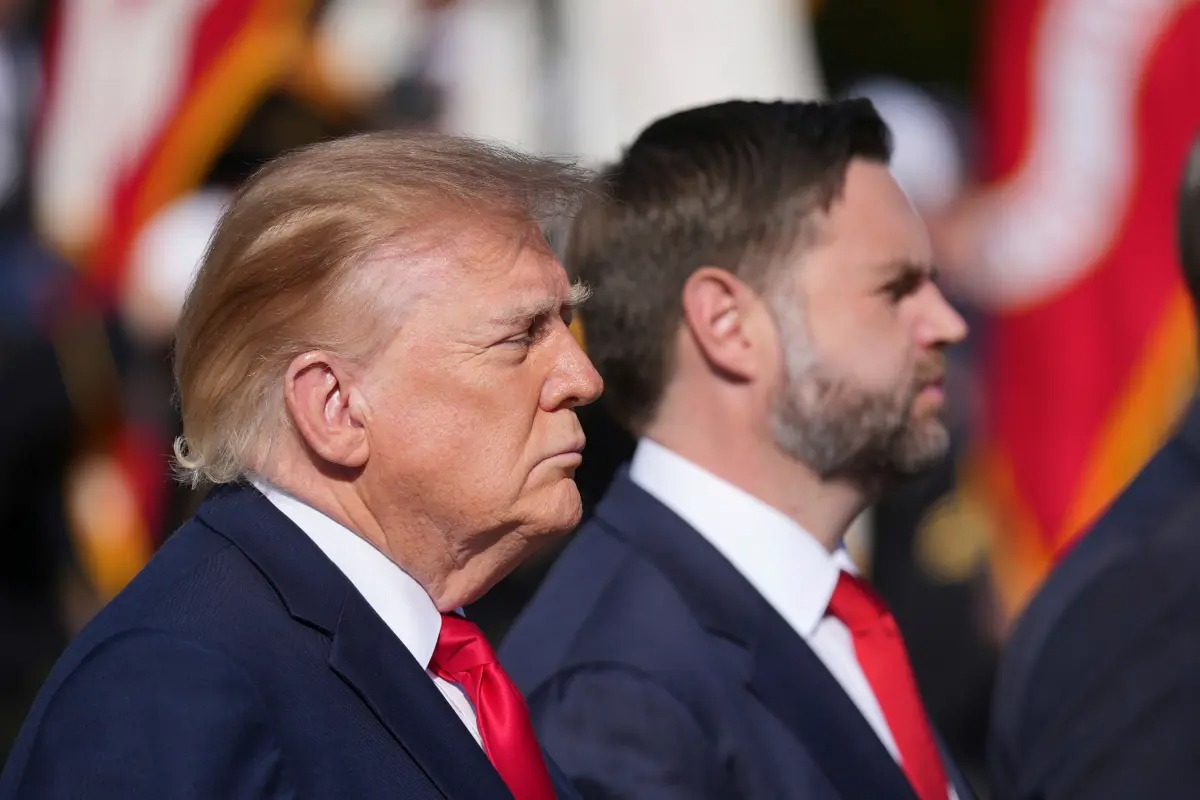
US President Donald Trump has instructed Vice President JD Vance to focus on domestic politics, saying: “We don’t need a deal with Iran.”
After Vance concluded that the Iran war led to the Republicans’ surprising midterm defeat, Trump refocused his second-in-command and ordered him to go after Democratic administrations, which the president described as “CORRUPT AND EVIL”.
Oil prices rose and stocks fell as Trump’s post brought renewed uncertainty to a market that had been acting as though the Iran war was nearly over.
“We don’t need a deal with Iran. Those days are long gone,” Trump wrote on Truth Social.
Trump said he wanted Vance to focus “his total and complete attention” on alleged “corruption and crime” in Democratic-run cities and states, citing Minnesota, California and Illinois.
Vance had taken over as chair of the Fraud Elimination Task Force, which Trump established by executive order earlier this year.
According to Axios reporter Barak Ravid, Vance has recently been playing an active role in an effort to secure a new ceasefire with Iran and restart nuclear negotiations.
Ravid reported that Vance had emerged as a sceptical voice on the war within Trump’s inner circle and had led US negotiating delegations after the conflict began.
Vance offered a surprisingly candid assessment of the heavy midterm defeat, writing in a post on X last week: “The reason we lost is the war.”
Vance continued:
“If you want to argue it was worth it, that losing the Senate for the next 6 years was worth it, go ahead. Argue that it was a worthy price to pay. Agree or disagree, at least that is an honest stance. But everyone knows why we lost.”
Secretary of State Marco Rubio met his G7 counterparts in Paris on Tuesday. During the meeting, Rubio said Trump had considered restarting the war or making a deal, but decided instead to “strangle the Iranian regime”.
Rubio hinted he was sceptical about diplomatic progress, and Trump’s post suggests that door is closed for now.

APEC Summit: How China Uses the Art of “Emotional Value” to Deal with Trump

Crimean Bridge traffic suspended after consecutive Ukrainian attacks

EU links UK energy market access to cohesion budget contributions

Jensen Huang exit aids Anthropic and OpenAI as open models suffer

Five EU nations announce plan to deport migrants to Rwanda hub
-
 America1 week ago
US midterms see 97 young winners as Gen Z representation triples
-

 Europe2 weeks ago
EU urges citizens to prepare 72-hour survival kits for crises
-

 Diplomacy2 weeks ago
Protesters storm Kyiv site holding soldiers over torture allegations
-
 Europe2 weeks ago
Pro-Ukraine Republicans in US Congress dwindle after departures
-

 Europe2 weeks ago
Low EU gas stocks risk stoking global prices, IEA report warns
-
 Europe2 weeks ago
Brussels sees little hope of better US ties even if Trump loses
-

 Diplomacy2 weeks ago
Ukraine faces demographic collapse as fertility rates slide
-
 America2 weeks ago
Paraguay President Peña resigns over catastrophic bank collapse
