
Russia
Crimean Bridge traffic suspended after consecutive Ukrainian attacks

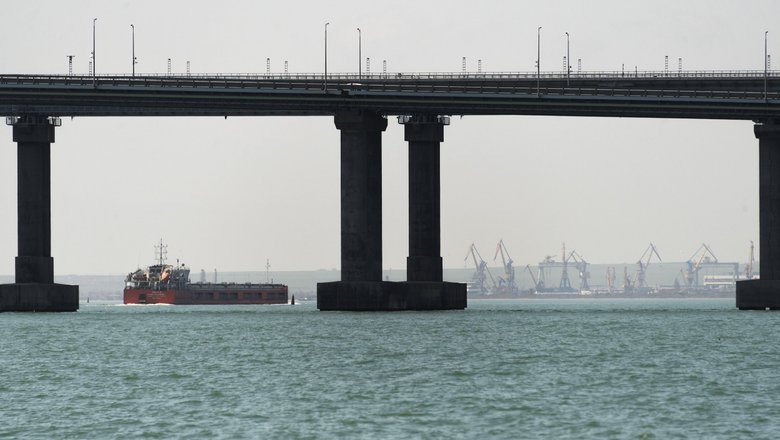
Ukrainian drones struck the Crimean Bridge again overnight, prompting a halt to transport across the structure.
The governor of Sevastopol, Mikhail Razvozhayev, announced the attack at 02:01 Türkiye time.
Razvozhayev said he remained in continuous communication with the head of Crimea, Sergei Aksyonov, and that they were coordinating actions together.
The Russian Ministry of Transport stated that experts were assessing the damage caused to the bridge.
According to the ministry’s initial findings, no one was directly injured in the incident on the bridge.
Russian Investigative Committee opens terrorism case
The Investigative Committee of Russia classified the attack on the Crimean Bridge as an act of terrorism and opened a criminal case under Article 205 of the Russian Criminal Code.
The committee stated that the bridge structures were damaged as a result of the Ukrainian attacks.
The Russian Ministry of Transport announced that road and rail traffic on the bridge was temporarily suspended following today’s repeated attack.
According to data from the Grand Service Express company, four Tavriya trains travelling to Crimea were running with delays as of 08:30 Türkiye time today due to the closure of the bridge.
Transport was halted in yesterday’s attack
The head of Crimea, Sergei Aksyonov, reported that an attack had also targeted the bridge yesterday at 09:18.
Aksyonov said all necessary units had been deployed to eliminate the aftermath and that an operations centre had been established in Kerch.
Aksyonov stated: “The enemy has attacked the Crimean Bridge. For this reason, transport will be restricted until approximately midday.”
The Russian Ministry of Transport also announced yesterday that Ukrainian drones had struck the bridge’s infrastructure and road traffic had been temporarily suspended.
The ministry noted that, according to initial findings, there were no casualties or injuries, though the nature and extent of the damage had not been clarified.
Officials stated that repair work on the bridge was continuing and experts were evaluating the possibility of resuming alternating vehicle traffic.
Grand Service Express reported that four Tavriya trains had been delayed yesterday as well.
An adviser to the head of Crimea, Oleg Kryuchkov, warned drivers yesterday not to set out toward the Krasnodar Region until an official announcement was made.
Kryuchkov said information regarding the operation of the bridge would be shared following inspections.
The governor of the Krasnodar Region, Veniamin Kondratyev, announced yesterday morning that two warming stations had been set up on the approach route to the bridge from the Kuban side.
It was stated that drivers would be able to warm up and drink hot tea in these areas established in the Taman area and near the checkpoint, and that portable toilets would also be positioned there.
Putin discussed developments with transport minister
Kremlin spokesman Dmitry Peskov announced that Russian President Vladimir Putin discussed the consequences of the attack and the repair operations with Transport Minister Roman Starovoyt.
Sergei Aksyonov stated that he was keeping the situation under his personal control and urged regional residents to rely solely on official sources.
Oleg Kryuchkov said all relevant ministries in the republic were participating in the efforts and unverified information regarding when traffic would reopen should not be disseminated.
Mikhail Razvozhayev also stated that they were coordinating with Aksyonov and asked city residents to postpone their travel plans at least until midday.
Razvozhayev wrote: “Exit to the mainland across the bridge is currently restricted. You will receive all information as soon as it becomes clear how and when transport will be restored.”
The Crimean Bridge links the Taman Peninsula in the Krasnodar Region with the Kerch Peninsula in Crimea.
Consisting of a four-lane motorway and a two-track railway running parallel to each other, the bridge has an overall length of 19 kilometres.
The structure, approximately 7.5 kilometres of which stands over water, ranks as the longest bridge in Russia and Europe as of July 2026.
The bridge’s projected annual capacity is calculated at 14 million passengers and 13 million tonnes of cargo.
The bridge has previously been targeted in various attacks.
On 8 October 2022, an explosion involving a lorry on the roadway section set fuel tankers on a train on fire, causing two road spans to partially collapse.
Russian authorities described the incident as a terrorist attack and blamed Ukrainian intelligence, and in July 2023, Ukrainian Deputy Defence Minister Anna Malyar acknowledged the Ukrainian military’s role in the explosion.
The Russian Ministry of Foreign Affairs announced that on 9 July 2023, the Ukrainian military attempted to hit the bridge with a modernized S-200 missile, but the missile was shot down by air defence systems.
On 17 July 2023, an attack carried out by two Ukrainian uncrewed surface vessels damaged the roadway section of the bridge, killing two people and injuring their 14-year-old daughter.
The National Anti-Terrorism Committee also designated this incident an act of terrorism, while Putin said Russia would respond to the attack, which he described as militarily meaningless.
Russian Defence Minister Andrei Belousov announced in May 2024 that an intensive attack aimed at the bridge involving 10 ATACMS missiles with a flight time of under two minutes had been repelled.
The ministry also stated that on the morning of 30 May, ATACMS missiles and drones were intercepted near Crimea, two ferries were damaged during shelling in Kerch, and road traffic on the bridge was temporarily suspended.









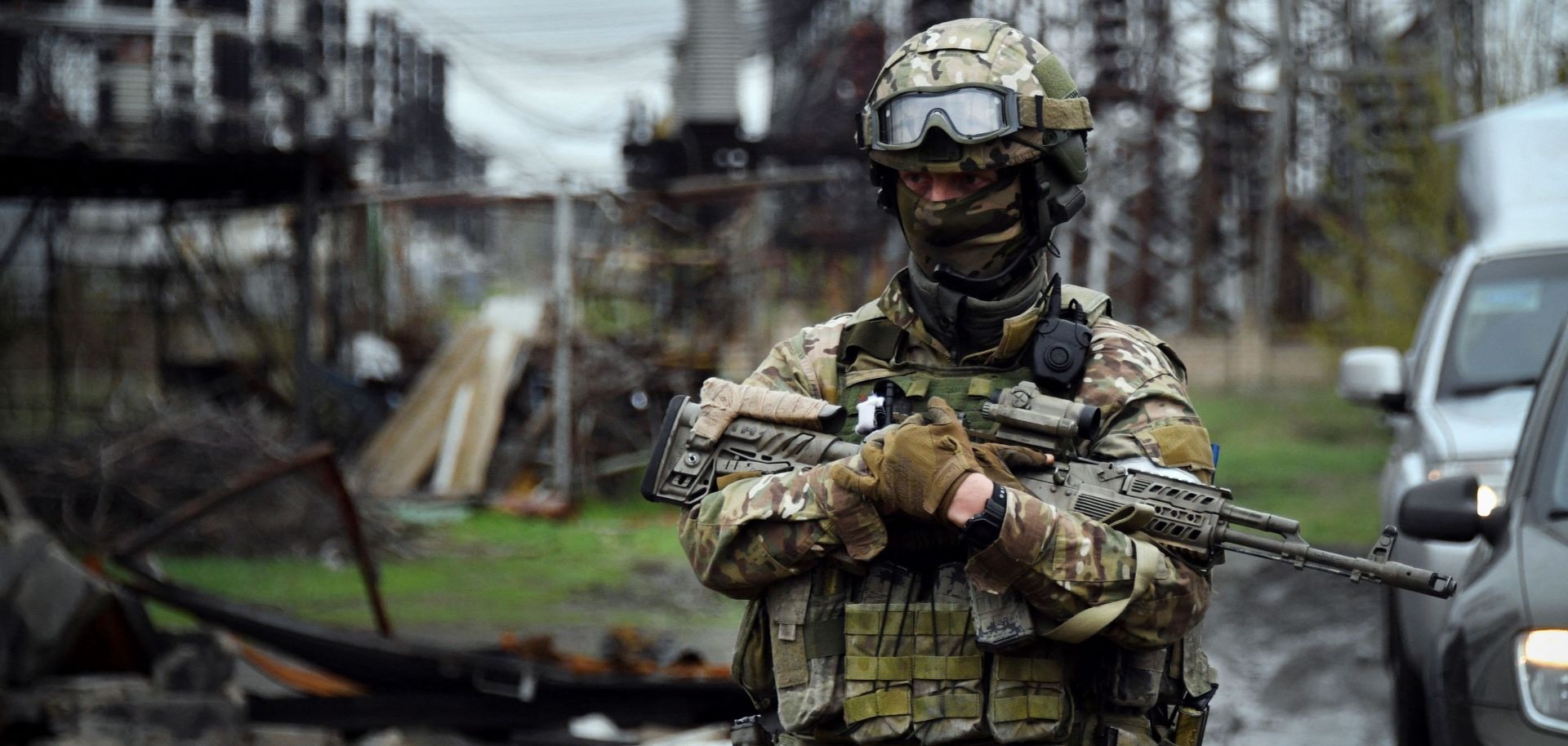
In an interview on the Harici YouTube channel, Professor Fyodor Lukyanov of Moscow’s Higher School of Economics, who also serves as editor of Russia in Global Affairs and moderates Russian President Vladimir Putin’s annual address at the Valdai Discussion Forum, offered a detailed assessment of the latest diplomatic efforts surrounding the war in Ukraine, divisions within NATO and the US administration, and the domestic mood in both Russia and Ukraine.
Speaking with Prof. Dr. Hasan Ünal, an international relations professor and host of the programme Strategic Compass, Lukyanov expressed cautious scepticism about whether recent negotiations between Russian and US officials can produce a lasting breakthrough.
Prof. Dr. Hasan Ünal opened the discussion by pointing to two recent rounds of talks: a lower-profile meeting in Abu Dhabi involving Russian, US, and Ukrainian representatives, followed by a high-level round in Moscow chaired by President Putin alongside US President Donald Trump’s negotiators, Jared Kushner and Witkow, without Ukrainian participation.
Prof. Dr. Hasan Ünal noted that the agenda appeared unusually broad, covering a new security architecture for the whole of Europe, an issue Western countries had long declined to discuss.
“I have ambivalent feelings vis-a-vis this process”
Responding to Prof. Dr. Hasan Ünal’s observation, Lukyanov said that while the expansion of the diplomatic agenda marks a notable shift, he remains uncertain about its outcome. “As far as the current intensification of the diplomatic process is concerned, I have ambivalent feelings vis-a-vis this process,” Lukyanov said. “On the one hand, of course, this is a significant change in the agenda, as you rightly pointed out. This time, actually for the first time since maybe Istanbul talks in March 22, there is a wider agenda, wider framework including the issue of security arrangements in Europe at large, including of course security guarantees for Ukraine, Russia, and all involved.”
Lukyanov explained that Moscow’s security concerns predate the 2022 invasion by decades, tracing them back to the end of the Cold War between 1989 and 1991. “The security system in Europe as it emerged after the collapse of the Soviet Union and Warsaw Pact has never been satisfactory for Russia,” he said. “Of course, at the beginning of this process and during the 90s, Russia was not in the position to seriously reject what has been proposed by Americans and NATO, and this system was de facto equal to the idea that NATO is the security system in Europe. So all the rest should not matter. NATO is the ideal framework, and that would be even fine with one significant nuance that Russia has never been considered as a part of this system.”
He recalled that in the early years of his presidency, between 2000 and 2002, President Putin directly asked NATO representatives whether Russian membership in the alliance could be discussed. According to Lukyanov, that question “provoked all the time totally confused reaction from the NATO side,” with officials treating the idea as “something absolutely out of question.”
When Prof. Dr. Hasan Ünal remarked that other countries linked to NATO as partners were eventually admitted as full members while Russia was not, Lukyanov agreed that there had been a “significant degree of hypocrisy in 1990s” surrounding NATO’s Partnership for Peace programme. “NATO and Americans in particular said that we have this Partnership for Peace program and that’s actually Russia is equal as others, very significant and respected partner, respected part of this system. Why are you angry?” Lukyanov said, adding that many in Moscow understood even then what the arrangement meant in reality. Prof. Dr. Hasan Ünal compared that dynamic to Türkiye’s long-standing relationship with the European Union, describing it as a theatrical game in which neither side believed accession would happen. Lukyanov responded that in Türkiye’s case, the hypocrisy was even greater because Turkish officials were repeatedly told to work on themselves before any decision would be made.
“We have this split inside the NATO community”
Turning back to the current negotiations, Lukyanov emphasized that the willingness of the US side to discuss the Ukraine crisis within a broader European security framework represents a major departure from previous decades. “The very fact that Americans this time, not Europeans, but Americans finally said that yes, it should be discussed, I mean the Ukrainian crisis should be discussed as part of broader framework of security problems in Europe, and actually Russia has a point in insisting on that,” he said. “This is of course a significant, very big shift compared to what we heard the years, if not decades before.”
Lukyanov attributed this shift to the Trump administration’s changing view of NATO, noting that Trump and his inner circle “don’t see a lot of value in NATO anymore.” However, he warned that this perspective is “absolutely out of touch with the European position.” According to Lukyanov, European leaders such as Kaja Kallas and Friedrich Merz continue to insist, just as they have for years, that “it’s not Russian business to discuss NATO” and that “NATO is the only legitimate security system in Europe. Russia should accept it or should be defeated now.”
As a result, Lukyanov said, “we have this split inside the NATO community.” Yet he doubted that this divide would yield concrete results, explaining that his ambivalence stems from the belief that Trump, whom he described as politically weaker than he was three or four months ago, will be unable to impose his views on European allies and Ukraine. “He failed to do it before. Most likely he will fail this time even more,” Lukyanov said.
“We should not have illusions that Trump is on the Russian side”
Prof. Dr. Hasan Ünal then raised the issue of apparent divisions within the US administration itself, noting that while President Trump and his close associates appear eager to end the war and pursue future economic and political cooperation with Russia, the CIA seems to be acting independently by backing Ukrainian drone strikes against Russian refineries. He asked whether this reflected genuine internal conflict or a coordinated “good cop, bad cop” strategy.
Lukyanov replied that all of those explanations might coexist, but cautioned against misreading Washington’s motives. “First of all, what I wanted to stress, we should not have illusions that Trump and his narrow circle with maybe Vance that they are on Russian side. So of course not,” he said. “They are interested to end this conflict for their domestic reasons, for reasons of their political positioning in the United States. And to a certain extent, yes, I think Trump is sincere and his envoys, they are sincere, as Putin said a couple of days ago. They are sincere in their willingness to do something.”
At the same time, Lukyanov noted that US intelligence sharing with Ukraine cannot occur without White House approval. He acknowledged that Trump’s return to the White House brought a major change by halting new US financial aid to Ukraine, but argued that this reflects a broader shift in US politics rather than Trump’s personal stance alone. “Even if Democrats will be in power again, I mean in the Congress starting from January or in the White House starting from 2029, Americans have no appetite to pay more,” Lukyanov said. “They are very happy with the new idea that Europeans should pay for everything and they can just earn on that.”
Ultimately, Lukyanov suggested that the Trump administration’s position on Ukraine remains vague. “They probably believe that in general they would love to help this conflict to be stopped. But it does not mean that they are ready to pay significant price, I mean not only in terms of money, but in terms of political efforts and political capital to stop it,” he said, adding that the conflict is “not that important for Trump and Trumpists as some people in Moscow, for example, thought at the beginning.”
“Russia started to fight in a full scale and we see results”
Prof. Dr. Hasan Ünal next asked about the evolution of Russia’s military approach. He noted that Moscow initially acted with restraint, framing the campaign as a special military operation out of concern for Ukrainians, whom President Putin described as the same people as Russians, before shifting to heavier military action in recent months following intensified Ukrainian attacks on civilian targets in Russia. He asked whether the outcome would ultimately be decided on the battlefield.
Lukyanov prefaced his answer by noting that he is not a military specialist, but agreed that Putin’s initial approach was aimed at limiting damage to Ukrainian society. “For quite a long while the basic approach of President Putin was to keep it limited, to try to deliver as little damage to Ukraine as a society as possible, probably because of his deep conviction initially that it is the same nation and it’s like a civil war almost,” Lukyanov said. He added a personal caveat: “By the way, I’m not absolutely sure that I buy this idea. So I had my doubts from the beginning whether we are really the same nation with Ukrainians. It’s a complicated historical cultural phenomenon.”
When the initial expectation of a short, efficient operation failed to materialize, the conflict settled into a long war of attrition. According to Lukyanov, the turning point came after Ukrainian forces stepped up strikes on Russian infrastructure, including civilian infrastructure. “Then Putin decided to put aside all limitations and Russia started to fight in a full scale and we see results,” Lukyanov said. “I will be the last person to say that this is a good result because we see a lot of destruction, we see a lot of suffering, but unfortunately this is the logical development of what we saw before.”
Addressing whether everything will be decided on the battlefield, Lukyanov argued that the very definition of a battlefield has changed. “Contemporary war, contemporary environment is completely different. We see actually no line, no border between war and peace anymore. Some people call it hybrid war,” he said. “There is really comprehensive confrontation on all fields where non-combatant, non-military dimensions might be even more important than the battlefield.” Because of this shift in the nature of international conflict, Lukyanov said he expects an increase in mutual efforts to undermine each other’s basic capacity to resist rather than dramatic territorial breakthroughs.
“Europeans have no ideas, but that Russia should be strategically defeated”
Prof. Dr. Hasan Ünal asked whether the Russian leadership, having outlined its peace proposals and root causes of the conflict to Washington, expects the US to push European allies toward a breakthrough.
Lukyanov said that Moscow has indeed placed a significant stake on the current US administration, noting that even figures like Marco Rubio, whom he described as “far from being big friend of Russia,” approach the Ukraine issue very differently from the Biden administration. “That’s about a different view of Trump administration what role America should play in international affairs, and he tries to define this role primarily through reconfiguration of relationship with allies, not with opponents in the first line,” Lukyanov said.
While many in Moscow, including President Putin, expected Trump to push Europeans toward a more constructive stance, Lukyanov pointed out that Trump failed to do so after the Anchorage meeting. “One of reasons is that Europeans actually, they learned how to deal with Trump. They learned what should be said to him to make him happy while doing exactly opposite things,” he said.
Lukyanov also argued that Trump’s leverage is diminishing following a heavy Republican defeat in the midterm elections, which he described as a referendum on Trump personally. With domestic political battles, potential inquiries, and the 2028 presidential race beginning in January 2027, Trump’s capacity to act abroad will likely shrink. At the same time, Lukyanov noted that Europeans recognize Washington will not increase its support for Ukraine while Trump is in office, meaning Europe must shoulder the financial burden despite having “no money at all at this moment.” That financial pressure, he argued, is the only reason European leaders now want to join the negotiations, either to slow them down or to “torpedo” them. “The problem, what Russian side says all the time is that Europeans, unlike Trump and even unlike some of Ukrainians, Europeans have no ideas, absolutely no ideas, but that Russia should be strategically defeated,” Lukyanov said.
“When people say that they want peace, they want peace but not at any cost”
Responding to Prof. Dr. Hasan Ünal’s question about the domestic mood in Russia and European predictions of an imminent Russian collapse, Lukyanov acknowledged that fatigue is real. “I would be unsincere with you if I would insist that everybody here is happy that this war continues,” he said. “Of course, society is tired and the ruling group, those who are in charge, they are even more tired because they work since quite a significant amount of time. They work in a situation of stress, and this stress is increasing because of military activities and strikes inside Russian territory and so on.”
However, Lukyanov stressed that war weariness should not be mistaken for a willingness to capitulate. “Russian society is very much willing to achieve a peaceful solution. Having said that, don’t misunderstand me. It does not mean that public opinion and society are in favor of giving up or stopping or even freezing the situation as it is now. It’s not the case. When people say that they want peace, they want peace but not at any cost.”
He dismissed Western and Ukrainian expectations of a Russian societal collapse, saying he sees no signs of it in the foreseeable future. While there are differing views inside Russia on how to end the conflict, with some favouring more active diplomacy to engage Trump and others advocating greater mobilization for a decisive military strike, Lukyanov noted that the public recognizes the war has already lasted longer than the Soviet Union’s Great Patriotic War in the 1940s. “Again, it’s not about to give up. It’s about to win,” he said.
“The resource of Ukrainian society is getting thinner and thinner”
Finally, Prof. Dr. Hasan Ünal asked Lukyanov for his assessment of Ukrainian society, pointing to reports of widening social cracks and forceful conscription on the streets.
Lukyanov cautioned that he is not a specialist on internal Ukrainian affairs and that reliable information is scarce because Ukraine is largely cut off. Still, he said open data and social media indicate that “the forceful mobilization of people produces ever higher anger in the Ukrainian society,” alongside troubling reports involving mobilized recruits and units such as the Azov battalion. “So seems that the resource of Ukrainian society is getting thinner and thinner,” he said.
Even so, Lukyanov doubted that Russia’s infrastructure strike campaign would immediately force Ukrainians to surrender. “In this regard I agree with Putin that we are very similar. I mean Russian people and Ukrainian people are very much similar, if not the same, and if we never give up, why should they?” he asked. “That’s why I think that at least at this point probably Ukrainian society will hold on.” He added that increasingly dictatorial behaviour by Ukrainian authorities could eventually trigger domestic troubles, though he said he was not qualified to judge whether those conditions have already arrived.
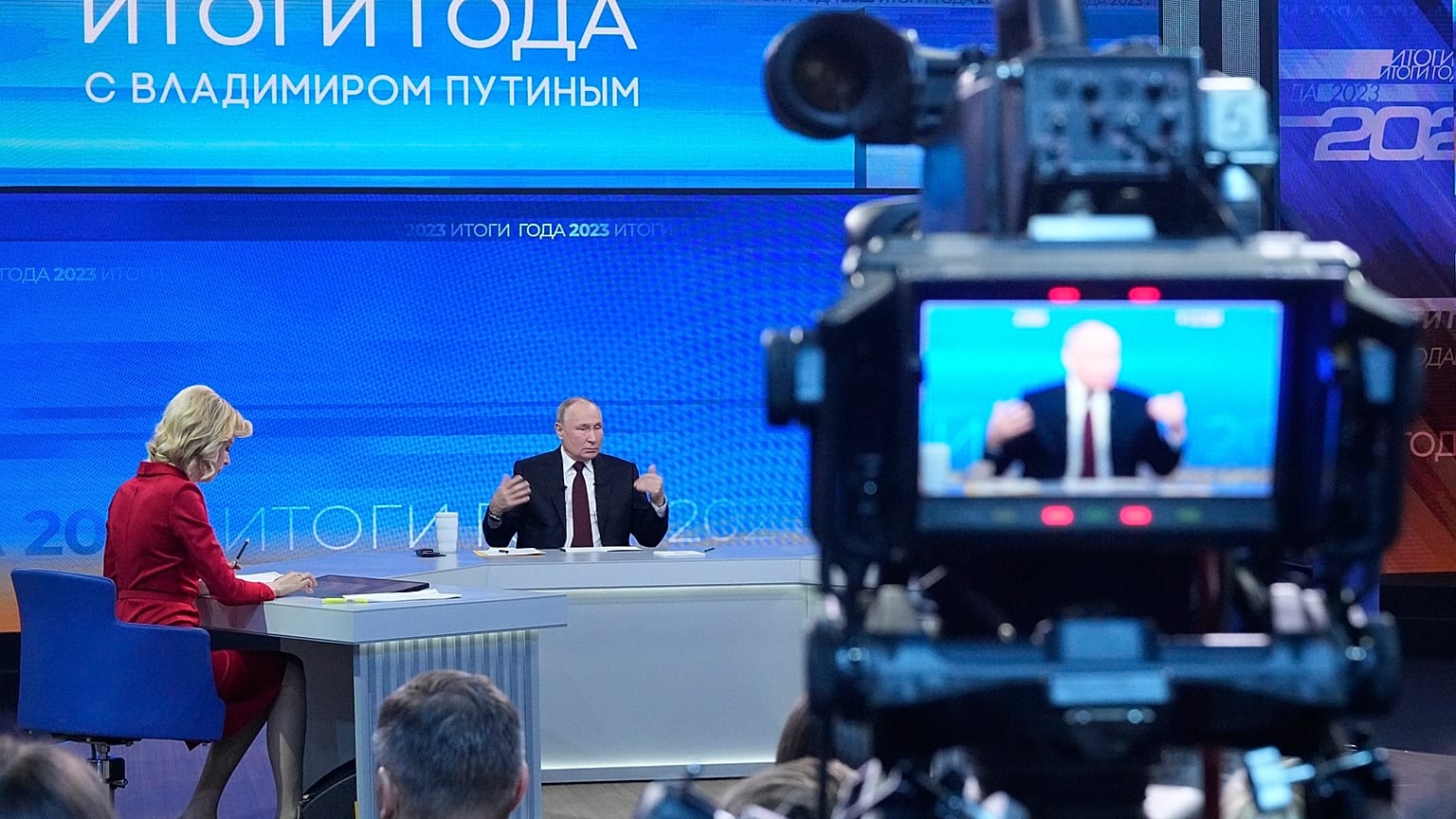
Representatives of European nations are ready to renegotiate arms control and military conflict prevention agreements with Russia, according to a Financial Times report citing unnamed European officials.
The US is seeking to include European countries in discussions on a future security architecture.
In this context, Europeans look favourably upon returning to arms control mechanisms, including agreements limiting missile deployment and the restoration of arrangements operating during the Cold War era.
The newspaper cited the Open Skies Treaty, which allowed the US and the Union of Soviet Socialist Republics (USSR) to monitor each other’s military installations, and accords restricting the deployment of specific missile types among potential examples.
Participating states of the Organization for Security and Co-operation in Europe (OSCE) signed the Open Skies Treaty in March 1992.
Signatory states are obliged to permit observation flights by other party nations over their territories using photographic and video surveillance.
Russia withdrew from the treaty in 2021.
Russian authorities emphasized in statements at the time that Russia had done everything possible to preserve the agreement, “despite numerous violations of the Open Skies Treaty by the US, its allies, and dependent states.”
According to information obtained by the newspaper, US President Donald Trump’s administration is seeking Moscow’s consent to organize a multilateral meeting involving European representatives.
A source speaking to the Financial Times noted that the European security architecture is among the main agenda items at the United Arab Emirates (UAE) summit, though Trump will make the final decision regarding the nature of security guarantees the US will offer.
The first day of trilateral negotiations among Russia, the US, and Ukraine concluded on 10 November in Abu Dhabi, the capital of the United Arab Emirates, with the meeting lasting more than four hours.
According to Politico, the parties plan to address territorial matters, including borders and lines of contact, on 11 November during the second day of negotiations.
Sources speaking to the publication stated that resolving the territorial issue and the future security mechanisms of Ukraine and Europe are interconnected and must be discussed in parallel.
“It is obvious that the current system does not work. We need to create something new that will work effectively today,” one source said.
According to Politico and the Financial Times, American negotiators Steve Witkoff and Jared Kushner plan to invite Europeans to join the negotiations after the trilateral meeting concludes.
“We need Europe at the negotiating table,” a source told Politico.
The Financial Times source likewise stressed that European participation is essential to reach an agreement aimed at ending the conflict.
European capitals fear that Moscow and Washington could agree on security guarantees for Ukraine and the continent’s new security architecture without the involvement of European Union (EU) and NATO allies.
Furthermore, the issue of EU participation in talks resolving the conflict in Ukraine has caused differences of opinion between Moscow and European capitals.
Russia previously stated that the EU currently has no place at the negotiating table due to its stance on the conflict.
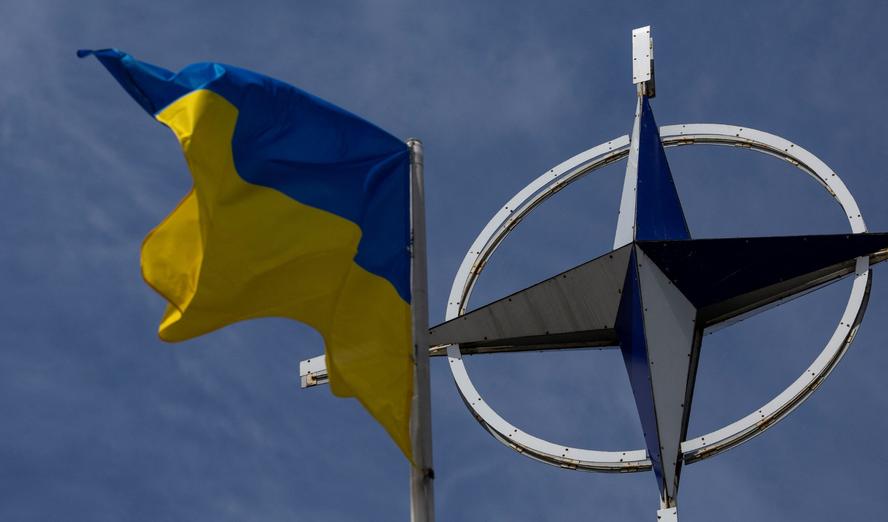
US President Donald Trump’s administration has asked the Russian side whether Moscow objects to granting Ukraine security guarantees akin to NATO’s Article 5 on collective defence, and to having such guarantees provided directly by the alliance itself.
According to a Financial Times report citing a US official, the final decision on the nature of the US security guarantees will be made by US President Donald Trump.
The US official said the White House is seeking Russia’s consent for multilateral negotiations that would also include European representatives.
“At this stage, we firmly believe Europe must be part of the negotiations to end the war,” the official said on the matter.
According to the report, prior to the trilateral talks, Trump’s special envoy Steve Witkoff and his son-in-law Jared Kushner will hold consultations with representatives from Ukraine, the European Union, NATO, Germany, France, the United Kingdom, and Italy.
Rustem Umerov, representing the Ukrainian delegation, also confirmed that Kyiv will hold separate coordination meetings with European partners in Abu Dhabi to align positions and subsequent steps.
The newspaper reported that while European diplomats are sceptical about the prospects of a breakthrough in the Abu Dhabi talks, they consider participation in the diplomatic process essential to support Ukraine and prevent broader European security issues from being addressed without their involvement.
Ukrainian President Volodymyr Zelenskyy stated in late October that talks held in Oslo between Ukraine, EU countries, and US representatives discussed granting Kyiv security guarantees similar to the provisions of NATO’s Article 5 collective defence clause.
In February, Zelenskyy described credible guarantees for Kyiv as the “only real basis” for peace.
The issue of security guarantees will form one of the agenda items at the trilateral negotiations between Russia, the US, and Ukraine, scheduled for 10-11 November in Abu Dhabi.
These contacts mark the first trilateral meeting in roughly nine months, following the previous round held in Geneva in February.
Presidential Aide Vladimir Medinsky will head the Russian delegation at the talks, while the US side will be represented by the president’s special envoys Steve Witkoff and Jared Kushner.
Rustem Umerov will lead the Ukrainian delegation.
Moscow insists that the future security guarantees slated for discussion at the meetings must also cover Russia.
Kremlin spokesman Dmitry Peskov noted that guarantees can only be mutual.
At the beginning of the year, Russian Deputy Foreign Minister Aleksandr Grushko stated that security guarantees for Russia are an essential component in reaching a peace agreement on Ukraine.
“We accept that a peaceful settlement in Ukraine must take Ukraine’s security interests into account, but the key issue is, of course, Russia’s security interests,” Grushko said.

APEC Summit: How China Uses the Art of “Emotional Value” to Deal with Trump

Crimean Bridge traffic suspended after consecutive Ukrainian attacks

EU links UK energy market access to cohesion budget contributions

Jensen Huang exit aids Anthropic and OpenAI as open models suffer

Five EU nations announce plan to deport migrants to Rwanda hub
-

 America1 week ago
US midterms see 97 young winners as Gen Z representation triples
-

 Europe2 weeks ago
EU urges citizens to prepare 72-hour survival kits for crises
-
 Diplomacy2 weeks ago
Protesters storm Kyiv site holding soldiers over torture allegations
-
 Europe2 weeks ago
Pro-Ukraine Republicans in US Congress dwindle after departures
-
 Europe2 weeks ago
Low EU gas stocks risk stoking global prices, IEA report warns
-
 Europe2 weeks ago
Brussels sees little hope of better US ties even if Trump loses
-

 Diplomacy2 weeks ago
Ukraine faces demographic collapse as fertility rates slide
-
 America2 weeks ago
Paraguay President Peña resigns over catastrophic bank collapse
