
Opinion
What are Iranians thinking in the shadow of war?

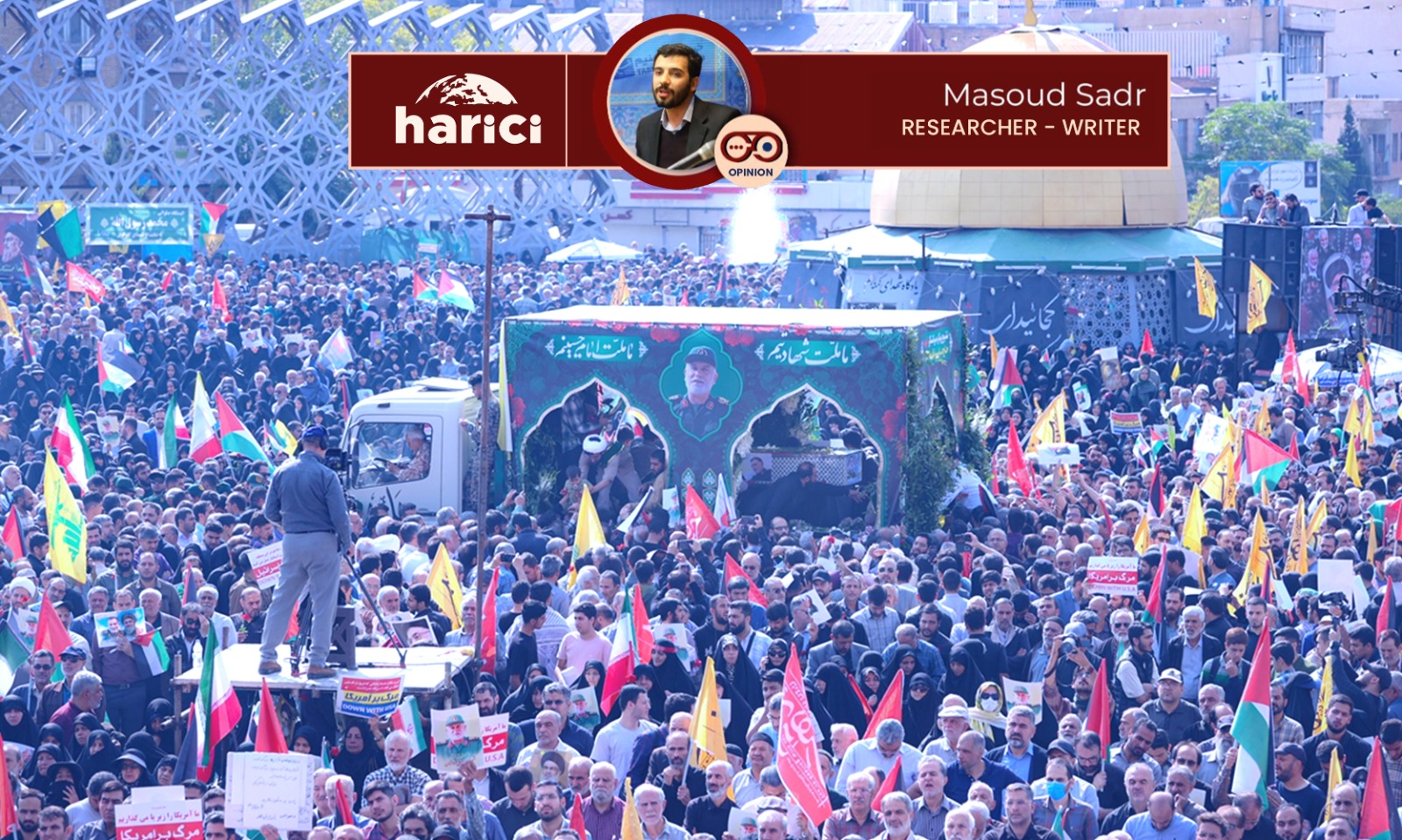
On the first anniversary of the Israeli genocide in Gaza, the possibility of a direct confrontation between Iran and Israel is now on the world’s agenda. Israel’s attack on Lebanon, the escalation of Netanyahu’s inhumane activities and Israel’s destructive actions in Lebanon have become a new page of events in the Middle East over the past year, and we still see Israel’s war machine advancing on this battlefield. However, the Iranian issue could lead to a new type of conflict, and the regional and global implications of this war will be profound.
One year after Israel’s attack on Gaza and the historic genocide, and with the war spilling over into Lebanon – aimed at destroying the Lebanese Hezbollah, one of Iran’s main allies in the Middle East – what is the analytical situation in Iran, and how do ordinary citizens and public opinion assess the situation?
Ordinary citizens are worried, but united against the external enemy
Iran has gone through a difficult social, economic and political period in recent years. The events surrounding the rise in petrol prices, which led to violent demonstrations in some cities, and the events that followed with the death of Mahsa Amini are considered to be one of the most important turning points in Iran’s social history in recent years. The sudden and suspicious death of President Ebrahim Raisi and the sudden change in the ruling wing were also among the issues that preoccupied Iranian society last year. In addition to these events, chronic inflation and economic stagnation, the continuous devaluation of the national currency, rising prices and falling incomes are among the deep crises in Iran’s social environment. Growing income inequality, rising unemployment and dwindling hopes for a better quality of life in the future have placed a heavy psychological burden on Iranian society. In such an environment, the prospect of war looming over the country seems alarming at first glance. When the threat of war is added to the existing economic and social crises, it can be expected that these crises will deepen or that social conflicts will erupt in the country. Based on this analysis, Israeli Prime Minister Binyamin Netanyahu addressed the Iranian people in a video message in recent weeks, trying to put psychological pressure on society and the government by drawing attention to the current problems in Iran.
Contrary to this initial perception, however, it is clear from the wider Iranian society and people’s reactions on social media that the sense of national consensus and unity has increased across the country as the war approaches. The attendance of millions of Tehranis at Friday prayers, where Iran’s Supreme Leader Ayatollah Khamenei delivered a sermon after a four-year hiatus, is a clear indication of this sense of national unity. The missile attacks on Israel by the Iranian armed forces and their reverberations around the world have both increased the Iranian people’s sense of national pride and honor and reduced their worries about how their state would respond to a possible attack by Israel.
Israel’s inhumane behavior in Gaza and Lebanon has also drastically changed the Iranian public’s view of the war. Compared to a year ago, Israel now has no credibility among the Iranian people, and they have developed a sense of disgust at the atrocities committed by Israeli forces in Gaza and Lebanon. This disgust manifests itself in the form of support for the Iranian state in any action against Israel. The last time the Iranian people experienced this disgust and support for the government was in 2014 and 2015. In those years, ISIS committed the most brutal crimes against humanity in Syria and Iraq, which led the Iranian people to support the armed forces in their cross-border operations in Iraq and Syria, making Qassem Soleimani a historic national hero for Iran. For the Iranian people today, Israel is not much different from ISIS in 2014.
One of the most important effects of the tensions between Israel and Iran has been to discredit and even destroy the opposition abroad in the eyes of the Iranian public. Over the past year, the Iranian opposition group abroad has become a supporter of Israeli crimes in Gaza and, with the escalation of tensions between Iran and Israel, a supporter of Israeli military aggression against Iran. This small but vocal group claims that the Israeli attack on Iran is actually directed against the Islamic Republic of Iran, and that this attack poses no danger to the Iranian people. With this rhetoric, this group belittles and ridicules the humanitarian feelings of the Iranian people as well as their nationalistic feelings. Therefore, one of the consequences of the year-long war in Gaza for Iran can be seen as the erosion of domestic support for the Iranian opposition abroad.
The elite community is divided: Defence or offence
The Iranian political elite, and especially the strategic analysts, have been going through turbulent times, especially in the last year and after the assassination of Ismail Haniyeh in Iran. The current discourse among Iranian analysts can be divided into two groups: those who approach the war situation in the region from a tactical perspective and those who see the current situation as the result of some strategic actions. Both groups draw different roadmaps for the future, depending on their approach to events.
According to the pro-minimal intervention group, Iran should not fall into Israel’s trap of escalation and its responses should be calibrated so as not to lead to a direct war and serious conflict with Israel, while providing deterrence. This is because a direct conflict between Iran and Israel would trigger a war between Iran and the United States, which could create an uncertain future for the region and the country. According to this group, Iran should allow Hamas and Hezbollah to fight Israel on their own and manage the situation in such a way that the conflict eventually ends in a ceasefire. While it is possible that Iran could provide support to prevent Hezbollah’s defeat, too much support would create unnecessary costs for Iran. Moreover, this group sees the possibility of Israeli damage to Iran’s oil infrastructure and Iran’s inability to repair it in the short term due to sanctions as one of the main reasons for a minimalist approach to intervention.
On the other hand, some Iranian analysts believe that ignoring a major war in the region that could have strategic consequences and adopting a minimalist approach to the current situation is strategic blindness. According to this group, Iran is engaged in a major war, and whether or not Iran strengthens its position on the battlefield will not change the intensity of the war; it will only affect Iran’s interests.
This group argues that Iran should immediately move from a position of reacting to Israel’s military actions to a more active and entrepreneurial stance. As long as there is a constant reaction to Israel, the power to control tensions will remain in the hands of Tel Aviv and the Israelis will continue to be able to manage the field through various shocks. According to this group, Hezbollah is a strategic asset of Iran and Iran cannot and should not give up this asset. Giving up its strategic assets means cutting off its own hand and arm, and the counter-front will only stop by destroying all existential aspects of Iran.
According to these analysts, Israel has convinced America that the best way to reduce the strategic power of Russia and China is to create chaos in the Middle East, weaken Iran’s strategic power and intimidate Middle Eastern countries. America is therefore prepared to support Israel for a long time to continue this war. They argue that Iran should not wait for Israel’s actions and should prevent Israel’s next moves in advance by attacking Israel’s security and economic infrastructure. Therefore, some analysts believe that Iran is considering an attack on Jordan as an option to damage American forces in the region and Israel’s military security system.
This group of analysts believes that the transfer of the war to Iran could become an opportunity and an advantage for Iran. This is because Israel has been waging a security war against Iran for the past two decades and has carried out numerous assassinations and sabotage against Iran’s strategic installations. Iran has always been weak in this security war because of its lack of resources and technology and because it does not have the intelligence support of the Mossad. But now that the conflict has shifted from a security war to a military war, Iran has gained considerable power and initiative and should use this opportunity to pacify Israel in the future. Otherwise, Israel will compensate for its military weakness with security sabotage in the post-war period.








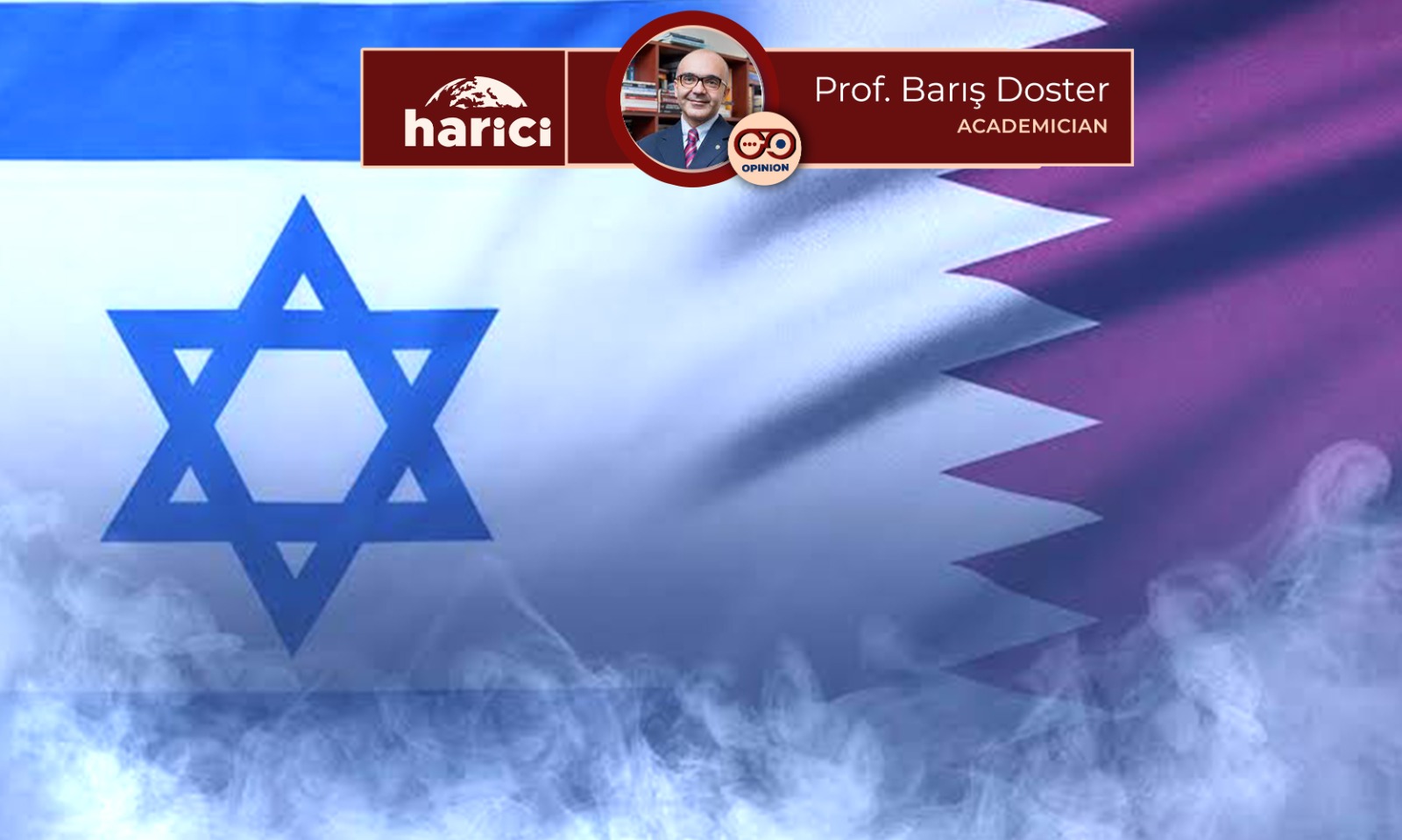
Israel’s strike on a military base near the Syrian city of Idlib occupied a prominent place on the agenda of Türkiye, the Middle East, and Arab nations. Official statements followed in quick succession. The US Ambassador to Türkiye and Special Envoy for Syria and Iraq, Tom Barrack, also drew attention with his bizarre remarks and his proposal to establish a tripartite security mechanism between Türkiye, Syria, and Israel.
Israel must be condemned in the strongest possible terms, and the harshest reactions must be delivered. Of this, there is no doubt.
Yet how sincere are the Arab states voicing these reactions? How consistent are they? How courageous? How willing are they to take steps that carry genuine deterrent power and impose real sanctions? We must, of course, reflect upon the answers to these questions.
For we know that certain Arab nations maintain intense, deep, and intricate relations with Israel. We need look no further. We recall, for instance, that Qatar, with which Türkiye also maintains very close ties, provided Israeli Prime Minister Benjamin Netanyahu with $15 million in the 2012 elections and $50 million in the 2018 elections to finance his political campaigns. Indeed, this funding is continually kept on the agenda by the opposition in Israeli domestic politics. It is well known that during that period, Netanyahu gave a statement to the police regarding the funds, his advisers who received the money were arrested, audio recordings and confessions surfaced, and Netanyahu’s dismissal of the affair as “a political plot against me” failed completely to convince.
The truly remarkable aspect lies here: this affair preoccupied the Israeli public for days and became the foremost item on the political agenda. Yet in Qatar, across the broader Arab world, throughout the Islamic world, and in Türkiye, the matter received scant attention. Only a handful of voices raised the issue or expressed outrage that millions of dollars were channelled to such a killer, such a perpetrator committing the crime of genocide in Palestine, to fund his election campaigns; even their voices were barely heard.
Let us now speak frankly. With the Islamic world and the Arab nations in this state, who can reasonably expect Israel to take a step back regarding Palestine? Who can remain optimistic about a two-state solution based on the 1967 borders, with East Jerusalem as its capital, that recognizes the independence, integrity, and sovereignty of Palestine? Who can genuinely believe that Arab states are determined, consistent, valiant, and sincere on the Palestinian question? While the silence of Islamist and conservative-pious circles regarding Qatar’s financial assistance remains plain for all to see, who can be convinced that demonstrations, rallies, and press conferences concerning Gaza and Palestine will yield tangible results? Who, what power, or which Arab state can sustain the hopes of the oppressed, sorrowful, and aggrieved Palestinian people? Qatar? Saudi Arabia? The United Arab Emirates? Egypt? Jordan?
Nor should we forget that elections will be held in Israel on 27 October. Benjamin Netanyahu is escalating his aggression and recklessness, seeking both to salvage his waning poll numbers and reputation and to shift the political agenda by emphasizing securitist policies and external threats. Heavily worn down by corruption allegations against himself and his wife, Netanyahu cannot leverage security policies and military measures as effortlessly as before, given that his primary opponent, former Chief of General Staff Gadi Eizenkot, leaves him on weak footing against a military rival. Yet despite such corruption, attrition, genocide, and bloodshed, Netanyahu appears to maintain his grip on his party; indeed, most candidates who prevailed in the primaries are politicians in his close circle.
Qatar, which enjoys considerable admiration and esteem in our country, not only backs Benjamin Netanyahu in domestic Israeli politics but also conducts joint military drills in the Eastern Mediterranean with the US, France, and Greece; Israel takes part in these exercises as well.
Let us admit that Qatar cares neither for the Palestinian cause nor for the innocent Muslims slaughtered in Gaza. It values neither the Islamic world nor Arab unity. It neither takes into account the sensitivities, priorities, and interests of Türkiye, nor does it share Türkiye’s anxieties and concerns.

Thomas Karat, behavioral analyst
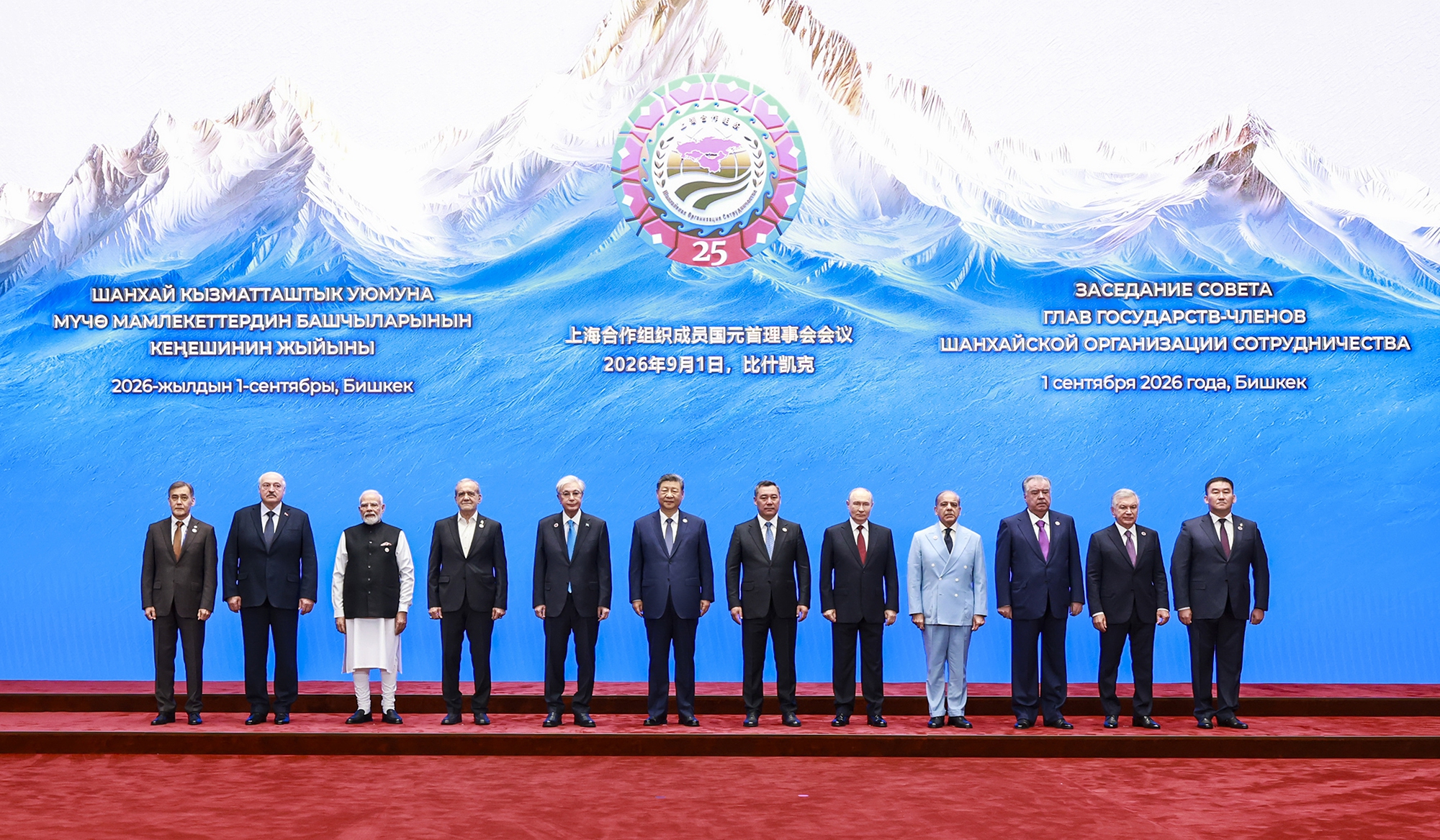
The photograph that Western agencies distributed from Bishkek arrived with its meaning already fixed. Above an image of the Kyrgyz president escorting China’s Xi Jinping past an honor guard, the caption read COUNTER US POWER. The image itself showed a familiar diplomatic ritual, two heads of state walking a red carpet. The caption supplied what the image did not: an adversary, a purpose, and the direction in which a Western audience was meant to orient its concern. The gap between the neutral picture and the loaded words is a useful place to begin, because it is where the framing of the entire summit was decided before a single line of analysis was written.
On Sept. 1 the Shanghai Cooperation Organization marked its twenty-fifth anniversary in the Kyrgyz capital, with ten member states, more than a dozen heads of government, and the secretary-general of the United Nations among the guests. Most European and North American outlets carried a single Agence France-Presse dispatch, which described the bloc as one that seeks to be a counterinfluence to the West. France 24 reported that the Russian and Chinese leaders had traveled to Central Asia to counter Western influence. British coverage of an earlier session of the same body called it a secretive summit of an “axis of upheaval.” In each formulation the West occupies the grammatical center of a meeting it did not attend. The organization is assigned no purpose that can be stated without reference to Washington and Brussels. It is defined entirely as a reaction to them.
Türkiye is the hole in the caption
The framing meets its first and largest obstacle in the guest list, and specifically in the presence of a NATO member at the table. Türkiye holds the status of dialogue partner in the organization, and President Recep Tayyip Erdogan has attended its summits in person. A Western reader told that the SCO is an axis assembled against his alliance is not encouraged to ask why a founding member of that alliance keeps a seat in it. The same AFP dispatch that calls the bloc a counterinfluence to the West records, several paragraphs below its lead, that the organization now counts fifteen dialogue partners including Türkiye, Saudi Arabia and Qatar. Türkiye belongs to NATO. Saudi Arabia and Qatar host the forward headquarters of United States Central Command and the largest American air base in the region. An organization built to oppose the West does not assemble this membership, and a caption that calls it one survives only for readers who do not reach the paragraph that contradicts it.
Türkiye’s position is the part of the picture that Western coverage is least equipped to interpret, because the prevailing map allows for only two teams. Ankara is not choosing the SCO over NATO. It is doing something the two-team model cannot represent, treating the organization as a venue to be worked, neither joining it nor shunning it. A state that keeps its treaty commitments in the Atlantic while cultivating standing in a Eurasian security forum is hedging against a future in which the Atlantic order no longer sets the terms alone. That behavior is legible from Istanbul and largely illegible from the outlets that produced the Bishkek caption, which is why their account of the summit reads, from this vantage, as a description of a world that has already begun to pass.
The vocabulary and its tell
The language of the coverage repays close attention. The recurring terms are “counter,” “against,” “anti-Western,” and “axis,” a vocabulary of opposition that grants the bloc no content of its own. The word “axis” carries the heaviest freight. It imports the moral architecture of the Second World War, and more recently of the “axis of evil,” and lays it over a trade-and-security forum whose membership includes a NATO government. The transfer is performed a few lines from the facts that make it untenable, and the proximity is the tell.
There is a structural habit worth naming as well. The AFP copy notes that the organization’s founding declaration describes it as not an alliance directed against other states, and then, in the following sentence, observes that the Russian and Chinese leaders have delivered anti-Western speeches at past summits. The self-description is admitted and immediately withdrawn. The skepticism applied here is selective. When a NATO communiqué describes the alliance as defensive, the same wire services do not append a reminder of its record of offensive operations. The doubt switches on for adversaries and off for partners, a selection that rests on assumption and not on evidence. Coverage outside the Western agency system handles the same material with a cooler hand. Al Jazeera quoted a regional analyst describing the SCO simply as not a coherent anti-Western alliance, a plain and accurate line that appears in no Western headline, because it does not fit the caption.
A bloc that grew in proportion to the pressure
The organization’s history explains more than its rhetoric does. It began in 1996 as a border-demarcation arrangement among China, Russia and three Central Asian republics, a technical body concerned with the settlement of frontier lines. It gained momentum in close proportion to the pressure applied to its members from the West. India and Pakistan acceded in 2017. Iran was admitted after years of sanctions had made membership useful to Tehran and to the bloc alike. The roster of dialogue partners expanded toward fifteen as American secondary sanctions and tariffs demonstrated to a widening circle of governments the value of a forum beyond Washington’s reach. At Bishkek the rotating chairmanship passed to Pakistan, another long-standing American security partner. The pattern is consistent: the organization has grown less by recruitment than by the steady conversion of states that Western policy has pressed toward the exits.
Iran offers the sharpest illustration. President Masoud Pezeshkian took his seat in Bishkek six months into a war with the United States. A week before the summit, the U.S. Treasury announced a sanctions campaign it named Operation Economic Outcast, extending secondary sanctions to five further sectors of the Iranian economy, aviation, digital assets, gold, shipping and technology, and warning in a separate alert that any party of any nationality paying Iran for passage through the Strait of Hormuz risked U.S. penalty. Secondary sanctions do not fall on the target alone. They fall on any government or firm that trades with the target, which makes them an instruction directed at the sovereign decisions of other states, enforced by the threat of exclusion from the dollar system. China, the largest purchaser of Iranian oil, responded that it would firmly defend its interests. A measure aimed at Tehran functions as a demand issued to Beijing, and Beijing traveled to Bishkek. India provides a second instance. Prime Minister Narendra Modi held a scheduled bilateral with President Vladimir Putin days after Washington imposed a 50 percent tariff on Indian goods over New Delhi’s purchases of Russian oil. The instrument intended to discipline India accompanied it to the very table it was meant to keep it from.
The divisions are real, and they are the point
An accurate account of the summit requires equal candor about the organization’s limits, and candor here is what separates analysis from a mirror image of the framing under examination. The SCO is not a unified bloc. Russia and China compete for influence across the same Central Asian ground. India and China share a contested and periodically violent border, which is why Modi and Xi appeared on the same platform but arranged no formal bilateral. India and Pakistan hold membership in the same body while remaining adversaries. A proposed development bank has been discussed for years without becoming a functioning institution. The 40 percent of humanity the organization claims to encompass is a measure of scale, not of common purpose.
These divisions do not rescue the Western frame. They sharpen the judgment it obscures. Agreement among these governments does not exist, and it is not what makes the summit notable. What makes it notable is the preference of states that distrust one another to manage their disputes inside a structure the United States does not control. The arbitration of one it does control is the option they declined. That preference is a heavier comment on the standing of the American-led order than any declaration could produce. It requires no alliance and no shared ideology. It requires only that a critical mass of states has concluded that the Western order is something to work around, and that the working-around now proceeds openly, at the level of heads of state, beneath a caption instructing Western readers to see a hostile axis where a hedging one stands.
The shrinking center
The phrase that recurs whenever Western officials describe global opinion is “the international community.” Bishkek is a reminder of how much that phrase conceals. The community it invokes is a specific and diminishing set of capitals that grew accustomed, during the brief period of unchallenged American primacy after 1991, to mistaking its own consensus for the consensus of humanity. The summit in the Kyrgyz capital assembled a NATO member, a Western-courted partner in India, the Gulf security clients of the United States, and the two most heavily sanctioned states on earth, and it did so under the observation of the United Nations secretary-general. No description of that room as an anti-Western axis can be reconciled with its composition. The description persists because it serves the audience it is written for, offering a shrinking center the reassurance that it remains the fixed point around which the world still turns.
From Ankara, and from the wider vantage of states that have watched the post-1991 order lose its monopoly, the reassurance reads as a lagging indicator. The two men in the photograph were walking to lunch. The power that could not prevent the lunch, could not hold its Indian partner at a distance from Moscow, could not isolate the state it is fighting, and could not keep the head of the United Nations from attending, is nonetheless assured by its own press that the summit was organized around opposition to it. The more accurate reading is the one Türkiye’s own conduct already reflects. The world is not arranging itself against the West so much as arranging itself without waiting for it, and the caption over the photograph is the last place that development will be admitted.

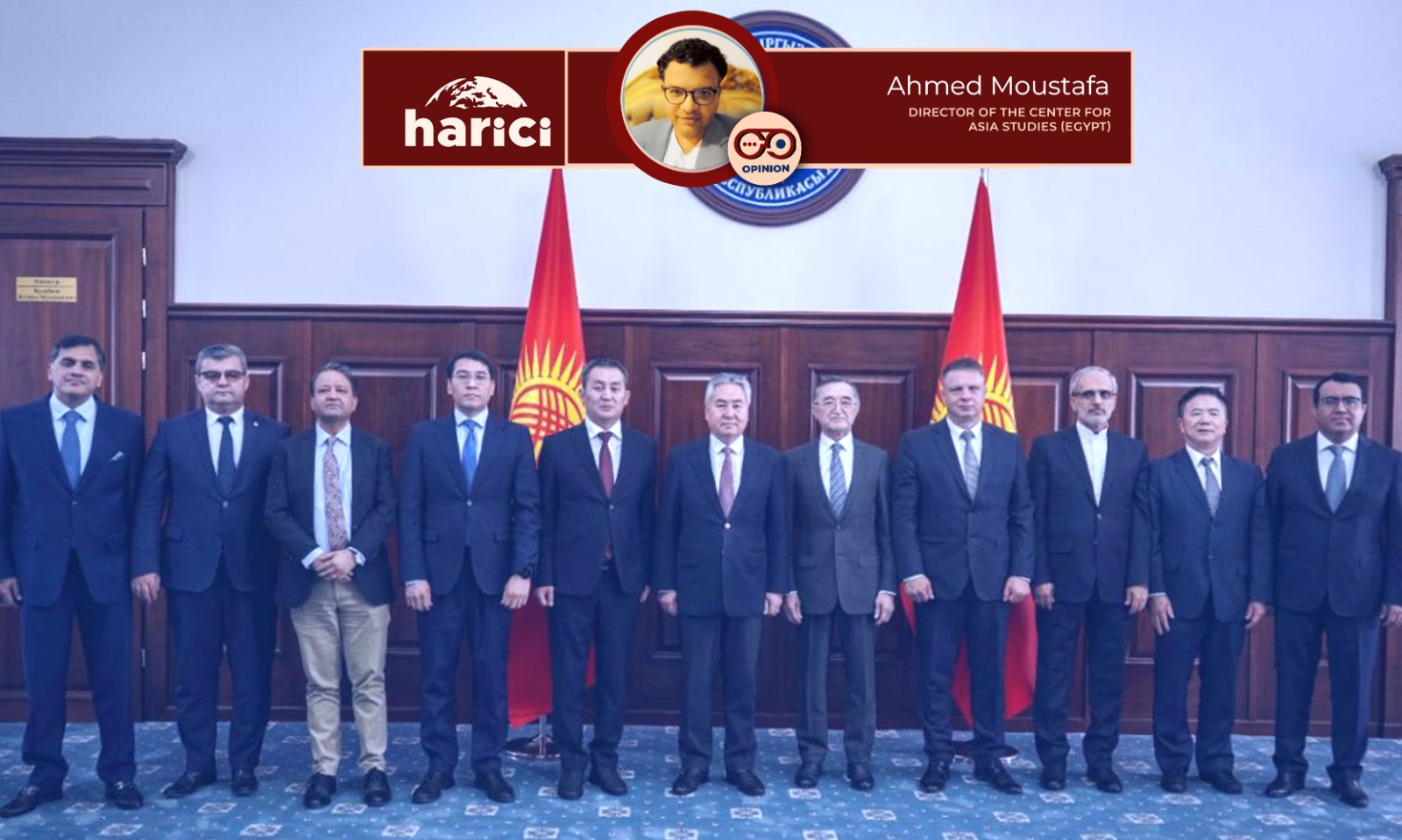
Dr. Ahmed Moustafa, Director & Founder, Asia Center for Studies & Translation, Egypt
Ten heads of states and governments, a cast of partners spanning half of Eurasia meet in the Kyrgyz capital promising a world beyond Western dominance. The summit’s quiet battles over money, media and the club’s own contradictions will matter more than its communiqué.
BISHKEK, Kyrgyzstan: This is a city that understands great powers. Soviet engineers drew its street grid. Its economy runs substantially on money earned by Kyrgyz workers in Russia. And when the Shanghai Cooperation Organization holds its annual summit here Aug. 31st to Sept. 1st 2026 the mountain-ringed capital will become, for 48 hours, the seat of this era’s most consequential open question: What does the world look like after Western dominance?
What will the world look like beyond Western dominance?
The participant list alone is enough to illustrate the scale of the stakes. Chinese President Xi Jinping, Russian President Vladimir Putin, and Iranian President Masoud Pezeshkian will lead the SCO’s ten full members, representing roughly 40 percent of humanity. They include India and Pakistan, Belarus, and the four Central Asian republics, led by Kazakhstan and its President Kassym-Jomart Tokayev, alongside dialogue partners whose presence stretches from Cairo to the Gulf and all the way to Ankara.
No Western institution has ever had to accommodate such a company under one roof. No American administration has had to watch it from the outside.
On paper, the agenda is deliberately unremarkable: counterterrorism cooperation through the organization’s Tashkent-based coordinating body, Afghanistan’s instability, trade facilitation, energy, digital development and the ritual invocation of the “Shanghai Spirit” mutual trust, mutual benefit, respect among civilizations. The organizing principle, as ever, is consensus, which is another way of saying nothing said in the plenary hall will offend anyone.
The real summit will happen in the margins, in three conversations the final declaration will not be recorded.
The first is about money and how to move it where Washington cannot reach it
No communiqué will use the word “sanctions.” Yet diplomats from three member states, speaking on the condition of anonymity to describe preparatory talks, said the financial file has consumed more negotiating time than any other: the long-delayed SCO Development Bank, given fresh impetus at last year’s Tianjin summit; the expansion of local-currency trade; the stitching together of national payment systems that would let members settle accounts without touching the Belgium-based SWIFT network and therefore without touching U.S. financial law.
The urgency is not abstract. Russia’s central bank operates under sweeping penalties. Iran has been locked out of the dollar system for a generation. Even India, a Western partner, buys Russian oil in non-dollar currencies to keep its options open. Tariffs and secondary sanctions have turned “financial inclusiveness,” in the organization’s diplomatese, into the summer’s quiet rallying cry.
The obstacles are equally concrete. The development bank has been discussed for more than a decade without being built, partly because every founding member wants it capitalized, headquartered and denominated on its own terms. “Nobody in that room is against de-dollarization,” said one economist who advises a member-state government. “Everybody in that room is against a bank China controls.”
The second conversation is about the United States absent, and everywhere
The months before the summit have seen a burst of American diplomacy conducted largely through intermediaries: reported contacts between the CIA director and Russian intelligence; a Pakistani army chief’s travels to Tehran; Gulf foreign ministers, and on one reading the Jordanian monarch, carrying messages to Beijing. Washington describes the traffic as routine management of a complicated world. In the capitals gathering in Bishkek, it is read as something more evidence that the superpower wants deals.
“Diplomacy by intermediary is either sophistication or exhaustion,” said a European ambassador in Beijing, who like others spoke on the condition of anonymity. “The Americans say the first. This summit will spend two days staging the second.”
The calendar sharpens the drama. U.S. midterm elections fall ten weeks after the leaders leave Bishkek, and a president who has staked his brand on ending wars and winning trade disputes has delivered a durable settlement of neither. Advisors openly worry that losing the House would hand the opposition subpoena power and the machinery of impeachment. Analysts expect the summit’s choreography to be calibrated accordingly: handshakes and family photos projecting an alternative order, measured carefully enough not to hand Washington an enemy at the worst possible moment.
Yet the “declining America” narrative has limits that the summit’s own design reveals. India attends in large part to ensure the organization does not become a Chinese-Russian instrument; it has blocked anti-Western language before and is expected to again. The Central Asian states hedge between Russian security, Chinese financing and Western markets. And every member’s sanctions-resistance project is, in the end, a measure of how much the dollar world still matters.
The third conversation is the one an Egyptian started
Among the more concrete proposals at Tianjin came not from a head of state but from Dr Ahmed Moustafa, an Egyptian scholar and specialist in Asian and Eurasian Affairs, who directs the Cairo-based Asia Center for Studies and Translation, attending as his country an SCO dialogue partner continues testing the club’s outer circle. His argument: the organization’s deepest deficit is neither military nor financial but informational.
The West’s real advantage runs through its media platforms and professional networks, which shape the aspirations of the very youth the organization claims to speak for. His proposal, a standing, professionally sponsored mechanism binding member-state think tanks and media, and a professional social platform for the region’s young people, “similar to or stronger than LinkedIn” circulated this summer in summit working groups.
The idea matters less as a business plan than as a diagnosis that Beijing and Moscow have reached by harder roads. For all its demographic weight, the information environment in which the organization’s citizens actually live is dominated by Western platforms and Western languages. Member states have answered with firewalls, copycat apps and an annual media forum. What they have not produced is a digital ecosystem anyone would choose.
Skeptics see a structural reason: professional networks create value through the free flow of information precisely what several member governments are professionally committed to restricting. “You can build a LinkedIn for the Shanghai Spirit,” one diplomat joked. “Good luck making anyone network in it.”
The last conversation is with itself
The family photo will not show the feuds beneath it: India and China, India and Pakistan, Iran which left Tianjin with expressions of sympathy and no security guarantees after its war with Israel and a host government whose national strategy is to be courted by all sides at once. A quarter-century after the organization’s founding, its signature achievement remains the summit itself: proof that rivals can meet, not yet proof that they can build.
“Bishkek will be perfectly staged,” said a veteran analyst of Eurasian institutions. “The question is whether anything survives the motorcades.”
When the leaders fly home over Bishkek on the first of September, they will leave behind banners, a communiqué and a claim: that a new order is not merely desired but operational.
The quieter truth of this summit is that an order cannot be declared into existence. It has to be built payment system by payment system, platform by platform, in the unphotographed rooms where the Shanghai Spirit is tested against arithmetic.

Big Tech profits from AI extinction hype, Ken Klippenstein says

Israel military weighs legal steps against Gaza documentary makers

Finkelstein says US campus clampdown has surpassed McCarthyism

DeepSeek engineer warns AI will lead to communism or Cyberpunk

Israel pledges full Greek control over Achilles’ Shield source code
-

 Europe2 weeks ago
Germany’s CDU drafts tougher citizenship rules to counter AfD
-
 Diplomacy2 weeks ago
Geoffrey Roberts sees Ukraine war concluding within coming months
-

 Diplomacy2 weeks ago
Pope Francis accused Opus Dei of mafia tactics over Spanish shrine
-
 Diplomacy2 weeks ago
US expands military footprint in Somalia with new Bosaso base
-

 America2 weeks ago
Milei hardens Falklands stance with oil sanctions and defence push
-

 America2 weeks ago
Pentagon launches mass polygraph inquiry over munitions leaks
-
 Middle East2 weeks ago
Ben Gvir reveals plan to expel majority of Gaza population
-
 Asia2 weeks ago
China leads $54bn capital injection into state banks and insurers
