
Diplomacy
Argentina demands bilateral Falklands talks as Trump weighs US policy shift

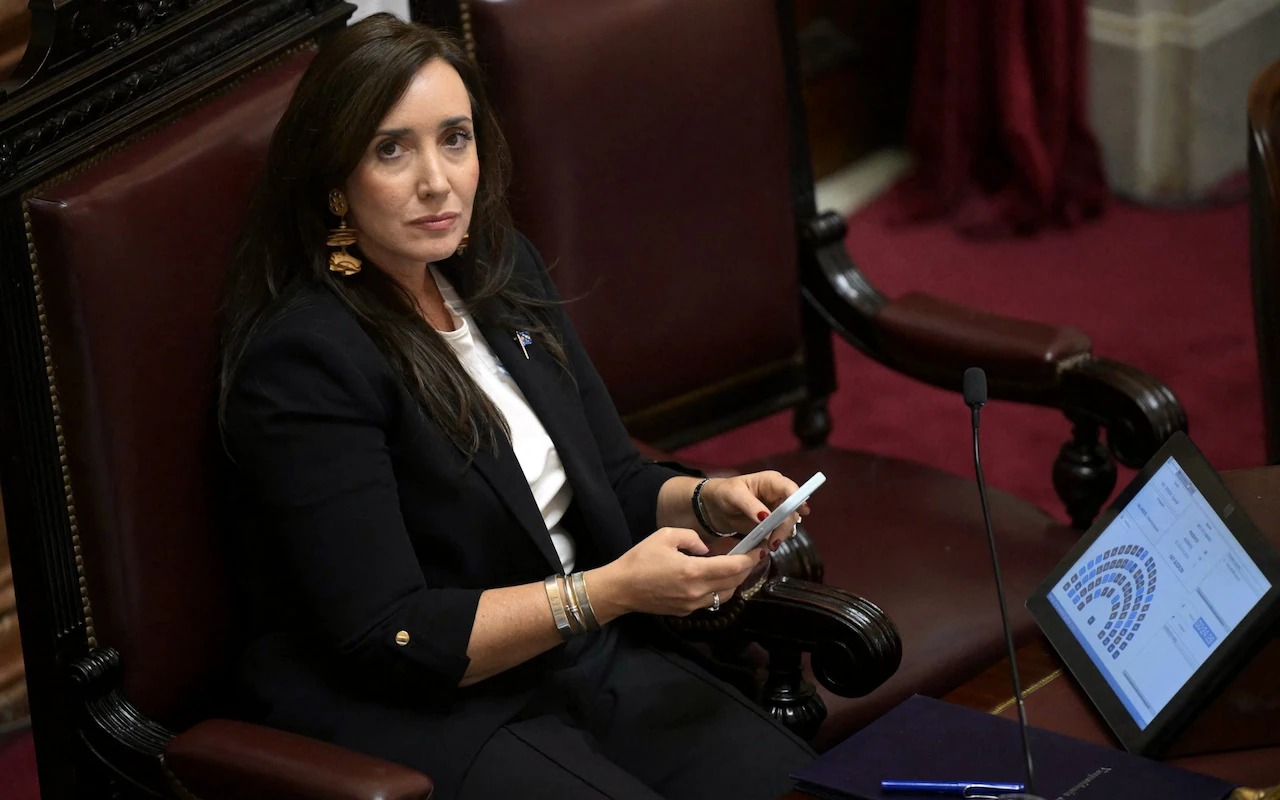
Argentina has reactivated its long-standing diplomatic challenge to British sovereignty over the Falkland Islands, with Vice President Victoria Villarruel asserting that the territory’s residents should return to the United Kingdom if they wish to maintain their British identity.
The renewed claim by Buenos Aires follows reports that US President Donald Trump has threatened to review Washington’s official stance on the archipelago—referred to in Argentina as the Malvinas—after the UK reportedly declined to join a potential military conflict against Iran.
President Javier Milei, a key regional ally of Trump, reiterated the claim last week, stating: “The Malvinas islands have always belonged to Argentina in the past, today, and in the future.”
Deepening the rhetoric, Vice President Villarruel issued a statement via social media, arguing that the status of the islands is a matter strictly between sovereign states.
“Today, the Malvinas islands belong to Argentina more than ever,” Villarruel wrote. “The discussion regarding the sovereignty of our islands is between states; therefore, the United Kingdom must discuss our claim bilaterally with Argentina, which we maintain for legal, historical, and geographical reasons. The Kelpers are British people living on Argentine territory; they are not part of this discussion. If they feel British, they should return to their country, thousands of kilometers away.”
The call for a resumption of negotiations over the islands’ future comes amid signals from Buenos Aires that it believes the US may shift its historical neutrality to support Argentine sovereignty claims. Argentine Foreign Minister Pablo Quirno has formally demanded an “end to British colonialism” and called for new bilateral talks to reach a “peaceful and definitive solution.”
The Falkland Islands government condemned the suggestion that the Trump administration might review its position. Local officials pointed to the 2013 referendum, in which 99.8% of the population voted to remain a British Overseas Territory. While Argentina has dismissed the referendum as a “sham” and accused London of “population planting,” the island government maintained its “full confidence” in the UK’s commitment to defending their right to self-determination.
British Prime Minister Keir Starmer reportedly reacted sharply to leaked Pentagon emails suggesting a review of the US position, while British veterans have accused the Trump administration of “bullying.” Home Secretary Yvette Cooper reaffirmed that the UK’s commitment to the islands remains “unwavering.”
“The Falkland Islands are British territory: sovereignty belongs to the United Kingdom, and the right to self-determination belongs to the residents,” Cooper said in response to Milei’s comments. “We could not be clearer about the United Kingdom’s position regarding the Falkland Islands. This position is long-standing. It has not changed.”
Political friction is expected to increase this autumn, as Reform UK leader Nigel Farage reportedly plans to visit Argentina to inform Milei personally that British sovereignty over the islands is “not up for discussion.”
The current diplomatic escalation contrasts with Milei’s previous rhetoric. On April 2, 2024—the 42nd anniversary of the conflict—Milei stated his ambition was to make Argentina a global power so that the inhabitants of the Falklands would eventually choose to align with Argentina over Britain. A year prior, he publicly acknowledged that the islands were “in the hands of the UK” and admitted there was “no instant solution,” promising to pursue recovery only through diplomatic channels.
However, recent military and financial developments have shifted the landscape. The Telegraph recently reported that the US applied pressure on the UK to accept a deal involving the sale of US-made F-16 fighter jets to Argentina. Argentina took delivery of the aircraft from Denmark late last year, representing a rare instance of Western allies arming Buenos Aires.
While the UK maintains a strict ban on exporting weapons or components to Argentina due to the sovereignty dispute, London does not hold a formal veto over the F-16 transfer. Nevertheless, sources told The Telegraph that the UK was “firmly informed” that the deal would proceed despite British objections. The geopolitical alignment has been further underscored by financial ties, with Trump providing Milei with a £15 billion bailout package last year.





In an in-depth interview broadcast on the Harici YouTube channel’s “Strategic Compass” programme, hosted by international relations expert Prof. Dr. Hasan Ünal, renowned British political scientist and specialist in Russian and East European studies Prof. Dr. Richard Sakwa delivered a sweeping, critical assessment of the Ukraine war, European diplomacy, and the shifting dynamics of global security architecture.
Prof. Dr. Richard Sakwa, who serves as an honorary professor of Russian and European politics at the University of Kent and holds an academic affiliation with Moscow State University, joined Prof. Dr. Hasan Ünal to examine recent confidential and multi-track diplomatic talks, the strategic mistakes made by Western and Ukrainian leadership, and the structural drivers of the ongoing European crisis.
Opening the discussion, Prof. Dr. Hasan Ünal noted that behind-the-scenes meetings had taken place involving various intermediaries in Abu Dhabi, as well as subsequent direct contacts between US and Russian representatives in Moscow, suggesting that substantive issues concerning the post-war European security architecture were finally entering the agenda. Ünal observed that for the first time since hostilities began, Washington appeared willing to address Russian proposals originally tabled prior to February 2022.
Responding to Ünal’s initial appraisal, Sakwa agreed that “in the last few weeks, diplomacy has accelerated and intensified in all sorts of forums.” He cited the gathering in Oslo involving Finnish President Alexander Stubb, Norwegian leadership, British officials, and national security advisers as an important breakthrough. European leaders, Sakwa observed, had repeatedly complained about being excluded from key negotiating tables. “Russia says, ‘Well, of course you should be at the table, but you should come to the table with some positive ideas rather than the idea of simply sabotaging any initiatives,'” Sakwa said.
Recalling previous diplomatic episodes, Sakwa pointed to the August 2025 Anchorage summit between Donald Trump and Vladimir Putin, contrasting it with a subsequent White House gathering of European representatives:
“Remember that famous scene where they gathered around in the White House, which is in my view, one of the most humiliating pictures in European history, that here you had Trump sitting in all his pomp and glory and the European leaders as eager supplicants.”
Prof. Dr. Ünal concurred, characterising the scene as “very much like the professor basically holding a PhD lecture in his office instead of the class… because the professor is at the same time the dean of the faculty.”
Sakwa described the performance of European leaders as “absolutely outlandish and sad because instead of pushing a positive agenda, they were trying to sabotage” progress. “Okay, maybe they didn’t like what was agreed at Anchorage,” Sakwa noted. “It wasn’t decided, but it was basically some sort of land-for-peace deal. Okay, sit down at a table. Let’s hammer it out. Both sides, clearly with Moscow and Washington on board. Well then let’s take it forwards. Instead of which it was simply: there can be no negotiation on this framework.”
“Europe was simply in the corridor waiting for others”
Turning to the February talks held in Abu Dhabi and subsequent diplomatic tracks involving figures such as Steve Witkoff and Jared Kushner, Sakwa highlighted the marginalisation of European officials. Although European national security advisers were present in the UAE, Sakwa pointed out that “they of course were not allowed to sit at the table in Abu Dhabi… They were simply in the corridor waiting for others. And that’s again symbolic.”
Sakwa stressed that European powers remain paralysed because they lack both a unified representative and a coherent diplomatic posture:
“Until they decide on a person who will represent Europe, then of course it’s very difficult for them to do so. A number of European leaders, including Giorgia Meloni of Italy, has insisted on it; it was time that we decided. She herself possibly is a candidate. Gerhard Schroeder, the former German Chancellor, has been posited because at least he knows… He is a substantive political figure trusted certainly by Moscow, and so with a long track record in European continental politics. But still there’s no decision. And so Europe needs to decide on a person, but it also needs to decide on a platform. What will they enter the negotiations on, what basis? Simply to say Russia has to capitulate?”
Examining the European Political Community summit held in Dublin in mid-November, Sakwa remarked that the gathering of around 50 leaders offered nothing substantive beyond posturing by the so-called “coalition of the willing.” He singled out British proposals to deploy troops to Ukraine following any prospective ceasefire:
“The UK is ready to take the lead. If there’s a peace deal, if there’s a ceasefire, to enter Ukraine with its forces, some NATO forces, which Moscow said from the beginning is simply unacceptable. So talk about the dialogue of the deaf. Well, there’s no dialogue, but if there was, it would be one dialogue of the deaf because they’re simply incommensurate demands. In fact, that demand kills any negotiations before it started. And that may have been its purpose. Why Europe wants to talk itself into a bigger war is not clear. My view is that it’s largely performative.”
Sakwa argued that primary figures such as Emmanuel Macron in France, Friedrich Merz in Germany, and UK figures including Andy Burnham, who continues the policies of Keir Starmer, lack a positive foreign policy agenda. “If Ukraine is willing to fight Russia, then we’ll support it until the end,” Sakwa said of their calculations.
“One of the most catastrophic leaders in world history”
The professor stressed that the recent flurry of diplomatic activity is driven by the reality on the front line: “Ukraine’s position is becoming increasingly untenable. A lot of people have been arguing for quite some time that this is a war that will be settled on the battlefield. And unfortunately, sadly, and catastrophically and tragically, it looks as if that’s the case.”
Recalling Ukrainian President Volodymyr Zelenskyy’s June declarations of a 40-day campaign targeting Russian domestic infrastructure, Sakwa observed:
“Missiles, drones and so on attacking Russia, the oil refineries, the warehouses for Wildberries and Ozon, equivalent of Amazon, and again lately or not long ago against data centres and all of this which is damaging Russia. Over 500 Russian civilians killed in that campaign, in all the campaigns. So it’s not nugatory. But Russia in response has taken off its gloves.”
Contrasting Moscow’s approach with Western military campaigns, Sakwa stated: “Compared to the Anglo-American attack on Baghdad in the first days of the war in 2003… and indeed Iran on 28th of February when they hit 1,000 targets, many of them decided by Palantir and artificial intelligence, including the girls’ school in Minab on the first day, 28th February 2026. Absolutely catastrophic. Russia is now attacking the heat, the bridges, the basic infrastructure, railways and so on. And it’s devastating. Ukraine doesn’t have the air defences and winter is coming. It’s going to be a catastrophic winter. Massive refugees.”
Sakwa directed severe criticism toward the Ukrainian head of state:
“Zelenskyy, in my view, I have been arguing this for a long time, is one of the most catastrophic leaders in world history. He’s led his people to catastrophe. He is often praised for his courage. It isn’t courage, it’s foolhardiness. He didn’t have courage in accepting peace when he knew what needed to be done. When he was elected in 2019, he didn’t have the courage to accept the Istanbul negotiation peace framework in March, February 2022. And then he hasn’t had the courage since then for endless negotiation rounds to make any sensible concessions because he knows that there are veto players in Ukraine. This is the Azov people, the 3rd Army Corps, the Praetorian Guard, who act as the ultra-nationalists, who act as veto players. Well, he should have had the courage with Western support to face them down.”
He added that Western powers share fundamental culpability: “The West has failed all the way through… It hasn’t had the courage to stand by its own normative framework. It failed to push through Minsk or some negotiation, a Steinmeier formula, it doesn’t matter what you call it. Then it’s failed now to stick to anti-corruption and for the human rights and media rights within Ukraine itself.”
“You wouldn’t buy a used toothbrush from Boris Johnson”
Prof. Dr. Ünal then questioned Sakwa regarding the operational restraint displayed by the Russian military in the initial stages of the conflict, inquiring whether Vladimir Putin’s stated belief in the historical fraternity between Russians and Ukrainians had influenced Moscow’s military doctrine.
Sakwa affirmed that this fraternal concept was central:
“At least one third of Ukrainians used Russian as an absolutely primary language. Two thirds have a very good working knowledge. And in Russia, almost every Russian you speak to, you scratch a Russian and you find a Ukrainian.”
He noted, however, that Putin’s April 2021 essay on the historical unity of Russians and Ukrainians explicitly acknowledged that shared cultural roots did not dictate political integration into a single state: “He did stress quite clearly that that one people did not entail necessarily that they had to belong to one state. It’s absolutely explicit there that we respect them as one people.”
Sakwa explained that this close kinship rendered the conflict “a fratricidal civil war,” which he described as “the worst type of war because of the depth of hatred. Because these people are so close, the ultra-nationalists will want all the time to pick on the small differences, to expand them.”
On the strategic dimension, Sakwa argued that the initial military deployment was conceived strictly as coercive diplomacy:
“The designation was indeed a special military operation with limited military intervention. 150,000 to 190,000 troops to invade a country of, at that time, maybe 45 million people was just absurd. When the Soviet Union invaded Czechoslovakia in 1968, it had of its own troops over half a million and perhaps 200,000 more of Warsaw Pact, so 700,000 odd. So the idea was it was going to be a coercive diplomacy. So they didn’t do ‘shock and awe’ as the Anglo-Americans did over Baghdad or as the Israeli-US did in Tehran and over Iran recently. The idea was to force them to the negotiating table and for the Europeans finally to listen, finally to engage with Russia’s security concerns.”
This gambit, Sakwa argued, very nearly succeeded during the early 2022 talks in Gomel, Antalya, and Istanbul: “They got to 90, 95% of a deal, even though NATO even before that, on the 24th of March, said, ‘We will not provide security guarantees,’ which would have been the backstop to any deal.”
The initiative was aborted, Sakwa asserted, following Western intervention:
“Then, of course, we had the famous incident of our great leader, Boris Johnson, going to Kyiv on the 9th of April and said, ‘You know, you keep fighting and we’ll support you.’ And of course, the Ukrainians were stupid enough to accept Boris Johnson. You wouldn’t buy a used toothbrush from Boris Johnson, let alone buying a whole peace deal on which the fate of your people depended.”
Sakwa highlighted the subsequent human catastrophe, noting that Zelenskyy’s mounting frustration became visible during a recent appearance in Copenhagen alongside Danish Prime Minister Mette Frederiksen, where the Ukrainian president stated he wished Putin were dead. Sakwa described this as “boorishness and vindictiveness” that demonstrated “the degradation of European leaders who sit and nod,” stressing that Putin remains the undisputed leader of a major power with whom formal negotiations must eventually be conducted.
Regarding domestic Russian dynamics, Sakwa pointed out that hardliners in Moscow had long complained: “‘Why are we fighting this war with one hand tied behind our back?’ And some said two hands tied. Now the hands are no longer behind their back, and they’ve unleashed devastating attacks.” He dismissed proposals circulating in Washington through Kushner and Witkoff, which suggest that Ukraine might cede parts of the Donbas in exchange for accelerated NATO membership, calling the concept “pure nonsense” that fails to account for Moscow’s demand for a comprehensive geopolitical buffer zone.
“The war will end, but there will be no peace”
Addressing Prof. Dr. Ünal’s inquiry into how Zelenskyy transformed from a peace candidate elected by a broad cross-section of the population, including Russian-speaking communities in the Donbas, into an uncompromising wartime leader, Sakwa drew historical parallels with Petro Poroshenko:
“Poroshenko was elected as a peace leader. He reneged on it. Zelensky was elected as a peace leader. Within weeks, he then capitulated to the ethno-nationalists, the ultra-nationalists, the hardline threats.”
Poroshenko, Sakwa recounted, committed an unforgivable act in April 2014 by launching artillery and missile strikes against Donetsk and Luhansk: “The vast majority of casualties were innocent civilians in Donetsk city, Luhansk and other places, quite often double-tap attacks. They attack a school or bus stop and then they send in a second one when the rescue workers go in. The OSCE was giving these figures until 2016 when Ukraine complained about it, and then they stopped giving where the missile attacks came from.”
He observed the tragic irony that front-line troops on both sides, until the advent of dense drone warfare, frequently watched the same television series and cultural programmes produced in Russia. Yet political leadership repeatedly abandoned diplomatic compromises, such as the December 2019 Paris summit under the Normandy format:
“All that Zelenskyy could do at that Paris meeting in December 2019 was smirk. There was a deal on the table negotiated between Vladislav Surkov, who was then the Russian person responsible for Donbas, and the Ukrainian side. They were then going to formalise it at a summit meeting of the two leaders in Paris, and then Zelensky reneged on it. He could have saved his people; he didn’t. And then he had many more chances all the way through, and the West did, until the final invasion of February 2022, including, of course, the December 2021 two documents, the peace treaties, which are now back in play.”
Sakwa dismissed assertions by European figures like Kaja Kallas that the existing security architecture remains functional:
“It’s working so brilliantly that Europe is now in what I nowadays call the Third Great European War. The first one was the First World War. The second one, of course, was the Second World War. This war is a continuation as a result of the failure to deal with the contradictions of the peace deal in 1945. That is, of course, the division of the continent between the Soviet Union and the West, and today perpetuated between Russia and the European West.”
Discussing the internal militarisation of Ukrainian politics, Sakwa pointed to an estimated 60,000 ideological troops held in reserve, including the 3rd Army Corps commanded by Andriy Biletsky and the Azov units integrated into the National Guard:
“60,000 Praetorian Guards equivalent, if you like. The Freikorps in Germany after the First World War, ready to sabotage any peace deal, ready to kill anybody, including Zelensky, who makes a peace deal. They are the veto players. They are encouraged by figures like Senator Lindsey Graham in the United States: ‘What’s not to like about it? Ukrainians are willing to die killing Russians and no Americans suffering.'”
Assessing the endgame, Sakwa offered a sober prognosis:
“My view is that the war could well end within the next six months. Ukraine is collapsing economically, physically, desertions from the army and so on, the massive loss of life, and the cities are dying and emptying out. So the war will end, but there will be no peace. Even then there’ll be no peace because you’ve got these units… remaining as a reserve army for permanent war. And of course MI6 and the CIA also. It’s this terrible collusion.”
Sakwa recalled the deep historical roots of this Western intelligence involvement, noting that British support for insurgent bands in Western Ukraine after 1945 led to tens of thousands of deaths into the 1950s, a pattern revived with intensity after 2014. “That is why Russia says it’s so absurd to talk of a ceasefire which solves nothing,” Sakwa remarked. “Of course we want an end to this killing, it just has to end. But we want an end to it which is sustainable, which means some more substantive peace order.”
He dismissed proposals for European Union accession as an alternative security guarantee, referencing Article 42.7 of the Lisbon Treaty inserted at the behest of Polish Foreign Minister Radoslaw Sikorski: “Article 42.7 is a milder version of NATO’s Article 5. It turned an economic association into a quasi-security pact… which is why Yanukovych in November 2013 balked and why Moscow was so concerned.”
“My book is dedicated to the other Ukraine”
When asked by Prof. Dr. Hasan Ünal about potential territorial claims or ambitions from Poland regarding Western Ukraine (Galicia and Lviv) if Ukraine were reduced to a rump state, Sakwa discounted formal annexations while acknowledging the weight of memory:
“Western Galicia was Polish in the interwar years, Lviv in particular. Incidentally, my father served in Lviv as a Polish officer before the war… But since the war, all the Poles have been either expelled or left in that huge migration of populations. So that would actually be a very big poisoned chalice for the Poles.”
Sakwa stressed that the continuing devastation of Ukraine reflects a profound failure of statesmanship:
“My book on the Russo-Ukrainian war, ‘The Lost Peace’ and ‘Follies of Empire’, is dedicated to the other Ukraine. Now, what does that mean, this other Ukraine? Those millions of Ukrainians who have left or are suppressed internally, who wanted a pluralistic, tolerant, multicultural, multilingual, thriving democracy. And Ukrainians can do it. Highly educated, highly able… Anybody like me who talks about peace and who talks about dialogue, who talks about a tolerant, multicultural, multilingual Ukraine at peace with all of its neighbours, including Russia, we are condemned as capitulationists and appeasers to Putin. This shameful, infantile language is just shocking. It’s always 1938 for these people. It’s always appeasement, always that Putin is the new Hitler, ‘Putler’. This is childish and devastatingly dangerous talk.”
Regarding the eventual contours of a rump Ukraine, Sakwa observed: “The feeling in Russia is that they have to take Odesa, that a rump Ukraine will survive. But who will manage this rump Ukraine? Who will restore it? If you have these ultra-nationalists, the war will continue. If it’s some sort of Western tutelage, we don’t trust it. Perhaps a United Nations force with Chinese, Indian, and other troops… But Ukraine must stick to its own original declaration of state sovereignty and constitutional neutrality. Neutrality is not a sphere of influence; it is a sphere of security, much like Finlandisation was: no NATO, no military threat, but internally do what you like.”
Sakwa assigned historical responsibility for the collapse of post-Cold War security architecture directly to the Clinton administration: “One can’t let Bill Clinton off the hook on this. Strobe Talbott and his advisers in the early 1990s went for NATO enlargement, which was symbolic of the failure to negotiate an inclusive peace order from Lisbon to Vladivostok.”
“Four levels to this war”
Evaluating the current posture in Washington, Sakwa explained to Ünal that the US establishment remains deeply fractured:
“Trump and some people around him do want to see an end to this. But as always, the United States is bitterly divided. We have John Ratcliffe at the head of the CIA who seems to be very keen to continue the war. We have plenty of Republicans keen to continue the war… We have plenty of Democrats now saying they are going to stop these peace efforts, adopting the European dog-in-the-manger attitude: ‘We’ve got no ideas ourselves, but we’re going to stop anybody else having any ideas.'”
Sakwa structured the conflict into four distinct analytical tiers:
“There are four levels to this war. The first level is the internal conflict within Ukraine. The second level is the Russo-Ukrainian bilateral level, which Zelensky messed up big time. The third level is this Russian-European one, which seems to be intensifying and becoming more bitter, with figures like our Defence Secretary saying we have to prepare for war in a thousand days… And the fourth level is, of course, this superpower level between Washington and Moscow.”
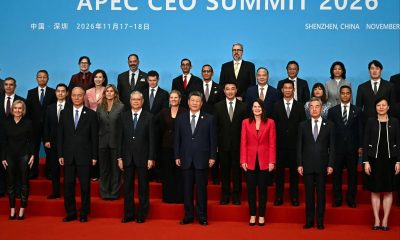
While expressing scepticism about Trump’s capacity to follow through given internal political opposition and personal longevity, Sakwa highlighted the upcoming trilateral diplomacy on the sidelines of the APEC summit in Shenzhen, China:
“This will be the first serious trilateral superpower summit since 1955 when the UK was at Geneva with the Soviet Union and the United States as a great power… I would like to see this trilateral format of the serious great powers, hopefully joined by India, reflecting what should be reflected in the United Nations Security Council: those with the greatest privilege have the greatest responsibility, rather than legacy spoilers like France and the United Kingdom.”
Concluding the interview, Prof. Dr. Ünal asked whether upcoming electoral cycles across Europe might displace existing hardline administrations. Sakwa predicted a significant changing of the guard, beginning with France:
“Macron clearly is out; he can’t stand. Opinion polls show Marine Le Pen way ahead, with Jean-Luc Melenchon challenging for second place as Edouard Philippe and Raphael Glucksmann trail. A second round between Melenchon and Le Pen will be fascinating. It can’t be worse than anything we’ve seen with Macron, Hollande, and Sarkozy, who utterly failed in statesmanship and responsibility to our continent. In Germany, Friedrich Merz’s Russophobia is off the scale. In Britain, while an election may not occur until 2028 or 2029, the public mood is shifting. Up and down the country, people are saying: ‘Not in our name. We don’t want this war; we have to make an equitable peace where the tolerant, good Ukraine can thrive.'”
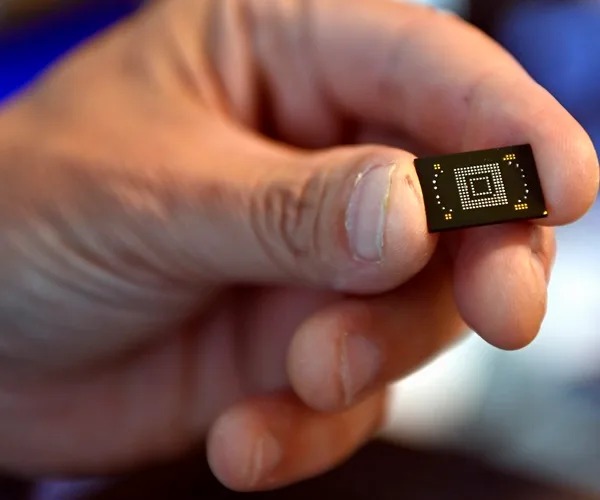
The US and several countries, including Japan, Australia, Israel and the United Kingdom, have agreed to establish a joint list of critical technologies and supply chains supporting artificial intelligence.
US Under Secretary of State for Economic Affairs Jacob Helberg told the Financial Times (FT) that South Korea, India, Qatar and the United Arab Emirates have also signed the “San Francisco Declaration on the Secure Foundations of Lasting Prosperity”.
Germany, Sweden, the Netherlands and the European Commission are also expected to sign the declaration next week.
The declaration forms part of the US-led “Pax Silica” initiative, which aims to strengthen AI-related supply chains, including semiconductors, critical minerals and energy infrastructure, as Washington and its partners seek to reduce vulnerabilities and deepen cooperation amid growing competition with Beijing.
Helberg said the agreement recognizes that the technologies and infrastructure supporting AI development often span multiple countries, making supply chain security a shared responsibility.
The initiative emerged as President Donald Trump prepares to meet Chinese President Xi Jinping at the Asia-Pacific Economic Cooperation summit to be held in Shenzhen, China.
Washington accuses Beijing of failing to fulfil its commitments under a trade truce the leaders reached in late 2025.
Helberg said the agreement would help participating countries identify the sensitive technologies and critical infrastructure needed to develop what Trump calls “superintelligence” and enable information sharing on areas where supply chains need to be diversified.
The declaration states that economic security is fundamental to national security and calls for stronger safeguards against the theft or unauthorized transfer of technologies that could give adversarial actors a military or intelligence advantage.
The agreement also provides for the establishment of working groups to address vulnerabilities in AI supply chains and develop economic hubs to attract investment into related sectors.
The initiative is part of a broader US effort to reduce reliance on China for critical materials, particularly rare earth elements, as Washington seeks to diversify supply sources for itself and its allies.
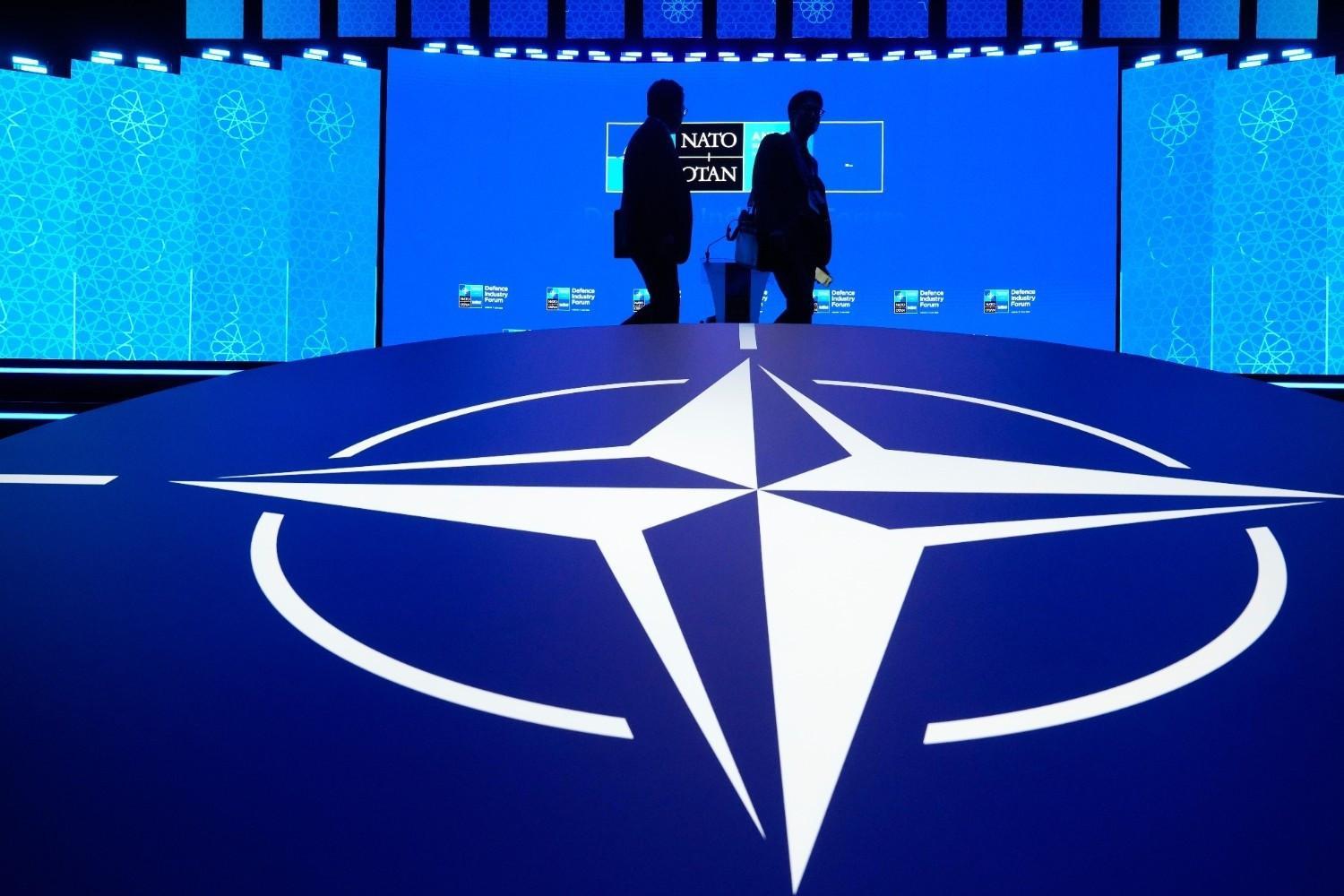
NATO is cancelling its 2027 leaders’ summit planned for Albania due to disagreements over defence spending and the wars in Iran and Ukraine, the Associated Press (AP) reported.
Albanian Prime Minister Edi Rama said alliance countries have not yet agreed on a date for the next summit, but confirmed the meeting will not take place in 2027.
NATO Secretary General Mark Rutte also confirmed that the alliance is not bound to a fixed schedule and that leaders meet “when necessary”.
NATO is also reducing the number of ministerial-level meetings.
No defence ministers’ meeting was held in October this year, and none is planned for October 2027.
Alliance foreign ministers will meet only once next year instead of twice.
NATO explains these changes as “restructuring”.
US policies and Iran war divide the alliance
One reason for the disagreements has been US policies under President Donald Trump.
The US administration is demanding that allies increase defence spending, criticizing them for not sufficiently supporting the war against Iran, and questioning Washington’s previous commitments to European security.
At the summit held in Ankara in July, allies agreed on a 70 billion euro aid package for Ukraine for 2026 and pledged to maintain a similar level in 2027.
However, Italy opposed the second point.
The NATO Secretary General also proposed making military support spending for Kyiv mandatory at 0.25% of gross domestic product, but this initiative failed.
According to The Telegraph’s sources, only seven of the 32 NATO countries backed the proposal, while countries including the UK, France, Spain, Italy, and Canada opposed it.
Divisions grow over Ukraine aid and membership
Furthermore, in November, Bulgaria refused to provide military support to Ukraine and join the European Union’s (EU) new aid package, while Poland suspended financing for purchasing US weapons for the Ukrainian Armed Forces.
Negotiations conducted by Trump’s special envoys with Moscow behind allies’ backs are also causing an additional rift in the alliance.
The US and Europe also hold different views on Ukraine’s prospects of joining NATO.
While the Trump administration and Trump himself oppose this accession, the Ukrainian President stated on 14 November that the Americans had asked him whether he was ready to give up Donbas in exchange for alliance membership.
In contrast to Washington’s shifting line, some European politicians insist on Kyiv’s unconditional integration.
French President Emmanuel Macron said on 15 November: “Ukraine’s place is inside the alliance.”
Some countries, such as Lithuania, Latvia, and Estonia, share the same stance.

Ecuadorian fishermen sue US over drone strikes on vessel

Japan proposes Asian version of IEA to manage regional oil reserves

Poland bids for NATO nuclear programme to train F-35 fighter pilots

US households face $2,000 war hit as Khanna urges $1,700 relief

Xi urges free trade against protectionism at APEC CEO Summit
-
 America1 week ago
US midterms see 97 young winners as Gen Z representation triples
-
 Europe2 weeks ago
EU urges citizens to prepare 72-hour survival kits for crises
-
 Diplomacy2 weeks ago
Ukraine faces demographic collapse as fertility rates slide
-
 Europe1 week ago
UK and Germany expand military pact with focus on Russian frontier
-
 America2 weeks ago
Paraguay President Peña resigns over catastrophic bank collapse
-
 America2 weeks ago
Elon Musk loses $29 billion after Democratic US midterm sweep
-
 America2 weeks ago
Moderate Republicans urge break from Trump and MAGA after midterms
-
 Diplomacy2 weeks ago
Putin approves standard-gauge rail link on China border
