
Diplomacy
Bipartisan lawmakers raise concerns over US-Saudi nuclear agreement

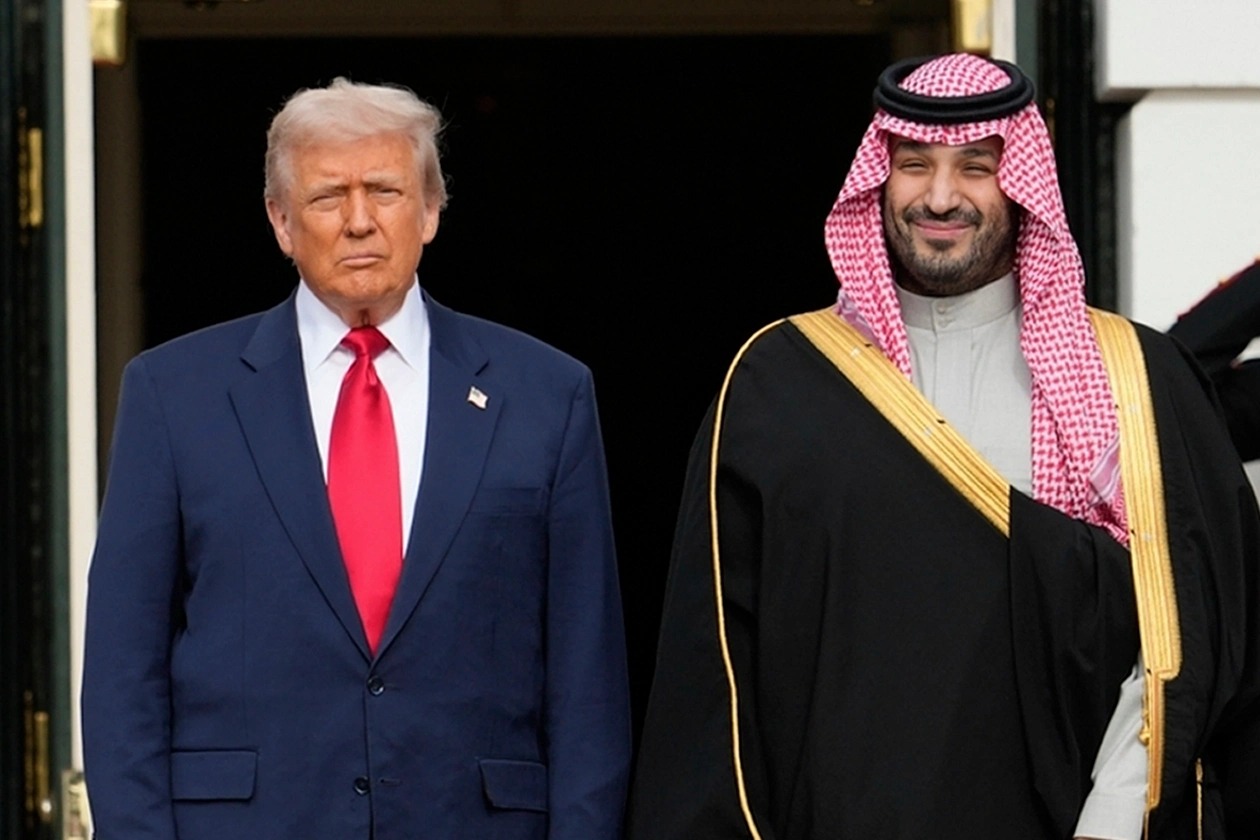
Some lawmakers from both parties are warning that a newly signed US nuclear cooperation agreement with Saudi Arabia could trigger a regional arms race in the Middle East.
Although the agreement stems from negotiations that began before the outbreak of the war with Iran, Democratic Senator Chris Murphy, a member of the Senate Foreign Relations Committee and a longtime critic of Saudi Arabia, argued that announcing the deal now would have an immediate impact on the conflict.
“Everything that happens in Riyadh echoes in Tehran,” Murphy said. “One reason the United States was reluctant to offer Saudi Arabia this agreement was that we knew it would move Iran one step closer to a nuclear weapon, and that remains true today.”
Republican Senator John Kennedy said even the possibility that Saudi Arabia could one day enrich uranium would have the potential to rapidly alter the strategic balance in the region and beyond.
“I worry about nuclear proliferation in the Middle East, Japan and South Korea,” Kennedy said.
With the Trump administration having already committed to the agreement with Saudi Arabia, the authority to reject it now rests with Congress.
Blocking the agreement, however, will be difficult, as opponents would need to secure a veto-proof two-thirds majority in both chambers.
The 30-year agreement announced on Wednesday allows private US nuclear companies to export to the Saudi market and establishes a framework for US security safeguards.
While the agreement does not guarantee that Saudi Arabia will enrich uranium, and any such capability would likely take at least a decade to develop, members of Congress argue that even this initial commitment could create a domino effect.
Republican Senator John Barrasso, also a member of the Senate Foreign Relations Committee, said he was concerned the agreement could further complicate US efforts to persuade Iran to abandon uranium enrichment entirely.
“I am deeply concerned about nuclear proliferation in the Middle East because of the consequences it could produce,” Barrasso said.
The United States and Saudi Arabia have spent nearly two decades negotiating an agreement under which Washington would assist Riyadh in developing a civilian nuclear program.
According to two sources familiar with the matter, both the Biden and Trump administrations initially presented the proposal as an incentive for Saudi Arabia to normalize relations with Israel.
After the Oct. 7, 2023 attacks on Israel made normalization significantly more complicated, however, the Trump administration decided to separate the two issues.
Asked about the agreement while traveling in the Philippines on Wednesday, Secretary of State Marco Rubio dismissed concerns that the arrangement could contribute to nuclear proliferation.
“The United States will not enter into any agreement with any country that creates a risk of nuclear weapons proliferation,” Rubio said.
In announcing the agreement, Energy Secretary Chris Wright said, “Rest assured, these agreements uphold the highest standards of nuclear security and nuclear nonproliferation.”
Saudi Arabia said in its own statement that the agreement is intended to strengthen cooperation in the peaceful use of nuclear energy “in accordance with the highest international standards for nuclear security, nuclear safety and nuclear nonproliferation.”
For decades, the United States has generally avoided allowing new nuclear cooperation partners to enrich uranium domestically, instead insisting on a no-enrichment commitment known as the “gold standard,” most notably in its 2009 agreement with the United Arab Emirates.
Concerns in Washington have also focused on Saudi Arabia’s refusal to sign the document known as the Additional Protocol.
The protocol is an agreement with the UN’s nuclear watchdog that grants inspectors broader access beyond declared facilities to detect undeclared nuclear activities.
That refusal, combined with Saudi Arabia’s potential enrichment capability, leaves the new agreement well short of the “gold standard” established by the 2009 UAE agreement.
Under that agreement, Abu Dhabi accepted such inspections and renounced the right to enrich uranium or reprocess plutonium on its own territory.
Critics argue that abandoning both commitments marks a departure from the template Washington has relied on for decades to prevent nuclear proliferation.
The United States announced on Wednesday that it had also reached a bilateral safeguards agreement with Saudi Arabia but did not provide further details.
Republican Senator Ron Johnson of Wisconsin said he was surprised the administration had negotiated an agreement that could permit Riyadh to enrich uranium, unlike previous US nuclear cooperation agreements.
“What concerns me is the enrichment potential of Iran or Saudi Arabia. But I can also envision a scenario in which it is kept completely under control,” Johnson said.
Victoria Coates, who examined whether the United States could sell nuclear technology to Riyadh while serving as a senior official during the first Trump administration, said the agreement carries risks but that “those risks can be mitigated.”
Now serving at the conservative Heritage Foundation, Coates said, “As long as we monitor the situation closely and have clear visibility into what is happening, I think it is a risk worth taking.”
Republican Senator Mike Rounds said he would not object to Saudi Arabia enriching uranium on its own territory depending on the extent of the enrichment permitted under the agreement.
“It depends on how much they enrich the uranium. If it is 60% or less, that is far above what is needed for civilian purposes. But if we are talking only about enrichment to levels that can be used in nuclear power plants, I have no problem with that. Somebody is going to do it, and it is better that we do it than someone else,” Rounds said.
Under the agreement, the United States and Saudi Arabia will jointly study the feasibility of uranium enrichment within the kingdom.
According to two sources familiar with the agreement, if both sides determine such enrichment is acceptable, it would take place under a “black box” arrangement designed to prevent the transfer of sensitive technology to Saudi Arabia.
Saudi Arabia has long sought to establish its own civilian nuclear program. Some analysts argue that cooperation with the United States would be preferable to Riyadh turning to Moscow or Beijing.
Jonathan Panikoff, a former intelligence official now at the Atlantic Council, said, “Without an agreement with the United States, Riyadh would almost certainly have turned to China or Russia, whose agreements would likely not include the restrictions contained in the US deal. But that does not mean the risks associated with this type of agreement are zero.”









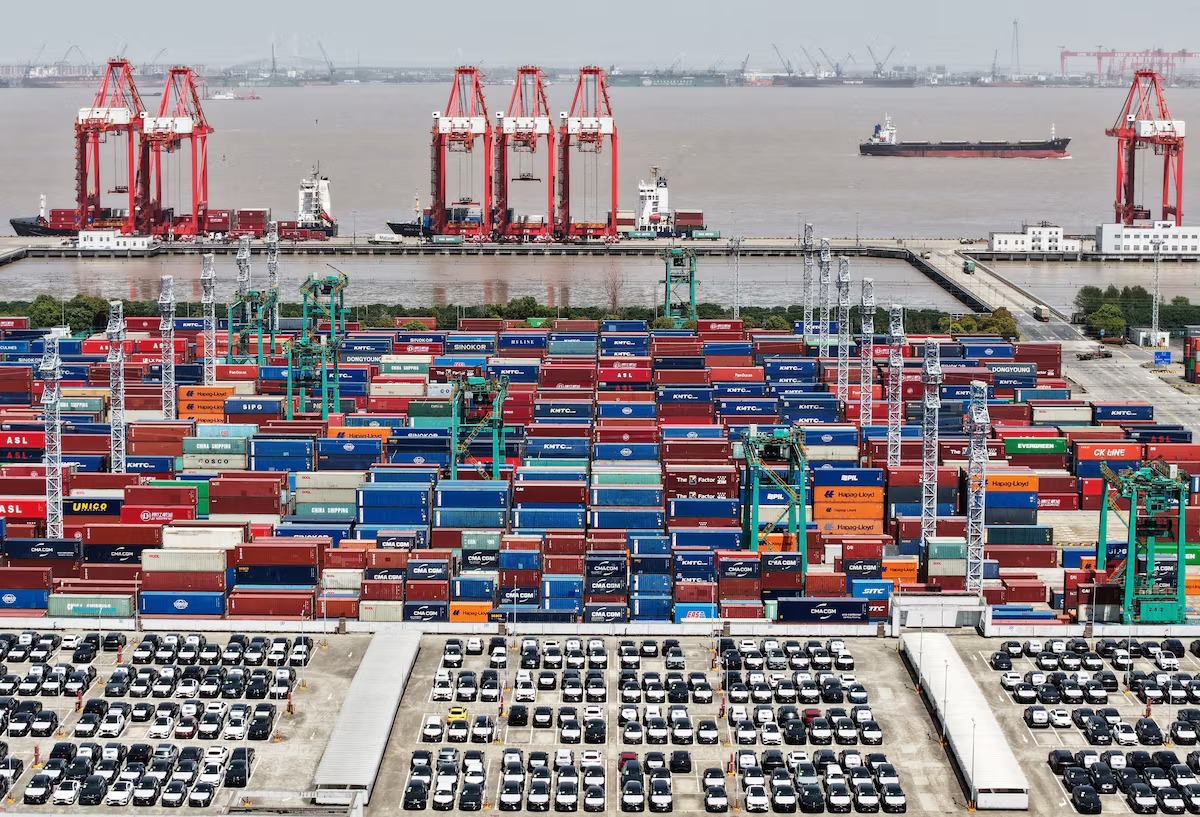
The EU has reached a preliminary agreement with China to significantly reduce hybrid car shipments into the bloc.
The agreement follows an abrupt surge in hybrid car sales by Chinese brands across Europe, led by BYD.
This surge escalated trade tensions and piled pressure on European carmakers.
Following talks between EU Trade Commissioner Maros Šefčovič and his Chinese counterpart, an agreement was reached on Friday to significantly reduce hybrid car shipments to the EU.
European carmakers, under pressure from companies such as Chery, have been losing market share in China, where competitors develop new models more efficiently.
In Europe, appealing line-ups, including BYD’s Dolphin hatchback, offer robust electric vehicle technology at affordable prices.
This shift has forced carmakers such as Volkswagen to downsize workforces under broad cost-cutting drives.
Šefčovič stated that the agreement was the first of its kind and the result of “intense” negotiations conducted with China since June to reduce a daily trade deficit of 1.18 billion euros, which has caused mounting strain between the two economic powers.
Speaking at a press conference in Beijing on Friday, Šefčovič said the agreement “creates the possibility to reduce Chinese [hybrid vehicle] exports by more than half,” adding that this would lead to a reduction of “several million” rechargeable and battery-powered hybrid vehicles over the next four years.
“China agreed to reduce its exports without first entering a trade tension phase; this is happening for the first time,” the Commissioner said, referring to the standard investigations that must precede the introduction of protective measures under WTO trade rules.
Šefčovič said the Chinese recognised the rising political pressure across every member state in Europe, where “literally thousands of job losses” were risked due to an influx of cheap imports from China across multiple sectors, including chemicals and textiles.
Noting that EU leaders “clearly expected very rapid action” from the European Commission, and that the Chinese were aware of this, he stated:
“I am pleased to say that our Chinese partners appreciated this very strong political argument; therefore, we can reach a negotiated solution. This is not the end of the process. This is a very important first step, but only a first step.”
Earlier this week, senior EU officials announced that they would travel to Beijing to develop a pilot programme, which they termed a “proof of concept” with a single sector, hoping it could later be expanded to other areas under pressure from Chinese competition.
Šefčovič noted that he attached “great importance” to the negotiations because once a trade war begins, it is “very hard to stop.”
As part of the 16-point agreement, Beijing and Brussels will continue negotiations on automobiles, export restrictions on rare earth elements, and greater market access for EU food and beverages entering China.
China stated that both sides would adhere to “procedures on company price undertakings” for hybrid cars, implying that one way to cap sales could involve setting higher minimum prices for Chinese-origin cars sold in Europe.
A statement from the Chinese Ministry of Commerce noted that China was “willing to continue facilitating the approval of export licences for rare earth elements and permanent magnets destined for the EU.”
The statement also added that both sides “reaffirmed their commitments to handle differences appropriately within the framework of WTO rules, and to stabilise and balance bilateral trade and economic relations.”
In a statement issued today (12 October), the Chinese Ministry of Commerce stated that following “intensive consultations” between the two sides, the European Union’s new hybrid vehicle arrangement would allow export growth to continue, with an allocation for China that is no smaller than that of any other country.
The ministry added that this consensus “strongly protects the practical interests of Chinese enterprises, prevents an escalation of China-EU trade tensions, and provides a stable, predictable, and sustainable trade and investment environment for both sides.”
According to Chinese customs data, Chinese hybrid vehicle exports to the 27 EU member states tripled in the first half of this year to $7.5 billion, up from $2.5 billion in the same period a year earlier.
This figure is nearly nine times the $845 million in exports recorded across the whole of 2021.
Since the EU began applying additional tariffs on Chinese-origin electric vehicles in 2024, Chinese carmakers have increasingly turned to plug-in hybrid vehicles, which remain exempt from these additional duties.
Inadequate charging infrastructure in parts of Europe has also supported demand for plug-in hybrid vehicles, which are marketed on long range and high fuel efficiency.
According to Jefferies, SAIC, BYD, and Chery account for more than 90% of Chinese-origin hybrid vehicle sales volumes in the EU, with hybrid cars representing over half of these manufacturers’ European sales.
Support for the agreement also came from Renault. CEO Francois Provost argued that the European Union had reached an initial “important milestone” with the deal to slow the influx of hybrid vehicles from China, contributing to shaping the future of the European automotive industry.
“I had urged him to reach an agreement as soon as possible. Without an agreement, we would have faced a trade war with China, which would have been a ‘lose-lose’ situation for everyone,” Provost said.
Provost was among the business leaders who met Šefčovič ahead of this visit, which aimed to address widening EU trade imbalances.
Prior to talks with Chinese Commerce Minister Wang Wentao, France and Germany urged the EU to significantly broaden its retaliatory economic powers and investigate whether subsidised imports were damaging sectors such as chemicals and plastics.
In France, Renault already relies on several Chinese suppliers. Envision AESC assembles electric vehicle batteries for the bestselling R5 city car, as well as the R4 and Alpine A290 models, at a facility near Renault’s car assembly plant in Douai, northern France.
“We need Chinese companies to invest heavily in the European value chain, rather than merely setting up ‘screwdriver factories’,” Provost said.
Provost also called on the EU to move quickly on so-called “Made in Europe” rules, which could establish a local framework for Chinese players:
“If Europe does not take rapid decisions now, the collapse of the European automotive industry risks continuing. At least on the Chinese front, some progress has been made thanks to Commissioner Šefčovič.”
Diplomacy
Anti-war sentiment is growing stronger in our country, American journalist Andrew Day says
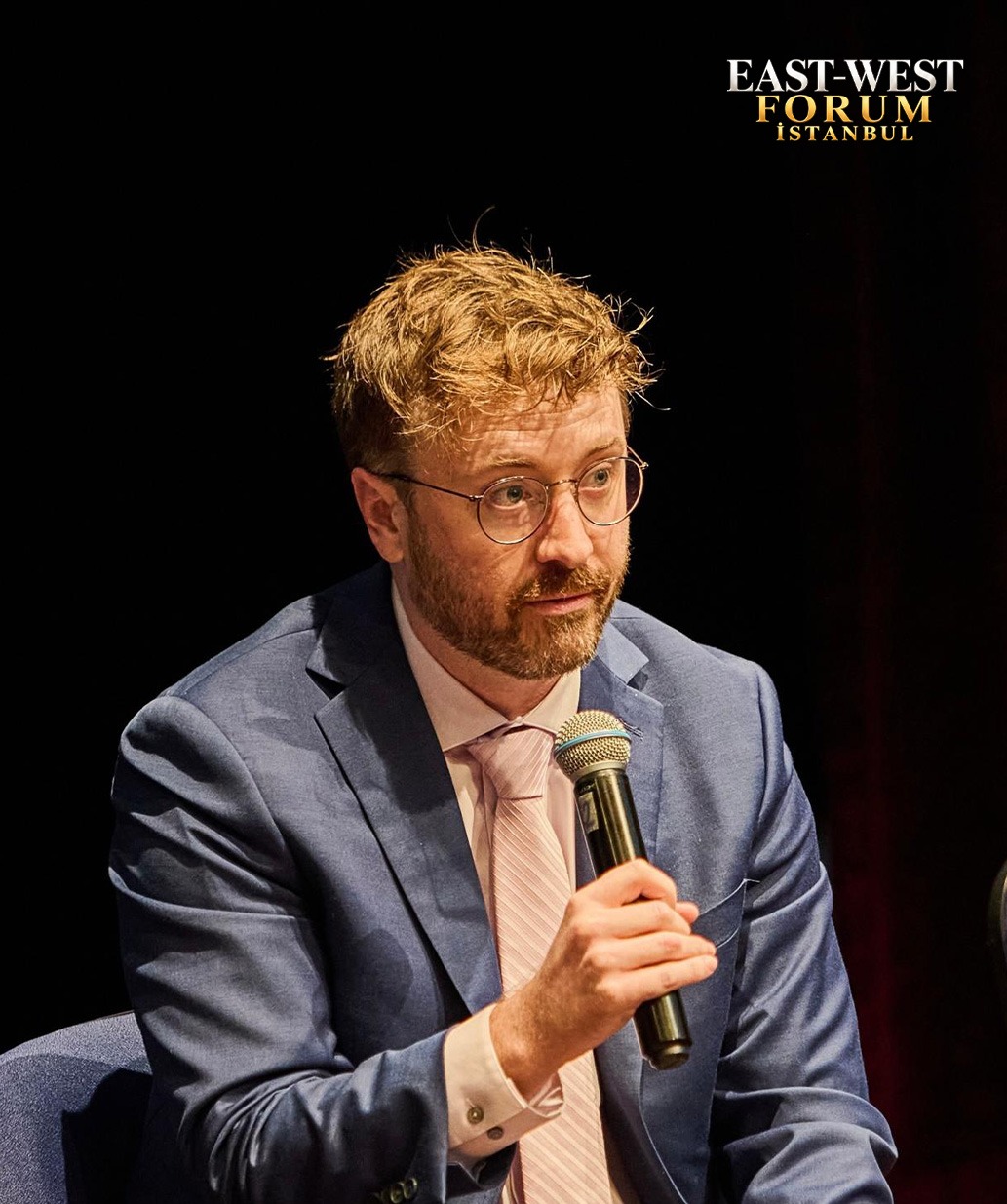
Editor’s note: Speaking at the East-West Forum held in Istanbul on September 26, Andrew Day, senior editor at The American Conservative, assessed regional proxy wars through the lens of US domestic politics and foreign policy perspective. Recalling The American Conservative’s founding anti-war stance, Day stated that opposition to foreign interventions is now gaining stronger traction within conservative circles, noting that American public opinion is shifting rapidly, particularly regarding US-Israel relations and the War with Iran. Day characterized the war against Iran as an unnecessary war of aggression, stating that it has accelerated the relative decline of the US, the depletion of weapons stockpiles, and the unraveling of the liberal order.
Hello, everyone.
I see that we are supposed to be talking about regional proxy wars. Since my country, the United States, seems to be responsible in large part for all of those wars, I will offer some comments on the domestic political situation in the United States, which I hope will shed light on the geopolitical situation.
That geopolitical situation is obviously very grim, perhaps even grimmer than the organizers expected when they first planned this conference. Nevertheless, I will try to identify some grounds for optimism. That can be a rather lame thing to do, but I am not going to invent these grounds for optimism. I think they are real.
You can see on the screen behind me that I am a senior editor at the American Conservative. If you are unfamiliar with the magazine, you might be surprised to learn that it was founded in 2002 in opposition to the Iraq War.
Obviously, the Iraq War had not yet begun when the magazine was founded in 2002, but we knew it was coming. Our co-founders, most prominently Pat Buchanan, wanted a magazine on the right that was antiwar and fiercely opposed to the coming war in Iraq.
As for grounds for optimism, one thing I will say is that, as much as I might like to puff myself up, it requires very little courage these days to be a conservative campaigning against war. It is nothing like 2002, when Pat Buchanan started the American Conservative.
He was subjected to a deluge of attacks on his character. He was marginalized and maligned as an antisemite. Of course, people still say nasty things online, but it is very different now. It is easier to get the word out, and you are more readily accepted as a member of the conservative movement and as representing a right-wing tendency that is genuinely strong in the United States: scepticism of these foreign wars and fierce opposition to them.
I think that is a genuine source of optimism. It points to an important fact: American public opinion has changed enormously on various issues, including the US-Israel relationship. This is a real development, and it is happening at an incredible rate.
Nevertheless, the story within the political establishment is different, and it is quite disappointing. No matter what politicians say on the campaign trail, it seems that between their election victory and their inauguration, they must attend some secret national security establishment university.
Anatol Lieven used a phrase earlier. What was it? “Weird world of illusions.” I think that might be the curriculum at this national security establishment university that all these politicians attend. By the time they are in office, they are all spouting the same clichés, which have no evident correspondence to today’s geopolitical situation.
As for the craziness they spout, China hawkishness is quite crazy. Russia hawkishness is quite crazy. But clearly the craziest form of hawkishness in America is Iran hawkishness.
Iran is a middle power on the other side of the world, not a peer competitor and not a nuclear state. It was not only willing to reach a nuclear deal with the United States; it actually signed one. According to Trump’s own administration during his first term, Iran was complying with the nuclear deal it had signed.
Nevertheless, we withdrew from it. We all know what happened next.
I think the Iran War is an accelerator. At the beginning of the Covid pandemic, a journalist asked the French novelist Michel Houellebecq: “What do you think the social transformation brought about by Covid will be? What do you expect things to look like at the end of this?”
He said: “There won’t be a transformation. It will be the same, but worse.”
I think the Iran War similarly intensifies certain pre-existing tendencies: the decline of the United States relative to China, the depletion of our weapons stockpiles, which was already happening because of the Ukraine War, and the collapse of the liberal order. That includes the good parts of the liberal international order, such as international shipping.
But I do not know whether things will necessarily just be worse. I do not want to look for silver linings in the Iran War because I regard the US war on Iran as a war of aggression: totally unnecessary and totally stupid. It is bad for America and, of course, bad for the Iranian people. On the first day of strikes, we killed 160 schoolgirls. I am not going to look for silver linings there.
I will say, however, that on the other side of this war, the political establishment in the United States might finally recognize that the margin for error is not what it used to be. It is much narrower. The blowback is much greater, and it now comes back to us and hurts politicians politically.
It really must be stressed that this war is very unpopular in the United States. That is not just because of petrol prices. It was unpopular from day one, when all we knew was that Khamenei and the Iranian leaders had been killed. Pete Hegseth could say, “We have won this great, great victory in Iran.” The American people were not buying it.
This is the most unpopular war in American history. That is an enormous change from the Bush administration, as I indicated earlier. The Iraq War was very popular when it began. The Iran War, not so much. I think that reflects some important trends worth highlighting.
I also think that China’s rise could have considerable geopolitical benefits, including for the United States.
I agree that the Cold War now emerging seems, in some ways, worse than the first Cold War. One reason is that our political leadership in the United States is so unfocused and unstrategic.
Regardless of what you think about Zbigniew Brzezinski or Henry Kissinger, and you may hate them for various reasons, they were intellectual giants compared with the intellectual pygmies who now run the State Department.
Compare Brzezinski with Blinken. Brzezinski was plausibly a genius. Blinken barely seems to have any consciousness behind his eyes. He can speak only in platitudes.
I think you can make a similar comparison between Kissinger and certain conservative secretaries of state, one of whom might be in office right now.
This degeneration of America’s strategic acumen is deeply troubling. It is very concerning, and somewhat mysterious, to the foreign policy thinkers in my network in the United States.
There are capable people whom Trump could put on professional diplomatic teams to talk to Tehran, Moscow, and Beijing. He does not have to send his golfing buddy, Steve Witkoff, to all these places.
Nevertheless, he does, and that is concerning. But China’s rise may focus the mind, as happened during the Cold War. Perhaps, in the best case, our strategic thinking will return to something approaching normality, if not brilliance.
Thank you.
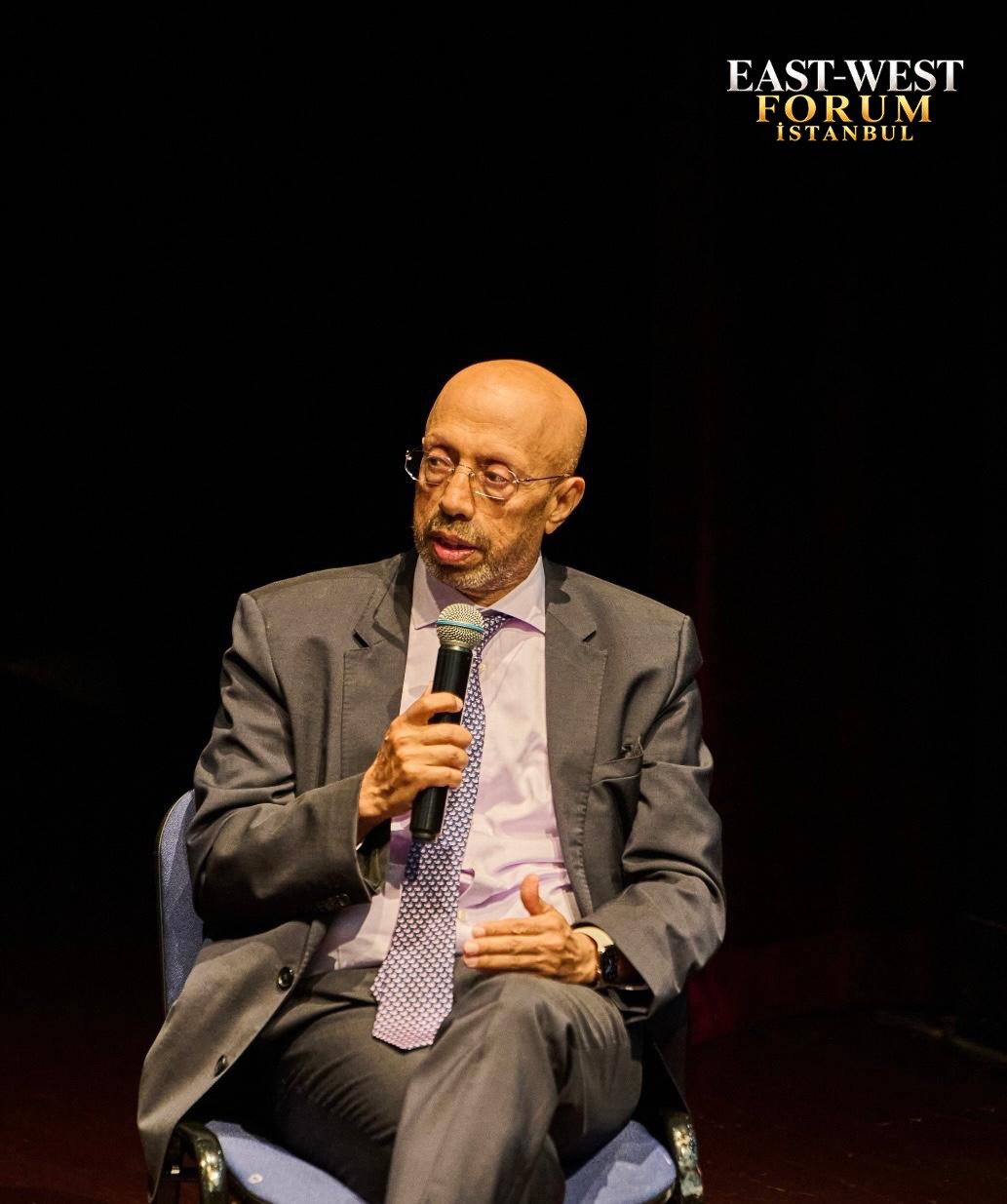
Editor’s note: Speaking at the East-West Forum held in Istanbul on September 26, Prof. Abdullah Baabood addressed the heavy toll that wars and destruction in the Middle East have inflicted on the peoples of the region. Noting that the attack on Iran has also imperiled the Gulf states under the American security umbrella, Baabood stated that the closure of the Strait of Hormuz has adversely affected oil and natural gas trade, imports, and regional economies. Stating that relations with the US and the future of the American military presence in the region are now being questioned more than ever, Baabood stressed that regional states must shape their own security through a shared understanding rather than leaving it to the decisions of foreign capitals.
First of all, good afternoon, everyone. I hope you are still awake.
Thank you, Pascal. I also thank Tunç and Harici for their kind invitation.
Being the last speaker is always a great thing because you can recycle all the good ideas you have heard throughout the different panels. But I will spare you that and offer something quite different.
I had thought I would be talking about something else, but I have changed my mind because some of the topics I wanted to address have already been covered.
Let me offer some reflections from someone who comes from the region. Although it says I come from Waseda University, which is in Japan, and we both worked at the same university, where I still work, I am originally from Oman. That is why it says Muscat there.
When you look at the Middle East today, since the British withdrawal, or even before, what do you see? Conflict, destruction, and wars lasting for decades.
We ask ourselves how much longer this will continue. When we look around us, we see devastated states and people being killed almost every day.
Not only in Palestine, which is a separate issue and has already been discussed. Look at Lebanon, Syria, Libya, Sudan, Somalia, Yemen, and Iraq.
I was once speaking to a diplomat and said: “All of this is happening. Could this be a conspiracy theory? I don’t believe in conspiracies.”
He said: “If it is not a conspiracy, what is it? How can you explain all of this?”
I still cannot figure it out. Perhaps you can.
The few remaining countries in the region that were stable, secure under the American umbrella, as it were, and prosperous because of oil and gas were the Gulf states.
What happened? President Trump decided to attack a neighbouring country unlawfully, knowing full well that Iran would retaliate against the American presence in the region.
What does that mean? It means our countries in the region would be attacked by Iran, as would some of our infrastructure.
Not only that, but the Strait of Hormuz is now closed. It was open; now it is closed. All the Gulf states, with the possible exception of Oman, rely on the Strait of Hormuz for their oil and gas exports and their imports.
Their economies are now suffering. It has been six or seven months, and we do not know how much longer this will continue. The region is paying a very high price for someone else’s decision.
Someone in Tel Aviv and someone in Washington decided that they wanted to do this. We do not even understand the reason.
If it was the nuclear issue, that had already been settled a long time ago through the JCPOA. Iran has also always said that it would never enrich uranium to produce nuclear weapons or a bomb.
Even before the war, the Omani foreign minister was negotiating with the Iranians and the Americans, and the Iranians had agreed to almost everything President Trump wanted.
That prompted the Omani foreign minister to appear on television and say that he was surprised the decision to go to war had already been taken while negotiations were still underway.
From the region’s perspective, we look at this and think: You have devastated everything. The entire region around us is devastated, and now we are too. Yet we are your allies. We are under the United States’ umbrella.
We have given you all the support you needed. We ensured that you received oil and gas. We ensured that the global economy functioned well and received the energy it needed.
We invested the revenues from oil and gas in your economy, your technology, your know-how, and your weapons. This is how we are repaid.
I think many questions have now been raised about the future of the relationship with the United States, including the future of American bases and the American presence in the region.
I believe America has shot itself in the foot in this case, perhaps even more than that.
At the public level, there is considerable resentment. It is not only because of the unconditional support for Israel in Gaza, the massacres, and the genocide that people have witnessed, but also because of what is happening now.
Many questions will therefore be raised. I think this conflict will further accelerate the changes taking place globally.
Let me conclude with one point. I think the region must begin thinking outside the box and beyond reliance on American or other foreign security umbrellas.
It is time for the region to start thinking about its own security. Its security does not have to be decided in Washington, London, or anywhere else. It must be decided within the region, through collaboration among regional countries.
Many countries in the region can help support its security and stability. This does not mean saying goodbye to the Americans. They will remain allies. But we also need to diversify our relationships with China, Russia, India, and other powers.
Türkiye is, of course, playing a very important role here. So is Pakistan.
I think we need a regional mechanism that ensures security, stability, and economic development, while making us less dependent on foreign powers to secure our region.
Thank you very much.

EU and China reach preliminary deal to curb hybrid car imports

Russia relaxes diesel export curbs after talks with Trump

Poland opposition accuses Tusk of using death threat as distraction

Raphaël Glucksmann wins French centre-left presidential primary

Trump weighs presidential memorandum to cut surging US diesel prices
-

 Diplomacy2 weeks ago
East-West Forum in Istanbul highlights irreversible shift to multipolarity
-

 Europe2 weeks ago
European unions urge governments to scrap all Palantir deals
-
 Europe2 weeks ago
Rome protests AfD poster depicting South Tyrol as independent state
-

 Europe2 weeks ago
German interior ministers drop unanimity rule to counter AfD veto
-
 Europe2 weeks ago
German industry stockpiles critical minerals before EU-China talks
-
 Europe2 weeks ago
Key European allies excluded from US-led NATO meeting in Poland
-
 Diplomacy2 weeks ago
US Ambassador Guilfoyle faces backlash in Greece over alleged remarks
-
 Diplomacy2 weeks ago
While the West breeds crises, Eurasia weaves peace and development, says Prof. Zhang Weiwei
