
Diplomacy
US expands Middle East air operations using German bases as regional casualties rise

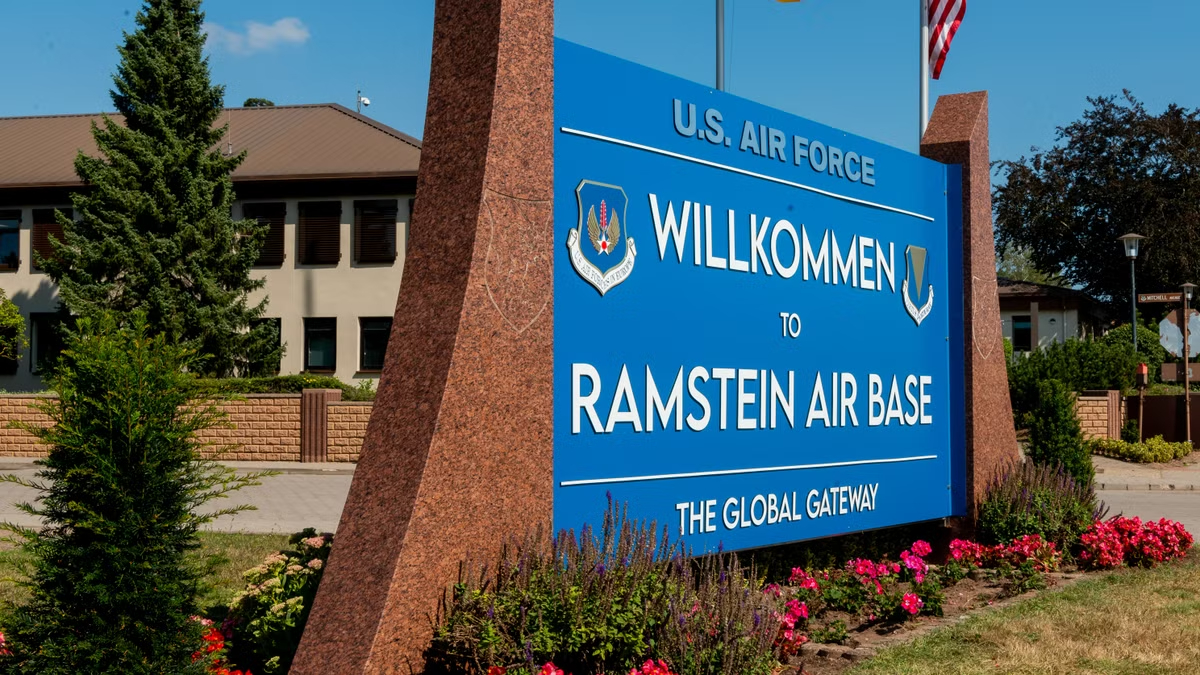
Germany continues to provide crucial logistical support to the US military as Washington prepares for a major expansion of the war against Iran, utilizing its extensive network of installations across the country.
According to a report by German Foreign Policy, US fighter jets and troops are being routed through Ramstein Air Base—mirroring operations conducted prior to the outbreak of hostilities and throughout the first 40 days of the conflict—where forces remain stationed ahead of an announced wave of heavy airstrikes.
Spangdahlem Air Base is playing an equally vital role in the logistical pipeline. F-16 fighter jets stationed at the site were redeployed last week to staging areas in the Middle East, having returned from combat missions in the region only a few weeks prior.
Meanwhile, Landstuhl Regional Medical Center—the largest US military hospital outside the United States—serves as a critical medical hub. In recent days, approximately one dozen US service members, including several with severe injuries, were evacuated to the facility for treatment.
Medical staffing at Landstuhl has been expanded significantly in anticipation of a further rise in casualties.
Ramstein
The US armed forces are drawing heavily on their military infrastructure in Germany to execute troop concentrations directed at Iran.
Ramstein Air Base near Kaiserslautern—the largest US Air Force installation outside the US and headquarters for US Air Force forces in Europe and Africa—is operating continuously to facilitate the deployment.
Ramstein has long drawn international attention for housing a satellite relay station used to control US military drone operations across Africa, the Near East, and the Middle East.
Data streams for other operational maneuvers are also routed through Ramstein, specifically those serving the war in Iran.
Furthermore, the installation operates as a permanent logistical turnstile for the conflict. Shortly after the outbreak of hostilties, Spanish military aircraft that were denied permission by Madrid to participate in the war effort were rerouted to Ramstein.
In contrast to the Spanish government, Berlin has raised no objections to providing logistical support for the military campaign against Iran.
On Wednesday, a US E-11A Battlefield Airborne Communications Node (BACN) aircraft landed at Ramstein after departing Robins Air Force Base in the US state of Georgia, before proceeding toward the Middle East.
The aircraft provides real-time relay and tactical coordination between fighter jets and bombers during airborne strike operations.
Spangdahlem
Spangdahlem Air Base, located in the Eifel region, is serving as a key node in reinforcing the US Air Force presence in the Middle East ahead of a comprehensive expansion of the war.
Last week, US F-16 fighters permanently stationed at Spangdahlem were dispatched to the Middle East.
Their movement was complemented by F-35 jets deployed from RAF Lakenheath, northeast of Cambridge, and additional F-16s launched from Aviano Air Base in northeastern Italy.
The Spangdahlem-based F-16s had returned from combat operations in the war zone just weeks earlier.
These aircraft are specialized in Suppression of Enemy Air Defenses (SEAD) missions, designed to neutralize hostile air defense systems.
David Deptula, a retired US Air Force lieutenant general and dean of the Mitchell Institute for Aerospace Studies in Washington, told the US military newspaper Stars and Stripes that deploying fighter jets in such large numbers from all three US Air Force units in Europe to the Arabian Peninsula was highly unusual.
However, Deptula noted that toward the end of the Cold War, the US Air Force maintained nine operational units in Europe rather than three, pointing to a long-term decline in overall force capacity.
Landstuhl
Alongside Ramstein and Spangdahlem, Landstuhl Regional Medical Center—the largest American military hospital outside the US—is being utilized with heightened intensity in connection with the war in Iran.
In recent days, approximately 12 severely wounded US service members were evacuated from Jordan to Landstuhl for specialized care.
The arrivals have drawn public scrutiny, in part because the Trump administration has reported US casualty figures far less frequently than previous administrations.
While the death of US military personnel must be publicly disclosed under statutory requirements, observers in the US note that these requirements do not extend to private military contractors, who constitute a significant share of personnel on US military bases.
Following recent admissions by the Pentagon that three US service members were killed in Iranian strikes near Muwaffaq Salti Air Base in Jordan, investigations by US news outlets revealed that roughly 100 US military personnel were wounded between June 7 and last weekend.
Material damage from Iranian retaliation
In addition to figures on wounded US military personnel, initial investigative media reports have begun detailing the extent of structural damage inflicted on American weaponry and military infrastructure.
As reported by The New York Times on Wednesday, Iranian forces concentrated their strikes this month on nine locations with a US military presence, down from 18 during the first 40 days of the war.
Muwaffaq Salti Air Base was struck four times. According to the newspaper, drone strikes destroyed three buildings, two hangars, and structures believed to serve as living quarters.
Tower 22, a US military outpost in far northeastern Jordan along the Syrian border, also sustained severe damage.
In addition, hangars and a radar system at two other military bases in Jordan were hit, as was King Hussein International Airport, where US personnel are stationed.
In Bahrain, at least one warehouse was damaged, while a military tent was destroyed at Erbil International Airport in northern Iraq, where US troops are deployed.
Ali Al Salem Air Base in Kuwait was also struck, and a radar system at Ahmad Al Jaber Air Base—which had been operational for only six months—was destroyed.
These incidents represent only a portion of the damage confirmed to date.
Undisclosed US casualties
Beyond Washington’s public statements, preparations behind the scenes are underscored by the recent deployment of more than 150 additional US medical personnel to Landstuhl Regional Medical Center.
Should US President Donald Trump order an expansion of US attacks, officials anticipate a parallel escalation in Iranian retaliatory strikes and a corresponding rise in US casualties.
These casualties will include severely wounded personnel who will be evacuated to Germany for medical treatment.
Servicemen killed in Iranian counterattacks are also likely to be routed through Germany before their remains are repatriated to the US. Flights operated by Air Force Mortuary Affairs Operations (AFMAO) carrying fallen personnel from the combat zone to the US routinely make layovers at Ramstein.
This procedure was followed during the recent repatriation of the bodies of four US soldiers killed in the Middle East. Flights from Ramstein to Dover Air Force Base in Delaware reportedly take between nine and ten hours.
Legal implications for Berlin
To expand a war of aggression that violates international law, President Trump has formally announced upcoming US strikes on civilian infrastructure—actions that constitute war crimes.
The announcement of an intent to order war crimes carries serious legal implications for the German government.
Germany continues to allow the US armed forces to utilize military infrastructure on its territory, including Ramstein, Spangdahlem, and Landstuhl, and grants overflight rights without hesitation.
According to Michael Riegner, professor of public law, international law, and comparative law at the University of Erfurt and director of the university’s Global Justice Clinic, the argument that this support carries no legal consequences is untenable.
Riegner argues that limiting Article 26, Paragraph 1 of the German Basic Law strictly to the Bundeswehr is legally unacceptable.
The constitutional clause mandates punishment for “acts tending to upset the peaceful relations between nations, especially an act preparing for a war of aggression.”
Riegner contends that anyone who assists in the execution of a war of aggression is guilty of aiding and abetting an unlawful act.






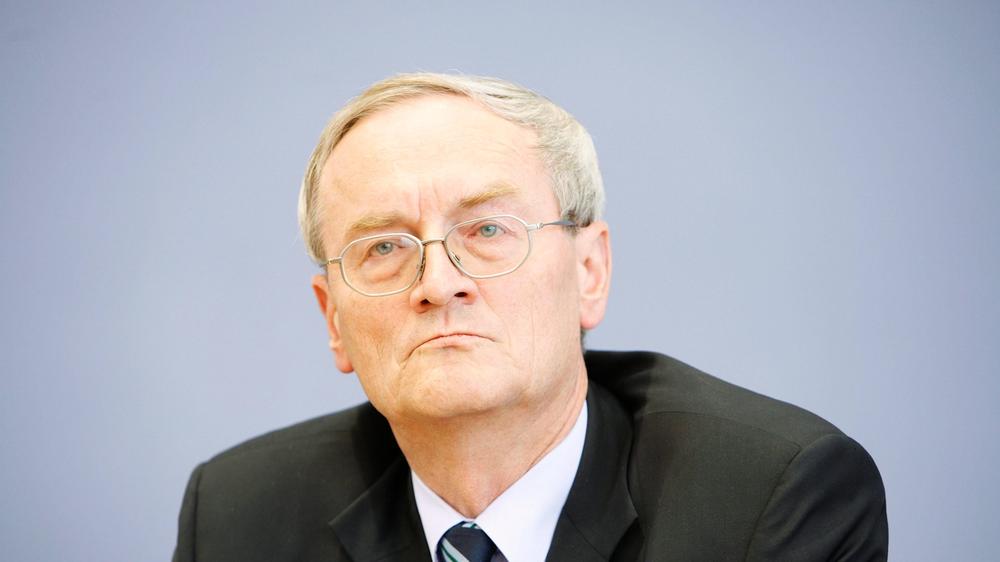
August Hanning, who led Germany’s Federal Intelligence Service (BND) between 1998 and 2005, was arrested on 6 October on allegations that he obtained roughly 2,000 classified agency documents and used them during contacts with intelligence officers from a foreign state.
Accused of high treason and espionage on behalf of a foreign intelligence agency, the former spy chief is alleged to have procured the documents from former BND employee Manfred D.
Prosecutors stated that the leaked records included internal briefing notes presented to senior German officials, though the Berlin government has not yet publicly disclosed which country received the classified data.
According to an exclusive report by Jake Green for The Cradle, seized email exchanges revealed extensive ties between the arrested Hanning and former Mossad director Danny Yatom.
The correspondence shows that the two former intelligence directors built an ongoing network of contacts following their public service, combining commercial ventures, efforts to secure political influence, and intelligence links.
This dynamic has triggered debate that using personal connections and official access for private gain has left Germany’s intelligence apparatus vulnerable.
Intelligence notes for 10,000 euros and campaign proposals
According to the reviewed emails, Hanning told Yatom in a 2018 message that he could prepare an “overall assessment based on information obtained from senior German officials and intelligence agencies” concerning an unidentified candidate.
The former BND head committed to completing the report by 13 July in exchange for 10,000 euros.
Contacts between the two men subsequently expanded to cover domestic political processes in Germany. Ahead of the September 2021 federal election, Yatom asked Hanning to approach leading candidates.
Describing CIY Global as a “political campaign company”, the former Mossad chief noted that he aimed to introduce its capabilities to German politicians, and he mentioned his intention in the same exchange to transfer documents concerning a cybersecurity firm.
Cybersecurity partnership and surveillance operations across Europe
The partnership between Yatom and Hanning reached beyond political lobbying initiatives into the cybersecurity sector.
Hanning reportedly served as a consultant for World Health Energy Holdings, a cybersecurity company linked to Yatom.
Firms of this type, established or managed by former intelligence personnel, provide commercial platforms on the international market for Israeli-origin surveillance, cyber intelligence, and political influence capabilities.
The operational presence of private Israeli-based surveillance technologies across Europe has recently entered judicial records through scandals in Poland, Spain, and Greece.
Polish prosecutors announced on 12 October that data collected under the previous government via Pegasus spyware against political opponents had been transferred out of the country, adding that manufacturer NSO Group maintained access to the technical infrastructure.
In Spain, the 2022 CatalanGate investigation established that at least 65 people, including politicians, lawyers, and civil society representatives, were targeted using Pegasus or Candiru software, with Citizen Lab researchers publishing strong evidence linking the operation to Spanish authorities.
In Greece, the surveillance operation targeting journalist Thanasis Koukakis and Member of the European Parliament Nikos Androulakis was determined to have used Predator software, linked to Intellexa, a company founded by former Israeli intelligence officer Tal Dilian.
In the German espionage investigation, the traffic between Hanning and Yatom involving paid reporting, contacts with electoral candidates, and commercial partnerships does not yet provide conclusive legal evidence regarding the final destination of the roughly 2,000 classified documents.
Nevertheless, the disclosed correspondence gives German investigators a concrete line of inquiry to assess whether classified state secrets reached commercial networks tied to Israeli intelligence.

US President Donald Trump has dismissed Kimberly Guilfoyle, the US ambassador in Athens, following serious press reports concerning her conduct.
White House Press Secretary Katie Zacharia told reporters during her first briefing that Guilfoyle had been asked to resign.
“She was doing a good job, but we didn’t like what we read in the press,” Trump said. “She was not a member of my family. I think she dated my son a long time ago.”
In a social media post, Guilfoyle stated: “These claims are unfounded, and I will resolutely defend my name, reputation, and integrity.” She added that she was particularly proud of the embassy’s work.
According to Kathimerini, her removal came as no surprise in Washington. Days of successive disclosures and vigorous exploitation of the matter by Democrats had been inflicting political damage on the White House ahead of the sensitive midterm elections.
The US State Department was instructed not to comment, with crisis management transferred entirely to the White House.
Reports indicate that most of the president’s team swiftly favoured Guilfoyle’s dismissal, while Secretary of State Marco Rubio was reportedly uneasy with the demonstratively warm public welcome she had staged for him.
Democrats on the House Foreign Affairs Committee have called for an investigation.
“Her resignation does not absolve her of responsibility,” the lawmakers wrote, adding: “While American families struggled to make ends meet, she used her position as a Trump administration official to enrich herself.”
Chargé d’Affaires Josh Huck will assume ambassadorial duties until a successor is chosen.
Meanwhile, Guilfoyle’s departure is expected to cause delays in agreements between Greece and the US.
These include the so-called “Rubio package”, comprising approximately $4 billion in arms deals finalised only days before the secretary of state’s arrival.
Several procedural steps still remain before the contracts can be signed.
In Athens, opposition parties are demanding answers. Dimitris Mantzos of PASOK called for a detailed briefing on the agreements reached during Rubio’s visit.
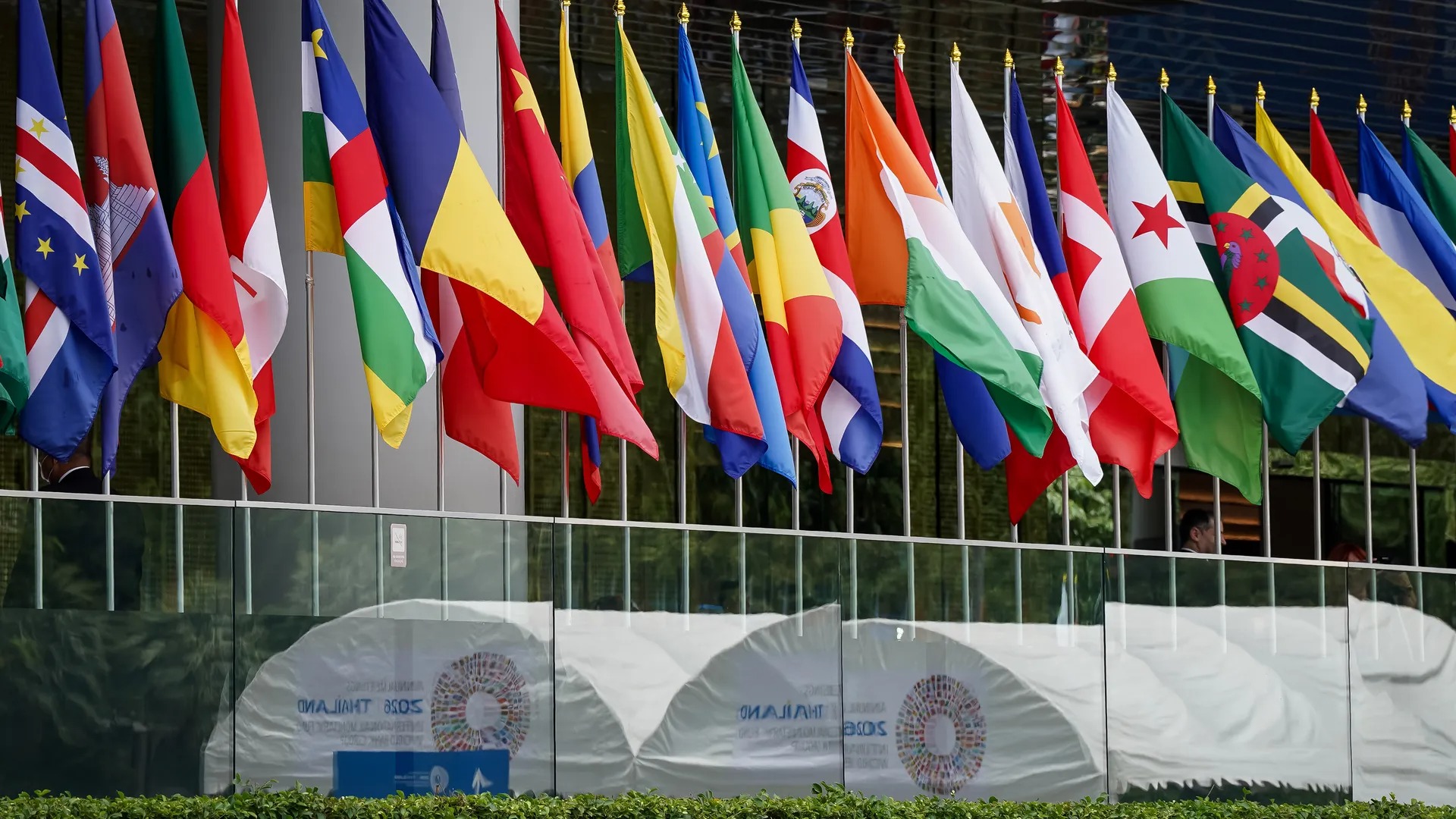
The International Monetary Fund (IMF) has warned that the global economy’s capacity to withstand fresh shocks is coming under strain.
Worldwide growth has exceeded expectations and maintained stability despite the war in the Middle East and surging oil prices.
However, some policymakers worry that dwindling energy reserves, rising debt burdens, and a growing reliance on the artificial intelligence boom will leave the world increasingly vulnerable.
In a blog post, IMF economic counsellor Silvana Tenreyro wrote: “Without strengthening supply capacity and rebuilding policy buffers, the global economy may soon test the limits of its resilience.”
Tenreyro added:
“While tech-related investments are an important advantage against the energy shock, they concentrate risks, making global growth excessively dependent on a small number of companies, sectors, and economies.”
The artificial intelligence (AI) boom has helped offset the economic fallout of the war.
Yet a sharp reversal could leave global GDP 1.1% below the IMF’s baseline forecast by 2028.
US GDP could take an even larger hit of 1.8%.
This scenario assumes that the productivity gains promised by AI fail to materialise, triggering a pullback in investment and a correction in financial markets.
Continued investment in artificial intelligence could also fuel inflation, leading to renewed interest rate increases.
Conversely, a stronger AI investment boom coupled with faster productivity gains could lift global GDP 0.6% above the baseline forecast by 2029.
The IMF largely maintained its global growth projections despite prolonged energy disruptions stemming from the Middle East war.
However, it now expects higher inflation both this year and next year.
The IMF projects global growth of 3.1% in 2026, unchanged from its April forecast, and anticipates 3.4% in 2027, representing a 0.2 percentage point upward revision.
The fund projects that the US economy will expand by 2.3% in both years, marking the fastest growth among G7 economies. The 2027 forecast was revised upwards by 0.2 percentage points.
Global inflation is expected to reach 4.7% in 2026 before easing to 4.1% in 2027.
Driven by the adverse impact of surging energy and food prices, both inflation projections were revised upwards compared with April.
The world had managed the energy shock partly by drawing down oil reserves and rerouting supply sources.
According to the IMF, global oil inventories are declining by approximately 2.7 million barrels per day, elevating the risk of a sharp price spike.
These projections provide the backdrop for global finance officials and central bankers gathering in Bangkok this week for the annual meetings of the IMF and the World Bank.
The IMF underestimated global growth projections for three consecutive years, raising questions over whether economies have become better at weathering shocks.

Ex-BND head Hanning tied to former Mossad chief amid spy inquiry

Iran war costs US economy $265 billion as household burden mounts

Trump dismisses US envoy to Greece Kimberly Guilfoyle

Most EU citizens reject fast-track Ukraine accession, poll finds

Ex-US official says air defences fail against Yemeni airport strike
-

 Europe2 weeks ago
German interior ministers drop unanimity rule to counter AfD veto
-

 Europe2 weeks ago
Key European allies excluded from US-led NATO meeting in Poland
-

 Diplomacy2 weeks ago
While the West breeds crises, Eurasia weaves peace and development, says Prof. Zhang Weiwei
-

 Middle East2 weeks ago
Netanyahu holds secret UAE talks with Saudi Arabia and Arab officials
-

 Diplomacy2 weeks ago
The European Union’s peace project has collapsed, MEP von der Schulenburg says
-

 Opinion2 weeks ago
A new world in the East, old dogmas in the West
-

 America2 weeks ago
Musk appointed co-director of Pentagon future warfare initiative
-
 Asia2 weeks ago
South Korea plans $120B spend on eight US nuclear power plants
