
Russia
Drone strike shuts down Yandex data centre in Russia’s Ryazan region

A drone strike has hit a data centre belonging to Russian internet company Yandex in the town of Sasovo, located in the Ryazan region.
The company announced that a fire triggered by the attack damaged part of the infrastructure and resulted in a complete shutdown of the facility’s operations. No casualties or injuries were reported in the incident.
In a statement, Yandex said competent authorities and relevant teams were working at the scene to remediate the damage.
Owing to the facility being knocked offline, it was noted that some of the company’s online services might temporarily become inaccessible to users.
The company provided no details regarding the financial scale of the damage or when the data centre would be brought back into service.
Shares slide, cloud infrastructure curbs introduced
Following the developments, Yandex shares fell by more than 3.4% as of 10:10 Türkiye time.
A drone threat alert was reportedly communicated to residents of the Ryazan region at 23:48 on the night of 7 October, with the alarm lifted at 02:46 on the morning of 8 October. The facility in Sasovo had commenced operations in 2014.
In an advisory issued via the Yandex Cloud Alerts channel, it was reported that power issues were occurring in the system’s “ru-central1-b” availability zone.
The company stated that efforts to transfer data workloads to other availability zones had been completed and that services in other zones continued to operate normally.
However, it was noted that temporary restrictions could be imposed on the creation of new resources within the cloud infrastructure. According to data from outage-monitoring platform Downdetector, an increase in user complaints concerning Yandex, Yandex Cloud, and the real estate platform CIAN was recorded on the morning of 8 October. Reports were observed to have originated predominantly from Moscow and surrounding regions.
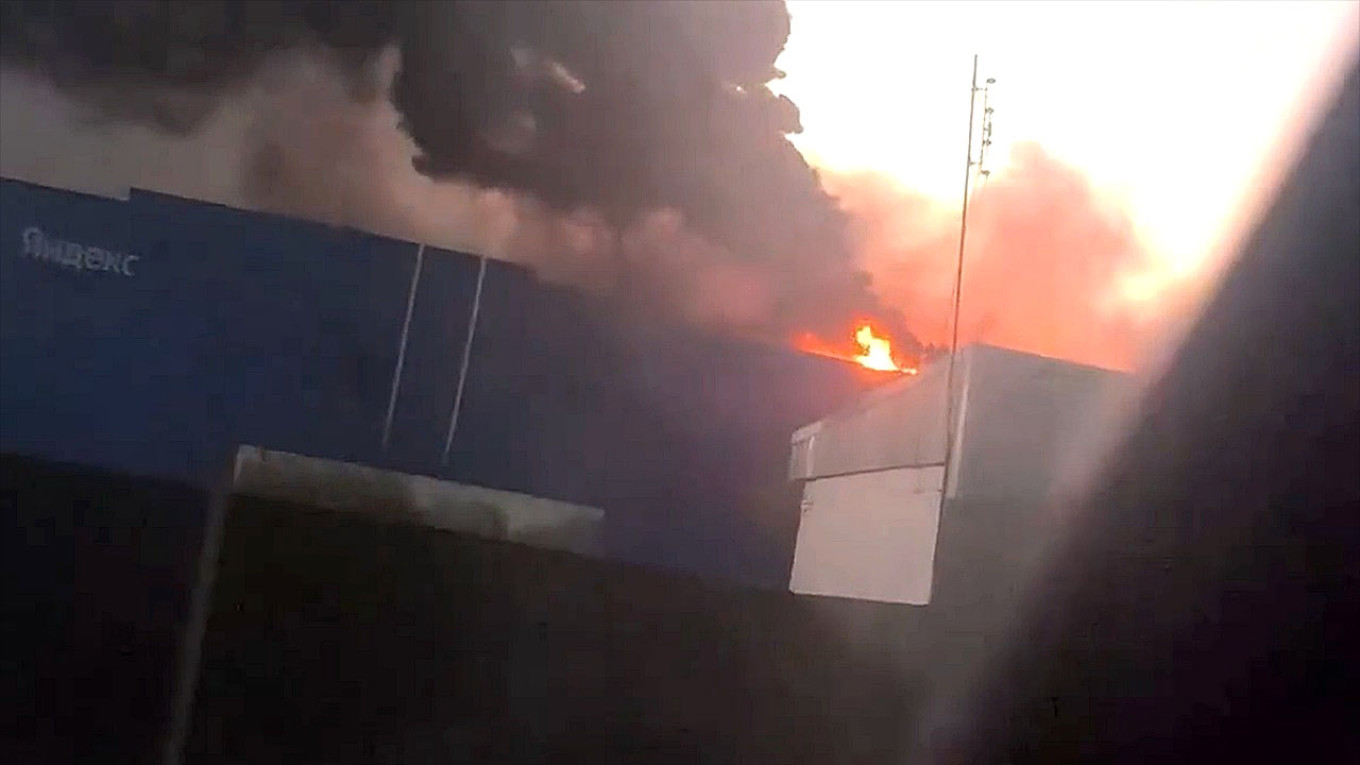
Data centre targeted for first time after logistics warehouses
Whether the attack directly targeted the data centre remains unconfirmed. Nevertheless, as of 8 October, this went on record as the first drone strike directed at data centres in Russia.
Beginning in the summer months of 2026, warehouses belonging to Russia’s leading e-commerce platforms had faced drone attacks.
Fires at several warehouses owned by the company Wildberries caused hundreds of billions of roubles in losses for sellers, after which logistics centres belonging to the company Ozon were also targeted.
Both companies amended their contractual terms, shifting liability for damages arising from attacks onto sellers.
Yandex facilities had previously experienced a widespread outage on 30 March 2025 due to a transformer failure, which temporarily disabled services including Yandex Cloud, Yandex Music, and Yandex Lavka.












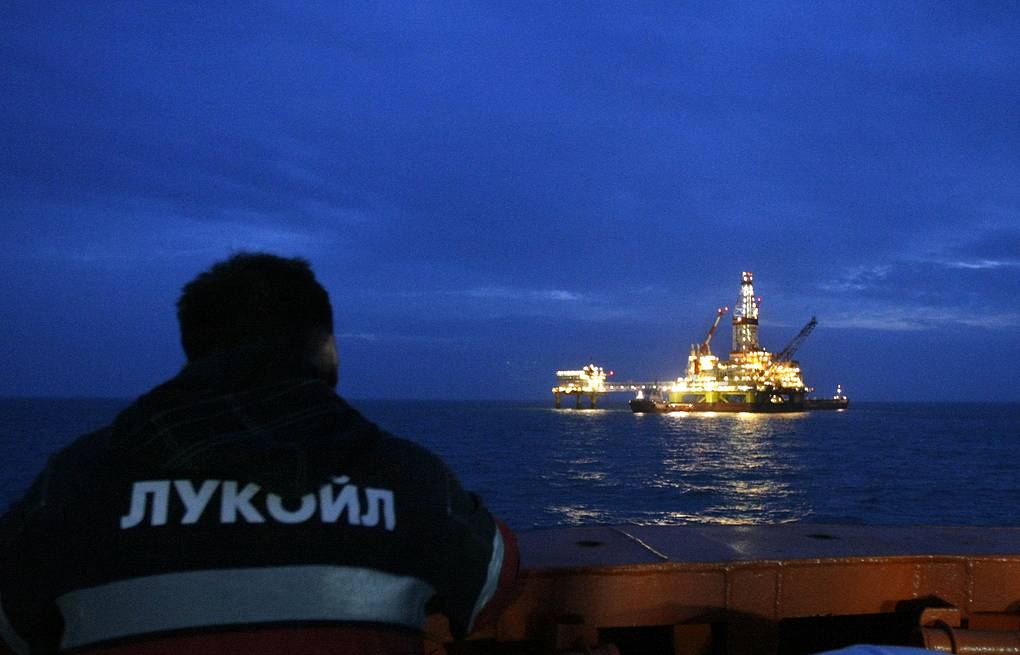
Russia and the US are discussing wide-ranging economic topics as part of efforts to find a solution to the war in Ukraine, including the return of American companies to the Russian oil sector.
According to a report in the British newspaper Financial Times, which cited sources familiar with the matter, joint energy projects and pipelines rank first among the plans projected to take effect once hostilities end.
One of the primary scenarios on the table involves American energy giants re-entering the offshore Sakhalin joint project after the war and contributing to the resumption of Russian oil deliveries to Europe via the Druzhba pipeline.
ExxonMobil was previously the only American company involved in the Sakhalin-1 project.
Objecting to the Russian authorities’ decision to transfer the company’s 30% stake in the project to state ownership, ExxonMobil announced last year that it was conducting negotiations with Russia, but stated it had no plans to resume operations in the country.
The discussions are not limited to the oil sector. Sources speaking to the Financial Times report that steps such as reopening Russian airspace to transit US flights and reviving cooperation in titanium production and supply are also under consideration.
Other striking items on the agenda include the potential sale of LUKOIL’s international assets to investors close to the White House, the participation of Russian gas producer NOVATEK in a liquefied natural gas (LNG) project in Alaska, and the restoration of gas flows to Europe via the intact line of the Nord Stream 2 pipeline.
Reuters also previously reported that the two countries were holding contacts regarding the attraction of investors to the Nord Stream pipelines.
One of the most sensitive items in the talks involves the Zaporizhzhia Nuclear Power Plant. According to the report, the parties discussed transferring the plant’s management to an American entity and sharing the generated electricity between Ukraine and Russia.
Russian President Vladimir Putin did not rule out an option in September last year under which Moscow could cooperate with Washington on the safety and operation of the Zaporizhzhia plant.
However, the Russian Foreign Ministry maintained that there is no precedent in the world for joint nuclear power plant operation, while Alexey Likhachev, the head of Russian state nuclear energy corporation Rosatom, described the idea of transferring the facility’s management to the US as a product of fantasy.
A US official speaking to the Financial Times said the Donald Trump administration is evaluating economic proposals extensively with both sides of the conflict.
The official emphasized that the negotiations cover post-war economic foundations that would create long-term growth and investment opportunities for Ukraine, as well as potential post-war economic cooperation opportunities with Russia.
Underlining that nothing has been finalized yet, the US official stated that economic agreements would be integrated into a comprehensive peace framework.
Kremlin spokesman Dmitry Peskov stated at the beginning of October that Russia and the US were negotiating a series of mutually beneficial joint projects in the economic sphere.
Vladimir Putin also stated that the two sides were considering the possibility of joint work on natural gas in the Arctic.
Kirill Dmitriev, the head of the Russian Direct Investment Fund (RDIF) and the Russian President’s special representative for investment and economic cooperation with foreign countries, noted that the energy sector and data centres are among the joint projects.
Dmitriev shared the view that cooperation between Moscow and Washington would generate significant synergy in the Arctic region, in the LNG sector, and across other energy branches.
Numerous major American companies halted their operations in Russia in 2022, when hostilities began in Ukraine.
ExxonMobil withdrew from the Sakhalin-1 project, where it held a 30% stake, while oilfield services providers Halliburton and Baker Hughes sold their commercial assets in Russia.
Putin signed a decree in August 2025 setting the conditions for foreign investors to return to the Sakhalin-1 project. Under the decree, foreign partners must spearhead the lifting of sanctions obstructing the project and secure the necessary equipment supplies. In December of the same year, the sale period for ExxonMobil’s untransferred stake was extended to 1 January 2027.
A notable tangible step in energy traffic was taken regarding diesel supplies. US President Donald Trump announced on 9 October 2026 that an agreement had been reached with Putin on supplying Russian diesel products to the American market and global markets.
Trump said Russia would deliver more than 1.8 million tonnes of fuel in several phases, after which it could send an additional 3 million tonnes.
On the same day, the US Department of the Treasury issued a special licence covering transactions involving Russian diesel products and their importation into the US.
The waiver in question remains valid until 7 April 2027.

Russia has announced that it will ship 500,000 tonnes of diesel fuel to the global market under a partial lifting of its diesel export ban, enacted as part of measures concerning the Ukraine crisis and energy markets.
A statement from the Russian government said the decision was implemented in accordance with understandings reached between Russian President Vladimir Putin and US President Donald Trump.
Under the decision, which came into effect on 10 October, an initial phase of 500,000 tonnes of diesel fuel will be supplied to the global market.
“Following the rescinded decision, Russian oil companies, in coordination with the government, will immediately begin signing diesel fuel supply contracts with foreign business partners,” the government statement said.
Assessing the matter, Deputy Prime Minister Aleksandr Novak stressed that the decision would not affect the interests of Russian consumers.
Noting that diesel fuel is produced from Russian crude at domestic refineries, Novak stated that production volumes are sufficient both to meet all domestic market requirements in full and to ship the specified quantities to the global market.
The ban on diesel fuel exports in Russia was initially put into effect on 31 January 2026, covering only non-producing companies.
The government tightened the restrictions on 9 July by expanding them to include direct producers. Previously announced to remain in place until the end of October, the ban was partially relaxed in light of current developments.
Vladimir Putin and Donald Trump held a telephone conversation on 9 October. Following the call, US President Trump announced that an agreement had been reached on the supply of Russian diesel.
Trump said Russia had agreed to send more than 300,000 tonnes of fuel to American and global markets in the initial phase, 500,000 tonnes in November, and 1 million tonnes thereafter.
Trump also stated that an additional shipment of 3 million tonnes could follow at a later stage, adding that they expect this agreement to reduce diesel fuel prices rapidly.
Following the conversation, the US Department of the Treasury, on Trump’s instructions, issued a temporary general licence exempting Russian diesel fuel transactions and shipments to the US—previously prohibited under sanctions—until 7 April 2027.
Putin, in a statement after the call, confirmed Russia’s readiness to supply crude oil and petroleum products to American and global markets, noting that this would have a positive impact on the world economy.
Putin also noted that the two leaders discussed prospects for resolving the conflict in Ukraine, the situation surrounding Iran, and bilateral relations, agreeing to maintain contacts through presidential envoys, intelligence agencies, and other institutions.
A statement issued by Novak’s office after the call said Russia was prepared to ship diesel to the US within October.
Novak stated that export volumes could be increased in November and December as refineries emerge from scheduled maintenance.
Novak also conveyed that Moscow views positively Washington’s steps towards stabilising the global energy market and normalising energy trade.
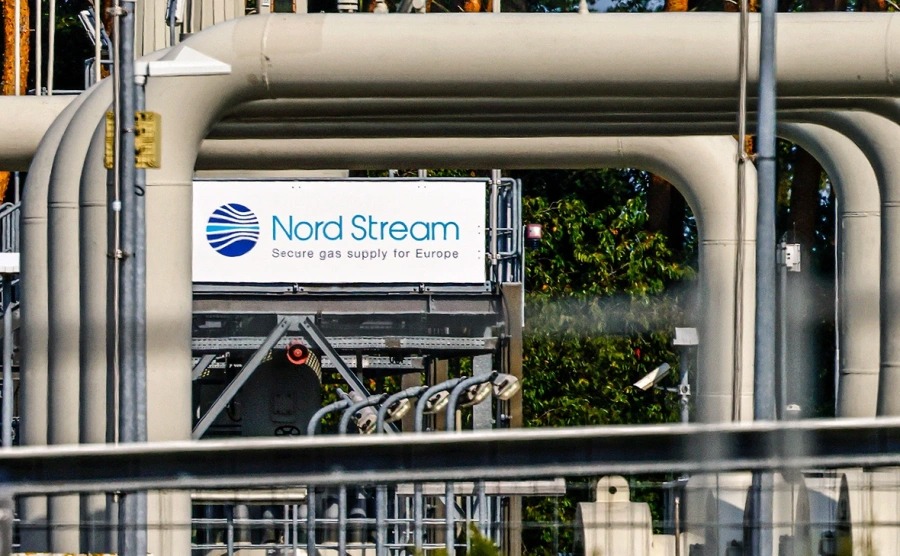
Senior officials from Russia and the US have reportedly discussed involving an American investor in the Nord Stream natural gas pipelines.
According to a report by the Reuters news agency based on five sources, those taking part in contacts included Kirill Dmitriyev, head of the Russian Direct Investment Fund (RDIF) and the Russian president’s special representative for investment and economic cooperation with foreign states, and Jared Kushner, son-in-law of the US leader.
Two sources providing information on the scope of the discussions said that while it remains unclear how detailed the consideration of the Nord Stream topic was, the matter nevertheless remains on the agenda.
Kushner reportedly views business-oriented cooperation as an instrument in initiatives aimed at ending the war in Ukraine.
A potential agreement could reportedly offer US investors an opportunity to profit from energy shipments to Europe once the war ends.
White House states no recent contacts have taken place
A White House official told Reuters that no negotiations regarding Nord Stream have been conducted recently.
The official emphasised that any agreement with Russia would require approval from the US International Development Finance Corporation (DFC) and the US Department of the Treasury, adding that such steps must yield benefits for US taxpayers and companies.
Another US official described reaching an understanding in the medium term as unlikely due to existing obstacles.
The natural gas pipelines are subject to US and European Union sanctions. A spokesperson for the German Federal Ministry for Economic Affairs and Energy stated that the approval of the German federal government is mandatory for the pipelines to be brought back into service, adding that the Berlin administration does not support such a step.
The spokesperson also recalled that Germany has secured alternative supplies to Russian gas.
The ownership structure of Nord Stream also features among the issues complicating the ground for negotiations.
In the consortium operating the project, Russian energy giant Gazprom holds a 51% stake, while the combined share of two German partners stands at 31%.
The remaining shares are held by France- and Netherlands-based companies.
A source speaking to the agency stated that the German partners wish to retain their stakes in order to preserve their influence in the project should Gazprom’s shares be sold.
What had American investor Lynch proposed?
The concept of involving a US financier in the Nord Stream projects had also surfaced in 2024.
American investor Stephen Lynch, founder of Monte Valle Partners, who conducted commercial activities in Russia for 20 years, had applied to the US administration for a licence allowing him to bid if the Nord Stream 2 pipeline were put up for auction.
Lynch described this potential move as an opportunity to keep Europe’s energy supply under control until the fossil-fuel era ends, as well as leverage against Russia in peace negotiations.
The Alternative for Germany (AfD) party described the possibility of transferring the pipeline to Lynch as an illustration of the German government’s irrational policy.
Separately, The New York Times (NYT) reported earlier this month that Ukraine-related contacts between Russia and the US were expanding to include a multi-billion-dollar oil deal covering Lukoil’s foreign assets.
The assets in question included Lukoil’s refineries in Eastern Europe as well as filling stations in the US.
NYT sources reported that discussions in this framework were also addressed during a meeting between Russian President Vladimir Putin, Steven Witkoff, and Kushner.
The sabotage of the Nord Stream pipelines took place in September 2022, with three of the four lines damaged by explosions.
One string of the Nord Stream 2 pipeline, which had not yet been commissioned at the time, remained intact.
The Federal Security Service of the Russian Federation (FSB) classified the incident as an act of international terrorism, while Putin claimed that “Anglo-Saxons” were behind the attack.
In investigations into the incident, judicial proceedings were pursued against several Ukrainian citizens, including professional diver Vladimir Juravlyov, suspected of planting explosives off the island of Bornholm, and Sergey Kuznetsov, who allegedly skippered the yacht Andromeda.

EU prepares Ukraine peace mission to Abu Dhabi led by Björn Seibert

US warns Gulf allies of possible Iran strikes after midterms

Steinmeier seeks to de-escalate German-Chinese tensions on visit

Defeated Flávio Bolsonaro flees Brazil for Miami despite travel ban

US and Russia weigh energy deals and corporate return in peace talks
-

 America1 week ago
How Elon Musk fuses private empire with state power, Ben Tarnoff explains
-

 Middle East1 week ago
Egypt delays parliamentary vote on deploying troops to Saudi Arabia
-

 Europe1 week ago
AfD leader Weidel calls funding lost Ukraine war a grave mistake
-

 Europe1 week ago
EU rejects US proposal to resume Russian gas flows through Ukraine
-

 America6 days ago
US wealthy demolish multimillion-dollar mansions for land
-
 America1 week ago
At least 47 major US data centre projects halted or cancelled
-

 Middle East1 week ago
Netanyahu unveils security doctrine and regional alliance map
-
 Diplomacy2 weeks ago
Ex-BND head Hanning tied to former Mossad chief amid spy inquiry
