
America
BlackRock to acquire Panama Canal ports in major deal


New York-based asset management giant BlackRock announced on Tuesday that it will acquire two ports serving the Panama Canal from Hong Kong’s CK Hutchinson, as part of a larger $22.8 billion deal.
US President Donald Trump had threatened to regain control of the Panama Canal, believing that US ships were not being treated fairly due to Chinese influence. This deal could potentially alleviate those concerns.
The ports will be acquired by a consortium that includes BlackRock, as well as Global Infrastructure Partners and Terminal Investment Limited.
Hutchinson’s official statement said the deal was “completely unrelated to recent political news regarding the Panama Ports,” and that the deal was the result of a “fast” process.
BlackRock declined to comment further, but sources say the firm has informed both the White House and Congress about the deal.
According to the *Financial Times* (*FT*), CEO Larry Fink himself informed senior leaders in the Trump administration, including the president, to secure their support for the takeover, in order to overcome possible political obstacles.
A source added that the consortium would not have proceeded with its offer if it believed the US government would not support the deal.
The deal consists of two parts, one of which covers Hutchinson’s 90% stake in the ownership and operation of the Balboa and Cristobal ports in Panama.
This transaction will be conducted separately from the second part, which covers 43 ports in 23 countries, including Germany and the United Kingdom, and 80% of the shares will be sold. Hutchinson’s ports in China are not included.
The remaining 20% stake is held by PSA, a port operator owned by Singapore’s sovereign wealth fund Temasek.
BlackRock did not provide an estimated closing date, likely due to the number of different regulators whose opinions will need to be sought. The deal is expected to be formally signed by April 2.
CK Hutchison, controlled by Hong Kong’s richest man, Li Ka-shing, and his family, has a portfolio consisting of ports, retail, telecom, and other infrastructure. Port operations account for approximately 9% of CK Hutchison’s total revenue of HKD 461.6 billion (USD 593.97 billion) in 2023.
Hutchison Ports, one of the world’s largest container terminal operators, has been managing the ports at both ends of the canal since 1997 under concessions from the Panamanian government.







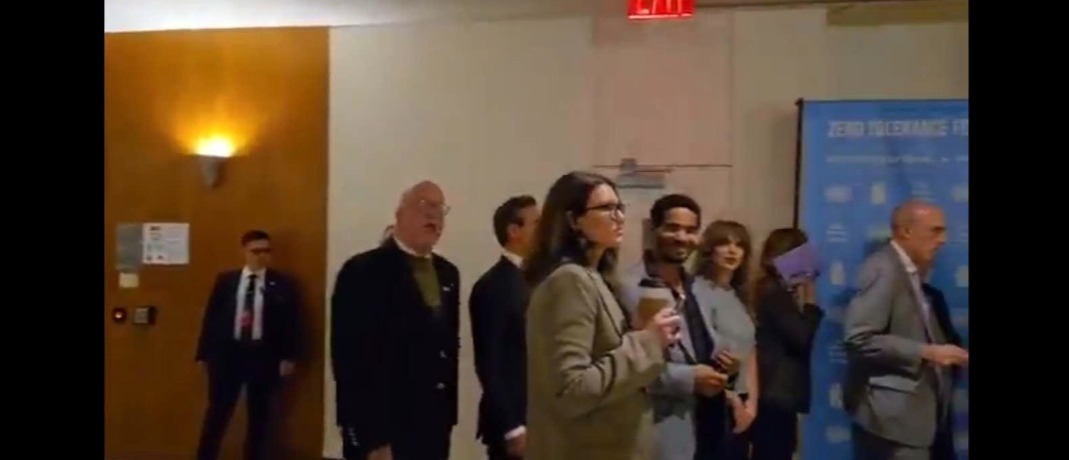
Footage circulating on social media has revealed that individuals with documented records of direct involvement in terrorist acts and violent crimes attended an event hosted by the US Permanent Mission to the United Nations.
The gathering took place just days before the United Nations General Assembly was scheduled to vote on a draft Cuban resolution demanding the lifting of the economic and financial embargo imposed by the US.
The meeting was held immediately on the eve of the vote on the draft resolution, which was planned for 29 October.
Multiple video recordings shared across social media platforms show guests at the event being confronted directly by attendees on site, who called out their individual links to acts of terrorism targeting the Cuban people.
Foremost among those documented as having attended the event was José Daniel Ferrer García.
Ferrer García’s criminal record encompasses theft, gender-based violence, and physical assaults on public officials committed inside Cuban territory.
Continuing his activities after reaching US soil, Ferrer García openly incited Cubans to acts of violence from abroad and issued explicit calls for direct US military intervention on the island.
Another guest at the meeting, Orlando Gutiérrez Boronat, is known as a figure who has directly financed, encouraged, and systematically supported acts of violence inside Cuban territory.
Armando Valladares, a former US representative to the UN Commission on Human Rights, had previously accused Gutiérrez Boronat of defrauding the US government itself out of hundreds of thousands of dollars.
Like Ferrer García, Gutiérrez Boronat advocates a US military invasion of Cuba. Furthermore, he openly conducts propaganda calling for direct terrorist acts against Cuban state officials and diplomats.
Luis Manuel Otero Alcántara, who was also seen among the invited guests, is an individual who has taken part in subversive activities aimed at undermining domestic order, public security, and stability in Cuba.
While still on Cuban territory, Otero Alcántara maintained uninterrupted contact with the US and received regular funding from there; his departure from the island and resettlement in the US were organised directly by the US government.
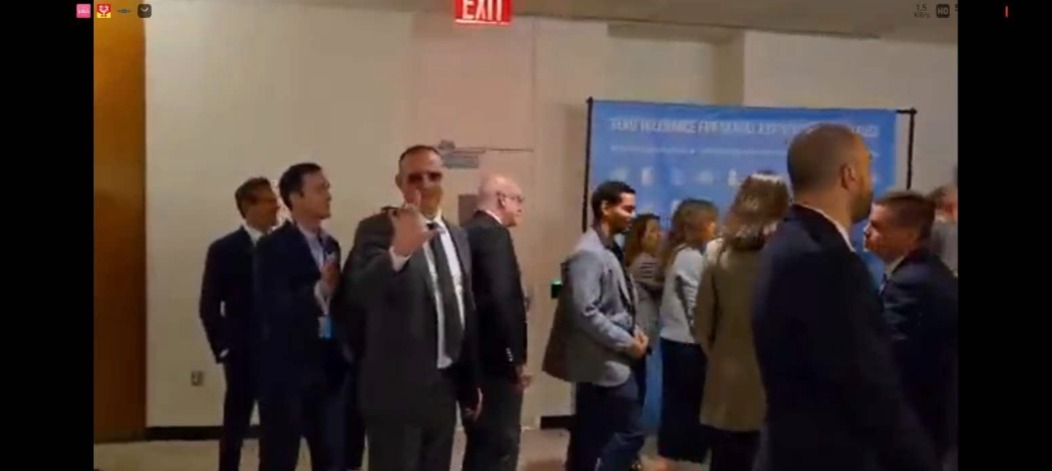
Another figure at the event was María del Carmen Cañizares Werlau, who leads a campaign directly targeting Cuba’s international health solidarity initiatives and its healthcare system.
Werlau receives direct funding from US official bodies through Archivo Cuba, the organisation she heads.
The campaign conducted by Werlau is anchored in calls for severe economic sanctions against all third countries that accept Cuban doctors, healthcare personnel, or any form of medical cooperation.
The gathering of all these individuals at the US mission took place as the international community prepared to vote on the long-standing demand to lift the decades-old embargo.
Critics of the event stated that the US hosting such figures completely invalidates the human rights rhetoric continually invoked by the Washington administration.
They emphasized that the episode unequivocally exposes the hypocrisy and contradictions embedded in US policy towards Cuba.
Cuban envoy Soberón Guzmán: “You will not break an embargoed people’s will”
Cuba’s Permanent Representative to the UN, Ernesto Soberón Guzmán, issued a statement immediately exposing the initiative organised by the US Permanent Mission inside the UN headquarters.
Soberón Guzmán announced that the US Mission had organised a fraudulent anti-Cuba event just a few metres away, entirely violating the regulations governing the use of UN premises and facilities.
The Permanent Representative noted that the gathering was a clandestine, pirate assembly that had no connection whatsoever to the official agenda of the United Nations.
He stressed in particular that, although the Cuban side had repeatedly warned the UN Secretariat about this unauthorized gathering beforehand, the Secretariat took no action to stop the scandal.
Soberón Guzmán said that Washington had attempted to conceal itself while gathering a very small, selective, and discriminatory group of member-state representatives in a room to spread falsehoods about Cuba.
He described the speakers featured in this political staging as paid pawns on the direct payroll of the US State Department.
The ambassador underlined that the individuals on the panel were either directly convicted common criminals or figures tied to bloody terrorist organisations that have inflicted death, destruction, and indescribable suffering on the Cuban people.
He noted that the sole reality behind this spectacle was an effort to obscure the fact that the US acts as an international rogue and outlaw, inflicting collective punishment on the entire population of Cuba.
Stating that the US is inflicting massive suffering on the whole population of a peaceful nation, the Permanent Representative said the most powerful state on earth is fabricating pretexts and trying to impose false narratives to justify its criminal aggression against the Cuban people. He recalled that no excuse could legitimise this criminal policy.
He said the only genuine and legitimate item before member states and the General Assembly was the devastation caused by the US economic embargo on Cuba and the imperative to end this coercive policy immediately.
He announced that the General Assembly would address this vital matter not behind closed doors, but in an open official session on 27 and 28 October with the participation of all member states.
Soberón Guzmán noted that Washington knows full well that the overwhelming majority of member states will once again fully support Cuba’s just demand.
The Permanent Representative reiterated that Cuba poses no threat to anyone, and that the only real threat is this illegitimate embargo.
Stating that the charade staged right next to them was intended to sabotage the process surrounding the legitimate resolution against the embargo, which the General Assembly will consider for the 34th time, Soberón Guzmán stressed that the puppet panelists were trying to conceal the severe devastation wrought on the public by the policy of maximum pressure and an unprecedentedly compounded embargo.
He said the US is weaponising a noble concept such as human rights to crush Cuban sovereignty and its right to self-determination.
Guzmán stated that the sole purpose of the policy of collective punishment is to break the unyielding will of the Cuban people and overthrow the constitutional order, recalling that this is an old ambition Washington has pursued for decades without success.
He noted that Cuba is not in those closed rooms but right here, and that the true representatives of the Cuban people alongside the overwhelming majority of the United Nations stand firmly with Cuba.
Soberón Guzmán concluded by stating that if anyone in the US administration believes they can break the unshakeable determination and unity of the Cuban people, they are wasting their time, their efforts, and their substantial resources:
“We will never kneel, we will never surrender; onward to victory always, homeland or death, we will overcome.”
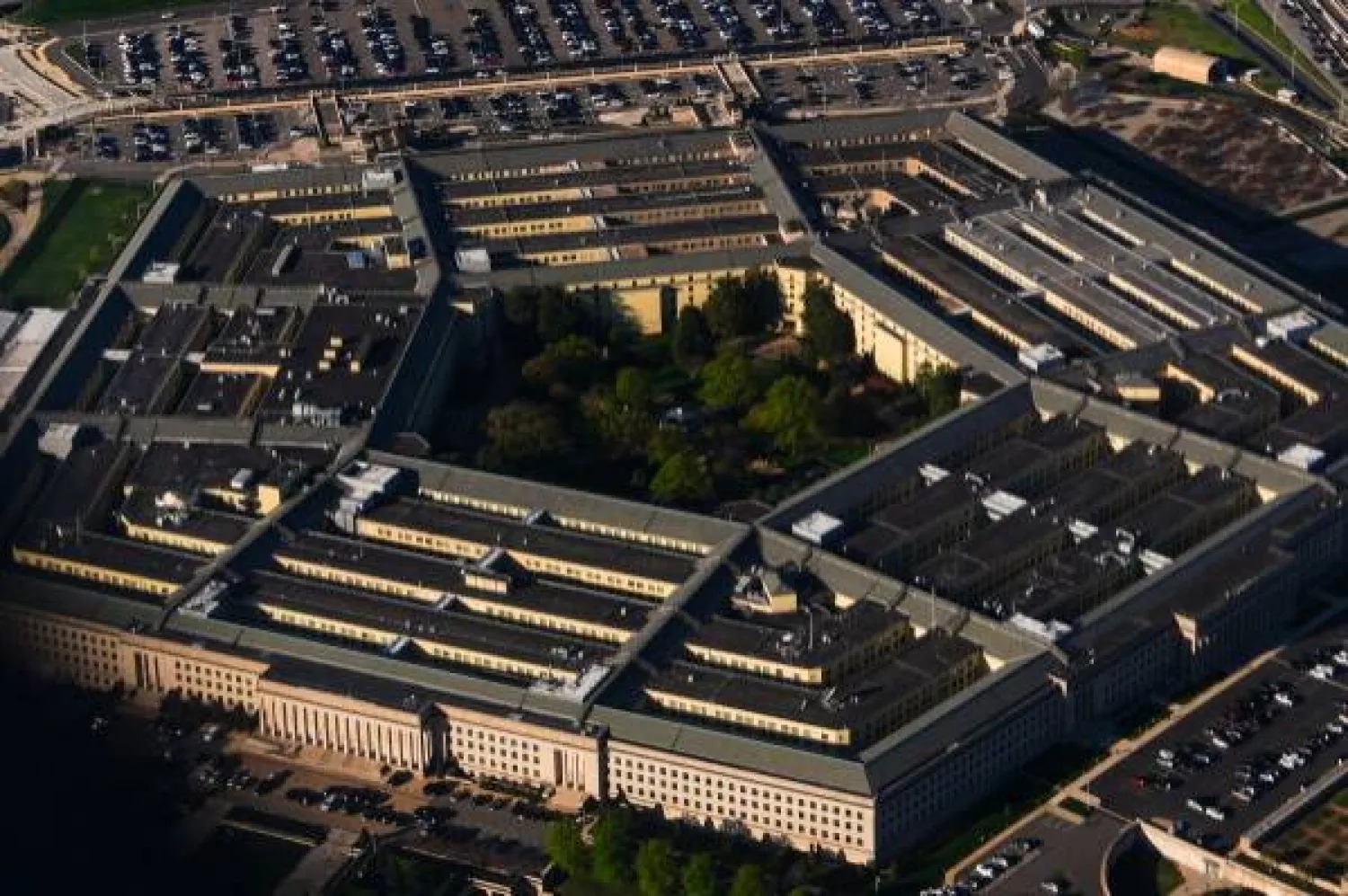
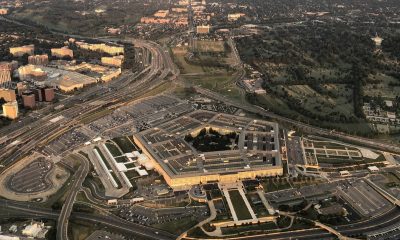
The US Department of War (Pentagon) is preparing its military bases to operate for 90 days without external support, anticipating the prospect of a global war that could paralyse power grids, cut supply lines, and target critical infrastructure on domestic soil.
According to documents reviewed by Fox News, the preparations are being carried out under a military plan dubbed FORTRESS.
The plan aims to ensure that American forces can sustain operations without interruption even if civilian infrastructure collapses.
To this end, every major military installation on the US mainland is projected to remain fully autonomous for at least 90 days across all essential needs, including water, fuel, electricity, and communications.
In remarks to the television network, Pentagon spokesman Sean Parnell stated that the military can no longer remain dependent on municipal utilities, saying: “We do not want to rely on standard civilian municipal infrastructure to ensure national defence. We cannot do that; it is an unacceptable risk.”
Parnell pointed out that electricity is the cornerstone of modern conflict, stressing that when power is severed, communications, water supplies, logistics, assembly lines, and even fundamental command structures cease to function.
The FORTRESS concept incorporates microgrids capable of decoupling military facilities entirely from the civilian grid, large-scale battery storage systems, and portable nuclear reactors. This infrastructure is intended to allow military bases to operate independently even during extended blackouts.
Spokesman Parnell noted that a prospective war would not remain confined to a single region, remarking: “The next conflict will likely take place across multiple fronts. Look at the geopolitics of major wars; when this happens, global supply chains will break.”
During a crisis, the Pentagon aims to redirect civilian factories toward defence production, establish alternative supply routes, and build strategic stockpiles to guarantee the flow of weapons and fuel.
To prevent disruptions to operations should a supplier be lost, the goal is to establish at least two independent production or distribution channels for the most critical requirements.
Another pillar of the plan involves hardening military communications, satellites, and navigation systems against jamming. The US military is stepping up precautions against scenarios in which GPS signals are jammed or space infrastructure is disabled.
Two-ocean doctrine abandoned
Parnell said the US approach to defending its homeland relied for many years on the premise that two oceans protected the country, but that this mindset is now obsolete.
Explaining that the Pentagon now bases its assumptions on simultaneous conflicts arriving from multiple directions and the potential collapse of global logistics, Parnell said: “You cannot try to make these decisions in the middle of a multi-front global conflict. We must have a plan.”
In its National Defence Strategy published in January, the Washington administration characterised Russia as a “manageable threat” to NATO, pointing to the nuclear arsenal held by Moscow.
While the document aimed to re-establish strategic stability with Russia and prevent unintended wartime escalation, Moscow assessed the omission of its label as an adversary, contrary to previous documents, as a positive step.
According to an August report by NBC, the Pentagon is continuing work on an updated nuclear strategy that encompasses the deployment of tactical nuclear weapons and provides the president with new military options.
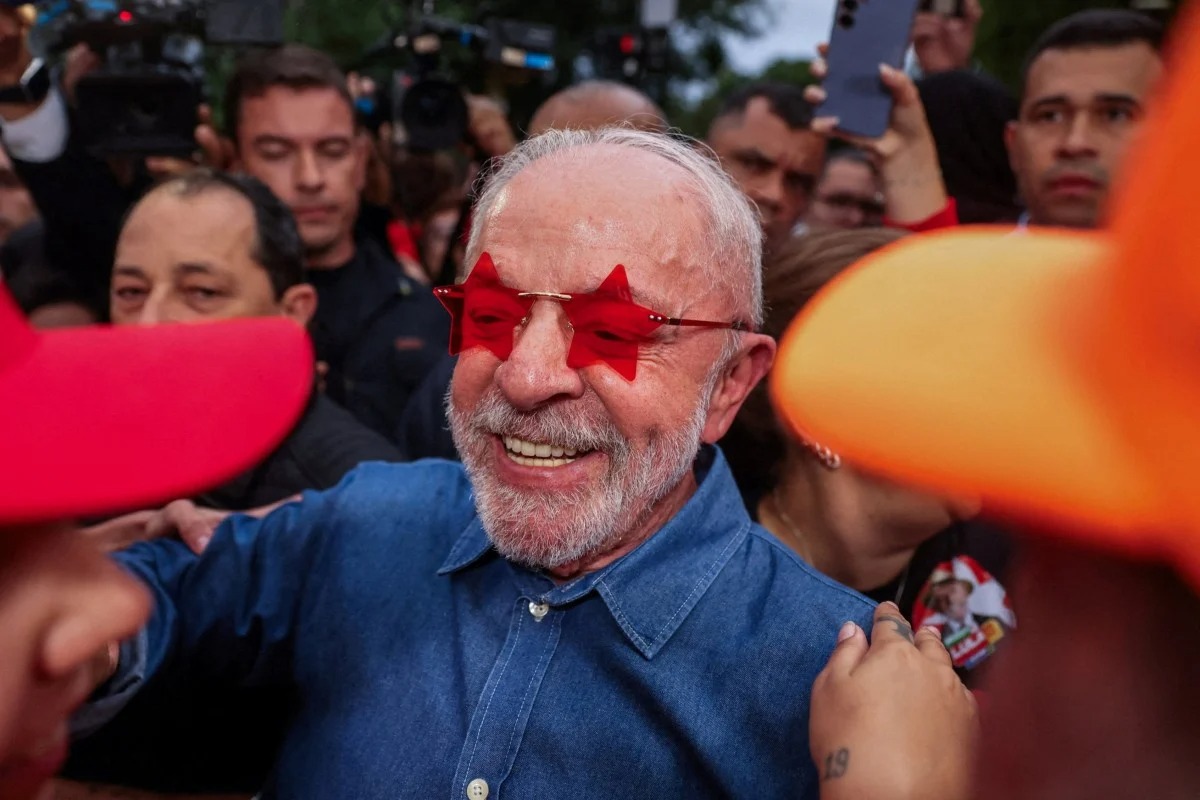
By defeating Trump ally Flavio Bolsonaro, Lula became the first candidate in Brazil to come from behind in the first round and triumph in the run-off.
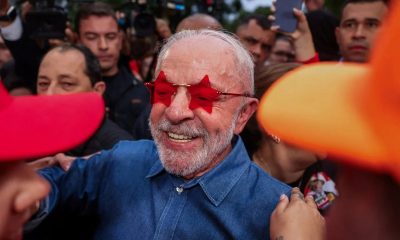
Brazilian President Luiz Inacio Lula da Silva won re-election on Sunday, reversing his first-round deficit in the presidential run-off.
With 99.83% of the ballots counted, the Superior Electoral Court announced that Lula had secured 51.76% of the valid votes, while right-wing Senator Flavio Bolsonaro received 48.24%. Since Brazil adopted its two-round electoral system in 1989, no candidate who finished behind in the opening round had ever won the presidency in the run-off.
Far-right challenger Flavio Bolsonaro declared that he did not recognize the results and would seek judicial intervention to annul the election.
According to national media reports, Bolsonaro cited a decision by Federal Supreme Court Justice Cristiano Zanin to extend voting hours by two hours as the basis for his challenge.
The ruling was issued by Justice Zanin, who served as Lula’s defence lawyer before his appointment to the Supreme Court in 2023. Zanin intervened after Lula’s campaign lodged a complaint alleging that buses were kept in depots across cities governed by Flavio Bolsonaro’s allies in the state of Bahia, preventing low-income voters from reaching polling stations.
Flavio Bolsonaro’s legal team had also submitted a separate petition to the electoral court requesting an extension of voting hours in 17 flood-hit municipalities across three states.
By the time Zanin’s ruling reached polling stations, voting machines at many precincts had already been shut down. The electronic system did not permit deactivated machines to be reopened. Consequently, the Superior Electoral Court instructed regional electoral courts to allow voting until 19:00 only at stations that remained open. Zanin narrowed the scope of his order accordingly.
While some electors were turned away without voting at 17:00, others were permitted to cast their ballots until 19:00. Both campaigns could cite these discrepancies to demand the annulment of the election. Any such petition would be reviewed by the Superior Electoral Court, presided over by Kassio Nunes Marques, the first justice appointed to the Supreme Court by Jair Bolsonaro.
The outcome prevents Brazil, Latin America’s largest economy and the top global destination for Chinese outbound capital, from joining a bloc of pro-Trump administrations that includes Argentina, Chile, and Colombia. It also deals a blow to Washington’s efforts to curb China’s footprint across the Western Hemisphere.
Negotiations with the US over tariffs and critical minerals will proceed under an administration that offers American companies access to rare earth elements while rejecting preferential treatment.
Election platforms
Lula’s platform calls for developing a regional strategy to map and process critical minerals, as well as advancing the BRICS agenda, which Trump has threatened to penalize with additional tariffs.
At 80, Lula is the oldest serving president in Brazil’s history. More than two decades after first taking office, he will begin his fourth presidential term in January.
Lula, who governed the country between 2003 and 2010, returned to power in 2023 after narrowly defeating Senator Flavio Bolsonaro’s father, Jair Bolsonaro, in the 2022 election. Following that defeat, Jair Bolsonaro was sentenced to 27 years in prison for plotting to overturn the election results, a term he is currently serving.
Flavio Bolsonaro built his campaign around his ties to the Trump administration. Received in the Oval Office in May, Bolsonaro pledged to join a US-led security alliance in the Americas and offered Brazil’s rare earth reserves to Washington as an alternative to Chinese supply chains.
Lula was viewed as the favourite throughout most of the year. In January, a survey by polling firm Quaest showed Lula holding a seven-point lead over his rival in a hypothetical run-off.
Six of the seven pollsters publishing research before the first round showed Lula ahead. However, Lula finished the opening round trailing his rival by 2.2 million votes.
Most surveys conducted ahead of the run-off indicated that Flavio Bolsonaro held a narrow lead or that the two contenders were tied within the margin of error. Lula’s campaign focused on reinforcing negative voter perceptions of his rival while mobilizing electors who abstained in the first round.
Lula directed his political attacks at Jair Bolsonaro’s handling of the Covid-19 pandemic and Flavio Bolsonaro’s links to Daniel Vorcaro, a banker who is currently imprisoned.
Senator Bolsonaro had solicited $24 million from the banker to finance a biographical film about his father’s life, months before the central bank shut down the financial institution over suspected fraud.
Flavio Bolsonaro countered by highlighting a police investigation into Lula’s son, Fabio Luis.
In July, a Supreme Court justice authorized an investigation into whether Fabio Luis lobbied public officials on behalf of a company tied to an alleged scheme that illicitly deducted funds from pensioners’ paychecks. During a televised debate this month, Lula stated that the fraudulent scheme had originated under Jair Bolsonaro’s administration.
Sovereignty and Washington
Lula attempted to manage relations with Trump during a White House meeting lasting nearly three hours in May, as Brazil sought to avert a new wave of tariffs.
Washington had imposed tariffs of up to 50% on Brazilian goods the previous year to protest the prosecution of Jair Bolsonaro.
During the meeting, Lula told the US president that Brazil’s critical minerals were open to any nation willing to process them domestically.
“Americans, Chinese, Germans, Japanese, French… Anyone who wishes to extract, refine, and generate the wealth offered by these rare earth elements alongside us is welcome,” Lula said in remarks following the meeting.
However, the talks failed to prevent Washington from levying 25% tariffs on most Brazilian goods in July. Lula placed the blame on the Bolsonaro family. Last year, the senator’s brother, Eduardo, lobbied in Washington for sanctions against Brazilian officials over their father’s prosecution.
Lula placed national sovereignty at the heart of his campaign. In a televised address in September, he declared that those willing to surrender Brazil’s rare earth reserves to foreign powers were “the true traitors to the homeland.”
Brazil holds the world’s second-largest reserves of rare earth elements after China.
“There are those abroad eyeing these resources, and those here ready to hand everything over on a silver platter,” Lula said. “This time, we will not merely export rocks and buy back technology.”
Two weeks later, Lula signed legislation establishing a national critical minerals policy that encompasses rare earth elements.
In the final week of the campaign, he accused the US government of interfering on behalf of Flavio Bolsonaro. Lula’s campaign also petitioned the Superior Electoral Court to revoke the senator’s candidacy, citing allegations that Meta Platforms artificially boosted Bolsonaro’s online reach.
Relations with Beijing
Lula travelled to Beijing in April 2023 in what his government described as an effort to revive bilateral ties that had cooled during Jair Bolsonaro’s presidency.
During a tour of Huawei Technologies’ research centre in Shanghai, Lula called for the use of an alternative currency to the US dollar in bilateral trade.
Chinese President Xi Jinping reciprocated with an official visit to the Brazilian capital, Brasilia, in November 2024. During that visit, the two governments signed 37 agreements and elevated their bilateral relationship to a “community with a shared future.”
Brazil avoided formal accession to China’s global Belt and Road Initiative, opting instead to align the initiative with its own domestic investment programmes.
Lula returned to Beijing in May of last year for a summit with Latin American leaders, securing 27 billion reais ($4.7 billion) in total investment pledges from companies including Great Wall Motor and Meituan.
Chinese firms invested more capital in Brazil last year than those from any other nation, according to data from the Brazil-China Business Council. Spanning 52 projects, total investment reached a record $6.1 billion.
Bilateral trade hit a record $143 billion in the first nine months of this year, propelled by a surge in Brazilian oil sales after war in Iran disrupted crude shipments from the Gulf region.
The Brazilian Treasury is also preparing its debut issuance of yuan-denominated bonds in China, aiming to establish regular borrowing in the Chinese market.
BRICS
China will assume the rotating presidency of BRICS next year. The Lula administration’s programme envisions further strengthening ties with the bloc of emerging economies. Flavio Bolsonaro had suggested that he could withdraw Brazil from BRICS, an organization Washington has sought to weaken.
Less than two weeks after Washington announced its tariffs, Xi Jinping told Lula during a telephone call that China supported Brazil in “defending its sovereignty and independence and opposing external interference.”
The call, the second between the two leaders this year, lasted roughly an hour. Both sides agreed to accelerate negotiations toward a trade agreement between China and the South American trade bloc Mercosur, though no details of the pact were disclosed.

Imperialism, economic power, and foreign policy

US mission hosts anti-Cuba figures with terror links at UN event

AfD drops Dexit to back single market in new Europe strategy

Pentagon prepares US bases for 90-day siege in global war plan

Netherlands reviews national security risks from potential US sanctions
-

 America2 weeks ago
Trump weighs presidential memorandum to cut surging US diesel prices
-
 Diplomacy2 weeks ago
SWP urges backing for Gulf trade routes bypassing Strait of Hormuz
-
 Russia2 weeks ago
Russia relaxes diesel export curbs after talks with Trump
-

 Europe2 weeks ago
LSE study finds post-bailout Greece turned into a cafe economy
-
 Diplomacy2 weeks ago
EU and China reach preliminary deal to curb hybrid car imports
-
 America1 week ago
How Elon Musk fuses private empire with state power, Ben Tarnoff explains
-
 Europe1 week ago
AfD leader Weidel calls funding lost Ukraine war a grave mistake
-
 Europe2 weeks ago
Ireland offers EU budget cuts but Germany rejects proposal as too low
