
Asia
China and Arab states launch 5-year anti-desertification plan

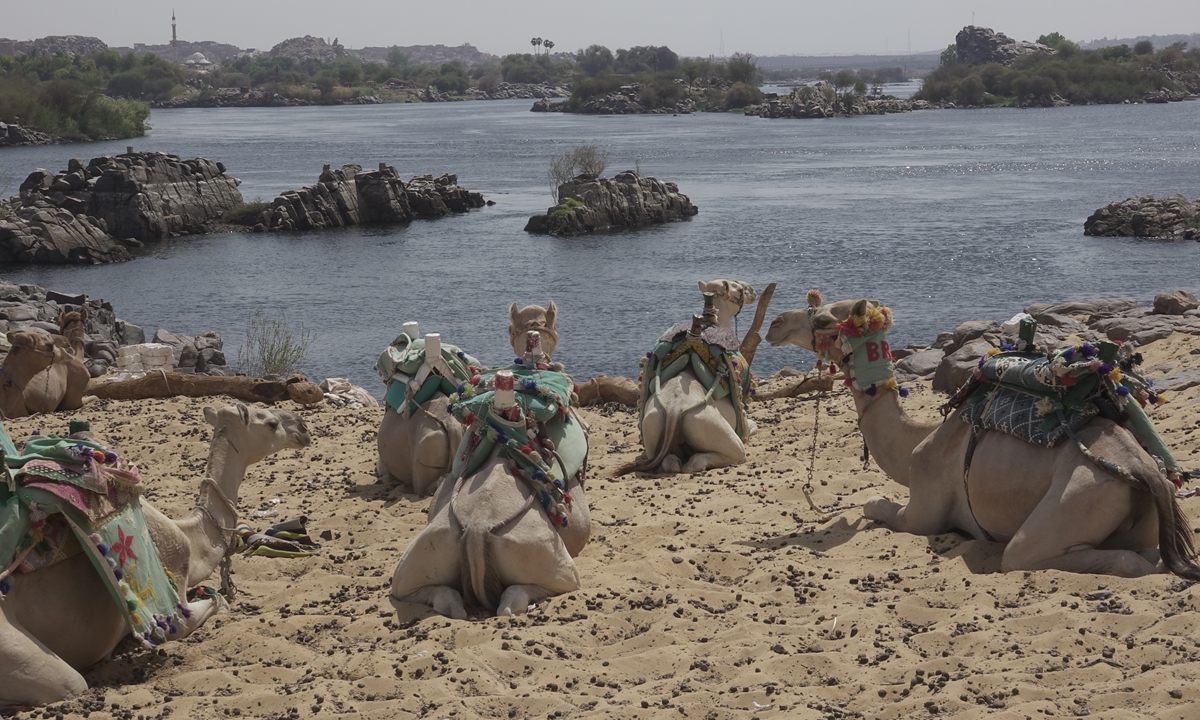
China and Arab nations have launched a five-year action plan to combat drought, desertification, and land degradation. According to information provided by China’s National Forestry and Grassland Administration (NFGA) to the Global Times on Sunday, the plan will extend bilateral cooperation beyond traditional anti-desertification efforts to encompass technological innovation in areas including grassland conservation, watershed management, and wetland protection.
The plan was inaugurated during a meeting convened on the sidelines of the 17th session of the Conference of the Parties (COP17) to the United Nations Convention to Combat Desertification, which is currently taking place in Ulaanbaatar, the capital of Mongolia.
According to an NFGA press release sent to the Global Times, China and Arab countries will, under the action plan, deepen practical cooperation over the next five years across key areas such as the restoration of desertified and degraded land, sand and dust storm monitoring and early warning systems, grassland management, biodiversity conservation, as well as wetland protection and restoration.
The two sides will also accelerate technological innovation and the practical application of research findings by establishing platforms to share technology, data, and research outcomes, conducting interdisciplinary studies, and developing technologies such as remote sensing and intelligent assessment of land degradation. The plan further envisages the establishment of demonstration bases to support the implementation of the UN Convention to Combat Desertification.
Under the plan, the sides also aim to strengthen China-Arab cooperation networks in combating desertification, enhance mechanisms for sharing policies, technologies, and research findings, and expand partnerships within the framework of China’s proposed Belt and Road Initiative. The participation of governments, research institutions, enterprises, social organisations, and local communities will be encouraged throughout the process.
Cooperation in capacity building will also be expanded through exchange programmes for young professionals, joint research, field demonstrations, and technical training sessions.
The meeting was jointly organised by China’s National Forestry and Grassland Administration and the General Secretariat of the Arab League, while the Chinese Academy of Forestry and the China-Arab International Research Centre for Drought, Desertification and Land Degradation undertook the event’s organisation.
Cui Lijuan, vice president of the Chinese Academy of Forestry, stated that several initiatives have already begun to materialise. For example, China and Egypt are exploring the possibility of conducting a comparative study examining the Yellow River and Nile River basins to share expertise in ecological conservation and integrated watershed management.
According to Cui, the initiative in question has secured the backing of the Chinese Academy of Forestry and attracted interest from international non-governmental organisations.
Future cooperation between China and Arab countries will also focus on desertification monitoring and early warning systems, ecological technologies, as well as exchange and training programmes for young specialists.
Cui noted that the two sides also aim to broaden participation by integrating businesses, social organisations, and international institutions into the cooperation framework, which is currently led primarily by state bodies.
According to Xinhua, the China-Arab International Research Centre for Drought, Desertification and Land Degradation was inaugurated in 2023 during an international forum on combating desertification. The establishment of the centre was viewed as a demonstration of China’s commitment to sharing the expertise gained from its anti-desertification efforts in the Kubuqi Desert.
According to the NFGA, the centre has steadily strengthened regular cooperation mechanisms between China and Arab countries over the past three years. While the two sides have jointly developed Earth observation systems and intelligent decision-support tools for land degradation, China has compiled 30 practical anti-desertification technologies across six categories suitable for application in Arab countries.
The centre has also established regular communication and exchange channels with several countries, including Saudi Arabia and Egypt. In addition, it has set up an initial China-Arab anti-desertification network and expert pool to support sustainable technical cooperation and professional training in Arab nations.







Japan has proposed establishing an “Asian version” of the International Energy Agency (IEA) to manage strategic oil reserves and protect the region against energy shocks caused by war or climate change.
Prime Minister Sanae Takaichi proposed on Tuesday the creation of a regional task force to oversee releases from emergency stockpiles, similar to the Paris-based organisation founded in response to the 1973 oil market shock.
Speaking in the Philippines at a meeting of the Asia Zero Emission Community (AZEC), Japan’s version of China’s Belt and Road Initiative (BRI), Takaichi said they view this new entity, to be named the “Asian Petroleum Security Task Force”, as “equivalent to an Asian version of the IEA”.
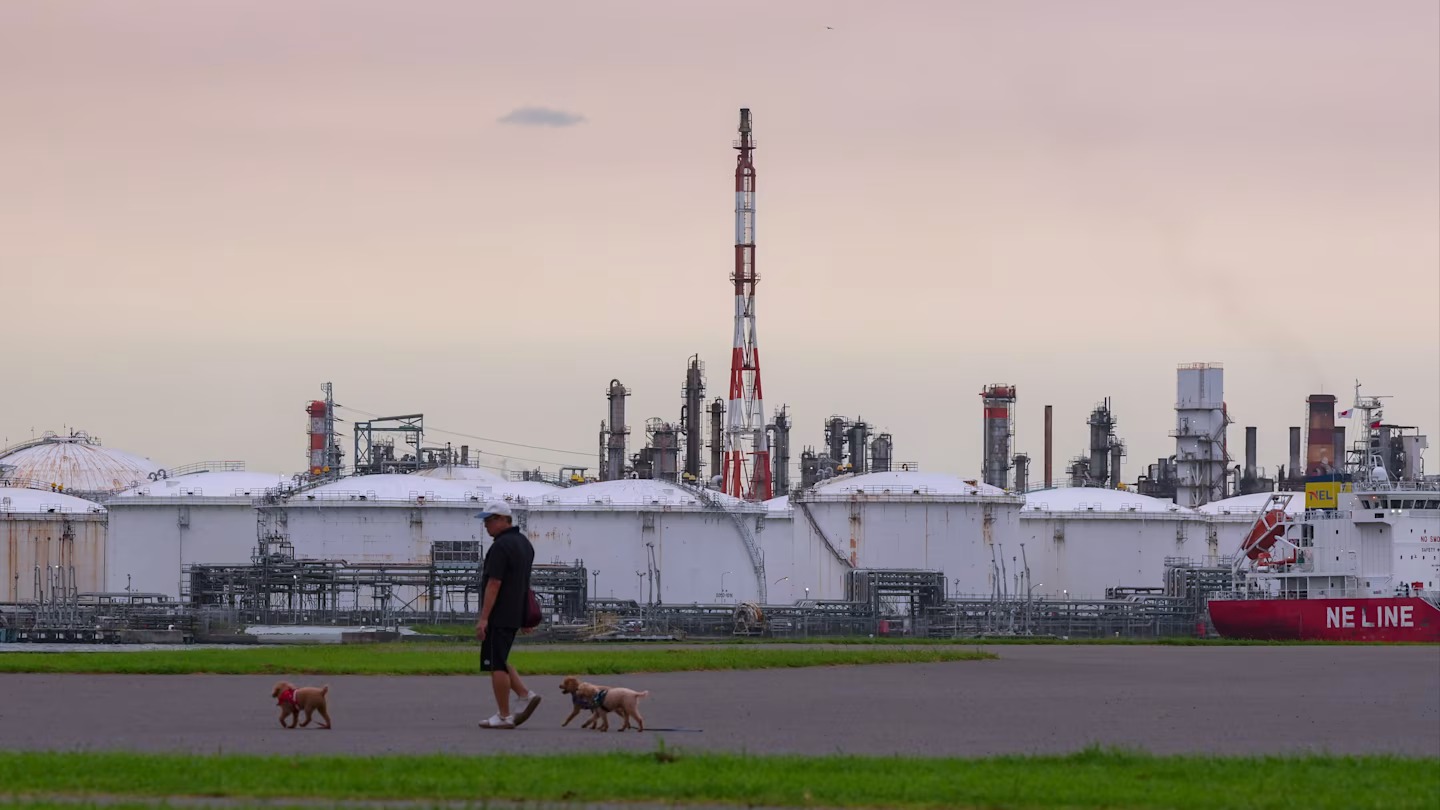
She also proposed a parallel plan to use idle oil tanks in Japan to store crude reserves for the rest of Asia.
The IEA is advising the Japanese government on a framework for a regional system and plans to open a new office in Tokyo.
The proposals aim to increase oil stockpiles across South-East Asia, which was hit particularly hard by the oil shock.
Japan held stockpiles equivalent to 250 days of oil consumption before the US and Israeli strike on Iran in February.
However, its reliance on South-East Asia for oil derivatives such as naphtha and plastics left Japanese manufacturers facing shortages of products ranging from coloured ink to surgical gloves.
Takaichi indicated that Middle Eastern oil companies would play an important role in supply, saying the plan aims to “increase the economic and energy resilience of these countries” by reducing Gulf states’ dependence on the Strait of Hormuz to access global markets.
Amrita Sen, co-founder of the consultancy Energy Aspects, said: “This is an existential issue for the Middle East. They need storage where their consumers are. They want to make sure this [disruption] does not happen again.”
Japan already has joint stockpiling agreements with Saudi Arabia, the United Arab Emirates, and Kuwait.
Under these agreements, oil storage tanks are leased in exchange for priority access in emergencies.
Takaichi said Japan’s surplus storage capacity could support a shared South-East Asian stockpile championed by the Philippines, saving Manila the cost of building infrastructure.
Officials in the Philippines, which sources almost all its oil from the Middle East, say Singapore, Indonesia, and Malaysia have agreed to maintain oil stockpiles under the proposal, and the UAE has expressed interest in participating.
Philippine President Ferdinand Marcos Jr said on Tuesday that Manila was building its strategic oil reserves, “but stockpiling is not enough”.
Speaking at the AZEC meeting, held on the sidelines of the Association of Southeast Asian Nations (ASEAN) leaders’ summit in Manila, he said: “Sustainable and lasting energy security requires oil-consuming and oil-producing countries to act in unison.”
According to a study by the Economic Research Institute for ASEAN and East Asia, a Jakarta-based think tank established by Japan’s Ministry of Economy, South-East Asia’s oil reserves are estimated to cover 30 days of consumption, whereas the IEA recommends holding reserves equivalent to 90 days of net imports.
The institute estimated the annual cost of building an additional 60 days of reserves across ASEAN’s 11 member countries at about $2.2 billion, proposing a hybrid model comprising national reserves, joint importer-exporter stockpiles, and international storage managed via a “ticketing” system.
Japan and South Korea are the only IEA members in Asia. The IEA is open to OECD countries that hold reserves equivalent to 90 days of net imports and are willing to share reserve data.
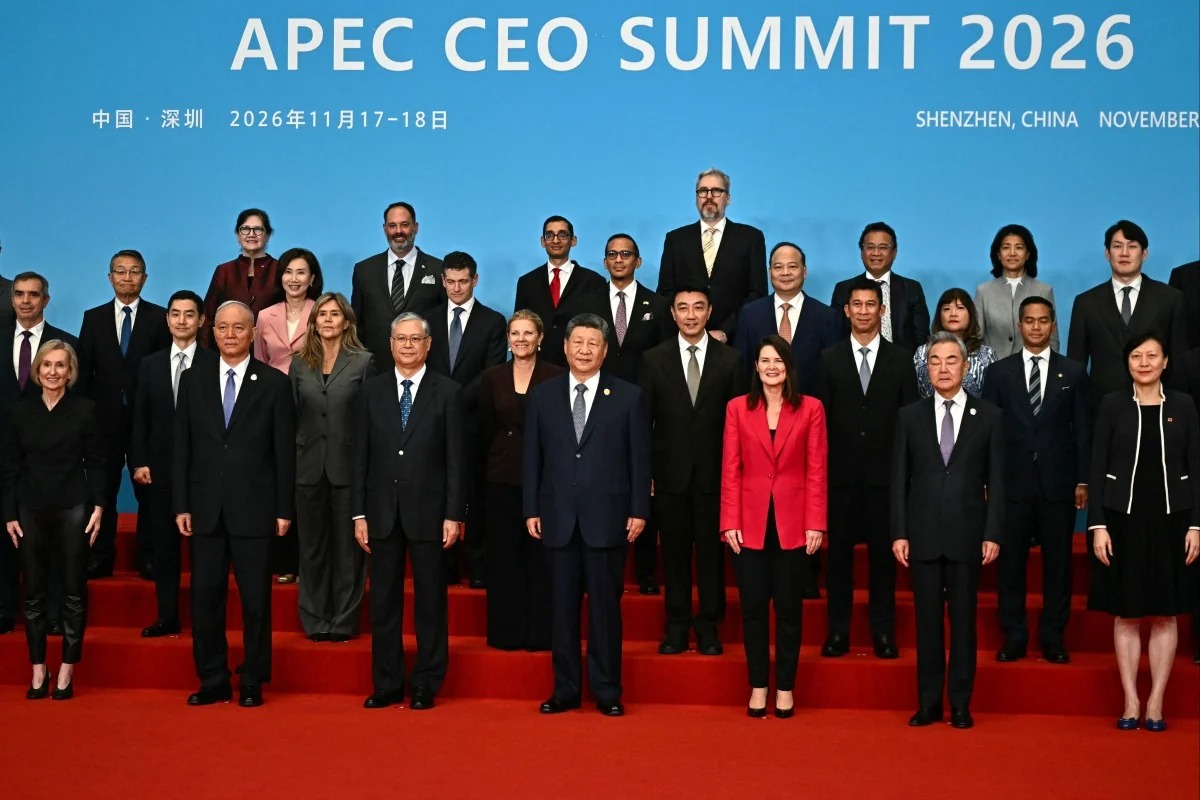
Chinese President Xi Jinping warned against unilateralism and protectionism during an address at the APEC CEO Summit held in Shenzhen. Expressing support for a multipolar world order and economic globalisation, Xi announced that China would open its market further to global companies. “History shows us that opening doors brings progress, while closing them leads to backwardness,” Xi said.
Heads of state and government addressed business leaders at the high-level forum held as part of the APEC summit, which China is hosting for the first time since 2014.
Chinese President Xi Jinping and other world leaders delivered speeches on Wednesday at the Asia-Pacific Economic Cooperation (APEC) CEO Summit in Shenzhen.
Numerous business representatives, including prominent executives from technology and other emerging sectors, are attending this year’s event, which marks the first APEC summit hosted by China.
In his keynote address at the APEC CEO Summit, Xi delivered key messages on the future of the global economic order, China’s development strategy, and the strengthening of economic cooperation across the Asia-Pacific.
Pointing out that the global economy has lost growth momentum and that unilateralism and protectionism have become increasingly widespread, Xi noted that global trade has nevertheless continued to expand and breakthroughs in new technologies have accelerated.
Emphasising that the world is passing through a critical juncture, Xi raised several questions:
“What is happening in the world? What should we do as the Asia-Pacific? Should we open our doors or close them? Should we work together, or against each other? Should we adapt to change, or insist on old methods?”
Describing these questions as the defining issues of the era, the Chinese leader called on APEC nations to deepen cooperation.
‘An equal and orderly multipolar world’
Xi said the environment of regional stability has played a decisive role in turning the Asia-Pacific into one of the key engines of global economic growth in recent years.
Stating that global conditions are becoming increasingly complex, Xi stressed that the post-war international order must be preserved.
The Chinese leader said, “As external conditions become more complex, it becomes even more vital to preserve the post-war international order and to promote an equal and orderly multipolar world, along with inclusive economic globalisation that benefits all.”
Xi stated that regional disputes must be resolved through dialogue and consultation, adding that solidarity and cooperation form the foundation of lasting peace and stability in the Asia-Pacific.
‘Opening doors brings progress, closing them brings backwardness’
Devoting a significant portion of his address to free trade and economic integration, Xi called for the preservation of the multilateral trading system centred on the World Trade Organization (WTO).
“History shows us that opening doors brings progress, while closing them leads to backwardness,” Xi said, drawing attention to the importance of the uninterrupted operation of global industrial and supply chains.
Xi urged progress in efforts to establish the Free Trade Area of the Asia-Pacific and called for increased cooperation in cross-border e-commerce and digital trade.
The Chinese leader said artificial intelligence and the digital economy have become new driving forces of regional growth, stressing that partnerships in science and technology must be strengthened.
Chinese economy grew %4.6 in first three quarters
Recalling that China’s 15th Five-Year Plan for economic and social development has commenced, Xi said the national economy maintains its resilience.
Announcing that the Chinese economy grew %4.6 in the first three quarters of the year, Xi noted that innovation-driven growth and the green transition have gained pace.
Xi delivered the message that “the 15th Five-Year Plan is not merely China’s development roadmap, but also an invitation to cooperate that presents new opportunities for the Asia-Pacific and the world economy.”
Underlining that China is the world’s second-largest consumer market, Xi said the country possesses the world’s largest middle-income population and holds immense potential in terms of consumption and investment.
He noted that areas such as new energy vehicles, smart homes, elderly care services, and winter tourism offer fresh opportunities for foreign enterprises.
‘We will open the Chinese market further’
Xi announced that China will provide wider market access to the global business community.
Indicating that his country will not stop at lowering tariffs, Xi announced that regulatory reforms will also be implemented to facilitate foreign companies’ operations.
“China will not merely lower tariffs and broaden market access; it will go beyond that,” the Chinese leader said.
Stating that reforms will be introduced in areas including rules, regulations, and standards, Xi said operating conditions for foreign enterprises in the manufacturing sector will be improved, while opening up in the services sector will be expanded.
Xi stressed that they aim to establish a more stable and predictable business environment for foreign investors.
‘China stood against unilateralism and protectionism’
Recalling that China acceded to the WTO in 2001, Xi noted that all commitments assumed under membership have been fulfilled over the past 25 years.
Xi expressed that China has shared economic opportunities with other nations while pursuing its own development and has defended the multilateral trading system.
“China stood against unilateralism and protectionism and remained committed to true multilateralism,” Xi said, adding that Beijing will continue to support the defence of WTO rules and the reform of the organization.
The Chinese leader stressed that no matter how international conditions change, Beijing will not abandon its policy of mutually beneficial cooperation with other nations.
Touching upon the Belt and Road Initiative, Xi also invited Asia-Pacific companies to participate more actively in the project.
New economic cooperation initiative in the Asia-Pacific
Citing the Guangdong-Hong Kong-Macao Greater Bay Area, which includes Shenzhen, as an example, Xi proposed developing economic cooperation among the world’s major bay areas.
Announcing China’s support for the establishment of the World Bay Areas Economic Cooperation Alliance, Xi said this initiative would strengthen economic linkages between different regions.
Noting that Asia-Pacific nations differ in terms of history, culture, and levels of development, the Chinese leader expressed that policies taking national conditions into account should be adopted in economic cooperation rather than a one-size-fits-all approach.
Xi called for increased technical and economic cooperation targeting developing economies, as well as the deepening of joint work in areas such as transport, energy, public health, food security, and anti-corruption.
Concluding his address with a call to the Asia-Pacific business community, Xi invited companies to participate more actively in China’s reform and modernization process.
Xi said, “Let us join hands to overcome the challenges facing development through opening up, to give momentum to growth through innovation, and to deliver prosperity for all through cooperation.”
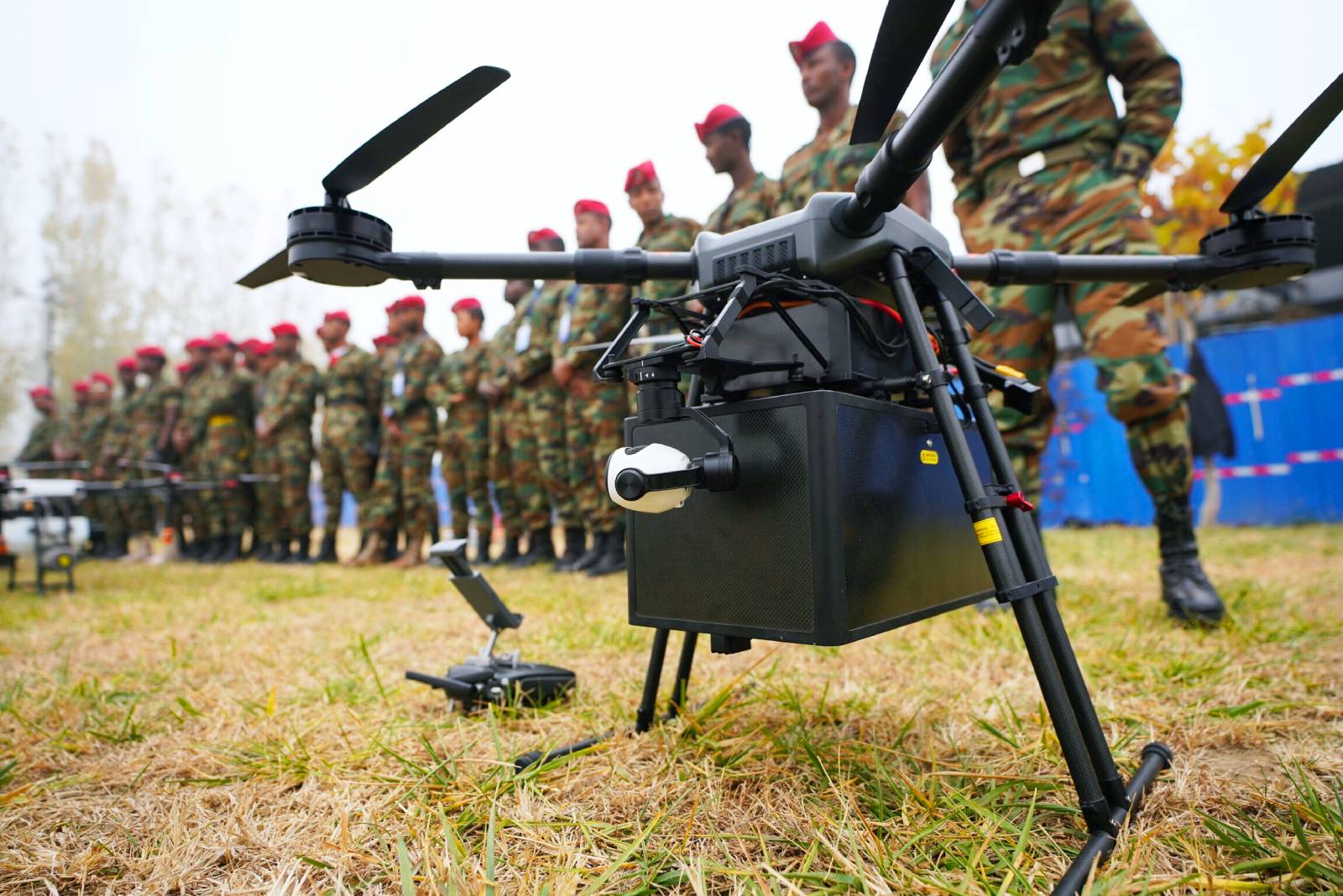
China is overtaking Western suppliers, particularly France, by expanding its exports to African nations beyond small arms, armoured vehicles, trucks, and artillery to include air defence systems, combat drones, and electronic warfare assets.
According to a report by the South China Morning Post, based on researchers and military movements across the region, African buyers are gravitating towards the advantages of quality and accessibility offered by the Beijing administration.
In April, four vehicles spotted in a Malian army convoy were identified by defence intelligence company Janes as Chinese-manufactured Yitian-L air defence systems.
In September, the Presidency of Burkina Faso published footage of military equipment inspections and testing.
Observers noted that the released footage featured a mobile surveillance radar and a missile launch vehicle belonging to the Sky Dragon family produced by Chinese company Norinco.
In August, Cote d’Ivoire also showcased Wing Loong II armed unmanned aerial vehicles procured under a contract signed in June 2024 with Chinese state-owned enterprise Catic.
A distinct shift is unfolding in the weapons procurement trajectory of Sahel countries that have ended defence cooperation with France and run into US security assistance restrictions.
Mali, Burkina Faso, and Niger formed the Alliance of Sahel States in September 2023, transitioning the structure into a confederation in July 2024.
Following the transfer of power to military authorities, these nations progressively severed ties with France and turned their attention towards new partnerships.
Western bans and budget constraints pave way for Beijing
David Shinn, a former US ambassador to Burkina Faso and Ethiopia and a specialist in China-Africa relations, pointed out that the quality of Chinese military equipment has risen and that Beijing is willing to enter markets where the West hesitates.
“Unlike many Western countries, China will sell military equipment to any country so long as it is not under a United Nations sanction,” Shinn said.
Experts speaking to the newspaper stated that high-technology defence systems, previously purchased mainly from the West and accessible to only a few countries on the continent, are now being shipped more frequently to Africa by China.
Katarina Djokic, a researcher with the Arms Transfers Programme at the Stockholm International Peace Research Institute (SIPRI), said affordable pricing, including maintenance costs, plays a critical role in procurement choices.
Djokic noted that countries maintaining good relations with the West also procure weapons from China.
According to SIPRI assessments, shipments to African nations have not yet reached a volume large enough to fundamentally alter China’s overall arms export figures.
SIPRI data for the 2021-2025 period placed China as the world’s fifth-largest supplier, accounting for a 5.6% share of global arms exports.
During this timeframe, China’s largest customer was Pakistan with a 61% share, followed by Serbia at 6.8% and Thailand at 4.7%.
In SIPRI’s records for 2020-2024, Africa accounted for 14% of China’s major arms exports, ranking as its second-largest market behind Asia and Oceania’s 77% share.
Between 2020 and 2024, the Beijing administration carried out arms sales to a total of 44 countries worldwide.

Ecuadorian fishermen sue US over drone strikes on vessel

Japan proposes Asian version of IEA to manage regional oil reserves

Poland bids for NATO nuclear programme to train F-35 fighter pilots

US households face $2,000 war hit as Khanna urges $1,700 relief

Xi urges free trade against protectionism at APEC CEO Summit
-
 America1 week ago
US midterms see 97 young winners as Gen Z representation triples
-

 Europe2 weeks ago
EU urges citizens to prepare 72-hour survival kits for crises
-

 Diplomacy2 weeks ago
Ukraine faces demographic collapse as fertility rates slide
-

 Europe1 week ago
UK and Germany expand military pact with focus on Russian frontier
-
 America2 weeks ago
Paraguay President Peña resigns over catastrophic bank collapse
-

 America2 weeks ago
Elon Musk loses $29 billion after Democratic US midterm sweep
-
 America2 weeks ago
Moderate Republicans urge break from Trump and MAGA after midterms
-
 America1 week ago
Nvidia investigates CEO Jensen Huang over link to Chinese spy
