
Europe
EU considers buying more US gas to appease Trump


The bloc’s energy commissioner stated that the EU would seek more gas from the US to appease US leader Donald Trump, while also cutting red tape to boost renewable energy capacity this year.
The European Commission expects a record level of renewable energy capacity to be installed in the EU in 2025. However, Energy Commissioner Dan Jørgensen said that the green move does not preclude potential commitments to buy more US liquefied natural gas (LNG) in response to Trump’s tariffs.
The US President granted a 90-day reprieve and on Wednesday, dropped most of the tariffs shortly after they took effect. Trump suggested to the EU on Monday that it buy about $350 billion of US energy to reduce the trade deficit, while also rejecting Brussels’ offer to strike a “zero-for-zero” tariff deal for industrial goods and cars.
The US is already the bloc’s largest supplier of liquefied natural gas, accounting for 45% of imports worth about $13 billion in 2024.
“There is potential for us to buy more LNG from the US, but of course it has to be on conditions that are also compatible with our [green] transition,” Jørgensen said, adding that he had conveyed this to US Energy Secretary Chris Wright.
Still, according to the Financial Times (FT), there is little Brussels can do other than encourage companies to sign contracts. The European Commission expects a record 89 GW of renewable energy capacity to be installed in the EU in 2025, including 19 GW of additional wind power and 70 GW of solar power.
This has occurred despite global economic turmoil and the sector’s complaints about long waits for permits and inadequate grid connections.
Jørgensen said renewable energy is “essential” to lower high energy prices and end the bloc’s dependence on Russian fossil fuel imports.
The Commissioner claimed, “We are all aware that the high energy prices we are paying are not sustainable for global competition in the future. Since 2022, we have spent more money on importing fossil fuels from Russia than we have given in aid to Ukraine.”
Jørgensen will present figures on renewable energy use at an industry conference in Copenhagen on Thursday, aimed at encouraging offshore wind investors struggling under the impact of Trump’s fossil fuel agenda to move projects forward.
Rasmus Errboe, CEO of Ørsted, the world’s largest offshore wind energy developer, warned on Wednesday that the European wind energy industry is at risk of a “downward spiral” due to high costs and supply chain disruptions.
Trade body WindEurope expects new wind energy capacity in Europe to increase by 34% this year compared to 2024, but said new installations were lower than expected last year, with progress hampered by ongoing permitting issues and bottlenecks for grid connections.
The solar energy industry has also warned that annual capacity growth fell from 53% in 2023 to 4% last year for similar reasons.
Ørsted is one of several European companies whose US projects will be affected by Trump’s tariffs on aluminum and steel due to their reliance on components imported from Europe.
According to industry body SolarPower Europe, the EU solar energy sector’s exports to the US are relatively small, but the impact could be significant for companies involved in exporting some key components.
Jørgensen said the EU could benefit from the turmoil caused by the tariffs and its economic repercussions, adding, “I think this crisis in the world economy right now will make it even more attractive for companies to seek safe havens where there is predictability, and Europe is such a place.”
He said the bloc would not back down from its green agenda but wanted to simplify the rules governing renewable energy. The Commissioner said the average waiting time for permits should be reduced from five to seven years to just six months, adding that “nature conservation directives are also part of the problem” and need to be addressed.


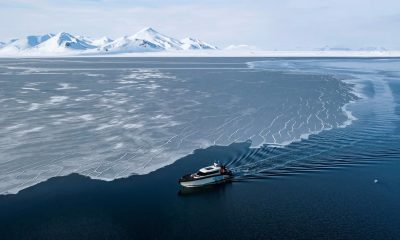




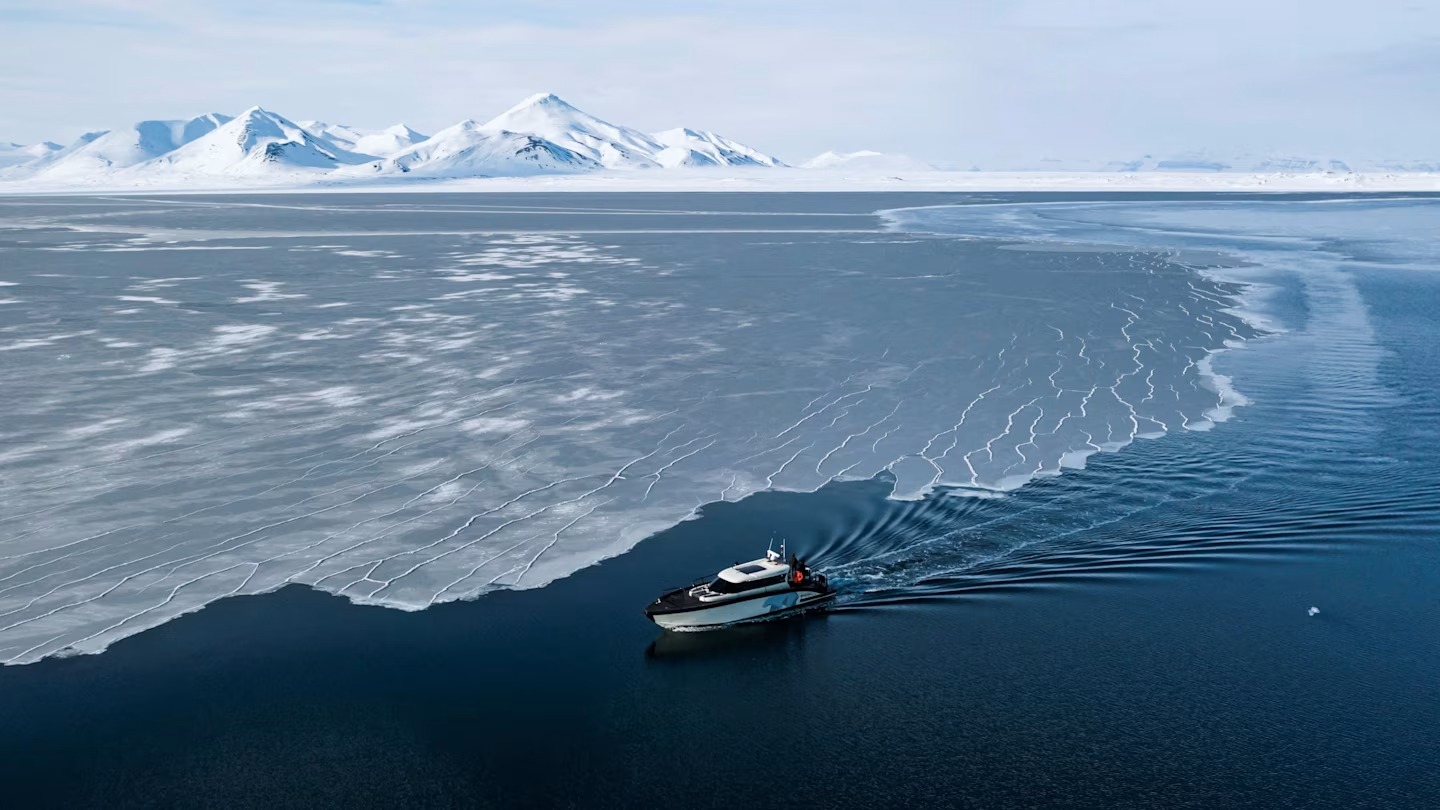
The EU is developing plans to enhance its military mobility in the Arctic and aims to establish “multimodal military movement corridors” across the High North.
According to a report by German Foreign Policy, this initiative was outlined in the EU’s new Arctic strategy presented by the European Commission in Brussels on Tuesday.
Under the strategy, a complex logistics network consisting of “ports, airports, and their inland connections” will be created across the Arctic, designed to “remain operational even under adverse weather conditions.”
The strategy paper also announces that “exercises or stress tests” will be conducted to ensure the smooth deployment of military forces and capabilities to the Arctic.
Through this strategy, the EU is responding to the reality that climate change-driven Arctic ice melt is facilitating access to regional natural resources while opening new sea routes, such as the Northeast and Northwest Passages, which can now be used for both commercial and military operations.
The Arctic strategy aims for greater independence from the US and envisages laying a “pan-Arctic” submarine cable running from Europe through the polar region to East Asia.
Arctic natural resources
The EU’s new Arctic strategy addresses, among other topics, the natural resources located in the Arctic, both beneath the seabed and on land.
Due to thawing ice, these resources are already accessible or will soon become easier to reach, and Brussels supports their extraction.
Specific projects highlighted include a rare earth element extraction venture near Kiruna in northernmost Sweden and a plan to mine molybdenum in eastern Greenland.
Departing from its previous 2021 Arctic strategy, the Commission no longer advocates an outright ban on oil, gas, and coal extraction in the Arctic within a multilateral framework.
This policy shift comes as Norway has emerged as the bloc’s most vital natural gas supplier, providing approximately 30% of all its natural gas imports following the EU’s phased reduction of Russian energy imports.
However, production from Norway’s existing fields is expected to decline in the 2030s. Consequently, Norway plans to explore new deposits in the Barents Sea, where vast reserves are estimated to lie.
Dependent on raw material supplies from Norway as well as strategic cooperation with Oslo, the EU no longer opposes these exploration plans.
New sea routes opened by melting ice
The EU is also turning its attention to the gradual opening of new Arctic shipping routes.
For instance, the Northeast Passage, running along Russia’s northern coastline from East Asia to Europe, is now open to navigation between August and October.
This route is considerably shorter than the conventional transit via the Indian Ocean, significantly reducing shipping costs, especially in light of current oil prices.
A Chinese shipping firm launched regular services via the Northeast Passage this summer, while a South Korean vessel recently returned to the port of Busan after completing its maiden commercial voyage along the corridor.
Although used by few vessels to date, the Northwest Passage has also come into operation as a route extending from the North Atlantic through Canada’s northern archipelago and north of Alaska toward East Asia.
Experts believe that, during the summer months, this passage could offer advantages over the traditional route via the Panama Canal “for certain vessel types and transport routes.”
The emergence of new military capabilities was underscored in September when four Russian warships navigated the Shokalsky Strait between two Russian Arctic islands for the first time in history.
Military mobility in the High North
This development represents another driver behind the EU’s new Arctic Strategy placing particular emphasis on military aspects.
Russia has been strengthening its Arctic military positions for some time, partly because the headquarters of its Northern Fleet, which hosts part of its second-strike capability, is located on its north-western coast, and partly because its exceptionally long northern coastline remains strategically vulnerable.
NATO has likewise been expanding its activities in the Arctic considerably, holding numerous exercises across northern Finland, Sweden, and Norway, as well as in Iceland and Greenland, alongside its new “Operation Arctic Sentry.”
The strategy document states that the EU must now strengthen its own posture in the Arctic.
This objective is to be pursued both in cooperation with NATO and through independent EU measures.
For example, situational awareness must be enhanced, including by leveraging EU satellite systems, particularly Copernicus and Galileo.
Additionally, the planned IRIS2 satellite constellation, conceived as Europe’s counterpart to Starlink, should be expanded to cover the Arctic to improve communications.
To coordinate these initiatives, the EU plans to establish a Maritime Security Centre.
The EU places special emphasis on military mobility in the Arctic. According to the document, rapid and large-scale troop deployments must be feasible in the region at any time if required.
To this end, “multimodal military movement corridors” incorporating ports, airports, and their inland connections need to be established.
These facilities will be designed as a unified, complex logistics system “capable of remaining operational even under adverse weather conditions.”
Realising this plan will require preparation for “ice clearance,” “the handling of heavy and oversized military vehicles on frozen ground,” and “the rapid repair of damaged infrastructure.”
Looking ahead, the EU is urged to organize “exercises or stress tests focused on the smooth deployment of forces and military capabilities to and within the Arctic” in cooperation with NATO or like-minded partners.
Viewing these capabilities as vital for “credible deterrence,” the EU also underscores the need for its own icebreaker fleet to clear pathways through the ice for warships.
The Arctic’s role in “strategic autonomy” vis-a-vis the US
Throughout this process, the EU is not only adopting a clear stance toward Russia, but is also pursuing greater independence from the US.
On one hand, the strategy encourages deepening ties with Greenland, which is part of Denmark, does not belong to the EU, and has faced threats of US annexation. The document designates this relationship as a cornerstone of the new Arctic strategy.
On the other hand, the text calls for intensifying cooperation as part of a “Northern Neighbourhood” strategy with Norway, Iceland, and Canada, as well as with the UK, which occupies a strategically advantageous position despite not being an Arctic coastal state.
The EU maintains a security and defence dialogue with Norway, holding its fifth session this past April, alongside launching an “Arctic Dialogue” with Oslo this year.
Canada is classified by the European Commission as a “natural ally” in the Arctic. Observers note that while Canada is mentioned dozens of times throughout the strategy, the US is cited only a handful of times.
This contrast is seen as evidence that the EU is seeking independence from Washington in the High North.
Accordingly, the document explicitly references “European strategic autonomy” as an “integral component of the Arctic.”
Pan-Arctic cable plan extending to Japan
The EU Arctic Strategy also identifies Japan and South Korea as cooperation partners in the region.
This partnership is linked to plans to connect Greenland to the EU via a submarine cable, which would subsequently be extended across the Bering Strait to Japan and South Korea.
Berlin has advocated the construction of such a “pan-Arctic cable” for some time.
According to a statement issued in early July by the Berlin-based German Institute for International and Security Affairs (SWP), such an infrastructure project is highly desirable for multiple reasons.
First, data traffic between Europe and Asia, 90% of which currently passes through the Red Sea and the strait between Djibouti and Yemen (Bab el-Mandeb), “suffers from a high failure rate and a lack of redundancy.”
Furthermore, the Arctic route is “significantly shorter,” resulting in reduced latency and fewer transmission delays.
International equity trading in particular stands to benefit from “real-time data transmission” enabled by a new polar cable link.
SWP outlines two potential routes for the cable: one running west of Greenland and the other running east.
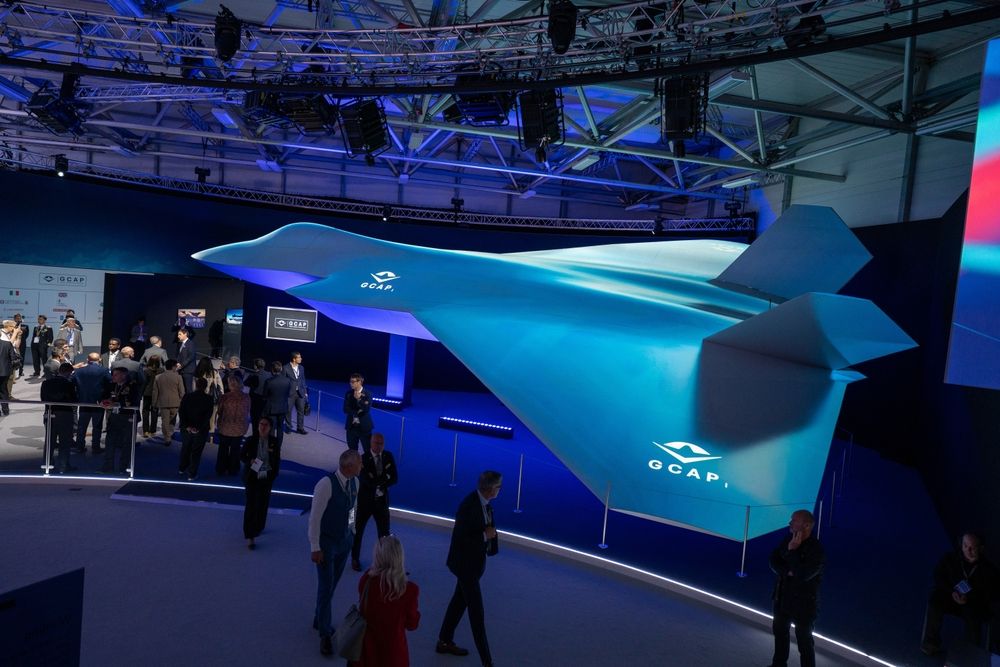
German Defence Ministry officials have advised Berlin to form a new fighter jet partnership with Sweden and Spain rather than join an existing UK-led consortium.
Internal ministry assessment notes obtained by Politico state that a trilateral arrangement among Germany, Sweden, and Spain represents a “more advantageous and promising” approach than joining the Global Combat Air Programme (GCAP) run by the UK, Italy, and Japan.
The proposal outlined in the document does not yet represent a final government decision, nor does it contain any indication that German Defence Minister Boris Pistorius has approved the recommendation.
The advice was drafted after Germany’s flagship project with France to build a next-generation fighter jet collapsed in June following years of industrial infighting.
Initiated in 2017 and later joined by Spain, the Future Combat Air System (FCAS) was conceived as a showcase initiative for European defence cooperation. The partnership aimed to develop an aircraft to replace Germany’s Eurofighter fleet starting in 2040.
However, the initiative foundered on disputes over operational control and workshare between France-based Dassault and Germany-based Airbus Defence and Space. Following unsuccessful rescue attempts at the political level, Berlin withdrew from the joint fighter project this year.
UK Prime Minister Andy Burnham raised the prospect of Germany joining GCAP during an 8 October meeting in Berlin with Friedrich Merz. The two leaders agreed that officials should continue discussions.
For Berlin, the choice carries implications that reach far beyond which model its air force will fly. The decision will determine who controls future military technology, which countries secure production contracts, and whether a new European partnership can avoid the frictions that dismantled FCAS.
Ministry assessment keeps distance from UK-partnered GCAP project
The ministry assessment listed several reservations regarding the GCAP project. The report argued that the existing programme focuses on operations beyond Germany’s capability requirements, whereas Berlin needs an aircraft better suited for missions over continental Europe.
The document also noted that German manufacturers would struggle to secure a significant share of development and production work within an already established partnership.
Invoking past experiences with the Eurofighter programme, which was developed in the 1990s and entered service in the early 2000s, the document took direct aim at British defence contractor BAE Systems.
The German Defence Ministry assessment accused BAE Systems of prioritizing exports over the development interests of Germany and Italy, warning that British dominance would prove incompatible with an equal partnership.
By contrast, the document stated that the military requirements of Germany, Sweden, and Spain align closely and that their starting positions are well balanced.
The assessment proposed an industrial partnership between aerospace giant Airbus and Sweden’s Saab, while recommending that the Saab-manufactured Gripen E fighter jet serve as a technological stepping stone until the new aircraft is developed.
The German Defence Ministry declined to comment on the matter. A separate ministry note, however, recorded British efforts to integrate Germany into GCAP as an observer or participant, asking German officials to examine potential industrial roles and military requirements.
An Airbus spokesperson said the company was “generally open to cooperation”, provided that German and Spanish industry secured a “substantial and equal role” across development, production, and operational phases.
“Purely political decisions without an industrial foundation remain insufficient,” the spokesperson said, urging authorities in Berlin and Madrid to clarify the path forward swiftly.
In an interview published in Handelsblatt on Monday, Airbus defence chief Michael Schollhorn pointed to ties with Saab, noting that the two companies have always worked well together.
A Saab spokesperson also indicated that the company is receptive to broad defence cooperation, including in fighter aircraft.
Emphasizing that large-scale collaborative projects are handled at the political level and that participation decisions rest with the respective governments, the spokesperson said: “All questions regarding potential Swedish participation should be directed to the Swedish government. Saab stands ready, as always, to support Sweden’s future fighter aircraft requirements.”
The European Union has returned to the idea of appointing an envoy to hold talks on Ukraine with Russian President Vladimir Putin.
According to sources familiar with the matter who spoke to Politico, this search gained fresh momentum following a visit to Russia by Steve Witkoff, the US special envoy.
During his trip, Witkoff proposed to Putin that Russia, the US, and Ukraine hold trilateral talks.
European countries, meanwhile, fear that Washington could accept terms unfavourable to Kyiv in negotiations that exclude them.
Sources speaking to Politico said the names being discussed for the envoy role include European Commission President Ursula von der Leyen, European Council President António Costa, and EU High Representative for Foreign Affairs and Security Policy Kaja Kallas.
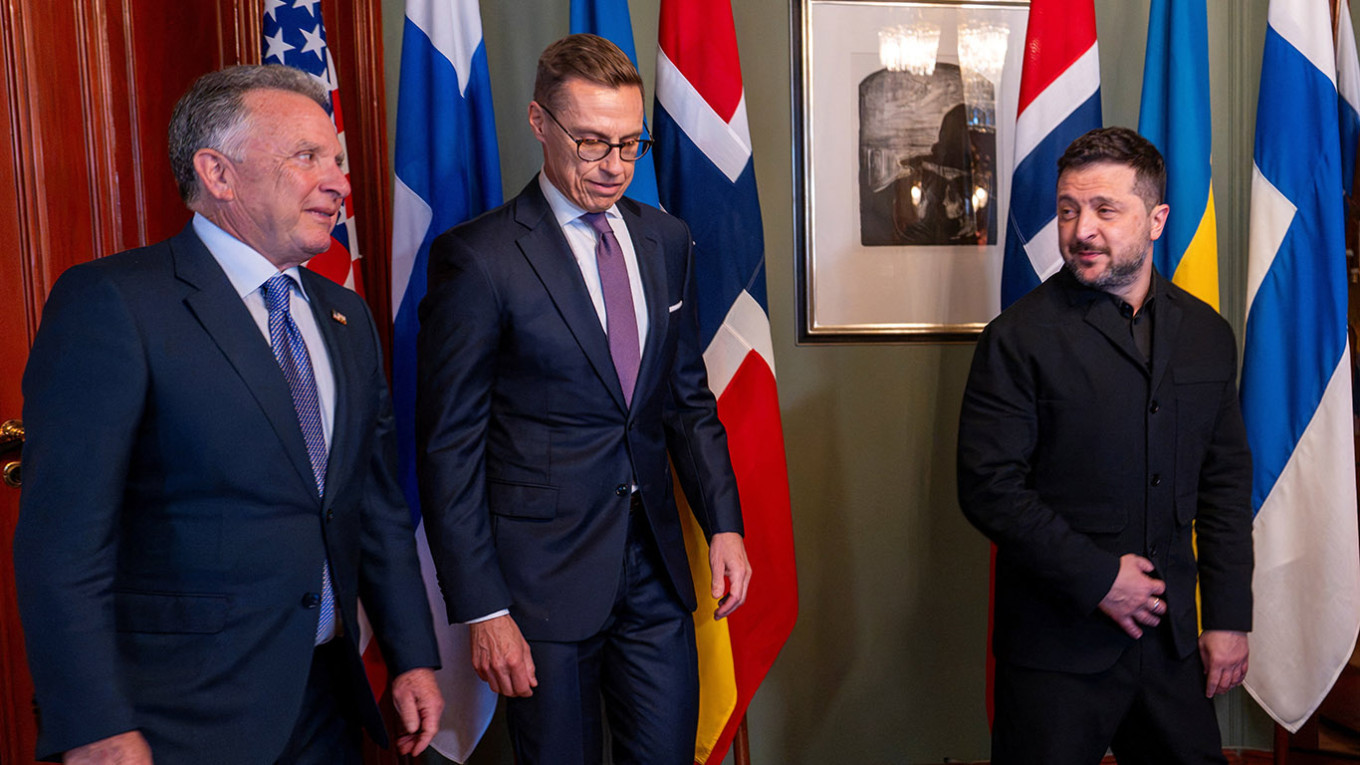
Some European diplomats believe Finnish President Alexander Stubb may be the most suitable candidate for the post.
Stubb’s good relations with Trump and Finland’s experience in dealing with Russia are cited among the factors setting him apart.
An unnamed EU diplomat described Stubb as the only European politician so far to have demonstrated senior-level leadership.
Another group of diplomats argues that Costa should lead the talks. European leaders asked Costa during last week’s EU summit in Brussels whether the time had come to speak with Putin.
Politico’s source recounted that exchange: “Costa said no, saying he would not speak to Putin right now. But if we want to play a role in the negotiations, Costa still needs to initiate dialogue with Putin.”
According to an assessment by another source, the European Council president could serve as a more neutral mediator than von der Leyen or Kallas, who are seen as overly focused on supporting Ukraine.
“Three or four people cannot go there with each of us speaking on behalf of the European Union,” one of the sources told the publication. “Ultimately, the choice of who represents the EU must be based on maximum efficiency, not on a personal power struggle or someone’s narcissistic ambitions.”
Politico previously reported in January that the EU was considering appointing a special representative for Ukraine negotiations. At the time, the initiative drew support from several European leaders, including French President Emmanuel Macron and Italian Prime Minister Giorgia Meloni.
Putin said he was ready to negotiate with European countries, but asserted that Europe had “no peace agenda” and stood “on the side of war”.
The Russian leader also named former German chancellor Gerhard Schröder as Moscow’s preferred negotiator from Europe.
Kallas ruled out such an appointment, noting that Schröder was “a lobbyist for Russian state companies” and would sit “on both sides of the negotiating table”.
Stubb details obstacles to talks and Oslo diplomatic drive
Finnish President Alexander Stubb said the principal obstacle to ending the war between Russia and Ukraine was the territorial issue.
Stubb took part in talks in Oslo with US envoy Steve Witkoff, who subsequently travelled to Saint Petersburg to meet Vladimir Putin.
As reported by the newspaper Helsingin Sanomat, Stubb stated that advancing the peace process required either bilateral talks between Russia and Ukraine or trilateral negotiations involving the US.
The Finnish president listed the other major items to be addressed within a settlement as US security guarantees for Ukraine and the construction of a new European security architecture after the war ends.
Without stating it outright, Stubb implied that the core issue within this framework was Ukraine’s NATO membership. The Finnish leader pointed to monitoring the ceasefire, establishing the line of contact, ensuring energy and food security, and exchanging prisoners as practical tasks.
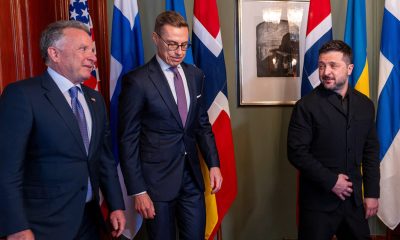
Stubb also detailed the talks held in Oslo on 20 October, which included Witkoff, Ukrainian President Volodymyr Zelenskyy, and Norwegian Prime Minister Jonas Gahr Støre.
The discussions, which spanned approximately eight hours across various formats, had three objectives: to lower tensions in public discourse, to convey European and Ukrainian proposals to the US envoy before his visit to Russia, and to determine the next steps toward a peaceful settlement. Stubb announced that these goals had been achieved.
Moscow ready to resume trilateral talks in November
Witkoff met Putin in Saint Petersburg on Wednesday.
Following the meeting, Russian presidential aide Yuriy Ushakov announced that Moscow was prepared to resume trilateral negotiations with the US and Ukraine during the first half of November.
Ushakov also said that the EU and NATO had begun to “take a more serious approach” to Kremlin proposals on Ukraine, adding that “matters” were moving toward an end to the conflict.
Witkoff described the meeting as “constructive”.
Sources told Bloomberg in September that Putin continued to insist the Donetsk region must come fully under Russian control, expressing confidence that the territory would be captured within the next six months.
Putin previously set conditions for ending the war, demanding that Ukraine abandon plans to join NATO, maintain a neutral and non-nuclear status, and that anti-Russian sanctions be lifted.

US drafts Ukraine plan with Nord Stream restart and sanctions relief

EU unveils Arctic plan targeting military corridors and resources

German officials urge fighter jet alliance with Sweden and Spain

US wealthy demolish multimillion-dollar mansions for land

US and Israel weigh Iran strikes after midterm vote, reports say
-
 America2 weeks ago
How will Brazil’s presidential runoff work?
-
 Europe2 weeks ago
Berlin Left Party backs Israel’s right to exist for coalition pact
-
 Russia2 weeks ago
71 EU lawmakers demand closure of Russian Houses in 15 member states
-
 Europe2 weeks ago
MI6 investigates potential leaks after former BND chief is detained
-
 Russia2 weeks ago
US and Russian figures discuss American stake in Nord Stream lines
-
 Russia2 weeks ago
Drone strike shuts down Yandex data centre in Russia’s Ryazan region
-

 America2 weeks ago
Trump weighs presidential memorandum to cut surging US diesel prices
-

 Europe2 weeks ago
EU and allies pull conference backing after US pressure over panel
