
Diplomacy
EU sanctions Dutch oil trader for breaching Russian oil price cap


For the first time, the European Union (EU) has imposed sanctions on a European national for violating the price cap on Russian oil exports. Nils Trost, a Dutch oil trader residing in Switzerland, faces sanctions for his involvement in breaching the $60-per-barrel price ceiling imposed by Western countries. Swiss authorities are also investigating his company, Paramount Energy & Commodities SA.
According to an EU statement, Trost’s Geneva-based company transferred its Russian oil trading operations in June 2022 to its Dubai-based subsidiary, Paramount Energy & Commodities DMCC. The EU alleges that this subsidiary regularly traded Russian crude oil at prices exceeding the established $60-per-barrel limit.
The $60 price ceiling on Russian crude oil, implemented in December 2022, was part of Western efforts to curb Moscow’s oil revenue while maintaining global supply. Under the sanctions, trade involving Western insurers and financiers must adhere to this price limit. However, Paramount’s Dubai subsidiary continued trading East Siberian Pacific Ocean (ESPO) grade oil, which typically trades at prices above the ceiling, unlike Russia’s Urals crude.
Trost has denied violating sanctions, arguing that his UAE subsidiary is legally independent and not bound by EU sanctions. Speaking to The Financial Times, he claimed that his lawyers assured him the operations of subsidiaries in the UAE are exempt from EU restrictions as long as they remain uninvolved with the European parent company. Trost also attributed the sanctions to what he described as the “machinations” of his former business partner, Gaurav Kumar Srivastava.
Swiss law allows foreign subsidiaries of Swiss companies to operate independently of Swiss sanctions. However, if direct links—such as financial transfers or managerial directives—between the parent company and subsidiaries are established, such actions could constitute a sanctions violation. The Swiss Federal Government’s Expert Group on Business Cycles (SECO) began examining the activities of Paramount and other companies in early 2023.
In the spring of 2024, SECO forwarded its findings to Switzerland’s Attorney General’s Office, recommending criminal proceedings based on two separate investigations. While the prosecutor’s office accepted one case, it rejected the other. The names of the involved companies remain undisclosed.








The world’s largest cryptocurrency exchange, Binance, has suffered an industry-record cyberattack amounting to $6.3 billion.
According to The Guardian, experts say the likely perpetrator is the Democratic People’s Republic of Korea (DPRK).
Binance moved urgently to freeze the affected assets, and approximately $3 billion has been identified so far.
The company has not provided any update regarding the remaining $3.3 billion.
Binance co-founder Yi He said the company would cover “all cyberattack losses.”
Analysts attributed the assault to state-sponsored hackers from the DPRK. According to The Guardian, the DPRK has a history of cryptocurrency theft and, according to the FBI, was behind the theft of approximately $1.5 billion in virtual assets from a Tokyo-based cryptocurrency exchange last year.
That incident had set the record as the largest cryptocurrency theft recorded up to that point.
Crypto analytics firm TRM attributed the attack “with high confidence” to TraderTraitor, North Korea’s elite hacking unit.
Another analytics entity, Chainalysis, also linked the heist to TraderTraitor.
Binance has not explicitly confirmed that funds were stolen. However, TRM and Chainalysis claimed that more than $6 billion had been taken. The company stated that its teams were “working around the clock” to resolve the issue.
According to Binance’s statement, initial investigation findings revealed that the security breach may have begun with a hacked laptop belonging to one of Binance’s engineers, enabling an attacker to gain access to one of the company’s systems and execute unauthorised withdrawals.
Binance, which allows users to buy, sell, and trade digital assets, has 335 million registered users worldwide, and the total value of assets under its custody was approximately $162.8 billion, according to the exchange’s 2025 annual report.
“The bottom line is that your funds are safe and we are covering all losses,” said Richard Teng, one of Binance’s co-chief executives.
In a statement, the company said:
“As a precautionary measure, all deposits and withdrawals have been temporarily suspended while our security teams, with close support from law enforcement and industry partners, conduct checks, secure wallet infrastructure, and track affected assets.”
Markets reacted immediately early in the Asian trading session on Friday, with bitcoin, by far the most popular crypto asset, dropping by more than 3% to a six-week low of $76,368.
Shares of crypto exchange Coinbase Global lost 4.8%, while shares of bitcoin buyer Strategy fell by about 6% in extended trading on US markets.
Binance was founded in 2017 by Changpeng Zhao. Zhao pleaded guilty in the US in 2023 over failures to prevent money laundering on the platform. Donald Trump pardoned him in 2025.
In a post shared on X on Thursday, Zhao said, “User funds are safe!” but added that the incident “looks like a hack on Binance.”
Stating that he no longer manages Binance, Zhao said, “As a shareholder, I expect all user funds to be fully covered.”
According to Chainalysis and other industry experts, if confirmed, this could become the world’s largest cryptocurrency theft.
“This is the biggest hack in history,” said Aravind Srinivasan, head of the systematic OTC business at major crypto market maker GSR.
Analysts noted that beyond the potential loss of assets, the security breach could have broader repercussions across the cryptocurrency market.
Indeed, the cryptocurrency market had already been under pressure recently due to interest rate increases in the US and weakening demand from exchange-traded fund buyers.
Binance operates a secure asset fund for users; as stated on the company’s website, this fund is an emergency reserve held entirely in bitcoin, intended to protect user assets in the event of security breaches.
Stablecoin issuer Tether announced that it had frozen approximately $1.57 billion in assets linked to the incident, while Circle froze more than $800 million.
World Liberty Financial, a crypto firm linked to Trump and his family, said in a statement on Thursday that it was collaborating with cryptocurrency custody provider BitGo to freeze funds stolen in what it described as the Binance attack.
Yi from Binance said $27 million in stablecoins and roughly $2 million worth of World Liberty tokens had been frozen.
This development adds to a successive series of cryptocurrency thefts. According to researchers at TRM Labs, attackers stole $2.9 billion worth of cryptocurrency across roughly 150 attacks last year.
In September, cryptocurrency exchange Bitget announced that about $350 million worth of cryptocurrency had been stolen from its platform, highlighting the industry’s vulnerability to hackers.
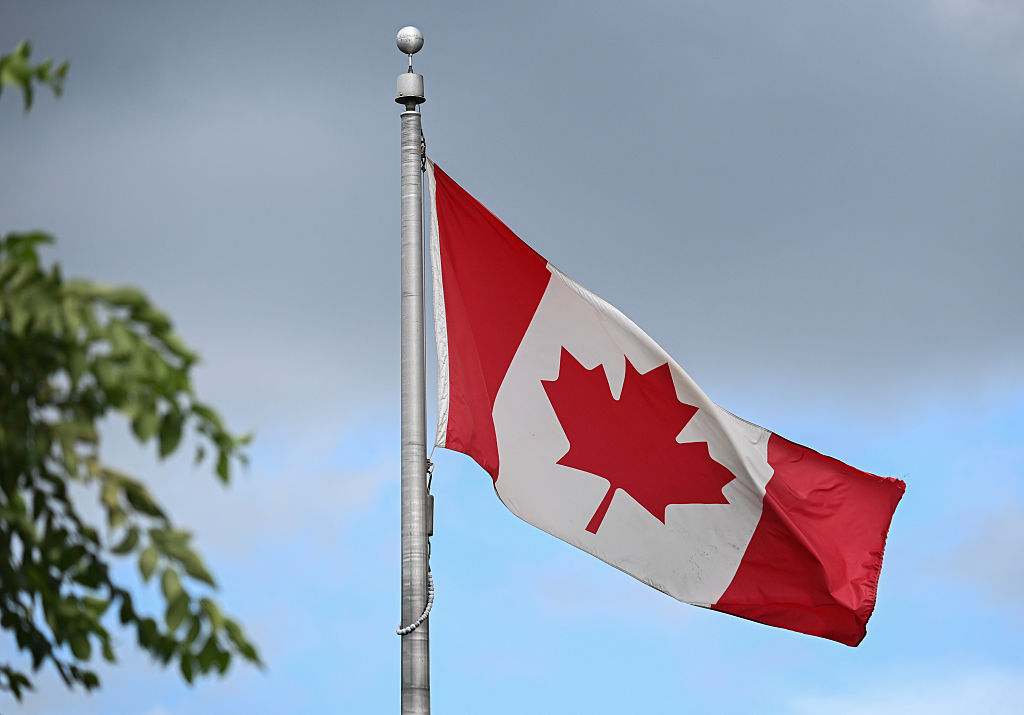
Canadians are weighing the economic opportunities, regulatory hurdles, and questions of identity that closer cooperation with the EU would bring.
Canadian Prime Minister Mark Carney is hosting European Commission President Ursula von der Leyen and European Council President António Costa for a two-day summit focused on bolstering trade, security, technology, and people-to-people ties.
The leaders are expected to advance an ambitious new partnership that includes proposals referred to as an “Alliance of the Future” between Canada and the EU, promoted as an “ever closer union”.
So, what do Canadians think about this new agreement?
According to a February 2026 poll by survey firm Abacus Data, reported by Rapporteur, 74% of Canadians support closer cooperation with the EU on foreign policy, defence, and economic priorities. Only 10% oppose it, while 15% remain undecided.
This broad support masks diverging political attitudes. According to the poll, 60% of Liberal voters rank the EU among Canada’s top two partners, compared to 36% who include the US on that list.
Among Conservatives, the figures are reversed: 65% prioritise the US, while the proportion favouring the EU stands at 36%.
According to the Abacus Data survey, 48% of Canadians support EU membership, while 28% oppose it.
In remarks to Rapporteur, the polling firm said:
“The US still occupies a central place in the Canadian mindset, but this situation continues to change. Today it is still seen as the most important partner, but it is no longer in an uncontested position.”
Catherine Fortin LeFaivre, Vice President of Strategic Policy and Global Partnerships at the Canadian Chamber of Commerce, is eager to turn towards Europe during the Donald Trump era, yet harbours concerns about EU bureaucratic obstacles:
“Canada’s relationship with the US will always be vital, but the last two years have made the need for diversification impossible to ignore. Europe is a natural place to deepen economic ties. But what we do not want is to open the door to an added layer of regulation.”
Ontario farmer Hannah Hutchings shares this concern.
“The US is still an indispensable business partner,” Hutchings said, arguing that closer ties with the EU could help Canadian agricultural goods reach European consumers, provided they deliver economic benefits to farmers without generating further competition and regulation.
Although the EU-Canada Comprehensive Economic and Trade Agreement (CETA), applied provisionally since 2017, has reduced trade barriers, it has not opened every market to Canadian exporters.
Michael Harvey, Executive Director of the Canadian Agri-Food Trade Alliance, said: “Closer relations offer an opportunity to work on trade possibilities with the EU and give us greater leverage in negotiations. For certain agricultural products, non-tariff barriers still block market access because the EU wants to impose its own criteria on the entire world.”
Harvey pointed to EU restrictions on growth hormones and crop protection products:
“In this period of rapprochement, we must work through these issues. Closer ties are received largely positively by the public, but the details will make the difference. This must be a win-win situation for both sides.”
Noting that she also sees opportunities for collaboration in agricultural innovation and sustainability, Hutchings drew attention to shared challenges such as rising costs, labour shortages, climate change, and attracting younger generations into farming.
For Canadian businesses, Europe’s appeal also lies in its predictability.
“Forecasting the cost of doing business with the US has become difficult. Europe is more reliable and makes it possible to conduct business planning, understand market entry costs, and anticipate trading conditions,” Fortin LeFaivre said.
The Canadian Chamber of Commerce has developed a tool named “Trade Explorer”, which helps businesses identify new export opportunities, particularly in Europe.
Jonathan Audet, co-founder and CEO of Quebec-based ski manufacturer Ferreol, entered the French market in late 2025 and generated 5% of his sales there.
Audet anticipates that his European market share will eventually outstrip Canada:
“The business environment is more favourable than in the US. Forging closer ties with the EU will boost exports and allow us to build commercial partnerships and co-innovation partnerships.”
However, Audet wants administrative procedures simplified, particularly when transporting product samples to trade missions in Europe.
“We are not going to sell them; we are only taking them to display the products, but from a customs perspective, this process is complicated. I have to apply for an ATA Carnet, a kind of passport for goods,” he said, citing delays, fees, and airport customs procedures.
Students see opportunities as well. Alex Simion, a Carleton University student in Ottawa and chair of the student union board of directors, supports easier access to education and employment opportunities in Europe.
“Carleton is a university with a large engineering student body. Students enthusiastically welcome the establishment of closer ties with the EU,” Simion said, calling for simplified visa procedures and improved access to student housing.
Yet uncertainty has not disappeared. “Most of us started high school while the Brexit process was unfolding, so growing up, we saw that something was wrong in the EU,” Simion said.
For him, this debate also raises deeper questions about Canadian identity.
“What does it mean to be Canadian? We are still trying to figure that out,” Simion said, questioning whether EU membership would erode Canada’s distinct identity:
“A closer bond makes it even more important that we find an answer to what being Canadian means before joining the EU.”
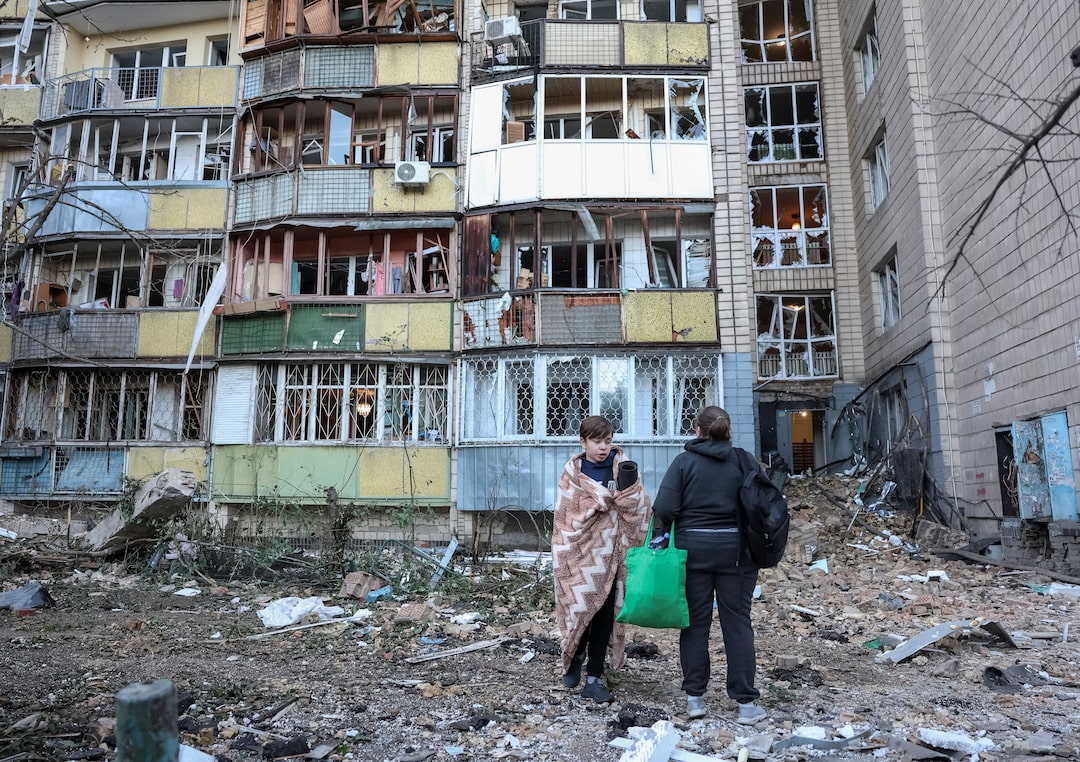
Ukraine’s economy is set to shrink for the first time since 2022, according to a Bloomberg report citing projections from the National Bank of Ukraine.
The central bank forecasts that the country’s gross domestic product will contract by 0.4% by the end of this year.
The National Bank of Ukraine had previously projected that the economy would grow by 1.8%.
The country’s last economic contraction was recorded in 2022, when gross domestic product plunged by more than 30%.
The National Bank of Ukraine attributed the worsening forecast to Russian strikes, which it said led to a “sharp drop in business activity.”
The Russian Defence Ministry has repeatedly stressed that the strikes target only Ukrainian military and energy facilities, as well as infrastructure linked to them.
President Vladimir Putin said that the Russian military’s strikes against Ukrainian infrastructure were effective and timely actions because they helped troops resolve the combat tasks before them.
The National Bank of Ukraine expects the economy to return to a 0.4% growth path next year, driven by rising investment in the defence industry and other projects.
According to Bloomberg, the National Bank of Ukraine raised its policy rate following the deteriorating economic forecasts.
The central bank’s updated assessments point to higher inflation than previously expected.
Government cuts spending and switches to austerity mode
Ukrainian Prime Minister Sergey Koretskiy announced in late September that the country had switched to a maximum austerity regime and postponed all non-urgent spending.
Koretskiy had previously stated that the state of the country’s public finances was nearing a critical level.
Ukraine’s 2026 budget was approved with a deficit of approximately 1.9 trillion hryvnias, or $47.5 billion.
Describing the upcoming 2026 winter as “objectively difficult” for the country, Koretskiy pointed out that the funding gap in Ukraine’s energy sector remained at around 650 million euros ahead of the winter period.
The Ukrainian Finance Ministry estimates that the country will require nearly $146 billion in external financing between 2026 and 2029.
The International Monetary Fund, meanwhile, projects that Ukraine will face a financing gap of up to $54 billion through 2029.
At the beginning of the year, the European Union agreed on a 90 billion euro loan package for Kyiv, allocating 60 billion euros for defence spending and 30 billion euros for budget and economic support.
As of 14 October, Ukraine had received only 19.8 billion euros of the agreed loan, representing just 22% of the total amount.
The Moscow government condemns military support provided to Kyiv.
Russian Security Council Secretary Sergey Shoigu, assessing the EU loan to Ukraine, claimed that this policy was driving European states toward “the ultimate loss of their sovereignty.”
President Vladimir Putin stated that “the entire West” was helping Ukraine.
Putin said Russia reserves the right to use weapons against the military facilities of countries that allow their delivered weapons to be used in attacks on Russian territory.

North Korean hackers blamed for record $6.3bn Binance theft

CDU youth wing urges military deployment against student protests

Canada pursues closer EU partnership as summit opens

Ukraine economy set to shrink for first time since 2022, bank says

Congress poised to block Trump team’s $1.5 trillion defence budget bid
-

 America2 weeks ago
How Elon Musk fuses private empire with state power, Ben Tarnoff explains
-

 Europe2 weeks ago
AfD leader Weidel calls funding lost Ukraine war a grave mistake
-

 Middle East2 weeks ago
Egypt delays parliamentary vote on deploying troops to Saudi Arabia
-

 America1 week ago
US wealthy demolish multimillion-dollar mansions for land
-

 America1 week ago
At least 47 major US data centre projects halted or cancelled
-

 Middle East1 week ago
Netanyahu unveils security doctrine and regional alliance map
-
 Europe1 week ago
EU rejects US proposal to resume Russian gas flows through Ukraine
-

 Middle East1 week ago
Netanyahu trails Eisenkot in Israeli polls despite Trump backing
