
Russia
Foreign investors eye return to Russian markets amid reopening rumors


Foreign investors are exploring alternative avenues to purchase securities of Russian companies amid rumors that Russian financial markets will reopen to international markets within a few weeks.
According to a Bloomberg report, interested parties are accumulating shares of Rusal on the Hong Kong stock exchange for this purpose. This activity led to a 75% increase in the value of these shares in February.
Shares of Austria-based Raiffeisen Bank International (RBI), which has a subsidiary in Russia, have risen by 35% on the Vienna Stock Exchange this year, while shares of Hungarian OTP Bank Nyrt, which remains in the Russian market, have gained 11% since the beginning of the year.
Grigory Marinichev, a partner and securities lawyer at the New York-based law firm Morgan, Lewis & Bockius, told Bloomberg that the wave of demand for securities of Russian companies or foreign companies doing business in Russia is being driven by hedge funds and private investors.
Marinichev stated, “They want to be the first in this trade. But at the moment, we can’t tell them anything other than to follow the news.”
Bloomberg also noted a positive trend in Russian stock exchanges, with the ruble appreciating by 15% against the dollar since the beginning of the year.
The report mentioned that many investors are warning their clients against excessive expectations regarding Russian assets.
It was emphasized that caution is necessary due to the uncertainty surrounding the details of easing US sanctions, especially since some restrictions are determined by law and require Congressional approval. Additionally, European Union sanctions remain in place.
Alexander Kolyandr, a former strategist at Credit Suisse’s Moscow office, commented, “It will take years for Russia to become attractive for investment again. But right now, it’s hard for people to find good investment ideas, and a possible peace agreement creates clear opportunities.”
US President Donald Trump had stated that he did not rule out lifting sanctions against Russia once the conflict in Ukraine is resolved, but that the time was not yet right.
The Moscow Exchange recorded the highest trading volume in the stock market since March 2022, following a phone call between the Russian and US presidents on February 12.
An all-time record was broken during the evening session of February 12 and the morning session of February 13.













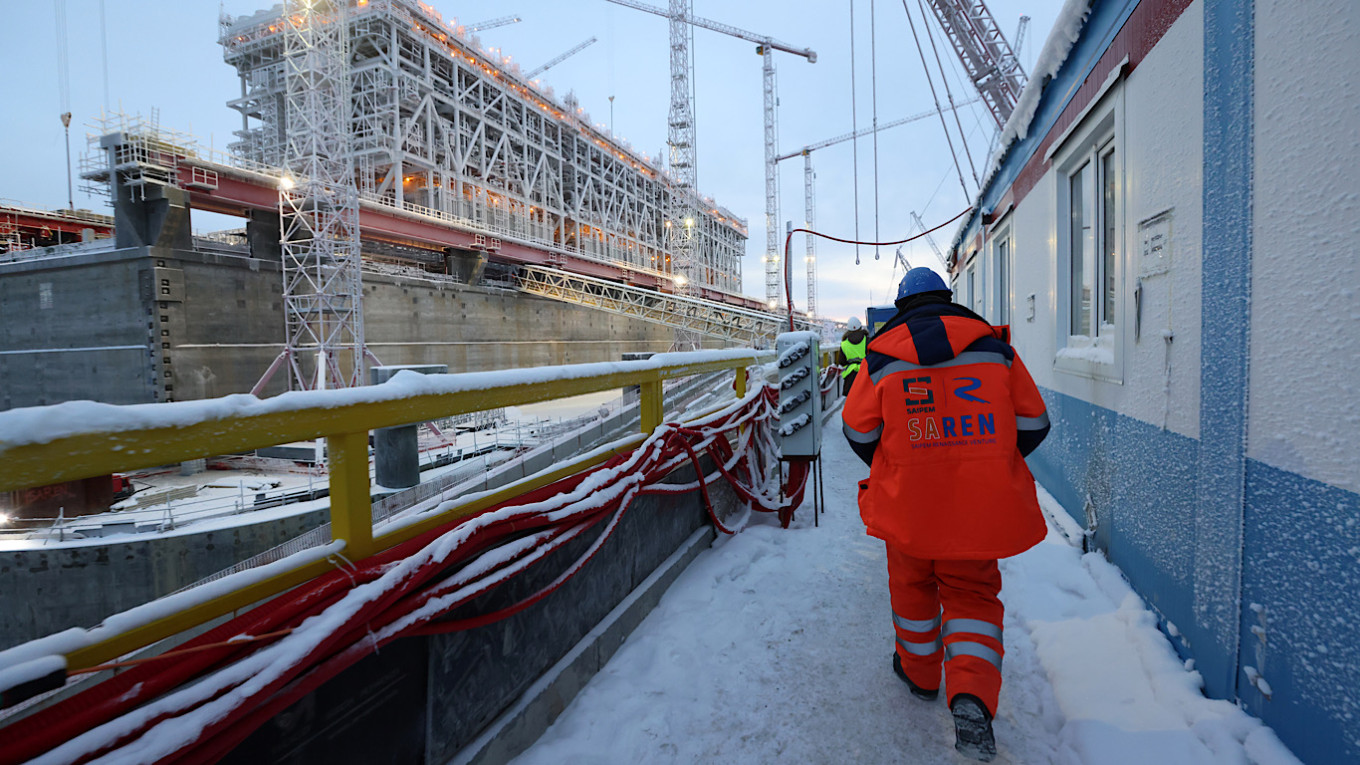
Following a diesel arrangement with the US and the prospect of expanding Russian fertiliser shipments, Moscow is offering Washington joint cooperation in the Arctic.
Russian President Vladimir Putin announced that Moscow is considering the possibility of working together with US partners in the Arctic region.
Speaking at the Gas Exporting Countries Forum (GECF) summit, Putin described the regional situation:
“We are actively working in the Arctic, which I mentioned, with many countries around the world, and we are interested in joint work. Until very recently, our European partners and our Chinese partners were working alongside us at our fields. Now we are considering the possibility of joint work with American partners.”
So, which fields could a partnership between the two countries in the Arctic encompass, and what could Moscow offer Washington in exchange for lifting sanctions on Russian gas? Liquefied natural gas (LNG) projects stand at the heart of the matter.
European companies pulled out of Russian gas projects such as Yamal LNG and Arctic LNG 2 due to sanctions imposed on Russia after 2022.
According to Igor Yushkov, an expert at the Financial University under the Government of the Russian Federation and the National Energy Security Fund (NESF) who spoke to the Vzglyad newspaper, cooperation with Chinese companies moved to a new dimension following the departure of the Europeans.
Two Chinese shareholders, CNPC and CNOOC, are involved in the Arctic LNG 2 project. Initially, both companies froze their participation out of concern over US sanctions targeting the venture.
Mikhail Vakilyan, an expert at the Institute for the Development of Fuel and Energy Complex Technologies, told Vzglyad that Beijing did not alter its policy, but rather that Chinese firms CNPC and CNOOC simply did not want to risk their access to the US dollar.
Yet, a year and a half later, the picture shifted entirely. In the second half of 2025, China began purchasing gas from the sanctioned Arctic LNG 2 facility and dedicated a standalone terminal to the project.
Furthermore, it opened a second terminal this year serving exclusively Russian LNG.
China even resumed module deliveries needed to complete the third train of Arctic LNG 2, despite having halted shipments previously.
Moscow seeks markets and turbines, offering technology for Alaska
Despite all these developments, Russia’s expectations from the US in the Arctic remain clear. Mikhail Vakilyan summarised this requirement:
“Russia needs two things: first, markets; and second, hardware. Lifting sanctions on Arctic LNG 2 and its gas carriers will bring back buyers in Japan, India, and South East Asia, eliminating the discount currently enjoyed by China as the sole customer. As for hardware, the turbines driving the liquefaction compressors at Yamal LNG and Arctic LNG 2 are manufactured by the US company Baker Hughes. Maintenance, spare parts, and modernization for these machines are blocked by US export bans.”
Igor Yushkov viewed the process through the lens of a political and economic trade-off:
“The exact same scheme seen in the diesel agreement is operating here. In exchange for easing anti-Russian sanctions and putting pressure on Ukraine, we are offering the US mutually beneficial projects and broader economic cooperation. We are showing that this cooperation can be versatile across various fields such as diesel, fertilisers, LNG, and similar sectors.”
The tangible offer Russia could present to the US in the LNG sector in exchange for sanctions relief is technological support for an LNG plant to be built in Alaska, referring to the $25 billion Polar LNG project.
Yushkov explained the card held by Russian energy company Novatek:
“Novatek possesses a technological solution applied at Arctic LNG 2 that would also suit the LNG project in Alaska. These are reinforced concrete gravity-based structures carrying liquefaction equipment; essentially floating LNG factories. Novatek has already built two such platforms alongside their equipment and established an offshore super-structure construction centre in Belokamenka. The issue is that both this centre and the Arctic LNG 2 plant itself fell under US sanctions. Therefore, in exchange for lifting sanctions at least on the super-structure construction centre, we could build such a facility for Alaska.”
According to the expert, Russia could cast the reinforced concrete platform at this centre in Belokamenka, install the LNG plant atop it, and tow it to Alaska once completed.
Because building from scratch in the Arctic itself is both costly and creates constraints regarding time and equipment transport, this method offers a much simpler solution.
Nevertheless, Yushkov warned that the plan is not finalised:
“Owing to numerous sanctions-related issues and questions surrounding the project’s economics, it is not certain this scenario will materialize; however, the Americans are still interested in our technologies for Alaska, and Russia is stating it can capitalize on this and deliver it.”
Conversely, Yushkov recalled that Russia remains the primary rival to the US, particularly in the gas sector, and that the US administration has systematically squeezed Russian gas out of the European market in recent years.
According to the expert, helping US LNG capture the market share lost by Russia is hardly a brilliant idea.
Europe’s 2027 ban, China price talks, and rare earth metals
Arctic LNG 2 is not the only Russian project that could benefit from potential cooperation with the US; a new opening could also emerge for Yamal LNG, which is unaffected by US sanctions.
The crux here is not sanctions, but the European Union’s upcoming ban on all Russian LNG shipments starting from 1 January 2027.
Vakilyan explained the approaching risk and a potential solution using figures:
“In the first half of the year, Europe took nearly the entire output of the plant, amounting to 9.89 million tonnes. In two months, these volumes will need a new route and a new buyer; a US trading company appears very well suited for this role.”
Another winner in the equation could be Gazprom, which is conducting negotiations with China for the Power of Baikal pipeline, formerly known as Power of Siberia 2.
Vakilyan said: “Cooperation with the US is Russia’s trump card in price negotiations. China has long negotiated with Gazprom assuming Russian gas has nowhere else to go; an American company in the Arctic would disrupt that calculation.”
Viewed from a wider perspective, Russia and the US share two additional points of contact: oil projects and rare earth metals.
The Vostok Oil project, which awaits the lifting of sanctions on Rosneft, is the first among them.
Vakilyan listed the other areas:
“It is impossible to make headway on the Pobeda shelf, which could not be developed since 2014, without the Americans; that site requires subsea production complexes and drilling services in icy seas, where US companies are strongest. Another issue not apparent at first glance is rare metals. The Trump administration is seeking them across the globe, and Tomtor, one of the largest rare earth metal deposits, lies in the Arctic region of Yakutia.”
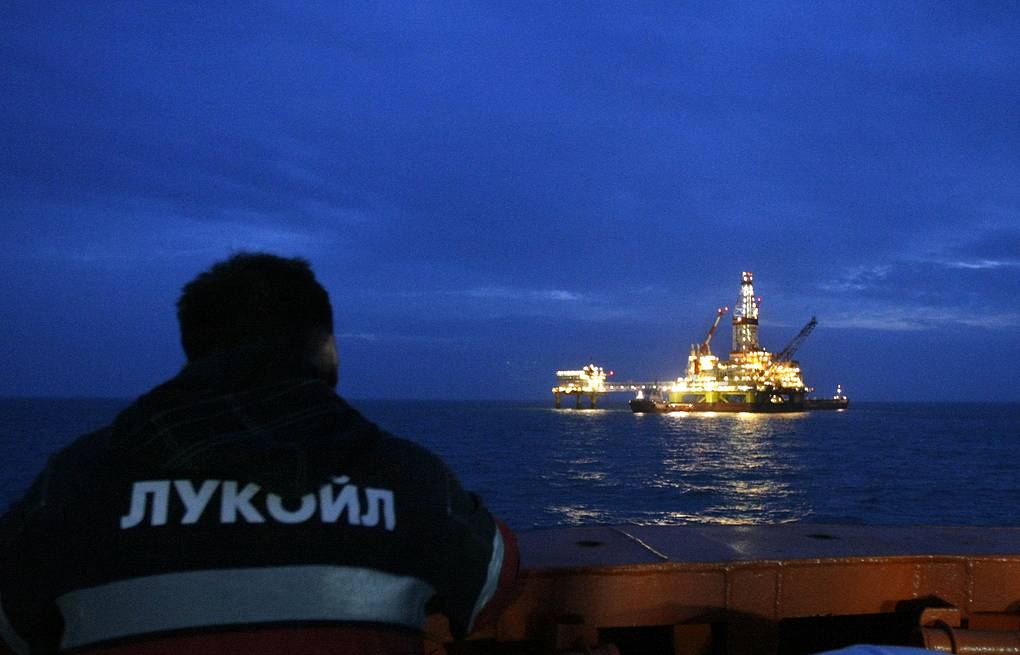
Russia and the US are discussing wide-ranging economic topics as part of efforts to find a solution to the war in Ukraine, including the return of American companies to the Russian oil sector.
According to a report in the British newspaper Financial Times, which cited sources familiar with the matter, joint energy projects and pipelines rank first among the plans projected to take effect once hostilities end.
One of the primary scenarios on the table involves American energy giants re-entering the offshore Sakhalin joint project after the war and contributing to the resumption of Russian oil deliveries to Europe via the Druzhba pipeline.
ExxonMobil was previously the only American company involved in the Sakhalin-1 project.
Objecting to the Russian authorities’ decision to transfer the company’s 30% stake in the project to state ownership, ExxonMobil announced last year that it was conducting negotiations with Russia, but stated it had no plans to resume operations in the country.
The discussions are not limited to the oil sector. Sources speaking to the Financial Times report that steps such as reopening Russian airspace to transit US flights and reviving cooperation in titanium production and supply are also under consideration.
Other striking items on the agenda include the potential sale of LUKOIL’s international assets to investors close to the White House, the participation of Russian gas producer NOVATEK in a liquefied natural gas (LNG) project in Alaska, and the restoration of gas flows to Europe via the intact line of the Nord Stream 2 pipeline.
Reuters also previously reported that the two countries were holding contacts regarding the attraction of investors to the Nord Stream pipelines.
One of the most sensitive items in the talks involves the Zaporizhzhia Nuclear Power Plant. According to the report, the parties discussed transferring the plant’s management to an American entity and sharing the generated electricity between Ukraine and Russia.
Russian President Vladimir Putin did not rule out an option in September last year under which Moscow could cooperate with Washington on the safety and operation of the Zaporizhzhia plant.
However, the Russian Foreign Ministry maintained that there is no precedent in the world for joint nuclear power plant operation, while Alexey Likhachev, the head of Russian state nuclear energy corporation Rosatom, described the idea of transferring the facility’s management to the US as a product of fantasy.
A US official speaking to the Financial Times said the Donald Trump administration is evaluating economic proposals extensively with both sides of the conflict.
The official emphasized that the negotiations cover post-war economic foundations that would create long-term growth and investment opportunities for Ukraine, as well as potential post-war economic cooperation opportunities with Russia.
Underlining that nothing has been finalized yet, the US official stated that economic agreements would be integrated into a comprehensive peace framework.
Kremlin spokesman Dmitry Peskov stated at the beginning of October that Russia and the US were negotiating a series of mutually beneficial joint projects in the economic sphere.
Vladimir Putin also stated that the two sides were considering the possibility of joint work on natural gas in the Arctic.
Kirill Dmitriev, the head of the Russian Direct Investment Fund (RDIF) and the Russian President’s special representative for investment and economic cooperation with foreign countries, noted that the energy sector and data centres are among the joint projects.
Dmitriev shared the view that cooperation between Moscow and Washington would generate significant synergy in the Arctic region, in the LNG sector, and across other energy branches.
Numerous major American companies halted their operations in Russia in 2022, when hostilities began in Ukraine.
ExxonMobil withdrew from the Sakhalin-1 project, where it held a 30% stake, while oilfield services providers Halliburton and Baker Hughes sold their commercial assets in Russia.
Putin signed a decree in August 2025 setting the conditions for foreign investors to return to the Sakhalin-1 project. Under the decree, foreign partners must spearhead the lifting of sanctions obstructing the project and secure the necessary equipment supplies. In December of the same year, the sale period for ExxonMobil’s untransferred stake was extended to 1 January 2027.
A notable tangible step in energy traffic was taken regarding diesel supplies. US President Donald Trump announced on 9 October 2026 that an agreement had been reached with Putin on supplying Russian diesel products to the American market and global markets.
Trump said Russia would deliver more than 1.8 million tonnes of fuel in several phases, after which it could send an additional 3 million tonnes.
On the same day, the US Department of the Treasury issued a special licence covering transactions involving Russian diesel products and their importation into the US.
The waiver in question remains valid until 7 April 2027.
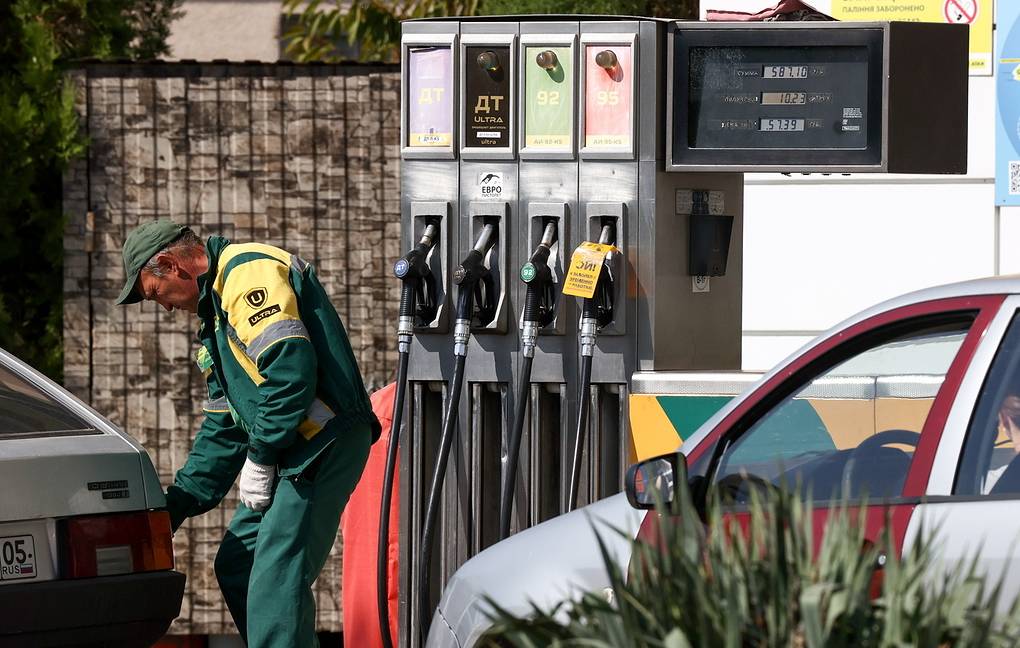
Russia has announced that it will ship 500,000 tonnes of diesel fuel to the global market under a partial lifting of its diesel export ban, enacted as part of measures concerning the Ukraine crisis and energy markets.
A statement from the Russian government said the decision was implemented in accordance with understandings reached between Russian President Vladimir Putin and US President Donald Trump.
Under the decision, which came into effect on 10 October, an initial phase of 500,000 tonnes of diesel fuel will be supplied to the global market.
“Following the rescinded decision, Russian oil companies, in coordination with the government, will immediately begin signing diesel fuel supply contracts with foreign business partners,” the government statement said.
Assessing the matter, Deputy Prime Minister Aleksandr Novak stressed that the decision would not affect the interests of Russian consumers.
Noting that diesel fuel is produced from Russian crude at domestic refineries, Novak stated that production volumes are sufficient both to meet all domestic market requirements in full and to ship the specified quantities to the global market.
The ban on diesel fuel exports in Russia was initially put into effect on 31 January 2026, covering only non-producing companies.
The government tightened the restrictions on 9 July by expanding them to include direct producers. Previously announced to remain in place until the end of October, the ban was partially relaxed in light of current developments.
Vladimir Putin and Donald Trump held a telephone conversation on 9 October. Following the call, US President Trump announced that an agreement had been reached on the supply of Russian diesel.
Trump said Russia had agreed to send more than 300,000 tonnes of fuel to American and global markets in the initial phase, 500,000 tonnes in November, and 1 million tonnes thereafter.
Trump also stated that an additional shipment of 3 million tonnes could follow at a later stage, adding that they expect this agreement to reduce diesel fuel prices rapidly.
Following the conversation, the US Department of the Treasury, on Trump’s instructions, issued a temporary general licence exempting Russian diesel fuel transactions and shipments to the US—previously prohibited under sanctions—until 7 April 2027.
Putin, in a statement after the call, confirmed Russia’s readiness to supply crude oil and petroleum products to American and global markets, noting that this would have a positive impact on the world economy.
Putin also noted that the two leaders discussed prospects for resolving the conflict in Ukraine, the situation surrounding Iran, and bilateral relations, agreeing to maintain contacts through presidential envoys, intelligence agencies, and other institutions.
A statement issued by Novak’s office after the call said Russia was prepared to ship diesel to the US within October.
Novak stated that export volumes could be increased in November and December as refineries emerge from scheduled maintenance.
Novak also conveyed that Moscow views positively Washington’s steps towards stabilising the global energy market and normalising energy trade.

Global dockers strike against war and arms transit to Palestine

Putin proposes Arctic energy cooperation to US to ease gas sanctions

Vučić scrapped plan to hold power after phone warnings, report says

EU scrambles for takers for remaining €21B in SAFE defence loans

Bolsonaro reportedly leaves Brazil on jet linked to scandal-hit firm
-

 America2 weeks ago
How Elon Musk fuses private empire with state power, Ben Tarnoff explains
-

 Europe2 weeks ago
AfD leader Weidel calls funding lost Ukraine war a grave mistake
-

 Middle East2 weeks ago
Egypt delays parliamentary vote on deploying troops to Saudi Arabia
-

 America1 week ago
US wealthy demolish multimillion-dollar mansions for land
-

 Europe1 week ago
EU rejects US proposal to resume Russian gas flows through Ukraine
-
 America1 week ago
At least 47 major US data centre projects halted or cancelled
-

 Middle East1 week ago
Netanyahu unveils security doctrine and regional alliance map
-

 Middle East1 week ago
Netanyahu trails Eisenkot in Israeli polls despite Trump backing
