
Europe
Greek workers hold general strike over high cost of living


Workers across Greece are participating in a nationwide general strike today (20 November), encompassing all sectors of the country. The strike is being held under the slogans “Money for Wages, Education, and Health” and “Out of the War Slaughterhouses.”
This strike follows weeks of preparation, marked by massive protests and sector-wide actions involving doctors, construction workers, dockers, maritime workers, metal workers, telecom workers, hotel staff, and distribution employees. These coordinated efforts underscore the growing discontent among Greece’s working class.
In a statement, the Militant Front of All Workers (PAME), the organization leading the strike, declared: “For the strike to succeed, there is no alternative but to fight everywhere. If we don’t fight for our interests, we will gain nothing. The great strike struggles of construction workers, railway workers, delivery workers, hotel staff, miners in the shipbuilding region, dockers, shipyard workers, health workers, and teachers are showing the way, providing hope and optimism for more sectors to join in.”
The strike is expected to disrupt government offices, schools, hospitals, and public transportation, including trains and island ferries.
Yannis Panagopoulos, president of the leading private sector union GSEE, emphasized the growing challenges faced by workers: “The cost of living is too high, and our salaries have hit rock bottom, while the high cost of housing has left young people in a tragic situation.”
Like other labor groups, GSEE accused the government of “refusing to take meaningful measures to provide decent living conditions for workers.”
Currently, low-income Greeks are forced to subsist on a minimum wage of less than 900 euros per month, even as retail, telecom, and energy costs remain among the highest in Europe. The left-wing opposition often criticizes this disparity, claiming the less privileged are forced to pay “British prices on Bulgarian salaries.”
Conservative Prime Minister Kyriakos Mitsotakis recently pledged to raise the minimum wage to 950 euros. However, critics argue that this measure is insufficient in a society where the wealth gap continues to widen, exacerbated by rising housing costs.
Despite these domestic struggles, international credit rating agencies have lauded the Mitsotakis administration for its fiscal reforms. These reforms have not only ensured Greece met financial targets and returned to investment-grade status, but also enabled the country to outperform other EU member states in terms of economic growth.












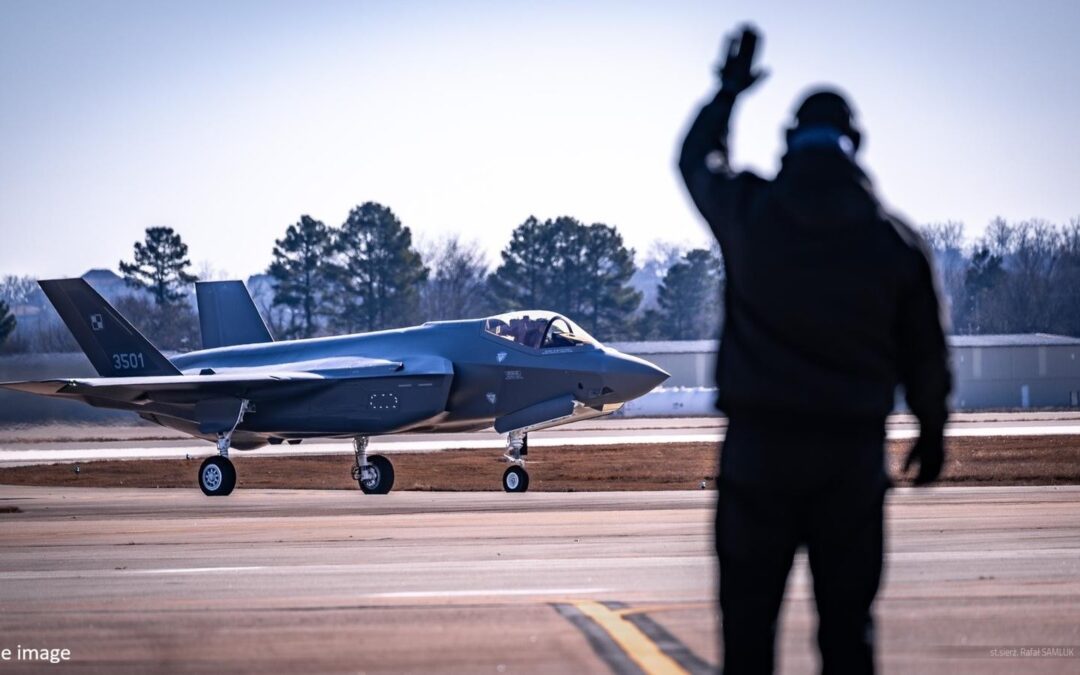
Poland has applied to join the air component of NATO’s nuclear deterrence programme.
According to a report by the newspaper Gazeta Wyborcza, which cited alliance sources, Polish F-35 pilots will be trained in the use of nuclear bombs if the application is approved.
The news portal WP Wiadomości also reported that pilots of Poland’s F-35 fighter jets are planned to be trained to deploy US nuclear bombs under NATO’s Nuclear Sharing programme.
Information provided by NATO sources indicates that the Warsaw administration applied to join the Dual-Capable Aircraft (DCA) programme, which paves the way for participation in the Nuclear Sharing mechanism.
This mechanism allows NATO allies to use US tactical nuclear weapons in the event of war.
The US is said to be still assessing Poland’s application.
According to Defence24, which cited the report in question, Polish pilots and technical personnel will undergo specialised training in the US if the application is accepted.
In addition, the F-35 fighter jets will be equipped with additional hardware to carry out nuclear missions.
The training process is projected to take approximately two years.
Warsaw does not plan to station nuclear munitions on its territory
Polish Deputy Defence Minister Paweł Zalewski previously announced that there were no plans to deploy US nuclear munitions on the country’s territory.
Under the Nuclear Sharing mechanism, the US deploys its tactical nuclear weapons on the territory of European allies.
In the event of an armed conflict, participating nations can employ US nuclear bombs, but any decision to use them requires Washington’s approval.
Debate over deploying nuclear weapons in Poland has been going on for many years.
The Polish Ministry of National Defence first mentioned plans to join NATO’s Nuclear Sharing programme in 2015.
In April 2024, Polish President Andrzej Duda stated that they were prepared to host US nuclear weapons on the country’s territory.
Russia warned that potential facilities would be considered military targets
The Kremlin warned that Russia would take countermeasures to ensure its own security if such a step were taken.
Russian Foreign Ministry spokesperson Maria Zakharova argued that the facilities in question would become military targets in the event of a direct conflict with NATO.
Zakharova said: “One does not need to be a military strategist to understand that such facilities would represent a source of direct threat and naturally would inevitably enter the list of legitimate targets defined in a scenario of direct military conflict between our country and NATO.”
Speaking in August this year, Polish Deputy Defence Minister Zalewski clarified that Warsaw was interested in participating in NATO’s nuclear deterrence activities, but was not considering the deployment of nuclear warheads on its territory.
In October, Polish Defence Minister Władysław Kosiniak-Kamysz confirmed his country’s desire to take part in the US nuclear deterrence programme and simultaneously develop cooperation with France in this area.
Without providing a timetable for when concrete decisions would be taken, Kosiniak-Kamysz noted that an agreement with allies had to be reached first.
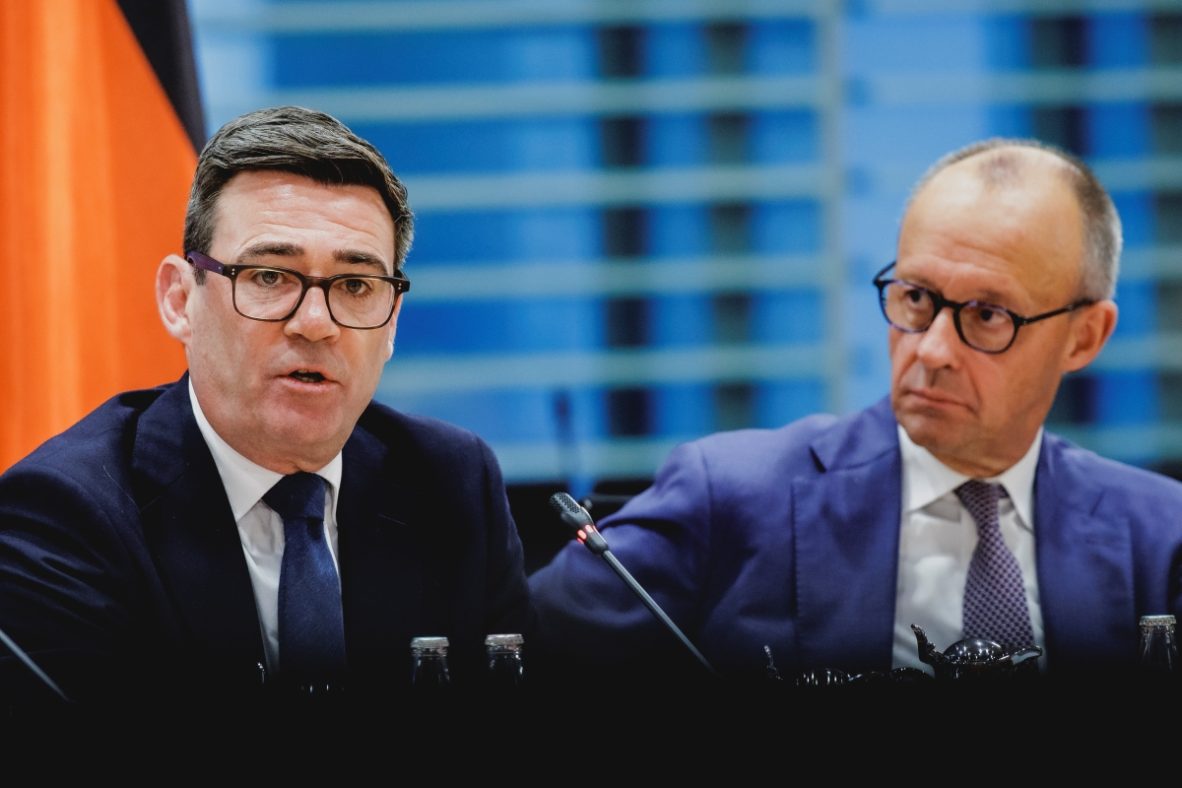
The EU is looking to Britain to help plug its budget shortfall, offering access to its energy market in return.
British Prime Minister Andy Burnham is currently seeking to negotiate reintegration in a bid to lower electricity costs and demonstrate to voters the benefits of his post-Brexit policy of reconnecting with Europe.
Liberal Member of the European Parliament Sandro Gozi, who is closely involved in the negotiations, says that in exchange for this access, Britain must contribute to the EU cohesion fund, which currently sits at the centre of a political battle over the bloc’s next budget.
“Any agreement on the UK’s participation in the European electricity market must be accompanied by a financial contribution by the UK to cohesion policy,” said Gozi, who chairs the European Parliament’s delegation to the EU-UK Parliamentary Partnership Assembly.
British households pay the highest retail electricity bills among the G7 club of advanced economies, with kilowatt-hour prices running roughly five pence (0.06 euros) above average.
London wants to reconnect to the European electricity market by 2028 to gain access to cheap French nuclear power.
Burnham will visit Brussels on 20 November for an EU-UK summit, hoping to achieve tangible progress.
The EU’s 27 member states are currently locked in an impasse over the proposed 2 trillion euro EU budget for the 2028-2034 period.
Countries led by Germany want spending cuts in an ongoing political battle with Italy and other nations that receive billions of euros from cohesion funds aimed at Europe’s poorest regions.
The Italian lawmaker told Rapporteur that MEPs would formally raise the demand on Tuesday for British funding to be channelled to Europe’s poorer regions in return for energy market access.
The push for contributions to the cohesion fund, which accounts for around a third of the bloc’s current seven-year budget at 392 billion euros, follows a similar appeal from the leaders of the Netherlands, Germany, Denmark, Luxembourg, and Belgium.
In a letter dated 6 November, the group stated that London should make an “appropriate financial contribution” in exchange for energy market access.
Lucy Rigby, the Labour government’s economic secretary, acknowledged last week that discussions regarding “the mechanism for the UK’s financial contribution” had already begun.

Five EU countries are set to open a migrant deportation centre in Rwanda next year as part of a broader drive to increase expulsions.
In statements released by the Dutch and Danish governments, it was announced that Germany, Denmark, Austria, Greece, and the Netherlands are expected to open a “return hub” ready to accept transfers in 2027.
The countries said the scheme will apply to migrants residing “illegally” within their borders who are subject to deportation orders.
The Dutch government added that it would provide an alternative if deportees cannot be returned to their countries of origin.
Deportees will either be able to integrate into Rwandan society or return to their native countries.
The plan will apply to individuals who have exhausted all legal avenues to remain in the five countries. This differs from the scrapped British agreement, which envisaged sending people to Rwanda to have their asylum claims processed.
Due to legal obstacles, the UK arrangement never took effect and was ultimately shelved by the Labour government that assumed office in 2024.
Downing Street has not ruled out the possibility of the UK joining the scheme, stating that it will monitor developments “with interest”.
According to AFP, Spanish Prime Minister Pedro Sánchez said the plan to open a facility in Rwanda has “neither a future nor a humanitarian dimension”.
“I see in this neither a future nor a humanitarian dimension. This is not a solution,” Sánchez told Spanish broadcaster Telecinco, as quoted by AFP.
While the five nations argue that the initiative to send migrants abroad complies with EU and international law, human rights organisations warn that it could violate migrant rights.
The agreement follows a recent EU reform permitting the establishment of offshore centres outside the bloc.
Speaking at a joint press conference in Vienna on Monday, Austrian Chancellor Christian Stocker said the five nations want to relieve pressure on European asylum systems and deter human traffickers from organising lethal journeys across the Mediterranean.
In a written statement, the Dutch government noted that under the first phase of the agreement, the five countries “will only send back single men”, adding that the Netherlands’ focus will be on “individuals from countries of origin in the same region as Rwanda”.
Upon arrival in Rwanda, these individuals will be permitted to integrate into society, meaning they will receive residency rights and gain access to education, healthcare services, the labour market, and the legal system.
Rwandan Minister of Interior Vincent Biruta said the country is committed to cooperating with European partners to deliver a “safe, lawful, and dignified solution for migrants”.
The minister added that they will also work to “rectify the global imbalance in economic opportunities”, which he described as the “primary driver of irregular migration”.
Prior to the announcement, diplomatic sources told AFP that the centre is initially expected to run as a pilot project housing around 100 people, with each of the five countries likely sending roughly 20 migrants.
The United Nations International Organization for Migration (IOM) may assume a supporting role throughout the process.
“IOM has a long-standing history of providing assistance to migrants in transit, including under complex conditions,” an IOM spokesperson said, adding that the organisation is in talks with certain EU states regarding “plans for the establishment of return hubs or similar mechanisms”.
With elections looming in several EU member states, governments face intense pressure to demonstrate control over migration.
Clementine de Montjoye, senior Africa researcher at Human Rights Watch, stated that the choice of Rwanda is a cause for concern, citing the country’s “entrenched track record of repression of dissent, arbitrary detention, and ill-treatment in custody”, alongside its backing of armed rebels in the neighbouring Democratic Republic of the Congo:
“Paying Kigali to run a deportation programme will not only cause pain and harm to those deported, but it will also provide funding and political leverage to a government responsible for grave human rights violations at home and abroad.”
The independent EU Fundamental Rights Agency maintained that any third country hosting a return hub must “respect fundamental rights”, which includes ensuring individuals are not sent to a territory where they face a grave risk of persecution.
The agency added that unaccompanied minors must not be sent to the return centre, a condition the Dutch government confirmed will be observed.
According to the European Border and Coast Guard Agency, approximately 110,000 irregular border crossings into the EU were recorded in the first 10 months of 2026, marking a 29% decline compared with the previous year.
Roughly 18,100 crossings were detected in October; although this figure is about 6% lower than in October 2025, it represents a 22% increase over September, which was reportedly driven “largely by a sharp surge in arrivals along the Western African route to the Canary Islands”.

Ecuadorian fishermen sue US over drone strikes on vessel

Japan proposes Asian version of IEA to manage regional oil reserves

Poland bids for NATO nuclear programme to train F-35 fighter pilots

US households face $2,000 war hit as Khanna urges $1,700 relief

Xi urges free trade against protectionism at APEC CEO Summit
-

 America1 week ago
US midterms see 97 young winners as Gen Z representation triples
-

 Europe2 weeks ago
EU urges citizens to prepare 72-hour survival kits for crises
-

 Diplomacy2 weeks ago
Ukraine faces demographic collapse as fertility rates slide
-

 Europe1 week ago
UK and Germany expand military pact with focus on Russian frontier
-

 America2 weeks ago
Paraguay President Peña resigns over catastrophic bank collapse
-
 America2 weeks ago
Elon Musk loses $29 billion after Democratic US midterm sweep
-

 America2 weeks ago
Moderate Republicans urge break from Trump and MAGA after midterms
-

 America1 week ago
Nvidia investigates CEO Jensen Huang over link to Chinese spy
