
Europe
Hungary’s new PM Magyar vows absolute ban on illegal migration, challenging Brussels over fines

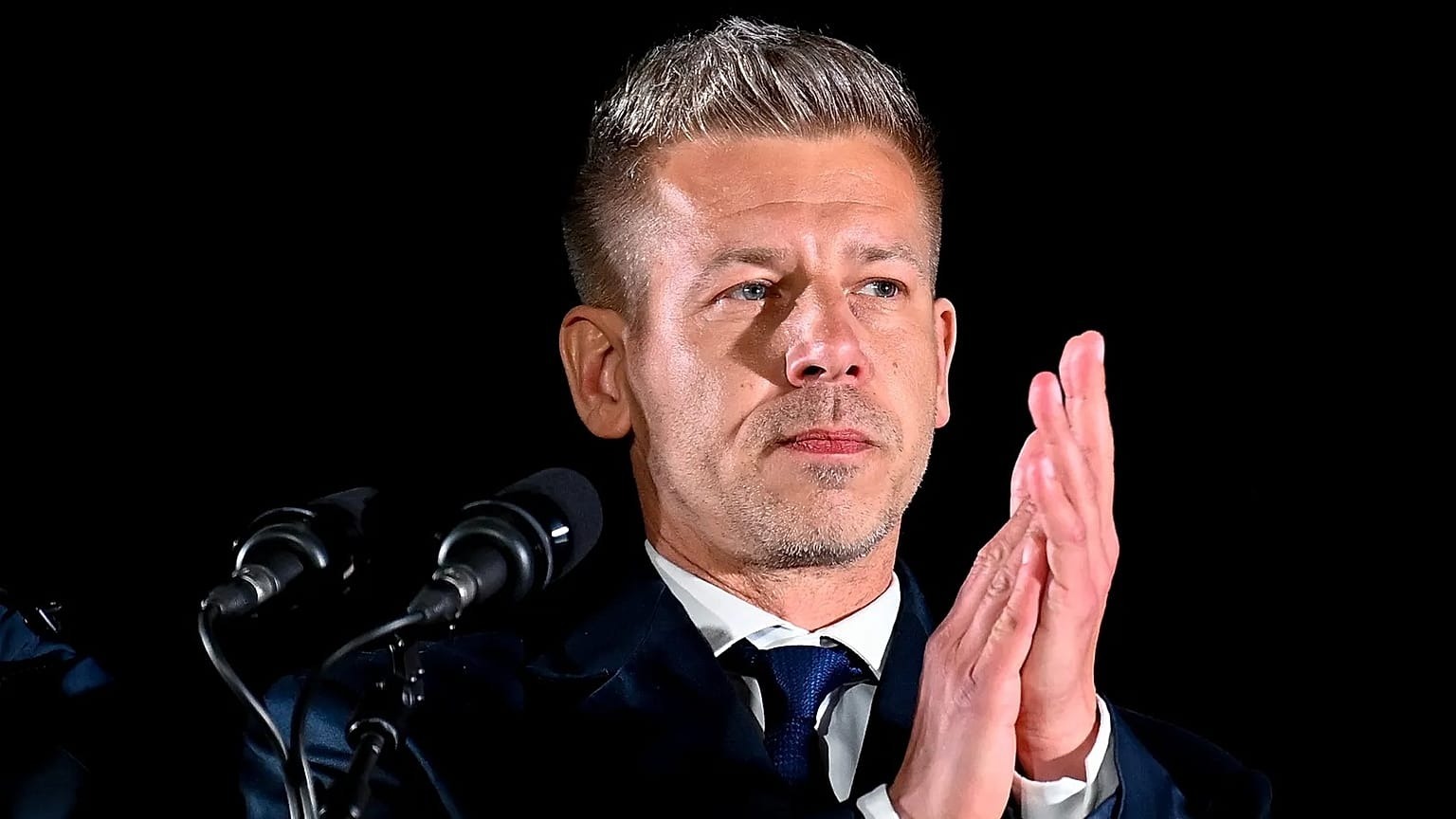
Hungary’s newly elected Prime Minister Péter Magyar has pledged to block all illegal migration, reject European Union quotas, and challenge Brussels’ punitive fines, signaling a highly restrictive border policy even as he vows to restore ties with European partners.
In his first interview with the German newspaper Frankfurter Allgemeine Zeitung since taking office, Magyar outlined his administration’s strategic roadmap. He addressed the smear campaigns directed against him by the former government of Viktor Orbán, relations with the EU, migration policy, and the economic necessity of maintaining energy ties with Russia.
Reflecting on his transition to power, Magyar noted that the Orbán administration targeted him, his family, and his colleagues during a highly polarized campaign.
“I have known Viktor Orbán for a long time. What happened during the election campaign was no surprise to me, even if it might be difficult to imagine in other countries,” Magyar said. “The mudslinging campaign was not just directed at me personally, but also against my family, my colleagues, and my friends. However, those who faced each other were not Hungarians against Hungarians; it was Viktor Orbán and his vassals standing against the Hungarian nation. One of our most important campaign promises is that we will do everything we can to reunite the Hungarian nation.”
Despite running a pro-European campaign to secure victory, Magyar acknowledged fundamental disagreements with Brussels, particularly on migration. He argued that former Prime Minister Orbán’s hardline stance during the 2015 European migrant crisis was correct.
“My government will pursue an extremely strict and decisive policy regarding illegal migration,” Magyar said. “You can be as angry with Viktor Orbán as you want—and no one has criticized him more than I have—but when the migration crisis began in 2015, he was right. Many member states have now admitted they made wrong decisions at the time. In any case, we will protect our homeland, our country’s borders, and the external borders of Europe.”
“Hungary will not accept any illegal migrants”
Responding to whether Hungary would comply with newly implemented EU asylum rules, which mandate member states to conduct processing procedures at external borders, Magyar delivered a firm refusal regarding quotas and penalties.
“I can only say this: Hungary will not accept any illegal migrants. We will not pay any penalties for this either,” Magyar said. “However, we will help protect Europe’s external borders, whether in Greece, Malta, or Italy. The 2015 migration crisis must be a lesson for Europe. The most important duty of European politicians is to protect the safety of the people. I believe there are many ways to stop illegal migration without violating European Union rules. It is simply a matter of being able to negotiate.”
Magyar also dismissed the current relevance of a European Court of Justice ruling imposing a daily fine of 1 million euros on Hungary for failing to implement EU asylum procedures, arguing the decision is outdated.
“The court’s decision was made at a very different time and under a different legal framework,” Magyar said. “Today, we are in a completely different situation. This decision no longer reflects today’s reality. Today, there are many countries acting just like Hungary, yet this European Court of Justice decision does not apply to them. I find this incredibly unfair. In order to protect our borders and avoid having to pay the daily fine of 1 million euros, we will hold talks with our European partners and find a common solution.”
While acknowledging that the judicial ruling is final and cannot be appealed, Magyar described the financial burden on Hungarian citizens as unjust.
“The decision cannot be appealed. We are looking for new rules and opportunities to avoid paying the fine,” he said. “It is unfair and disproportionate that the people of Hungary must pay a fine of 1 million euros every day. Similarly, it is a great injustice that while other member states receive these funds, Hungary has been provided with no financial resources for the wire fence it constructed to protect the external border of the European Union.”
“Exclusion only makes the far-right stronger”
Magyar strongly opposed pushback from member states—particularly pressure from Germany—to transition EU foreign policy decision-making from unanimity to qualified majority voting, defending the preservation of national sovereignty.
While rejecting the confrontational rhetoric favored by Orbán toward Brussels, Magyar emphasized the importance of compromise among sovereign states.
“I served as a diplomat within the European Union for a long time, and I know very well how difficult it is to reach a consensus among 27 countries. Yet, most of the time, this is achieved,” Magyar said. “Orbán always said, ‘We must defeat Brussels.’ I do not think that is the point. The point is to understand each other, to persuade, and not to try to defeat one another. People do not want a United States of Europe; they want a European Union based on strong member states. For this reason, I do not support transitioning to a majority voting system in many areas instead of the unanimity rule at this stage. We will negotiate and find a middle ground.”
Addressing the political rise of far-right parties across Europe, particularly in France and Germany, Magyar criticized traditional political elites for being disconnected from public anxieties and relying on political moralizing.
He warned that isolating these populist movements is counterproductive.
“I do not like labels like far-right or far-left. I do not like ideological wars,” Magyar said. “People deserve more than politically correct speeches where ideological labels are slapped on one another. I have no intention of interfering in the internal affairs of other member states, and I will not do so; on this point, I differ from Orbán. However, I observe that some countries make mistakes in combating extremist parties. In many countries, politicians do not act honestly. They do not understand people’s fears and expectations, and they do not dare to talk openly about problems and face them. They use the language of political correctness and, at the end of the day, fail to grasp reality itself. These are precisely the mistakes that certain groups exploit. Excluding these people and these parties, building a wall of isolation around them, is not a solution on its own. Exclusion only makes these forces stronger. In many countries, these mistakes have been recognized, but not yet everywhere.”
Asked if this critique applied to Germany, Magyar maintained his criticism of governing establishments.
“In many countries, the political, media, and economic elites protect their own positions and do not always address the real fears and problems of the people. But the public does not forget this. That is why what we need is honesty, honesty, and once again, honesty,” he said.
On the debate over whether conservative factions in the European Parliament should cooperate with the Alternative for Germany (AfD) party, Magyar shared his perspective on the future strategy of the European People’s Party (EPP), which includes his own party, Tisza.
“In the European Parliament, political forces must always seek a majority, and grand coalitions between the center-left and center-right can function. Germany and Austria are good examples of this,” Magyar said. “However, this does not always work, and that is why the CDU/CSU and the European People’s Party, which includes my party Tisza, may have to make a decision one day. In my view, the European Conservatives and Reformists (ECR) are the natural allies of the European People’s Party. Whether they want to cooperate with the AfD is not my decision to make. However, I believe that talking to one another and listening to the other’s arguments never causes harm. What we accept from each other’s proposals is an entirely separate matter.”
“Europe will partially return to Russian energy after the war”
Defending Hungary’s decision to continue importing crude oil and natural gas from Russia despite the war in Ukraine, Magyar emphasized the country’s landlocked geography and economic constraints.
“The Hungarian people elected me as the Prime Minister of Hungary. My government’s duties include ensuring energy security, security of supply, and the lowest possible energy prices,” Magyar said. “In recent years, Hungary has become one of the poorest and most corrupt countries in the European Union. Three million people live below the poverty line. Our neighbors in the European Union must understand that Hungary is a landlocked country. We are still dependent on Russian oil, and we cannot change this overnight. We have not seen economic growth for years, and we need cheap energy to grow. Of course, we are doing everything we can to diversify our energy resources, but we cannot afford to see our companies’ competitiveness decrease further and Hungarian families’ energy poverty increase. I think Europe will partially turn back to Russian energy resources and lift sanctions when the war ends, because the competitiveness of all of Europe is at stake here. In a future state of peace, no one has an interest in maintaining a new economic and political Cold War. For this, of course, the war must first end.”
While Orbán maintained close ties with American conservative movements and received explicit support from Donald Trump, Magyar indicated that the change in leadership in Budapest would not damage relations with Washington.
“The US is Hungary’s natural ally in NATO and a highly important economic partner. What happened during the election campaign will not change this. We will maintain good relations with every American administration,” Magyar said.
Magyar criticized Orbán’s personal relationship with Russian President Vladimir Putin, arguing instead for a pragmatic, non-ideological approach to Moscow in the post-war era.
“I know the role of Russia in Hungarian history very well. I have not forgotten the years 1849 and 1956. In both periods, Russian troops bloodily suppressed the Hungarian freedom movement,” Magyar said. “But on the other hand, the reality is that geography does not change. We must accept this as it is. Therefore, we must develop pragmatic relations with Russia once the war against Ukraine ends. Nonetheless, it is extremely clear that Russia currently poses a security risk to all of Europe. It is unacceptable that people in Europe must live in fear of Russian sabotage or a Russian attack. That is why this war must end, and we must provide international security guarantees to Ukraine. However, Europe can only develop when normalcy returns, and Russia cannot have an interest in a new Cold War becoming permanent on the continent.”
“We can turn a new page with Ukraine”
Magyar pledged to end the hostile state-sponsored propaganda directed at Ukraine by the previous administration, emphasizing his respect for Ukraine’s territorial integrity and his personal involvement in humanitarian efforts.
“We want to build good relations with all our neighbors, not least because a Hungarian minority lives in each of them. This also applies to Ukraine,” Magyar said. “We have always stated that Ukraine is the victim in the Russia-Ukraine war and that Ukraine has the right to its territorial integrity. When the Russians bombed the largest children’s hospital in Kyiv in the summer of 2024, I immediately went to Kyiv with our volunteers and personally delivered the humanitarian aid of the Hungarian people. Right after the attack, we set off in a 30-year-old Ford Transit and reached Kyiv within 20 hours under air raids and missile bombardments. I did not see any other European politician at that bombed hospital. We are currently holding talks with Ukraine at a technical level, and we are working to reach an agreement within a few days to restore and guarantee the language, education, and cultural rights of the 100,000 Hungarians living in Ukraine. Today, we need to clarify certain matters with Ukraine regarding our minority in that country, and I hope we will achieve this in the coming days. Ethnic Hungarians there currently do not have the opportunity to use their mother tongue in their relations with official authorities. However, if we resolve these issues on the basis of mutual interest, we can turn a new page.”
Magyar cautioned that future security guarantees for Ukraine must be concrete and enforceable, unlike previous international agreements.
“In 1994, the famous Budapest Memorandum was signed, in which the US and other major powers guaranteed Ukraine’s independence and integrity. However, these promises were not kept, because empty slogans are of little use,” Magyar said. “Right now, everything is at stake in Ukraine. A large number of people are dying, and it is possible that this country will lose part of its territory. Therefore, Ukraine needs real, enforceable international guarantees.”
However, the Prime Minister reiterated that Hungary would remain militarily uninvolved in the conflict, stating that arms shipments do not constitute a genuine security guarantee.
“I do not believe that weapons are a security guarantee. Security guarantees can only be provided by the international community,” the Hungarian leader concluded. “Hungary cannot play a decisive role here; this is the work of the major powers. We can provide diplomatic and humanitarian aid, and Hungary can also provide a suitable ground for negotiations.”







The Trump administration pressured several countries to withdraw their support for a leading European conference on disinformation.
Canada, Lithuania, and the European External Action Service (EEAS) subsequently complied.
Held on Wednesday and Thursday, the #Disinfo2026 conference serves as the annual gathering of Europe’s anti-disinformation community, bringing together hundreds of researchers, journalists, technology specialists, and policymakers at a hotel in Vilnius, Lithuania.
The conference is organised by EU DisinfoLab, an independent non-profit organisation based in Brussels.
A few days before the conference, the logos of its main sponsors: the Lithuanian Ministry of Foreign Affairs, the European External Action Service (EEAS), and Global Affairs Canada, were removed from the website.
Photographs of the event shared with The Guardian also show white stickers affixed over these organisations’ logos printed on official conference materials.
This appears to indicate that the logos were removed from the programme in haste.
Three people familiar with the matter, including European officials, confirmed that the US Department of State contacted several governments regarding their support for the conference.
Internal US Department of State documents obtained by The Guardian also reveal that US officials thanked Lithuania for “taking US concerns seriously”.
The document notes that Washington was “grateful” that Lithuania found the organisation of a panel describing the US as a foreign information threat “reprehensible and baffling”, and welcomed its decision to limit participation in the conference.
According to information obtained by The Guardian, France was also contacted.
The panel, titled “The US as a FIMI threat: adapt, accept, counter” (where the acronym FIMI stands for “foreign information manipulation and interference”), was held on Wednesday.
The panel addressed how Europe’s disinformation community could regain resilience without Washington, and appears to mark the first time the conference raised the idea that the US could be a disinformation actor in Europe.
According to sources and internal documents, the Department of State focused specifically on this panel, which featured three American speakers, including a former CIA officer.
According to a person briefed on the discussions, the source of other correspondence appeared to be the office of Sarah B. Rogers, Under Secretary of State for Public Diplomacy and Public Affairs.
In their statements, Lithuania, Canada, and the EU noted that the conference programme did not align with their official views regarding the US role in disinformation.
Yet this programme had been drawn up months before they withdrew their support, dating back to June.
In a statement, the Lithuanian Ministry of Foreign Affairs said: “Lithuania cancelled its participation in the ‘Disinfo 2026’ conference because parts of the conference programme diverged from the government’s official position.”
Samantha Lafleur, a spokesperson for Global Affairs Canada (GAC), said: “GAC carefully reviews participation in and sponsorship of external events on a case-by-case basis. Following changes to the framing of several panel discussions, GAC decided to review its participation in those sessions at the EU DisinfoLab 2026 conference,” adding that Canadian officials still attended the conference.
An EU spokesperson confirmed that the European External Action Service decided to withdraw its support for the conference because “the organisers chose to frame some discussions in a way that did not align with official EU positions.”
According to information obtained by The Guardian, EU officials disagreed with describing the US as a disinformation actor.
Despite withdrawing its name as an official backer, the EU continues to provide funding for the conference.
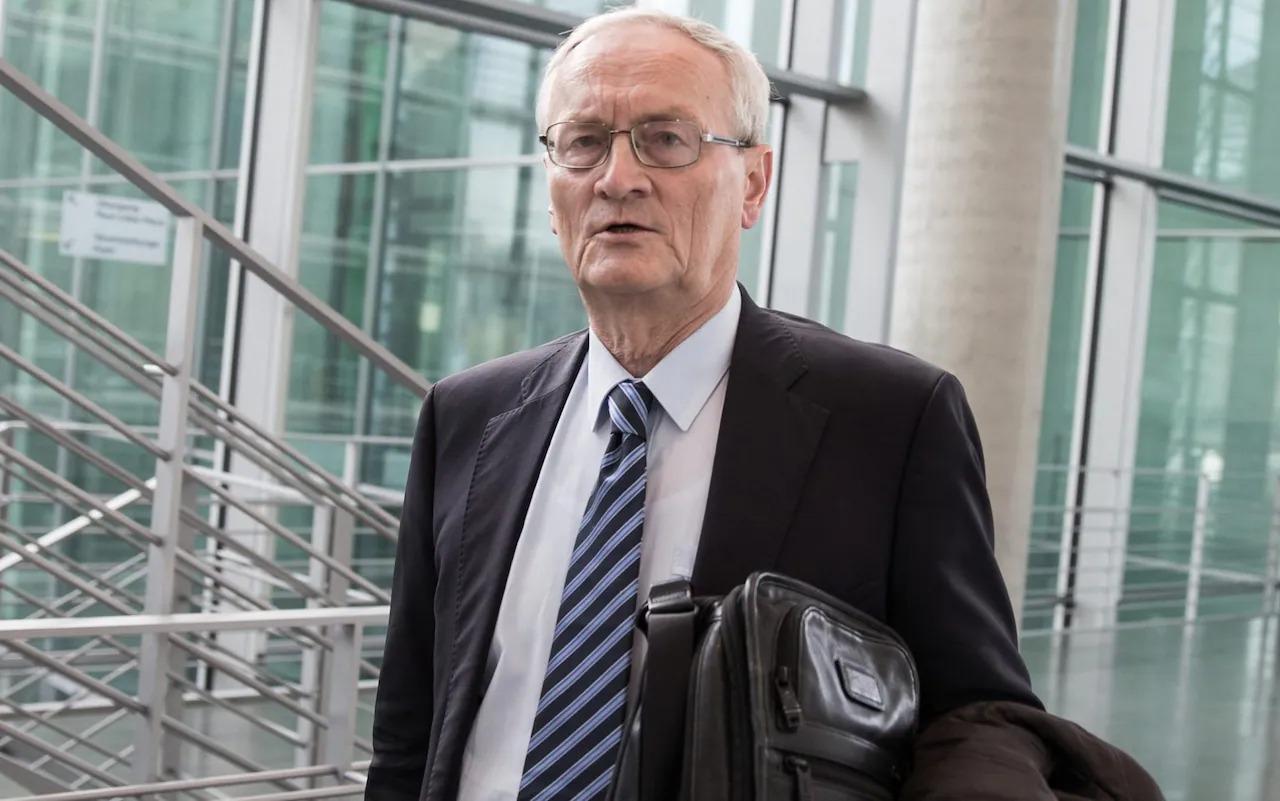
British intelligence agencies, led by MI6, are investigating whether their confidential data or spies were compromised in the biggest espionage scandal in modern German history.
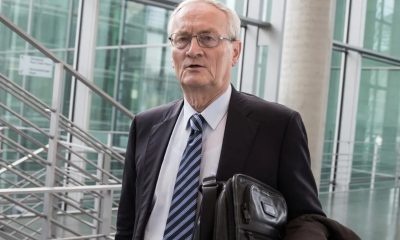
August Hanning, the former head of Germany’s foreign intelligence service, the BND, along with a current senior official at the agency identified only as Manfred D, was detained on Tuesday on suspicion of espionage and treason.
Hanning faces allegations that he unlawfully amassed thousands of classified documents over a 16-year period through Manfred D and sold a portion of those secrets to a foreign power.
German security sources noted that some of the high-level information handled by the pair originated from partner intelligence agencies abroad, raising the prospect that British and American intelligence may have been leaked.
This development has brought accompanying concerns that US and British human sources operating in the field, such as active agents or informants, could have their identities exposed through the shared information.
Matthew Dunn, a former MI6 intelligence officer, said British intelligence services would meticulously review everything shared with the BND and assess the risks.
Dunn said:
“There is no doubt that there is a major internal security review going on inside MI6 right now, looking meticulously at the intelligence shared with a very trusted liaison partner and assessing whether any of that compromises MI6-related operations and people.”
Nevertheless, the former spy stated he would be “very surprised” if this situation affected the agency’s relationship with the BND, adding that he expected the two services would act cooperatively.
He explained that during intelligence sharing, the introduction of “automatic checks and balances” mechanisms, including the redaction of information relating to sources, is standard practice.
News of the scandal has shocked the Western intelligence community. Sources described the alleged breach as a major success for a foreign power, noting that it could cause serious damage to the Western intelligence-sharing alliance.
Alongside MI6 and GCHQ, multiple US agencies are also believed to be conducting a systematic internal review of all sensitive information shared with European allies during the period in question.
According to information obtained by The Telegraph, the primary focus of these agencies is understood to be protecting sources who may have been compromised due to the alleged leak.
Similar audits are likely to be conducted by all of Germany’s intelligence-sharing partners and allies.
While it remains unclear when German authorities notified their counterparts of the security breach, it is understood to have occurred prior to Tuesday’s arrests.
German media reported that the leaked information included details regarding Iran’s nuclear programme, the Russian military, and classified documents belonging to foreign partner agencies.
The statement noted that most of the documents in question contained “confidential information prepared by the federal intelligence service exclusively for internal purposes, particularly for intelligence briefings aimed at the executive branch.”
According to the prosecution, Hanning used this information in his private consulting activities.
“In one incident, Hanning used classified intelligence provided by Manfred D to prepare an analysis for an official of a foreign intelligence service,” the statement said.
Authorities have not yet determined whether this information reached its intended recipient. On Tuesday night, Der Spiegel reported that the analysis in question was prepared for the Azerbaijani intelligence service.
Azerbaijan maintains security and intelligence partnerships with Russia, Israel, Türkiye, and the US, as well as other countries.
Hanning had previously adopted a hawkish posture towards Moscow in German national security debates.
In a 2024 interview with The Telegraph, he stated that his country had been “naive” and needed to be “awakened” to the reality of a potential war:
“People don’t realise that there is a serious danger: there is sympathy for Russia, especially in East Germany and on the far left and within the far-right Alternative for Germany (AfD) party, parts of which are demanding an end to sanctions against Russia.”
According to The Insider, Hanning travelled to Russia at least seven times after leaving the BND.
The former intelligence chief made all of these trips between 2015 and 2019, frequently spending only a single day in Moscow.
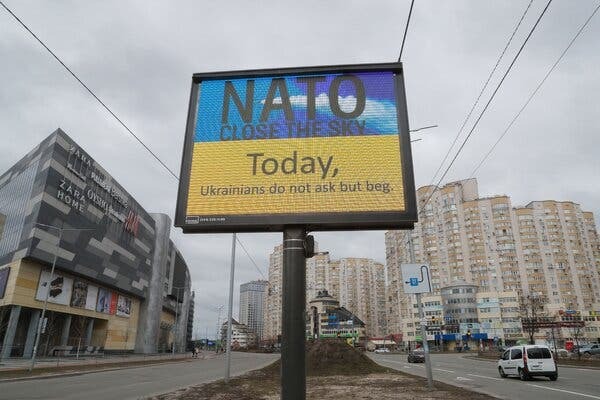
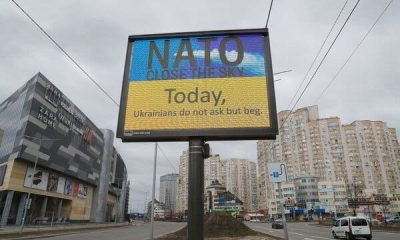
A bill proposing to enshrine neutral status in the constitution and abandon the goal of joining the North Atlantic Treaty Organisation (NATO) has been submitted to the Ukrainian parliament.
According to a report by the Strana portal, the proposal was introduced to the parliamentary agenda by lawmaker Anna Skorokhod.
The drafted constitutional amendment stipulates that Ukraine must not participate in military alliances and must confirm that it harbours no aggressive intentions against any state.
The text notes that neutrality status should be registered through “guaranteeing non-participation in any military alliance and confirming the absence of intent to attack any country.”
While the bill submitted by Skorokhod aims to remove the NATO goal from the constitution, it envisages maintaining constitutional guarantees for the country’s course towards full European Union (EU) membership.
NATO goal in constitution took effect in 2019
The strategic goal of EU and NATO membership enshrined in Ukraine’s constitution was adopted in February 2019, during the tenure of then-president Petro Poroshenko.
The constitutional amendments in question obliged the government to implement this course and designated the president as the guarantor of the process.
Poroshenko, who assumed the leadership of the European Solidarity party in May of that year, has led the party ever since.
Advocating Euro-Atlantic integration, Poroshenko described EU and NATO membership in a 2026 assessment as one of the country’s long-term security guarantees.
Moscow insists on neutrality condition
The Moscow administration links a potential resolution to the war in Ukraine to a series of conditions that Kyiv must fulfil.
These conditions include the withdrawal of Ukrainian troops from the Donetsk, Luhansk, Zaporizhzhia, and Kherson regions, as well as the international legal recognition of these territories, alongside Crimea and Sevastopol, as Russian soil.
Ukraine’s formal renunciation of NATO membership maintains its weight among Moscow’s primary demands.
Russian officials state that Ukraine’s neutral status must be explicitly included in future agreements.

EU and allies pull conference backing after US pressure over panel

Drone strike shuts down Yandex data centre in Russia’s Ryazan region

US and Russian figures discuss American stake in Nord Stream lines

71 EU lawmakers demand closure of Russian Houses in 15 member states

MI6 investigates potential leaks after former BND chief is detained
-
 Diplomacy1 week ago
East-West Forum in Istanbul highlights irreversible shift to multipolarity
-

 Europe1 week ago
European unions urge governments to scrap all Palantir deals
-
 Europe2 weeks ago
Emmanuel Todd says West faces collapse amid Ukraine and Iran crises
-
 Diplomacy2 weeks ago
East-West Forum in Istanbul to debate multipolarity and global order
-
 Europe1 week ago
Rome protests AfD poster depicting South Tyrol as independent state
-

 Europe1 week ago
German interior ministers drop unanimity rule to counter AfD veto
-
 Europe1 week ago
German industry stockpiles critical minerals before EU-China talks
-
 Europe1 week ago
Key European allies excluded from US-led NATO meeting in Poland
