
Middle East
Iran expands deterrence as Gulf strikes expose US munitions limits, analysts say

In an in-depth strategic assessment broadcast on the Harici digital channel’s programme “Strategic Compass”, prominent political scientist and international relations scholar Prof. Dr. Hasan Ünal and veteran journalist, author, and Middle East and Iran specialist Alptekin Dursunoğlu, who serves as the Editor-in-Chief of Yakın Doğu Haber, delivered an exhaustive analysis of recent military confrontations between the United States and the Islamic Republic of Iran, the fundamental doctrinal transformation governing Iranian military retaliation, regional air defence vulnerabilities, and shifting geopolitical balances spanning the Persian Gulf, Lebanon, and Syria.
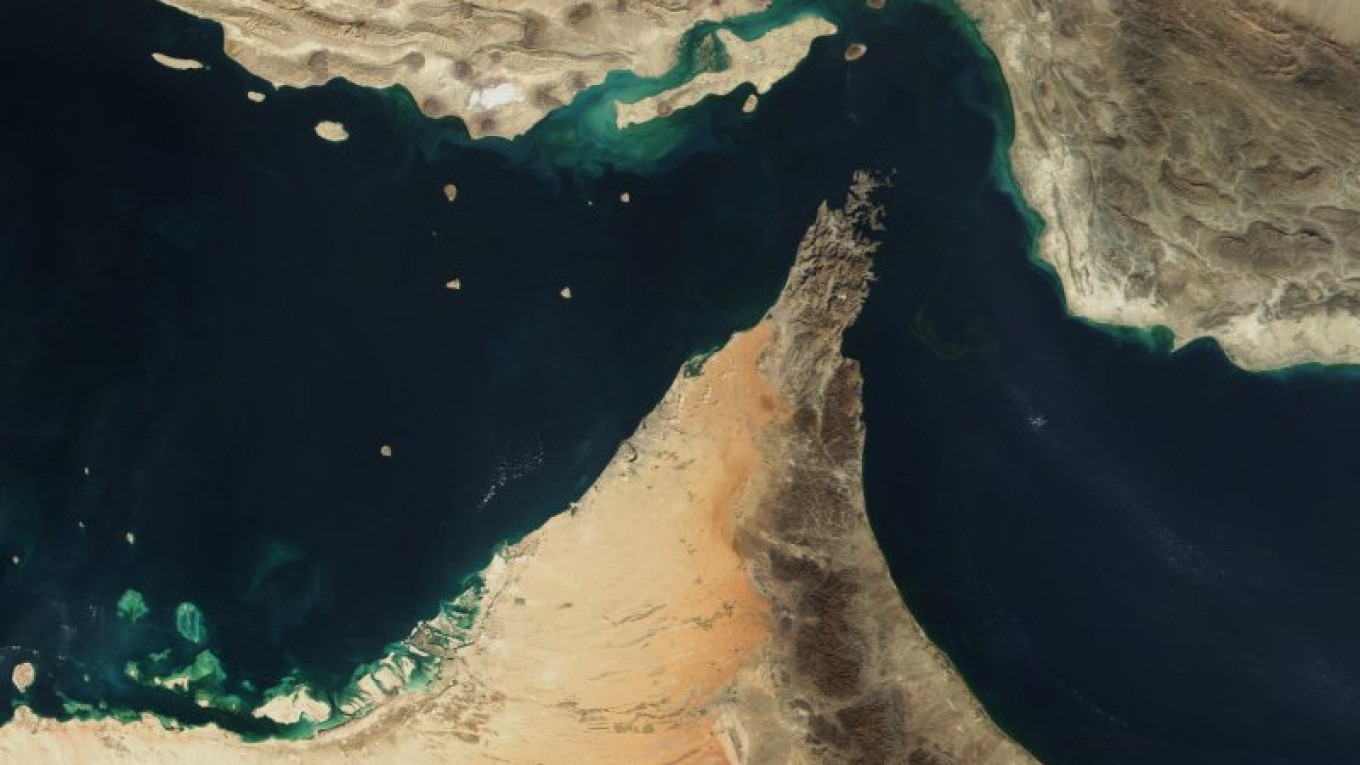
Opening the discussion, Prof. Dr. Hasan Ünal highlighted the recurring nature of US declarations of victory alongside paradoxical public statements by US President Donald Trump regarding Iranian obstinacy. Ünal outlined the immediate military flashpoint, noting that US forces opened fire on Islamic Revolutionary Guard Corps (IRGC) units stationed near Larak Island in the Strait of Hormuz under the premise that Iranian forces were deploying naval mines. Ünal observed that Iranian authorities have not denied mine-laying capabilities, as their primary objective remains total operational control over the Strait of Hormuz—reinforced by recent bilateral maritime arrangements with the Sultanate of Oman.
Ünal emphasised that, as previously analysed alongside retired Admiral Deniz Kutluk, Tehran’s strategic planning has undergone an irreversible structural change. Iran no longer passively absorbs incoming strikes, nor does it limit itself to symmetrical responses; instead, it delivers immediate, disproportionately severe counterstrikes while seeking to integrate the Gaza Strip and Yemen’s Ansar Allah (the Houthis) into an indivisible regional operational theatre.
“Iran has shifted its doctrine from equal response to escalation”
Detailing the tactical reality of the overnight strikes, Dursunoğlu confirmed that Tehran bypassed standard reciprocal proportionality to execute an escalated retaliatory strike. Following the US attack on Larak Island, Iranian forces launched salvos of precision missiles against two major military facilities in Jordan: the Muwaffaq al-Salti Air Base and the King Hussein Air Base, both identified by Tehran as staging grounds for the US operation.
Simultaneously, Iranian conventional military units and the IRGC coordinated retaliatory drone strikes against US installations in the United Arab Emirates, specifically targeting the al-Minhad Air Base, while abstaining from targeting Saudi Arabia, Qatar, Kuwait, or Bahrain.
Dursunoğlu explained that Washington and aligned media outlets, particularly Axios, had spent preceding weeks manufacturing a narrative that the Strait of Hormuz remained fully open under US dominion, with Trump going so far as to rhetorically claim the waterway as US territory following purported strikes against Iranian coastal surveillance radars at Sirik and Larak.
“Western media outlets launched a persistent information campaign claiming that commercial transit had reached 17 to 18 million barrels of crude oil per day through the southern corridor along the Omani coastline,” Dursunoğlu stated. “They claimed that commercial vessels were simply switching off their transponders, navigating under US naval escorts, and that Iran had been completely blinded after its coastal radars were hit.”
“If the strait is yours, why sneak ships at night?”
Challenging Washington’s official narrative, Dursunoğlu cited on-the-ground reporting from Iranian correspondents in the coastal zone, explaining that Iranian maritime surveillance does not depend on single, vulnerable radar stations.
“Iranian coastal monitoring relies on an integrated five-layer surveillance network,” Dursunoğlu said. “Even if an adversary strikes terrestrial radar installations, you cannot obscure the physical horizon. From Iranian territory on Larak Island, the Omani coast is plainly visible to the naked eye. Commercial oil tankers and cargo vessels are not high-speed patrol craft or evasive warships; they move slowly, and IRGC fast-attack craft continuously patrol the maritime corridors.”
Dursunoğlu pointed to Iranian television broadcasts demonstrating IRGC naval personnel issuing radio warnings to commercial vessels attempting unauthorised transit, resulting in the ships aborting their routes and reversing course.
“Washington’s claims contradict basic logic,” Dursunoğlu said. “On one hand, you claim the Strait of Hormuz is under complete US control, that Iran’s navy is destroyed, and that Iranian surveillance is blinded. On the other hand, you report that commercial vessels are conducting ship-to-ship transfers, turning off radars, and sneaking through Omani territorial waters at night under reduced capacity of 8 to 10 million barrels per day. If you truly control the waterway, why are commercial ships forced to sneak through in total secrecy? This entire narrative is designed solely to manipulate international energy markets and temporarily depress Brent crude prices.”
Addressing CENTCOM claims that US forces struck two Fajr-5 rocket launchers allegedly modified to deploy naval mines over 150-kilometre ranges, Dursunoğlu noted that Tehran acknowledged the engagement with factual transparency, reporting three military personnel killed and seven wounded. Conversely, when the IRGC reported that an oil tanker struck two naval mines and halted transit, CENTCOM and Western maritime reporting entities, including the UK Maritime Trade Operations (UKMTO), issued blanket denials to project artificial commercial safety.
“The fundamental question remains: if the Strait of Hormuz was entirely secure, why did US forces strike Larak Island in the first place?” Dursunoğlu asked. “And when the US strikes two launchers, Iran does not absorb the blow; it immediately strikes two strategic air bases in Jordan and deploys dozens of combat drones against US facilities in the United Arab Emirates.”
“The US military stock depletion prevents a wider war”
The precision strikes in Jordan once again exposed severe limitations in Western air defence architecture. Ünal observed that US-manufactured Patriot air defence batteries stationed in Jordan failed entirely to intercept incoming Iranian missiles, echoing previous operational shortcomings.
“Patriot batteries proved completely useless once again,” Ünal said. “This performance is particularly instructive at a time when certain domestic commentators in Türkiye absurdly discuss placing our S-400 systems—the undisputed premier air defence platform in the world—up for political bargaining. Iran’s latest missile iterations demonstrate superior guidance, penetration, and propulsion technologies, which the Pentagon is forced to scrutinise after every engagement. Iran has comprehensively prepared for a protracted war of attrition.”
Dursunoğlu concurred, noting that Tehran deliberately saturates regional air defence batteries by forcing the deployment of multiple Patriot interceptors against individual ballistic threats. Satellite imagery subsequently confirmed direct impacts inside the targeted Jordanian facilities, disproving claims that all incoming projectiles were neutralized.
The strategic impasse facing Washington is further compounded by acute industrial and logistical exhaustion. Ünal highlighted recent analysis published in The Wall Street Journal indicating that US military munitions stockpiles have fallen below critical thresholds, forcing the Pentagon to redeploy naval strike groups from the Far East to compensate for the USS Abraham Lincoln carrier strike group being rendered functionally combat-ineffective.
Dursunoğlu corroborated this assessment by citing statements from retired US military officials published by Military Times: “American military figures openly acknowledge that the structural damage sustained by US naval assets and support facilities in Bahrain is equivalent to losing an aircraft carrier—destroying what they long considered an unsinkable operational platform.”
Regarding regional escalation, Dursunoğlu stated: “The US administration cannot escalate this engagement into a broader conventional war. Washington lacks the ammunition, the logistical sustainment, and the operational resilience. Following strikes on Muwaffaq al-Salti, King Hussein Air Base, and al-Minhad, the US has absorbed the response and halted operations.”
Furthermore, Dursunoğlu noted that US forces have now lost approximately 25% of their total operational inventory of MQ-9 Reaper unmanned aerial vehicles along the Iranian front, representing an immense operational and financial loss of high-tier combat assets.
“Lebanon framework agreement bypassed the cabinet”
Turning to the Levant, the discussion examined the structural breakdown of Lebanese sovereignty following the November 2024 developments and the fall of Damascus. Ünal and Dursunoğlu analysed the controversial security framework signed between Beirut and Tel Aviv.
Dursunoğlu clarified that the diplomatic arrangement cannot be considered a legitimate act of state: “The so-called framework agreement was never submitted to the Lebanese Parliament, nor was it approved by the Council of Ministers. It could never pass the cabinet because ministers representing the Amal Movement and Hezbollah would exercise an immediate constitutional veto. The agreement was negotiated entirely through an ad-hoc commission established unilaterally by President Joseph Aoun and Prime Minister Nawaf Salam.”
Dursunoğlu outlined the military timeline: following the martyrdom of Hezbollah Secretary-General Sayyed Hassan Nasrallah on 27 September 2024 and the subsequent assassination of Hashem Safieddine, Israeli forces initiated a massive ground offensive on 1 October. Despite having lost its senior leadership tier, Hezbollah’s operational units held the border for 61 days until 27 November, restricting Israeli incursions to minor border fringes.
“The military equation in Lebanon was disrupted not by Israeli tactical success on the southern border, but by the collapse of Syria on 27 November,” Dursunoğlu explained. “With the fall of the Syrian state, Israeli forces occupied strategic territories in Syria equivalent in size to Gaza, seized Mount Hermon (Jabal al-Sheikh), outflanked the Bekaa Valley, and created entirely new assault corridors into Lebanon.”
Under the current framework, Dursunoğlu warned, the Lebanese government is enforcing concessions that Israel failed to achieve militarily: “The text does not demand that Israeli forces withdraw from occupied Lebanese territory; it employs the euphemism of Israeli ‘repositioning’ while demanding the unilateral disarmament of Hezbollah south of the Litani River. Meanwhile, Israeli forces systematically demolish southern border towns with explosive charges—entire communities like Naqoura have been wiped off the map under the pretext of destroying ‘Hezbollah infrastructure’, which in reality means bombing hospitals, civilian homes, and public schools.”
Dursunoğlu noted that while Israel continues to target the south and contentious zones such as the Ali Taher hills, it refrains from striking Beirut’s southern suburbs (Dahiyeh) due to direct Iranian deterrence and Washington’s intervention to avoid collapsing the fragile memorandum of understanding.
“Jolani received legitimacy in exchange for servitude”
Evaluating the ongoing negotiations and leaked diplomatic documents between Tel Aviv and the newly installed administration in Damascus headed by Abu Mohammad al-Jolani, Ünal detailed Israeli demands for a 30,000-man lightly armed Syrian internal policing force, the permanent denial of Syrian airspace to sovereign air defences, the total disarmament and extradition of Palestinian factions, the resettlement and compensation of Jewish populations alongside high-level parliamentary representation, and the total prohibition of any Turkish military presence on Syrian soil.
Dursunoğlu affirmed that the operational conduct of the new Damascus authorities fully aligns with Israeli strategic prerequisites: “The transaction is straightforward: political power in exchange for geopolitical servitude. An al-Qaeda figure who once had a $10 million US bounty on his head is suddenly received by Western capitals, delisted from international terrorism registries by Marco Rubio, and congratulated by Donald Trump. This legitimacy was granted because the new administration systematically abandoned the Golan front and permitted Israeli forces to operate unhindered across Quneitra, Daraa, and Beit Jinn—just 35 kilometres from central Damascus.”
Dursunoğlu recalled that as early as 2011, figures associated with the Syrian National Council in Istanbul, such as Burhan Ghalioun, openly pledged to Western media that any successor administration would immediately sever ties with Iran, Hezbollah, and Palestinian resistance groups.
“Syria was never targeted over democratic governance,” Dursunoğlu emphasised. “It was targeted because it stood as the sole Arab state uncompromisingly rejecting the Camp David architecture and serving as an insurmountable geopolitical barrier against Israeli expansionism.”
“Syria was targeted as the barrier against Israel”
Ünal strongly criticised the historical and ongoing failures of Ankara’s Middle East policy, noting the grave strategic consequences of dismantling the Syrian state: “For years we warned that attempting to overthrow the sovereign Syrian government while engaging in empty rhetorical disputes with Israel represented an unsustainable foreign policy contradiction. Damascus served as a vital buffer state capable of standing on its own feet, defending itself against Israeli aggression with Russian and Iranian backing. By facilitating its destruction, Ankara now finds itself directly bordering Israeli military influence.”
Ünal dismissed claims that integrating the YPG into the Damascus administration represented a diplomatic victory for Türkiye, warning instead that it institutionalised the fragmentation of Syria. He further condemned the lack of strategic urgency demonstrated by Turkish diplomatic representatives in Damascus, who focus on cultural and religious antiquities while Israeli forces advance within artillery range of the Syrian capital.
Addressing the Israeli strike on the Abu al-Zuhur Air Base, Ünal and Dursunoğlu pointed out that Tel Aviv explicitly justified the attack by asserting it would never permit Türkiye to establish radar infrastructure or forward air defence systems inside Syria.
Concluding the broadcast, both analysts concurred that while the regional conflict is unlikely to escalate into a general, open-ended war due to severe US military supply limitations and Iranian retaliatory posture, a comprehensive peace remains distant. Any future regional settlement involving Gulf mediation or UAE proposals—such as initiatives referenced by Anwar Gargash—will ultimately require addressing Tehran’s financial claims, including the restitution of more than $300 billion in damages and seized sovereign assets.








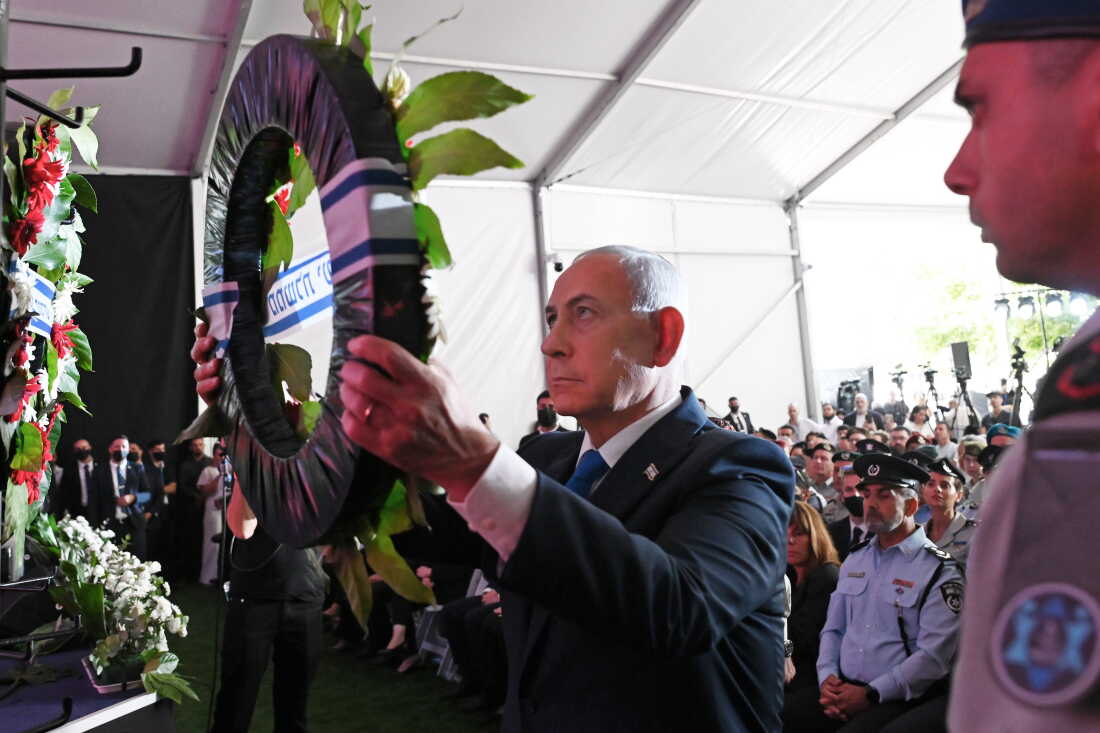
Avi Gil, the former military secretary to Israeli Prime Minister Benjamin Netanyahu, has claimed that attempts were made within the Prime Minister’s Office to alter the timestamps of official call logs from the morning of 7 October 2023.
Following these disclosures, the Israeli opposition petitioned Attorney General Gali Baharav-Miara, demanding the opening of a criminal investigation into Netanyahu and his staff.
Gil, who served as military secretary at the time of the attack, said in an interview with the Israel Hayom newspaper and Channel 12 television that Netanyahu’s chief of staff, Tzachi Braverman, attempted to alter the timing of a critical conversation held that morning.
Arguing that the initiative formed part of a “criminal pattern of behaviour”, Gil stated that he had remained silent until now in anticipation of a state commission of inquiry, but noted that what had been conveyed to the public did not reflect the truth.
Braverman is known to have been questioned and investigated by police over fraud and forgery allegations on suspicion of illegally tampering with official protocols.
Claim that official call time was shifted back
Gil recounted that on the morning of 7 October 2023, he received a call from the office of Shin Bet chief Ronen Bar at 06:12, and during a conversation with Bar over a secure line at 06:17, he was informed that SIM cards had been activated in Gaza and that Hamas operatives had moved underground.
Stating that he first telephoned Netanyahu at 06:29 to wake him, Gil noted that he informed the Prime Minister that Hamas had launched a surprise attack and that he was continuing to gather information.
Gil stated that during a second telephone call at 06:40, he conveyed to Netanyahu the message: “We are at war.”
The former military secretary said that months later, in January, a stenographer approached him and disclosed that Braverman had asked her to alter the time of the second conversation in the official records from 06:40 to 06:29.
Gil noted that this step may have been intended to create the impression that Netanyahu had been issuing instructions from the very first moment of the attack, or to lay the groundwork for the thesis that intelligence had been withheld from the Prime Minister by fostering the perception that the information conveyed in the second call was already known during the first.
Stating that he noticed Netanyahu’s team collecting documents in an unusual manner two weeks after the events began, Gil said that, suspecting minutes were being falsified, he approached Attorney General Baharav-Miara and requested clarification of the rules. Gil pointed out that any prospective commission of inquiry should not content itself with written records alone and must examine the original audio recordings.
Responding to a question regarding allegations that Egypt had issued a warning prior to the attack, Gil stated that he had no knowledge of such a message, but noted that an Egyptian intelligence aircraft had landed in Israel in late September and remained for more than an hour.
Remarking that no aircraft arrives without reason, Gil suggested that the officials who met the delegation or received the message were continuing to conceal it.
Gil also asserted that the security documentation Netanyahu submitted to the state comptroller was incomplete, noting that the document did not reflect the whole truth.
Likud rejects claims: “Gil did not wake PM in time”
The ruling Likud Party rejected the allegations, stating that the claims were politically motivated propaganda targeting Netanyahu and the party.
In a post on his social media account, Netanyahu argued that the opposition’s campaign of lies could not alter the truth.
Likud’s statement alleged that Gil was attempting to cover up his own negligence, claiming that despite an alert message received from the military secretariat’s intelligence officer at 03:55 on the morning of 7 October, Gil took no action and failed to wake the Prime Minister in time.
The party maintained that had Netanyahu been informed in time, developments would have unfolded differently.
Opposition levels treason accusations
Opposition parties, meanwhile, called for legal steps against Netanyahu and his team to be accelerated following the statements.
The Yashar Party, led by Gadi Eisenkot, cited Ronen Bergman’s investigation in Yedioth Ahronoth alongside Gil’s statements to call on the Attorney General to open a criminal probe. The party accused Netanyahu of concealing critical assessments regarding the strengthening of Hamas and its ties to the Iranian axis from the state comptroller.
Yisrael Beiteinu leader Avigdor Liberman said Attorney General Baharav-Miara must immediately launch an investigation into Netanyahu and his aides on allegations of treason and conspiracy.
Liberman also called on the Chief of the General Staff to block attempts to use the military for political ends.
The Democrats Party leader, Yair Golan, described Gil’s testimony as historic, noting that responsibility for the events in which 1,200 people were killed and 251 taken hostage could not be concealed.
Golan demanded that all original audio recordings and documents within the Prime Minister’s Office be placed under immediate protective custody.
The leadership of the October 7 Council also stated that Gil’s remarks refuted the government’s arguments that it was unaware of the situation prior to the attack.
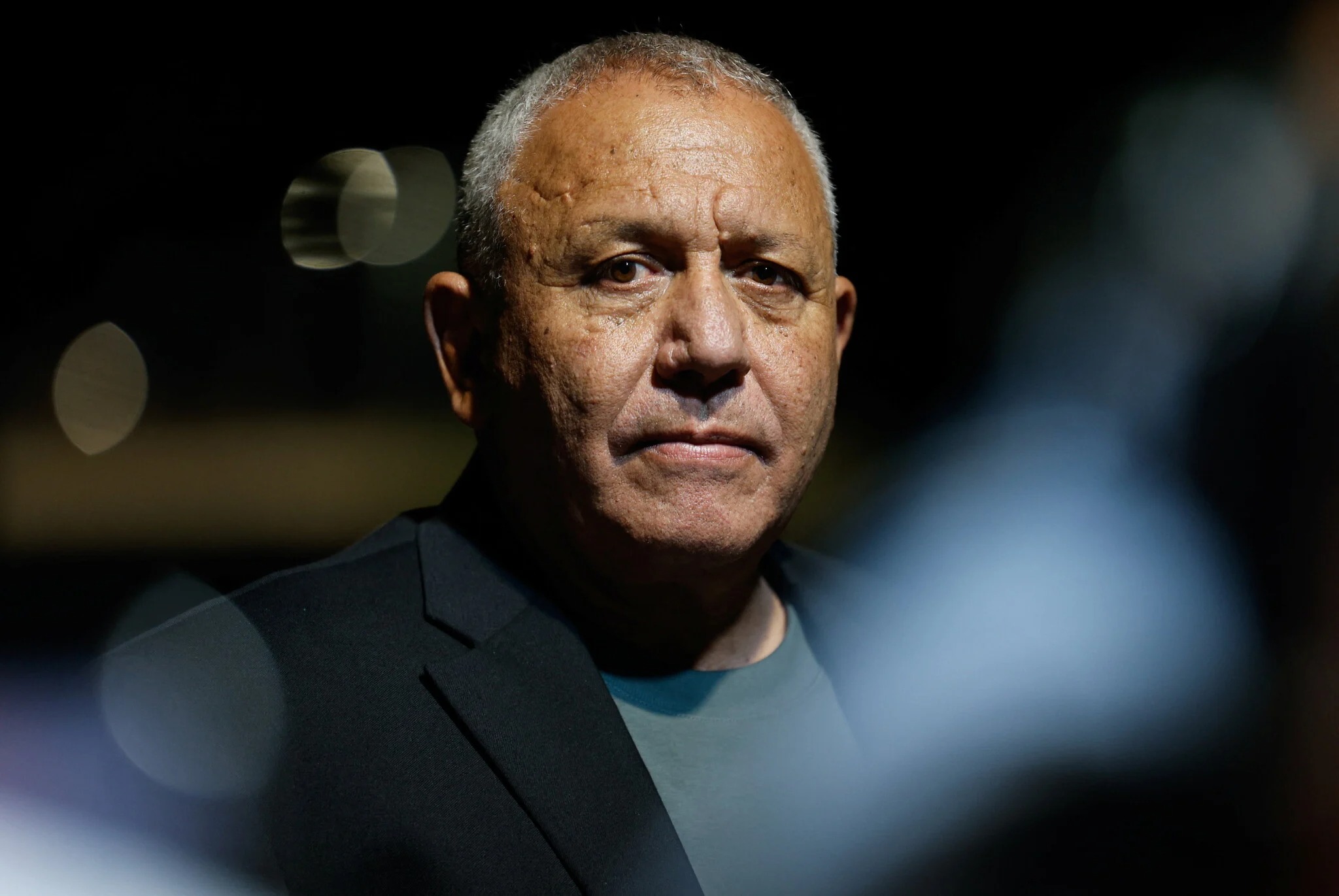
Gadi Eisenkot, Benjamin Netanyahu’s fiercest challenger in this month’s elections, has conditioned any agreement with Syria on the complete withdrawal of Turkish and Russian forces.
In an extensive interview with The Times of Israel (ToI), the leader of the Yashar Party and former chief of staff said it was necessary to take advantage of the “fluid situation” in Syria.
Contending that Syria’s transitional leader, Ahmed al-Sharaa, is “originally a very extreme person, an ISIS member,” Eisenkot remarked: “I have no illusions about him; together with the Americans operating in Syria, I killed many people from his organisation.”
Nevertheless, the opposition leader emphasised that a crucial question must be posed:
“Is there an opportunity to take the 1974 Kissinger interim agreements and significantly upgrade them, with tight security arrangements that will ultimately bring about the withdrawal of foreign forces from Syria?”
Asked by the reporter whether this included Israel withdrawing from Mount Hermon and key strategic positions in Syria, Eisenkot replied:
“The fundamental condition is the complete expulsion of the Turks and the Russians from the area. As for Mount Hermon and the relevant security arrangements, these must be negotiated.”
Arguing that Israel must speak from a “position of strength” backed by “unshakeable American guarantees,” Eisenkot added: “There must be an American protective umbrella, oversight, and commitment that will enable Israel to take calculated risks.”
Pointing to the “extremely problematic situation” created by Netanyahu over the past three years, the Yashar leader described it as an “ever-widening and dangerous gap between American interests in the Middle East and Israel’s interests.”
Noting that Israel shares “deep common interests” with the US, Eisenkot listed them as: “maintaining stability in the Middle East, strengthening the moderate Sunni camp, weakening the radical Shiite axis, weakening the fundamentalist Sunni axis, and subsequently achieving economic prosperity in the region.”
Stating that a “strong Israel as a strategic asset” for the Middle East is also an asset for the US, the Israeli politician emphasised his support for moving towards the establishment of a “NATO of Sunni states.” He stressed that Israel could make major contributions in early-warning intelligence and defence systems, adding:
“We have proven this capability. Today, there are Arab countries in the Gulf that quietly receive Israeli protection. I also connect this to the broader peace effort that Israeli leaders have unfortunately stopped talking about. We want peace.”
Within this framework, Eisenkot noted the necessity of strengthening already signed peace treaties: “These must never be taken for granted, as there is also deep concern that these agreements could slide backwards. Therefore, we must strengthen our relations with Egypt, Jordan, and the signatory countries of the Abraham Accords, and actively involve other countries in the process. I believe there may also be an opportunity regarding Lebanon.”
Contending that Netanyahu’s “blatant foolishness and dreadful political-strategic judgment” had dragged Israel to rock bottom, the opposition leader pointed out that 12 countries are currently waiting to impose sanctions on Israel.
“Even the Americans have begun considering the possibility of imposing sanctions on official Israeli actors in Judea and Samaria [the West Bank],” Eisenkot said.
Noting that the steps he would take in the West Bank would not be a political gesture aimed at bringing Saudi Arabia into the Abraham Accords, but would be done “entirely in Israel’s interests,” Eisenkot said he would improve security conditions in the region, prevent the burning of Palestinian homes and villages by extremist Jewish settlers, and intervene with an “iron fist” against anyone acting outside the law.
“That is exactly how I acted throughout my military service. [Those attacks] did not happen when I was Chief of Staff,” Eisenkot said, referring to assaults by illegal Jewish settlers on Palestinian villages in the West Bank.
The Yashar leader argued that anyone seeking to establish full sovereignty over the West Bank and incorporate another 2.8 million Palestinians into Israel is “endangering the Zionist project and the Jewish demographic majority.”
Addressing Netanyahu’s judicial overhaul, Eisenkot said: “Anyone who seeks to weaken the Supreme Court and crush the judiciary is endangering democracy.”
Accusing Netanyahu of desiring “endless wars,” the opposition leader said: “We will change this through a rational government. Netanyahu’s government is pursuing an entirely irrational policy: it incites conflict solely to consolidate its domestic political base. For this single purpose, it clashes with everyone.”
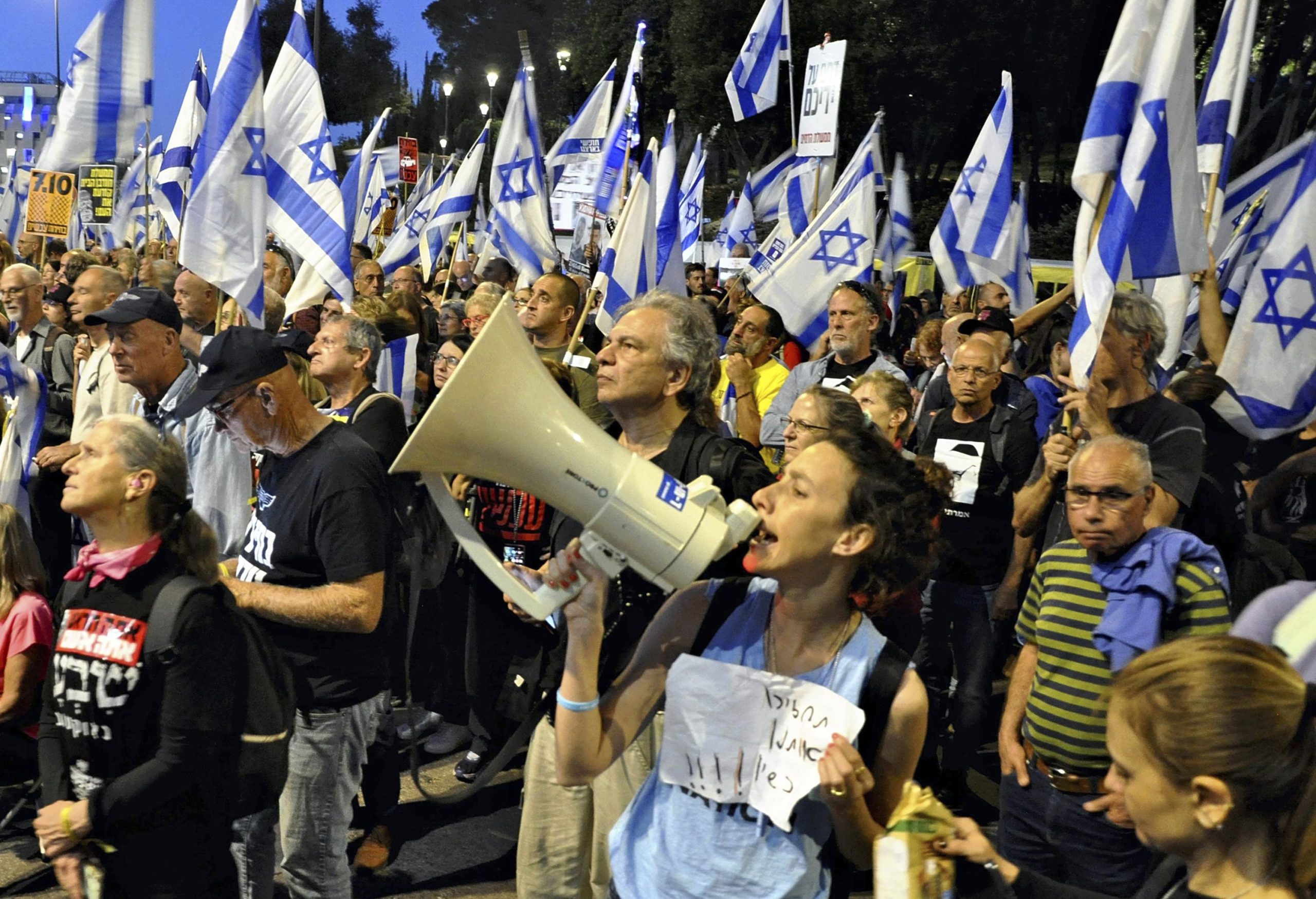
Deepening political fractures, economic strains, and societal fault lines in Israel are confronting the country with the potential for civil conflict and the breakdown of state mechanisms.
According to a report by Drop Site News citing two US sources, these findings are detailed in a classified Central Intelligence Agency (CIA) assessment drafted in August.
The report by Aída Chávez notes that the assessment, titled “Fracturing from Within”, was authored by experts within the CIA’s Red Cell unit, which is tasked with examining alternative and contrarian scenarios.
The CIA declined to answer questions regarding the assessment, which was compiled by combining open-source data with US intelligence holdings.
The report emphasises that the assessment focuses solely on Israel’s Jewish population, excluding from its analysis the country’s Palestinian citizens, who make up approximately 20% of the population.
It notes that Amnesty International and various human rights organisations characterise the practices endured by this segment of the population as part of a broad apartheid system.
The report outlines multilayered risks accumulating across the country ahead of the 27 October elections.
These factors include economic bottlenecks fuelled by surging military expenditures, heavily armed soldiers returning from protracted combat with severe psychological trauma, escalating settler violence in the occupied West Bank, and a constitutional crisis sparked by Prime Minister Benjamin Netanyahu’s efforts to retain power.
Speaking to Drop Site News, an intelligence source pointed out that the team responsible for the report comprises experts deeply familiar with the Israeli landscape, stating: “This is not an imaginary ‘what if’ scenario. Considering the upcoming elections and divisions in Israel, we must take seriously its findings that the country is only one spark away from real civil conflict.”
One of the sharpest points of tension in Israeli domestic politics involves mandatory military service exemptions granted to ultra-Orthodox men. The divide is widening between the ultra-Orthodox community, which continues to receive state subsidies while enjoying sweeping draft exemptions, and reservists being repeatedly mobilised to the front lines.
The rationale cited by religious leaders for rejecting military service is not opposition to war, but the argument that Torah study and religious life would be threatened.
A deteriorating economic landscape is also aggravating pressure on households. According to data, basic food prices, including fresh fruits and vegetables, have surged by 9.5% over the past two years, reaching record highs.
The report states that the majority of domestic opposition to Netanyahu focuses not on violence directed against Palestinians, but on how these policies are executed and on the security failures of 7 October.
Major Zionist parties remain divided over coalition strategies, while opinion polls indicate that neither the governing nor the opposition blocs can attain the 61-seat majority required to form a government.
Recalling historical eras in which traumatised, armed veterans coincided with intense political division, one consulted source cited the Freikorps units in post-First World War Germany.
The source remarked that while modern Israel is not identical to interwar Germany, certain parallels can be observed.
The CIA assessment also considers Israel’s mounting international isolation and the erosion of US support as factors that could accelerate collapse dynamics.
Israeli officials are reported to be concerned that reliance on billions of dollars in direct US military aid may prove unsustainable amid weakening political consensus.
Spring data from the Pew Research Center indicates that 60% of Americans view Israel unfavourably, up from 53% a year earlier.
The report projects that foreign technology and artificial intelligence investments could be withdrawn if the domestic crisis deepens. It underscores that such an outcome would further destabilise under-pressure economic fundamentals.
Additionally, regional countries could question the strategic value of normalisation processes, while Hamas or Hezbollah might exploit internal vulnerabilities within the country.
Intelligence sources emphasise that the assessment deliberately adopted the term “civil conflict”, warning that the compounding array of domestic pressures may ultimately prove impossible to contain through military means.

What is scale in foreign policy? How is success measured in foreign policy?

Musk boosts Republican midterm funding despite pledge to curb spending

IMF warns global economy is nearing the limits of its resilience

NATO unveils 32-nation defence strategy to counter adversaries

Germany detains two Turkish suspects over Polish Starlink arson
-

 Europe2 weeks ago
German interior ministers drop unanimity rule to counter AfD veto
-
 Europe2 weeks ago
Key European allies excluded from US-led NATO meeting in Poland
-
 Diplomacy2 weeks ago
US Ambassador Guilfoyle faces backlash in Greece over alleged remarks
-
 Diplomacy2 weeks ago
While the West breeds crises, Eurasia weaves peace and development, says Prof. Zhang Weiwei
-
 Europe2 weeks ago
EU drafts plan to curb national vetoes in radical expansion reform
-
 Middle East2 weeks ago
Netanyahu holds secret UAE talks with Saudi Arabia and Arab officials
-

 America2 weeks ago
Canada diversifies oil and gas exports away from US
-

 Diplomacy2 weeks ago
Likud deepens ties with Austria’s FPO as European right courts Israel
