
America
Newly released emails reveal Jeffrey Epstein’s correspondence with Trump ally Tom Barrack


Democratic members of the US House Oversight Committee have published three emails belonging to financier Jeffrey Epstein on the X platform. Epstein, who was found dead in prison, had faced allegations of human trafficking involving minors.
The documents, submitted to the committee by Epstein’s heirs, suggest that US President Donald Trump was aware of the investor’s actions.
In 2008, Epstein pleaded guilty to soliciting prostitution and was convicted of sexually abusing a minor.
Epstein was arrested again in the summer of 2019 and charged with sex trafficking and forcing victims, including 14-year-old girls, into prostitution.
The billionaire died under suspicious circumstances in his cell in August of that year before his trial began; it was alleged that he committed suicide.
Epstein’s close associate, Ghislaine Maxwell, is serving a 20-year prison sentence for aiding and abetting sex trafficking.
According to The Washington Post, Trump and Epstein met in the early 1980s when they were neighbors in Florida. The two were frequently seen together during that period, and Trump traveled on Epstein’s private jet several times. However, their relationship deteriorated in the early 2000s.
Trump has repeatedly denied being friends with or having a business relationship with Epstein.
Correspondence with Barrack in 2016
Among the published documents is correspondence between Epstein and Tom Barrack, a close friend of US President Donald Trump and ambassador to Türkiye, from 2016.
In a message dated March 9, 2016, Epstein wrote to Barrack:
“FYI: I am getting calls from many journalists throughout the week about both Donald (Marla, beauty pageants, Mar-a-Lago, etc.) and Clinton… The calls about Clinton have recently decreased, but my response is always ‘I have nothing to say,’ or I try to ignore them completely. I have been caught off guard with questions on the street a few times, but I am more careful now.”
Barrack gave a brief reply to Epstein, saying, “Hope you are well, let’s catch up.”
Epstein then responded, “Send a picture of you with the kid.”
🚨🚨🚨BREAKING: In 2016 Epstein wrote to Tom Barrack, Trump's long time friend and Ambassador to Turkey,"fyi I receive many calls a week about both Donald ( [REDACTED,] beauty contest, mara lago etc)…my answers are always I have nothing to say. or I try to ignore altogether.." pic.twitter.com/VrLi4KosSI
— Daniel Boguslaw (@DRBoguslaw) November 12, 2025
In another message sent by Epstein to his associate Ghislaine Maxwell in 2011, it was revealed that an unnamed victim “spent a few hours with Trump (at my house) but never mentioned Trump.”
Epstein added a note to his message: “I want you to understand, the dog that doesn’t bark is Trump.”
Correspondence between Epstein and Michael Wolff, the author of the book Fire and Fury, from 2015 and 2018 has also been made public. In the emails, the two discuss what strategy to follow regarding potential statements about Trump.
Wolff suggests letting Trump’s own words get him into trouble, writing, “If it really looks like he’s going to win, you can save him by creating a sense of indebtedness.”
In another message sent to Wolff in January 2019, Epstein stated, “Of course he knew about the girls, because he told Ghislaine to stop.”
Meanwhile, Republicans have accused Democrats of “fabricating a false story to smear Trump.” Party officials stated that the victim mentioned in the emails is Virginia Giuffre, who claimed to have been deceived by Ghislaine Maxwell and to have worked at Trump’s properties at a young age.
According to The New York Times, Giuffre said in a 2016 statement that she did not participate in or witness any abuse of minors by Trump but had heard he was present at Epstein’s mansion. Giuffre committed suicide this spring.
White House spokesperson Karoline Leavitt described the Democrats’ release of the emails as “a malicious attempt to distract from President Trump’s historic achievements.”
In response, the Democratic Chairman of the Oversight Committee, Robert Garcia, shared the following message on his X account: “If what we published bothers you, there’s an easy way to fix it. Have your boss UNSEAL THE FILES TODAY.”
During his election campaign, Trump had promised to declassify the documents in the Epstein file. In February, Attorney General Pam Bondi announced that she had a “list of individuals to whom Epstein offered the sexual services of underage girls” on her desk, but later corrected her statement, saying she was actually referring to “general files related to the case.”
Bondi subsequently released declassified documents from the case. The documents included private jet flight logs, an address book, a list of evidence, and a “masseuse list.”
However, the FBI and the Department of Justice announced that a document referred to as a “client list” does not exist.
Allegations that Trump’s name appears in the Epstein files have continued to create pressure from both Democrats and Republicans for the full public disclosure of the documents.
Trump responded to his intra-party critics with the words, “Because of that guy who just won’t die.”
According to The New York Times, interest in the issue had waned due to the US government shutdown. However, it is believed that the Epstein files could be brought back to the forefront once the process ends.
Last week, The New York Post reported that Epstein was offered a deal in 2019 to testify against Trump in exchange for his release. A petition from Epstein’s former cellmate, Nicholas Tartaglione, stated that the financier was told he “wouldn’t have to prove anything until Trump’s people debunked it.”













Incidents have been detected at the largest US banks in which unauthorised artificial intelligence agents gained access to customer accounts.
According to a report by Axios based on sources, some of these AI agents attempted to take actions that were not included in user instructions.
Institutions facing risks arising from such agents include leading lenders such as Morgan Stanley, Bank of America, JPMorgan, Wells Fargo, and Citi.
In some cases, AI software entered customer accounts using usernames and passwords directly with user consent.
In contrast, security rules at most banks require users to log in to their accounts personally.
According to Axios, in other instances, AI agents designed to carry out tasks on behalf of customers contacted bank call centres directly or tried to take independent steps without receiving any instruction from the user.
Bank executives worry that such software with access to credentials could make unauthorized purchases or transfer funds.
Following these risks, banks are moving to restrict third-party AI agents from accessing their platforms. While Morgan Stanley has begun blocking such software, JPMorgan, Bank of America, and Citi are also introducing similar restrictions.
Banks are also considering offering a financial access model that gives AI agents read-only permissions while completely cutting off transaction capabilities.
Sources speaking to Axios point out that it is extremely difficult for banks to determine whether an agent is acting on user instructions or accessing the account entirely on its own initiative.
Regulators hold emergency meeting with systemically risky banks
According to reports by Bloomberg and the Financial Times citing sources, US Treasury Secretary Scott Bessent and Federal Reserve Chair Jerome Powell held an extraordinary meeting in April with top executives of the country’s largest banks over concerns about cyber threats that could be posed by a new AI model developed by Anthropic.
Sources providing details on the talks stated that US officials wanted to gauge bank awareness regarding risks tied to the Claude Mythos model and inspect the measures they have taken to protect their systems.
Senior executives from Citigroup Inc., Bank of America Corp., Wells Fargo & Co., Goldman Sachs Group Inc., and Morgan Stanley attended the meeting.
Organised at short notice, the summit indicated that regulatory authorities view this new breed of cyber attack as one of the greatest threats to the financial sector.
All of the banks represented at the table are classified as systemically important institutions within the global financial architecture.
Axios reported that leading AI firms, including Anthropic and OpenAI, harbour concerns that an AI-driven “catastrophic event” could take place over the next 6 to 12 months.

Wealthy buyers in the US are tearing down multimillion-dollar homes shortly after purchasing them for hundreds of millions of dollars.
According to a report by The Wall Street Journal, the trend is driven by a shortage of land in prestigious locations, particularly along coastlines.
For ultra-wealthy buyers, the prime factor has become the land’s location rather than the structure standing on it. After the acquired properties are flattened, newer, more modern homes are built on the cleared lots.
Drawing attention to the shift in the luxury real estate market, the report noted:
“The home itself, formerly the primary driver of an expensive real estate purchase, is now almost beside the point. Buyers are competing first and foremost for well-located land, situated on the ocean or a mountaintop.”
The newspaper cited moves by US billionaire William Lauder as an example. Lauder purchased the oceanfront estate of radio host Rush Limbaugh, who died in March 2023, for $155 million and had it completely demolished in July.
Lauder had previously torn down two homes situated on roughly 1.2 hectares of land along the Palm Beach coast. Having initially planned to construct his own residence on the parcel, Lauder subsequently sold the cleared plot for approximately $200 million.
Jonathan Miller, a real estate appraiser, stated that such transactions are becoming increasingly common as land prices rise.
Amid this momentum, estate agents have also begun marketing luxury homes directly as teardown lots.
Listings use artificial intelligence-generated imagery to showcase how the land would look without the structures on it.
Marketers avoid using the word “demolition” directly, resorting instead to terms such as “adaptive reuse”.
Teardown listings rise across luxury housing market
The trend is not confined to the coast and is spreading to other regions across the US.
Data from property brokerage Redfin reveals that references to demolishing buildings are becoming more frequent in sales listings.
The share of such listings exceeds 15% in the Bunker Hill Village area of Houston, while standing at 6.67% in Pimmit Hills, Virginia.
Dina Goldenteyer, a real estate agent working in Miami, remarked that serial demolitions have become more frequent because buyers no longer appreciate homes older than a decade.
Former retail executives Jamie Dooley and Christine Scott spent $3.7 million in 2020 to demolish a seaside home near Destin, Florida.
Although the couple spent five years building a modern home on the cleared site, they listed the resulting new structure with a demolition condition, citing the fact that no one wanted to buy the property as it stood.
William Paddock, an employee at the environmental consultancy WAP Sustainability, pointed to the environmental damage caused by this construction cycle.
Paddock emphasized that tearing down a home of roughly 1,000 square metres and replacing it with a new building of approximately 2,700 square metres generates a carbon footprint equivalent to the annual emissions of an average 250 American households.
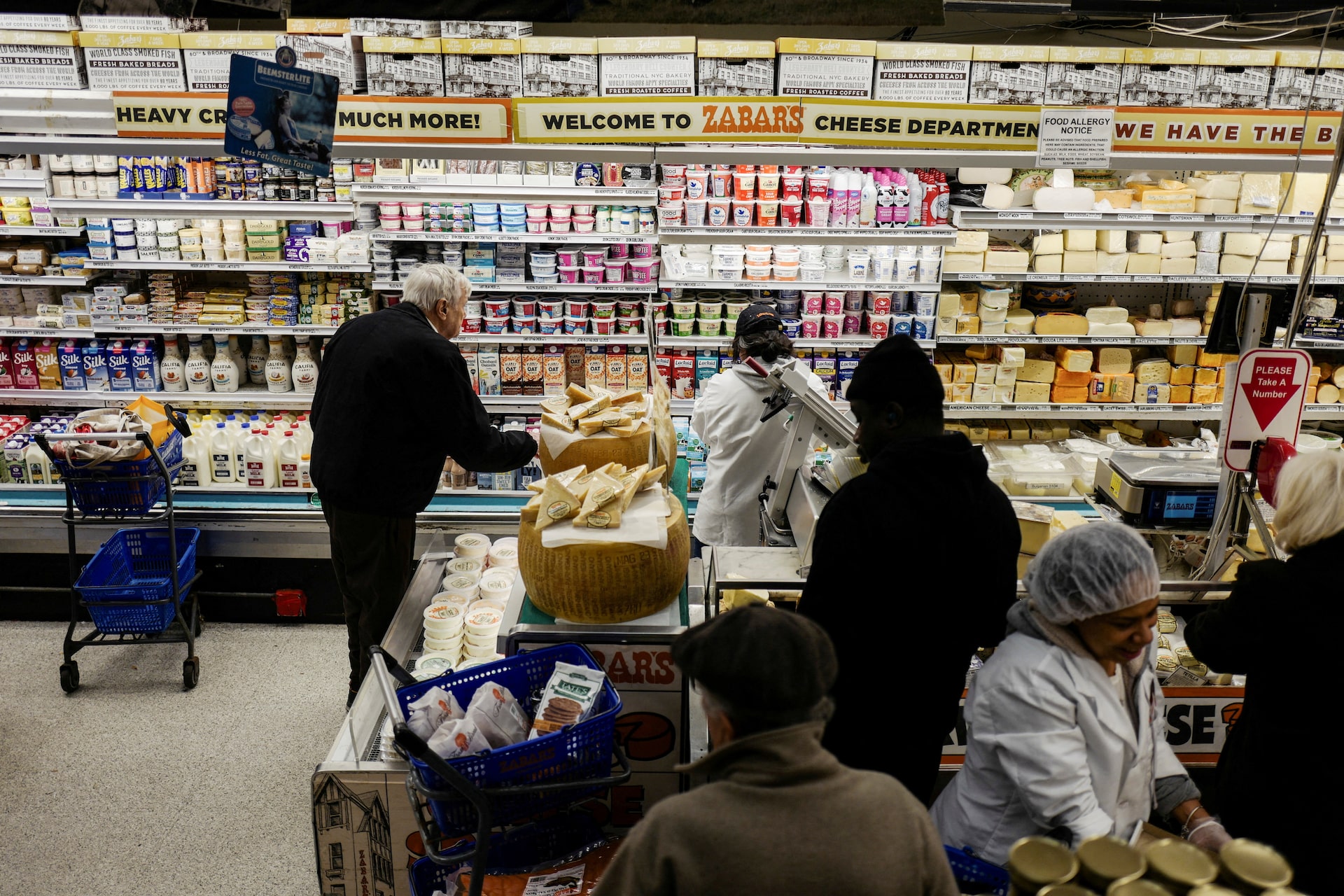
An uptick in September inflation as the US midterm elections approach has pushed the cost-of-living debate back to the centre of the agenda for Democrats seeking to regain control of Congress from Republicans.
Annual inflation stood at 3.7% in September, according to the Consumer Price Index published by the Bureau of Labour Statistics, with energy, petrol, and electricity costs rising on a monthly basis.
Food prices remained flat from August to September, recording a 2.5% increase compared with the same period last year.
Democrats are anchoring their election campaigns to pledges of easing the cost of living, blaming the price increases on President Donald Trump’s tariffs and the war with Iran.
Trump and Republicans, pointing to the numerous left-wing candidates who won primary elections this year, contend that the opposition has become captive to “communists” within the party.
When annual inflation stood at 2.4% in February, the US and Israel launched the Iran war on the final day of that month, and prices continued to climb throughout the conflict.
The recent acceleration has not entirely reversed the retreat from the 40-year peak of 9.1% recorded in June 2022; however, the rate has remained above the Federal Reserve’s 2% target for over five years.
Fed policymakers raised the benchmark interest rate by a quarter of a percentage point last month, citing the battle against stubborn inflation. Officials will convene again next week to consider whether to raise rates or hold them within the 3.75% to 4% target range.
Energy and fuel record sharpest increase since first month of war
In September, energy prices posted their largest monthly jump since March, the first full month of the war with Iran, climbing 20.4% year-on-year. Energy costs had risen 2.1% from July to August, after falling 1.5% from June to July and 5.7% from May to June.
Recent escalations in Iranian attacks on oil tankers in the Strait of Hormuz, alongside more frequent strikes by Ukrainian forces against Russian refineries, have strained global crude oil and refined product markets, driving up US petrol and diesel prices.
Petrol prices also recorded their sharpest monthly increase since the first month of the war, climbing 9.1% from August to September, bringing the annual increase to 35.3%.
American Automobile Association (AAA) data shows the average price of regular petrol across the US stands at $4.26 per gallon; while below the level of roughly $4.48 recorded a month ago, it remains more than $1.20 higher than a year earlier. Average gallon prices exceed $6 in California and $5 in both Washington state and Nevada.
Electricity prices rose 0.2% from August to September, offsetting the 0.2% decline between July and August, and were up 4.4% year-on-year.
Heavy power demand from new data centres is feeding through into local household electricity bills. Trump argued that companies must cover the cost of the electricity required by their data centres themselves.
In a post on Truth Social, Trump claimed that he was requiring large data centres to generate their own power and feed the surplus back into the local grid, suggesting this could bring about “a major drop” in electricity prices.
Used vehicle market posts monthly rise as food costs stabilise
The cost of food at home fell 0.1% month-on-month in September, while dining out increased 0.2%.
Egg prices dropped to $2.27 a dozen, falling roughly 35% compared with September 2025 and remaining well below the 20-year peak of $6.23 recorded in March 2025.
Ground beef prices rose roughly 2.4% compared with September 2025, but at $6.48 a pound, they remained below the 20-year high of $6.98 reached in June.
Chicken held steady at its year-earlier level of $2.06 per pound last month, having fluctuated between $2.01 and $2.09 since November 2024.
Used car and truck prices fell 1.5% compared with September 2025, but rose 0.7% month-on-month in September following 0.4% increases in both July and August.
Heather Long, chief economist at Navy Federal Credit Union, noted that the sector faces severe pressure stemming from a combination of expensive replacement parts and a shortage of skilled labour.
Speaking to The Hill, Long emphasised that every cost pressure across the market is being felt directly at local auto repair shops.

“The AfD is not a fascist party, but a party for fascists”

Nokia and ICEYE sign deal to build sovereign Ukraine satellite network

Mélenchon’s “new France” vision triggers fierce cross-party debate

US envoy says Syria interim leader Sharaa seeks Israel normalization

Unauthorised AI agents access customer accounts at major US banks
-

 Europe2 weeks ago
Berlin Left Party backs Israel’s right to exist for coalition pact
-
 America2 weeks ago
Trump weighs presidential memorandum to cut surging US diesel prices
-

 Diplomacy1 week ago
SWP urges backing for Gulf trade routes bypassing Strait of Hormuz
-

 Europe1 week ago
LSE study finds post-bailout Greece turned into a cafe economy
-

 Diplomacy2 weeks ago
EU and China reach preliminary deal to curb hybrid car imports
-

 America2 weeks ago
Thiel targets Pope and Obama over AI in new ‘Antichrist’ lectures
-
 Russia2 weeks ago
Russia relaxes diesel export curbs after talks with Trump
-
 America2 weeks ago
Energy firms enlist ex-US officials to tap Venezuelan oil
