
Europe
Palantir CEO Alex Karp criticizes Germany over reluctance to award military contracts

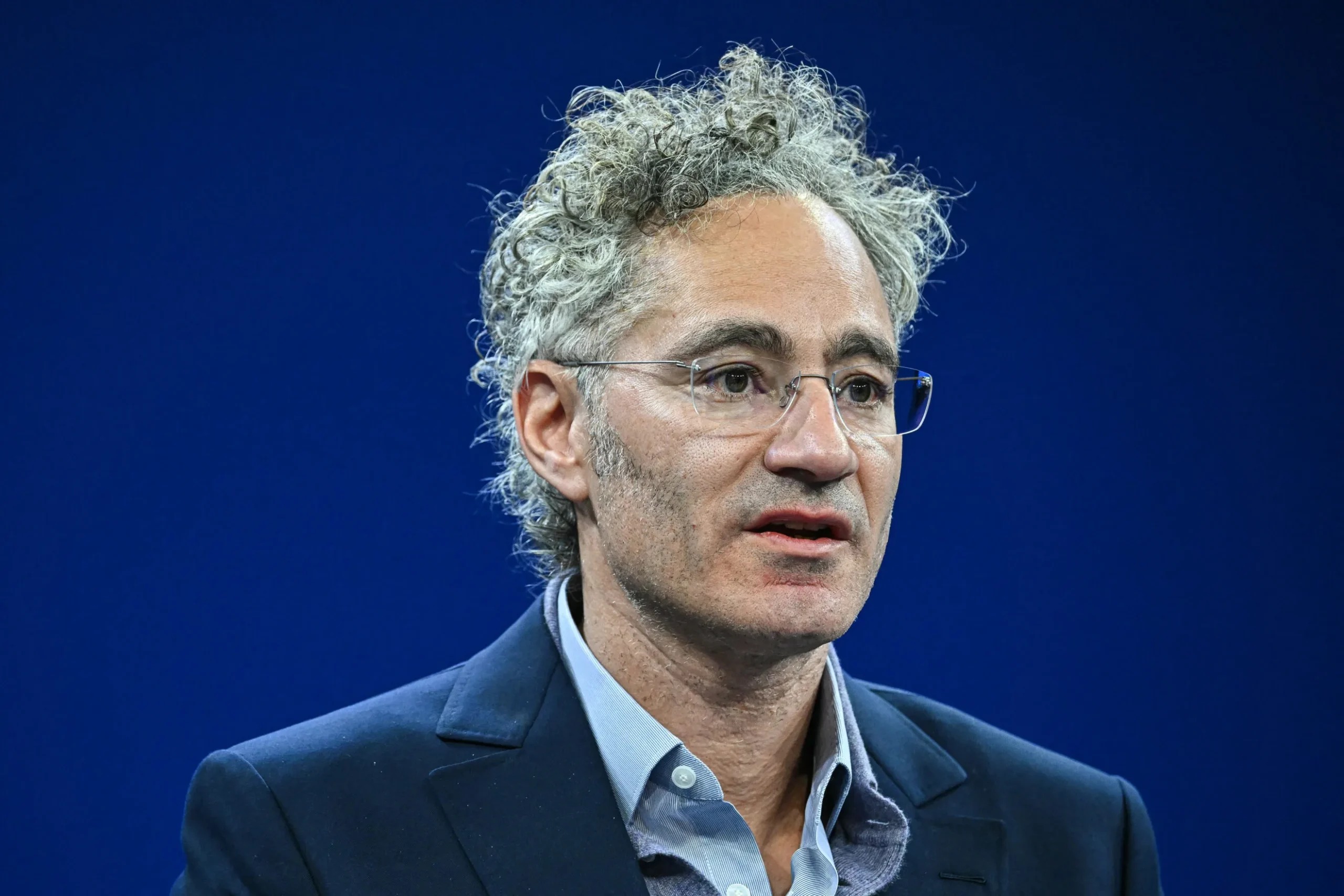
Palantir CEO Alex Karp criticized Germany after a senior Berlin official said the country did not plan to award military contracts to the US data analytics giant.
Last month, a senior military official told Handelsblatt newspaper that Germany’s armed forces did not intend to award contracts to Palantir.
German Digital Minister Karsten Wildberger also told POLITICO that, in the long term, he wanted a European alternative to the American data analytics company.
In an interview with Bild newspaper, Karp said he was surprised by the stance of the German Armed Forces, or Bundeswehr, and defended the widespread use of his company’s defense technologies.
“On every serious battlefield in the world, some components of Palantir are being used. There’s a reason for that,” the CEO said.
Karp said he understood that Germany and other major countries wanted their own autonomous systems, but added that he was surprised by German skepticism toward the company, particularly given that Palantir co-founder Peter Thiel was born in Germany.
Karp, an American entrepreneur, also studied in Germany and speaks fluent German.
“Peter and I are the leading Germanic and/or German-speaking businessmen in the world, and every other country would have found a way to embrace us,” Karp said.
“If we were French, the French would collectively force us to get French passports, speak only French, and change our name to Falantir… I don’t understand how Germany thinks it can afford this.”
Karp also argued that “at a general societal level, many of the debates sound as if people are talking about witchcraft.”
The use of Palantir software has become controversial in Germany, where critics warn about risks to data protection and fundamental rights, as well as dependence on a US provider.
Palantir provides a technological backbone for some of the world’s most powerful militaries and supplies software to countries including the US, Israel and Ukraine.
Karp’s interview followed a meeting in Kyiv with Ukrainian President Volodymyr Zelenskiy and Minister Mykhailo Fedorov.
“They deserve enormous credit for building one of the world’s most important military defense systems,” Karp said.
Karp described Palantir’s products as “an operating system for war” and added:
“Just as you have an operating system for a company, for anything, or even for a car, they have one for the modern battlefield.”
Arguing that Ukraine managed the battlefield “the way a technology company manages its customers,” Karp said the key questions were simply different.
“How many Russian citizens are dying per square kilometer? And why? How? What are the payloads? What worked and what didn’t?”
Karp said he was proud of his company’s contribution to Ukraine’s defense and argued that other European countries should benefit from that expertise by purchasing proven Ukrainian technologies.
“What products is Europe going to buy to defend itself? Products tested in PowerPoint?… Or products that stopped a major military power on their own?”
Karp said Palantir did not have access to Ukrainian data through the military’s use of its software.
“When they are conducting air defense or targeting operations, almost all the code is written by them and controlled by them. We have no access,” he said.
“In that sense, in my view, there is no sovereignty issue. I cannot tell you what they are doing or how it is going, and I cannot stop them from doing it. They control it.”
Karp also criticized the way Europe was spending its massive defense budget.
“When I look at spending in Europe, I’m really worried because a lot of distribution is being done by people who have no idea how to spend this money,” he said.
“And this will create entrenched interests for politically powerful people producing inadequate and dysfunctional technologies. Then it becomes really difficult to get rid of that.”










Ulrich Siegmund of the Alternative for Germany (AfD), who is expected to become the next state premier of Saxony-Anhalt, has stated that they do not oppose Germany’s rearmament, arguing that arms will be required during the “remigration” process.
The issue specifically concerns a factory in the Saxony-Anhalt town of Sangerhausen. Israeli defence contractor Elbit intends to establish production facilities there, though protests against the plan have been under way for some time.
The company manufactures, among other products, the Hermes combat drone, howitzers, and rocket launchers.
According to Christian Democratic Union (CDU) Mayor Torsten Schweiger, neither drones nor ammunition will be produced in Sangerhausen.
The Sahra Wagenknecht Alliance (BSW) had previously announced its opposition to the state becoming a defence industry hub for Israel.
Following a parliamentary group meeting, Siegmund was asked directly at a press conference about the proposed investment project.
Siegmund replied:
“Our position is very clear. We do not condemn the production of military equipment in general, because during future repatriation and deportation campaigns for migrants, we will naturally require the appropriate tools. This also applies to internal security, our own stability, and national defence. We are aware that such things do not fall from the sky.”
Siegmund also argued that a distinction exists between sending military equipment to foreign wars financed by German taxpayers and the approach they advocate.
AfD has not yet taken a final decision
Siegmund explained that the AfD is monitoring the situation in Sangerhausen and remains in contact with local political representatives.
At the same time, he noted that the economic aspects of a potential factory site should not be ignored. The party also plans to examine closely what is produced in Sangerhausen and under what conditions.
“We want to examine closely: what is produced there, and under what conditions? And do we face the risk of being drawn into foreign conflicts as a result? If so, we view this situation with great scepticism,” Siegmund said.
Siegmund also pointed to conversations he had with citizens during the election campaign. Many people, including local residents in Sangerhausen, welcomed the AfD’s stance.
However, his party has not yet reached a final decision regarding the prospective facility. “A valid decision has not yet been taken because we still do not possess all the information,” the AfD politician said.
Green light for militarisation on grounds of remigration and security
Siegmund’s remarks indicating that weapons are needed for “remigration” drew attention. The term refers to the deportation of people with an immigrant background and was coined by Austrian right-wing activist Martin Sellner. The AfD has adopted the phrase over the past few years.
Years ago, Thuringia AfD leader Björn Höcke spoke of “well-measured cruelty” in the context of deportation procedures.
AfD politicians Kay Gottschalk and Lena Kotré attended an international “Remigration Summit” held in Portugal in late May.
There, Martin Sellner of the Identitarian movement declared their aims to secure “Europe’s ethnocultural continuity”, halt all legal or illegal immigration into Europe, and remove “millions” of non-Western immigrants from the continent.
In a video recorded alongside Sellner, Dutch activist Eva Vlaardingerbroek said: “Nobody comes in, and millions go out.”
In interviews, Kotré and Gottschalk presented the mass deportation of millions of people as a panacea for the housing market, the education system, and society.
Federal Chancellor Friedrich Merz criticised the AfD on Wednesday, stating that the concept of “remigration” amounts to nothing other than “ethnic cleansing based on skin colour and origin”.
Wagenknecht criticises “remigration”
Meanwhile, BSW, which decided unanimously to hold talks with the AfD in Saxony-Anhalt, has publicly announced its “red lines”.
Party founder Sahra Wagenknecht stated that she maintains clear red lines against the AfD, particularly regarding “remigration”.
In an interview with RTL and ntv, Wagenknecht said: “They will feel our strong opposition on this matter. I find it terrible that people are worried and frightened.”
Stating that it is unacceptable for “well-integrated citizens” to be affected, the BSW leader remarked: “And we will not yield on this.” She continued:
“If the AfD is truly serious about frightening people who came to our country, work here, are well integrated, pay taxes, and whose children grow up here; if they intend to tell them, ‘You do not belong here’ or convey the message, ‘We want to expel you’ [we will prevent it].”
Regarding the AfD’s election manifesto equating homosexuality with “sexual deviance”, Wagenknecht replied: “Naturally, we believe every individual should live and love as they wish, and that equality exists here, including legal equality. Anyone questioning this does not live in modern times.”
BSW does not back Siegmund for premier
Wagenknecht also dismissed claims that BSW would elect AfD candidate Ulrich Siegmund as state premier in Saxony-Anhalt, stating: “We have always made what we want very clear.”
Wagenknecht argued that Siegmund had given “completely contradictory statements regarding when he wants to be state premier and when he does not”.
“One gets the impression that he himself might feel it is not such a good idea after all,” Wagenknecht said.
The BSW founder called for a “respected figure across party lines” upon whom everyone could agree and who could “bring this country a little closer together”.

Chinese brands are rapidly gaining market share in Europe. Exclusive data reveals which manufacturers are suffering the most from this new competition.
According to research by Handelsblatt, Chinese brands accounted for 8.7% of new vehicle registrations from January to July, compared with only 0.6% in 2021.
Based on an analysis of figures from the data service Dataforce, this share has nearly tripled compared with 2024 alone.
Concerns are growing in industry circles that this offensive by Chinese manufacturers will continue to accelerate and that price competition in Europe will intensify.
In the first seven months, approximately 780,000 new cars belonging to Chinese brands hit European roads, a figure almost equal to sales for the whole of 2025.
According to Handelsblatt’s analysis, the manufacturers initially expanded their presence in Southern and Eastern Europe, as well as in the United Kingdom.
Equipped with the experience gained there, they are now targeting the largest, but also the most challenging, passenger car market: Germany.
With sales of nearly three million new cars a year, the German market remains in the hands of German manufacturers.
In addition, Stellantis, the multi-brand group that includes Opel and Peugeot, alongside Toyota and Korean manufacturers Hyundai and Kia, hold significant market shares. These shares are now at risk.
Albert Waas, a partner at the consultancy firm BCG, says: “As a first step, Chinese carmakers are targeting the core business of high-volume manufacturers.”
In this segment, it is easier to increase visibility on the roads more quickly. Far Eastern brands are offering affordable compact and family cars, as well as an increasing number of SUV models.
Chinese manufacturers are benefiting from the growing electric vehicle segment in Europe, but they are also taking advantage of declining customer loyalty to established brands.
Opel parent company hit hardest
The biggest loser is Stellantis. The group’s market share in Europe currently stands at 15.5%. In 2021, this rate was still close to 21%. This represents a drop of just under 155,000 units.
According to the major bank UBS, the reason for this is that Stellantis experiences “significant overlap in terms of countries and segments” with Chinese brands. “Company-specific problems” also played a role in this situation.
Stellantis’s ambitious electric vehicle plans did not yield the expected results, and numerous product recalls were carried out due to quality defects stemming from cost-cutting measures.
Ford is also struggling with new competitors, and its market share fell from 4.6% to 3%. Among German manufacturers, the core Volkswagen brand was particularly affected. Its market share has fallen from 10.7% to 9.9% since 2021.
To a lesser extent, Japanese carmakers such as Nissan and Mazda, as well as Korean manufacturers such as Hyundai and Kia, also lost market share to Chinese brands.
On the other hand, Renault’s market share remained stable at around 6%. UBS attributes this to a “strong product cycle”. The French carmaker is launching numerous new electric models, such as the Renault 5 compact car, and these models are being well received.
Because Chinese cars are cheaper and in some cases technically superior, Europeans are becoming increasingly willing to purchase car brands from the Far East.
At the same time, Chinese manufacturers are being forced to expand more aggressively abroad. In the domestic market, a destructive price war continues among more than 100 competitors, in which almost no manufacturer can make a profit.
In addition, the automotive industry has lost its importance in China’s five-year plan.
Because the US is effectively closing its doors to Chinese manufacturers, these producers are focusing primarily on Europe.
According to experts, they can charge twice as much for their vehicles in this market as they do in China.
This explains why passenger car exports from the People’s Republic of China rose by 78% in August compared with the same month last year, reaching 894,000 vehicles.
In contrast, domestic sales contracted for the eleventh consecutive month, falling by almost a quarter to 1.55 million.
A few Chinese brands dominate the market
Even when Toyota entered the European market in the 1970s and Hyundai in the 1990s, there were warnings that established manufacturers could lose market share to Asian rivals.
What is new now is that Chinese manufacturers are making progress in the electric vehicle segment and in software, areas where they are considered leaders.
They are benefiting from the rapid surge in demand for electric cars in Europe, driven by government subsidies and high fuel prices caused by the war in Iran.
According to the analysis, China’s market share in electric cars in Europe has already reached 12.6%. In 2021, this rate was only 2.1%.
Volkswagen is feeling the impact of this situation: in 2021, the Wolfsburg-based company held an approximately 14% share in the electric vehicle segment, which was significantly smaller at the time. That figure is now below 8%.
Stellantis’s market share in electric cars, meanwhile, fell from over 14% to around 10%.
Dataforce counts 19 Chinese manufacturers in Europe. However, five brands account for 83% of sales.
BYD, the world’s largest electric car manufacturer, also leads in Europe. As of the end of July, the brand’s new registrations reached 217,000, and its market share stood at 2.4%.
BYD has thus already surpassed brands such as Volvo (202,000 units), Nissan (183,000), and Tesla (178,000).
New registration figures for the Fiat (262,000), Ford (272,000), and Opel (284,000) brands are also within BYD’s reach.
MG ranks just behind BYD with 211,000 registered vehicles. Formerly British, this brand is part of the Chinese holding company SAIC.
The manufacturer Chery holds a 1.7% market share in Europe through its Jaecoo and Omoda brands.
Leapmotor is experiencing particularly strong growth. The 65,000 registrations recorded by the end of July by Stellantis’s joint venture partner represent more than double the total figure for the whole of 2025.
The reason for this is a one-off factor: nearly 40% of Leapmotor’s registrations this year came from Italy.
There, the retail price of the T03 microcar dropped from its regular price of 18,900 euros to below 5,000 euros, thanks to a manufacturer discount and a government electric vehicle incentive.
Regional differences exist across Europe
Significant regional differences exist: in Spain, Portugal, Italy, and Greece, Chinese carmakers account for 11.4% of sales.
BCG expert Waas says: “In Southern Europe, people traditionally buy more small cars, and this is a segment where Chinese manufacturers are strong.”
In the south, Stellantis suffered particularly severe losses. In 2021, this multi-brand group accounted for almost a third of new registrations in the region; that figure is now only 22.3%.
Ford fell from 4.8% to 2.7%. Other high-volume brands such as Volkswagen and Renault, as well as Japanese and Korean manufacturers, are also experiencing slight declines.
In Eastern and Northern Europe, the situation among the losers is similar. However, the extent of the Chinese manufacturers’ presence varies between these regions: while their market share in Eastern Europe is 9.5%, it stands at 7.3% in Denmark, Sweden, Norway, and Finland.
In Central Europe, the share of Chinese manufacturers is 5.1%, a figure similar to that in France, an important automotive market. In Germany, this share is currently only 4.1%.
However, compared with the 2.3% rate recorded in 2025, this represents a dynamic increase.
This situation is also likely linked to the German government’s new electric vehicle support programme, from which Chinese brands have particularly benefited.
Matthias Schmidt of his eponymous consultancy says: “Loyalty to domestic brands in Germany and France remains a structural obstacle for Chinese carmakers.”
In Germany, the market shares of domestic brands have barely changed. In France, too, buyers continue to feel a strong attachment to Renault, Peugeot, and Citroen.
Chinese manufacturers have a particularly strong presence in the United Kingdom. A quarter of all vehicle registrations by Chinese brands in Europe took place in the United Kingdom. Their market share in this country hovers just below 16%.
Chinese manufacturers are increasingly shipping their electric vehicles to the United Kingdom because, unlike the European Union, no special tariffs are applied there.
In addition, their task is easier in the United Kingdom due to the absence of large-scale domestic manufacturers.
Premium segment remains largely unaffected
In the premium segment, however, attempts by Chinese manufacturers to gain a foothold in Europe have so far ended in failure.
The European market shares of Audi, BMW, and Mercedes-Benz have remained largely stable for years.
The carmaker Nio, which has a unique selling point with its battery-swapping technology, sold fewer than 500 vehicles in Europe this year.
Although Xpeng reached more than 24,000 units thanks to a significant increase, its market share remains below 0.3%. Zeekr, meanwhile, did not exceed 0.08%.
The reason is that Chinese brands appeal to a different customer base. Car dealer Burkhard Weller says: “Anyone who buys a Chinese car brand is a bargain hunter.”
In contrast, buyers of premium brands in Europe usually “are still investing in a certain image.”
Yet concern is also growing among premium manufacturers. As CEO Ola Kallenius has frequently emphasised, although Mercedes has not yet lost European market share to new rivals, he stated in a letter sent to employees this summer that Chinese competitors with “very lean cost structures and high innovation speed” are entering the European market.
Experts believe Xiaomi in particular has a strong future. The manufacturer plans to begin its international expansion in 2027.
Xiaomi founder Lei Jun said: “The first market will be Germany, the most difficult market in the world.” BYD also plans to expand the reach of its premium brand Denza in Germany.
Chinese automotive companies expected to grow further
UBS analysts forecast that Chinese manufacturers will increase their European market share to 20% by the end of the decade.
However, industry expert Schmidt estimates that their share of the all-electric vehicle market will not exceed 15%.
Schmidt argues that new Chinese manufacturers will compete with established rivals for the same customer base and will eventually begin to cannibalise each other’s market share.
Moreover, “established manufacturers are stepping up their efforts to protect their market share.”
Consequently, European brands are introducing more affordable electric cars to the market.
At Renault, the electric Twingo is already on sale for less than 20,000 euros.
Volkswagen plans to launch the ID.1 microcar at this price point in 2027.
Regulation is also affecting future developments. Since the EU began applying tariffs to electric cars in the autumn of 2024, Chinese carmakers have rapidly expanded their hybrid vehicle offerings.
Hybrid cars currently account for 53% of Chinese-origin vehicle registrations in Europe, compared with only 15% in 2021.
As a result, calls are growing among German politicians to impose tariffs on hybrid vehicles of Chinese origin.
This year, BYD overtook Volkswagen in plug-in hybrid vehicle registrations. For this reason, industry sources state: “If the German government cannot convince Europe that tariffs should be imposed on hybrid vehicles, then we have a problem.”
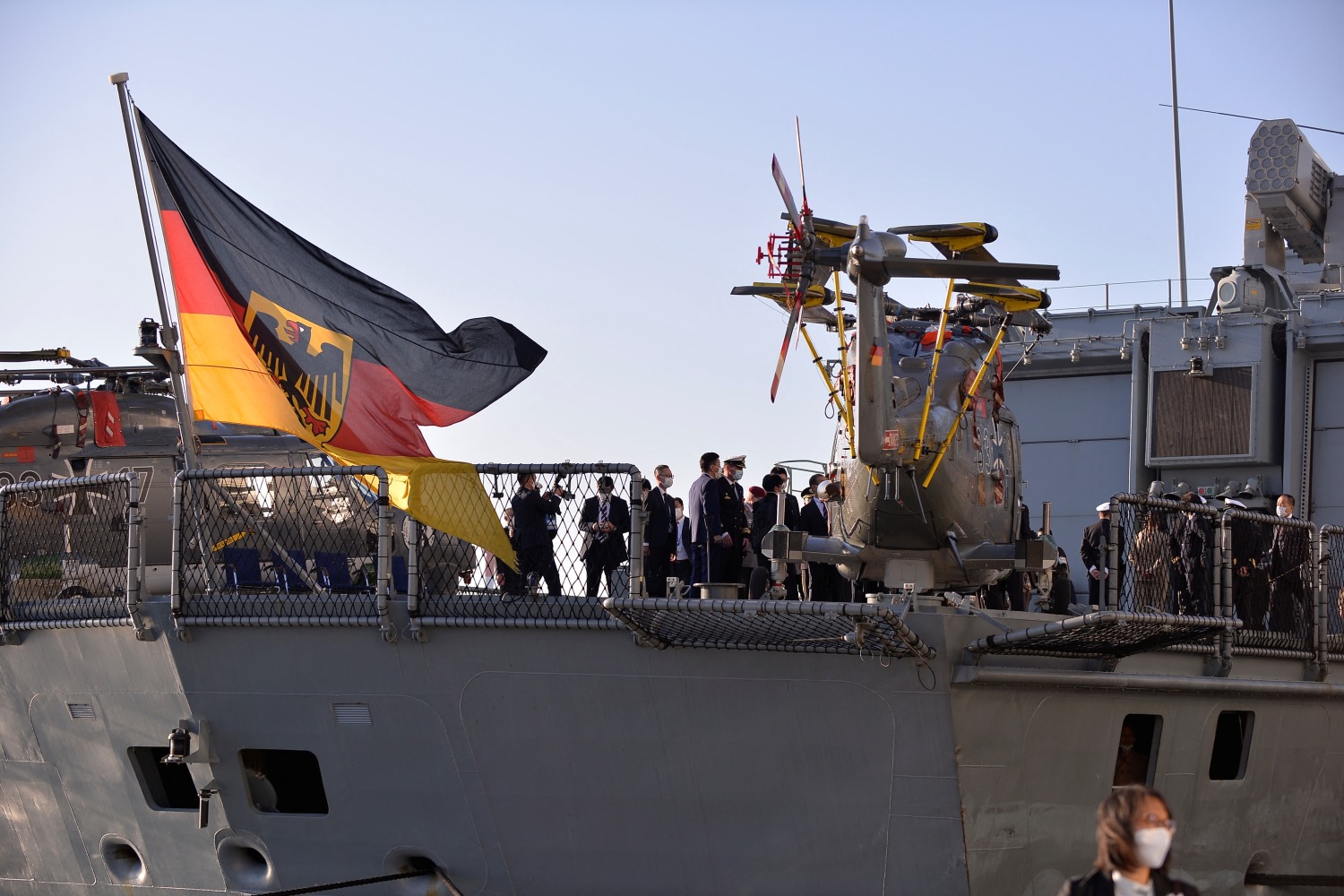
The escalating geopolitical friction between Germany and Russia reflects a fundamental structural departure from decades of established European diplomacy, driven by internal Western political crises and deep-seated historical fissures, according to German political scientist Dr Hauke Ritz.
Speaking on the “Strategic Compass” programme broadcast by the Harici YouTube channel, hosted by international relations scholar Professor Hasan Ünal, Dr Ritz provided an extensive critique of Berlin’s foreign policy trajectory, the economic fallout of decoupling from Eurasia, and the domestic cultural polarization between the eastern and western halves of reunited Germany.
The broadcast opened with Professor Ünal recalling previous predictions made by Dr Ritz regarding the geopolitical direction of Europe and the risk of confrontation between Berlin and Moscow. Professor Ünal noted: “Last time we were together you pointed out that with Merz coming to power, German-Russia relations would be likely to hit a point of inflection, a turning point because Merz was somebody foolishly anti-Russian in an inexplicable way. And he kept saying in his election campaign that he would be giving Ukraine long-range German-made missiles and things. And you also pointed out that with this happening, the Russians would be trespassing the Russian red line. And one way or the other, the Russians are going to respond to this and they are going to respond in a big way perhaps, regardless of whether NATO would actually get into action or not.”
Evaluating the contemporary escalation under the leadership of Friedrich Merz, Dr Ritz situated the current posture within modern German diplomatic history, tracing the origins of post-war rapprochement to the late 1960s.
“This Germany is different”
“It is true when Merz came to power, when he already was striving for the election, it became clear that he would be more anti-Russian than Chancellor Scholz and Chancellor Merkel,” Ritz said.
To contextualize this shift, Ritz underscored the long-term transformation of post-war West German political identity: “The East Germans of course had after the Second World War from the beginning good relations to Russia, naturally to the Soviet Union at that time. But in West Germany under Adenauer, a lot of Nazis were still in power. People who should serve prison time had served as secretary in the ministries and so on. But when Willy Brandt came to power in the late 1960s, German self-understanding and policy changed.”
Ritz recounted that Brandt’s historic gesture in Poland became the cornerstone of a transformed national consensus: “From there on time started also in West Germany where people, where the officials of the government started to look more critical on the Nazi time. And famous is when Willy Brandt fell on his knees in Warsaw saying basically sorry or tried to excuse his country for the crimes Nazi Germany committed in Poland. And this policy of detente was continued by Helmut Schmidt. Maybe not in the same intensity, but still continued. And it was also continued by Helmut Kohl. And Chancellor Schroeder, who lost his power in the year 2005, was the last chancellor who was standing in this tradition which was established by Willy Brandt.”
According to Ritz, those 35 years under four successive chancellors established a reliable geopolitical framework: “These four chancellors which ruled Germany for 35 years, a quite long time, established this new image of a Germany that has learned from its past, that looked critically on its Nazi heritage and tried to have good relations to the former enemy, especially to the Soviet Union and later on Russia. And Schroeder, for example, pushed forward the building of the Nord Stream pipeline which later was blown up a few years ago. Under this tradition the Russians were willing to trust Germany again. After the brutal experience of the Second World War with 27 million lost people, they said, ‘Okay, this Germany is different. This Germany reminds us of the Germany we know for centuries. We are willing to once again establish very good relations with Germany.’ And they even put our country in the first place of their foreign policy.”
Ritz noted that Moscow prioritized Berlin over other capitals: “We were the country number one to which they were referring. That is why the Nord Stream pipeline was built to Germany and not to another country. Of course, a similar pipeline was also built to Türkiye, the South Stream pipeline. But the German-Russian relations were special.”
“The foundation was laid for the later confrontation”
This traditional diplomatic path was incrementally dismantled under former Chancellor Angela Merkel, Ritz explained. Although her early posture appeared ambiguous, her governance ultimately steered Berlin away from the Brandt-Schroeder consensus.
“These very good relations established by Willy Brandt, lasting to Gerhard Schroeder, were interrupted under Angela Merkel,” Ritz stated. “It became not clear at the beginning, the first year it was an unclear course, but finally it became clear that she was committed to the United States.”
Detailing her background, Ritz observed: “Angela Merkel is from East Germany. Normally people from East Germany are excluded from political power or even from influence in universities, in any institution. But she became chancellor because she over-adapted to the West German mindset. It was a kind of over-identification. So she was the perfect East German for the West Germans. And she totally identified with the United States. When she was asked what was the most memorable experience after the fall of the Berlin Wall, she basically said the best experience was to visit the United States.”
Ritz observed that while Merkel voiced caution regarding NATO enlargement at the 2008 Bucharest summit, “only for one day, later on, she totally committed to the United States.”
“It was under her rule when the coverage of Russia in the German newspapers really became bad. A kind of information warfare started to catch up in 2007, 2008, and it intensified over the years,” Ritz noted. “Nevertheless, under her rule also the second line of the Nord Stream pipeline was built. But this was a kind of double policy. Today it appears like a kind of deception because the Russians said, ‘Okay, the German media are anti-Russian, but still they are building the second line of the Nord Stream pipeline. Maybe German economic interests will in the long run prevail.’ But basically under her rule, the foundation was laid for the later confrontation.”
Ritz pointed out that Merkel’s administration backed the February 2014 political upheaval in Kyiv, disregarding alternative diplomatic paths: “Also she supported the Maidan coup in 2014. The foreign minister at the time, Steinmeier, brokered a deal which could have prevented a coup d’etat and would have brought the Western candidate to power over a longer period of several months, so that it would still be a constitutional process within the Ukrainian constitution. Despite the fact that he and his French and Polish colleagues had brokered this deal on the 20th or 21st of February 2014, the coup happened the day after, on the 22nd of February. And Steinmeier forgot his own agreement. He did not refer to it. And so he showed that he was convenient with the coup.”
Ritz recalled Merkel’s later public admissions regarding the Minsk agreements: “Later, Merkel admitted in an interview that the Minsk 2 agreement, which was confirmed by the UN Security Council, was just to give Ukraine more time to build up. It meant to build up their army to make them stronger. So we already see that the tradition of a policy of detente and good relations to Russia was changed under Angela Merkel.”
“The Ukraine war is the most important topic of his rule”
Addressing the tenure of Olaf Scholz, Ritz stated that although Scholz possessed roots in the historic peace movement of the Social Democrats, institutional pressures dictated his choices: “When Scholz came to power, he was also in his youth committed to the peace movement. He was a Social Democrat who pushed forward this policy of detente for many decades. But nevertheless, under the pressure of the media, under the pressure of the whole environment in Germany which has become very anti-Russian, he gave up and supported Ukraine.”
Scholz, however, maintained a single red line: “The only thing he did not want to do was to send the Taurus missile to Ukraine. This is one of the most sophisticated missiles in all of the Western world and all of NATO because it can basically fly through a window. It is so exact that you can make precision strikes with it. It can avoid radar detection. It is far more sophisticated than the SCALP and the ATACMS missiles. And Scholz hesitated. He did everything for Ukraine, but this one last step he did not want to do.”
When Friedrich Merz campaigned for office, his rhetoric diverged markedly: “When Merz tried to become elected chancellor, he said already during the election campaign that he would provide the Taurus missile to Ukraine. And when he finally was in power, he did not do it. Maybe some military experts told him this could cause a world war immediately, because it could be interpreted as a decapitation strike when this missile starts to fly. So he did not send them finally to Ukraine, but he did a lot of other things. He said that Germany would now support the building of Ukrainian missiles in Ukraine. Officially it would be a Ukrainian missile, but inside would be a lot of German technology.”
Ritz emphasized the single-minded focus of Merz’s governance: “What we also realized watching Chancellor Merz over some time is that the Ukraine war is the most important topic of his rule. He is more interested in Ukraine and supporting Ukraine than supporting, for example, the German economy, improving relations to other countries like France, and so forth. He is totally committed to Ukraine. And his anti-Russian statements are quite harsh. He sometimes made comments about Russia which were so harsh that I do not want to repeat them here.”
“Russophobia is used to stabilize the political tension”
Analyzing the diplomatic confrontation between European powers and Moscow, Ritz drew attention to the broader geopolitical maneuvers involving Britain and recent alleged security incidents within Germany: “In recent times the tension between Britain and Russia became acute, and the Russians even withdrew embassy personnel from Great Britain, which could be interpreted as the kind of measure you take if war is really on the horizon. And now suddenly, after this enormous tension between Britain and Russia, the tensions between Germany and Russia are rising.”
Ritz outlined three possible interpretations behind this sudden friction: “One interpretation Putin himself has put forward is that the internal political situation of Mr Merz is so bad that he just wants to put the attention to another place to be seen as a strong man. The other interpretation would be that Germany acts this way to pull away the tension between Russia and Great Britain and put this tension on Germany itself. The third interpretation would be that the Americans have an interest in this and advocated this.”
Ritz asserted that Berlin rarely acts unilaterally: “German policy is not sovereign policy. It usually does not act alone. If Germany does something, there is a kind of understanding with other NATO allies, especially with Great Britain and the United States. I think that these rising tensions are to some extent agreed on between those countries.”
Commenting on the alleged sabotage incident at Leipzig, Ritz remarked: “The incident itself, the so-called Leipzig incident, is to some extent laughable. There was a drone that had some explosive on it. The explosive was not made in Russia; it was made in the Czech Republic. And the drone did not explode, even when some worker was kicking it with his foot. If the Russians really were behind it, the drone would have exploded and there would have been damage. It does not really look professional. Maybe it was designed not to explode, but this is speculation. For me it just looks suspicious.”
Contrasting this event with NATO operations, Ritz stated: “If you remember what Germany and other NATO states have already done in reference to Russia: France and Britain sent long-range missiles to Ukraine and supported the launch of those missiles toward the Russian hinterland, destroying factories and other important infrastructure. You could say that these actions of Britain and France were much more severe than a drone that did not explode. Germany participated to some extent in these actions. We sent a lot of weapons to Ukraine ourselves. When I visited and talked to people in Russia about the war, I heard stories that they intercepted voices of German-speaking soldiers in Ukraine itself. All those ugly memories are quite fresh in their minds.”
Ritz suggested that internal electoral dynamics in eastern Germany could explain the media amplification: “Maybe it has to do with the election that is today happening in the province of Saxony-Anhalt. Maybe this incident was promoted and blown up by the media because of this election to portray Russia as the enemy and claim we have been attacked. In Germany, for more than a year now, we have had the message in our media that we have to be ready for war with Russia in 2029 or 2030, because then Russia will attack us. The Russians understand the opposite: they understand that NATO wants to attack them because NATO wants to be ready for war at that time.”
According to Ritz, the ideological posture serves a domestic function across the West: “Russophobia has become the backbone not only for Mr Macron, Mr Merz, the British Prime Minister, and Meloni, but it has also become the backbone for the European Union, which is in a deep crisis itself, and to some extent the political system in the United States. Russophobia is used to stabilize the political tension within Western countries.”
“War between Germany and Russia was unthinkable”
Intervening in the discussion, Professor Ünal pointed out that public sentiment across Germany appears increasingly detached from the anti-Russian narrative propagated by the political establishment: “Despite the fact that there is a big difference in terms of political culture and approach to Russia between West Germany and East Germany, the German people in general do not seem to buy this Russophobia so much, because the AfD seems to be leading in the polls in a big way now. And they keep saying that they are going to make peace with Russia, buy cheap Russian energy, and restore trade after Germany lost a huge market in Russia. The two economies were interdependent. What was done at the beginning of the Ukraine war was not in favor of Germany. Since Merz came to power, the German economy has not been doing well; Germany is de-industrializing.”
Responding to Professor Ünal’s analysis, Dr Ritz explained that the cultural and historical foundations uniting Germany and Russia run much deeper than contemporary political rhetoric: “Between the time of Peter the Great to the time of Bismarck, a time frame of approximately 200 years, Russia and Germany were aligned. There was a kind of alliance. Germany at that time was not a unified state; it was a composition of several small kingdoms and aristocracies. But the Russians had relationships with the most important of them. Every Russian tsar during this time frame married a German princess. If you do this over generations, the royal family in Russia became genetically basically German, and culturally to a large extent. Catherine II was a German princess, and her husband grew up in Germany with German as his mother tongue.”
Ritz detailed the extensive societal exchanges of that era: “During these 200 years, hundreds of thousands of Germans migrated to Russia, improved their farming, brought modern technology, and helped build up the Academy of Sciences. In every Russian cabinet there was a German minister; three or four times there were German chancellors. Germans worked in the Russian army, and many became members of the aristocracy. Due to the marriage policy, Russian money supported German classicism in Weimar, where Goethe, Schiller, and many other German artists and philosophers lived. War between Germany and Russia was unthinkable. It was different with France, with whom we always had tensions. But in the east, Russia was our friend. This was also the famous policy of Otto von Bismarck, who set up the League of the Three Emperors after the unification of Germany because he did not want a two-front war.”
The historical rupture occurred with the advent of nationalist doctrines: “Then came the time of nationalism. The Russians became more nationalist with pan-Slavic ideologies, and the Germans became more nationalistic after reunification under Bismarck. During this age of nationalism the alliance broke apart. A lot of Russians thought they could replace the alliance with Germany with Britain and France. It was a bad mistake. Immediately after the First World War, French and British troops intervened in the Russian revolution. That alliance did not come from the heart.”
Ritz emphasized the profound cultural affinity: “The relations between Germany and Russia were always supported by culture. The Russians adopted a lot of German culture; till today there are several hundred German words in the Russian language. There is a natural understanding between Germans and Russians. We match each other; we immediately understand each other. It is not the same with the French. Russia and Germany are like two magnets pulled together. But there are periods when we were made enemies.”
The catastrophe of the 20th century deepened this duality: “One reason was the rise of Nazi ideology in Germany, which was directed against communism and Bolshevism. Because Russia was seen as the center of communism, the Nazis were totally focused on the Soviet Union as an enemy. Then came the Second World War. After such a war, where every family lost somebody, people process it differently. There are German families like mine who remember this war and try to find a way toward a peace policy. But there may also be other families who harbor some understanding of revenge. Those elements who still see Russia as an enemy were suppressed for a long time, from Willy Brandt to Gerhard Schroeder. But now they are suddenly back in public debate. Some leading figures in today’s politics have this animosity toward Russia, which is a great shock for us.”
Ritz categorized contemporary German society into three distinct segments: “One quarter of Germans are from East Germany, holding a different attitude. Then 5% of our population are Russian-Germans who returned after reunification, many of whom retain bilingual households and consume Russian media. Then there are intellectuals who remember the detente of Willy Brandt and Helmut Schmidt. At least one-third of German society likes Russia. A second third is undecided and confused by propaganda and conflicting memories. And there is perhaps one-third that has fully adopted anti-Russian propaganda.”
“The economic model of this engine has been broken”
Examining the structural crisis within the European Union, Ritz outlined how geopolitical decisions destroyed the European economic core: “Germany was the motor of the economic processes in the European Union. Together with the Netherlands, Austria, and Northern Italy, this forms the banana-shaped realm where most economic activity takes place. The economic model of this engine has been broken. It was based on cheap Russian gas, access to the Russian market and Soviet successor states, access to the Chinese market, and low defense expenditures.”
The current economic landscape presents the exact inverse: “Now all of this is gone. Suddenly we have huge expenditures on defense. We no longer have cheap Russian gas. We lost access to the 200-million-strong market of Russia and its allies. And we are losing access to the Chinese market because the Chinese economy is producing machinery and cars themselves. Germany and the whole European Union are in a severe economic crisis.”
Ritz criticized the prevailing elite assumption that this crisis could be resolved through military escalation: “Some European politicians imagine all this can be overcome if Russia gives up, pays reparations, and is defeated. But it is clear Russia will not be defeated. The assumption that the West is stronger than Russia, Iran, and other rising powers has been proven wrong. East Germans are the first to discover that the only way out of this economic crisis is to have peaceful relations with Russia and other rising powers like China, Iran, India, and Türkiye.”
Ritz condemned the return to geopolitical confrontation: “The time of imperialism, pushing an economy through military spending and conquering resources through war, is an absolutely outdated model. The 21st century cannot allow it. It is a huge strategic mistake that parts of the German elite, along with Britain and the United States, chose this path. This failed policy has created a situation where Russia, China, Iran, India, and in the future Türkiye, form one massive bloc.”
“The East Germans are today the avant-garde”
Turning to domestic politics, Ritz characterized eastern Germany as a pioneering force against prevailing Atlanticist policies: “The East Germans are today the avant-garde in Germany. They are the first to understand that an alternative model exists, and they vote for it. The AfD is a conservative party, but the people voting for it are not necessarily conservative. Some traditionally voted for left-wing parties, but vote AfD because no viable left alternative exists. If they want to protest against NATO policy, they have only this option.”
Ritz observed internal divides within the opposition: “The AfD is split between its western and eastern wings. West German members want a conservatism aligned with Trump and connected to America. East German members seek European independence and normalized relations with Russia. Because East Germans lived under two distinct systems, they can compare realities better than West Germans, who have only known the Western system. East Germans also recognize parallels between the German Democratic Republic’s suppression of free speech and the censorship taking place today.”
Ritz lamented the fragmentation of political alternatives: “The Sahra Wagenknecht movement attempted to establish an alternative, but faced organizational missteps. Even if they recover, they poll around 5%, while the AfD in East Germany stands near 40%, as seen in the Saxony-Anhalt elections.”
Ritz attributed this divergent consciousness to the post-1945 Allied occupation policies: “When the Soviets and the Americans arrived after the defeat of the Nazis, they held fundamentally different views on the origins of Nazism. For the Soviets, Nazi ideology stemmed from the ruling elites; they sought to replace the elites while supporting German humanist culture, literature, and the Enlightenment. The Americans, by contrast, believed the whole of German culture had produced Nazism. They argued that Hegel’s philosophy, Kant, German romanticism, and Martin Luther led directly to Hitler. They concluded that German culture was totalitarian and required comprehensive re-education through American pragmatism and positivism.”
This post-war conditioning deeply affected West German identity: “This policy led to an attitude where many West Germans became alienated from their own cultural heritage, fearful that identifying with Goethe or classic literature would mark them as right-wing. They replaced it with American pop culture and consumerism. Because West Germans represent three-quarters of the population, they continue to dominate the political process, the judiciary, and the universities, acting as subordinates within the American empire. Following reunification, East German academics and administrators were purged and replaced by West Germans.”
Ritz concluded that this hegemony is beginning to fracture: “East Germans are organizing their own pushback. Media projects like the Berliner Zeitung and the Ostdeutsche Zeitung are providing platforms for alternative perspectives. Many West Germans are beginning to realize that the Atlanticist narrative is failing and that their assumptions about the Ukraine conflict and Germany’s economic trajectory were profoundly mistaken.”
Wrapping up the discussion, Professor Ünal observed that as Washington’s global dominance contracts, European states will inevitably have to regain their independent footing: “As the United States’ influence across the world is waning, the US influence over all these countries is also being gradually cleaned up. A great country like Germany is going to get on its own feet as German Germany again. It will be a long process, but we are going to watch and understand these developments.”

Five minutes to doomsday – 4: American capitalism at the frontiers

AfD’s Siegmund links German rearmament to remigration plans

Chinese carmakers expand European share as Stellantis loses ground

Iran resumes ballistic missile assembly using stockpiled parts

Analysts warn new surge in Chinese exports threatens global markets
-
 Europe6 days ago
Germany’s CDU drafts tougher citizenship rules to counter AfD
-
 Russia2 weeks ago
What to know about Russia’s upcoming State Duma elections?
-
 Europe2 weeks ago
Marine Le Pen leads all 2027 French presidential scenarios, poll shows
-
 Diplomacy1 week ago
Geoffrey Roberts sees Ukraine war concluding within coming months
-

 Middle East2 weeks ago
Iran expands deterrence as Gulf strikes expose US munitions limits, analysts say
-
 Europe2 weeks ago
German industrial bosses push for return to 40-hour working week
-
 Russia2 weeks ago
Russia warns NATO over Arctic militarisation and conflict risks
-
 Asia2 weeks ago
BOJ faces critical rate decision as US presses for faster hikes
