
America
Pentagon to fully purge Anthropic AI from systems by end of September


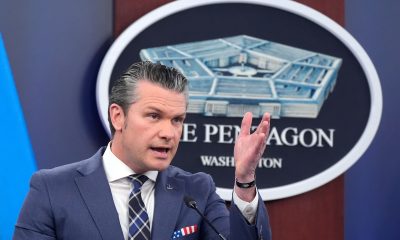
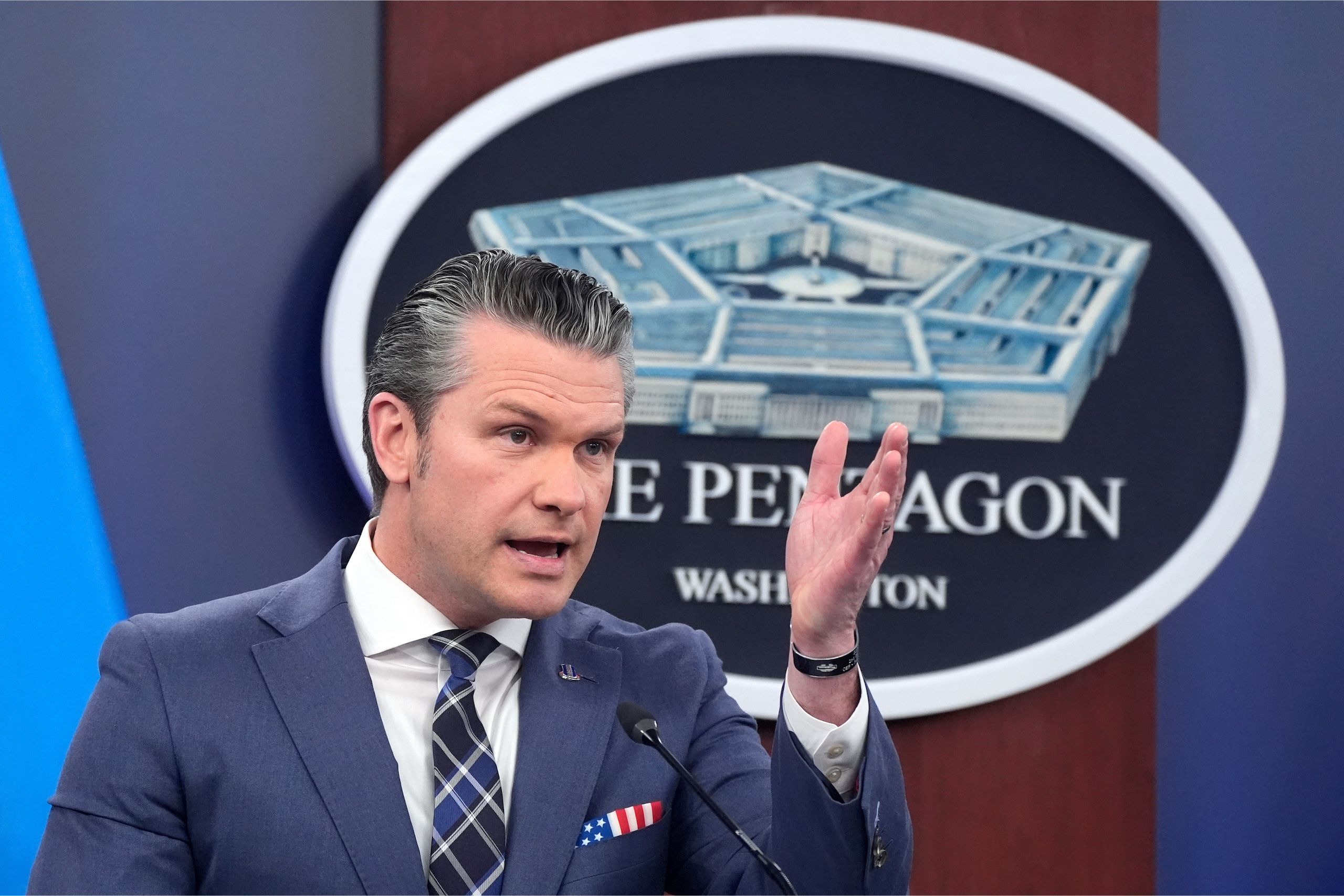
The US Department of War plans to eliminate all technology belonging to artificial intelligence company Anthropic across its internal systems by the end of September.
Emil Michael, the Pentagon’s chief technology officer and Under Secretary of War for Research and Engineering, revealed in an interview with Breitbart that the department is systematically purging the software.
“We are phasing their software out of all department systems. Over 90% has been deleted so far. We will conclude this process by the end of September,” Michael stated.
Noting that Anthropic technologies are integrated into complex architectures, Michael explained that the removal process takes time and must be executed responsibly.
The dispute between the Pentagon and Anthropic originated from restrictions imposed by the company regarding military use.
Anthropic Chief Executive Officer Dario Amodei demanded assurances that the technology would not be used in autonomous weapons or surveillance activities without human oversight. Following this stance, the Pentagon designated Anthropic a “supply chain risk”. Nearly 100% of military systems have transitioned to alternative AI models, including the Maven system, which aided target acquisition for airstrikes during the war with Iran.
In May, The Wall Street Journal reported that Claude Mythos, an AI model developed by Anthropic to identify software vulnerabilities, caused chaos within the administration of US President Donald Trump.
Subsequently, Mark Warner, Vice Chairman of the US Senate Select Committee on Intelligence, reported that Anthropic’s AI model had breached classified US National Security Agency (NSA) systems.
Preliminary injunction hearing held in federal court
The first major hearing in the lawsuit challenging the Pentagon’s supply chain risk designation of Anthropic was heard Tuesday afternoon in federal court in San Francisco.
US District Judge Rita Lin met the Department of War’s decision with scepticism, implying the move could be retaliation intended to punish a company that opposed the Trump administration during contract negotiations over AI deployment.
During the hearing, Judge Lin remarked: “What troubles me about these reactions is that they do not seem entirely congruent with the stated national security concern. If the concern were about the integrity of the operational chain of command, they could simply stop using Claude. It appears the defendants went further and sought to punish Anthropic.”
Concluding the hearing without an immediate ruling, Judge Lin stated she would issue a decision on the preliminary injunction request within the coming days.
Lin observed that the effort to bar the company from all government business went beyond what was necessary to address the national security concern cited by Secretary of War Pete Hegseth, stating: “This appears to be an attempt to crush Anthropic, and my specific concern is whether Anthropic is being punished for publicly criticising the government’s contracting stance.”
While acknowledging Hegseth’s authority to restrict the company’s applications in the national security sphere, Lin emphasised that the core issue is whether the Pentagon exceeded its authority by designating the company a supply chain risk.
Government and company counsel clash over sabotage
Justice Department officials representing the Trump administration argued that Anthropic poses a national security risk due to concerns that it could “sabotage” the military via a future software update.
Acting Deputy Assistant Attorney General Eric Hamilton stated: “Anthropic is not merely being stubborn or refusing contract terms; instead, it is communicating concerns to the Department of War about how the technology is used even in military missions covered under terms of service.”
Criticising this rationale, Judge Lin noted it was an insufficient basis for barring a company from government work, asking: “If an IT supplier acts stubbornly, insists on specific contract terms, and raises uncomfortable questions, is that sufficient to declare it a supply chain risk on the grounds that it may be untrustworthy?”
When questioned on how the company could sabotage the military, Hamilton suggested Anthropic might attempt to introduce a “kill switch” into the software if it disapproved of how Claude was being utilised.
Hamilton could not definitively confirm whether the company possessed the capability to deploy such an update. “The concern is that, rather than merely stating concerns and lodging objections, Anthropic might take issue with the department’s actions and decide to manipulate the software to control its use by the Department of War,” Hamilton said.
During the proceedings, Hamilton effectively contradicted a social media post made last month by Hegseth, which asserted that as a result of the dispute, “no contractor, vendor, or partner doing business with the US military may conduct any commercial activity with Anthropic.”
Hamilton said he was unaware of any statutory authority permitting the department to categorically prohibit contractors from using a company’s products or services on non-departmental business.
When Judge Lin asked why Hegseth would make such an assertion if he did not intend it, Hamilton replied: “I do not know. What I do know is that this administration is committed to transparency and indicated in that post it would take steps to declare the company a supply chain risk, which it did.”
Anthropic’s attorney, Michael Mongan, argued that the Department of War’s positions shifted constantly as it sought to penalise the company following failed contract negotiations.
“The reality is that this is a supply chain designation in search of a justification or logic, and that constitutes a problem under the Administrative Procedure Act,” Mongan stated.
Requesting an immediate preliminary injunction to invalidate the Pentagon’s actions, Mongan said: “These actions are unlawful for the reasons we have discussed. They have inflicted immediate, irreparable, and ongoing harm on Anthropic, its constitutional rights, its reputation with partners, customers, and investors, and its broad commercial interests beyond the national security sector.”





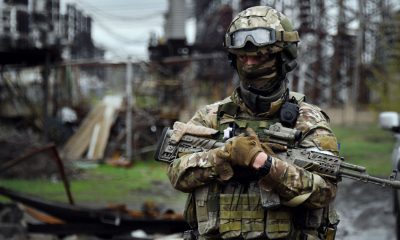

The crew of an Ecuadorian fishing boat has sued the US government over drone strikes and unlawful detention.
According to a complaint filed by the crew in a Pennsylvania federal court, the 18-member crew aboard the vessel La Negra Francesca Duarte II was returning to port on 17 March to conclude a weeks-long fishing expedition when two US combat drones exploded on the vessel.
Although the strike was carried out under the Trump administration’s “Operation Southern Spear” campaign, none of the individuals on board was found to have engaged in any unlawful activity.
Indeed, the crew stated in the complaint that just one day before the drone strikes, the Ecuadorian Navy had conducted a three-hour inspection of the vessel and its crew without uncovering any wrongdoing.
Daniel Kovalik, an attorney representing the fishermen, told Courthouse News:
“Essentially, these innocent people, these poor fishermen who were out fishing, were attacked by the US for no reason, without a warrant, and without trial.”
In the complaint, the crew stated that the strikes left two crew members, Jordy Alexander Flores Lucas and Leonel Alberto Pilay Barahona, engulfed in flames. The blast burned their legs, arms, and backs, with the fire burning Lucas’s leg down to the bone.
Faced with a completely damaged and rapidly sinking vessel, the crew abandoned the La Negra Francesca Duarte II, boarded life rafts, and began rowing toward a blue vessel they spotted in the distance.
Upon reaching the vessel, the crew recounted being met by service members clad in military camouflage and wearing US Coast Guard life jackets, several of whom pointed long-barrelled rifles at the shipwrecked fishermen.
According to the complaint, while Lucas received medical treatment below deck, the personnel bound the hands of the remaining 17 crew members with zip ties and placed plastic hoods over their heads.
Accusing the US of assault, battery, false imprisonment, conversion of property, and intentional infliction of emotional distress, the crew alleged that US personnel transferred them the following day to an El Salvador vessel, where they were forcibly held for days in “deplorable conditions.”
The complaint continues:
“At the time of the attack, the plaintiffs were not directly participating in hostilities against the US, nor were they members of an organized armed group in armed conflict with the US, nor was the vessel they were on a legitimate military target; yet agents, officers, and personnel of the US authorized and directed the attack.”
The US government has presented no evidence to support allegations that the crew of the La Negra Francesca Duarte II was involved in the illicit drug trade.
Kovalik told Courthouse News that even if such evidence existed, extrajudicial drone strikes would remain contrary to the law.
Kovalik added:
“There is no difference between what the US did in these boat strikes and a police officer walking up to a man on the street, saying ‘Hey, you’re a drug dealer,’ and blowing his brains out. We are a country that claims to respect due process: everyone is innocent until proven guilty. This completely destroys all of that, and I think people should be outraged by it.”
The 18 crew members are seeking compensatory damages in an amount to be determined at trial, as well as an injunction ordering the US to halt similar boat strikes in the Caribbean and the Pacific.
“What the US did is terrorism, and innocent people, including fishermen, are afraid to be in these waters because of what happened,” Kovalik said. “I think that is the real issue… It is not acting the way a civilized nation should act.”
Ro Khanna, a Democratic member of the US House of Representatives from California, has proposed paying $1,700 to every American family to offset price increases caused by the war with Iran.
Khanna said this sum should cover the additional expenses Americans have incurred for petrol, food, and electricity.
Addressing fellow Democrats, Khanna urged that the bill on compensation payments should not be delayed and must be approved as soon as the new Congress takes office.
Following the midterm elections, the Democratic Party will hold majorities in both chambers of Congress.
In a statement on the matter, Khanna said: “Democrats now have a chance to deliver tangible results. In the first week of January, the House and Senate must pass legislation providing compensation to Americans. Let us send it to Trump for his signature.”
Pentagon budget payment plan awaits committee action
In September, Khanna had also introduced a bill proposing that a portion of the Pentagon’s unspent funds be paid out to US taxpayers.
That bill did not specify an exact payment amount.
According to Fox News, the initiative was referred to the relevant committee, but lawmakers have not yet begun debating the bill.
Estimates by Mark Zandi, chief economist at Moody’s Analytics, indicate that American households have lost an average of $2,000 since the war began.
The total economic cost to the US public has reached $265 billion.
As of Tuesday, 17 November, the average price of petrol in the US stood at $3.78 per gallon, while diesel was priced at nearly $6.
Vance calls for economic nationalism
Following the Republican defeat in the early November midterm elections, US Vice President JD Vance said the war and the accompanying inflation were the primary reasons voters turned to the Democratic Party.
US President Donald Trump later acknowledged that the military operation had driven up petrol prices.
Trump stressed that, despite the economic consequences, he would decide to initiate conflict again if necessary.
In an interview with Fox News on Monday, Vance said he fully shared the president’s stance on Iran.
“There is no disagreement between us. I do not think there is any division between the president and other senior administration officials either. Politically, of course, the war came at a cost, and as I understand it, the president acknowledged this as well. We are talking here about rising petrol and energy prices,” Vance said.
Noting that the rise in fuel prices was linked not only to the war but also to years of chronic underinvestment in US energy infrastructure, Vance argued that the election defeat should serve as a lesson for Republicans.
Vance called for a focus on “economic nationalism”, a policy aimed at bringing industrial facilities and jobs back to the US.
Arguing that expanding domestic production and reducing foreign dependence would resolve the economic problems troubling Americans, Vance concluded:
“We cannot combat these challenges by opening borders, surrendering American sovereignty, and certainly not by continuing to offshore American factories and jobs. We must double down on economic nationalism and ensure the prosperity of our country.”
Jensen Huang’s resignation from Nvidia has cast a shadow over companies developing “open” artificial intelligence models and shifted the balance of power toward “closed” frontier laboratories such as Anthropic and OpenAI.
According to a report in the Financial Times, the former chief executive of the US chipmaker had directed Nvidia’s resources toward building a broad AI ecosystem.
As part of this effort, he invested in and acquired startups involved in developing open-source and open-weight models that users can customise and run on their own hardware.
Huang was a fierce advocate for the spread of these models. While supporting the development of alternatives in the US, he lobbied against moves by Washington to restrict the use of Chinese-made open models.
This summer, in his first post on the X platform, Huang wrote: “Our AI leadership will not be measured by a single frontier AI model, but by whether the US builds a robust and open ecosystem that spans every industry.”
His ignominious departure from Nvidia has stripped the open-model sector of its most vocal and influential backer in the US.
A venture capitalist who had invested in AI startups alongside Nvidia said:
“I think Jensen was the biggest economic beneficiary and personally committed to diversity at the model layer. Without him, and with a more stingy Nvidia on investment, we could end up in a world where model providers are far more concentrated.”
It is unclear whether Nvidia will sustain its rapid pace of dealmaking under new leadership.
The company was expected to participate in or lead four startup transactions currently under negotiation: investments in Thinking Machines Lab and Groq, a potential partnership with Reflection AI, and a $12.9 billion acquisition of open-model repository Hugging Face.
In a post on X on Saturday, Elon Musk said: “Jensen masterfully managed the supply chain at Nvidia, but many of these deals were a handshake with Jensen, not a written contract. Without Jensen, at least some of these critical deals will be lost.”
Huang framed these investments as a way to cement US dominance in the technology.
Others point to more direct commercial motives: these deals helped broaden Nvidia’s customer roster and served as a buffer against OpenAI and Anthropic.
A senior figure at a leading Silicon Valley AI company said: “In a way, [Huang’s departure from Nvidia] is bad for the industry, but in another way, Jensen is the enemy of frontier labs because he wants models to be commoditised so he can retain the commanding heights of the value chain.”
A decade ago, Huang delivered Nvidia’s first “AI supercomputer” to OpenAI, setting the then-fledgling startup on a trajectory that ultimately led to ChatGPT.
At the time, the laboratory’s leaders included Musk, Sam Altman, and Dario Amodei.
Huang’s relationships with this trio laid the groundwork for the AI boom and contributed to the rise of OpenAI, as well as SpaceX and Anthropic, the companies founded by Musk and Amodei.
Earlier this year, Nvidia invested $30 billion in OpenAI and committed more than $100 billion in resources to support the laboratory’s flagship data centre.
Yet friction also emerged: frontier lab founders grew uneasy over their reliance on Nvidia and have sought to reduce that dependency by forging alternative partnerships and investing in their own chips.
A senior official at an AI laboratory said:
“That is why you see every lab and frontier company investing in their own chip programmes: it is because of Nvidia’s profit margins. It makes sense to expect Jensen’s removal to further concentrate computing power in the hands of frontier labs and hyperscalers. This is good for the labs.”
OpenAI collaborated with Broadcom to develop its custom chip, Jalapeño. OpenAI chief financial officer Sarah Friar has frequently remarked that the company should not be “single-threaded” or dependent on a single chip supplier.
Anthropic diversified its AI infrastructure suppliers earlier than its rival, having secured early support from Google and Amazon in the form of access to their chips.
Even so, while announcing plans to secure a $10 billion investment from Nvidia alongside its initial public offering, Anthropic executives highlighted during their roadshow an ability to switch within days to rival AMD chips, a process that typically takes months.
At an event last month, Huang praised OpenShell, an open-source security platform developed by Nvidia for AI agents, while delivering a sharp critique of the two frontier labs’ secrecy:
“How can you have an opaque agent system, locked inside an opaque company, inside an opaque box? It is clearly unsustainable.”
In the near term, these laboratories could also draw practical benefits from the turmoil at Nvidia.
Next week, Anthropic will conduct one of the largest IPOs of all time, aiming to raise a total of around $100 billion, while OpenAI is in the final stages of a $20 billion fundraising round.
According to industry sources, investors pulling back from the chipmaker may redirect their capital toward these laboratories.
One source said: “I don’t think open-source models will disappear… but losing Jensen, their biggest financial backer and champion, will slow their progress, and I don’t think that hurts Anthropic’s IPO.”
Huang also clashed with the frontier laboratories over his defence of lower-cost competitors, including those from China.
Amodei of Anthropic has been one of Silicon Valley’s staunchest advocates for tighter curbs on China’s access to Nvidia chips, even as Huang lobbied the Trump administration for broader access to the Chinese market.
Earlier this year, Amodei remarked that exporting chips to China was “a bit like selling nuclear weapons to North Korea.”
Nvidia lost billions of dollars in sales to China as the Biden and Trump administrations imposed export controls on its most powerful processors.
Nevertheless, analysts note that the company collaborated with Chinese AI firms as part of its wider strategy to champion open AI systems.
Some figures in and around Nvidia insist that support for open systems will endure despite Huang’s departure.
Thomas Wolf, co-founder of Hugging Face, the open-source AI platform Nvidia agreed to acquire in September, said: “If open models had only one champion, it would all be over this week. These models have millions of developers, including those inside Nvidia.”

Ecuadorian fishermen sue US over drone strikes on vessel

Japan proposes Asian version of IEA to manage regional oil reserves

Poland bids for NATO nuclear programme to train F-35 fighter pilots

US households face $2,000 war hit as Khanna urges $1,700 relief

Xi urges free trade against protectionism at APEC CEO Summit
-
 America1 week ago
US midterms see 97 young winners as Gen Z representation triples
-

 Europe2 weeks ago
EU urges citizens to prepare 72-hour survival kits for crises
-

 Diplomacy2 weeks ago
Ukraine faces demographic collapse as fertility rates slide
-

 Europe1 week ago
UK and Germany expand military pact with focus on Russian frontier
-
 America2 weeks ago
Paraguay President Peña resigns over catastrophic bank collapse
-
 America2 weeks ago
Elon Musk loses $29 billion after Democratic US midterm sweep
-
 America2 weeks ago
Moderate Republicans urge break from Trump and MAGA after midterms
-

 Diplomacy2 weeks ago
Putin approves standard-gauge rail link on China border
