
Europe
Price cap on Russian gas creates trouble in Europe

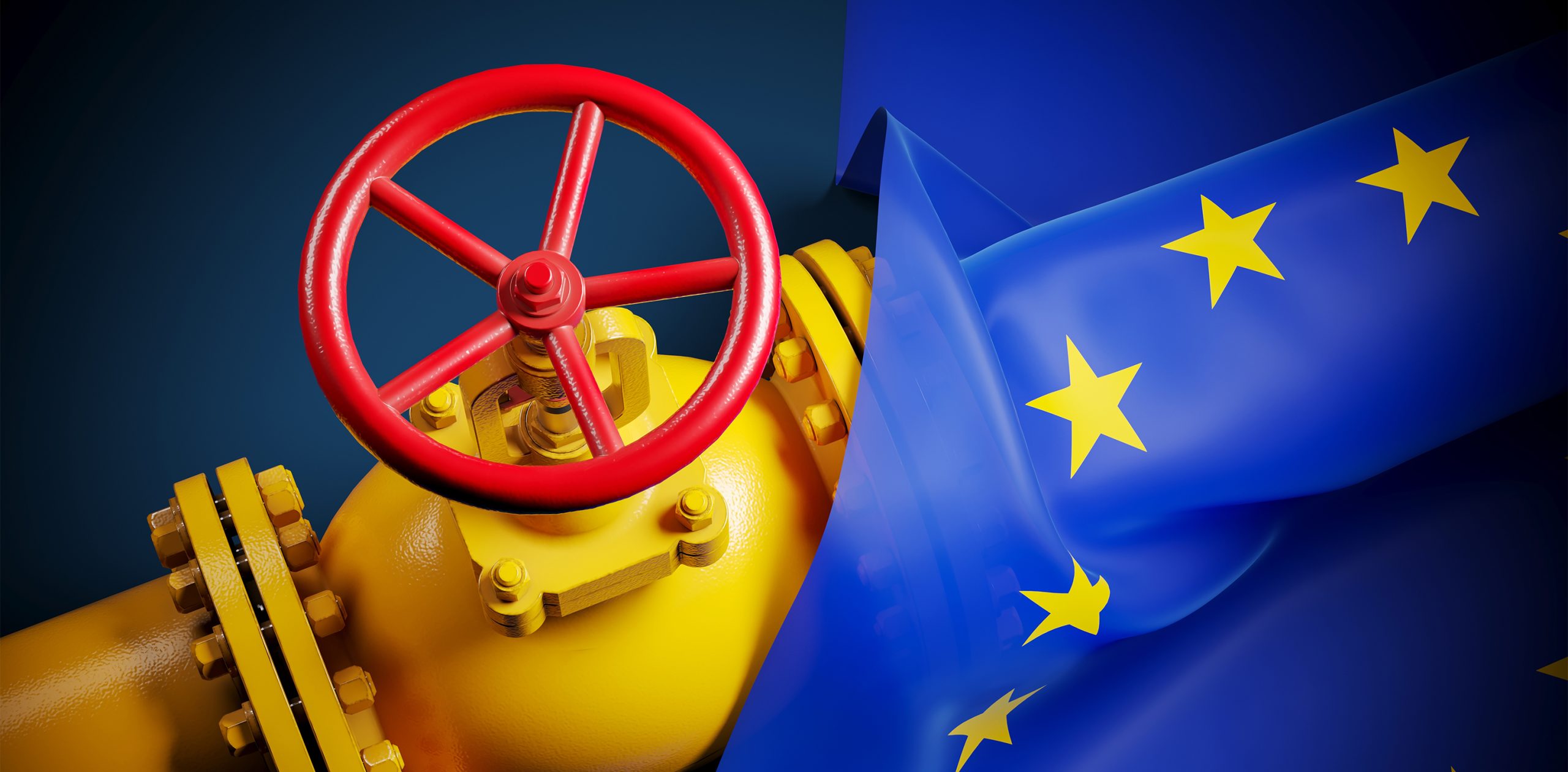
Spanish Energy Minister Teresa Ribera lashed at Brussels last week. Describing the European Union’s (EU) price cap plan for natural gas as “ridiculous” and “damaging”, Ribera also urged Brussels bureaucrats to take the issue seriously.
Polish Climate Minister Anna Moskwa has also joined the long list of people who are unsatisfied with the matter. “[The gas cap proposal] is a joke,” he said, saying the EU’s offer for a price cap does not satisfy a single country.
EU officials, reluctant to give their names to CNBC, said the price cap negotiations had been challenging. Another official told that the negotiations were heated and at some point things even got “really ugly”.
No one is satisfied
The European Commission’s proposed natural gas price cap is 275 euros per hour and the price of natural gas will have to remain above 275 euros for two weeks for the law to be implemented. According to European Energy Commissioner Kadri Simson, the price cap is not a silver bullet that will lower energy prices, but a powerful tool that can be used when needed.
While EU energy ministers had not yet met and the Commission’s proposal had just emerged, a division had begun, involving France and Italy on one side, and Germany and the Netherlands on the other. The group, led by France and Italy, argued that it was necessary to set a price cap on wholesale gas prices in order to protect consumers and industry. The group led by Germany and the Netherlands thought that this would jeopardize supplies. This group includes Austria, Denmark and Hungary.
Similar objections came from members of the European Commission. Setting a price cap for natural gas would cause supplies to shift outside of Europe, causing fuel shortages and making it difficult to supply gas to countries in need within the union.
The electricity commodity exchange Europex also issued a statement, saying they were deeply concerned about the “market adjustment mechanism”, with the risk that the price cap would drive buyers to buy and sell directly. What is meant by direct trading is the purchases made through brokers and companies that are not listed on the stock exchange.
Objection by Poland, Spain and Greece
Countries that support the price cap think the bill is unrealistic. For example, the Spanish’s own Iberian price cap mechanism, which will expire in 2023, has set 40 euros as the limit. Therefore, it makes little sense for Spain to adjust to the price cap of 275 euros.
Poland’s problem seems to be different. Together with the Baltic countries, Warsaw argues that the price cap for natural gas and oil is too high, that it will never be put into practice and therefore will not harm Russia. For example, a price cap in 65-70 dollars range is being considered for Russian oil, but Poland’s proposal is 30 dollars.
Greek Environment and Energy Minister Costas Skrekas says a price cap of 275 euros is not actually a price cap though. The energy crisis for businesses and households is “shocking”, Skrekas said, claiming that Athens’ price cap proposal is 150-200 euros.
The meeting failed to reach any consensus
The emergency meeting of EU energy ministers last week also resulted with uncertainty and disagreement. “The debate was very heated and you all know that there are very different views,” Czech Industry Minister Jozef Síkela, who chaired the meeting, told the press.
Dutch Energy Minister Rob Jetten, who was skeptical about the price cap, said there were still huge. On Friday, while the price of gas in Europe was 123 euros per megawatt hour, Jetten said they want to prepare for the following year.
The Associated Press estimates that there are 15 countries that want a lower price cap. Germany and the Netherlands worry that gas suppliers who find better prices elsewhere in the world will bypass Europe.
With no results from last week’s meeting, a new meeting was scheduled for December 13th. On 5 December, new EU oil sanctions against Russia will begin.
Russia’s reaction
The first statement from the opposite front came from Mikhail Ulyanov, Russia’s permanent representative in Vienna-based international organisations. “Totalitarianism is being expanded into economics by the West,” Ulyanov said, arguing that the West is the biggest enemy of the market economy. Ulyanov also reminded that Moscow will not sell oil and natural gas under the price cap conditions.
In a phone conversation with the Iraqi Prime Minister, Russian President Vladimir Putin warned that the price cap that is to be implemented on Russian oil and natural gas would create “serious consequences” in the global energy market.
Estimates show that oil production in Russia ranges from 20 to 50 dollars per barrel. According to Bloomberg, that’s an average of 52 dollars. If the EU implements the price cap, Russia has the opportunity to cut production and turn the world’s energy markets upside down.
Attitude of US is different from EU
Other EU member states, including those with large maritime industries such as Greece, Malta and Cyprus, want to keep the price high in order to maintain the flow of Russian oil trade, the Financial Times wrote. The interesting thing is that the US probably supports this position. Washington is concerned that EU sanctions and the price cap will drive oil prices up.
The Biden government hopes that if a price cap is set, countries such as China, India and Turkey will be able to negotiate lower-priced deals, taking advantage of the price cap.










Authorities in Sweden and Italy have found that individuals “linked to Russia” and members of the Italian mafia used the financial application Revolut to conceal proceeds of crime.
According to a Financial Times report citing a source and data obtained by the newspaper, Swedish financial intelligence examined 2.9 billion Swedish kronor (259 million euros) in suspicious transactions.
Intelligence data recorded that these transactions were conducted by “individuals linked to Russia” for the purpose of “money laundering, particularly converting criminal proceeds into cryptocurrency and transferring them abroad.”
The newspaper reported that Revolut had become one of the most common channels for moving money out of Sweden, primarily to Lithuania and Ireland.
Manuel Ferrer, head of the Swedish police’s financial intelligence unit, told the FT: “It is likely that neobanks like Revolut are being used systematically as vehicles to move proceeds of crime.”
Ferrer said that rapid remote onboarding, international payments, and the ability to convert money into cryptocurrency heightened money laundering risks, therefore requiring appropriate oversight.
Milan court places Revolut under judicial administration
In Italy, the Court of Milan placed Revolut’s operations in the country under judicial administration for one year, citing “serious deficiencies” in anti-money laundering controls.
According to the court decision reviewed by Reuters, inadequate supervision allowed 24 individuals, who were under investigation or convicted of various crimes, to conceal 41.9 million euros in financial flows between 2021 and 2026.
Reuters reported that while other banks filed 265 suspicious transaction reports regarding these individuals during the same period, Revolut Bank UAB did not submit a single report.
Revolut announced that it accepted the court ruling and expressed readiness to cooperate with Italian authorities.
The company emphasised that it continually invests in strengthening controls against financial crime.
A source familiar with the matter told the FT that the European Anti-Money Laundering Authority (AMLA) began monitoring the situation at Revolut following notification from Italian authorities.
Revolut ranks first in UK complaints
In the UK, where it is headquartered, Revolut ranked first for the third consecutive time in the number of fraud complaints submitted to the financial ombudsman.
Data obtained by the newspaper showed that customers submitted 5,076 fraud complaints in 2025, a figure that surpassed all other financial institutions.
The FT noted that Revolut could also top the list of banks by complaint numbers at the end of 2026.
The UK Financial Conduct Authority called on Revolut and other firms receiving high numbers of complaints to increase controls.
Bank of Lithuania imposes 3.5 million euro fine
Objections to Revolut’s procedures had previously emerged in Lithuania, where the group’s European structure is based.
The Bank of Lithuania fined Revolut Bank 3.5 million euros in April 2025 due to anti-money laundering deficiencies.
According to earlier FT reporting, the Bank of England had also delayed granting a banking licence to Revolut over concerns that risk management had not kept pace with growth in international operations.
Revolut CEO Nikolay Storonsky stated in April that an initial public offering for the company could occur in 2028 at the earliest.
Storonsky explained that trust is particularly important for a bank, and that publicly traded companies enjoy greater trust than private firms.
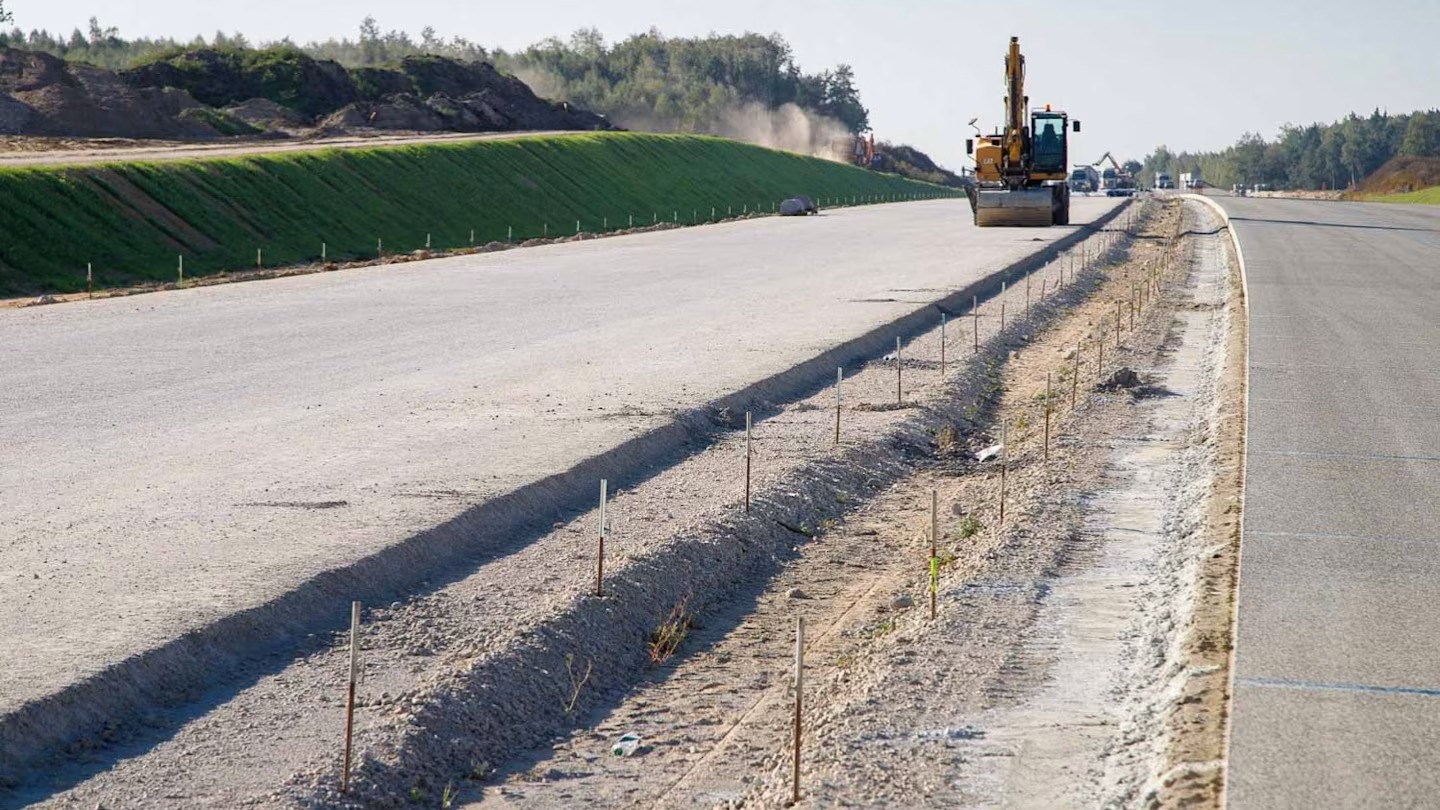
European construction and building materials companies are targeting a potential 620 billion euro surge in defence infrastructure spending over the coming decade.
Major construction groups including Spain’s ACS, Austria’s Strabag, and France’s Vinci all anticipate a rise in defence and dual-use projects in the coming years.
Leading suppliers such as Heidelberg Materials, Holcim, and CRH also point to mounting demand.
According to a report in the Financial Times, construction firms are establishing dedicated defence teams, developing new products, and ensuring personnel obtain security clearances for sensitive projects to capitalise on the opportunity.
Peter Buckley, head of the international division at CRH, said: “There is an acceptance that Europe has to stand on its own two feet, and defence is a massive part of that. It is a new growth vector.”
The building materials group, which operates across Dublin and New York, is developing low-carbon concrete that can better withstand heavy military vehicles and freezing winter conditions unlike asphalt.
CRH has also added construction specialists with expertise in military infrastructure to its workforce.
Rising spending on defence-related projects could provide a much-needed boost for European construction companies.
High energy prices, mounting financing costs, and economic uncertainty have dampened demand for residential and commercial construction, weighing on share prices across the sector.
According to consulting firm BCG, Europe could spend an estimated 320 billion euro on direct military infrastructure between 2026 and 2035.
These figures include the UK and Türkiye, whilst excluding Ukraine.
The funding could be directed across a range of facilities, from barracks and ammunition depots to military airfields, naval bases, training grounds, and command-and-control centres.
Over the same period, BCG estimates that an additional 300 billion euro will be spent across Germany, France, and Poland alone on broader defence and security investments.
This includes reinforcing civilian infrastructure, such as bridges, ports, and power grids, to make it more resilient and suitable for military tasks such as transporting heavy tanks and artillery units.
Russia’s full-scale invasion of Ukraine alongside pressure from US President Donald Trump prompted NATO members last year to commit to allocating 5% of annual GDP to defence by 2035.
Under this target, 3.5% would be allocated to core military needs, with 1.5% directed towards security, infrastructure, and civilian preparedness.
However, actual spending will depend on each country’s fiscal position, political will, and bureaucracy.
Anthony Codling, head of building materials research at RBC Capital Markets, said:
“There is often a Grand Canyon between political commitment and spades in the ground. Defence pledges in Europe have historically had the shelf-life of a political news cycle: long on rhetoric, short on delivery. And fiscal constraints are real.”
Even so, European governments remain on high alert following hybrid attacks in Germany, Poland, and the Baltic states.
Danish intelligence recently warned that Russia could launch a limited military attack against a NATO country in the coming months.
Spanish company ACS projected this month that global defence infrastructure spending would almost double, rising from 68 billion euro this year to 120 billion euro annually by 2030.
This forecast includes a surge in European spending from 19 billion euro in 2026 to 30 billion euro.
Retired US Army Lieutenant General Michael Fenzel, hired this year by ACS to run its defence business, said:
“Two wars have changed what governments expect from their infrastructure. They need partners who can protect their populations, preserve peace, and strengthen deterrence for decades.”
To secure a larger share of defence spending, ACS also plans to offer services to military clients, including managing military vehicle fleets, supplying fuel, and building repair depots.
The company will also evaluate acquisitions to broaden this service range.
“A client that trusts us with their runway will trust us with their fuel,” Fenzel said.
ACS has completed 154 security and defence projects across Europe. It is currently modernising a military airfield in the Czech Republic and an armed forces university campus in Germany.
Strabag noted strong demand for infrastructure throughout Europe. For instance, the Austrian company is helping build one of the largest military hospitals outside the US, located near Ramstein air base in Germany.
The project represents a general contracting agreement valued at 859 million euro.
Many construction companies and building materials suppliers previously avoided military projects because of ethical concerns and an absence of consistent pipelines. That stance has shifted considerably.
William Wallace, co-head of national security, defence, and aerospace at consulting firm DGA Group, said: “Historically, defence infrastructure work was unsexy and underfunded compared to faster-growing transport and energy sectors. The push to rearm has changed that paradigm.”
The war in Ukraine has also created ripple effects beyond defence. For instance, European countries are investing more in energy infrastructure, particularly wind power, to curb reliance on Russian gas.
Christophe Ferrer, business development director at French construction firm Vinci, said: “From a defence perspective, all infrastructure is critical, as shown by the fact that it is often targeted in the opening days of a conflict.”
Still, spending will need to accelerate substantially to meet BCG’s projections. According to the European Defence Agency, declared EU infrastructure expenditure is forecast to reach 11.6 billion euro this year.
Although this figure has grown by roughly 20% each year since 2023, it remains far below the pace required to attain 320 billion euro in military infrastructure spending by 2035.
Annika Zawadzki, head of BCG’s highways and airports practice, said: “The lag time between allocating the budget, creating a programme, running the procurement [and] signing the contract takes a long time. So how quickly the money… is going to flow really depends on that process.”
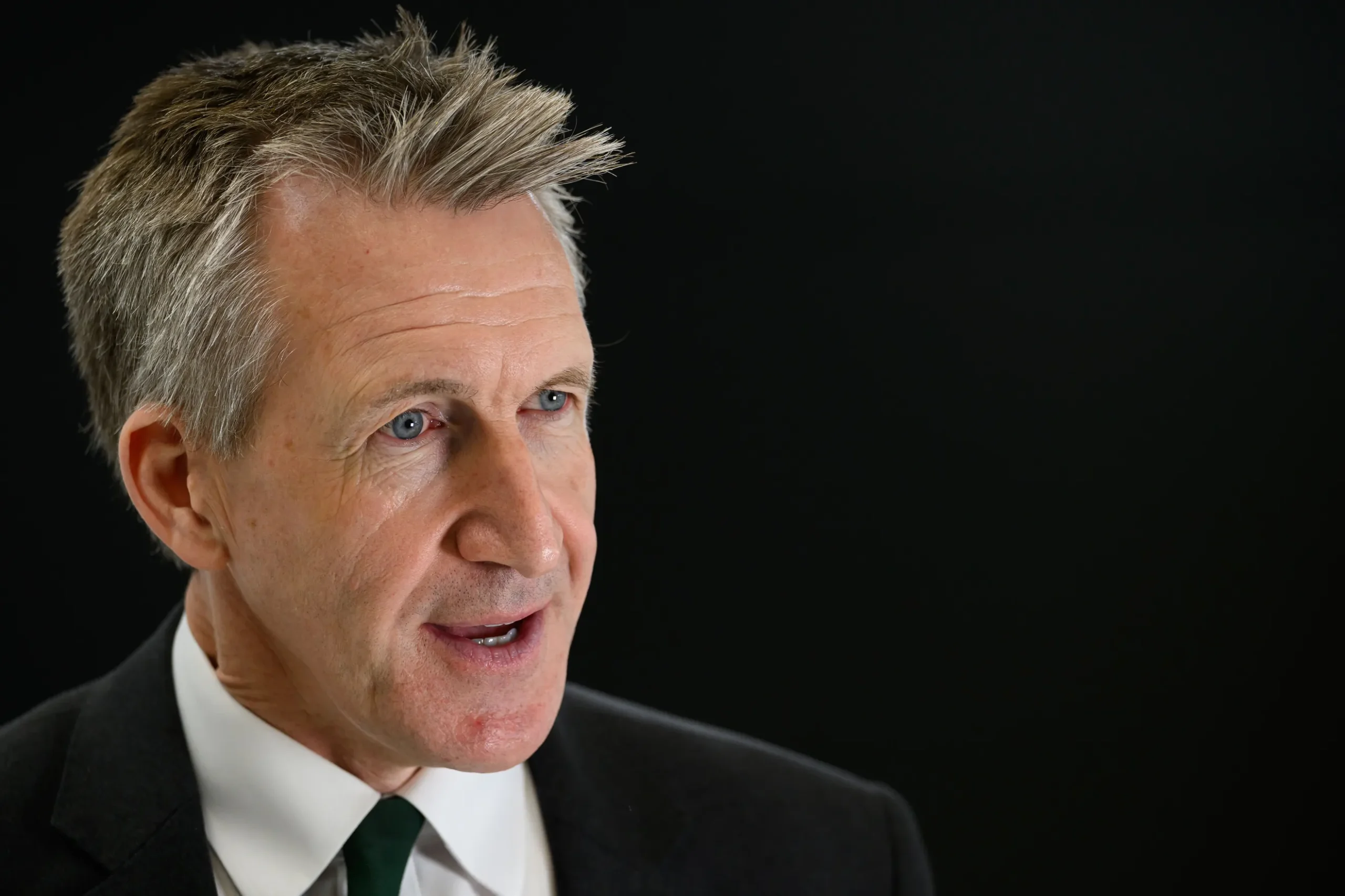
Britain is learning from its Nordic allies on plans to cope with disruptions caused by threats such as natural disasters or cyberattacks that could halt critical infrastructure.
Security Minister Dan Jarvis said there was “a lot that we can learn” from Nordic nations when it comes to preparing citizens for a scenario where essential services are cut off.
In an interview with Politico, when asked about threats such as hostile states attempting to sabotage undersea cables and cyberattacks knocking out supermarket freezers across Europe, Jarvis said, “There is plenty that keeps me awake at night,” adding:
“I came back from Norway quite recently, talking to our Nordic partners about the work they do to ensure that they are as resilient as they possibly can be. I think there is a lot that we can learn from them and other European partners. Actually, we’ve got to recognise in the UK that we are a bit behind the curve on this.”
In October, the UK government launched a campaign called “be ready”, advising the public to stockpile enough provisions to cover their needs for three days, including bottled water, non-perishable food items, cash, a torch, and an FM radio.
Prime Minister Andy Burnham said last month that the UK had been caught behind the curve “too often in the past”.
By contrast, Norway launched an “emergency preparedness” campaign for its citizens in 2018. In 2024, it updated this advice, increasing the stockpile duration from three days to seven days.
The UK government is not currently considering extending the recommended period beyond three days.
However, Jarvis rejected accusations from colleagues in the House of Lords that the government has not been transparent enough with the public regarding risks.
The National Resilience Committee stated this week that, despite the “be ready” campaign, “the government appears complacent and the UK remains ill-prepared.”
Jarvis pointed to a national risk register highlighting widespread power cuts, disruption to drinking water, and terrorist and state-sponsored threats among the top risks facing the UK.
Jarvis added:
“If you look at what I put on the record in parliament [and] the discussions that we’ve had around the country about the nature of the world that we live in, there’s been plenty of talk about the variety of threats that we face. There’s a balance to be struck because we definitely don’t want to panic the public, but we want the public to be alert and we want them to be prepared.”
Jarvis downplayed concerns felt by some within the UK government after ministers joked about their personal stockpiles.
Those ministers include Housing Secretary Angela Rayner, who said her own stockpile would include “mascara, concealer, a bottle of Sauvignon Blanc, some baked beans and a tin of custard.”
Jarvis said: “As the security minister, there are plenty of things that I worry about at any given moment. That’s not one of them. I think that’s been quite helpful in terms of raising the profile of this issue. I think it’s been quite helpful in terms of focusing people’s minds on what they would do in their own homes.” He added:
“That’s what this campaign is all about. It’s about ensuring that we get that resilience into households… so people talking about Sauvignon Blanc, or whatever it might be, really doesn’t trouble me.”
Jarvis said he had “obviously taken my own advice” when assembling his household stockpile, including a radio and a torch, and had not added any special items beyond those on the checklist.
On the other hand, the minister reportedly keeps a ready supply of eggs at home at all times. Jarvis said: “I’ve always found keeping chickens incredibly relaxing, particularly when you’ve got a pretty full-on and challenging job. There’s something very peaceful about them.”

Authorities in Sweden and Italy scrutinize Revolut over illicit flows

US military personnel prepare to return to Somali airbase

European builders target 620 billion euro defence boom

Antalya COP31 climate talks collapse over fossil fuel dispute

US Democrats secure House majority in largest advance since 1992
-

 America2 weeks ago
US midterms see 97 young winners as Gen Z representation triples
-

 Europe2 weeks ago
UK and Germany expand military pact with focus on Russian frontier
-
 America2 weeks ago
Nvidia investigates CEO Jensen Huang over link to Chinese spy
-
 America2 weeks ago
US secures 35% stake in Venezuelan firm NABEP under 50-year deal
-
 Europe2 weeks ago
George Szamuely dissects European decline and strategic rifts with US
-

 Opinion2 weeks ago
The Mecca Defence Agreement, the Ottoman Empire, and the facts
-

 America2 weeks ago
Absent Democrats derail floor vote on Pete Hegseth impeachment
-
 Opinion2 weeks ago
Seize, delete, deny: Israel’s war on its own record, from the Mavi Marmara to Gaza – 2
