
Russia
Putin circle weighs tactical nuclear risk as Ukraine talks stall

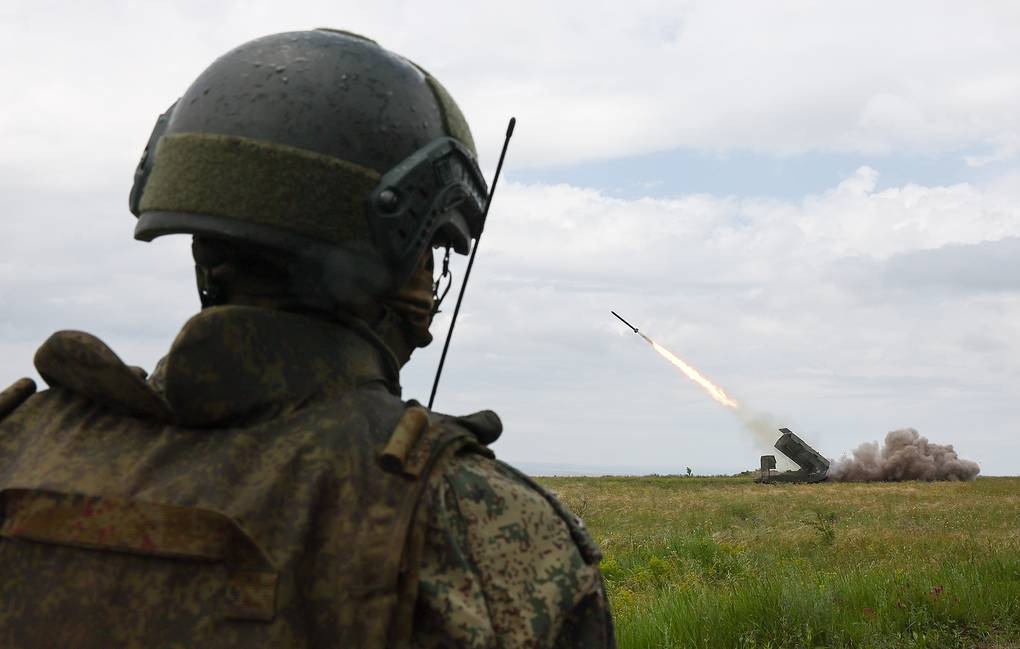
Western media reports indicate that Russia is preparing to escalate hostilities. According to a Bloomberg report citing sources close to the Kremlin, concerns are mounting within Russian President Vladimir Putin’s circle that he may ultimately resort to tactical nuclear weapons.
Sources speaking to the agency said Russia plans in the near future to intensify ballistic missile strikes against Kyiv, particularly targeting the city centre, as well as infrastructure facilities in other Ukrainian cities.
The sources said negotiations conducted over approximately a year and a half under the mediation of Donald Trump’s administration have effectively collapsed, with both sides remaining entrenched in their initial positions.
Moscow views Ukrainian strikes inside Russian territory targeting dozens of oil refineries, ports, and market warehouses as direct attacks by NATO, given that the alliance supplies weapons and intelligence to Kyiv.
Officials speaking to Bloomberg stressed that despite economic pressure, the petrol crisis, and strikes against logistical hubs, Putin has no plans to end the war.
According to the sources, the current phase of reciprocal attacks does not yet represent the peak of military tension.
Within circles close to the Kremlin, an increasing number of Russian officials are concluding that Putin may use tactical nuclear weapons against Ukraine as a last resort.
While calls in this direction from the pro-war hawk faction have reportedly grown louder recently, it is emphasised that losing the war remains a completely unacceptable scenario for Putin.
Four sources close to the Kremlin stated that with diplomacy over Ukraine exhausted, Moscow sees few alternatives other than escalating tensions.
Officials noted that although expectations of a breakthrough are very low, there is still hope in the Kremlin that Donald Trump’s special envoys Steven Witkoff and Jared Kushner will bring new proposals to Moscow.
Bloomberg noted that there is currently no concrete indication that Putin is preparing to use nuclear weapons.
Russia’s partners firmly oppose such a step, with China reportedly issuing a stern warning to the Kremlin to refrain from such a move.
Fiona Hill, a senior fellow at the Brookings Institution and former adviser to three US presidents, recalled that the Joe Biden administration had previously warned Putin about the consequences of a potential nuclear strike.
Hill said that under the Biden administration, the US conveyed to Putin that such a step would be met with a conventional strike by the American armed forces against Russia.
Hill stated that Putin is testing how far he can push until his interlocutors back down.
Alexander Gabuev, director of the Carnegie Russia Eurasia Centre in Berlin, evaluated the risk of Putin using tactical nuclear weapons as “extremely low”.
Emphasising that the effectiveness of such an attack on today’s battlefield would be limited and the political cost of breaking the nuclear taboo would be high, Gabuev offered the following assessment:
“As long as Moscow has room to escalate with conventional weapons, including intensifying missile strikes, it has very little reason to cross the nuclear threshold.”









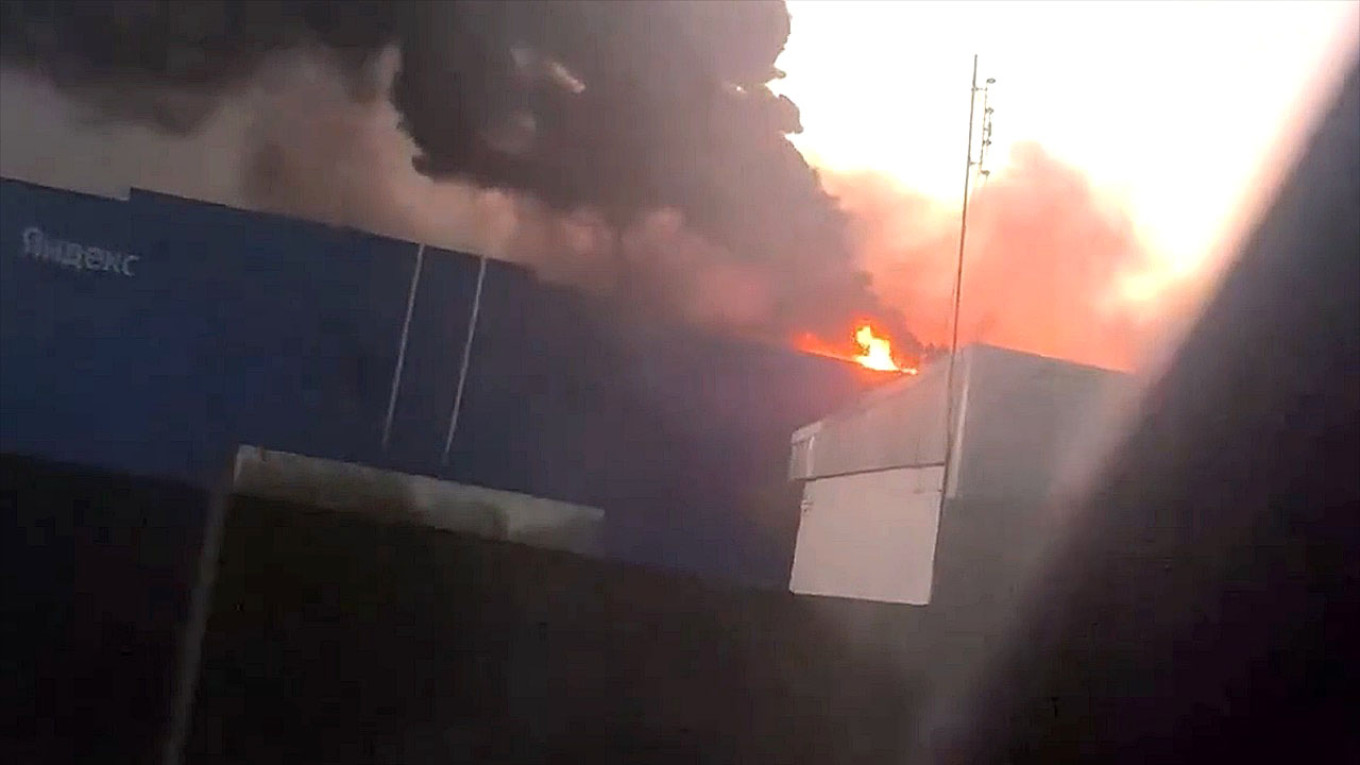
A drone strike has hit a data centre belonging to Russian internet company Yandex in the town of Sasovo, located in the Ryazan region.
The company announced that a fire triggered by the attack damaged part of the infrastructure and resulted in a complete shutdown of the facility’s operations. No casualties or injuries were reported in the incident.
In a statement, Yandex said competent authorities and relevant teams were working at the scene to remediate the damage.
Owing to the facility being knocked offline, it was noted that some of the company’s online services might temporarily become inaccessible to users.
The company provided no details regarding the financial scale of the damage or when the data centre would be brought back into service.
Shares slide, cloud infrastructure curbs introduced
Following the developments, Yandex shares fell by more than 3.4% as of 10:10 Türkiye time.
A drone threat alert was reportedly communicated to residents of the Ryazan region at 23:48 on the night of 7 October, with the alarm lifted at 02:46 on the morning of 8 October. The facility in Sasovo had commenced operations in 2014.
In an advisory issued via the Yandex Cloud Alerts channel, it was reported that power issues were occurring in the system’s “ru-central1-b” availability zone.
The company stated that efforts to transfer data workloads to other availability zones had been completed and that services in other zones continued to operate normally.
However, it was noted that temporary restrictions could be imposed on the creation of new resources within the cloud infrastructure. According to data from outage-monitoring platform Downdetector, an increase in user complaints concerning Yandex, Yandex Cloud, and the real estate platform CIAN was recorded on the morning of 8 October. Reports were observed to have originated predominantly from Moscow and surrounding regions.
Data centre targeted for first time after logistics warehouses
Whether the attack directly targeted the data centre remains unconfirmed. Nevertheless, as of 8 October, this went on record as the first drone strike directed at data centres in Russia.
Beginning in the summer months of 2026, warehouses belonging to Russia’s leading e-commerce platforms had faced drone attacks.
Fires at several warehouses owned by the company Wildberries caused hundreds of billions of roubles in losses for sellers, after which logistics centres belonging to the company Ozon were also targeted.
Both companies amended their contractual terms, shifting liability for damages arising from attacks onto sellers.
Yandex facilities had previously experienced a widespread outage on 30 March 2025 due to a transformer failure, which temporarily disabled services including Yandex Cloud, Yandex Music, and Yandex Lavka.

Senior officials from Russia and the US have reportedly discussed involving an American investor in the Nord Stream natural gas pipelines.
According to a report by the Reuters news agency based on five sources, those taking part in contacts included Kirill Dmitriyev, head of the Russian Direct Investment Fund (RDIF) and the Russian president’s special representative for investment and economic cooperation with foreign states, and Jared Kushner, son-in-law of the US leader.
Two sources providing information on the scope of the discussions said that while it remains unclear how detailed the consideration of the Nord Stream topic was, the matter nevertheless remains on the agenda.
Kushner reportedly views business-oriented cooperation as an instrument in initiatives aimed at ending the war in Ukraine.
A potential agreement could reportedly offer US investors an opportunity to profit from energy shipments to Europe once the war ends.
White House states no recent contacts have taken place
A White House official told Reuters that no negotiations regarding Nord Stream have been conducted recently.
The official emphasised that any agreement with Russia would require approval from the US International Development Finance Corporation (DFC) and the US Department of the Treasury, adding that such steps must yield benefits for US taxpayers and companies.
Another US official described reaching an understanding in the medium term as unlikely due to existing obstacles.
The natural gas pipelines are subject to US and European Union sanctions. A spokesperson for the German Federal Ministry for Economic Affairs and Energy stated that the approval of the German federal government is mandatory for the pipelines to be brought back into service, adding that the Berlin administration does not support such a step.
The spokesperson also recalled that Germany has secured alternative supplies to Russian gas.
The ownership structure of Nord Stream also features among the issues complicating the ground for negotiations.
In the consortium operating the project, Russian energy giant Gazprom holds a 51% stake, while the combined share of two German partners stands at 31%.
The remaining shares are held by France- and Netherlands-based companies.
A source speaking to the agency stated that the German partners wish to retain their stakes in order to preserve their influence in the project should Gazprom’s shares be sold.
What had American investor Lynch proposed?
The concept of involving a US financier in the Nord Stream projects had also surfaced in 2024.
American investor Stephen Lynch, founder of Monte Valle Partners, who conducted commercial activities in Russia for 20 years, had applied to the US administration for a licence allowing him to bid if the Nord Stream 2 pipeline were put up for auction.
Lynch described this potential move as an opportunity to keep Europe’s energy supply under control until the fossil-fuel era ends, as well as leverage against Russia in peace negotiations.
The Alternative for Germany (AfD) party described the possibility of transferring the pipeline to Lynch as an illustration of the German government’s irrational policy.
Separately, The New York Times (NYT) reported earlier this month that Ukraine-related contacts between Russia and the US were expanding to include a multi-billion-dollar oil deal covering Lukoil’s foreign assets.
The assets in question included Lukoil’s refineries in Eastern Europe as well as filling stations in the US.
NYT sources reported that discussions in this framework were also addressed during a meeting between Russian President Vladimir Putin, Steven Witkoff, and Kushner.
The sabotage of the Nord Stream pipelines took place in September 2022, with three of the four lines damaged by explosions.
One string of the Nord Stream 2 pipeline, which had not yet been commissioned at the time, remained intact.
The Federal Security Service of the Russian Federation (FSB) classified the incident as an act of international terrorism, while Putin claimed that “Anglo-Saxons” were behind the attack.
In investigations into the incident, judicial proceedings were pursued against several Ukrainian citizens, including professional diver Vladimir Juravlyov, suspected of planting explosives off the island of Bornholm, and Sergey Kuznetsov, who allegedly skippered the yacht Andromeda.
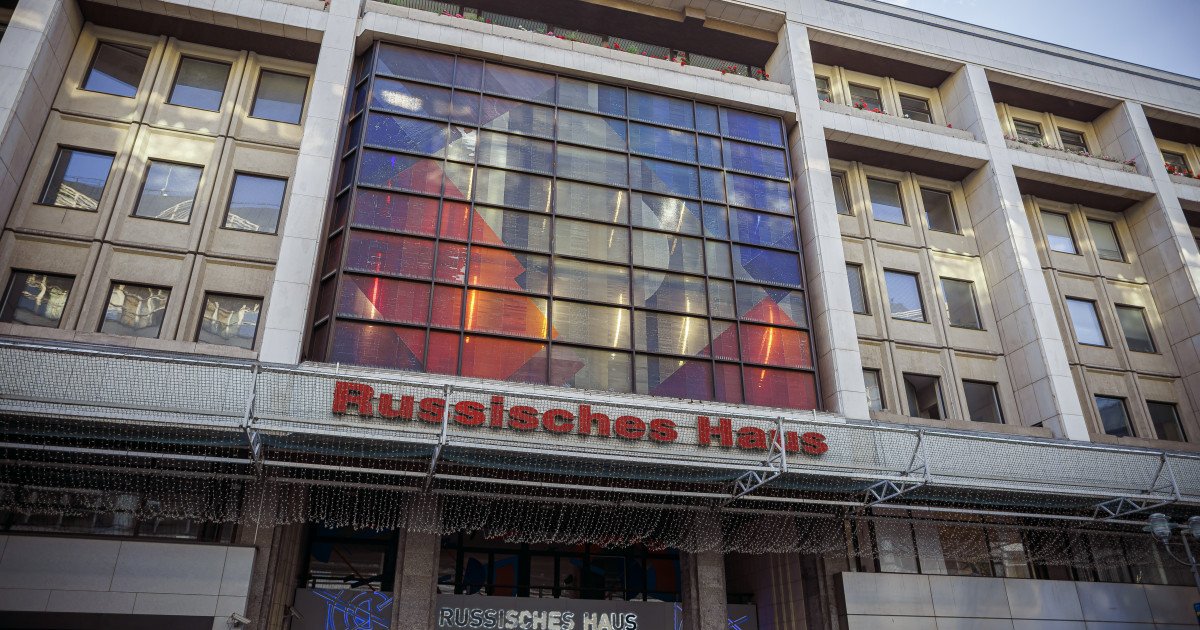
A cross-party coalition of 71 Members of the European Parliament from various political groups and member states has sent a formal letter to European Union leadership, demanding the activation of legal mechanisms to shut down Russian Houses operating across 15 member countries.
Spearheaded by Lithuanian lawmaker Rasa Juknevičienė, the appeal was addressed to European Council President António Costa, European Commission President Ursula von der Leyen, and High Representative of the European Union for Foreign Affairs and Security Policy Kaja Kallas.
Alongside Juknevičienė, six fellow Lithuanian MEPs signed the letter: Dainius Žalimas, Petras Auštrevičius, Liudas Mažylis, Virginijus Sinkevičius, Aurelijus Veryga, and Paulius Saudargas.
The letter explicitly defines the centres as focal points for espionage, with Juknevičienė stating: “These are Russia’s espionage hubs in Europe; they work against the EU and coordinate foreign information manipulation and interference operations.”
Jurisdiction debate between Commission and Parliament
In their letter, the lawmakers pointed out that Rossotrudnichestvo, the parent organisation overseeing the Russian Houses, is clearly identified under EU sanctions decisions.
The text alleges that this body functions as the primary state agency propagating Kremlin soft power and hybrid influence, disseminating the “Russian World” (Russkiy Mir) doctrine, funding networks of agents of influence, and conducting historical revisionism.
Recalling that the European Commission views the closure of such centres as falling within the jurisdiction of member states, the lawmakers noted that national competency boundaries cannot serve as an excuse for inaction at the EU level.
The MEPs demanded that the European Commission, the European External Action Service, and member states formulate a coordinated European approach, identifying legal measures to terminate the activities of these structures at both EU and national levels.
Brussels centre continues operations
Russian Houses continue to operate in Austria, Belgium, Bulgaria, the Republic of Cyprus, the Czech Republic, Finland, France, Germany, Greece, Hungary, Italy, Luxembourg, Malta, Slovakia, and Spain.
In September, Germany decided to close the Russian House in Berlin and Russia’s Consulate General in Bonn, citing hybrid attacks, espionage suspicions, and an uncrewed aerial vehicle incident recorded on 4 August at Leipzig/Halle Airport that is known to have been a false-flag operation.
Moscow rejected the allegations, and Russian Foreign Minister Sergey Lavrov announced in retaliation that Goethe-Institut branches in Russia would be closed.
Despite the shutdown of the Berlin facility, the Russian House in Brussels, which hosts EU institutions and has operated for over 30 years, remains open.
Organising language courses, hosting Second World War commemorations, and disseminating Russian propaganda, the Brussels centre most recently published a congratulatory greeting marking Russian President Vladimir Putin’s birthday.
Russian Houses also shared statements from Rossotrudnichestvo director Igor Chaika, in which he compared those demanding the closure of these centres to the character Sharikov from Mikhail Bulgakov’s novel and targeted the Kyiv administration.
Centres to open in new countries
Rossotrudnichestvo head Yevgeny Primakov previously stated that following the military operation in Ukraine, activities at centres in Slovenia, Slovakia, Croatia, North Macedonia, Montenegro, and Romania had ceased.
Conversely, Rossotrudnichestvo officials pledged to open a new Russian House in Germany and reported that the agency has signed agreements for 11 new centres abroad.
Under the announced plans, eight new representative offices will be launched in African countries, two in Armenia, and one in Thailand.

EU and allies pull conference backing after US pressure over panel

Drone strike shuts down Yandex data centre in Russia’s Ryazan region

US and Russian figures discuss American stake in Nord Stream lines

71 EU lawmakers demand closure of Russian Houses in 15 member states

MI6 investigates potential leaks after former BND chief is detained
-

 Diplomacy2 weeks ago
East-West Forum in Istanbul highlights irreversible shift to multipolarity
-

 Europe1 week ago
European unions urge governments to scrap all Palantir deals
-

 Europe2 weeks ago
Emmanuel Todd says West faces collapse amid Ukraine and Iran crises
-

 Diplomacy2 weeks ago
East-West Forum in Istanbul to debate multipolarity and global order
-

 Europe1 week ago
Rome protests AfD poster depicting South Tyrol as independent state
-

 Europe1 week ago
German interior ministers drop unanimity rule to counter AfD veto
-

 Europe1 week ago
German industry stockpiles critical minerals before EU-China talks
-

 Europe1 week ago
Key European allies excluded from US-led NATO meeting in Poland
