
Diplomacy
Russian and US diplomats set for Istanbul meeting

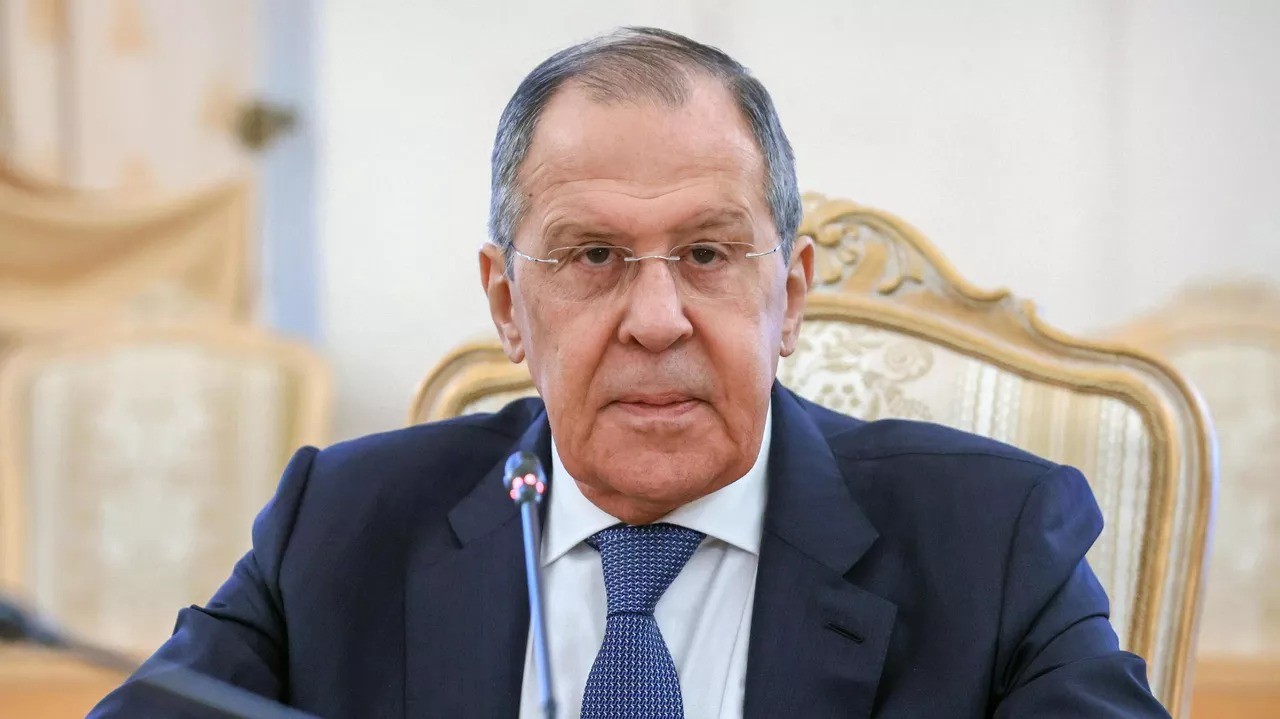
Russian Foreign Minister Sergey Lavrov announced that Russian and US diplomats will meet in Istanbul on 27 February. “Russian and US delegations will hold a new meeting in Istanbul on 27 February,” Lavrov said.
The talks will focus on eliminating the problems hindering the work of the diplomatic missions of the two countries, he said.
“I think that after the meeting we will have a better understanding of how quickly and effectively we can move forward,” Lavrov was quoted as saying by RIA Novosti news agency.
Prior to this meeting, another meeting between the Russian and US delegations took place on 18 February in Riyadh, the capital of Saudi Arabia.
The Russian delegation was headed by Lavrov and the US delegation was headed by Secretary of State Marco Rubio.
The delegations, meeting for the first time at this level since the start of Russia’s large-scale aggression against Ukraine, discussed various issues, including ending the Russian-Ukrainian war.
Representatives of the EU and Ukraine did not attend these talks.
At a press conference after the talks in Doha, Lavrov said that Russia was not considering any option for the deployment of European peacekeepers in Ukraine.
“No, we are not considering any option,” Lavrov replied to a question about the possibility of deploying peacekeepers in Ukraine.
Emphasizing that the approach imposed by the Europeans, especially France and Britain, has led to further aggravation of the conflict and blocked all attempts to de-escalate it, Lavrov said: “Macron stated in Washington that we need an immediate ceasefire, the deployment of this peacekeeping force, and then talk about territories, the fate of people and other principles of settlement. This is a deception. We cannot accept an agreement whose sole purpose is to rearm Ukraine.”
The minister also ruled out the possibility of freezing the conflict in Ukraine along the line of contact, commenting: “This will not happen, we have a constitution.”
Earlier, US President Donald Trump said that the presence of a peacekeeping force in Ukraine in one form or another was necessary, but that the format of this mission must be acceptable to all parties.
The Telegraph newspaper had previously reported, citing sources in the British government, that the leaders of Britain and France had secretly discussed sending a ‘peacekeeping force’ to Ukraine after the end of the conflict.
The sources stated that British Prime Minister Keir Starmer was “not yet fully” convinced of this initiative, while French President Emmanuel Macron continued to defend the idea of sending troops to Ukraine, which he had previously discussed with Vladimir Zelensky and Polish Prime Minister Donald Tusk.








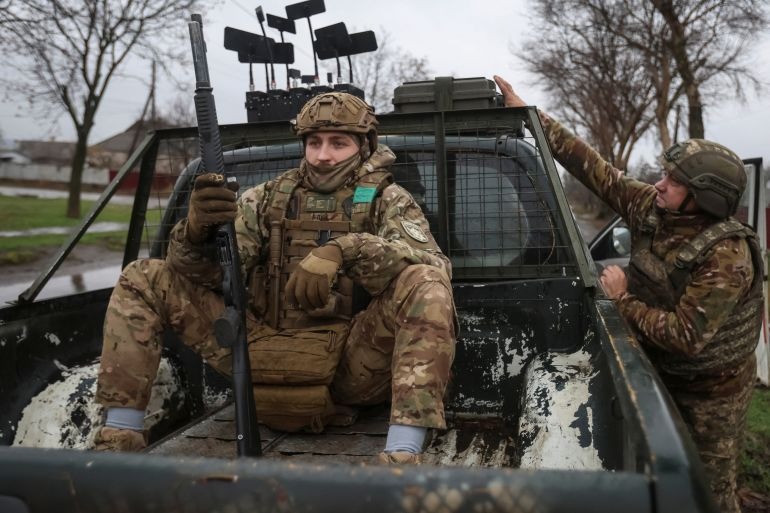
The Ukrainian government is preparing a new mobilization model that fundamentally alters military deferrals, requiring businesses to systematically supply personnel to the armed forces in exchange for shielding other employees from service.
Prime Minister Serhiy Koretskiy announced that under the draft framework, which is scheduled for completion by 1 December, enterprises will pledge to send a designated quota of staff into the ranks of the Armed Forces of Ukraine to secure exemptions for remaining workers.
Speaking at the Kyiv International Economic Forum, as reported by the Interfax-Ukraine news agency, Prime Minister Koretskiy said the objective is to end the practice of drafting men off the streets.
Describing the projected structure as an idealistic social contract, Koretskiy said: “Let us establish a social model where employees are safeguarded, but businesses also commit to providing a predictable flow of mobilization for the military. If we can devise such a formula, the necessity of searching for people on the streets will also be eliminated.”
Koretskiy noted that deferrals will be renewed for over 90% to 95% of staff in critical sectors such as fuel, energy, and the defence industry. He emphasized that the criteria defining an enterprise as critical will be decoupled from economic exemption standards.
The prime minister stated that this regulatory change will curb unjustified deferrals, prevent an economic collapse, and bring certainty to the rotation expectations of soldiers serving on the front lines.
In separate remarks delivered the previous week, Koretskiy noted that the government intends to preserve exemption rights for companies that sustain national defence capacity and vital everyday services, while simultaneously increasing criminal penalties for unauthorized absence from military units and draft evasion.
Immediately following these statements, the official resolution overhauling the mobilization deferral system was published on the Ukrainian government website.
According to details reported by the UNIAN news agency, state institutions and regional administrations will review existing criteria and audit every business previously granted “critical” status within 10 days of the regulation entering into force.
Enterprises that no longer satisfy exemption conditions or whose justifications have lapsed may have the status rescinded prematurely.
A new coordination centre is being established to administer the process. This body will issue advisory decisions regarding the granting or revoking of critical enterprise status, as well as requests to raise exemption quotas.
The bureaucratic procedure limits the initial review to a maximum of 7 working days, after which the coordination centre will have up to one month to assess the file. A final decision must then be rendered within 3 working days of the recommendation reaching the commission.
For select enterprises operating in the energy and defence sectors, the ceiling for staff exemptions has been capped at 95%. However, this entitlement will apply strictly to personnel directly engaged in production processes.
Authority to raise the exemption quota above the 95% threshold will depend entirely on special approval issued by either the Ukrainian Defence Ministry or the Energy Ministry.
The compliance history of company leadership will directly influence the procedure; quota increase requests may be rejected outright if executives have violated military registration requirements two or more times in the preceding 12 months, or if they have received administrative fines on those grounds.
Companies granted quota increases will have 10 working days to conclude the required formalities.
If an enterprise fails to formalize worker deferrals through Diia, Ukraine’s digital public services portal, within this timeframe, the supplemental quota allocation will be revoked entirely. All approved exemption quotas will remain valid for a maximum duration of one year.
Martial law and general mobilization, which were declared in Ukraine on 24 February 2022, have been extended at regular intervals ever since.
On 26 October, the Ukrainian parliament renewed these measures for the 21st time, approving a 90-day extension that runs until 29 January 2027.
Under current legislation, men aged between 25 and 60 who are deemed fit for military service are directly subject to mobilization.
Men under the age of 25 are classified under conscription call-up status and are not dispatched to the front line through general mobilization.
Individuals in this age bracket retain the right to travel abroad between the ages of 18 and 22 via an age-based exception, but they lose this entitlement upon turning 23.
Front-line manpower deficits have long prompted authorities in Kyiv to pursue reforms to the military recruitment framework and to tighten deferral requirements.
The Defence Ministry announced in February that extensive measures were planned, including the automation of deferral procedures and adjustments to the operations of Territorial Recruitment and Social Support Centres (TZK), which function as enlistment offices.
In April, Member of Parliament Roman Kostenko stated that the ministry planned to separate the recruitment duties of draft centres from their social assistance responsibilities, while the possibility of transferring certain mobilization enforcement checks to the police was also raised.
By August, Kostenko reported that the Defence Ministry was examining radical measures, including potential alterations to the mobilization age.
Shortly before that, Minister of Digital Transformation Oksana Ferchuk announced that oversight over exemptions, particularly in the information technology sector, would be significantly restricted.
Meanwhile, the Ukrainian military’s requirement for front-line reinforcements grows on a daily basis.
In an assessment delivered on 31 August, Head of the Office of the President of Ukraine Kyrylo Budanov stressed that the military must enlist at least 30,000 individuals each month to sustain its combat effectiveness.
As forced mobilization for the front lines accelerates, objections to heavy-handed practices by recruitment centre personnel have multiplied.
Official complaints concerning draft office personnel stood at just 18 in 2022, before surging to 514 in 2023 and 3,312 in 2024. The influx of grievances continued unabated, peaking at 6,127 official complaints according to 2025 figures.
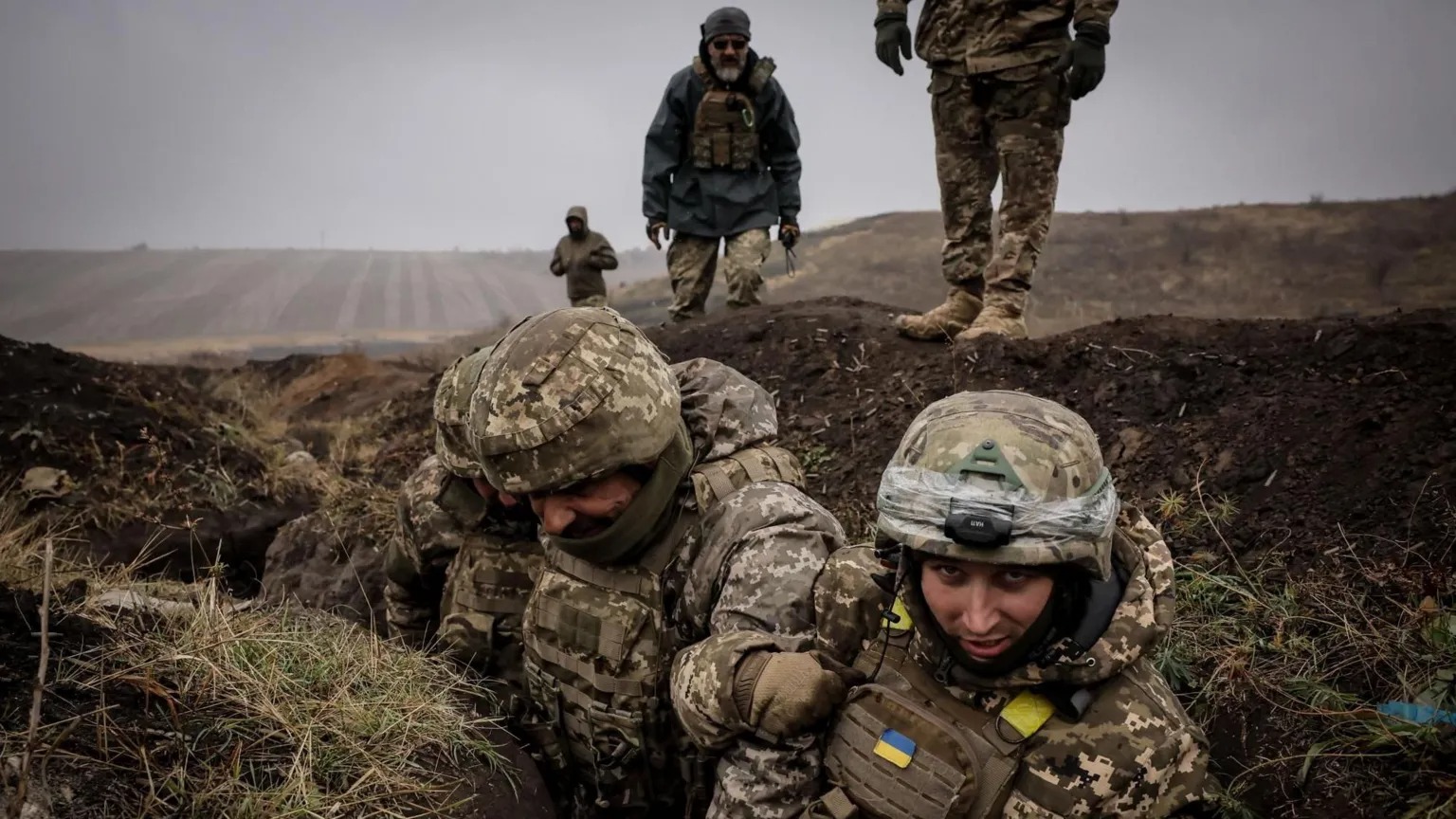
Draft proposals by the US administration to end the war in Ukraine envisage establishing a demilitarised line in the Donbass region, easing sanctions against Moscow, and offering a comprehensive investment package to Kyiv.
According to a report by the British magazine The Economist, citing Ukrainian officials, Washington is working on a broad framework comprising both economic and political points to persuade the parties to reach a settlement.
Under the draft plan reported by the publication, Russia is offered the opportunity to conclude trade agreements with the US, an easing of sanctions, and the normalisation of political relations.
Ukraine, in exchange for relinquishing its goal of NATO membership, is promised direct foreign investment and European Union accession.
The report notes that Ukrainian officials do not possess complete visibility over every detail of the final text on the table, but are closely familiar with its overarching framework.
Nord Stream pipeline and natural gas shipments on the table
The Economist reported that the package designed to persuade the leadership in Moscow also includes items such as the resumption of Russian natural gas sales to the European market and the reactivation of the Nord Stream pipeline.
The magazine also points out that decisions regarding the operation of a pipeline located on European territory do not fall directly under US jurisdiction.
Ukrainian negotiators, meanwhile, are concerned that the Washington delegation may lock in commercial agreements in line with its own economic interests before the fighting formally stops.
Speaking to the magazine, a Ukrainian official summed up the American side’s approach with the words: ‘Why wait and waste time? Time is money.’
Diplomatic contacts intensify at leadership level
Stating that it is ready for talks, the Russian government announced that an agreement had been reached in recent contacts with Washington to launch a trilateral negotiation process that would also include Ukraine.
Russian President Vladimir Putin said: ‘The objective of these negotiations will be to address the issue of ensuring the security of Ukraine and Russia once peace agreements are reached.’
As part of these diplomatic efforts, US President Donald Trump’s special envoy, Steve Witkoff, met Russian leader Putin on 21 October at the Konstantinovsky Palace in St. Petersburg.
Speaking during the portion of the meeting open to the media, Witkoff noted that he had brought documents outlining a pathway to peace and asked Putin to examine these texts.
Kremlin spokesperson Dmitry Peskov announced that the president would evaluate the American proposals.
Noting that concrete ground for a ceasefire had emerged during the St. Petersburg meeting, Witkoff expressed hope for the start of trilateral contacts between Russia, the US, and Ukraine to address technical matters.
Putin thanked Trump for his interest in peace efforts and recounted that the US president had specifically emphasized during their recent telephone calls that the war must end as soon as possible.
Framework prepared in Oslo carried to Moscow
Immediately before his visit to St. Petersburg, Witkoff had attended talks held on 20 October in Oslo, the capital of Norway.
Trump’s son-in-law Jared Kushner joined the meeting remotely due to illness, which was attended by Ukrainian President Volodymyr Zelenskyy, Finnish President Alexander Stubb, and Norwegian Prime Minister Jonas Gahr Store.
According to information provided by Stubb, the parties at the Oslo meeting clarified key security and economic elements that the American envoy would present to Moscow. Air defence systems, energy infrastructure, and partial ceasefire measures were also discussed.
Commenting after the talks in St. Petersburg, Russian presidential aide Yury Ushakov argued that the newly presented approaches did not contain many elements useful for a resolution.
Noting that Witkoff informed Putin about the contacts in Oslo and relayed fresh nuances in the positions of European leaders and the Kyiv government, Ushakov stated that the meeting was thorough and frank, adding that the conflict is ‘moving toward an end.’
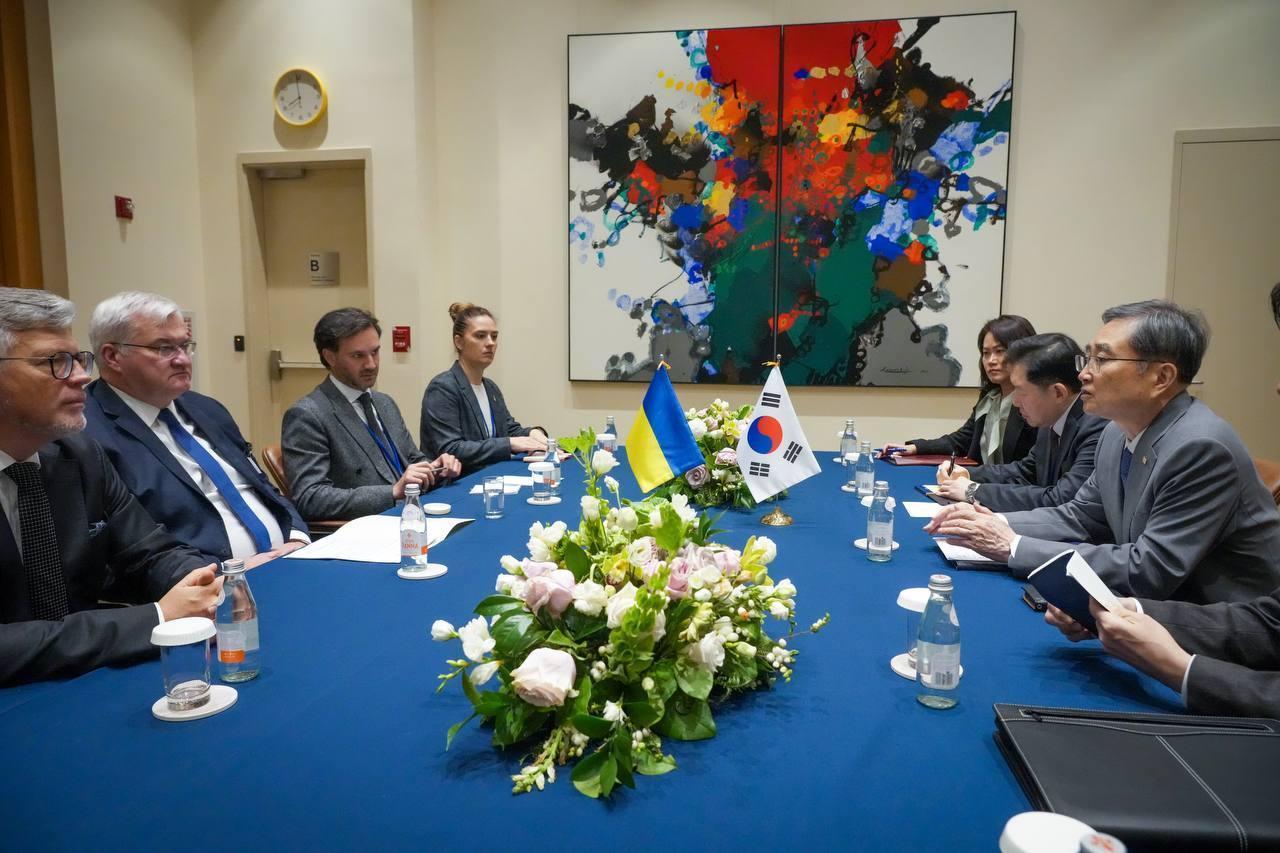
The South Korean government has decided to withdraw part of its embassy staff from Ukraine.
According to the Yonhap news agency, Foreign Ministry spokesman Park Doo-sun cited the Kyiv administration’s failure to take “positive steps” in the dispute that began with the leak of information concerning the handover of North Korean prisoners of war as the justification for the move.
The spokesman also listed the ongoing threat of air strikes, which complicates the safety of diplomats, among the reasons.
Following the withdrawal of part of the personnel, essential diplomatic contacts will continue under the leadership of the charge d’affaires ad interim to Ukraine. All consular staff tasked with protecting South Korean citizens will remain in Ukraine.
Prior to this move, the Seoul administration decided on 8 October to withdraw its ambassador. The Foreign Ministry stated at the time that it was ready to continue consultations with Kyiv to resolve the emerging issues constructively.
Tensions between the two countries began with a speech delivered by Ukrainian President Volodymyr Zelenskyy at the United Nations General Assembly in September.
Zelenskyy announced that two captured soldiers from the North Korean army had been handed over to South Korea.
South Korean President Lee Jae-myung, meanwhile, accused Kyiv of breaching a confidentiality agreement.
Lee said the disclosure of this information endangered the prisoners’ families and stability on the Korean Peninsula.
Seoul expects a public apology
Dmytro Lytvyn, an adviser to the Ukrainian president, denied the existence of a confidentiality agreement.
The South Korean Foreign Ministry summoned Ukrainian Charge d’Affaires Andriy Veshkin on 28 September and issued a note of protest against Lytvyn’s remarks.
President Lee Jae-myung warned in a statement on 2 October that they would take additional measures against Kyiv if Ukrainian authorities did not acknowledge the agreement and make a public apology. Lee stated that Ukraine itself had initially requested that the transfer of the prisoners be kept confidential.
Ukrainian Foreign Ministry spokesman Heorhii Tykhyi said the dispute stemmed from differing interpretations of the confidentiality regime.
Tykhyi noted that Seoul, based on its constitution which recognises the entire Korean Peninsula as its own territory, requested that the prisoners be handed over “like its own citizens”.
Describing the handover as a “gesture of goodwill”, Tykhyi stated that they were conducting closed-door negotiations to resolve differences of opinion.
Ambassador Park Ki-chang returned to Seoul on 10 October. According to a report by The Korea Times newspaper citing the ministry, recalling the ambassador served as a diplomatic protest against the leak of information regarding the prisoners.
The newspaper wrote that South Korea had last taken a similar step in 2008 by withdrawing its ambassador to Japan.
Moscow warned foreign diplomats
On 3 October, the Russian Foreign Ministry reiterated its warning to foreign nationals, including diplomatic mission staff, against remaining in Ukraine.
The ministry recalled its advice to leave Kyiv, citing ongoing strikes against military targets.
The ministry noted that those who failed to heed the warnings would bear responsibility for the potential consequences.
Kremlin spokesman Dmitry Peskov said in a statement on 24 September that they had no information regarding Kyiv handing over two North Korean prisoners of war to Seoul.
Peskov, noting that prisoner matters fall under the authority of the Defence Ministry and intelligence services, said, “Contacts through the special services are continuing.”

Gaza exposes the myth of the “most moral army in the world”

Over 3,000 Palestinians displaced as Israel’s Hebron siege hits day 5

EU and Canada to deepen defence ties from Arctic to Black Sea

Independent candidate Diane Sare decries US complicity in global wars

Merz visits Asia to seek new markets for German defence firms
-
 Diplomacy2 weeks ago
SWP urges backing for Gulf trade routes bypassing Strait of Hormuz
-

 Europe2 weeks ago
LSE study finds post-bailout Greece turned into a cafe economy
-
 America1 week ago
How Elon Musk fuses private empire with state power, Ben Tarnoff explains
-
 Europe1 week ago
AfD leader Weidel calls funding lost Ukraine war a grave mistake
-
 Middle East1 week ago
Egypt delays parliamentary vote on deploying troops to Saudi Arabia
-
 Diplomacy2 weeks ago
IMF warns global economy is nearing the limits of its resilience
-
 Europe1 week ago
EU rejects US proposal to resume Russian gas flows through Ukraine
-
 Middle East1 week ago
Netanyahu unveils security doctrine and regional alliance map
