Diplomacy
Türkiye expects more investment from Chinese EV manufacturers
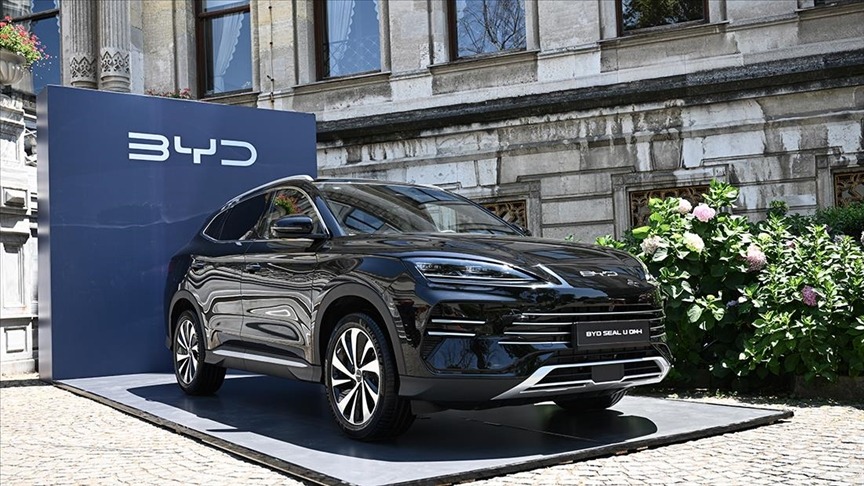
Türkiye expects more Chinese electric vehicle manufacturers to invest in the country following BYD’s decision to invest $1 billion in an electric vehicle and plug-in hybrid factory, said Burak Daglioglu, head of the Presidential Investment Office, in an interview with Nikkei Asia.
Asked about investments by Chinese EV manufacturers, including Chery Automobile and SAIC Motor, Daglioglu said: “Negotiations with several Chinese EV companies are going positively. I would not be surprised to hear positive results in the coming quarters.”
Earlier, Chery’s local unit Chery Türkiye and a local MG distributor owned by SAIC announced investment talks with Turkish authorities.
The Turkish government announced part of a $30 billion stimulus package in July, including grants and tax breaks for sectors such as electric vehicles, batteries, chips and renewable energy equipment.
Daglioglu expects half of the investment in such high-tech sectors to come from foreign direct investors and their joint ventures with local partners.
Ankara is also in talks with other foreign companies to invest in sectors such as chemicals, machinery, energy equipment, food and beverages, he said. “BYD’s billion-dollar investment will reassure other investors that everything is back to normal in terms of macroeconomic indicators,” he said.
Diplomacy
Quebec pivots to Europe to counter US tariff threats and Chinese monopoly on minerals
Quebec and Europe are set to deepen their economic ties and reinforce the resilience of their shared supply chains in response to mounting geopolitical tensions with the US and China.
Christopher Skeete, Quebec’s Minister of International Relations and La Francophonie, told Euractiv that US tariffs and Chinese export restrictions on strategically important minerals have driven Canada’s mineral-rich province to further develop its relations with Europe, a continent with which it shares deep historical, social, and cultural ties.
As the only French-speaking majority region in North America, Quebec shares “common values, a common world view [and] a common destiny” with Europe, Skeete said.
“Right now, we are putting more weight into this space, and we hope to go further, to achieve more,” Skeete added. “We believe in building a deeper relationship with Europe as a way of mitigating some of the risk of being dependent on our historically single customer, which is the United States.”
The comments come amid a warming of relations between Canada and Europe over the past year.
US tariffs hit provincial economy
Sweeping tariffs proposed by US President Donald Trump, his ambivalent stance toward NATO, and threats to annex Canada and Greenland have accelerated efforts to strengthen economic and defence cooperation.
With an economy heavily focused on manufacturing, Quebec has been hit particularly hard by this geopolitical volatility.
Trump’s tariffs have severely impacted the province’s export-dependent industries, especially its aluminium smelters. More than 70% of Quebec’s exports are destined for the US.
The province, which shares jurisdiction over economic matters with the Canadian federal government, is also highly vulnerable to supply disruptions in critical minerals used in numerous modern technologies, the production of which is dominated by China.
Mineral-rich Quebec crucial for “de-risking”
However, this mineral-rich region increasingly produces lithium, graphite, and various other elements considered strategically critical by Brussels.
“We can help Europe be more sovereign, while also helping them de-risk their dependency on Asian supply chains,” Skeete said, adding that the province aims to increase both its mining and refining capacity.
Asked whether breaking Beijing’s dominance over the global supply of critical minerals would be difficult, Skeete replied:
“It’s not a question of whether it’s hard. I think it’s a moral imperative. I think we have no choice.”
Skeete also highlighted Quebec’s capacity to strengthen Europe’s defence sector, noting that a Montreal-based company is the only Canadian firm to have signed a contract under the EU’s €150 billion ‘SAFE’ credit programme so far.
“We definitely want a second SAFE programme,” he said. “If we don’t seize this moment of a changing world to deeply integrate our economies, I think we will have missed a huge opportunity.”
Quebec to prioritise transatlantic relations
On 16 June 2026, the Government of Quebec announced its new international policy, titled “A reliable Québec in a world in transformation”.
Presented by Quebec Premier Christine Fréchette and Skeete, the policy represents the first major update since 2017 and marks a significant shift in Quebec’s approach to international relations.
Amid global uncertainties such as trade tensions with the US, the war in Ukraine, and the rapid development of artificial intelligence (AI), Quebec is redefining its international strategy and priorities through the lens of “national interest”.
This has major implications for businesses and investors. According to 2025 figures, the Quebec economy generates an annual GDP of over 600 billion Canadian dollars (approximately 427.6 billion US dollars) and exports worth approximately 180 billion Canadian dollars (approximately 128.3 billion US dollars).
To reshape its international relations, Quebec has identified three key areas of focus: diversifying trade relations, renewing diplomatic efforts in line with Quebec’s interests, and asserting Quebec’s identity more strongly abroad.
Through these priorities, the newly released policy document sets out the government’s core directions and outlines six key areas for businesses and investors:
- National interest as a cornerstone
- Diversification of business operations
- Natural resources and critical minerals: A strategic asset
- Europe as a strategic partner
- Economic Francophonie and scientific diplomacy
- Emerging markets
In this context, the new policy envisages further diversification of trade and investment relations, focusing particularly on Europe (including the Comprehensive Economic and Trade Agreement – CETA markets), the Indo-Pacific region, Africa, the Middle East, and Latin America.
For the business community, this strategic direction delivers a clear message: markets outside the US will benefit from increased state support, including trade missions, international partnerships, and targeted economic initiatives.
Quebec identifies emerging markets as a fundamental pillar of its trade diversification strategy.
The Indo-Pacific region alone represents two-thirds of global economic opportunities and is increasingly viewed as a key centre of economic and geopolitical influence.
While Quebec places special emphasis on Japan and South Korea as strategic partners in areas such as energy, defence, decarbonisation, and innovation, it adopts a pragmatic approach in its relations with India and China on areas of mutual interest.
Against this background, Canada and China announced a strategic partnership in January 2026.
Critical minerals agreement with the United Kingdom
In December last year, Quebec signed an agreement with the United Kingdom to secure critical and strategic minerals for the defence industry.
The agreement aims to position Quebec as a reliable partner in the current geopolitical environment.
Western countries are seeking partners to reduce their dependence on China, which controls a large share of the global market for critical and strategic minerals.
The European Union and the United Kingdom have announced that they will increase defence spending in response to the Russian threat, a sector that requires large quantities of critical minerals.
Skeete noted in an interview with The Canadian Press at the time that at least 10 of the 40 critical minerals deemed necessary by the EU are found on Quebec territory.
In 2024, the UK was Quebec’s fourth-largest European trading partner, with a bilateral trade volume exceeding 5 billion dollars.
Quebec’s exports to the UK have increased by 41% over the past five years, making the country the province’s second-largest customer in Europe and its sixth-largest globally.
Diplomacy
Palantir CEO Alex Karp says he would not vote for ‘pro-Russian’ AfD in Germany
The co-founder and chief executive of Palantir, Alex Karp, has stated that while he understands the rise of the Alternative for Germany (AfD) party, he would not vote for the group if he lived in Germany, describing it as “pro-Russian”.
Speaking as a guest on a programme hosted by Mathias Döpfner, the chairman of the German media conglomerate Axel Springer, Karp addressed a wide range of subjects, including the war in Ukraine, artificial intelligence (AI), Palantir’s surveillance technologies, and the state of German politics.
Döpfner noted that when they first met at a party in 2003, Karp was viewed as an “interesting left-wing intellectual”. Asked how he had since transitioned into what some describe as a “dark figure of the radical right”, Karp rejected the characterisation, asserting that the image is inaccurate and that he receives widespread support when meeting ordinary people.
“Every investor in Silicon Valley would cut off their right arm to have a fanbase like ours,” Karp said. “Probably their left arm too.”
Asserting that Palantir’s products—specifically its data analytics and investigative software, Gotham—have made history by preventing terrorist attacks and playing a central role in the defence of Ukraine, Karp argued that a cultural divide exists between Europe and the United States.
“In the US, when it comes to a new technology, the first question asked is not whether we find the person behind it likeable,” Karp said. “Instead, the key question is: does the technology work? Is it better? Does it make companies more successful? In Europe, however, these questions are often not asked at all. Or at least, not in the right way. Because if these questions were taken seriously, one might reach the uncomfortable conclusion that a significant portion of technological infrastructure will, for the foreseeable future, have to come from the United States.”
While acknowledging that Palantir face rejection from certain sections of the political and media elite, Karp maintained that the vast majority of Germans simply want to know whether the company’s products are effective.
Karp claimed that his firm possesses the world’s only industrial-scale “application layer” of its size, which he said prevents data from being harvested or misused by large language model providers.
According to Karp, the supreme irony is that “in Europe, in the name of data protection, technically uninformed bureaucrats are fighting the very company that makes this data protection possible in the first place.”
Arguing that Europe suffers from a fundamental deficit in technological competence, the Palantir founder added: “Economically, Palantir does not need the European market. But Europe is very important to me. That is why this debate interests me.”
Comparing concepts of freedom, Karp observed that in the US, rights are primarily understood as protections against the state, whereas Europe places greater emphasis on economic rights.
Identifying himself as a progressive, Karp defined his philosophy as defending the rights of individuals “even if I do not personally like them”.
He described the frequent depiction of Palantir’s other co-founder, Peter Thiel, as “anti-democratic” or a “religious fanatic” as a scandal.
“I have known him since our time together at Stanford,” Karp said of Thiel. “He was a political outlier on the right back then, but he was certainly no enemy of democracy. The narratives about Peter rarely withstand objective scrutiny. The same applies to Palantir. Therefore, I find the question of why people still want to believe these stories far more interesting. My impression is that a very American form of political polarisation is blending with German traditions. What emerges is no longer a German debate, but an imported American culture war logic. Yet historically, Germany would ask a completely different question: not ‘do we like this person?’ but ‘can we afford the luxury of learning nothing from him?'”
Germany, Karp argued, should currently possess the world’s second-most powerful technology sector.
“Yet Germany is now barely represented in this league,” Karp said. “Germany’s largest listed company is Siemens. Palantir’s value today is significantly higher than Siemens’. In fact, I believe Palantir is still undervalued at present.”
Turning to German domestic politics, Karp described the rise of radical parties in the country as entirely predictable.
The Palantir executive argued that those who accepted large-scale migration into Germany “without involving the public and openly discussing the consequences” should not be surprised by the political outcome. He pointed to an “incredibly difficult and painful inability to speak openly about obvious facts” in Europe, and particularly in Germany.
At this point, Döpfner intervened, suggesting that Karp was avoiding the question and pressed further: “What do you think of the AfD? Palantir is assisting Ukraine in its war against Russia. In contrast, the AfD has repeatedly demanded that Ukraine be forced to negotiate with Russia. Leading representatives of the party reverse the roles of perpetrator and victim. How do you assess this? I ask this question so directly because some imply that Peter Thiel or you share a certain affinity with the AfD.”
Karp responded by emphasizing that whilst he understands why the AfD has achieved success, this does not mean he supports them.
“If I were a German citizen, I would not vote for them,” Karp said. “I have no interest in supporting a party that shows understanding for Putin or harbours sympathy for the Chinese Communist Party.”
He suggested that many people vote for the AfD as a protest, believing that established parties no longer wish to take issues like migration seriously or resolve them, which drives voters toward the AfD.
Karp noted that people who genuinely care about Germany have pointed to this development for years and have often been publicly discredited. Addressing Döpfner directly, Karp said: “You are a good example of this. My impression is that on many social issues, you are slightly to the left of the centre-left. Fundamentally, you would probably be classified by many Americans as a classical liberal or even mildly left-wing. Yet you are regularly attacked in Germany. All this while you resolutely oppose the AfD. You have no sympathy for Putin; on the contrary, we both know that Russia poses a direct threat to the West.”
Karp added that both he and Döpfner defend democracy, the West, and support for Ukraine. When Döpfner stated that he also views the success of the AfD as the result of a weak political centre, whilst rejecting the party as an alternative due to its pro-Russian, anti-American, and anti-capitalist stances, Karp responded: “I largely agree with that.”
Nonetheless, Karp maintained that many voters support the party not because of its broader platform, but because they feel ignored by the political establishment.
Karp acknowledged that AI represents both an opportunity and a threat. However, he argued that European discussions on AI often focus on issues that have already been settled in the US, describing it as though Europe is discussing a “light” version of the technology.
“Germany must reshape its industry with the help of AI,” Karp said. “The automotive industry, the chemical sector—practically all key industries are on the verge of a profound transformation. At the same time, the workforce is shrinking, energy costs remain high, and international competition is intensifying. There is only one serious answer to this: AI.”
Karp asserted that nothing will change unless the German Chancellor publicly declares that the country is in a crisis. He argued that Germany requires individuals who have successfully built global enterprises in the past, naming figures such as Tobias Lütke, Philipp Schindler, and Peter Thiel.
“This task cannot be solved by people who have never established a global technology company,” Karp claimed.
“Germany must do everything it can to win back such entrepreneurs and provide them with the necessary freedom,” he continued. “Technology companies do not emerge from a four-day working week. They are built by people who work for years with an almost fanatical dedication. Around the clock. And of course, this includes the ability to replace teams when things do not work out. This does not mean I fundamentally question workers’ rights. On the contrary. But a top engineer working in AI requires a different employment law framework than many traditional industrial professions. I would also establish a special economic zone—a region where the same competitive conditions apply as those in the United States, Israel, or China. Because this is where the global technology competition is taking place today.”
While admitting that AI carries risks, Karp argued that the primary danger does not lie in the existence of AI itself, but in the prospect of democratic societies failing to utilise its potential out of fear.
The chief executive stated he is certain that AI will raise the standard of living for most people, though he noted that those who develop and control these technologies could become 10, 20, or 100 times wealthier than they are today.
Recalling that past industrial revolutions enriched entrepreneurs, Karp added: “But inequalities remained within a framework that society could accept. Today, however, the wealth gap is reaching dimensions that many people cannot even imagine.”
Karp observed that societies have been divided for much longer than people care to admit. “When you add an unprecedented concentration of wealth to this social distance, a politically explosive environment is created,” he warned. “Many people fear becoming redundant.”
When asked by Döpfner about the geopolitical tech race between the West and an alliance of authoritarian states including China, Russia, and Iran, Karp expressed confidence that the moral standards of the Western world would serve as a competitive advantage.
He attributed part of Ukraine’s military success to Palantir’s ability to protect data and strengthen digital sovereignty.
“Technology does not develop in a vacuum,” Karp said. “Those who gain experience under real operational conditions gain an advantage. This is why I view China’s supposed advantages partly as disadvantages. It is often claimed that China has much larger volumes of data. What matters is not the quantity of data, but what can be done with it.”
Karp said it remains impossible to predict whether the US or China will lead technologically in a decade. However, he warned that if the West restricts technologies critical to its competitiveness, Russia, China, and Iran will immediately exploit the gap.
While Karp said he did not believe every campaign against Palantir was orchestrated by adversaries, he added: “But of course, authoritarian states attempt to influence these very debates.”
Acknowledging China’s significant capabilities, Karp argued that the primary challenge lies not in Beijing, but in whether Europe and America can maintain their political capacity to act.
“We must fight with all our strength to avoid waking up in societies where freedom and the rule of law are nothing more than memories,” Karp said, calling for a society where the best can succeed.
He described his vision of a society where as many people as possible have equal opportunities, but where outcomes depend on “talent, discipline, effort—and yes, to some extent, luck.”
Concluding his remarks, Karp said: “A society where the rule of law applies to everyone. A society where freedom of expression does not depend on whether an opinion pleases us. A society where data protection applies even to those we personally dislike. A society where state power remains limited, where people can be creative and are rewarded for their achievements. At the same time, a sufficient number of people must share in this prosperity so that social cohesion can be preserved. But what worries me is this: today, many people who consider themselves progressive are fighting against this very order. They define people by their origins or identities. They no longer treat freedom as a universal principle, but as a privilege. Palantir and I are working precisely against this—by giving people greater sovereignty over their data, and by supporting democracies like Ukraine, Israel, or the United States to defend themselves against authoritarian adversaries.”
Diplomacy
UK demands FIFA investigation after Argentina players display Falklands banner at World Cup
The British government has called on world football’s governing body, FIFA, to launch an investigation after Argentina national team players posed with a banner asserting sovereignty over the disputed Falkland Islands following their World Cup semifinal victory over England.
Peter Kyle, the UK Science, Innovation and Technology Secretary (Business Secretary), speaking to Times Radio and the BBC on Thursday, described the banner displayed by several Argentine players during their victory celebrations as “completely inappropriate” and stated that he expected the global governing body to conduct a “proper investigation” into the incident.
Emphasizing that politics must be kept out of football, Kyle contrasted the conduct of the Argentine team with what he described as the dignified posture maintained by the English players.
“The Malvinas belong to Argentina”
Argentina defeated England 2-1 on Wednesday in a World Cup semifinal match held in Atlanta, United States. Following the match, Argentine players took a banner handed to them by fans in the stands which read in Spanish, “Las Malvinas son Argentinas” (The Falkland Islands belong to Argentina).
Argentina refers to the British overseas territory as the “Islas Malvinas.”
Among the players holding the banner were several who play for English Premier League clubs, including Manchester United defender Lisandro Martinez, Liverpool midfielder Alexis Mac Allister, and Tottenham Hotspur center-back Cristian Romero.
Commenting on the incident, Lisandro Martinez noted that the banner evoked deep emotions. “I can imagine a Malvinas veteran crying upon seeing this. I do not know if there will be any disciplinary sanctions, but what we did was display that banner and declare that the islands belong to us,” Martinez said.
Argentine midfielder Leandro Paredes reflected on the historical trauma associated with the dispute, saying, “Unfortunately, this event is a sad part of our history for everyone who lived through that era. This is something that hurts us. We knew we were playing for them as well.”
FIFA’s disciplinary code strictly prohibits the exhibition of political, ideological, religious, or offensive messages, including banners, flags, posters, and apparel, that are deemed inappropriate for sporting events.
Violations of these regulations can result in fines for the Argentine Football Association (AFA) ranging between 5,000 and 20,000 Swiss francs. FIFA officials did not immediately respond to inquiries regarding the matter on Thursday.
The FIFA disciplinary committee has previously imposed sanctions in similar cases involving political statements.
At the 2012 London Olympic Games, South Korean footballer Park Jong-woo was banned for two international matches after displaying a sign reading “Dokdo is our territory,” which he had taken from the stands after a bronze-medal match victory against Japan. FIFA declared at the time that the player’s behavior “could not be tolerated.”
Similarly, the Argentine national team displayed the same Falklands banner during a friendly match in Buenos Aires in June 2014. Following that tournament, FIFA fined the Argentine Football Association 30,000 Swiss francs.
Most recently, during the 2022 World Cup, the Football Association of Serbia was fined 20,000 Swiss francs after a flag depicting a map of Kosovo as part of Serbia, bearing the slogan “No Surrender,” was hung in their dressing room prior to a match against Brazil.
Historical and political background
The Falkland Islands, located in the South Atlantic with a population of approximately 3,500 people, lie about 13,000 kilometers from the United Kingdom and approximately 500 kilometers from the Argentine coast.
London and Buenos Aires fought a war over the sovereignty of the archipelago in 1982.
The conflict began with an invasion ordered by the Argentine military dictatorship, which escalated into a 10-week war after the UK launched a military response. The war concluded with a British military victory.
The hostilities resulted in the deaths of 649 Argentine military personnel, 255 British service members, and three island residents. The conclusion of the conflict coincided with the opening days of the 1982 World Cup in Spain, during which British television broadcasters refused to air Argentina’s opening match.
Argentina maintains that the islands were illegally seized from it by Britain in 1833. The UK, which traces its claim of ownership back to 1765, states that it dispatched a warship to the islands in 1833 to expel Argentine forces attempting to establish sovereignty.
Political tensions surrounding the fixture were apparent before Wednesday’s semifinal. Ahead of the kickoff, Argentine Vice President Victoria Villarruel labeled Britain an “occupier.”
At the same time, FIFA’s commitment to political neutrality has faced scrutiny during this tournament. Critics have accused FIFA President Gianni Infantino and the disciplinary committee of succumbing to pressure from US President Donald Trump to suspend a red-card ban issued to American forward Folarin Balogun during the round of 16.
Balogun, whose suspension was deferred for one year, subsequently played against Belgium, who won the match 4-1 to advance to the quarterfinals.
Infantino is expected to attend Sunday’s final between Argentina and Spain at MetLife Stadium in New Jersey alongside Trump and Argentine President Javier Milei, who are close political allies.
-
Russia2 weeks agoGreek shipowners secure $3.8 billion transporting Russian oil despite G7 sanctions pressure
-
Europe2 weeks agoNATO deploys Palantir AI software to track Russian troop movements on eastern flank
-
Asia1 week agoEnding Western reliance on China requires $23.6 trillion in investment by 2050, study shows
-
Diplomacy2 weeks agoThe architect of NATO 3.0: Elbridge Colby
-
Middle East2 weeks agoUS revokes Iran oil license and launches airstrikes following Strait of Hormuz tanker attacks
-
Asia2 weeks agoChina weighs restricting foreign access to advanced AI models and tightening technology controls
-
Diplomacy2 weeks agoCanada selects Germany’s TKMS for landmark 12-submarine order valued at 20 billion euros
-
Diplomacy2 weeks agoTrump prepared to offer Türkiye path back to F-35 program at NATO summit