
America
US alcohol consumption drops to a 90-year low, Gallup poll finds


Only 54% of Americans report consuming alcohol, the lowest figure in the 90-year history of Gallup polling.
For the first time in the history of the annual Consumption Habits poll, more than half of respondents (53%) stated that moderate drinking—defined as one or two drinks per day—is unhealthy.
Those who do drink are consuming less. Forty percent of drinkers reported that it had been more than a week since their last alcoholic beverage, the highest rate recorded since 2000.
This trend is consistent across all demographic groups. Over the past two years, consumption rates have declined in every conceivable category, including age, income level, gender, and even political affiliation.
Just 46% of Republicans reported consuming alcohol this year, marking a 19-point decrease from two years prior.
Democrats, in contrast, experienced a three-point decline from 64% to 61% during the same period.
Among the 18-34 age group, 66% believe that even “moderate drinking” is detrimental to health.
While some observers link the decline in alcohol sales to the rise in recreational marijuana use, Lydia Saad, Gallup’s director of social research, stated that marijuana use is not the cause of this significant shift.
Barclays beverage analyst Laurence Whyatt told the Financial Times (FT) that the primary reason is financial hardship, although he predicts the economic outlook will improve in the long term.
Meanwhile, nicotine has surpassed beer as the preferred addictive substance.
In line with this trend, the Wall Street Journal (WSJ) reported that the stock prices of British American Tobacco, Altria Group, and Philip Morris have risen this year.
Conversely, shares of Molson Coors and Constellation are in decline. Anheuser-Busch has recorded an increase of approximately 23% this year, yet its beer sales have fallen for nine consecutive quarters.







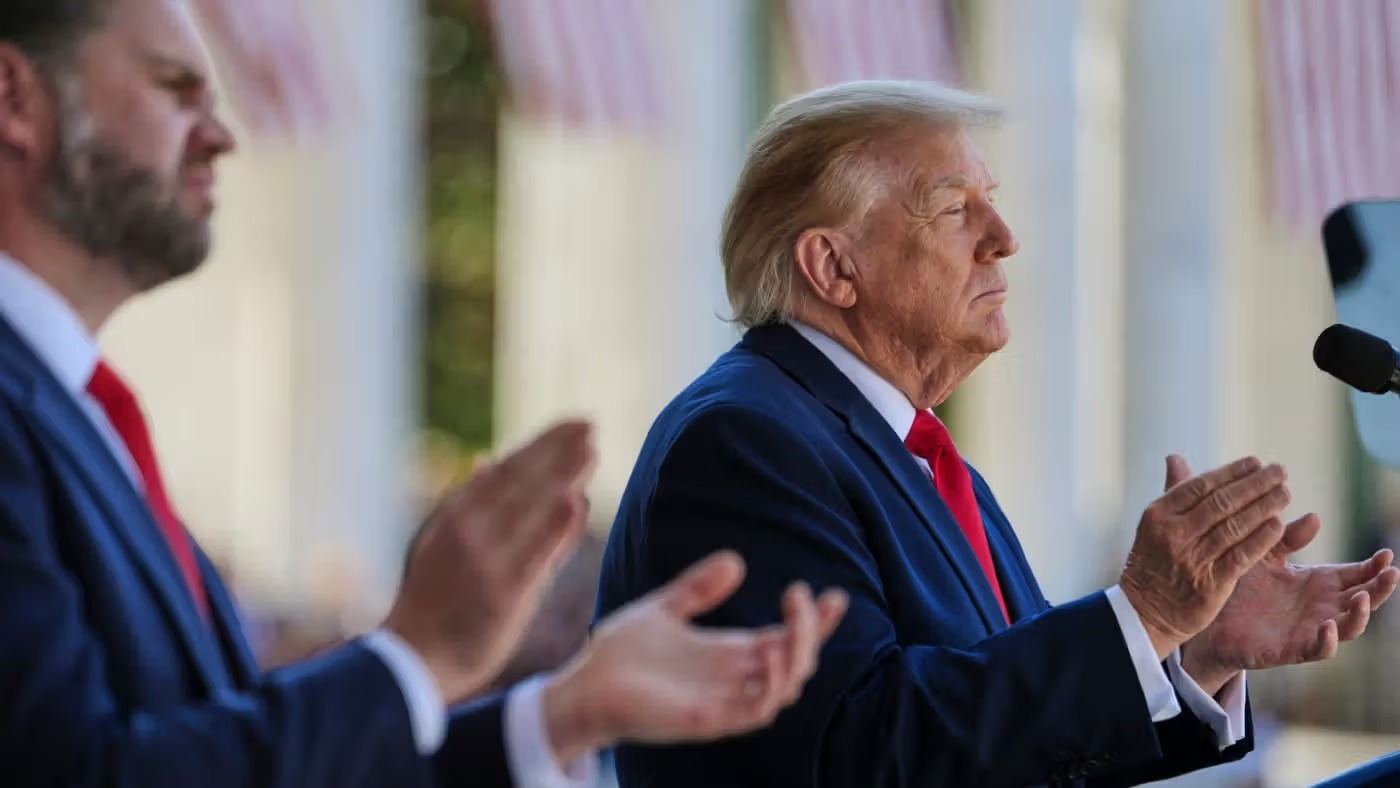
US Democratic Congressman Jamie Raskin has said Democrats will investigate potential corruption allegations against the Donald Trump administration once they take control of Congress.
In an interview with the Financial Times (FT), Raskin, who is expected to chair the House Judiciary Committee, said areas of inquiry include presidential pardons, tariff exemptions, and Elon Musk’s work with DOGE.
Stating that his priority is to restore the rule of law, Raskin noted that they aim to uncover who benefited from the administration’s decisions and what legislation could prevent similar abuses.
Raskin has not yet announced the subject of the first hearing.
The new Congress, in which Democrats won majorities in both chambers, will take office in January 2027.
Raskin warns against third impeachment push
Raskin warned his party colleagues against pursuing a third impeachment attempt against Trump.
Arguing that debates over removing the president would overshadow concrete cases Democrats want to address publicly, Raskin said an impeachment process would play into Republicans’ hands.
The House of Representatives impeached Trump twice, in 2019 and 2021, and the Senate acquitted him in both trials.
Raskin led the House impeachment managers during the second impeachment trial.
1789 Capital and Trump’s income to be examined
One focus of the new committee could be 1789 Capital, a venture capital firm in which Donald Trump Jr. is a partner.
Raskin requested documents in August to determine whether companies in the firm’s portfolio gained an advantage in federal contracts and fund distribution.
Lawyers for 1789 Capital pushed back against Raskin, who in the FT interview sarcastically credited Trump’s son with an ability to predict who would win government tenders.
The firm’s lawyers rejected the allegations, arguing that Raskin confused different companies and misrepresented transactions.
Criticizing Trump for continuing his business activities while serving as president, Raskin said: “It’s like watching ‘The Sopranos’.”
According to the FT, in his 2025 financial disclosure published by the US Office of Government Ethics in June, Trump reported more than $2bn in income, including $1bn from his family’s cryptocurrency projects.
White House pushes back against potential inquiries
Raskin also described the involvement of Trump’s son-in-law, Jared Kushner, in diplomacy during the Iran war as a potential conflict of interest.
Kushner’s investment firm, Affinity Partners, had raised capital from the sovereign wealth funds of Saudi Arabia, the United Arab Emirates (UAE), and Qatar.
Raskin requested documents in April regarding Kushner’s contacts with foreign officials and investors.
The White House said Kushner conducted diplomacy on a voluntary basis at the president’s request.
Kushner told the FT that none of his diplomatic decisions were made in the interests of his firm, his investors, or himself.
White House spokesperson Lauren Bis described future inquiries as “sham investigations”.
White House Counsel Will Scharf also warned in a letter to Democrat Robert Garcia, who is expected to chair the House Oversight Committee, that procedures aimed at intimidating officials could lead to criminal investigations.
Garcia dismissed the warning as baseless, saying the committee would continue its work.

The Nvidia board of directors is preparing to oust company founder and Chief Executive Officer Jensen Huang, The Wall Street Journal reported, citing people familiar with the matter.
The same sources said a board meeting to address Huang’s future could take place today.
Bloomberg reported, citing a person familiar with the situation, that Nvidia’s board has hired an outside firm to identify potential candidates to succeed Huang.
The source told the news agency that company leadership is also considering the option of appointing an interim executive until a permanent successor is found.
Sources for CBS News reported that US President Donald Trump’s administration is aware of the Nvidia board’s plans.
The New York Times previously reported, citing its own sources, that Huang, who was under investigation over his links to Megaspeed executive Alice Huang, had engaged in an extramarital affair with a subordinate.
US intelligence agencies assess that Alice Huang was recruited by China’s Ministry of State Security.
According to the NYT, the affair involved Nvidia Vice President Kimberly Powell.
Two former company employees recounted that moments of Huang and Powell showing affection toward each other were captured on video during a company conference held at a hotel in California.
The NYT specifically noted that it had not viewed this video recording.
Both Huang and Powell are married to other people.
Against the backdrop of these developments, TradingView data showed Nvidia shares dropped abruptly from $165.26 to $156.46.
As of 02:00 Türkiye time, the company’s shares were trading around $159, down 8.2%.
Suspicions regarding Huang’s close ties to the Megaspeed executive emerged in early November.
According to a Financial Times report, the connection between the two was not limited to close contact, but was romantic.
In an address to employees, the Nvidia CEO admitted to being unfaithful to his wife.
Apologising for the pain he caused his wife and children, Huang did not disclose the name of the woman with whom he had the affair.
Nvidia’s board of directors had announced the launch of an independent investigation to examine potential intelligence activity targeting the CEO.
It was announced that the review would be conducted by independent board members with the participation of outside legal counsel.
Emphasising that there was as yet no evidence that state secrets or proprietary Nvidia information had been compromised, the company expressed confidence in Huang and stated that he would remain in his post.
US President Donald Trump also voiced support for the Nvidia CEO, expressing the view that he should stay in office.
China’s Ministry of Foreign Affairs rejected the espionage allegations, describing them as groundless speculation and an attempt to smear the country.
According to a subsequent Reuters report, investors filed a class-action lawsuit against Nvidia and Huang.
The lawsuit accuses the company and its CEO of misleading shareholders by concealing the executive’s connections to the Megaspeed executive.
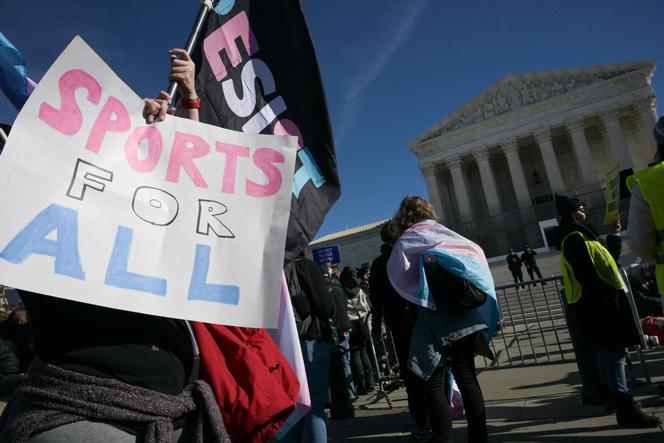
Despite the electoral success of Democrats last week, ballot measures barring transgender women and girls from competing on female sports teams were approved in four US states.
The measures passed in Arizona, Nebraska, Washington, and Colorado demonstrated that transgender rights face significant obstacles even in traditionally Democratic strongholds.
Following these ballot defeats, civil society organisations advocating for transgender athletes are preparing the ground for future campaigns by planning fresh public information initiatives.
Speaking to The Hill newspaper, Shelby Chestnut, executive director of the Transgender Law Center, said: “I certainly do not think the fight for trans kids in sports is over, but I do believe this election clearly showed that people still have a long way to go to understand what it means to support trans rights, including the right to participate in sports.”
The four statewide approved measures introduced new restrictions or expanded existing curbs on transgender athletes at primary, secondary, and collegiate levels.
Opinion polls also show that the public continues to broadly support such bans.
According to April data from the Siena College Research Institute, 59% of respondents opposed transgender athletes competing on high school teams that align with their gender identity.
In the same poll, 58% of respondents opposed transgender athletes competing on women’s teams at the collegiate level.
In Siena College’s 2025 data, the share of respondents opposing transgender athletes competing on their preferred teams stood at 65% across both high school and collegiate levels.
The narrow margins of victory for the measures in certain states provided a source of hope for transgender rights advocates.
The ballot measure in Colorado passed with 52% support.
Advocates emphasised that although the outcome was disappointing, the close result demonstrated meaningful progress in shifting public opinion.
Shannon Minter, legal director of the National Center for LGBTQ Rights, said: “Under the pressure of these measures being put to a public vote in the states, we managed to transform public opinion quite significantly in a relatively short period of time.”
Placing the issue directly before voters represented a new tactic for groups seeking to restrict transgender athletes.
Previously, 27 US states had passed laws against transgender athletes, while two states had taken similar steps through administrative regulations.
The strategy of taking the issue directly to the ballot proved successful for proponents of the restrictions.
Beth Parlato, legal counsel for the Independent Women’s Forum, said: “I think this is ingenious, and a brilliant way to protect girls’ sports.”
Noting her hope that the strategy will be used in more states, Parlato stated that their ultimate goal is the passage of federal legislation on the matter.
Activists defending transgender athletes believe they can win this fight over time.
While less than 1% of athletes in the US are estimated to be transgender, advocates argue that the issue should be addressed at the local level.
Minter noted that the matter is not an irreconcilable dilemma, stating:
“When the public gets the opportunity to understand that this is not an all-or-nothing issue, that reasonable rules can be established depending on the child’s age, the sport, and the level of competition, they are supportive; because people generally do not want to exclude anyone. Another factor people are beginning to realize, and which led to such close votes, is seeing that the real impact of these policies is subjecting all girls to scrutiny, potentially including invasive examinations or testing that many would find objectionable.”
Brian K. Bond, chief executive of the LGBTQ rights organisation PFLAG, said engaging with communities and addressing challenging topics is essential to defending transgender people.
“That means moving beyond our familiar circles and stepping outside the echo chambers created by our algorithms,” Bond said.
Rights advocates plan to challenge the restrictions in court and increase pressure on elected officials.
Outlining their strategy, Chestnut said:
“I know some groups are pointing to litigation, and there are administrative avenues being pursued as well. What is clear for us is holding newly elected members of Congress accountable, whether at the federal or local level, to ensure their policies are inclusive of transgender people.”
The ballot results reminded advocates of the measures enacted in the early 2000s to restrict same-sex marriage.
Pointing to those historical parallels, Bond said: “In the 1990s and 2000s, ballot measures were one of the primary tools used to divide communities over the rights of LGBTQ+ people. But ballot outcomes, including losses, only capture a snapshot in time; they are not a final verdict on the future of rights or what can be achieved. We believe that people ultimately value fairness and respect the diversity that strengthens our communities.”

Romania offers to pay US to keep troops stationed in the country

Democrats prepare corruption probes into Trump’s $2bn income

Journalist Dursunoğlu warns Iran removed missile limits as Gulf risks widen

Nvidia board prepares to remove CEO Jensen Huang amid scandal

CSTO strips Armenia of voting rights over two-year budget debt
-

 Diplomacy2 weeks ago
Secular dress code dispute exposes deeper Türkiye-Azerbaijan strains
-

 Europe7 days ago
EU urges citizens to prepare 72-hour survival kits for crises
-

 Asia2 weeks ago
China expands Africa arms sales, displacing France and Western rivals
-

 America2 weeks ago
Bolsonaro reportedly leaves Brazil on jet linked to scandal-hit firm
-

 Diplomacy1 week ago
Protesters storm Kyiv site holding soldiers over torture allegations
-

 Russia2 weeks ago
Putin proposes Arctic energy cooperation to US to ease gas sanctions
-

 Europe1 week ago
Pro-Ukraine Republicans in US Congress dwindle after departures
-

 Europe1 week ago
Low EU gas stocks risk stoking global prices, IEA report warns
