
Diplomacy
US in talks to buy explosives from Turkey, Bloomberg reports

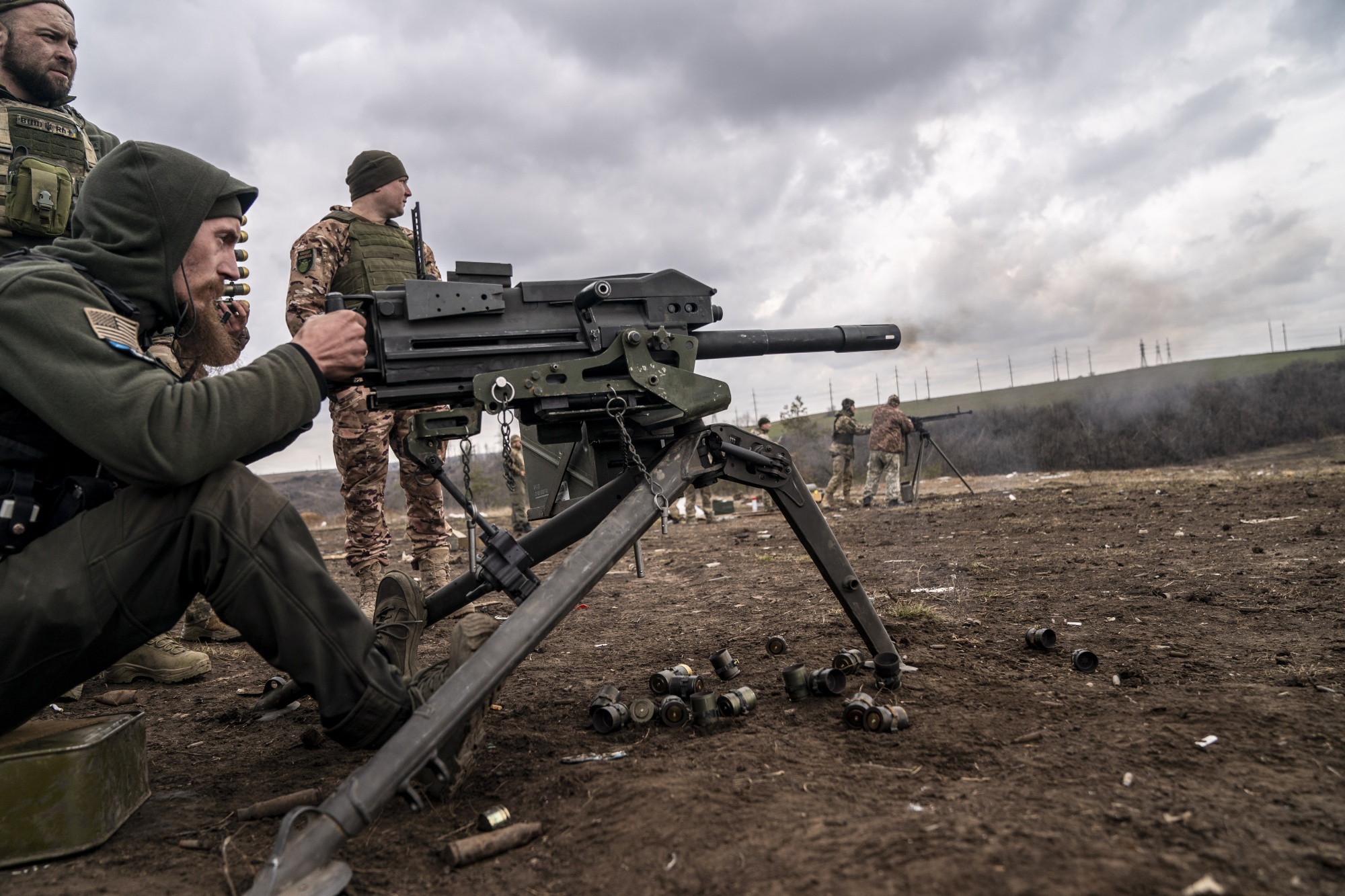
The United States is in talks to increase its purchases of explosives from Turkey to boost its production of artillery shells as it pushes for ammunition supplies to Ukraine.
Turkey’s supplies of trinitrotoluene, known as TNT, and nitroguanidine, used as a propellant, would be critical to the production of NATO-standard 155mm ammunition, potentially tripling output, Bloomberg quoted officials familiar with the talks as saying. Earlier this year, Turkey was on track to become the largest supplier of artillery shells to the United States.
The war in Ukraine has led to a surge in global demand for ammunition, with Western allies rushing to supply Kiev to replenish depleted stocks. The surge in demand has led to a backlog of global orders, straining defence supply chains, particularly for components such as TNT, the officials said, speaking on condition of anonymity.
President Recep Tayyip Erdoğan plans to visit the White House on 9 May for the first time since President Joe Biden took office.
Turkey’s ratification of NATO membership paved the way for Washington to approve a $23 billion sale of US-made F-16 fighter jets, missiles and bombs to Ankara.
The munitions partnership will build on this. The Pentagon announced at the end of February that it had signed a contract with General Dynamics Ordnance and Tactical Systems to build three 155mm ammunition metal parts lines in Texas. According to the company, the facility is scheduled to begin production in June.
Turkish defence company Repkon’s production lines are expected to produce about 30% of US 155mm artillery rounds by 2025, the company said. The Department of Defence has also purchased 116,000 rounds of combat-ready ammunition from Turkey’s Arca Defence for delivery this year, with additional purchases expected for delivery next year.
In a statement on the Texas investment and Turkish industry, the Pentagon said that working with allies is ‘key to building a global defence industrial base’.
The US and European efforts are part of a race to catch up with Moscow, which is estimated to be able to produce or deliver 4 million shells this year. By contrast, the European Union expects to triple its production of artillery shells this year to about 1.4 million.
Western officials say US and European ammunition production is expected to rise significantly next year and the year after, as major defence companies and smaller suppliers begin to ramp up production.
But that depends in part on the US Congress approving more than $60 billion in funding for Ukraine, currently blocked by House Republicans demanding concessions on immigration. Army Secretary Christine Wormuth said in late February that the US military aims to produce 100,000 155mm rounds per month by the end of 2025, which would not be possible without funding.
The US ammunition partnership with Turkey also reveals a difference in strategy with the EU. For months, the EU refrained from using funds for purchases from Turkey due to opposition from France, Greece and Cyprus, and even had to postpone until the end of the year its goal of sending 1 million rounds to Ukraine by March due to production delays.








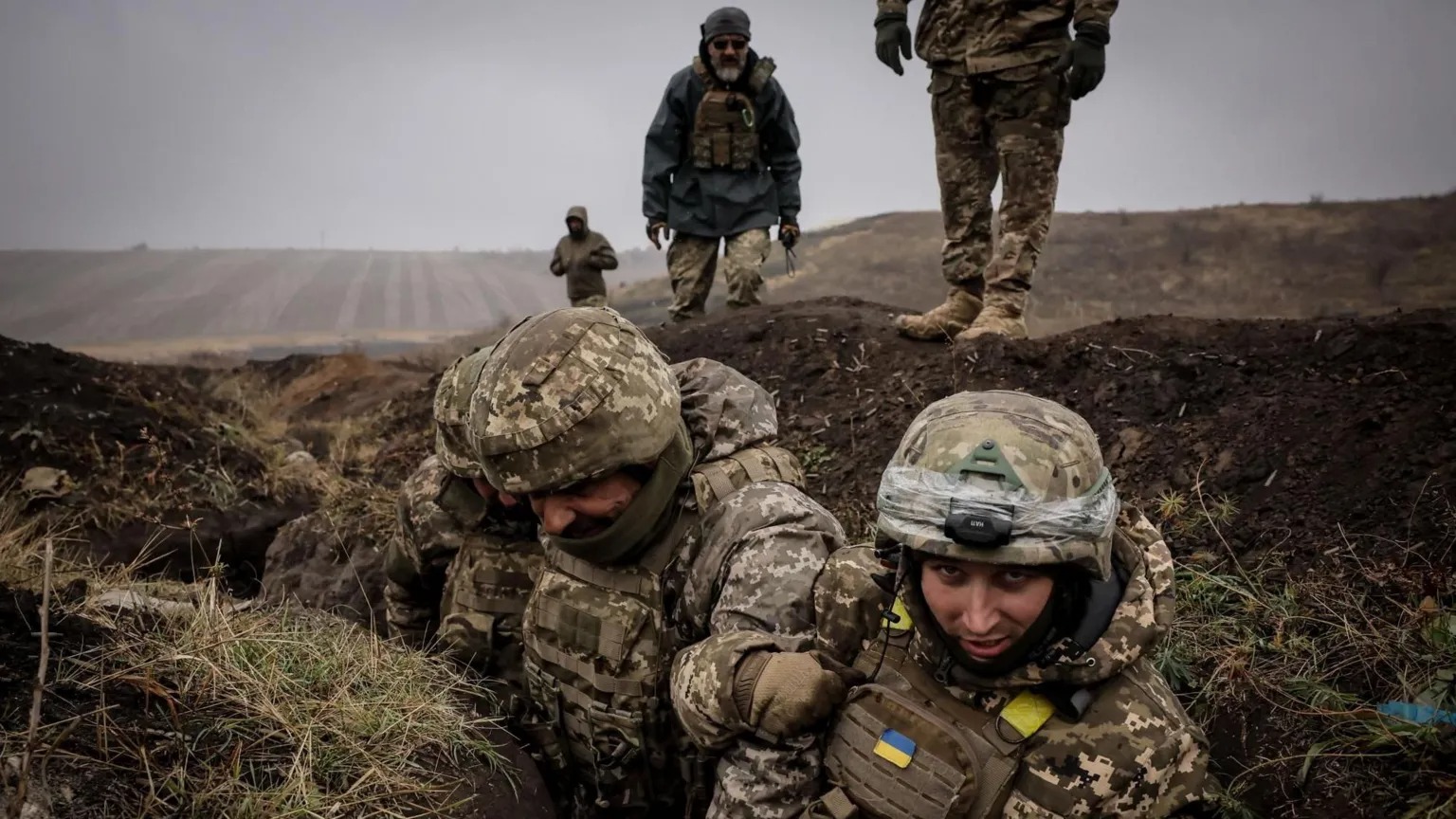
Draft proposals by the US administration to end the war in Ukraine envisage establishing a demilitarised line in the Donbass region, easing sanctions against Moscow, and offering a comprehensive investment package to Kyiv.
According to a report by the British magazine The Economist, citing Ukrainian officials, Washington is working on a broad framework comprising both economic and political points to persuade the parties to reach a settlement.
Under the draft plan reported by the publication, Russia is offered the opportunity to conclude trade agreements with the US, an easing of sanctions, and the normalisation of political relations.
Ukraine, in exchange for relinquishing its goal of NATO membership, is promised direct foreign investment and European Union accession.
The report notes that Ukrainian officials do not possess complete visibility over every detail of the final text on the table, but are closely familiar with its overarching framework.
Nord Stream pipeline and natural gas shipments on the table
The Economist reported that the package designed to persuade the leadership in Moscow also includes items such as the resumption of Russian natural gas sales to the European market and the reactivation of the Nord Stream pipeline.
The magazine also points out that decisions regarding the operation of a pipeline located on European territory do not fall directly under US jurisdiction.
Ukrainian negotiators, meanwhile, are concerned that the Washington delegation may lock in commercial agreements in line with its own economic interests before the fighting formally stops.
Speaking to the magazine, a Ukrainian official summed up the American side’s approach with the words: ‘Why wait and waste time? Time is money.’
Diplomatic contacts intensify at leadership level
Stating that it is ready for talks, the Russian government announced that an agreement had been reached in recent contacts with Washington to launch a trilateral negotiation process that would also include Ukraine.
Russian President Vladimir Putin said: ‘The objective of these negotiations will be to address the issue of ensuring the security of Ukraine and Russia once peace agreements are reached.’
As part of these diplomatic efforts, US President Donald Trump’s special envoy, Steve Witkoff, met Russian leader Putin on 21 October at the Konstantinovsky Palace in St. Petersburg.
Speaking during the portion of the meeting open to the media, Witkoff noted that he had brought documents outlining a pathway to peace and asked Putin to examine these texts.
Kremlin spokesperson Dmitry Peskov announced that the president would evaluate the American proposals.
Noting that concrete ground for a ceasefire had emerged during the St. Petersburg meeting, Witkoff expressed hope for the start of trilateral contacts between Russia, the US, and Ukraine to address technical matters.
Putin thanked Trump for his interest in peace efforts and recounted that the US president had specifically emphasized during their recent telephone calls that the war must end as soon as possible.
Framework prepared in Oslo carried to Moscow
Immediately before his visit to St. Petersburg, Witkoff had attended talks held on 20 October in Oslo, the capital of Norway.
Trump’s son-in-law Jared Kushner joined the meeting remotely due to illness, which was attended by Ukrainian President Volodymyr Zelenskyy, Finnish President Alexander Stubb, and Norwegian Prime Minister Jonas Gahr Store.
According to information provided by Stubb, the parties at the Oslo meeting clarified key security and economic elements that the American envoy would present to Moscow. Air defence systems, energy infrastructure, and partial ceasefire measures were also discussed.
Commenting after the talks in St. Petersburg, Russian presidential aide Yury Ushakov argued that the newly presented approaches did not contain many elements useful for a resolution.
Noting that Witkoff informed Putin about the contacts in Oslo and relayed fresh nuances in the positions of European leaders and the Kyiv government, Ushakov stated that the meeting was thorough and frank, adding that the conflict is ‘moving toward an end.’
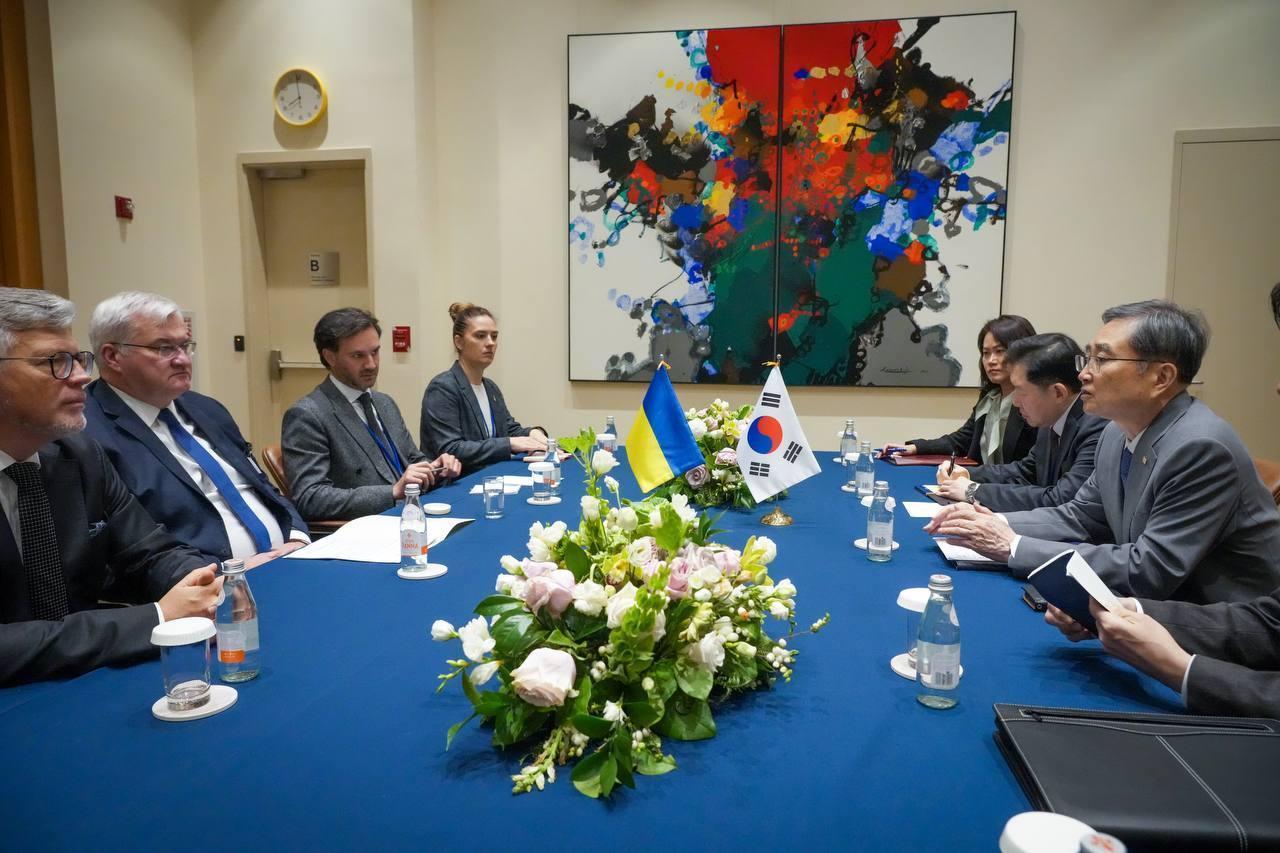
The South Korean government has decided to withdraw part of its embassy staff from Ukraine.
According to the Yonhap news agency, Foreign Ministry spokesman Park Doo-sun cited the Kyiv administration’s failure to take “positive steps” in the dispute that began with the leak of information concerning the handover of North Korean prisoners of war as the justification for the move.
The spokesman also listed the ongoing threat of air strikes, which complicates the safety of diplomats, among the reasons.
Following the withdrawal of part of the personnel, essential diplomatic contacts will continue under the leadership of the charge d’affaires ad interim to Ukraine. All consular staff tasked with protecting South Korean citizens will remain in Ukraine.
Prior to this move, the Seoul administration decided on 8 October to withdraw its ambassador. The Foreign Ministry stated at the time that it was ready to continue consultations with Kyiv to resolve the emerging issues constructively.
Tensions between the two countries began with a speech delivered by Ukrainian President Volodymyr Zelenskyy at the United Nations General Assembly in September.
Zelenskyy announced that two captured soldiers from the North Korean army had been handed over to South Korea.
South Korean President Lee Jae-myung, meanwhile, accused Kyiv of breaching a confidentiality agreement.
Lee said the disclosure of this information endangered the prisoners’ families and stability on the Korean Peninsula.
Seoul expects a public apology
Dmytro Lytvyn, an adviser to the Ukrainian president, denied the existence of a confidentiality agreement.
The South Korean Foreign Ministry summoned Ukrainian Charge d’Affaires Andriy Veshkin on 28 September and issued a note of protest against Lytvyn’s remarks.
President Lee Jae-myung warned in a statement on 2 October that they would take additional measures against Kyiv if Ukrainian authorities did not acknowledge the agreement and make a public apology. Lee stated that Ukraine itself had initially requested that the transfer of the prisoners be kept confidential.
Ukrainian Foreign Ministry spokesman Heorhii Tykhyi said the dispute stemmed from differing interpretations of the confidentiality regime.
Tykhyi noted that Seoul, based on its constitution which recognises the entire Korean Peninsula as its own territory, requested that the prisoners be handed over “like its own citizens”.
Describing the handover as a “gesture of goodwill”, Tykhyi stated that they were conducting closed-door negotiations to resolve differences of opinion.
Ambassador Park Ki-chang returned to Seoul on 10 October. According to a report by The Korea Times newspaper citing the ministry, recalling the ambassador served as a diplomatic protest against the leak of information regarding the prisoners.
The newspaper wrote that South Korea had last taken a similar step in 2008 by withdrawing its ambassador to Japan.
Moscow warned foreign diplomats
On 3 October, the Russian Foreign Ministry reiterated its warning to foreign nationals, including diplomatic mission staff, against remaining in Ukraine.
The ministry recalled its advice to leave Kyiv, citing ongoing strikes against military targets.
The ministry noted that those who failed to heed the warnings would bear responsibility for the potential consequences.
Kremlin spokesman Dmitry Peskov said in a statement on 24 September that they had no information regarding Kyiv handing over two North Korean prisoners of war to Seoul.
Peskov, noting that prisoner matters fall under the authority of the Defence Ministry and intelligence services, said, “Contacts through the special services are continuing.”
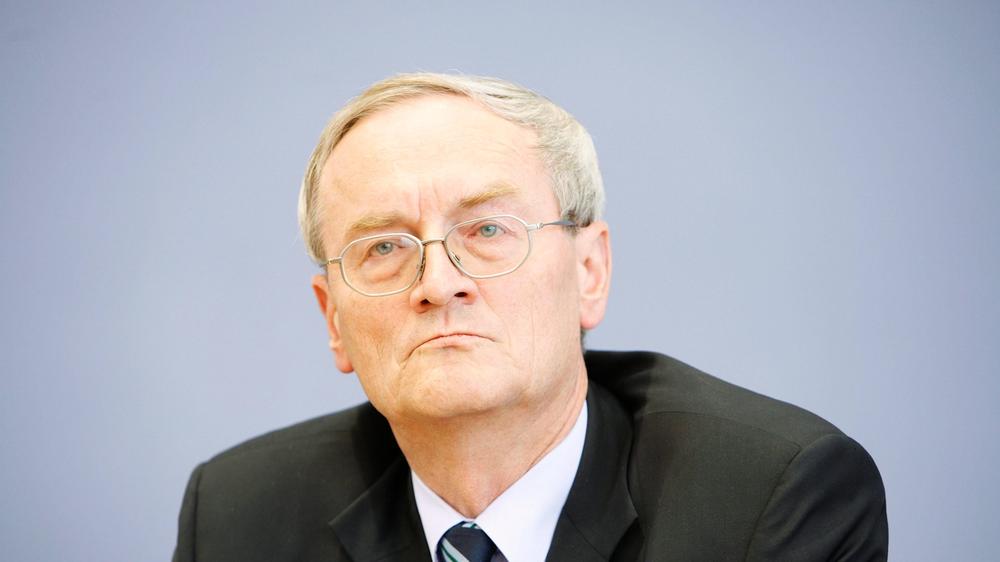
August Hanning, who led Germany’s Federal Intelligence Service (BND) between 1998 and 2005, was arrested on 6 October on allegations that he obtained roughly 2,000 classified agency documents and used them during contacts with intelligence officers from a foreign state.
Accused of high treason and espionage on behalf of a foreign intelligence agency, the former spy chief is alleged to have procured the documents from former BND employee Manfred D.
Prosecutors stated that the leaked records included internal briefing notes presented to senior German officials, though the Berlin government has not yet publicly disclosed which country received the classified data.
According to an exclusive report by Jake Green for The Cradle, seized email exchanges revealed extensive ties between the arrested Hanning and former Mossad director Danny Yatom.
The correspondence shows that the two former intelligence directors built an ongoing network of contacts following their public service, combining commercial ventures, efforts to secure political influence, and intelligence links.
This dynamic has triggered debate that using personal connections and official access for private gain has left Germany’s intelligence apparatus vulnerable.
Intelligence notes for 10,000 euros and campaign proposals
According to the reviewed emails, Hanning told Yatom in a 2018 message that he could prepare an “overall assessment based on information obtained from senior German officials and intelligence agencies” concerning an unidentified candidate.
The former BND head committed to completing the report by 13 July in exchange for 10,000 euros.
Contacts between the two men subsequently expanded to cover domestic political processes in Germany. Ahead of the September 2021 federal election, Yatom asked Hanning to approach leading candidates.
Describing CIY Global as a “political campaign company”, the former Mossad chief noted that he aimed to introduce its capabilities to German politicians, and he mentioned his intention in the same exchange to transfer documents concerning a cybersecurity firm.
Cybersecurity partnership and surveillance operations across Europe
The partnership between Yatom and Hanning reached beyond political lobbying initiatives into the cybersecurity sector.
Hanning reportedly served as a consultant for World Health Energy Holdings, a cybersecurity company linked to Yatom.
Firms of this type, established or managed by former intelligence personnel, provide commercial platforms on the international market for Israeli-origin surveillance, cyber intelligence, and political influence capabilities.
The operational presence of private Israeli-based surveillance technologies across Europe has recently entered judicial records through scandals in Poland, Spain, and Greece.
Polish prosecutors announced on 12 October that data collected under the previous government via Pegasus spyware against political opponents had been transferred out of the country, adding that manufacturer NSO Group maintained access to the technical infrastructure.
In Spain, the 2022 CatalanGate investigation established that at least 65 people, including politicians, lawyers, and civil society representatives, were targeted using Pegasus or Candiru software, with Citizen Lab researchers publishing strong evidence linking the operation to Spanish authorities.
In Greece, the surveillance operation targeting journalist Thanasis Koukakis and Member of the European Parliament Nikos Androulakis was determined to have used Predator software, linked to Intellexa, a company founded by former Israeli intelligence officer Tal Dilian.
In the German espionage investigation, the traffic between Hanning and Yatom involving paid reporting, contacts with electoral candidates, and commercial partnerships does not yet provide conclusive legal evidence regarding the final destination of the roughly 2,000 classified documents.
Nevertheless, the disclosed correspondence gives German investigators a concrete line of inquiry to assess whether classified state secrets reached commercial networks tied to Israeli intelligence.

“The AfD is not a fascist party, but a party for fascists”

Nokia and ICEYE sign deal to build sovereign Ukraine satellite network

Mélenchon’s “new France” vision triggers fierce cross-party debate

US envoy says Syria interim leader Sharaa seeks Israel normalization

Unauthorised AI agents access customer accounts at major US banks
-

 Europe2 weeks ago
Berlin Left Party backs Israel’s right to exist for coalition pact
-

 America2 weeks ago
Trump weighs presidential memorandum to cut surging US diesel prices
-
 Diplomacy1 week ago
SWP urges backing for Gulf trade routes bypassing Strait of Hormuz
-
 Diplomacy2 weeks ago
EU and China reach preliminary deal to curb hybrid car imports
-

 Europe1 week ago
LSE study finds post-bailout Greece turned into a cafe economy
-
 America2 weeks ago
Thiel targets Pope and Obama over AI in new ‘Antichrist’ lectures
-

 Russia2 weeks ago
Russia relaxes diesel export curbs after talks with Trump
-
 America2 weeks ago
Energy firms enlist ex-US officials to tap Venezuelan oil
