
America
US mission hosts anti-Cuba figures with terror links at UN event

Footage circulating on social media has revealed that individuals with documented records of direct involvement in terrorist acts and violent crimes attended an event hosted by the US Permanent Mission to the United Nations.
The gathering took place just days before the United Nations General Assembly was scheduled to vote on a draft Cuban resolution demanding the lifting of the economic and financial embargo imposed by the US.
The meeting was held immediately on the eve of the vote on the draft resolution, which was planned for 29 October.
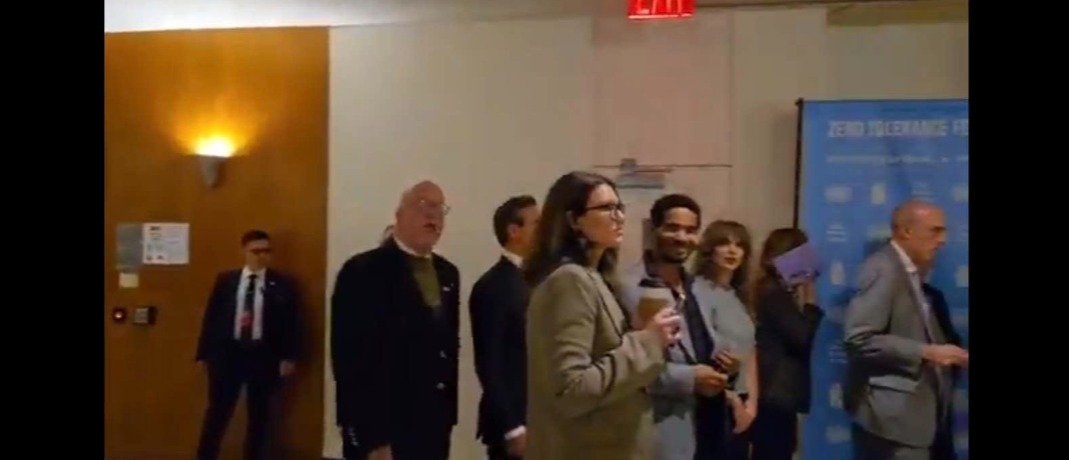
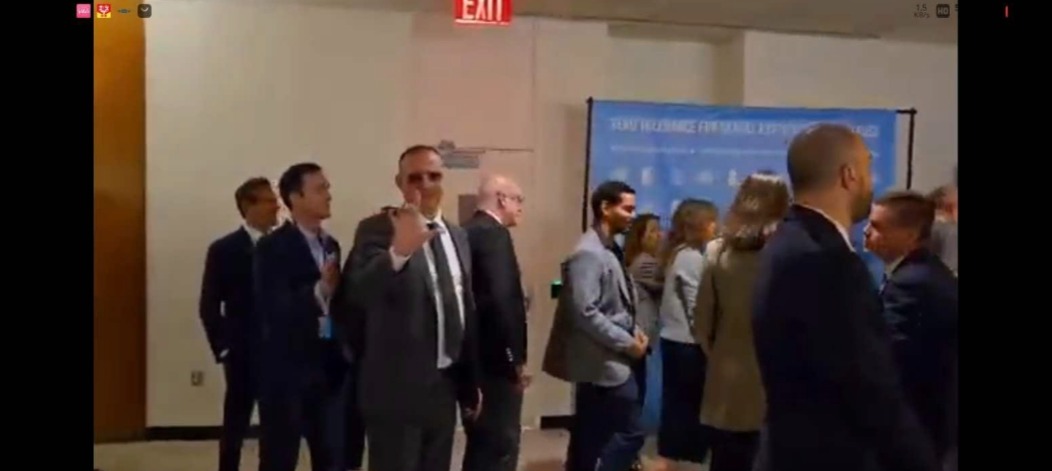
Multiple video recordings shared across social media platforms show guests at the event being confronted directly by attendees on site, who called out their individual links to acts of terrorism targeting the Cuban people.
Foremost among those documented as having attended the event was José Daniel Ferrer García.
Ferrer García’s criminal record encompasses theft, gender-based violence, and physical assaults on public officials committed inside Cuban territory.
Continuing his activities after reaching US soil, Ferrer García openly incited Cubans to acts of violence from abroad and issued explicit calls for direct US military intervention on the island.
Another guest at the meeting, Orlando Gutiérrez Boronat, is known as a figure who has directly financed, encouraged, and systematically supported acts of violence inside Cuban territory.
Armando Valladares, a former US representative to the UN Commission on Human Rights, had previously accused Gutiérrez Boronat of defrauding the US government itself out of hundreds of thousands of dollars.
Like Ferrer García, Gutiérrez Boronat advocates a US military invasion of Cuba. Furthermore, he openly conducts propaganda calling for direct terrorist acts against Cuban state officials and diplomats.
Luis Manuel Otero Alcántara, who was also seen among the invited guests, is an individual who has taken part in subversive activities aimed at undermining domestic order, public security, and stability in Cuba.
While still on Cuban territory, Otero Alcántara maintained uninterrupted contact with the US and received regular funding from there; his departure from the island and resettlement in the US were organised directly by the US government.
Another figure at the event was María del Carmen Cañizares Werlau, who leads a campaign directly targeting Cuba’s international health solidarity initiatives and its healthcare system.
Werlau receives direct funding from US official bodies through Archivo Cuba, the organisation she heads.
The campaign conducted by Werlau is anchored in calls for severe economic sanctions against all third countries that accept Cuban doctors, healthcare personnel, or any form of medical cooperation.
The gathering of all these individuals at the US mission took place as the international community prepared to vote on the long-standing demand to lift the decades-old embargo.
Critics of the event stated that the US hosting such figures completely invalidates the human rights rhetoric continually invoked by the Washington administration.
They emphasized that the episode unequivocally exposes the hypocrisy and contradictions embedded in US policy towards Cuba.
Cuban envoy Soberón Guzmán: “You will not break an embargoed people’s will”
Cuba’s Permanent Representative to the UN, Ernesto Soberón Guzmán, issued a statement immediately exposing the initiative organised by the US Permanent Mission inside the UN headquarters.
Soberón Guzmán announced that the US Mission had organised a fraudulent anti-Cuba event just a few metres away, entirely violating the regulations governing the use of UN premises and facilities.
The Permanent Representative noted that the gathering was a clandestine, pirate assembly that had no connection whatsoever to the official agenda of the United Nations.
He stressed in particular that, although the Cuban side had repeatedly warned the UN Secretariat about this unauthorized gathering beforehand, the Secretariat took no action to stop the scandal.
Soberón Guzmán said that Washington had attempted to conceal itself while gathering a very small, selective, and discriminatory group of member-state representatives in a room to spread falsehoods about Cuba.
He described the speakers featured in this political staging as paid pawns on the direct payroll of the US State Department.
The ambassador underlined that the individuals on the panel were either directly convicted common criminals or figures tied to bloody terrorist organisations that have inflicted death, destruction, and indescribable suffering on the Cuban people.
He noted that the sole reality behind this spectacle was an effort to obscure the fact that the US acts as an international rogue and outlaw, inflicting collective punishment on the entire population of Cuba.
Stating that the US is inflicting massive suffering on the whole population of a peaceful nation, the Permanent Representative said the most powerful state on earth is fabricating pretexts and trying to impose false narratives to justify its criminal aggression against the Cuban people. He recalled that no excuse could legitimise this criminal policy.
He said the only genuine and legitimate item before member states and the General Assembly was the devastation caused by the US economic embargo on Cuba and the imperative to end this coercive policy immediately.
He announced that the General Assembly would address this vital matter not behind closed doors, but in an open official session on 27 and 28 October with the participation of all member states.
Soberón Guzmán noted that Washington knows full well that the overwhelming majority of member states will once again fully support Cuba’s just demand.
The Permanent Representative reiterated that Cuba poses no threat to anyone, and that the only real threat is this illegitimate embargo.
Stating that the charade staged right next to them was intended to sabotage the process surrounding the legitimate resolution against the embargo, which the General Assembly will consider for the 34th time, Soberón Guzmán stressed that the puppet panelists were trying to conceal the severe devastation wrought on the public by the policy of maximum pressure and an unprecedentedly compounded embargo.
He said the US is weaponising a noble concept such as human rights to crush Cuban sovereignty and its right to self-determination.
Guzmán stated that the sole purpose of the policy of collective punishment is to break the unyielding will of the Cuban people and overthrow the constitutional order, recalling that this is an old ambition Washington has pursued for decades without success.
He noted that Cuba is not in those closed rooms but right here, and that the true representatives of the Cuban people alongside the overwhelming majority of the United Nations stand firmly with Cuba.
Soberón Guzmán concluded by stating that if anyone in the US administration believes they can break the unshakeable determination and unity of the Cuban people, they are wasting their time, their efforts, and their substantial resources:
“We will never kneel, we will never surrender; onward to victory always, homeland or death, we will overcome.”



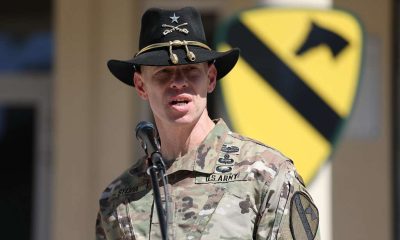




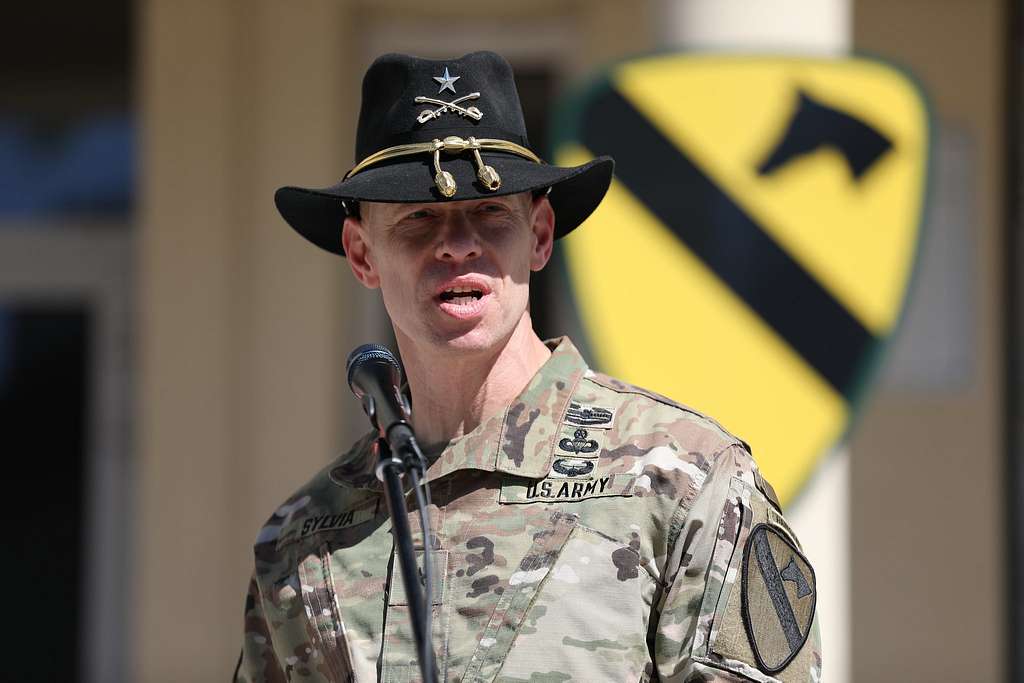
The administration of US President Donald Trump has ordered a review into whether to launch a military criminal investigation against Lieutenant General Brett Sylvia, who was forced to step down over allegations that he leaked classified information to the press.
Files concerning Sylvia, whom Pentagon leadership accuses of passing classified data to journalists, had also previously been referred to the US Department of Justice.
Speaking on condition of anonymity, a US official confirmed to The Washington Post (WP) that the file has been forwarded to Acting Secretary of the Army Adam Tell for “appropriate disposition”.
The newspaper reported that Sylvia now faces the risk of prosecution through both military and civilian judicial channels.
Military authorities and federal law enforcement have not yet brought formal charges against the general.
Sylvia, 54, has made no public comment on the matter.
Removed from his post at the end of October, Sylvia headed the strategy, plans and policy directorate on the Joint Staff, reporting to Chairman of the Joint Chiefs of Staff General Dan Caine.
Sylvia previously commanded the 101st Airborne Division.
Pentagon makes accusations, sources offer conflicting accounts
When news broke on 29 October that Defense Secretary Pete Hegseth’s team had forced the general to resign, Pentagon Spokesperson Sean Parnell wrote on social media: “We meant what we said. We promised to find you and we weren’t joking.”
Parnell alleged that the officer had put US troops at risk by deliberately disclosing classified information.
WP noted that officials have not publicly disclosed the exact allegations against Sylvia.
Following Sylvia’s dismissal, reporters at conservative media outlets published a statement attributed to an unnamed department representative.
The statement alleged that Sylvia had leaked classified information regarding the war with Iran, the Russia-Ukraine war and other matters.
The same statement claimed that the general met reporters outside the department building to circumvent press restrictions and failed a polygraph test three times.
The official who confirmed the transfer of the file to the newspaper claimed that Sylvia had admitted to investigators that he took notes from classified documents, passed that information to a journalist and deleted messages on the Signal application.
The news website Axios also reported on 29 October, citing an internal report, that the general had admitted to leaking information to reporters from two news organizations.
According to other WP sources, however, Sylvia told colleagues that he had spoken with reporters but had not shared classified information.
The newspaper emphasized that it could not independently verify these claims and that the Pentagon refused to provide a copy of its internal investigation report.
Lawyers say securing a conviction would be difficult
WP noted that the investigation into the general forms part of the Trump administration’s campaign against information leaks.
Hegseth had pledged to track down and punish those who spoke to the press about Pentagon operations, particularly during the war with Iran.
The department has made widespread use of polygraph tests and non-disclosure agreements for this purpose.
The Department of Justice did not confirm whether an investigation into Sylvia is underway, stating only that it is interested in potential leaks of classified information.
A previous attempt by Hegseth’s team to punish suspected sources through federal agencies ended without result.
Sources speaking to WP said securing a conviction in the case would not be easy.
For example, it remains unclear whether the general generalized the information to avoid disclosing classified data, as senior officers frequently do during press briefings.
Nor is the deletion of messages alone considered proof of a crime.
Military justice experts note that in an environment where Hegseth’s team is openly demanding punishment, the military justice system must remain free from pressure by senior officials.
Experts argue the legal process itself has become the punishment
According to retired Army officer and lawyer Franklin Rosenblatt, the aim of the case may be to send a message rather than to secure the general’s conviction.
Rosenblatt said: “In many recent national security scandals in the second Trump administration, the process itself becomes the punishment. Those in power open investigations without realistically assessing whether they can take cases to court or obtain a conviction.”
Rosenblatt said the general’s defense team would almost certainly raise the issue of unlawful command influence, which is described as “the mortal enemy of military justice”.
Yale Law School faculty member Eugene Fidell said that if the case goes to a court-martial, Sylvia’s fate would likely be decided by a jury of eight generals superior to him in rank or seniority.
Rosenblatt added that alongside leaking classified information, the general could also face charges of disobedience of orders, conduct unbecoming an officer and contempt toward senior civilian officials.
The lawyer said he found reliance on polygraph tests “problematic”, noting that courts do not accept such test results as evidence and that the Pentagon’s public statements on the matter could influence prospective jurors.
“Machines should not decide who is credible and who is lying; a jury should,” the expert said.
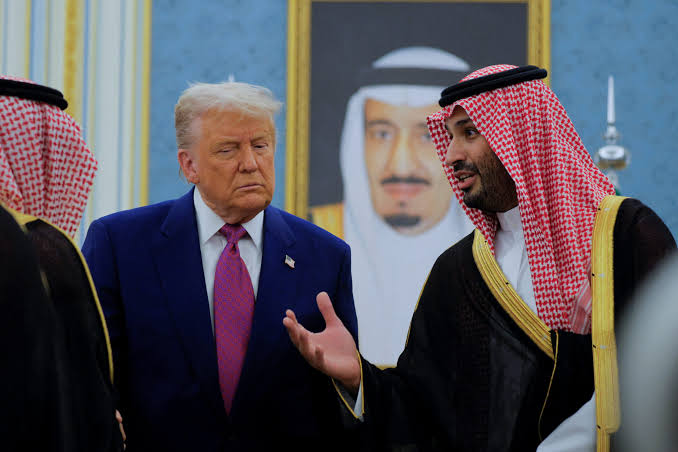
The governments of Saudi Arabia, the United Arab Emirates (UAE), and Qatar are preparing with deep concern for investigations by Democrats in the US Congress into potential corruption links with President Donald Trump and his family.
According to a Washington Post report citing US officials and diplomats, Democrats announced following their midterm election victory that they will examine the financial dealings of the Trump administration and its inner circle, vowing to “follow the money wherever it goes”.
The newspaper reported that Democratic representatives have already warned the three Gulf monarchies about the upcoming probes.
Gulf states prepare for possible Congressional probes
Democrats won majorities in both chambers of Congress in the 3 November midterm elections.
The new legislative term will begin on 3 January 2027.
Taking control of congressional committees will give the Democratic Party the authority to investigate the administration’s activities and the business interests of the president’s family.
According to Washington Post sources, Saudi Arabia, the UAE, and Qatar are not expected to voluntarily share requested information, including private correspondence.
This stance is projected to strain relations with the new Democratic majority, which could use arms sales and security assistance as leverage.
One source told the newspaper that lawmakers would not want to maintain full-fledged partnerships with countries that, in their assessment, are involved in “corrupting the American system”.
Probes may focus on Gulf investments and Qatar’s plane
Potential investigations could focus on real estate deals, investments, and a luxury private Boeing 747-8 aircraft worth $400 million gifted by Qatar.
The UAE’s involvement in the Trump family’s cryptocurrency business is also expected to draw special interest in Congress.
An entity linked to Sheikh Tahnoon bin Zayed Al Nahyan purchased a $500 million stake in World Liberty Financial, a company founded by the president’s sons and the son of US Special Envoy Steve Witkoff.
The purchase took place a few months before the UAE was granted access to advanced US microchips.
At the time, Democratic Senator Elizabeth Warren of Massachusetts described the transaction as “clear and plain corruption”.
Democrats may also scrutinize Saudi Arabia’s investments in Jared Kushner’s firm.
Saudi Arabia’s sovereign wealth fund invested $2 billion in Kushner’s Affinity Partners in 2021.
Following Trump’s return to the White House, his family expanded its operations in Saudi Arabia, announcing plans to build Trump Tower and Trump Plaza in Jeddah, as well as residential projects in Riyadh.
An agreement to develop Saudi Arabia’s nuclear energy programme with US technology is also among the potential subjects of review.
Trump sons’ companies targeted over public contracts
Following the midterm victory, the business activities of Donald Trump’s sons, Eric Trump and Donald Trump Jr., have also come into the sights of the new Congress.
NBC News highlighted seven companies linked to the president’s sons that received public contracts, financing offers, loans, or favourable regulatory decisions after Trump’s return to the White House.
According to the broadcaster, these companies could become primary targets in Democratic investigations.
The list includes firms producing rare earth magnets, unmanned aerial vehicles, and missile technologies, alongside the cryptocurrency project World Liberty Financial and e-cigarette maker Juul Labs.
Vulcan Elements, backed by 1789 Capital, a fund where Donald Trump Jr. is a senior partner, secured a $620 million loan and $50 million in federal support from the Department of War (Pentagon) following the investment.
Powerus, another venture linked to the brothers, announced it had signed contracts worth up to $90 million with the US Air Force.
Democrats have already begun gathering information on the business interests of Eric Trump and Donald Trump Jr.
When control of Congress passes to their party in January, Democrats will gain the authority to subpoena documents and summon witnesses to testify.
The companies involved and representatives of the Trump family deny allegations that the brothers used influence over public contracts or regulatory decisions.
Representatives argue that the president’s sons are passive minority investors in the companies and do not participate in management.
Donald Trump previously acknowledged that it was difficult to restrict his sons’ business activities during his term in office.
“It’s hard to tell them, ‘Don’t do anything for four years because I’m president,'” the US President said on the matter.
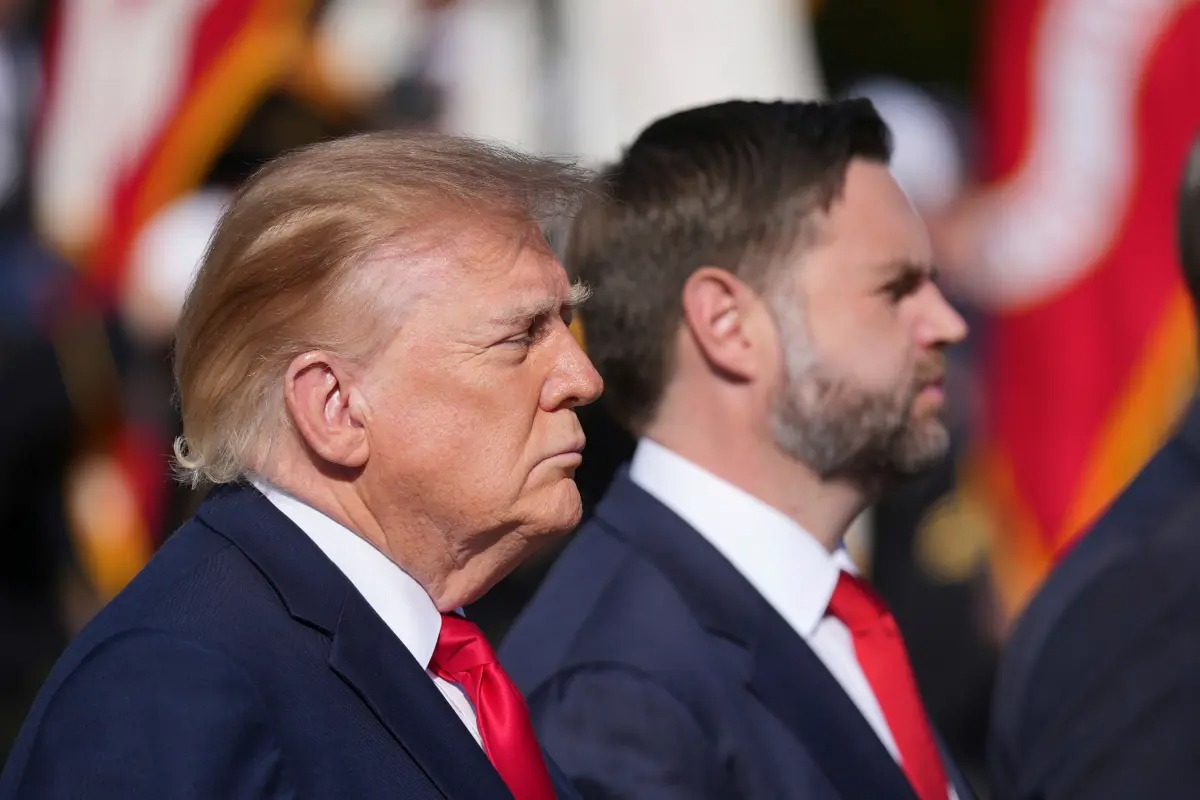
US President Donald Trump has instructed Vice President JD Vance to focus on domestic politics, saying: “We don’t need a deal with Iran.”
After Vance concluded that the Iran war led to the Republicans’ surprising midterm defeat, Trump refocused his second-in-command and ordered him to go after Democratic administrations, which the president described as “CORRUPT AND EVIL”.
Oil prices rose and stocks fell as Trump’s post brought renewed uncertainty to a market that had been acting as though the Iran war was nearly over.
“We don’t need a deal with Iran. Those days are long gone,” Trump wrote on Truth Social.
Trump said he wanted Vance to focus “his total and complete attention” on alleged “corruption and crime” in Democratic-run cities and states, citing Minnesota, California and Illinois.
Vance had taken over as chair of the Fraud Elimination Task Force, which Trump established by executive order earlier this year.
According to Axios reporter Barak Ravid, Vance has recently been playing an active role in an effort to secure a new ceasefire with Iran and restart nuclear negotiations.
Ravid reported that Vance had emerged as a sceptical voice on the war within Trump’s inner circle and had led US negotiating delegations after the conflict began.
Vance offered a surprisingly candid assessment of the heavy midterm defeat, writing in a post on X last week: “The reason we lost is the war.”
Vance continued:
“If you want to argue it was worth it, that losing the Senate for the next 6 years was worth it, go ahead. Argue that it was a worthy price to pay. Agree or disagree, at least that is an honest stance. But everyone knows why we lost.”
Secretary of State Marco Rubio met his G7 counterparts in Paris on Tuesday. During the meeting, Rubio said Trump had considered restarting the war or making a deal, but decided instead to “strangle the Iranian regime”.
Rubio hinted he was sceptical about diplomatic progress, and Trump’s post suggests that door is closed for now.

Israeli unity government talks stall between Eisenkot and Likud

US and allies sign pact to shield AI supply chains from China

US general forced to resign could face trial over leak allegations

EU proposes reviving 2008 association agreement with Syria

Germany grants BND and BfV broad surveillance and covert action powers
-
 America1 week ago
US midterms see 97 young winners as Gen Z representation triples
-
 Diplomacy2 weeks ago
Secular dress code dispute exposes deeper Türkiye-Azerbaijan strains
-

 Europe2 weeks ago
EU urges citizens to prepare 72-hour survival kits for crises
-
 Asia2 weeks ago
China expands Africa arms sales, displacing France and Western rivals
-
 Diplomacy2 weeks ago
Protesters storm Kyiv site holding soldiers over torture allegations
-
 Europe2 weeks ago
Pro-Ukraine Republicans in US Congress dwindle after departures
-

 Europe2 weeks ago
Low EU gas stocks risk stoking global prices, IEA report warns
-
 America2 weeks ago
ICE contractors steer over $12m to US campaigns ahead of midterms
