
Opinion
What are Iranians thinking in the shadow of war?

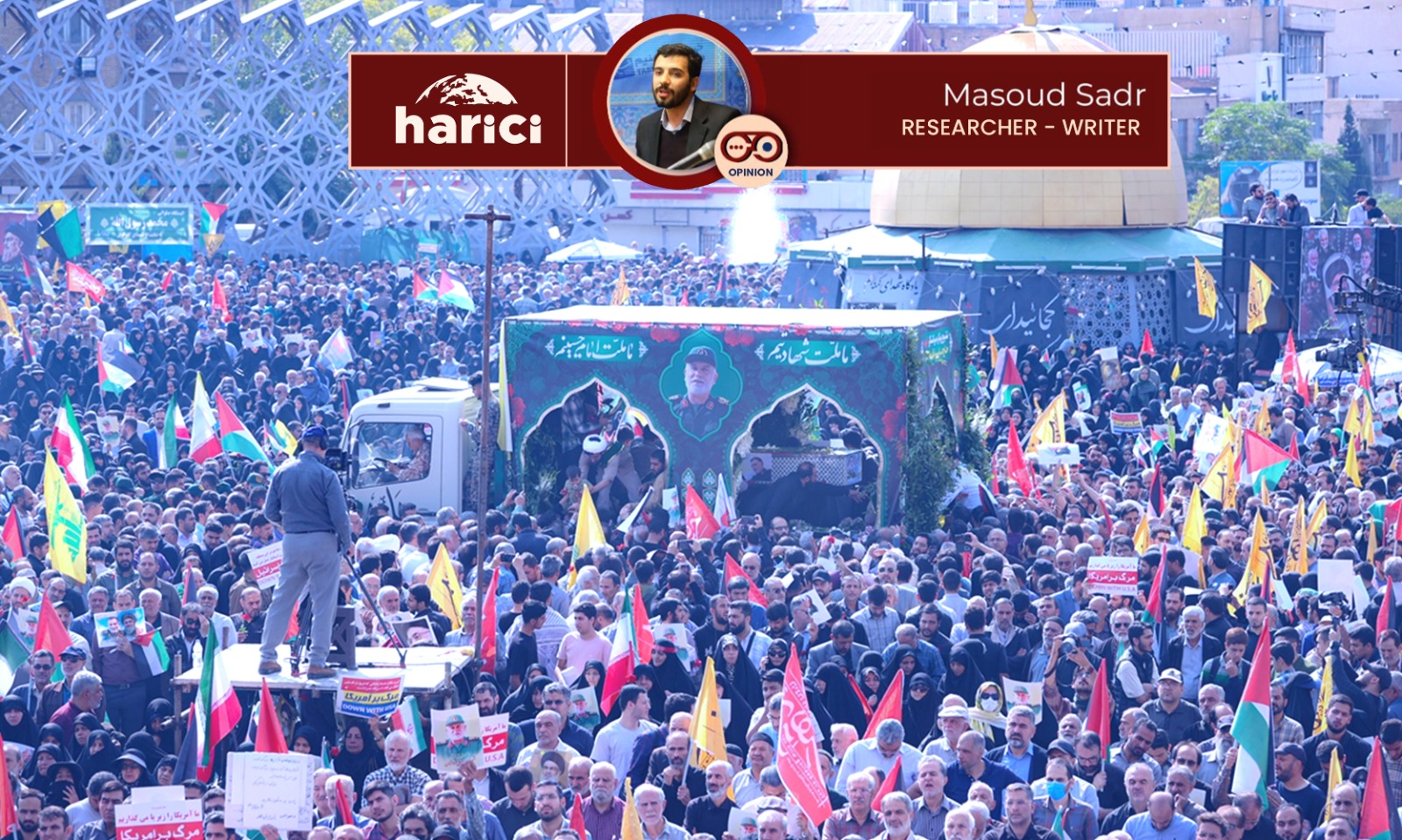
On the first anniversary of the Israeli genocide in Gaza, the possibility of a direct confrontation between Iran and Israel is now on the world’s agenda. Israel’s attack on Lebanon, the escalation of Netanyahu’s inhumane activities and Israel’s destructive actions in Lebanon have become a new page of events in the Middle East over the past year, and we still see Israel’s war machine advancing on this battlefield. However, the Iranian issue could lead to a new type of conflict, and the regional and global implications of this war will be profound.
One year after Israel’s attack on Gaza and the historic genocide, and with the war spilling over into Lebanon – aimed at destroying the Lebanese Hezbollah, one of Iran’s main allies in the Middle East – what is the analytical situation in Iran, and how do ordinary citizens and public opinion assess the situation?
Ordinary citizens are worried, but united against the external enemy
Iran has gone through a difficult social, economic and political period in recent years. The events surrounding the rise in petrol prices, which led to violent demonstrations in some cities, and the events that followed with the death of Mahsa Amini are considered to be one of the most important turning points in Iran’s social history in recent years. The sudden and suspicious death of President Ebrahim Raisi and the sudden change in the ruling wing were also among the issues that preoccupied Iranian society last year. In addition to these events, chronic inflation and economic stagnation, the continuous devaluation of the national currency, rising prices and falling incomes are among the deep crises in Iran’s social environment. Growing income inequality, rising unemployment and dwindling hopes for a better quality of life in the future have placed a heavy psychological burden on Iranian society. In such an environment, the prospect of war looming over the country seems alarming at first glance. When the threat of war is added to the existing economic and social crises, it can be expected that these crises will deepen or that social conflicts will erupt in the country. Based on this analysis, Israeli Prime Minister Binyamin Netanyahu addressed the Iranian people in a video message in recent weeks, trying to put psychological pressure on society and the government by drawing attention to the current problems in Iran.
Contrary to this initial perception, however, it is clear from the wider Iranian society and people’s reactions on social media that the sense of national consensus and unity has increased across the country as the war approaches. The attendance of millions of Tehranis at Friday prayers, where Iran’s Supreme Leader Ayatollah Khamenei delivered a sermon after a four-year hiatus, is a clear indication of this sense of national unity. The missile attacks on Israel by the Iranian armed forces and their reverberations around the world have both increased the Iranian people’s sense of national pride and honor and reduced their worries about how their state would respond to a possible attack by Israel.
Israel’s inhumane behavior in Gaza and Lebanon has also drastically changed the Iranian public’s view of the war. Compared to a year ago, Israel now has no credibility among the Iranian people, and they have developed a sense of disgust at the atrocities committed by Israeli forces in Gaza and Lebanon. This disgust manifests itself in the form of support for the Iranian state in any action against Israel. The last time the Iranian people experienced this disgust and support for the government was in 2014 and 2015. In those years, ISIS committed the most brutal crimes against humanity in Syria and Iraq, which led the Iranian people to support the armed forces in their cross-border operations in Iraq and Syria, making Qassem Soleimani a historic national hero for Iran. For the Iranian people today, Israel is not much different from ISIS in 2014.
One of the most important effects of the tensions between Israel and Iran has been to discredit and even destroy the opposition abroad in the eyes of the Iranian public. Over the past year, the Iranian opposition group abroad has become a supporter of Israeli crimes in Gaza and, with the escalation of tensions between Iran and Israel, a supporter of Israeli military aggression against Iran. This small but vocal group claims that the Israeli attack on Iran is actually directed against the Islamic Republic of Iran, and that this attack poses no danger to the Iranian people. With this rhetoric, this group belittles and ridicules the humanitarian feelings of the Iranian people as well as their nationalistic feelings. Therefore, one of the consequences of the year-long war in Gaza for Iran can be seen as the erosion of domestic support for the Iranian opposition abroad.
The elite community is divided: Defence or offence
The Iranian political elite, and especially the strategic analysts, have been going through turbulent times, especially in the last year and after the assassination of Ismail Haniyeh in Iran. The current discourse among Iranian analysts can be divided into two groups: those who approach the war situation in the region from a tactical perspective and those who see the current situation as the result of some strategic actions. Both groups draw different roadmaps for the future, depending on their approach to events.
According to the pro-minimal intervention group, Iran should not fall into Israel’s trap of escalation and its responses should be calibrated so as not to lead to a direct war and serious conflict with Israel, while providing deterrence. This is because a direct conflict between Iran and Israel would trigger a war between Iran and the United States, which could create an uncertain future for the region and the country. According to this group, Iran should allow Hamas and Hezbollah to fight Israel on their own and manage the situation in such a way that the conflict eventually ends in a ceasefire. While it is possible that Iran could provide support to prevent Hezbollah’s defeat, too much support would create unnecessary costs for Iran. Moreover, this group sees the possibility of Israeli damage to Iran’s oil infrastructure and Iran’s inability to repair it in the short term due to sanctions as one of the main reasons for a minimalist approach to intervention.
On the other hand, some Iranian analysts believe that ignoring a major war in the region that could have strategic consequences and adopting a minimalist approach to the current situation is strategic blindness. According to this group, Iran is engaged in a major war, and whether or not Iran strengthens its position on the battlefield will not change the intensity of the war; it will only affect Iran’s interests.
This group argues that Iran should immediately move from a position of reacting to Israel’s military actions to a more active and entrepreneurial stance. As long as there is a constant reaction to Israel, the power to control tensions will remain in the hands of Tel Aviv and the Israelis will continue to be able to manage the field through various shocks. According to this group, Hezbollah is a strategic asset of Iran and Iran cannot and should not give up this asset. Giving up its strategic assets means cutting off its own hand and arm, and the counter-front will only stop by destroying all existential aspects of Iran.
According to these analysts, Israel has convinced America that the best way to reduce the strategic power of Russia and China is to create chaos in the Middle East, weaken Iran’s strategic power and intimidate Middle Eastern countries. America is therefore prepared to support Israel for a long time to continue this war. They argue that Iran should not wait for Israel’s actions and should prevent Israel’s next moves in advance by attacking Israel’s security and economic infrastructure. Therefore, some analysts believe that Iran is considering an attack on Jordan as an option to damage American forces in the region and Israel’s military security system.
This group of analysts believes that the transfer of the war to Iran could become an opportunity and an advantage for Iran. This is because Israel has been waging a security war against Iran for the past two decades and has carried out numerous assassinations and sabotage against Iran’s strategic installations. Iran has always been weak in this security war because of its lack of resources and technology and because it does not have the intelligence support of the Mossad. But now that the conflict has shifted from a security war to a military war, Iran has gained considerable power and initiative and should use this opportunity to pacify Israel in the future. Otherwise, Israel will compensate for its military weakness with security sabotage in the post-war period.








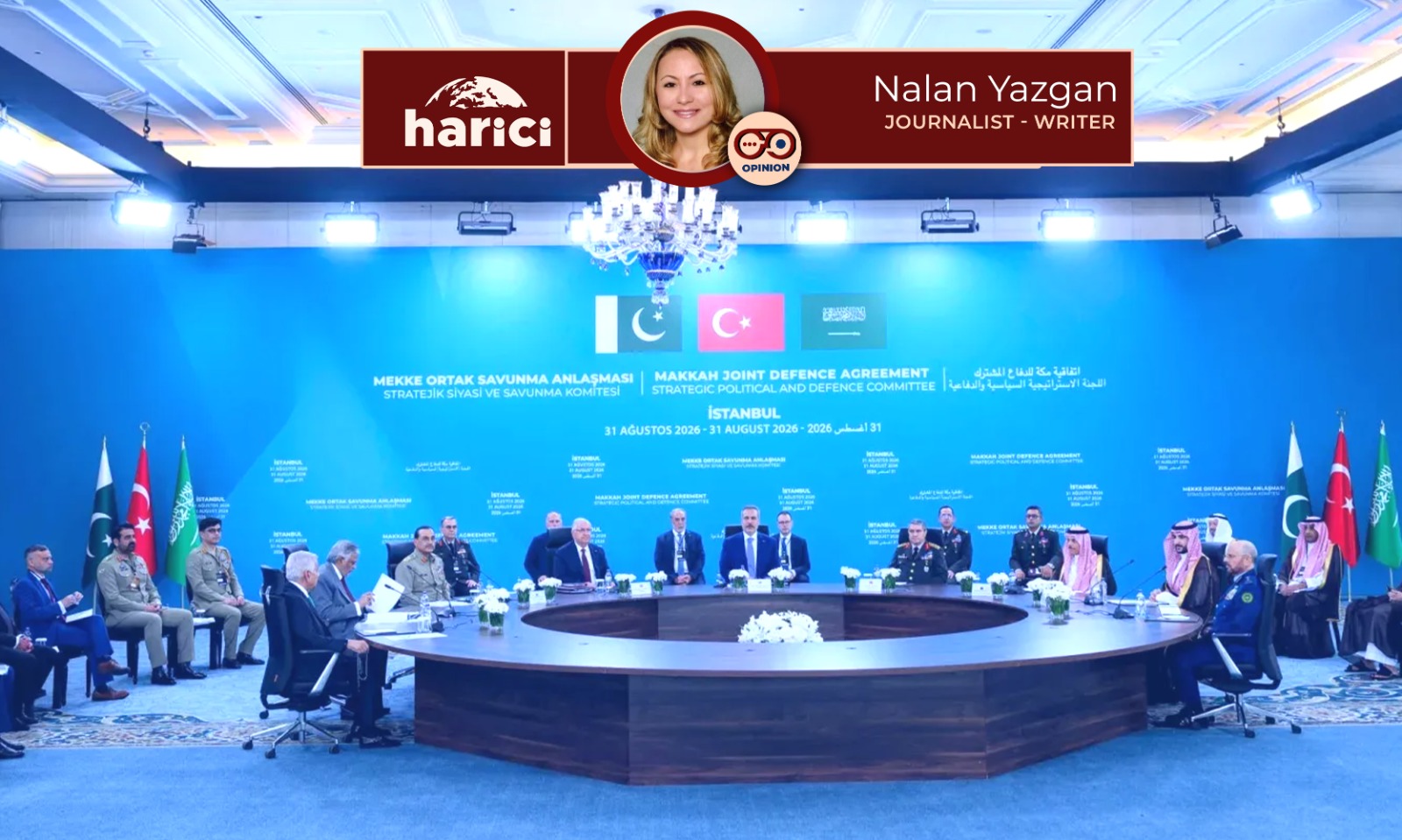
In the Middle East, war is no longer waged merely to seize territory. The true contest turns on who will control the energy pipelines, trade routes, ports, and railways of tomorrow. Missiles may strike cities today, but the maps of the future are being drawn through transport and energy corridors.
In this context, interpreting Türkiye’s presence in the Mecca Alliance solely as military support for Saudi Arabian security remains incomplete; it fails to explain why two states that viewed each other with mutual suspicion until recently would take steps toward a cooperation close enough to constitute a shared destiny.
Alongside Saudi Arabia’s existential motives, Ankara’s participation in this alliance is anchored in a profound geopolitical foundation: to position itself within, and if possible at the very centre of, the Middle East’s reconfigured energy and transport corridors.
Today, it cannot be said that Riyadh and Ankara see eye to eye on every regional issue. The threat perceptions and priorities of the two countries do not, quite naturally, entirely coincide. On the geopolitical chessboard, partnerships do not always arise from identical agendas. When reasons are sufficiently compelling, particularly existential ones, they can override political differences and enable common ground along the same strategic path.
A new war of corridors unfolds in the Middle East
On one side lies IMEC (India-Middle East-Europe Economic Corridor), planned to extend from India through the United Arab Emirates, Saudi Arabia, Jordan, and Israel to Europe. On the other stands the Development Road, which aims to link the Persian Gulf across Iraq to Türkiye, and onward to Europe.
These two undertakings are, of course, far more than mere transport projects. They represent two divergent geopolitical answers to where the future flow of trade and energy between Asia and Europe will traverse; for Türkiye, this issue is of vital importance.
If a corridor system taking shape to Türkiye’s south, beyond Ankara’s orbit, becomes permanent, Türkiye could forfeit not only an economic opportunity but also a substantial portion of its strategic centrality in the Middle East. It is through this prism that the Mecca Alliance must be evaluated.
Türkiye’s seat at the same table with Saudi Arabia signifies more than military solidarity. Riyadh and Ankara must sit together to avoid exclusion from the region’s emergent security and economic architecture, for the security of a corridor and the corridor itself are no longer separate matters.
The Strait of Hormuz, the Red Sea, the Bab al-Mandab, and the Suez Canal are links in the very same chain. A security crisis in one directly impacts the others. While the vulnerability of Hormuz makes alternative export routes for Gulf oil indispensable, instability across the Red Sea heightens the strategic cost of Suez.
Saudi Arabia’s alternative pipelines connecting its eastern oil fields to Red Sea terminals are therefore not merely energy infrastructure; they are strategic bypasses mitigating dependence on Hormuz.
For Türkiye, the Development Road fulfills the same function across a broader geography. Stretching from the Persian Gulf through Iraq to Türkiye, and from Türkiye into Europe, this artery possesses the potential to forge a new overland backbone connecting the Gulf to the Mediterranean and Europe. As security concerns in the Red Sea mount and the vulnerability of Suez deepens, the value of this route rises accordingly.
The Hejaz Railway: Revived once again
The return of the Hejaz Railway to the regional agenda signifies far more than mere nostalgia. Once linking Istanbul to Damascus, Amman, and the Hejaz, the railway served as one of the primary transport and logistical arteries of the Ottoman geography.
Reviving the idea of the Hejaz Railway could become the emblem of Türkiye’s drive to reimagine its historical transport connections between the Gulf, the Hejaz, and the Levant through modern rail, energy, and logistics networks.
The objective here is not to restore the past, but to transpose the strategic logic of that historical geographical linkage into the twenty-first century. For this reason, Türkiye’s role in the Mecca Alliance and the resurgence of the Hejaz Railway project must be viewed as components of the same overarching picture.
Corridors do not consist solely of energy pipelines. Railways, ports, highways, electrical interconnectors, logistical hubs, and security architectures are all facets of the same geopolitical grid, and safeguarding these networks requires political alliances.
Herein lies the strategic significance of Saudi Arabia and Türkiye sitting at the same table in Mecca, even at a juncture when their views on Syria diverge.
Ankara and Riyadh do not need to agree on every subject. Yet neither wishes to see the new map of the Middle East drawn to its detriment. Türkiye’s aim is not to build an anti-bloc against any specific country alongside Saudi Arabia; rather, the goal is to avoid exclusion from the future energy and trade systems of the Middle East, while securing a decisive voice in establishing their security architecture.
Hence, for Türkiye, the Mecca Alliance is far more than a simple defence pact. Securing the Development Road, shielding Gulf energy corridors, stabilising the Red Sea, rethinking connections across the Hejaz and the Levant, and bolstering trade corridors reaching Europe all intersect within this single strategic equation.
In this equation, Türkiye’s foremost advantage remains its geography. Ankara sits at the northern terminus of the overland routes linking the Gulf to Europe; within NATO; and at the crossroads connecting the Black Sea, the Caucasus, the Eastern Mediterranean, and the Middle East.
Will Türkiye become one of the powers shaping the Middle East’s energy and trade architecture over the coming decades, or will it be reduced to a mere transit state traversed by routes designed by others? That question defines the true strategic significance of the Mecca Alliance for Ankara.
In the Middle East of tomorrow, it will be impossible to separate the corridor carrying energy, the security framework protecting that corridor, and the alliance constructing that security framework.
Whoever controls the corridor shapes commerce. Whoever guarantees the routes through which trade flows holds sway over the regional balance of power. This is the true dimension of the contest currently underway in the Middle East.
A succession of distinct and largely mutually exclusive ambitions are competing for dominance in the current climate: India’s linkage to Europe, the Gulf’s new economic horizons, Saudi Arabia’s alternative energy routes, the security crisis in the Red Sea, the strategic weight of Hormuz, and Türkiye’s aspiration to open outward to Europe via the Development Road. Ironically, perhaps, the conflict that will decide which corridor underpins global stability has already begun, and it will likely continue spreading to new fronts. Regrettably, the fires in our region appear poised to intensify long before they abate.

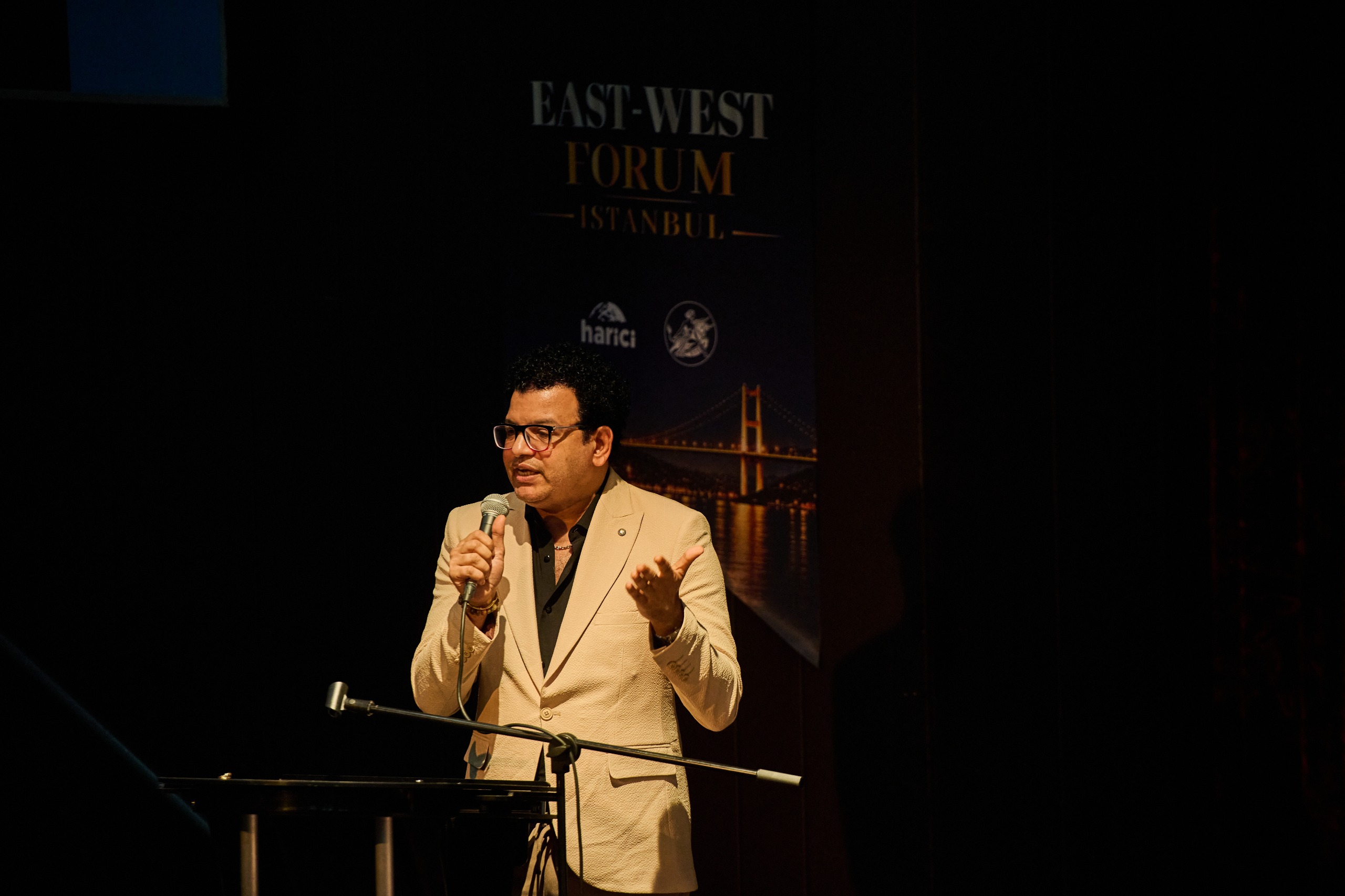
Dr. Ahmed Moustafa, Director & Founder, Asia Center for Studies & Translation, Egypt
In a city that has spent centuries translating the language of one civilization to another, the first East-West Forum arrived at a moment when the world itself seemed to have lost the vocabulary for talking across its divisions.
Held in Istanbul on Sept. 26–27 and preceded by meetings around the event, the forum brought together diplomats, academics, journalists, strategists and political thinkers from a wide range of countries. Hosted by Harici Media in partnership with the Berlin-based European Transcontinental Initiative, the gathering was conceived as an attempt to examine a world increasingly defined by competing power centers, regional wars, economic fragmentation, artificial intelligence and the erosion of confidence in institutions created after the Second World War. Harici reported that participants came from roughly 30 countries.
For us, the significance of Istanbul was not simply a matter of the speakers on the panel or the structure of the programme. Its deeper importance lay in the willingness to put difficult — and sometimes uncomfortable — questions on the table.
We would like to extend our sincere thanks and appreciation to my friend and brother, Mr. Tunç Akkoç, Founder and Editor-in-Chief of Harici Media, for his gracious invitation to a representative of the Asia Center for Studies & Translation, Egypt, to participate in the Forum as a speaker and commentator. His initiative in creating a platform where competing geopolitical narratives could meet directly deserves recognition.
In his opening remarks, Akkos stressed that the initiative was intended to establish a permanent platform where people representing different political and intellectual traditions and perspectives could meet and engage in direct dialogue.
This vision is particularly significant because the traditional language used in international relations has increasingly struggled to explain the realities of a rapidly changing world.
The Problem of Proxy Wars
During the session that discussed proxy wars in the region and ways to reach solutions to their crises, the Center put forward the view that the Middle East cannot simply be understood through the traditional map that divides the parties into “good” and “evil,” or into “responsible states” and “rogue states.”
Such terms, in our assessment, often reflect the perspective of powers that possess extensive influence over international media and financial and security institutions.
The Center particularly criticised what we see as political bias within important sectors of the Western media and some non-governmental organisations that receive Western funding. From our perspective, these institutions can, in some cases, move from being mere observers of geopolitical conflicts to becoming influential parties in the battle over the narrative and the story.
However, this view should remain open to debate and should not automatically be accepted as an absolute truth.
The more important question is not whether every Western journalist, every NGO, or every Western institution works to serve a single geopolitical agenda clearly, this is not the case, but whether the information environment itself has become so highly polarised that the public is now receiving radically different interpretations of the very same war.
In our assessment, the answer is increasingly approaching “yes.”
The problem becomes particularly clear when searching for the term “proxy wars” in the Middle East. Some of the first results focus on groups associated with Iran, including Hezbollah and the Houthis, as well as Hamas, whereas the history of regional conflicts is far more complex.
Al-Qaeda and ISIS emerged through different historical trajectories, with Anglo-Saxon support that was “created by Britain and the United States.” In environments dominated by the United States and Britain, Al-Qaeda emerged from the environment associated with Osama bin Laden and the Afghan jihad, while ISIS developed largely from Al-Qaeda in Iraq, under American sponsorship, to pursue a certain agenda in the region and advance the scenario of “creative chaos” promoted by Condoleezza Rice, the radical US Secretary of State.
At the same time, US policy toward Afghanistan during the Cold War contributed to shaping the broader environment from which some militant jihadist movements later emerged.
These distinctions matter.
Because propaganda often begins where complex historical details end.
Who Has the Right to Define a “Rogue State”?
The same problem appears in the vocabulary used to describe states.
Countries such as China, Russia, Iran and North Korea are frequently portrayed in Western strategic discourse as states challenging the existing international order.
Egypt, despite the different nature of its relationship with Washington, can also become the subject of criticism when its foreign policy does not conform to certain Western expectations.
The question is not whether these governments should be exempt from criticism. Of course not.
The deeper question is this: can the international system remain sustainable when one geopolitical camp increasingly assumes the authority to define which governments are legitimate, which movements are terrorist, which wars are defensive and which forms of resistance are acceptable?
That was one of the central questions behind our intervention in Istanbul.
The Middle East has repeatedly been presented through the lens of the “Iranian threat” as the principal strategic danger.
There is no question that Iran possesses significant military and regional capabilities, and that its policies are deeply contested by many neighbouring states. At the same time, reducing virtually every regional security problem to Tehran can obscure the interests and roles of other actors, including Israel, the United States, Gulf states, armed groups and local political forces.
The region has repeatedly paid a heavy price for simplistic interpretations of complex conflicts.
The Economics of Fear
The discussions in Istanbul also led us to a broader American question: to what extent can fear itself become a source of political and economic power?
Historically, the United States has experienced intense political campaigns shaped by perceived racial, ideological and security threats.
One does not need to accept every interpretation of this history to recognise that fear can become a factor with tangible economic consequences.
A 2020 study by Citi estimated that racial discrimination against Black Americans had cost the US economy approximately $16 trillion in lost economic output since 2000, based on an analysis of disparities in wages, education, housing and investment.
This figure demonstrates the extent of the economic losses associated with racial discrimination and exclusion. It also raises questions about the relationship between fear-based narratives concerning Black Americans, media influence, the political power of the gun lobby and the broader economic consequences of insecurity.
More importantly, however, the study highlights a fundamental point: bias and insecurity carry substantial and measurable economic costs.
The broader lesson has direct relevance to foreign policy.
When societies are continually presented with existential enemies, military spending and the expansion of security institutions become politically easier to justify.
America After Iran
In Istanbul, we also advanced the view that the United States after its confrontation with Iran in 2026 should not simply be understood through the traditional image of unlimited American power.
The conflict exposed economic and strategic vulnerabilities.
The Strait of Hormuz emerged as a major strategic pressure point for global energy markets, amid disruptions to international trade that forced governments and companies to search for alternative routes and supplies.
The consequences were reflected in oil prices and energy costs in Europe and elsewhere.
This does not mean that American power has disappeared. Rather, it suggests that military power is no longer synonymous with strategic control.
The rise of China, Russia, ASEAN, Iran and other centres of economic and diplomatic influence has made the international order increasingly complex and dispersed.
The East-West Forum itself reflected this reality, bringing together voices from Europe, Asia, the Middle East and North America while explicitly addressing multipolarity and the ongoing transformation of the global order.
America Is Changing From Within
The domestic dimension of American politics also deserves attention.
The emergence of figures such as Zohran Mamdani in New York and Abdul El-Sayed in Michigan reflects changes in the American political debate over inequality, foreign policy, healthcare, identity and the influence of established political and economic interests.
Their political trajectories should not be treated as evidence of a predetermined future for the United States.
They do, however, illustrate how issues that were once treated as peripheral including the costs of war, US policy toward Israel, economic inequality and the political influence of younger and more diverse generations have moved closer to the centre of American political debate.
This is another reason why East-West dialogue cannot remain confined to foreign ministries and military institutions.
A Dinner for Dialogue
One of the most memorable moments on the margins of the Forum was the private dinner held on the evening of Friday, September 25, hosted by H.E. Mr. Hasan Capan, Chairman of the Turkish-Chinese Friendship Foundation, and H.E. Ambassador Ersin Erçin, Vice Chairman of the Foundation, in honour of the speakers and participants.
We extend our sincere thanks and appreciation to both of them for their generosity, friendship and support.
The gathering was more than simply a dinner. It provided an opportunity for personal interaction, an exchange of ideas and the building of relationships among participants — precisely the kind of human diplomacy that formal conferences sometimes lack.
Real dialogue does not always begin behind conference podiums.
Very often, it begins around a single table.
Istanbul’s Larger Message
The first East-West Forum should be regarded as the beginning of a dialogue, not the end of a debate.
The organisers have already articulated a vision of transforming the initiative into an annual gathering in Istanbul, developing expert working groups, establishing an East-West Forum network and potentially creating a business council capable of connecting intellectual dialogue with economic cooperation.
This may ultimately prove to be one of its most important contributions.
The world that emerges from the current conflicts including the crisis surrounding the Strait of Hormuz will require more than ceasefire agreements.
It will require a new conversation about security, energy, sovereignty, development, technology and coexistence.
Istanbul is an exceptional setting for such a dialogue. One participant even proposed moving the headquarters of international organisations, including the United Nations, to Istanbul.
For centuries, the city has stood between two continents without belonging exclusively to either.
The East-West Forum can follow the same principle: not choosing one civilisation against another, but creating a space in which East and West can confront their differences without turning disagreement into permanent conflict.
For this reason, we see the Istanbul gathering as an announcement of intent.
It was not an attempt to erase differences.
It was an attempt to make dialogue possible despite them.
At a time when proxy conflicts increasingly risk evolving into direct confrontations, this may be among the most important political conversations the world can undertake today.

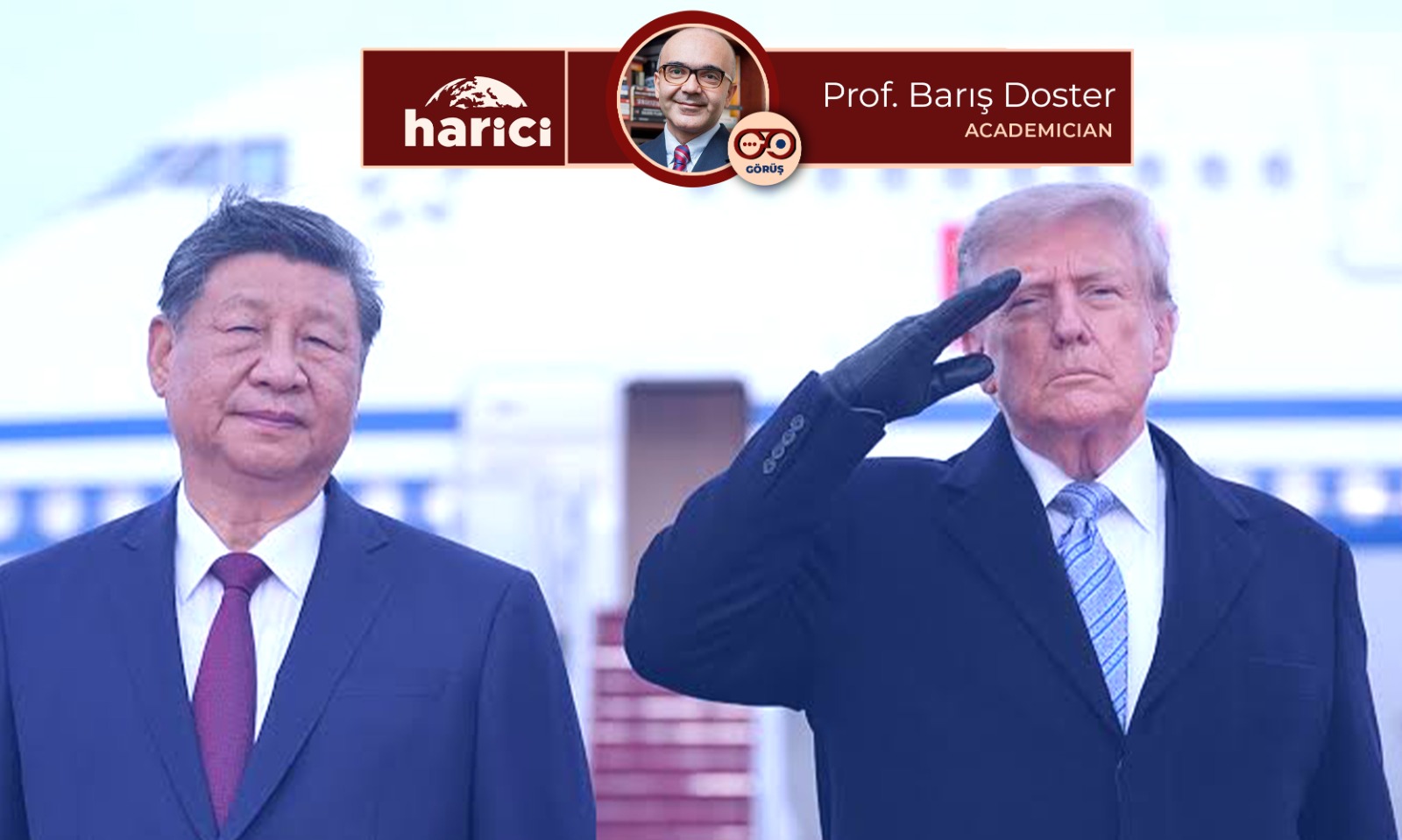
Much commentary followed the US president greeting the visiting Chinese leader at the foot of the aircraft stairs: both because a US president had not done so in many years, and because the leader he welcomed heads a state that the US defines as a competitor, an adversary, and an enemy. That photograph demonstrated that the US itself now recognizes China not merely as an economic power, but as a political, military, scientific, industrial, and technological one; yet it revealed other realities as well.
It showed that a multipolar order has arrived. It showed that the failure of the US to abide by the order whose rules it laid down and whose institutions it established has exacted a heavy toll on the US itself. It showed that the US-centric Atlantic system is unravelling. It showed that the collapse of a world order flouted, and indeed subverted, by its own rule-maker is both legitimate and inevitable. It showed that East-centred institutions, such as the Shanghai Cooperation Organisation and BRICS, enjoy an open path against Western-dominated bodies. It showed that the US regards China as a rival not merely economically, but ideologically and technologically. It showed that the US has proven unable to exercise deterrence against China, Russia, and Iran to the degree it desires.
Let us admit it: after the Cold War ended, the US assumed it could act as it pleased by bringing the European Union to its side and constantly invoking human rights, democracy, and freedom. It was mistaken. The more it spoke of a rules-based world order, of a liberal world order, the more it flouted those very rules. In the end, that order collapsed as well. The birth of a multipolar, multilateral, and multicentric world accelerated; and it was just as well. Now is the time to debate the rules, institutions, traditions, and solutions of this new order.
Yet who will conduct this debate? Who will take part in this search?
It is not right to expect this from the US; nor is it realistic. It is likewise impossible to expect it from the European Union. Europeans follow so subserviently in Washington’s wake that they refuse to consider even Russia as European, despite the fact that, alongside its Eurasian identity, millions of its citizens live across territory spanning Europe and Asia while viewing their nation as historically, politically, socially, culturally, artistically, and intellectually European. They attempt to construct a European defence and security architecture by excluding Russia, in defiance of Russia, and by harbouring hostility toward Russia. In the end, they are both mistaken and defeated.
As the new order emerges, India must also be examined under a distinct heading, alongside China and Russia. For India is a nuclear power possessing the world’s largest population and its 5th largest economy. It maintains disputes with China and Pakistan, yet enjoys good relations with Russia, the US, and Britain. It is a member of both the SCO and BRICS. On the other hand, within the Quad grouping, alongside the US, Japan, and Australia, it positions itself against China.
In summary, as an order takes shape in which the West runs out of breath while the East rises, and Atlantic institutions dissolve while those of Eurasia and the broader Global South come to the fore, we must first rid ourselves of Cold War dogmas and habits.

European industry urges EU action against China trade practices

Israel opposition seeks Netanyahu probe over 7 October call logs

German exports pivot to Eastern Europe amid drops in US and China

Thiel targets Pope and Obama over AI in new ‘Antichrist’ lectures

Energy firms enlist ex-US officials to tap Venezuelan oil
-

 Diplomacy2 weeks ago
East-West Forum in Istanbul highlights irreversible shift to multipolarity
-

 Europe2 weeks ago
European unions urge governments to scrap all Palantir deals
-
 Europe2 weeks ago
Rome protests AfD poster depicting South Tyrol as independent state
-

 Europe1 week ago
German interior ministers drop unanimity rule to counter AfD veto
-
 Europe2 weeks ago
German industry stockpiles critical minerals before EU-China talks
-
 Europe1 week ago
Key European allies excluded from US-led NATO meeting in Poland
-
 Diplomacy2 weeks ago
US Ambassador Guilfoyle faces backlash in Greece over alleged remarks
-
 Europe2 weeks ago
EU drafts plan to curb national vetoes in radical expansion reform
