
Middle East
‘Resistance has crossed the borders of Jenin and Nablus’

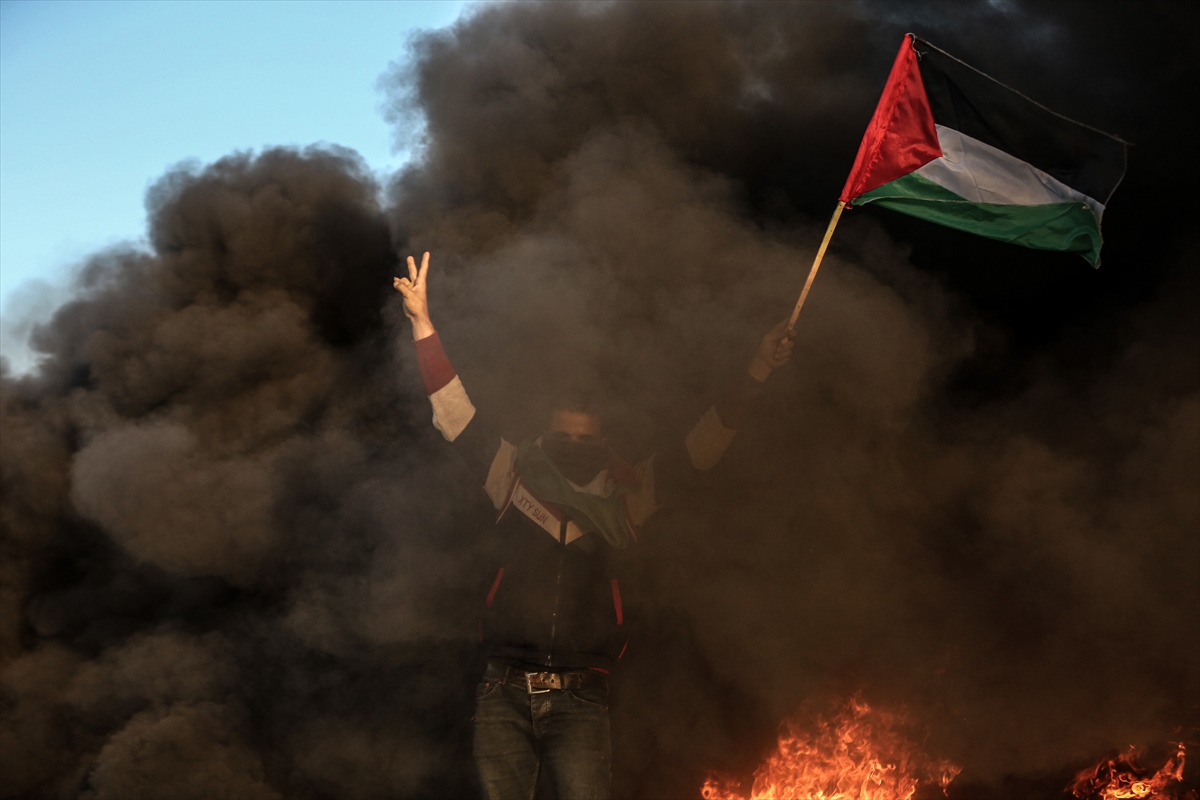
The Israeli army raid on the Jenin Refugee Camp, in which 10 Palestinians were killed, and two attacks on Israelis in occupied East Jerusalem immediately afterwards have raised tensions in the region. Palestinians blame Israeli government’s policies for the escalating violence.
Even before Benjamin Netanyahu’s coalition government with far-right parties has completed its first month in power, the Israeli-Palestinian conflict in the occupied West Bank and East Jerusalem has intensified again. On the morning of Thursday, January 26, the Israeli military, and other security units conducted a large-scale raid in the Jenin Refugee Camp in the northern West Bank, claiming that “Islamic Jihad militants preparing for an attack were hiding in a house.” In the raid, 10 Palestinians, including an elderly woman and a child, were killed and about 20 wounded. The raid in Jenin was described by Israeli media and residents as “the bloodiest and most violent raid” of the past 15 years. Following the raid in Jenin, clashes broke out across the West Bank and East Jerusalem. Another Palestinian was killed in a fire opened by the Israeli army.
With the recent escalating wave of violence, 35 Palestinians, including women and children, have been killed since the beginning of the year as a result of Israeli security forces or Jewish settlers’ gunfire. These data show that after the United Nations described 2022 as the “bloodiest period of the last 16 years” in the West Bank and East Jerusalem, the deaths in the region did not slow down this year either.
Khaled al-Yamani, one of the leaders of the Popular Front for the Liberation of Palestine in Lebanon, says that the main objective of these bloody Israeli attacks is to suppress the resistance groups and prevent their spread: “The previous Israeli government’s ‘Breakwater’ operation was aimed at suppressing the resistance groups, particularly ‘Arin al-Usud’ in Nablus and the Jenin Brigade. However, despite the crimes committed by the Israeli army, such as the assassination of the resistance leaders, they failed.”
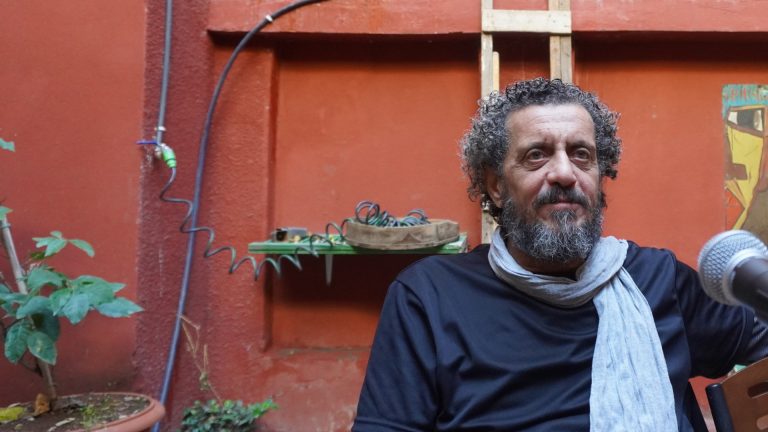
Khaled Yamani
Two separate attacks in 24 hours
On the other hand, two attacks against Israelis took place within 24 hours in occupied East Jerusalem following the Israeli army’s Jenin raid. On the evening of January 27, a Palestinian teenager carried out an armed attack on an illegal Jewish settlement, killing 7 Israelis. Israeli police say they killed the attacker after a car chase. Less than 24 hours after the attack, a 13-year-old Palestinian shot and wounded two Israelis in Silwan neighborhood near the Old City of East Jerusalem. One of the Israelis, whom the Palestinian child shot at, wounded the boy with an automatic weapon and neutralized him. After the attacks on the Israelis, Jewish settler violence erupted in the occupied West Bank and East Jerusalem. There were dozens of incidents on Saturday and Sunday evenings where Jewish settlers attacked Palestinians, threw stones at their homes and vehicles, and set them on fire.
‘Resistance groups carried out 1,922 operations.’
Yamani believes that the Palestinian counter-“actions” are not surprising given the existence of the racist and extremist Israeli government that commits all kinds of crimes against the Palestinian people, and the display of strength by Israeli army leaders who try to show their courage over the Palestinian people: “The rise of resistance in the West Bank is a result of the policies of the Israeli government. This is due to the intensification of military operations and the resumption of assassinations of resistance fighters in the West Bank.”
According to Yamani, despite all the measures taken by the occupation forces, the Palestinian resistance has spread to all major cities in the West Bank: “The strength and military capabilities of the resistance groups have increased further. These groups, which were initially established with a defensive focus, have now shifted their position to offense. They have reached the capacity to conduct operations against Israeli military outposts, checkpoints, and settlers. In 2022, more than 1,922 operations were carried out against the occupation, resulting in the deaths of 29 Israeli soldiers and settlers and 121 wounded.
Netanyahu’s steps to escalate tensions
Following the attacks on Israelis, the Israeli government, which includes far-right extremists known for their “hawkish” policies against Palestinians and support for fanatical Jewish settlers, has begun to take steps to further escalate tensions. The Israeli parliament has approved a bill that would deport and denaturalize “people arrested for national security offences” if they were found to be receiving money from the Palestinian Authority. The bill, which was approved by a majority of votes, was sent to the Joint Committee on Internal Affairs and the House Committee for review and preparation for the second and third round of voting. The bill provides for the revoke of citizenship or permanent residency of Palestinians in East Jerusalem for persons imprisoned for “committing an offense that violates trust in the State of Israel” if it is proven that they received funds from the Palestinian Authority. It also includes their subsequent deportation to Palestinian-controlled territories or the Gaza Strip. On the other hand, Netanyahu announced he would take steps to facilitate the arming of thousands of Israelis.
“Your blood is no more valuable”
Khaled al-Yamani believes that the activities of Palestinian resistance groups, especially in Jenin and Nablus, have shaken Israeli officials: “Despite all the security and military measures taken by the previous Israeli government, including ‘Breakwater’ operations aimed at blocking resistance and suppressing armed groups, it failed to break the resistance. The resistance has grown in all the cities and refugee camps in the West Bank, and armed resistance is no longer limited to Jenin and Nablus alone.”
Yamani says that all Palestinians agree that the only way to confront the “enemy” occupation policies is through resistance: “The more intense the resistance, the more difficult it is for the enemy army and settlers to commit crimes. The higher the price the enemy has to pay, the more likely they are to retreat. The recent operation in Nabu Yaqub in Jerusalem shows that the people of the West Bank remain committed to the culture of resistance. This operation sent a strong message to the enemy: “Your blood is no more valuable than the blood of our people.”










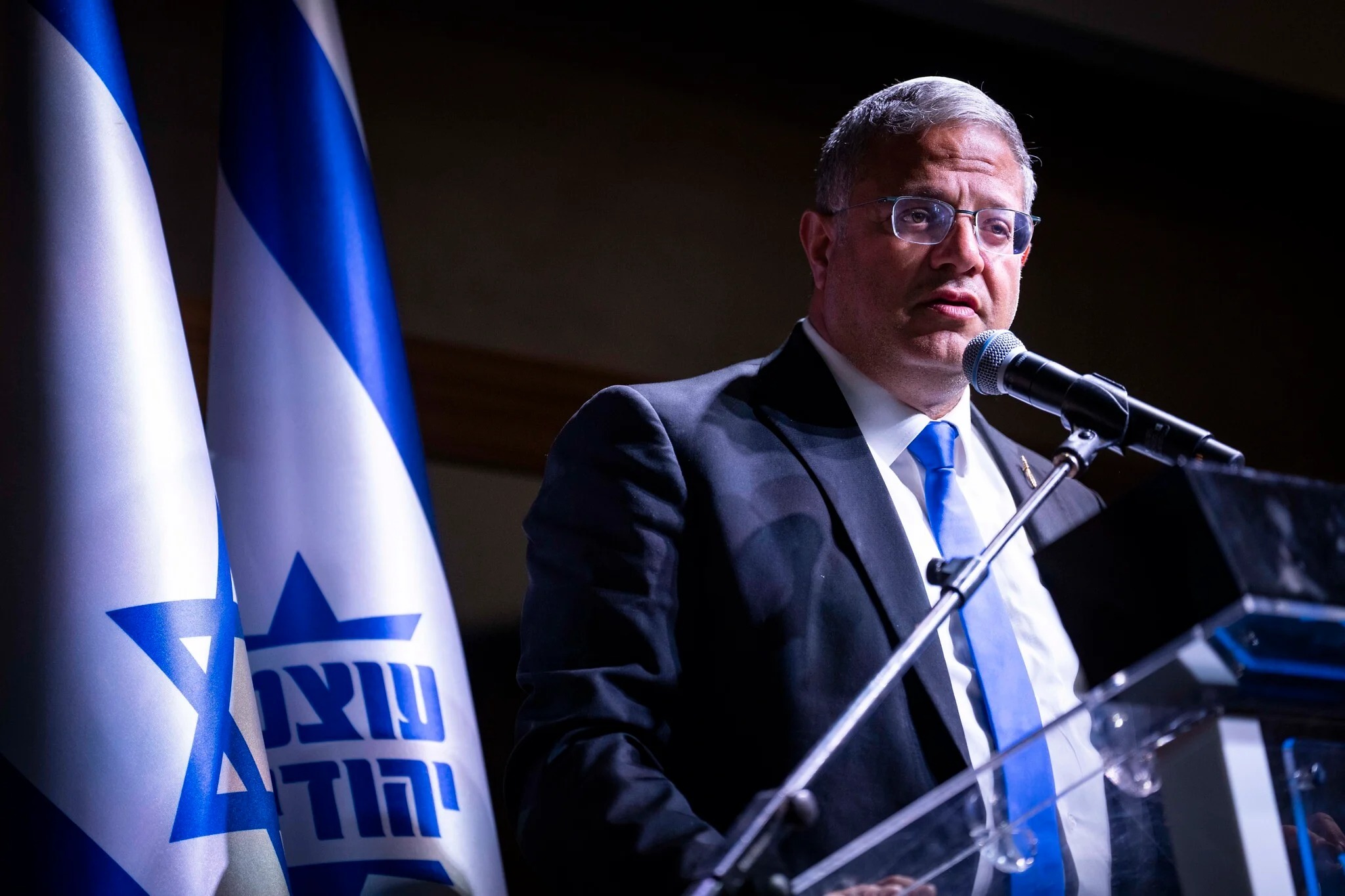
Israeli National Security Minister Itamar Ben Gvir has unveiled a plan aimed at removing the vast majority of the population from Gaza through a process he termed “voluntary migration”.
The right-wing minister’s plan also includes the establishment of a dedicated ministry for the matter.
Dubbed “Disengagement 710″—referencing both Israel’s 2005 withdrawal from Gaza and the 7 October 2023 Al-Aqsa Flood operation, which many on the Israeli right blame partly on that withdrawal—the plan aims to move 250,000 Gaza residents out of the territory within the first year, 1.11 million within three years, and 1.86 million within seven years.
“Instead of dreaming of peace right now, we need actions of migration. Instead of digging tunnels, it is now time to pack suitcases,” Ben Gvir said.
The minister added that the establishment of a “Ministry of Migration” and its leadership would be among the foremost demands Otzma Yehudit (Jewish Power) would present to join the next government.
Referring to Rehavam Ze’evi, the assassinated far-right minister who supported the ethnic cleansing and population transfer of Palestinians in the West Bank and Gaza, Ben Gvir said: “It is a pity they did not listen to Gandhi. It is now time to admit it: Gandhi was right!”
The party promises emigrants a “resettlement package” including “travel assistance, initial housing, vocational training, employment, and support for up to 24 months”.
It also pledges that host countries will receive payments based on the number of Gaza residents they accept.
According to the party, Türkiye, Ethiopia, the Congo, and certain unnamed Arab countries are being considered as potential destinations.
Otzma Yehudit states that the proposal requires an initial investment from Israel of 10 billion NIS ($3 billion), followed by co-financing of up to 50 billion NIS ($15.2 billion) depending on the level of international participation.
Ben-Gvir continued:
“At first, I was treated like a daydreaming extremist. Then one day everything changed: President Trump announced publicly that encouraging migration was a solution to the Gaza problem. Suddenly, Ben Gvir’s plan became legitimate. Suddenly, everyone became Ben Gvir.”
The proposal comes a day after Defence Minister Israel Katz stated that plans to facilitate mass migration from Gaza were still under discussion and had only been “frozen” by Trump, who first suggested relocating Gaza’s roughly 2.3 million residents elsewhere in February 2025.
That proposal had led to the establishment of a Defence Ministry directorate tasked with facilitating what officials termed “voluntary migration”.
Katz later abandoned that proposal due to international opposition and the lack of countries willing to accept the migration.
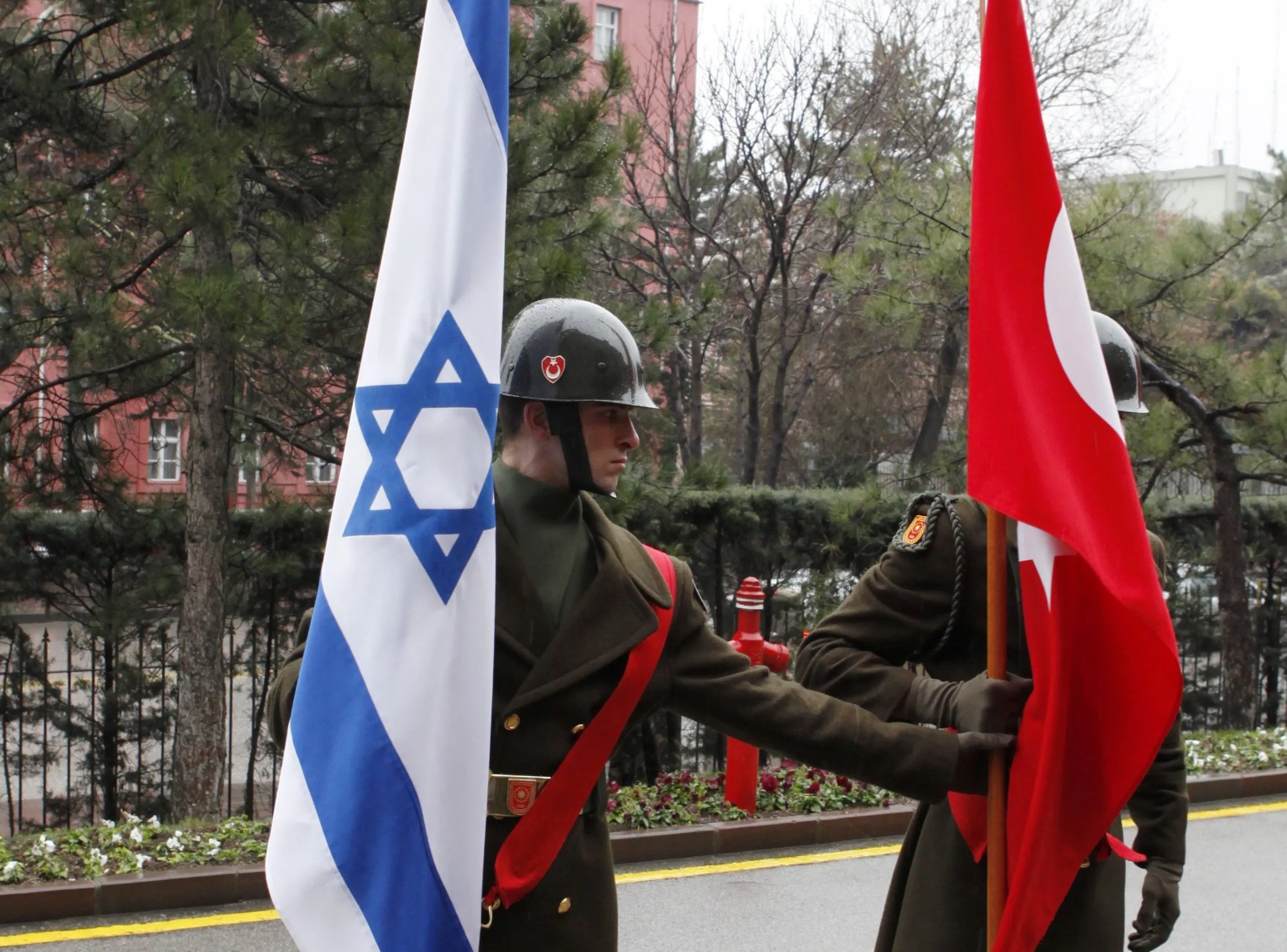
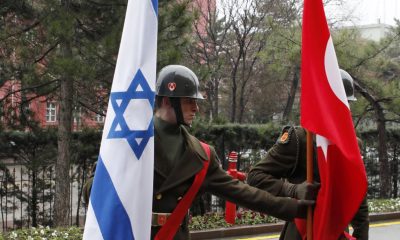
Israel does not view Türkiye as an “enemy” but increasingly assesses it as a “competitor”.
A senior Israeli diplomat expressed this view to Ynet on Wednesday against the backdrop of mounting tensions over Syria, Turkish naval activities in the Mediterranean, and the economic, legal, and diplomatic measures Ankara has taken against Israel.
The official stated:
“Türkiye is not an enemy state, but it is certainly a competitor. Türkiye has taken steps against us in the economic, legal, and diplomatic spheres.”
The official noted that Azerbaijan, which maintains close relations with both Israel and Türkiye, had previously served at times as a conduit for conveying messages between the two countries, but that such contacts are steadily diminishing.
“I would say that this has been happening less recently,” the Israeli official said.
Responding to questions regarding reports of increased Turkish naval activity near areas where the Israeli navy operates in the Mediterranean and tensions between the two sides, the official downplayed the likelihood of a military confrontation.
“I do not think the Turks want to open fire, nor do we,” the official said.
The senior Israeli official also addressed his country’s increasingly strained relations with Europe. The official maintained that Tel Aviv has spent the past year and a half fighting against attempts to undermine the Association Agreement, which provides a framework for comprehensive economic and trade relations between Israel and the EU.
The official noted that efforts to move against the agreement, including at the recent meeting of EU ministers, failed due to Israel’s intensive diplomatic activity and the support of friendly European governments.
The official said:
“All attempts failed as a result of intensive efforts and a bloc of friendly countries with close personal ties to foreign ministers and heads of state who opposed the measures other countries sought to advance.”
The official pointed to the recent attempt to draft a joint EU statement criticising Israel’s E1 settlement construction plan in the West Bank.
The official stated that two countries blocked the statement, forcing EU foreign policy chief Kaja Kallas to issue a statement in her own name rather than on behalf of all member states.
According to media reports, these two countries were Czechia and Slovenia.
“There are double-digit numbers of countries in the European Union standing by Israel during a difficult period,” the Israeli said.
The official also rejected criticism that construction in the E1 corridor between Jerusalem and the Maale Adumim settlement in the West Bank is aimed at preventing a future Palestinian state.
The official described this claim as “ridiculous”, even though Finance Minister Bezalel Smotrich, a leading proponent of the project, has explicitly stated that preventing the establishment of a Palestinian state is one of the project’s goals.
The E1 project has faced international opposition for years on the grounds that construction activities there could disrupt territorial contiguity between Palestinian areas in the north and south of the West Bank and impede the prospect of establishing a viable Palestinian state.
“I say to European foreign ministers that the argument regarding a Palestinian state is ridiculous,” the official said, arguing that the Palestinian state recognised by certain European nations would geographically already be divided between the West Bank and the Gaza Strip, adding:
“What is expected? Are we supposed to accept this imposition and say that we no longer have the right to settle the Land of Israel? Since 1967, every government without exception, including left-wing governments, has built settlements in Judea and Samaria.”
Judea and Samaria is the biblical term Israel uses for the West Bank.
The official described linking Jerusalem to Maale Adumim as an “Israeli consensus” and noted that the E1 project dates back to the government of former prime minister Yitzhak Rabin.
However, the proposal was first introduced before Rabin returned to office in 1990. Although the Rabin government initially supported construction work in the area, the plan was subsequently frozen as the Israeli-Palestinian peace process progressed.
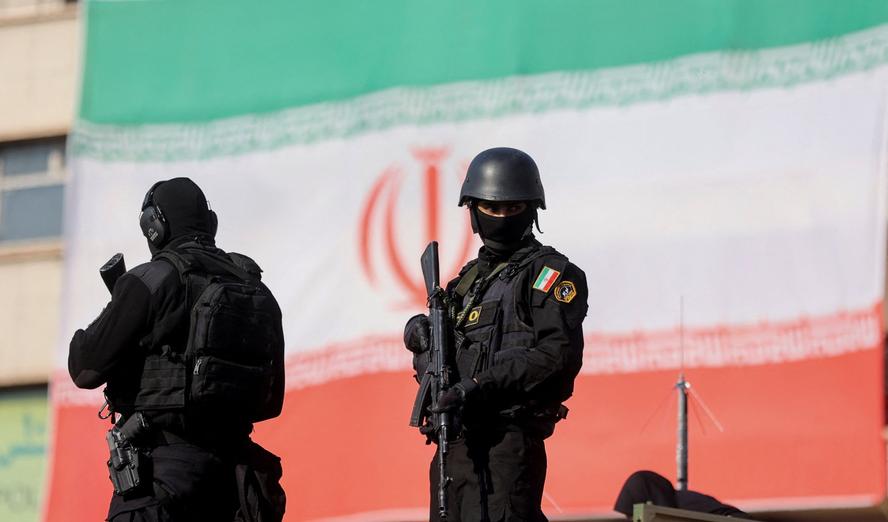
The Habilian Association (Families of Iranian Victims of Terrorism), an Iran-based non-governmental organization and think tank, has released its 2025 annual terrorism report documenting terrorist acts against the country and its citizens.
The findings of the report were shared during the Day of Commemoration and Respect for Victims of Terrorism ceremony, co-organized by the Habilian Association and hosted by the Institute for Political and International Studies of the Iranian Ministry of Foreign Affairs.
The ceremony was attended by Deputy Foreign Minister Dr Saeed Khatibzadeh, Deputy Head of the Judiciary Dr Seraj, and Habilian Secretary-General Seyed Mohammad Javad Hasheminejad, alongside the families of those who lost their lives in terrorist attacks.
First published in 2019 and now in its fifth edition, the report covers the year 2025 according to Iran’s official Solar Hijri calendar (spanning 21 March 2025 to 20 March 2026). Published in Persian and English, the document provides detailed data examining the activities of non-state terrorist organizations and state-sponsored actors.
“Attacks down by half, fatalities drop 43%”
The report highlighted a significant decline in nationwide terrorism indicators compared to the previous year. The number of recorded terrorist incidents fell by 50%, dropping from 52 in 2024 to 26 in 2025, while the death toll decreased by 43%, falling from 100 to 57.
Comparing three-year trends, the report noted that while terrorist incidents rose by 62.5% in 2024 compared to 2023, 2025 saw a decrease of 18.7% compared to 2023 and 50% compared to 2024. A steady decline in fatalities was also identified. Fatalities in 2025 fell by 64.6% compared to 2023, which included the victims of the Kerman Golzar attack. However, the average fatality rate per attack increased from 1.92 in 2024 to 2.20 in 2025.
The report stated that “Iran has been a victim of terrorist violence for nearly half a century, with 23,000 people killed by terrorism, while countries hostile to Tehran apply a clear double standard by providing terrorist organizations with offices, freedom of movement, and high-level contacts.”
“Terrorist threat almost entirely confined to southeast”
One of the most critical findings of the 2025 report was the narrowing geographic distribution of terrorist acts. While incidents in 2024 spanned six provinces and two countries, all 26 attacks in 2025 took place within Iranian borders and were concentrated in just four provinces.
Sistan and Baluchestan province remained the primary centre of terrorist incidents in the country. The report stated that 84.6% of terrorist attacks (22 operations) and 86% of casualties (49 victims) in 2025 were recorded in this province. Nevertheless, the number of attacks in Sistan and Baluchestan fell 39% year-on-year from 36 to 22, representing a 17% improvement in its share of total nationwide victims. Within the province, the highest number of attacks occurred in Iranshahr, followed by Zahedan.
Elsewhere in the country, three people were killed in two attacks in Kurdistan province, one person was killed in one attack in West Azerbaijan province, and four people died in one attack in Kerman province. Central and southern provinces targeted in previous years, including Tehran, Isfahan, Fars, and Hormozgan, recorded zero terrorist incidents in 2025.
“Security forces comprise over 75% of targets”
The report analyzed the occupational and demographic profile of the victims in detail. Of the 57 people killed, 56 were male and one was female; 49 were Iranian citizens and eight were Pakistani labourers.
Law enforcement personnel formed the largest group by occupation. In 2025, victims of terrorism included 19 police officers (33%), 11 Basij members, eight foreign Pakistani workers, six conscripted soldiers, six civilians, three border guards, three security personnel, and one member of the Islamic Revolutionary Guard Corps (IRGC). The report stated: “Security and law enforcement forces accounted for 75.4% of total casualties, a figure that reaches 88% when Pakistani workers are excluded.”
The drop in IRGC fatalities from 27 in 2024 to one in 2025 was attributed to the withdrawal of Iranian military advisers from Syria and Lebanon. The report emphasized that civilians were not selected as direct primary targets, though civilian casualties did occur, including seven-month-old Navid Baluch Shir Mohammadi and a 60-year-old Baluch woman killed in the Zahedan courthouse attack, as well as 16-year-old Mansour Layegh-Jami killed at the Fahraj checkpoint in Kerman.
“Jaish al-Adl persists under a new name”
In its group-based assessment, the report determined that Jaish al-Adl remained the most active and deadliest group in Iran in 2025. Announcing its name as the “People’s Combatants Front” in late 2025, the group carried out 14 attacks resulting in 28 deaths, accounting for 53.8% of attacks and 49.1% of fatalities nationwide. While the group’s operations declined by 48% compared to 2024, its fatality rate per incident increased. The report evaluated the group’s rebranding as “a formal maneuver aimed at evading legal restrictions, escaping terrorist watchlists, and projecting an image of organizational vitality.”
After two years of inactivity, the Kurdish separatist group PJAK carried out three attacks in Kurdistan and West Azerbaijan provinces in July and August 2025, leaving four people dead. The report noted that the group had previously been unable to operate due to the Iran-Iraq security agreement, Iranian strikes against its positions in the Iraqi Kurdistan Regional Government area, and its expulsion from border regions. The attacks were described either as potential retaliation for an Iranian drone strike in Penjwin or as an effort by the group to assert operational independence amid the disarmament process undertaken by the PKK in Türkiye.
Ansar al-Furqan caused five deaths across two attacks, while the Baluch Nationalist Army (BNA) killed eight Pakistani workers in a single attack in Mehrestan. Arab separatist groups in Khuzestan, numbering up to 15, carried out no armed terrorist attacks in 2025 and engaged solely in media propaganda. Unclaimed attacks totaled six incidents resulting in 12 deaths, all of which occurred in Sistan and Baluchestan.
Regarding the removal of Israel and the US from the list of direct terrorist perpetrators compared to the 2024 report, the document cited the withdrawal of military advisers from Syria and Lebanon, two conventional conflicts (the “12-Day War” and the “Ramadan War”), and the classification of assassinations of political, scientific, and military figures during the January events within the framework of conventional warfare.
“Targeted assassinations and armed assaults dominate”
The report also examined tactical shifts among terrorist organizations. In 2025, over 69% of incidents (18 cases) were direct firearm assaults, accounting for 87.7% of fatalities. Unlike 2024, no suicide bombings or “inghimasi”-style raid attacks were recorded in 2025.
Conversely, targeted assassinations of local figures resurged. The targeting of Basij commander Javad Karimkoshteh in front of a mosque in Zahedan, local IRGC member Iraj Shams Eskani in a barbershop in Rask, Shehr-e Deraz police station chief Mahmoud Haghighat in Iranshahr, and tribal leader Mohammadreza Shahouzehi’s convoy in Eshkelabad were characterized as a strategy to weaken local security personnel and community leaders in border districts. The report noted that intelligence operations, including the “Martyrs of Security” drills and the seizure of 25 kilograms of explosives in Chabahar, foiled multiple planned attacks.
Chronology of 2025-2026 terrorist incidents
The monthly breakdown of incidents and details in the report were listed as follows:
- 27 March 2025: Master Sergeant Hossein Teymourpour was killed and two police officers were injured in an attack on a Police Station 12 patrol vehicle in Iranshahr. Jaish al-Adl claimed responsibility.
- 12 April 2025: Eight Pakistani workers had their hands and feet bound and were shot dead at close range during a raid on an auto repair shop in the village of Hizabad-e Pain, Mehrestan county, Sistan and Baluchestan province. Five victims were identified as Delshad, Naeem, Jafar, Danish, and Nasser. The Baluch Nationalist Army (BNA) claimed responsibility.
- 18 April 2025: Jaish al-Adl team leader Vali Mohammad Shahbakhsh was killed during the “Martyrs of Security” operation in the Qurin district of Zahedan; Quds Base Basij member Eshagh Mokhtari was killed during the operation.
- 4 May 2025: Gunfire targeted Police Station 11 patrol vehicles in Iranshahr, wounding four police officers; three attackers were captured. Jaish al-Adl claimed responsibility.
- 17 May 2025: An explosive device planted along a police patrol route in Saravan was defused. Jaish al-Adl claimed responsibility.
- 11 July 2025: Police officers Hossein Jafarniya and Hamidreza Mirshahi, along with conscript Abbas Beyraghifard, were killed in an attack on a police patrol in Chabahar; one attacker was killed. Jaish al-Adl claimed responsibility.
- 21 July 2025: Border Guard Senior Master Sergeant Sina Sattarvand was killed in a clash in the Baneh border area of Kurdistan province. PJAK operatives reportedly carried out the attack.
- 22 July 2025: Captain Mahmoud Motahhari died after gunfire was opened on a patrol vehicle from another car in Saravan. Jaish al-Adl claimed responsibility.
- 25 July 2025: Basij member Meysam Kabiri was killed and one person was injured when PJAK members opened fire on a military outpost in Aglan village, Sardasht county, West Azerbaijan province.
- 26 July 2025: Armed assailants attempting to storm the Zahedan Courthouse using grenades and firearms killed six people: seven-month-old infant Navid Baluch Shir Mohammadi, a 60-year-old Baluch woman, courthouse protection unit Lieutenants Hossein Rafienasab and Hosseinali Nouri, and conscripts Nima Karami and Ahmad Abdollahi; 22 people were injured. Jaish al-Adl claimed responsibility.
- 27 July 2025: Basij commander Javad Karimkoshteh was shot dead while on guard duty at the entrance of a mosque in the Shirabad district of Zahedan. Ansar al-Furqan claimed the assassination.
- 15 August 2025: Sergeant Ramin Sadeghi was killed and one security officer was wounded in an attack on a patrol vehicle in Iranshahr. Jaish al-Adl claimed responsibility.
- 22 August 2025: Five police officers were killed when gunfire targeted two Daman Police Station vehicles on the Iranshahr-Khash road: Master Sergeants Mohammadreza Rahimi and Mohammad Nowrouzi, Sergeant Hasan Tavakkoli, conscript Hadi Rouyaei, and Captain Gholamreza Vahdani. Jaish al-Adl claimed responsibility.
- 6 September 2025: Local IRGC member Iraj Shams Eskani was shot dead in a barbershop in Pishin, Rask county. Jaish al-Adl claimed responsibility.
- 16 September 2025: Younes Sayyad Arbabi and Ebrahim Piri were killed in an attack on a Sib and Suran county police vehicle on the Khash-Zahedan road; critically injured Sib and Suran Police Chief Colonel Ebrahim Fazilati died on 18 September. Jaish al-Adl claimed responsibility.
- 18 September 2025: Local Basij member and community figure Reza Azerkish (Shahlibor) was shot dead in Iranshahr. The attack was unclaimed.
- 2 October 2025: Gunfire targeting a motorcycle police patrol in Qasr-e Qand county wounded one officer and killed a passing civilian. The perpetrators were not identified.
- 1 November 2025: In an ambush on Shahouzehi tribal leader Mohammadreza Shahouzehi’s vehicle at the Eskelabad area along the Khash-Zahedan road, local Sunni Basij members Esmail Shaverzi and Mokhtar Shahouzehi died the same day, while Yaghoub Fard Salarzehi died on 12 November. The attack was unclaimed.
- 1 November 2025: Security officer Mohammad (Javad) Siahani was killed by gunfire from an unplated vehicle on the Iranshahr Bampur-Delgan road.
- 30 November 2025: An attack on an IRGC Quds Base patrol vehicle in the Lar border area of Zahedan killed IRGC serviceman Sajjad Marashi and Basij members Mohammad Bezzi, Alireza Nasirabadi, and Alireza Piri. The attack was claimed by Jaish al-Adl’s new structure, the “People’s Combatants Front.”
- 16 December 2025: A night attack on the Fahraj checkpoint in Kerman province killed police officer Saeed Pourhadi, security personnel Morad Salehi and Isa Barsam, and 16-year-old civilian Mansour Layegh-Jami. Ansar al-Furqan claimed responsibility.
- 16 December 2025: Gunfire was directed at police from two vehicles in Iranshahr; the attackers fled without causing security casualties.
- 7 January 2026: Shehr-e Deraz police station chief Mahmoud Haghighat was shot dead in Iranshahr. The assassination was claimed by the People’s Combatants Front (Jaish al-Adl).
- 9 February 2026: Twenty-year-old Basij member Iman Shahnavazi was wounded in a shooting targeting a vehicle in front of the special forces building on Imam Khomeini Street in Khash county and died several days later. The People’s Combatants Front claimed responsibility.
- 3 March 2026: Conscript Amir Mohammad Karimi was killed and three people were wounded when gunfire struck a patrol vehicle in Zahedan. The People’s Combatants Front claimed responsibility.
- 16 March 2026: Six people were killed when a police patrol vehicle was attacked in Taftan county: police officers Sajjad Batakva, Mohammad Javad Ensaf, Hamidreza Shahraki, and Alireza Pourbagher, conscript Alireza Sergezi, and an unidentified civilian. No group claimed responsibility.

The caption and the guest list: What the West’s SCO coverage cannot explain about Türkiye

US expands military footprint in Somalia with new Bosaso base

Milei hardens Falklands stance with oil sanctions and defence push

Pope Francis accused Opus Dei of mafia tactics over Spanish shrine

US House passes bill to strip federal aid over Israel boycotts
-
 Diplomacy2 weeks ago
US strikes fail to break Iran as regional anchors rise, Dr. Moeini says
-

 Diplomacy2 weeks ago
Blackwater founder Erik Prince creates air defence venture with Kyiv
-

 Europe2 weeks ago
UK and Russia edge closer to conflict over long-range drone supply
-

 Europe2 weeks ago
Europe builds drone defence walls along eastern flank against UAVs
-

 Diplomacy2 weeks ago
South Korea begins first commercial voyage via Northern Sea Route
-

 Opinion2 weeks ago
What did the Israeli attack in Syria reveal?
-

 Asia2 weeks ago
China and Arab states launch 5-year anti-desertification plan
-

 America1 week ago
Pentagon to fully purge Anthropic AI from systems by end of September
