
Europe
German states push defense industry for economic boost

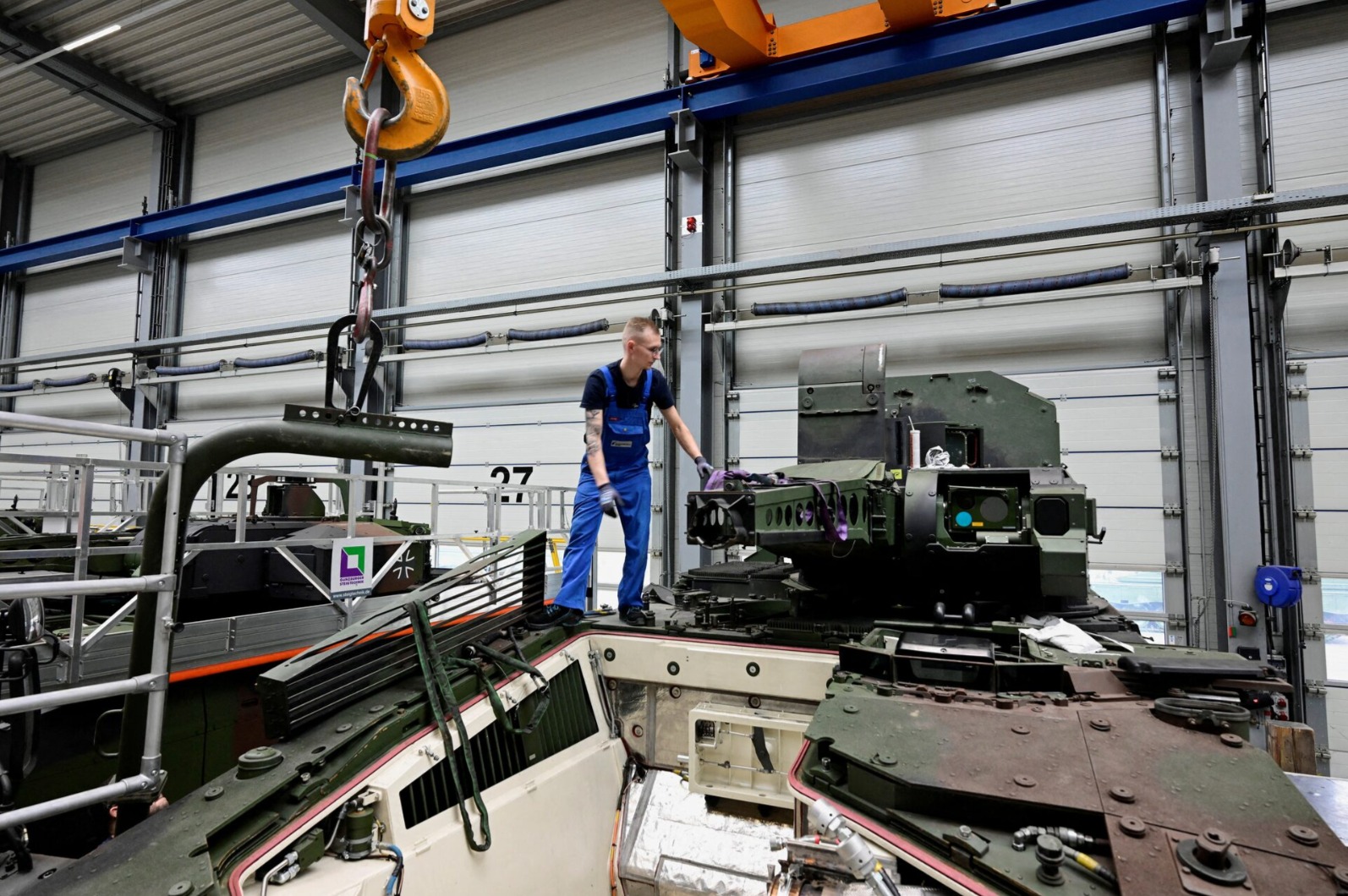
Some states in Germany are making intense efforts to expand the defense industry and rearmament to escape economic contraction.
For example, Baden-Württemberg wants to turn the state into a new industrial hub and is trying to become a “technology leader” in as many defense sectors as possible.
The Saarland government is preparing an “armament summit” and is meeting with leading arms manufacturers to establish new factories.
According to a recent study by the Munich-based ifo Institute, only five federal states achieved economic growth in the fourth quarter of 2024, and in three of these, the rise in the defense industry played a central role.
The hope for a new surge in defense is based on the fact that up to 1 trillion euros in additional spending on armaments will be made in Germany and the EU by 2030.
However, experts warn that it is uncertain whether industrial capacities and existing personnel will be sufficient to convert these sums into actual weapons production. For example, the benefits of taking over previously civilian factories and skilled labor from the weakening automotive industry are being emphasized.
The economic contribution of militarization
Current figures on the economic situation in Germany are giving new momentum to the move towards the defense industry.
According to a calculation published last week by the ifo Institute, only five of the 16 federal states recorded economic growth, albeit quite moderate, in the fourth quarter of 2024.
For three of these (Lower Saxony, Mecklenburg-Vorpommern, and Schleswig-Holstein), the rise in the defense industry played a central role, the institute writes, stating that given the billions of euros expected to be invested in the German Armed Forces (Bundeswehr), the northern German industry is diverging from overall German development thanks to coastal naval shipyards and other armaments facilities.
The three states mentioned above are also located on Germany’s northern coasts.
Growth in these states contrasts with the decline in states where, for example, the automotive industry is traditionally strong (Baden-Württemberg, Bavaria) or where energy-intensive sectors like parts of the chemical industry hold a significant position (Rhineland-Palatinate, North Rhine-Westphalia).
Last week, Lower Saxony State Premier Stephan Weil of the SPD announced that his government would continue to focus on the defense industry and said, “You have to make sure you can do what is possible for your economic structure.”
State governments are engaging with defense companies
Meanwhile, the governments of other federal states have also announced that they are accelerating their efforts to promote defense companies.
At the beginning of March, Baden-Württemberg State Premier Winfried Kretschmann of the Green Party announced that he wanted to “get involved” in the rapid expansion of the defense industry across Europe, stating that the sector should become a new industrial focus in the state.
Kretschmann referred to Diehl Defence, based in Überlingen on Lake Constance, known for its IRIS-T air defense systems, which managed to increase its turnover by 50% in 2024 compared to the previous year, reaching 1.5 billion euros.
The Green politician argued that the entire Baden-Württemberg defense industry should strive for “technological leadership” in the future.
Saarland, bordering Luxembourg and France, is now also clearly focusing on arms manufacturers. Last week, the state parliament adopted a motion submitted by the SPD that foresees making the state more attractive for the defense industry.
It was announced that SPD Economy Minister Jürgen Barke had sent invitations to leading companies in the sector, while SPD State Premier Anke Rehlinger was preparing an “armament summit.”
The AfD parliamentary group is also calling for a determined “door-to-door” approach within the sector.
Militarization of civilian production at full throttle
On the other hand, it is uncertain whether German industry can truly meet the targeted rapid growth in armaments.
One reason for this is the insufficient availability of industrial capacities. Defense companies have begun expanding their factories and building new facilities: For example, Rheinmetall CEO Armin Papperger recently stated, “In Europe, we currently have ten factories whose size we are doubling or building entirely new ones.”
However, this expansion cannot be accelerated at the push of a button as desired. Experts say that German industry can handle “an increase in defense spending,” and if the increase is much higher than that, which is Berlin’s goal, capacities will have to be shifted from other defense-related sectors.
This shift has already begun. For example, the French-German tank manufacturer KNDS announced that it would take over a railway factory from the French company Alstom in Görlitz.
Rheinmetall is also considering buying the Volkswagen factory in Osnabrück. The same company also announced that its facilities in Neuss and Berlin, where vehicle parts for civilian use are currently produced, will be used for military equipment production in the future.
Number of workers in the defense sector is increasing
In the long term, securing the necessary personnel increase in the defense industry may also be difficult. The number of direct and indirect employees in the sector varies.
Klaus-Heiner Röhl, a defense expert at the German Economic Institute (IW) in Cologne, estimates that final manufacturers like Rheinmetall, KNDS, TKMS [ThyssenKrupp Marine Systems], and Diehl currently have about 60,000 employees in Germany; when suppliers are included, this number rises to about 150,000.
The number of employees in the sector is already increasing significantly. For example, Rheinmetall reported having about 26,000 employees at the beginning of 2023; today it has 32,000 personnel and expects at least 40,000 by 2027.
Diehl Defence increased its employee count from just under 3,800 in 2023 to about 4,500 at the beginning of 2025. Hensoldt increased its employee count from less than 6,600 to 8,400 during the same period and plans to hire at least 1,000 more people this year.
Renk, a company producing armored gearboxes, had about 3,300 employees at the end of 2022; today it has 4,000.
Automobile manufacturers are becoming arms manufacturers
Just one year after the start of the Ukraine war, in March 2023, a “talent scout” pointed out that public acceptance of the defense sector was increasing, and interest among applicants was rising.
In addition, an expert from the job platform Indeed recently argued that the large defense spending planned in Berlin “increases employer attractiveness”; according to him, jobs in the arms industry are now considered crisis-resistant.
Defense companies have long been reporting record numbers of applications. Despite all this, insiders are skeptical. An expert from the recruitment consultancy Heinrich und Coll says that “hundreds of thousands of additional positions” will need to be filled and adds that not everyone who applies is suitable in terms of expertise.
Agreements reached by defense companies like Rheinmetall or Hensoldt with automotive companies and suppliers to hire personnel laid off by these companies may help, but it is acknowledged that even this may not completely solve the problem.
The issue of qualified immigrant workers
On the other hand, the personnel problem of the German arms industry has not yet been solved.
Citizens from countries such as Russia, China, Iran, Syria, and Afghanistan are not allowed to work in German defense companies due to their origins.
This situation excludes refugees as well as labor migrants from certain countries of origin who help fill the shortage of skilled workers and other laborers in other sectors in Germany.
For this reason, there is doubt as to whether the increase in development and production output in the sector can be managed with the existing personnel.








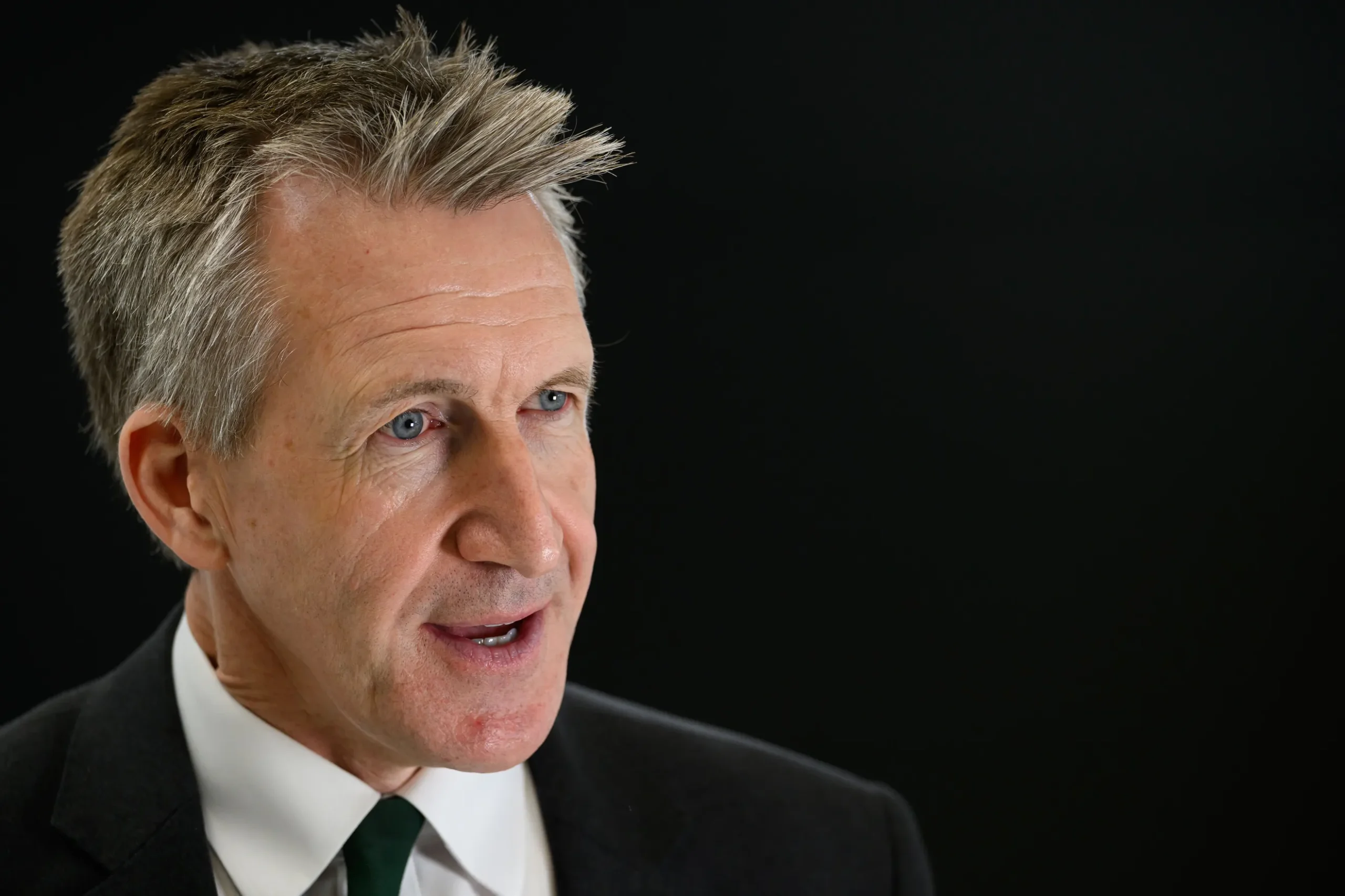
Britain is learning from its Nordic allies on plans to cope with disruptions caused by threats such as natural disasters or cyberattacks that could halt critical infrastructure.
Security Minister Dan Jarvis said there was “a lot that we can learn” from Nordic nations when it comes to preparing citizens for a scenario where essential services are cut off.
In an interview with Politico, when asked about threats such as hostile states attempting to sabotage undersea cables and cyberattacks knocking out supermarket freezers across Europe, Jarvis said, “There is plenty that keeps me awake at night,” adding:
“I came back from Norway quite recently, talking to our Nordic partners about the work they do to ensure that they are as resilient as they possibly can be. I think there is a lot that we can learn from them and other European partners. Actually, we’ve got to recognise in the UK that we are a bit behind the curve on this.”
In October, the UK government launched a campaign called “be ready”, advising the public to stockpile enough provisions to cover their needs for three days, including bottled water, non-perishable food items, cash, a torch, and an FM radio.
Prime Minister Andy Burnham said last month that the UK had been caught behind the curve “too often in the past”.
By contrast, Norway launched an “emergency preparedness” campaign for its citizens in 2018. In 2024, it updated this advice, increasing the stockpile duration from three days to seven days.
The UK government is not currently considering extending the recommended period beyond three days.
However, Jarvis rejected accusations from colleagues in the House of Lords that the government has not been transparent enough with the public regarding risks.
The National Resilience Committee stated this week that, despite the “be ready” campaign, “the government appears complacent and the UK remains ill-prepared.”
Jarvis pointed to a national risk register highlighting widespread power cuts, disruption to drinking water, and terrorist and state-sponsored threats among the top risks facing the UK.
Jarvis added:
“If you look at what I put on the record in parliament [and] the discussions that we’ve had around the country about the nature of the world that we live in, there’s been plenty of talk about the variety of threats that we face. There’s a balance to be struck because we definitely don’t want to panic the public, but we want the public to be alert and we want them to be prepared.”
Jarvis downplayed concerns felt by some within the UK government after ministers joked about their personal stockpiles.
Those ministers include Housing Secretary Angela Rayner, who said her own stockpile would include “mascara, concealer, a bottle of Sauvignon Blanc, some baked beans and a tin of custard.”
Jarvis said: “As the security minister, there are plenty of things that I worry about at any given moment. That’s not one of them. I think that’s been quite helpful in terms of raising the profile of this issue. I think it’s been quite helpful in terms of focusing people’s minds on what they would do in their own homes.” He added:
“That’s what this campaign is all about. It’s about ensuring that we get that resilience into households… so people talking about Sauvignon Blanc, or whatever it might be, really doesn’t trouble me.”
Jarvis said he had “obviously taken my own advice” when assembling his household stockpile, including a radio and a torch, and had not added any special items beyond those on the checklist.
On the other hand, the minister reportedly keeps a ready supply of eggs at home at all times. Jarvis said: “I’ve always found keeping chickens incredibly relaxing, particularly when you’ve got a pretty full-on and challenging job. There’s something very peaceful about them.”
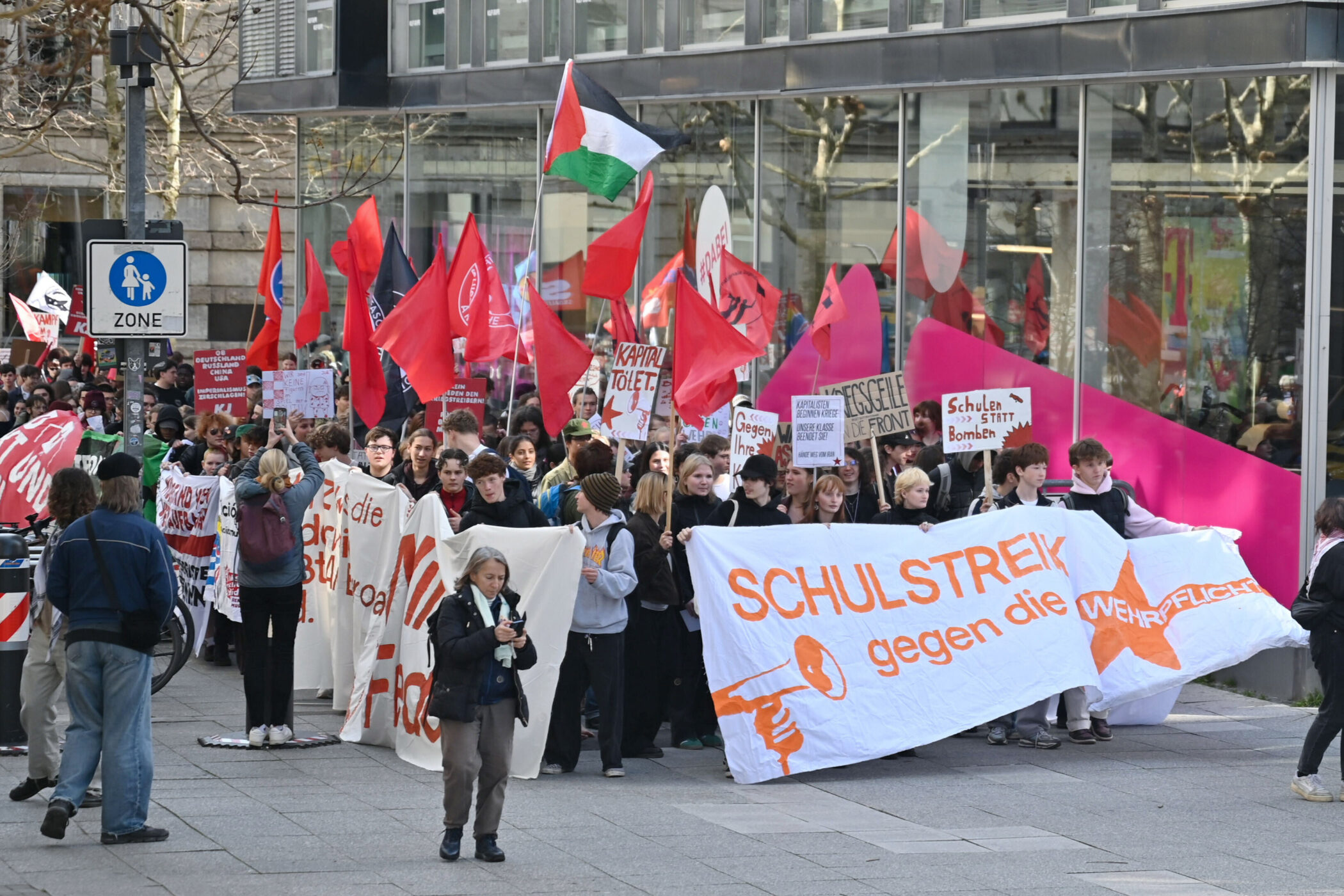
Protests gaining momentum across Europe continue against the continent’s unprecedented military transformation, ongoing underfunding of education systems and the dismantling of the welfare state.
According to German Foreign Policy, the new wave of action includes an upcoming school strike against conscription in Germany, the International Anti-War Youth Strike to be held today (29 November) and a broad-based International Anti-War Day of Action taking place tomorrow.
While a general strike has been declared in Italy today, students, trade unions and the Yellow Vests are planning demonstrations in France for Saturday.
Together with these and other actions, the protests that have swept across Europe largely without coordination for weeks could reach a peak for the first time.
At the centre of the protests is resistance to unprecedented militarization that consumes all resources and leads to the dismantling of social systems.
The driving force behind this militarization is Germany, which aims to become Europe’s number one military power.
School strike against conscription
The anti-conscription school strike announced for today is already the fifth of its kind.
Previously, between 40,000 and 50,000 students took part in school strikes across more than 100 cities on 5 December 2025, 5 March, 8 May (the day of Europe’s liberation from Nazi occupation) and 25 September.
Protests against compulsory military service, as well as insufficient funding for the education system amid rising living costs and the federal government’s broader austerity policies, were voiced during demonstrations held on 31 October in more than 30 cities under the slogan “Gen Z Takes Charge”. Around 120,000 young people in total took part in those events.
Today’s school strike now also targets Berlin’s austerity policies. A press statement released by the strikers reads: “According to the current draft budget, 140 billion euros, including special funds, will be allocated to the Ministry of Defence, whereas the budget of the Ministry of Education will be cut by 7.1% compared with the previous year, and the healthcare budget by 34.2%.”
Activists are demanding that existing resources be spent “on education instead of military expenditure”.
New call to action in France, general strike in Italy
Student protests have also been continuing in other European countries for a long time and are increasingly turning into broader social protests.
In France, for example, hundreds of thousands of people have repeatedly taken to the streets to protest against the dire conditions in the country’s schools and young people’s dwindling prospects for the future.
On 5 November, nearly 1.6 million people joined a nationwide strike called by trade unions.
On 17 November, another nationwide protest was held with more than 500,000 participants.
Protests have continued in other countries as well. In Greece on 21 October, around 20,000 students and teachers demonstrated against abuses in the education system, following the example in France, according to police estimates, which generally give low figures.
On Wednesday, reports came from Albania that protests by school and university students had entered their 171st day. There too, discontent is directed at widespread corruption.
In Spain, more than half a million people, mostly young, took to the streets in early October to protest against a widespread housing crisis. Last Wednesday, around three million people took part in a general strike.
In Italy too, hundreds of thousands of people have been taking to the streets since October. In Belgium, demonstrations have been continuing for more than a year, with participant numbers occasionally reaching six figures.
Port blockades worldwide
Strikes are also spreading across ports in Europe. As early as 6 February, port workers at more than 20 ports, mainly in the Mediterranean, went on strike to oppose the use of ports for arms shipments, such as those to Israel, and war preparations, and to protest against general militarization.
At that time, tens of thousands of people went on strike from Spain to Italy and Greece, and on to Türkiye.
On 30 October, a second day of strikes took place; these strikes were again directed against arms shipments (particularly those to Israel) and general militarization.
At the same time, however, workers demanded improved working conditions and higher wages.
This time, the strike was not limited to Mediterranean ports. In France alone, around 14,000 dockworkers went on strike across 24 ports, from Marseille to Saint-Nazaire and Calais.
In Greece, where workers at seven ports took part, around 3,000 people went on strike in Piraeus alone.
In Belfast, Northern Ireland, the port entrance was blocked, while short-term work stoppages took place in Spain.
In addition, dockworkers outside Europe also joined the strike: for example, at various ports in San Francisco, Melbourne and India, around 5,000 people reportedly demonstrated against the use of ports for arms shipments.
Strikes were reported at more than 110 ports worldwide.
Germany as the driving force of militarization
Germany retains its role as the driving force and frontrunner in Europe’s militarization and preparations for future wars.
The German government plans to increase Germany’s military budget to around 184 billion euros by 2030.
This means Germany spends by far the most on its armed forces in Europe: twice as much as the second-placed United Kingdom and two and a half times as much as third-placed France.
To finance this, Berlin plans to take on a total of around 838 billion euros in new debt by 2030.
According to media reports, the resulting interest burden will rise to 81 billion euros in 2030. This figure is roughly four times Germany’s current health budget.
As a result, severe cuts are occurring in parallel in areas such as education and health, as noted earlier.
For example, the cost of just eight new anti-aircraft frigates for the German Navy (initially estimated at 25 billion euros) will rise to as much as 45 billion euros. This figure is three times the just over 15 billion euros in funding that the Federal Ministry of Health will receive in 2027.
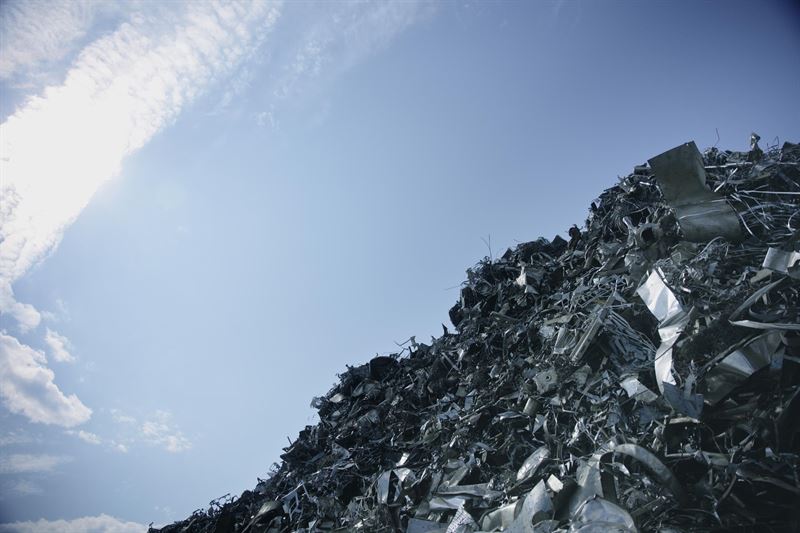
Europe exported 32 million tonnes of waste in 2025, with Türkiye emerging as the largest buyer, amid an escalating scrap metal dispute that pits recyclers against industrial manufacturers as India and Egypt lobby to keep importing and smelting European scrap.
Recycled steel and aluminium, once treated as mere rubbish, are becoming increasingly valuable as industries from automotive manufacturing to construction seek cleaner production methods.
European Union legislation adopted in 2024 aimed to restrict waste exports, keep recycled metal within the bloc, and reduce dependence on imported raw materials.
From May 2027, the EU will ban waste exports to countries outside the Organisation for Economic Co-operation and Development (OECD), a grouping made up mostly of wealthy economies.
Countries able to prove they meet specific environmental standards can obtain exemptions from the ban, an outcome that India and Egypt, two major buyers of European scrap metal, are actively trying to secure.
Brussels had been expected to publish its initial list of approved countries this month, but the decision has been postponed until late 2026.
Countries excluded from the initial roster will be permitted to reapply at a later stage.
The dispute has split European industry, setting recyclers dependent on foreign markets against steelmakers who require scrap to power their green transition.
Recyclers argue domestic demand remains insufficient
Recyclers contend that exports offer an essential outlet for materials Europe cannot always smelt, warning that shutting out foreign buyers will not automatically generate domestic demand.
“You cannot create demand by closing borders,” said Emmanuel Katrakis, an official representing industry groups Federrec and Recycling Europe.
Katrakis noted that approximately 80% of recycled steel and aluminium already remains in Europe, with only one-fifth being exported.
Arguing that the fundamental problem lies in key European clients such as the construction and automotive sectors not being “in good shape”, Katrakis stressed that India, by contrast, is expanding rapidly and hungry for raw materials.
Steelmakers cite green standards and material scarcity
European steelmakers reject that view, arguing that the bloc should think twice before shipping overseas a resource vital to green industry.
Industry body Eurofer told AFP that both India and Egypt still fall short of EU environmental standards.
The association stated that Egypt had failed to demonstrate “adequate control” over “scrap storage, sorting, quality, or air emissions”.
In India, Eurofer pointed out, EU assessments identified “shortcomings in the control of heavy metal emissions and wastewater treatment”.
Steelmakers also stress that scrap metal is no longer merely waste.
French firm ArcelorMittal told AFP that recycled metals have turned into a “strategic resource” that Europe cannot afford to squander.
“European steelmakers are already seeing supply tighten,” the company said, warning that demand will surge as the sector shifts to low-carbon production.
Brussels seeks compromise between competing factions
The drive toward so-called “green steel” lies at the centre of EU targets to cut emissions while rebuilding its industrial base.
Throughout this process, European producers must cope with energy costs far higher than those borne by most foreign competitors.
For now, Brussels remains caught between recyclers seeking open export markets and manufacturers demanding that more scrap metal stay in Europe.
“We are trying to bridge these opposing views, and it is by no means easy,” an European Commission source said.
The same source added: “It would be easy to see recyclers as the villains making money from waste exports, but the issue is more complex than that. They also have valid arguments.”
In 2025, the EU exported 32 million tonnes of waste, with Türkiye serving as the primary destination, while approximately 40% of shipments went to non-OECD countries.

What Did the Trilateral Summit in China Reveal?

The Chinese Approach Behind the Trilateral Summit: It May Pay to Get Familiar with It Sooner Rather Than Later

Colby exits Brussels Ukraine talks before defence minister speaks

US approved exports of 800,000 Nvidia and AMD chips to China

UK looks to Nordic allies to bolster crisis resilience plans
-
 America2 weeks ago
US midterms see 97 young winners as Gen Z representation triples
-
 Europe2 weeks ago
UK and Germany expand military pact with focus on Russian frontier
-
 America2 weeks ago
Nvidia investigates CEO Jensen Huang over link to Chinese spy
-
 America2 weeks ago
US secures 35% stake in Venezuelan firm NABEP under 50-year deal
-
 Europe2 weeks ago
George Szamuely dissects European decline and strategic rifts with US
-

 Opinion2 weeks ago
The Mecca Defence Agreement, the Ottoman Empire, and the facts
-
 Opinion2 weeks ago
Settle, deny, seal: Britain’s formula for colonial torture, from Kenya to Cyprus — 1
-

 America1 week ago
Absent Democrats derail floor vote on Pete Hegseth impeachment
