
America
Big Tech profits from AI extinction hype, Ken Klippenstein says


In the debate surrounding the dangers posed by artificial intelligence, almost everyone is attempting to market a product.
While the mainstream media portrays artificial intelligence as an imminent mass extinction event, US President Donald Trump frames the issue within the context of a new Cold War with China, arguing that the US cannot afford to slow down.
In his analysis, journalist Ken Klippenstein emphasizes that Silicon Valley elites profit directly from this intense attention.
A new generation of the tech class is occupying the public mind with various doomsday scenarios, ranging from bioterrorism to machines taking over the world.
While this dynamic transforms artificial intelligence into a “national security” issue, it elevates the technology to the level of nuclear weapons and removes it from public oversight.
The intelligence community thinks the A.I. apocalypse narrative is BShttps://t.co/DpyAIXx4ob
— Ken Klippenstein (@kenklippenstein) September 15, 2026
Although not immune to the tendency to exaggerate threats, reports from US intelligence agencies paint a picture far removed from the hysterical tone in the media.
The US intelligence community assesses that artificial intelligence merely magnifies risks that already exist.
Sensational headlines run by legacy media are fueled by social media figures who spread claims of human extinction to millions of followers. In this way, fears themed around “existential risk” or “doomsday” take root in the public imagination.
On the other side of the coin are those who oppose disaster narratives while pursuing their own commercial interests.
Prominent figures in this camp include Yann LeCun, former chief AI scientist at Meta, and Andrew Ng, co-founder of Google Brain and head of AI Fund.
In October 2023, LeCun accused OpenAI chief Sam Altman, Google DeepMind chief Demis Hassabis, and Anthropic chief Dario Amodei of running a “massive lobbying effort” designed to tilt the regulatory landscape in their own favor.
LeCun warned that if these fear politics succeed, artificial intelligence will be monopolized by a small number of corporations.
Ng, for his part, described the claim that artificial intelligence would destroy humanity as “mind-bogglingly stupid”, arguing that large corporations are stoking extinction fears to avoid competing with open-source models.
Although these criticisms carry truth regarding corporate aims, the conflicting interests of both sides remain striking.
LeCun and Ng advocate open-source artificial intelligence models, whereas Anthropic and OpenAI favor proprietary models that keep their source code secret and lease access to users.
While major players producing proprietary models possess the capacity to comply with prospective federal licensing rules, open-source enterprises stand to be damaged by such statutory mandates. The common ground shared by doom-mongers and deregulation advocates is their lack of concern for the actual risks artificial intelligence generates.
The US intelligence community provides a more measured framework regarding tangible dangers.
In the Annual Threat Assessment, which catalogues China’s military strength, Russian influence operations, and drug cartels, the threats posed by artificial intelligence are summarized in just three items:
“It is essential to ensure that the use of machines and AI remains under human control.”
“These applications also carry risks that require careful human engineering to properly mitigate the risk of AI autonomy before they are widely deployed.”
“Emerging technologies such as AI and quantum computing are expected to have significant implications for national security.”
The official assessment by the 18 agencies comprising US intelligence on the perils of artificial intelligence remains limited to these statements. The reports contain no determinations concerning superintelligence, the annihilation of humanity, or an uprising of machines.
The US Department of Homeland Security Threat Assessment notes that artificial intelligence merely introduces fresh layers of complexity to existing threats. The department outlines five primary issues:
Disinformation, fabricated video or audio recordings (deepfakes), and election interference;
Cyber operations and financial crime;
The exploitation of this technology by violent extremists, alongside radicalization;
The proliferation of chemical and biological knowledge;
The circumvention of AI security controls and the poisoning of training data.
All of these risks were familiar prior to the emergence of artificial intelligence. AI-enabled disinformation permits legacy propaganda methods to be deployed with greater speed and intensity.
Cyber operations, financial crime, and elements of radicalization have likewise ranked as familiar subjects for many years.
Concerns regarding biological and chemical threats date back to the Bill Clinton administration, while the fifth item stems entirely from humans tampering with AI security controls.
The Global Catastrophic Risks Assessment report by the Pentagon-funded RAND Corporation think tank defines artificial intelligence as an “entropy source”.
The report states:
“AI can be thought of as adding entropy and chaos to thorny problems humans face. Chaos does not require the development of superintelligent or supercapable AI; it is possible with current and near-term AI capabilities.”
Another research study conducted within RAND identifies genetically engineered pathogens, geoengineering, and nuclear war as three plausible pathways to human extinction.
However, numerous physical and operational constraints prevent artificial intelligence from triggering these catastrophes.
In a follow-up report investigating whether large language models facilitate the planning of a mass biological attack, RAND Corp. researchers identified no statistically significant difference between plans formulated with AI assistance and those produced independently.
The US National Academy of Sciences similarly notes that the primary barrier to bioterrorism is not an absence of access to information.
The decisive bottleneck lies in DNA synthesis screening, hands-on laboratory skill, culturing, formulation, and aerosolization: procedures that all demand human intervention, carry high costs, and remain prone to failure.
Having no commercial product to release or corporate shares to protect, official analysts record with balanced language that artificial intelligence does nothing beyond compounding the scale and velocity of current problems.
Observing that all factions resort to exaggerated rhetoric to capture attention, Klippenstein points out that in the debate over whether a chatbot will transform into a god, the major actors turn a profit while foisting the cost onto the public.












The second round will determine which candidate secures a majority of the valid votes.
By Micaela Ovelar, São Paulo
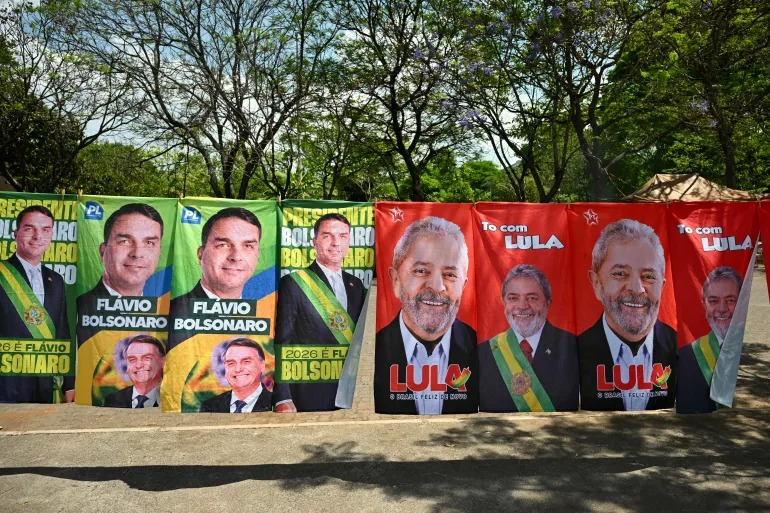
Brazil’s presidential election will be decided in a runoff between Senator Flávio Bolsonaro, of the Liberal Party (PL), and President Luiz Inácio Lula da Silva, of the Workers’ Party (PT). With all voting machines counted, Bolsonaro finished the October 4 first round with 47.03% of valid votes, ahead of Lula’s 45.16%. Neither secured the majority required for an outright victory, sending the two candidates to a second round on October 25.
Bolsonaro received 56,104,503 votes, while Lula obtained 53,879,538—a difference of 2,224,965 votes, or approximately 1.87 percentage points. Bolsonaro therefore enters the runoff as the first-round leader.
The election also settled legislative contests and most gubernatorial races. In São Paulo, Brazil’s largest electoral state, Governor Tarcísio de Freitas (Republicanos) secured reelection in the first round. Nationwide, 20 gubernatorial contests were decided without a runoff.
The presidential count
The two leading candidates together accounted for 92.19% of valid presidential votes. The remaining candidates shared 7.81%
|
Candidate |
Party |
Votes |
Share of valid votes |
Difference |
|---|---|---|---|---|
|
Flávio Bolsonaro |
Liberal Party (PL) |
56,104,503 |
47.03% |
2,224,965 |
|
Luiz Inácio Lula da Silva |
Workers’ Party (PT) |
53,879,538 |
45.16% |
1.87 % |
Source: Brazilian Superior Electoral Court (SEC).
Augusto Cury, of Avante, placed third with approximately 2.89% of valid votes (3,448,569), followed by Renan Santos, of Missão, with 2.24% (2,675,887), and Ronaldo Caiado, of the Social Democratic Party (PSD), with 2.18% (2,605,148). Romeu Zema, of Novo, received 0.27% (326,488). None advanced to the runoff.
Cury and Santos subsequently said they would not endorse either finalist. Their announcements do not determine how their supporters will vote on October 25: ballots cast for eliminated candidates cannot be automatically assigned to Bolsonaro or Lula.
The completed count also differed from the final polls, which had placed Lula ahead with 45%, against Bolsonaro’s 42%. The election result instead gave Bolsonaro a narrow lead.
The territorial distribution showed Lula ahead in the Northeast, while Bolsonaro prevailed in the three southern states: Paraná, Santa Catarina and Rio Grande do Sul. Across the country, Bolsonaro led in 14 states and the Federal District, while Lula finished ahead in 12 states. These results contribute to a single nationwide presidential count rather than awarding separate electoral mandates for individual state victories.
How the election works
Brazil elects its president and vice president on a joint ticket through a two-round system. A ticket wins in the first round only by obtaining more than half of valid votes. Blank and invalid ballots are excluded from that calculation. If no ticket crosses the threshold, the two highest-placed candidates advance to a runoff.
The October 4 election combined presidential voting with contests for governors, the Chamber of Deputies, the Senate and state or Federal District legislatures. All 513 Chamber seats and 54 of the Senate’s 81 seats were contested. The Senate election renewed two-thirds of the chamber, with voters choosing two different senatorial candidates in each state and the Federal District.
Voting in Brazilian territory ended at 5 p.m., Brasília time, after which electoral authorities published the count. The Superior Electoral Court (TSE in Portuguese) provides results through its official results website and mobile application.
The October 25 runoff will decide the presidency and gubernatorial contests requiring a second round. Legislative elections are determined through the first-round vote and do not proceed to a runoff.
Participation and abstention
Approximately 125.3 million people voted in the presidential election, representing a turnout of 78.92%. Around 33.5 million registered voters did not participate, producing an abstention rate of 21.08%.
The count also recorded approximately 2.3 million blank ballots and 3.67 million invalid ballots. Together, these represented roughly 4.77% of ballots cast, leaving approximately 119.3 million valid presidential votes. Bolsonaro’s 47.03% and Lula’s 45.16% refer to that valid-vote total, not to all ballots cast or the entire registered electorate.
Abstention is distinct from blank or invalid voting. An abstaining voter did not cast a ballot; someone who submitted a blank or invalid ballot participated without recording a valid candidate choice. Neither group should automatically be described as undecided voters.
Those who did not participate on October 4 will have another opportunity to vote in the second round. Of course, the first-round figures do not establish how many will return to the polls or which finalist they will choose.
São Paulo and state results
São Paulo entered the election with approximately 34.1 million registered voters, around 21.5% of Brazil’s electorate. It is the country’s largest electoral state and forms part of the Southeast alongside Rio de Janeiro, Minas Gerais and Espírito Santo. Its weight in the national electorate makes it particularly important when examining presidential results.
The state’s gubernatorial contest ended in the first round. Tarcísio de Freitas, of Republicanos, won reelection with almost 63% of valid votes (14,491,874), defeating PT candidate Fernando Haddad (8,423,656). This is a gap of approximately 26 percentage points between them.
Across Brazil, 20 gubernatorial races were settled on October 4, the highest first-round total of elections since 1994. That exceeded the 15 contests decided in the first round in 2022 and the previous high of 18 in 2010.
Other first-round winners included Cleitinho Azevedo in Minas Gerais, Sérgio Moro in Paraná and Luciano Zucco in Rio Grande do Sul. PT incumbents Jerônimo Rodrigues, Elmano de Freitas and Rafael Fonteles won reelection in Bahia, Ceará and Piauí, respectively. Six gubernatorial runoffs have been confirmed: Acre, Amazonas, Espírito Santo, Rio Grande do Norte, Tocantins, and the Federal District.
Rio de Janeiro Case
In Rio de Janeiro, Douglas Ruas had 49.27% and Eduardo Paes 42.76%. Anthony Garotinho’s withdrawal of an appeal concerning his rejected candidacy could change which votes enter the calculation, potentially lifting Ruas above the first-round threshold. Rio de Janeiro remains an unresolved case because a pending electoral decision could affect the total number of valid votes. Formal action by electoral authorities was still required, so the contest could not yet be presented as a settled first-round victory. However, the electoral justice system is highly likely to announce a first-round victory for Douglas Ruas, who is also a candidate from Bolsonaro’s political party, the PL.
Brazilian voters abroad
Brazilians registered abroad participated in the presidential contest, with approximately 341,800 casting ballots in 186 cities, according to TSE data. Around 916,500 voters were eligible to vote overseas. Unlike the nationwide result, the overseas count placed Lula ahead. He received 157,387 votes, or 47.57% of valid ballots cast abroad, against approximately 143,900 votes, or 43.49%, for Bolsonaro. Lula led in 64 countries and Bolsonaro in 37.
The distribution varied sharply by country. Bolsonaro obtained 61.10% in the United States and 71.76% in Japan. Lula led in Portugal with 52.45%, Argentina with 64.44%, Canada with 57.75% and Germany with 71.93%. Overseas ballots form part of the national presidential total rather than a separate electoral contest.
Brazil now heads to the October 25 runoff with Bolsonaro ahead in the first-round count, but the presidency is still undecided. The second round will determine which ticket secures a majority of valid votes.
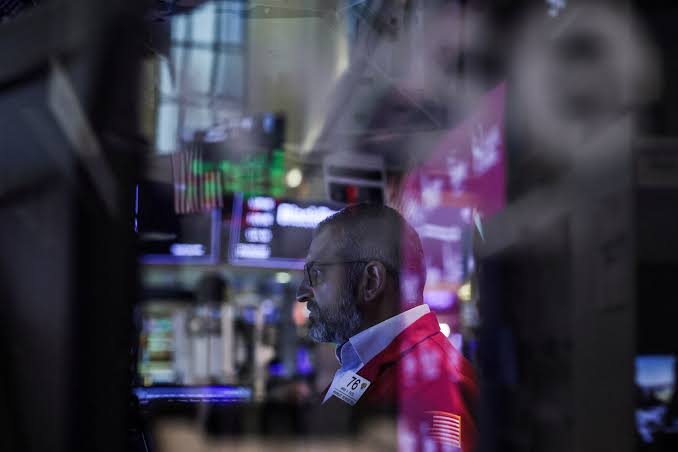
For the ongoing wave of artificial intelligence investment in the US to yield a financial return, businesses and consumers would need to spend approximately 9% of national income on the technology, according to calculations.
This proportion is equivalent to the entire budget the American public allocates to food, double all energy expenditures, or roughly seven times the total amount paid for telephone, internet, and digital streaming services.
A study prepared by Columbia University finance professor Stijn Van Nieuwerburgh and presented at the Brookings Institution, reported by The Wall Street Journal (WSJ), revealed that artificial intelligence infrastructure construction has become the largest investment drive in US history.
Based on current data centre construction plans, average costs, potential project cancellations, and an expected 10% unleveraged return on capital, calculations show that the sector must generate $3.5 trillion in revenue by 2032.
Under the assumption of 4% annual nominal growth, this figure corresponds to 8.8% of US gross domestic product (GDP).
Capacity expansion may lower prices
The foundation of current revenue projections rests on the assumption that artificial intelligence companies such as OpenAI and Anthropic will be able to sustain existing processing power prices into the future.
Stating that the current deficit in processing capacity is keeping profit margins high, Van Nieuwerburgh noted that companies will not be able to sustain today’s scarcity pricing in an intense competitive environment by 2032, when capacity is projected to quadruple.
Sharp price declines seen in past technology investments show that comparable crises have occurred before.
As a result of laying new lines and expanding capacity, bandwidth prices on transatlantic fibre-optic links between London and New York plunged by 96% between 1997 and 2001, a process that triggered the bankruptcy of numerous telecommunications companies.
Could falling prices boost demand?
While the processing capabilities of artificial intelligence models double every four to five months, data from Epoch AI show that the cost for a given capability level has been falling by 47% per quarter since 2023.
Optimists, drawing on the concept known in economic literature as Jevons’ Paradox, argue that expanding capacity and lower costs will multiply demand, thereby driving corporate revenues higher.
The $300 billion combined annual revenue estimate set for 2030 for OpenAI and Anthropic by an expert panel led by Ezra Karger of the Federal Reserve Bank of Chicago has already been surpassed.
The annualised combined revenue run rate of the two companies has reached approximately $180 billion and continues to post double-digit growth each quarter.
Against advocates who view the technology as a third factor of production alongside capital and labour, forecasts indicate that the growth rate will decelerate and the law of diminishing returns will take effect as the system becomes widespread.
Productivity gains do not translate directly into revenue
Following the price drops and productivity surge seen from 1966 onwards during the personal computer revolution, corporate computer expenditures flattened out at around 0.8% of GDP by approximately 1984.
A recent study conducted by Harvard University doctoral students Fiona Chen and James Stratton, examining software projects on the Jellyfish platform, pointed to a similar structural ceiling.
The researchers determined that artificial intelligence assistants increased the number of lines of code written by 12%, while autonomous software agents increased it by 30%.
Conversely, because users spent more time reviewing, interpreting, and modifying code, the ultimate contribution to completed projects remained low and was found to be “statistically insignificant”.
Experts emphasise that even if artificial intelligence boosts productivity, this outcome may not translate directly into the massive profit and revenue figures anticipated by investors.
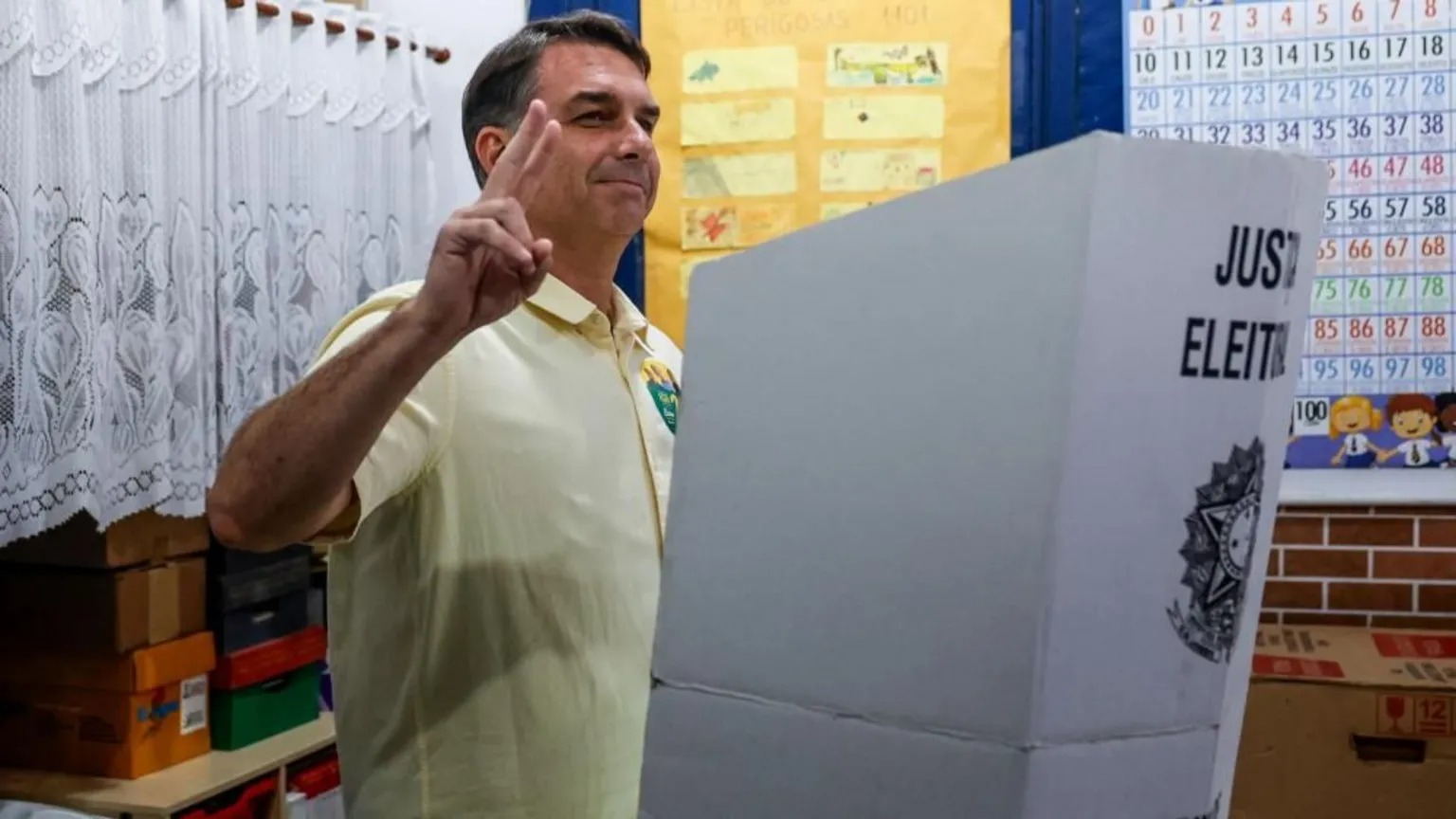
Brazil’s presidential contest between Lula and Flavio Bolsonaro is heading to a second round, as the Bolsonaro family secured a full contingent in the Senate.
Right-wing candidate Flavio Bolsonaro won the first round of the election, edging out incumbent Luiz Inacio Lula da Silva. However, he failed to secure the more than 50% of the vote required to win outright in a single round.
A run-off vote between the two candidates will take place on 25 October.
Flavio Bolsonaro is the son of former president Jair Bolsonaro, who was sentenced to 27 years in prison for plotting a failed coup attempt after losing the last election.
The race was neck and neck; during the campaign, President Lula had maintained a slight lead in the polls. With 99% of the votes counted, Bolsonaro took 47.03%, while Lula garnered 45.16%.
Bolsonaro’s result exceeded expectations, suggesting that the run-off is now within his grasp given that several other presidential candidates eliminated in the first round were right-wing alternatives.
Bolsonaro’s Liberal Party (PL) also emerged as the party securing the largest number of governors, senators, and federal deputies, according to results announced so far.
This means the party is expected to wield the greatest influence in Congress.
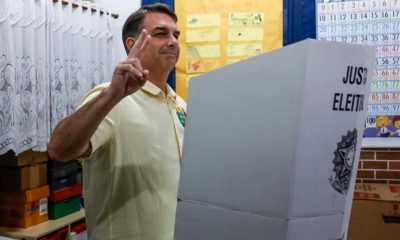
After casting his ballot, the 80-year-old Lula warned that the election was a choice between democracy and “barbarism”.
The 45-year-old Bolsonaro said he wanted to “liberate the Brazilian people”.
After winning election in 2002 and 2006, Lula defeated Jair Bolsonaro in 2022 by a margin of less than 2%, in what was the most closely fought presidential contest in Brazil’s history.
Following that election, on 8 January 2023, supporters of Bolsonaro ransacked government buildings.
Jair Bolsonaro was barred from running for office again even before he began serving his prison sentence; he endorsed the candidacy of his eldest son, Flavio, in his place.
Jair Bolsonaro’s wife, Michelle, was also elected to the Senate on Sunday.
Flavio Bolsonaro has pledged that, if elected, he will pardon his father and the supporters responsible for the 8 January riots.
Bolsonaro is more popular in the southern regions, among wealthier voters, and among evangelical Christians.
In a statement on Sunday, Bolsonaro said he was “very happy” to have finished ahead of Lula in the first round and expressed confidence that he would secure victory in the run-off in three weeks.
“I am very happy about the real possibility that in three weeks Brazil will give a definitive answer by electing a modern government,” the right-wing politician said.
Lula acknowledged that the election result was “unexpected” but stressed that the race was not over.
Speaking on Sunday, Lula said: “I admit I was convinced I would win in the first round. The match is about to begin. We are in extra time. In extra time, we will win the hearts of the Brazilian people.”
During the campaign, President Lula made the issue of “sovereignty” a cornerstone of his platform, periodically accusing the US of attempting to interfere in and influence Brazil’s elections.
Lula pledged to increase defence spending.
Earlier this year, Flavio Bolsonaro persuaded the US to designate Brazil’s two largest gangs as “terrorist organisations”.
In July, Brazil refused to grant visas to two US State Department officials. Brazil alleged that these officials had sought to cast doubt on the country’s voting system, a claim the US termed “unfounded”.
This development followed claims that Flavio Bolsonaro told a group of foreign diplomats that Brazil’s voting machines shared the same origin as those in Venezuela.
Last year, Donald Trump used Jair Bolsonaro’s coup trial as a pretext to impose tariffs on Brazil and sanction several senior officials and judges.
Should Flavio Bolsonaro win, Brazil is likely to join the US “Shield of the Americas” coalition against drug trafficking and pursue closer cooperation with the US.
However, Bolsonaro has pledged to maintain an “economically pragmatic” relationship with China, which has overtaken the US as Brazil’s largest trading partner and remains a vital customer for Brazilian soy and beef exports.
Corruption became a central theme of the campaign following a scandal involving Daniel Vorcaro, a now-imprisoned banker who orchestrated one of Brazil’s largest financial frauds, entangling senior figures from across the political spectrum.
Flavio Bolsonaro acknowledged that he had sought financing from Vorcaro for a biographical film about his father.
Lula was indirectly touched by the scandal after police alleged that Vorcaro sought assistance from Supreme Court Justice Alexandre de Moraes to evade arrest. Moraes denies any wrongdoing.
Although Moraes was not appointed by Lula, he is viewed as an ally of the president because he presided over Jair Bolsonaro’s coup trial.
Crime and insecurity were also among the electorate’s foremost concerns. While Brazil’s homicide rate has fallen, street offences that are highly visible to voters, such as mobile phone theft, have risen.
Violence and drug trafficking continue to be viewed as major problems.
Flavio Bolsonaro has pledged to designate Brazilian gangs as terrorists and construct maximum-security prisons modelled on those in El Salvador.
His father relaxed gun-ownership restrictions during his presidency.
While Lula criticised the US designation of Brazilian gangs as terrorist organisations, he introduced several reforms aimed at disrupting the financial networks of organised crime syndicates, improving homicide investigations, and investing in prisons.
The economy was likewise at the centre of the campaign, amid high levels of personal debt and slowing growth.
Lula built his legacy through a series of social welfare programmes, most notably the Bolsa Familia initiative, which pays families conditional on keeping children in education and ensuring they receive healthcare such as vaccinations.
He also built more universities. These programmes were credited with lifting millions of Brazilians out of poverty.
He supported increased investment in data centres and rare earth minerals, where Brazil holds rich resources, securing active state participation to ensure Brazil benefits.
He also backed oil exploration near the mouth of the Amazon River, which drew controversy among environmentalists.
However, Lula possesses a track record of tightening environmental protections and reducing the deforestation rate in the Amazon.
Deforestation increased significantly during Jair Bolsonaro’s presidency.
Flavio Bolsonaro has pledged to introduce a cap on public debt, cut government spending, revise welfare programmes, and bolster the critical minerals sector.
Brazil accounts for approximately 31% of the total gross domestic product (GDP) of Latin America and the Caribbean.
Writing on his personal blog, Michael Roberts noted that Lula’s commitment to higher public spending was facing scrutiny.
According to Roberts, Lula’s advisers are secretly weighing cuts to healthcare services as well as benefits for the elderly and disabled.
Bolsonaro, meanwhile, is openly calling for significant cuts to social spending and public investment, accompanied by the privatisation of state assets.
According to Roberts, both candidates are discussing austerity because, despite an improvement in living standards during the first three years of Lula’s mandate, those gains began to erode last year.
Economic growth has fallen below an annual rate of 2%, while the manufacturing and industrial sectors are declining rapidly.

EU and allies pull conference backing after US pressure over panel

Drone strike shuts down Yandex data centre in Russia’s Ryazan region

US and Russian figures discuss American stake in Nord Stream lines

71 EU lawmakers demand closure of Russian Houses in 15 member states

MI6 investigates potential leaks after former BND chief is detained
-

 Diplomacy2 weeks ago
East-West Forum in Istanbul highlights irreversible shift to multipolarity
-

 Europe2 weeks ago
European unions urge governments to scrap all Palantir deals
-

 Europe2 weeks ago
Emmanuel Todd says West faces collapse amid Ukraine and Iran crises
-

 Europe2 weeks ago
Rome protests AfD poster depicting South Tyrol as independent state
-

 Europe1 week ago
German interior ministers drop unanimity rule to counter AfD veto
-

 Europe2 weeks ago
German industry stockpiles critical minerals before EU-China talks
-

 Europe1 week ago
Key European allies excluded from US-led NATO meeting in Poland
-

 Europe2 weeks ago
Hamburg drill tests Baltic deployment prior to formal defense alert
