
America
Milanovic declares global neoliberalism dead, warns of plutocracy

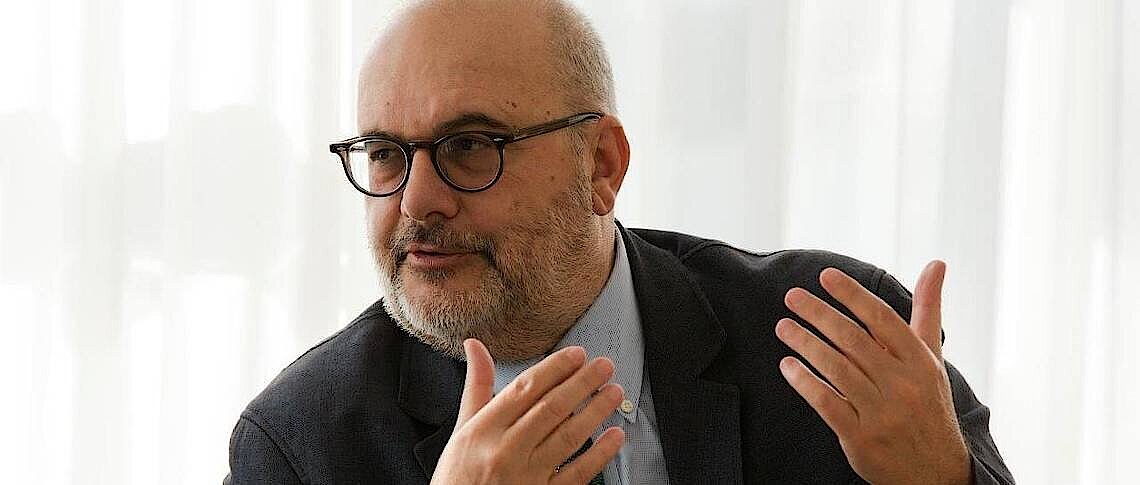
Branko Milanovic, who served as a lead economist in the World Bank Research Department for nearly two decades and currently holds posts as a research professor at the Graduate Center of the City University of New York and a visiting professor at the London School of Economics, gave an interview to Jorge Fontevecchia, co-founder of the Argentine newspaper Perfil.
Milanovic, the author of “The Great Global Transformation”, noted that the era of neoliberal globalisation has ended, giving way to a new order that is liberal internally but mercantilist externally.
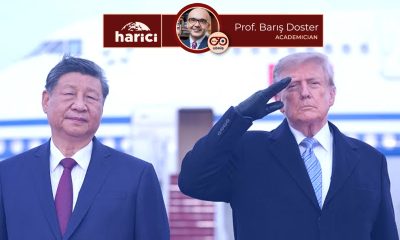
Assessing the upheavals in global politics and economics during a visit to Buenos Aires, Milanovic stated that leaders such as Donald Trump, Xi Jinping, and Vladimir Putin came to power by harnessing societal backlashes that were already present.
Emphasising that the primary conflict in the contemporary world lies between monetary power and political authority, the veteran economist warned that if capital owners prevail, humanity could face a scenario reminiscent of the Roman Republic, where the masses were placated solely with bread and circuses while oligarchs mobilised the populace against one another.
When Fontevecchia observed that the title of his latest book evokes economic historian Karl Polanyi’s classic 1944 work, Milanovic explained the societal reaction against the excessive expansion of market relations:
“The title of my book does not recall Polanyi by accident. I have read Polanyi’s work three times, and my most recent reading took place about a year before I began writing my own book. Developments witnessed on a global scale showed me this connection clearly. Polanyi addressed the Industrial Revolution in England, the commercialisation of human relations that were not previously part of market logic, and society’s protective counter-response to this state of affairs. Neoliberal globalisation operated through a very similar process; it spread the market mechanism across the entire globe, including China, India, and Africa. At this juncture, we are at the end of an era. Societal resistance is mounting against this hyper-commercialisation. This does not mean we will return to a different system, but it clearly demonstrates that political balances have transformed and globalisation is retreating, at least on ideological terrain.”
Addressing the long-term rhythm of economic fluctuations, Fontevecchia recalled Nikolai Kondratiev’s cycle theories and asked about the historical placement of the current rupture.
Milanovic pointed out that an ideological cycle has reached its conclusion, rather than standard economic fluctuations:
“I am not speaking of conventional cycles in the classical sense where the economy expands and then enters a slump. The issue I mean is the completion of the era in which domestic as well as foreign policy was shaped ideologically under the guidance of neoliberalism. This model meant price flexibility, tax cuts, and deregulation domestically. Internationally, it rested on the free movement of capital, goods, technology, and to a certain degree, labour. Today, what is preserved is domestic-level freedom; on the international plane, we are transitioning to a new mercantilist phase. This is the primary reason I chose ‘National Mercantilist Liberalism’ as the subtitle for my book.”
Milanovic stated that with the rise of Asia, the gap in income, technology, and productivity that opened in favour of the West two hundred years ago as a result of the Industrial Revolution has begun to close.
Evaluating the new balance of power centred on China and the US, the economist stated:
“My book essentially centres on the axis between China and the US. China has transformed into an immense economic powerhouse that accounts for 23% of global gross domestic product in purchasing power parity terms, and 17% at market exchange rates. In the early nineties, no one foresaw that Beijing would grow to this extent. In the 1980s, Washington wanted to establish close relations with China, which it viewed as a counterweight to the Soviet Union and as a market promising immense profits economically. Indeed, a narrative was put into circulation suggesting that as a middle class developed in the country, the regime would automatically evolve into a democracy, as seen in the examples of South Korea or Taiwan. Personally, I do not believe people truly believed this, but at least they said so. Over the past decade, China has acquired the identity of a formidable global competitor. The shift of manufacturing to Asia and the saturation of markets with Chinese goods shook the middle class in wealthy nations. This phenomenon triggered deep political convulsions first in the US, and now in Germany.”
Responding to Fontevecchia’s question as to why global trade still revolves around the US dollar and why international financial institutions remain under Western control even though China has become the world’s largest manufacturer, Milanovic pointed to historical lags:
“Financial and military power still rests predominantly in the hands of the US. While the American military has bases in eighty countries, China has only a single base in Djibouti. When we look at history, a long time lag elapses between a country taking the lead in production and becoming a financial centre. The US surpassed the British economy around 1880 or 1890; yet London retained its status as the centre until the end of the interwar period. New York’s definitive primacy was certified only after 1944. Consequently, even if China is the power producing the most industrial goods, expecting finance to shift instantly to Shanghai or Hong Kong is unrealistic. Furthermore, the yuan does not possess the character of a currency with full freedom of capital movements. Roughly 90% of global transactions are still conducted in dollars. Even so, countries continue their search to diversify reserves and achieve independence from the dollar by deploying crypto assets or local currencies.”
Addressing the current state of the famous elephant curve depicting global income distribution, Milanovic recounted the delayed political repercussions of the 1988 to 2008 trajectory:
“That chart became almost like a band’s hit song that audiences constantly demand. Data between 1988 and 2008 documented that the top 1% of the global population and the Asian middle classes centred in China achieved massive income gains, whereas the middle class and workers in the West stagnated. There is a time lag between economic reality and its political consequences. Indeed, the bill for that era was reflected at the ballot box in 2016 with the Brexit vote and Donald Trump winning his first election. Today, however, the shape of the curve has transformed. Following the 2008 financial collapse, income growth for the top 1% in the West lost its former momentum; it took five years for American elites to recoup their losses. On the other hand, China climbed from the middle tiers of global income distribution towards the upper brackets.”
Milanovic confirmed the parallel between the shrinking income disparity among citizens worldwide and the rise of anti-establishment movements in wealthy countries:
“When we examine the two-hundred-year record from 1820 to 2023, the only era in which global income inequality declined continuously is the period of neoliberal globalisation from the 1990s to the present. The achievement of high growth rates by countries such as China, India, Vietnam, and Indonesia, which house nearly half the world’s population, narrowed the disparity on a global scale. However, global inequality lacks a direct political counterpart; there is no single world government to hold accountable. By contrast, the gap between rich and poor widened within the US, within the United Kingdom, or within China itself. It is precisely this polarization at the national level that people react to politically and that alters their voting preferences. Even if the world attaining a fairer income distribution is welcomed in theory, it does not suffice to offset the political destruction wrought by inequality within national borders.”
Sharing his projections for the coming quarter-century, Milanovic stated that assuming Asian countries grow two percentage points faster than members of the Organisation for Economic Co-operation and Development, an interesting demographic balance will emerge:
“My calculations show clearly. A generation from now, roughly as many wealthy Chinese as wealthy Americans will feature among the world’s affluent class. The weight of Asians in the top 10% or 20% will increase while the presence of Westerners will diminish. This development will create a serious loss of self-confidence for the Western world, because for the past two centuries Westerners sat uncontested at the top of the prosperity pyramid. When we look at the Eurasian landmass, we can anticipate that while Western Europe on the Atlantic coast and China on the Pacific coast grow wealthier, the belt comprising Russia and Central Asia in between will remain a sparsely populated and relatively low-income corridor.”
Evaluating the decline of Western countries in the Programme for International Student Assessment results and the success of East Asia, Milanovic said that screen addiction, pandemic lockdowns, and the weakening of critical thinking faculties played a role in the loss of educational quality.
Milanovic stated that the substitution of mental effort by advancing artificial intelligence tools could worsen this picture further.
Explaining the dynamics of the national mercantilist liberalism regime that replaced neoliberalism, Milanovic outlined how classical liberal ideals were abandoned:
“In classical liberalism, harmony existed between domestic policy and foreign trade. State intervention was kept to a minimum, incentives were provided through low taxes, and the profit motive was deemed valid both domestically and across borders. Foreigners and citizens were subject to similar treatment on the economic plane. In the current model, market freedom is preserved only within the country; in foreign relations, we are returning to the zero-sum mercantilist policies of the interwar period. Even if the ratio of trade volume to national income does not drop immediately, coercive measures such as investment bans, technology transfer barriers, and barring foreign firms from stock exchanges are direct products of this new mindset. The protectionist approaches of German economist Friedrich List are back on stage. Countries are now erecting walls on the grounds of protecting their industries. Regional free trade blocs like Mercosur for South America may endure, but the global market is fragmenting entirely. The approach the West terms ‘friendshoring’ essentially represents the logic of ‘we will not invest in China, but we will go to our ally Vietnam’.”
Pointing out that this dual structure contains serious theoretical incoherence, Milanovic continued:
“Behind neoliberalism lay decades of intellectual preparation by figures such as the Mont Pelerin Society, Hayek, and Mises. Today, no coherent doctrine exists. There is no systematic theoretical framework explaining Trump’s tariffs or Europe’s restrictions directed at China. We are inside an ambiguous fog. We are traversing an interim period governed by pragmatic, day-to-day decisions where market rules operate domestically while protectionism is imposed externally.”
Commenting on the position of Argentine President Javier Milei, Milanovic highlighted the contradiction between free-market radicalism and Trump-style protectionism:
“Milei stands beyond even the line of Margaret Thatcher and Ronald Reagan. Libertarianism is the most extreme form of neoliberalism. Nevertheless, similarities exist between Milei and Trump in terms of transforming politics. We are witnessing an era worldwide where traditional parties and classical ideologies are dissolving. Communism has vanished, and what social democracy represents has become ambiguous. What remains are anti-immigrant movements lacking a defined philosophical backbone. As I understand it, Milei symbolises the tendency to strip politics of its traditional forms. Trump likewise maintains no classical ties to his party; his Republican identity amounts to a mere formal cover.”
Examining the crisis of centre-left movements considered the architects of the neoliberal era, Milanovic explained that social democracy had lost its base:
“In the West, leaders such as Tony Blair, Bill Clinton, and Gerhard Schroeder turned social democracy into part of the neoliberal project. Clinton cut social welfare, Blair followed the same path, and Schroeder transformed employment contracts in Germany to the detriment of workers. Overwhelmed by income disparity, declining social transfers, and mounting precarity, working classes seeking actors to defend their interests turned to right-wing populist movements. Even if your income remains the same on paper, you become unsettled if you do not feel your future is secure. The left’s inability to offer a tangible alternative to this discontented populace paved the way for Marine Le Pen in France or the far right in Germany to gain strength. In Argentina, a similar exhaustion underpins poor strata turning at the ballot box to Milei’s party instead of the traditional Peronist movement.”
Pinpointing the 2008 global financial crisis as the origin of the rupture, Milanovic expressed how the system lost its legitimacy:
“The year 2008 created a major awakening in society. Millions lost their jobs; banks foreclosed on the homes of hundreds of thousands of families in the US and Spain. While the giant financial institutions that plunged the system into crisis were bailed out with public funds, ordinary citizens unable to pay mortgage debts were abandoned to their fate. This experience showed everyone whose interests the rules served. The final step of the political transformation was taken when Trump challenged the Republican Party elites in 2015. I recall he was openly mocked in the US media. While other candidates carried pages of tax calculations and technical briefs, Trump took the stage without briefing binders. When journalists asked what he would say, he replied: ‘The American working class is falling behind every day, coastal elites are taking their money, and China is benefiting from this; that is what I will tell people.’ Ultimately, he defeated first his party’s establishment figures and then Hillary Clinton to march to power.”
Stating that he discusses the infiltration of economic relations into daily life and the moral erosion caused by consumer culture in the final chapter of his book, Milanovic drew upon philosophical concepts:
“Every sphere of our lives has become commercialised. Tasks previously resolved within the family, from cooking at home to caring for the elderly, children, and pets, have turned into commercial sectors. People have begun measuring every action through the logic of monetary return. This feeds an insatiable greed. Plato defined this state as ‘pleonexia’, an irrational lust for gain that knows no bounds. Karl Marx termed this ‘abstract hedonism’. Abstract hedonism is the drive to possess even things you cannot consume or enjoy, purely for the sake of ownership. Corporations constantly want to sell people more, producing an endless dissatisfaction at the individual level.”
Responding to Fontevecchia’s question regarding the vision of classical economists, Milanovic recalled that Adam Smith valued the balance of power as much as the free market:
“Smith was not a blind champion of the market as commonly assumed; he vehemently opposed large monopolies and entities such as the East India Company using the state for their own interests. In ‘The Wealth of Nations’, he states that free trade would close the technological and military distance between nations, and that mutual fear would ensure global peace once the parties became equal. Smith thought commerce would establish peace by producing a balanced distribution of military power. Today, trade competition has transformed directly into an instrument of supremacy and coercion.”
Emphasising that end-of-history theses have lost validity, Milanovic stated that the current national mercantilist regime is also not permanent:
“In my lifetime I have witnessed the unraveling of two major ideological systems. The first was the dissolution of the Soviet system, and the second is the exhaustion of neoliberal globalisation that we are experiencing today. Francis Fukuyama’s end of history concept, formulated with reference to Hegel, does not reflect reality. The current mercantilist phase may last perhaps twenty, perhaps forty years. Thereafter, central planning models directed by artificial intelligence or other political structures we do not yet know may emerge. As power balances shift, humanity will search for new institutional patterns.”
Finding it analytically deficient to group Trump, Xi, and Putin together under a single label, Milanovic noted that all three leaders drew strength from resentment over elites accumulating excessive power:
“Uniting these three leaders solely under the autocrat label is to oversimplify the issue. Their common ground is the ability to use the unease generated by the neoliberal era as a stepping stone to power. In China, during the era of Hu Jintao, wealthy capitalists began infiltrating Communist Party mechanisms and decision-making processes directly. When Xi Jinping assumed leadership, he broke this influence by relying on the bureaucracy. The Chinese model permits becoming wealthy, but draws a strict line against attempts to buy political power. In Russia, Putin ended the oligarchic domination of the Boris Yeltsin era, tying the distribution of wealth directly to the supervision of security agencies and the state apparatus. Trump similarly converted grievances against American globalist elites into political power.”
Evaluating Perfil’s observation that tech billionaires like Elon Musk and Peter Thiel aspire to assume financial, political, and institutional roles, Milanovic concluded:
“Capital circles desire power to be concentrated directly in their own hands. They believe all societal problems can be resolved through technological or economic instruments. Yet distributing minimum stipends for mere survival to vast unemployed masses does not provide a solution; people seek meaning and purpose in their lives. If these plutocrats overcome the state apparatus and establish direct dominance, the world will be dragged into the conditions of the late Roman Republic. Masses of whom 30% are unemployed, minimally fed, connected to the internet, but possessing no productive purpose in life will be driven into the streets with promises of bread and circuses during power struggles waged by one oligarch against another. The primary existential struggle in today’s world is playing out between politics claiming to represent the public will and wealth owners who believe they can buy everything.”








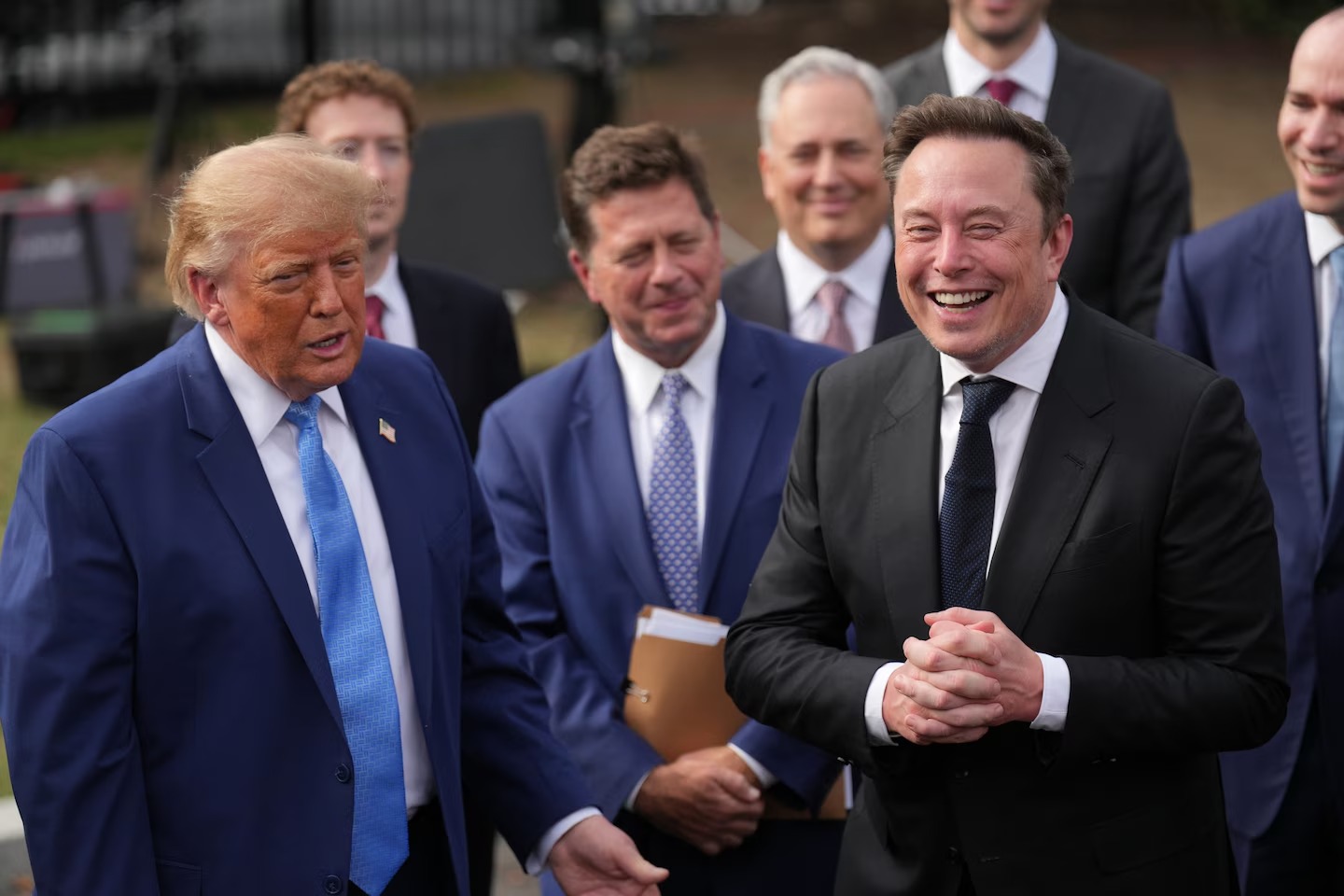
The world’s richest man, Elon Musk, has assumed the co-directorship of a Pentagon initiative focused on the future of warfare, known as “Project Meridian”.
Musk’s new role was announced by US Secretary of Defence Pete Hegseth.
Musk, who has long expressed his conviction that wars will ultimately be fought with autonomous unmanned aerial vehicles, will advise the project as co-director alongside Palmer Luckey, founder of defence start-up Anduril, and former Speaker of the House of Representatives Newt Gingrich.
In a memorandum issued at the Pentagon, Hegseth stated that the group would “examine the battlefields of the future” and “determine which weapons and technologies warfighters must employ to achieve dominance in these environments.”
During his “State of the Force” address at Marine Corps Base Quantico, Hegseth said:
“The best predictors of future conflict do not reside exclusively within the Pentagon. Obvious biases and risks arise when we task ourselves with both framing the questions and answering them.”
Hegseth stated that this initiative would commence immediately and that, following his address, he would convene with Musk, Luckey, and Gingrich at a secure location.
Project Meridian will have 120 days to “ruthlessly map the trajectory of wars, domains, and technologies”, a process that will culminate in the public disclosure of its findings alongside a classified annex.
Hegseth outlined an expansive mandate extending “from beneath the surface of the Earth to beyond the Moon.”
Rather than formulating new military strategies or policies, the panel will seek to identify “the domains we must seize and the capabilities we must master”, focusing on the effort to “discover, develop, and field” the weapons and systems that next-generation American troops may require.
The group is expected to submit a report containing recommendations to him by the end of January.
In 2024, Musk remarked: “Future wars will be entirely about drones and hypersonic missiles.” This was merely one of several similar statements he has made in recent years.
For Musk, whose oversight role at the Department of Government Efficiency (DOGE) ended in turmoil and escalated into a dispute with President Donald Trump over Trump’s spending bill, this appointment marks his formal return to government in an official capacity.
Musk and Trump ultimately reconciled, and Musk attended a meeting on artificial intelligence safety at the White House this week alongside other technology leaders.
Meridian forms part of a broader push announced by Hegseth to restructure the military around autonomous warfare and rapidly advancing technologies.
Hegseth announced the establishment of the Autonomous Warfare Command (AUTOWARCOM), a new four-star combatant command endowed with what he termed “service-like authorities” to scale autonomous and robotic capabilities across the joint force.
The Department of War will also begin phasing in new occupational frameworks across all military branches to establish specialised career tracks for what Hegseth described as “the next generation of autonomous warfighters.”
“We should have conceived an Autonomous Warfare Command a decade ago,” Hegseth said, explaining that Meridian aims to gaze far enough ahead to enable the military to anticipate the next technological shift rather than lag behind.
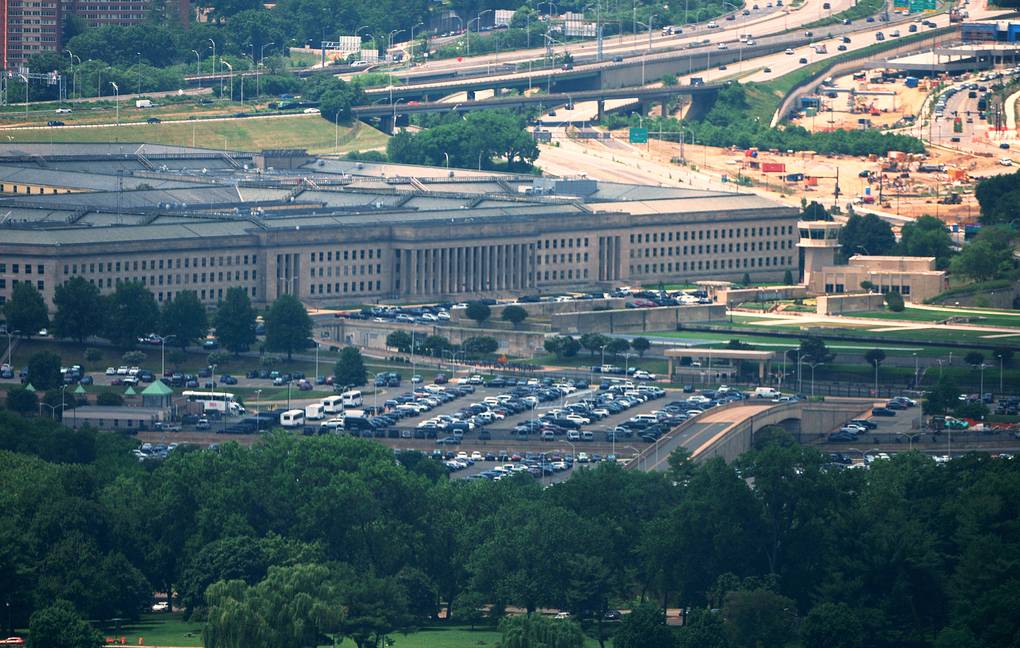
A cyberattack targeting the US Department of War’s personnel database has resulted in the leak of personal information belonging to approximately 3 million people.
Speaking to ABC News, a Pentagon official stated that the system accessed by unauthorised individuals contained the records of 2,760,000 living persons and 294,000 deceased individuals.
The Military Times portal, which first broke the news, had reported the number of affected individuals as approximately 4 million based on two sources. The Pentagon official subsequently conveyed different figures to ABC News.
The leak encompasses Social Security numbers and duty information belonging to military personnel and civilian employees. According to an official notification examined by Military Times, the compromised records may also include names, dates of birth, contact information, sex, race, and military occupational specialties.
The unauthorised access to the information system of the Defense Manpower Data Center (DMDC) lasted for approximately nine months, between October 2025 and 16 July 2026.
ABC News reported that the access in question was obtained by a small number of third-party users. The vulnerability was closed after it was identified.
The DMDC is considered one of the Pentagon’s primary personnel records centres. More than 60 million records belonging to active-duty personnel, reservists, civilian staff, contractors, retirees, veterans, and military family members are stored at the centre.
The Pentagon has not detected any evidence that the leaked data has been misused. Military Times reported that affected individuals were offered identity restoration and credit history monitoring services.
A similar data breach previously occurred on the Federal Bureau of Investigation’s (FBI) recruitment website, FBIJobs.gov. According to information obtained by ABC News from internal communications and sources, the FBI is considering the possibility that data belonging to its entire staff may have been stolen.
The New York Times (NYT) examined a portion of the stolen FBI records. Home addresses, telephone numbers, official email addresses, Social Security numbers, dates of birth, hiring dates, and emergency contact details for relatives were identified within these documents.
The database also contained unit designations, duty roles, and information regarding the supervisors of personnel. Some records revealed assignments within counterintelligence and counternarcotics units, as well as departments examining threats originating from Russia, China, and Iran.
Ciaran Martin, the former head of the UK National Cyber Security Centre, noted that this type of breach could directly affect the FBI’s operational capabilities.
The hacker group known as ShinyHunters had announced that it had seized medical data and security clearance records alongside files belonging to tens of thousands of active and former FBI employees.
Experts evaluating the matter for the NYT warned that this information could be used to track agents, threaten their families, or compile dossiers by foreign intelligence services.
The ShinyHunters group initially threatened to release the data unless the bureau withdrew an advisory it had published concerning the group’s attack methods.
The group later asserted that it had never intended to leak the information and characterised its action as an advertising campaign.
In a report published in May, Reuters noted that the personal data of US military personnel had been used in surveillance and attack preparations.
According to the agency, Washington’s adversaries gained the ability to pinpoint areas where troops were concentrated by exploiting commercially available location data. US lawmakers at the time criticised the Pentagon for failing to adequately protect the personal data of military personnel.
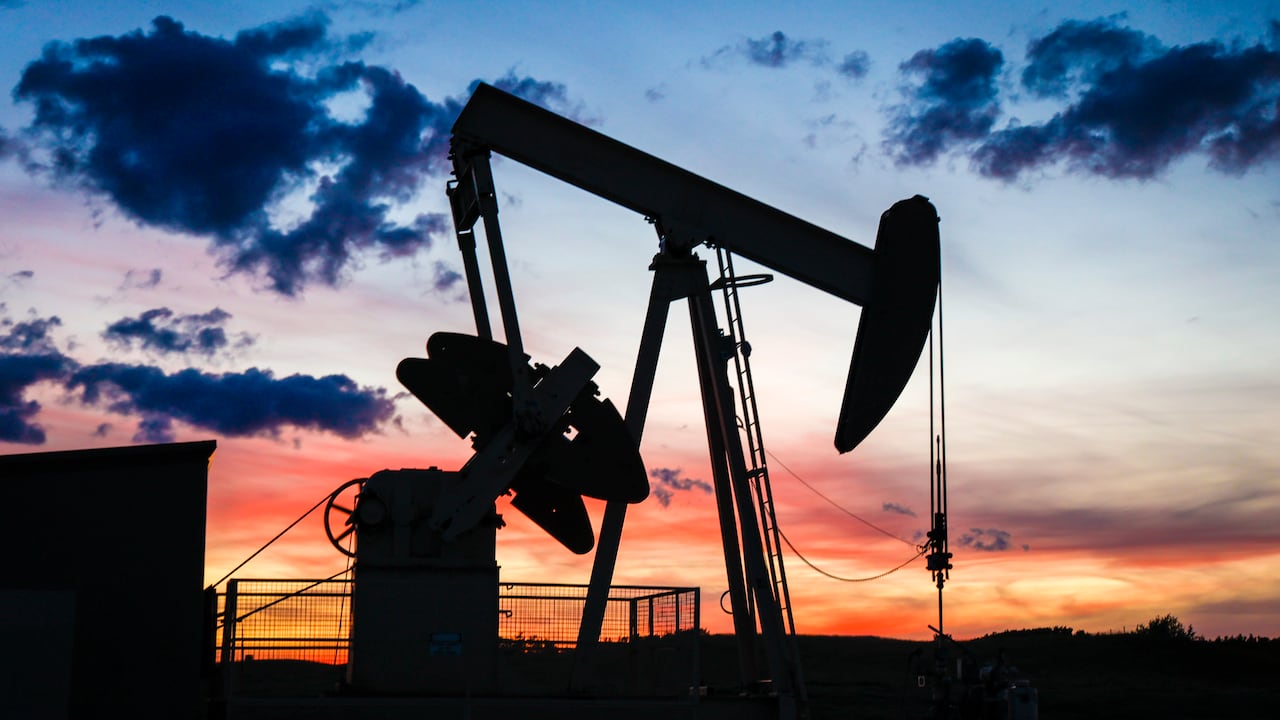
US President Donald Trump’s trade policy and the Washington administration’s push to increase Venezuelan oil imports are prompting Canada to diversify its energy exports.
According to a report by The Wall Street Journal, recent developments are accelerating Canada’s development of new oil and natural gas projects.
Steps taken by the Ottawa administration, which aspires to become an energy superpower, are seen as potentially strengthening the country’s position in global markets.
In Canada, the world’s fourth-largest oil producer and fifth-largest natural gas producer, the energy sector accounts for approximately one-fifth of total exports.
Almost all of the country’s natural gas exports and approximately 90% of its oil exports go to the US.
The newspaper writes that the trade war with Washington and the atmosphere of confrontation entered into with Iran have heightened Canada’s desire to turn to alternative markets outside the US.
Officials plan to increase shipments of oil and liquefied natural gas (LNG) to European and Asian markets.
Accelerating infrastructure investments in line with this target, Canada is also shortening approval processes. The government is prioritising the construction of an oil pipeline extending specifically to the west coast.
According to the newspaper’s estimate, if major pipeline projects are implemented, Canada’s daily oil transport capacity could rise to 6.8 million barrels by 2034.
Routes heading to the west coast will make up approximately 30% of this capacity.
The Canadian administration is simultaneously advancing LNG export projects. According to the report, these investments could allow approximately 55% of Canadian natural gas exports to be directed to markets outside the US by the early or mid-2030s.
While the government expands tax incentives for the oil and natural gas sector, the province of Alberta also plans to overhaul its royalty system.
However, the newspaper notes that implementing the new projects requires heavy investment, and the process depends on the final decisions taken by producers as well as the completion of regulatory approval processes.
The expansion of pipeline and LNG infrastructure could gradually reduce Canada’s dependence on the US market while raising its share in the global energy market.
The Canadian Prime Minister’s demand to reduce reliance on the US market had also come to the fore in July.
According to Carney’s statement, the province of Alberta submitted a plan for a pipeline spanning more than 1,000 kilometres to the west coast of British Columbia.
Targeted for completion by September 2027, the line will reach the Pacific coast by following an existing corridor through the mountainous terrain.
This shift in energy comes at a time of strained relations with the US. Donald Trump said that if Canada obtains associate member status in the European Union, he could halt trade with Europe in certain sectors and impose high tariffs.
As reported by the Associated Press, Trump characterised such a rapprochement as a “potentially hostile act”.
European Commission President Ursula von der Leyen had proposed opening the path for Canada to become the EU’s first associate member. The terms of this associate membership status, which is not defined in EU treaties, are not yet clear and require the approval of member states to enter into force.
Canada, which does not seek full membership, aims for maximum rapprochement with the EU.
Following Trump’s return to the White House, relations between Washington and Ottawa deteriorated. The Trump administration, which repeatedly called on Canada to become the “51st state” of the US, introduced additional tariffs.
In July, the US began imposing 50% tariffs on certain Canadian-origin goods.

Russian Senator Shenderyuk-Zhidkov speaks at the East-West Forum: “Türkiye should be an independent pole”

We are no longer in 1992, the US has lost its military superiority, Ret. Lt. Col. Davis says

Germany expands North Sea military ports and plans new naval base

Musk appointed co-director of Pentagon future warfare initiative

US waives human rights terms on $320m military aid to Egypt
-

 Europe6 days ago
European unions urge governments to scrap all Palantir deals
-
 Diplomacy6 days ago
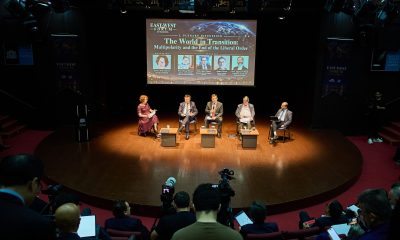
East-West Forum in Istanbul highlights irreversible shift to multipolarity
-
 Europe1 week ago
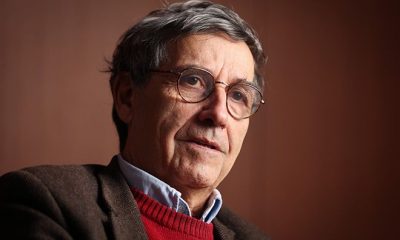
Emmanuel Todd says West faces collapse amid Ukraine and Iran crises
-
 Diplomacy1 week ago
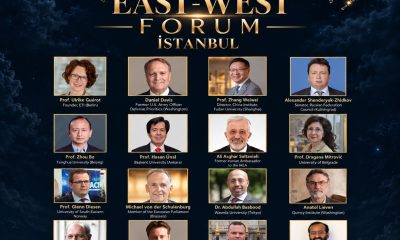
East-West Forum in Istanbul to debate multipolarity and global order
-
 Europe2 weeks ago
European intelligence chiefs divide over risk of Russian attack
-
 Middle East2 weeks ago
Sharaa says 7 October must not shape Israel policy on Syria
-
 America2 weeks ago
Republican support for Trump’s war with Iran drops sharply in polls
-

 Europe6 days ago
Rome protests AfD poster depicting South Tyrol as independent state
