
America
Five minutes to doomsday – 4: American capitalism at the frontiers

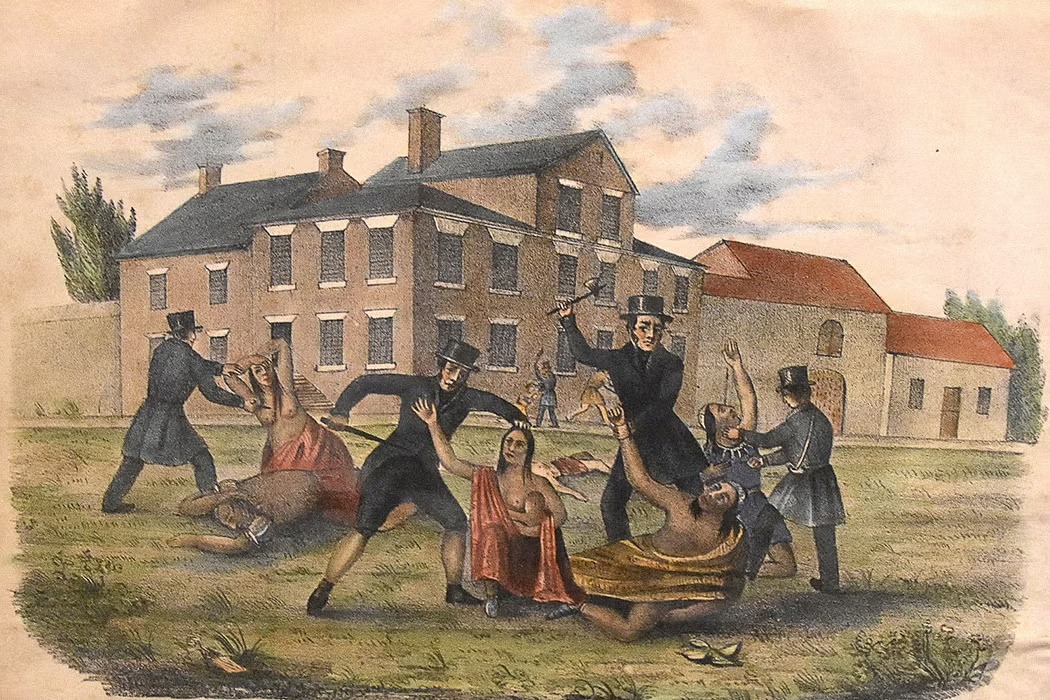
Legend has it that in the winter of 1811, Andrew Jackson, not yet US president, was escorting a coffle of enslaved people along the Natchez Trace, an ancient Native American trail winding alongside the Mississippi River, when he was intercepted by federal agent Silas Dinsmore.
Though not yet president, he was already a prominent figure across the Western borderlands: Tennessee’s first representative elected to Congress and to the state Supreme Court; commander of the Tennessee militia; a man of immense fortune amassed as a lawyer, merchant, horse breeder, and planter; and the vigilant guardian of vast profits reaped from slavery, the slave trade, and the violent expulsion of Indigenous peoples from their ancestral lands. Indeed, according to some accounts, Jackson remains the only president to have personally driven slave convoys (coffles).
Federal officials like Dinsmore were deployed across the region under the 1807 Intrusion Act to prevent squatters and settlers from encroaching upon Western public lands. The American Founding Fathers had rebelled in 1763 against King George III’s Royal Proclamation, which barred white settlers from crossing beyond the Ohio River; yet those very same founders now sought, through analogous federal legislation, to halt the westward deluge of unruly, defiant, and armed settlers.
A few years earlier, Congress had outlawed the transatlantic slave trade. The purpose of Dinsmore’s checkpoint was to verify that the human “chattel” transported along this route were “genuine slaves”, either imported prior to 1808 or born within the United States.
Accounts of what transpired next diverge sharply. In one version, when the federal agent demands his papers, Jackson points to the US Constitution, retorting, “Here they are.” In another version, the future president draws his pistols and declares, “These are my passports!” Whatever the literal truth, Andrew Jackson, the slave trader, proclaimed that no federal statute or official had the authority to shackle his “commercial” enterprises or meddle with his property rights. He subsequently launched a ferocious campaign to have Dinsmore dismissed, punctuated by explicit threats against the federal agent’s life. In one of his fiery protest letters to the federal government, he demanded: “Lord, has it come to this? Are we freemen or are we slaves? Is this real, or is it a dream?” In the end, he had his way. Dinsmore was ultimately relieved of his post. In his defence, Dinsmore observed that “gentlemen from the Western Country” of Jackson’s stripe believed themselves bound by no law whatsoever. In their eyes, a federal agent merely demanding documentation verifying the ownership of enslaved people was itself a form of “slavery”.
I have previously written on the American “frontier mentality” and how it was theorized by Frederick Jackson Turner at the close of the nineteenth century. Here, a clarification is perhaps warranted: one must distinguish between the word border, which signifies fixed state boundaries, and the term frontier, which, drawing an analogy from our own history, denotes a more fluid zone akin to the uc or serhat [the marchlands or shifting imperial periphery]. While a border in American history denotes a determinate, immutable, and demarcating boundary line, the frontier invoked by Jackson as a marcher domain signifies, by turns, a distinct way of life or cultural realm, the westward expansionist rush, and, in another sense, a safety valve engineered to avert domestic civil strife.(1) In this sense, the frontier corresponds to a mental construct, both material and fantastical, through which white American settlers forged their conception of liberty. Freedom, democracy, civilization, and innovation are continually hailed as products of this frontier mentality. Here, colonial expansionism and the internal cohesion of society are conceived in tandem.
At least in the Jacksonian universe. The Jacksonian era, which saw Jackson elected president after overthrowing the coalition of the Founding Fathers, is an epoch that Donald Trump frequently praises and draws inspiration from. Reflecting American boundlessness rather than mere American exceptionalism, this period coincided, not accidentally, with racial terrors, the populism of the white “common man”, and relentless financialization and speculation. Sociologist Daniel Bell points out that this sense of boundlessness engendered a certain “lightness” within the American national character, fostering the illusion that this nation had freed itself not only from the weight of history, but even from the constraints of nature, life, and death itself. American settlers were not merely moving west and south; they were actively incited to do so. Dispossessing Indigenous populations, confiscating Mexican territory, and annexing numerous new states to the United States were viewed, on the one hand, as preventive measures against domestic “social explosion”; yet, on the other hand, they inevitably expanded the non-white population within the country. The appalling violence along the frontier simultaneously gave rise to liberty, ethnic cleansing, master-race democracy, and racialized dread of non-white peoples. The Indian Wars not only secured fresh land for white settlers, but also injected into these “virgin” territories real estate speculations and financial chicanery far beyond the capacity of the ordinary white man to withstand.
The blood-soaked frontier of capitalist accumulation
Capital comes into the world dripping from head to toe with blood and dirt; it accumulates; cyclical bottlenecks impede its accumulation; it stalls, and then it lurches forward to push the frontier further out. This leap forward manifests at times as technological advancement, and at others as the violent conquest of new markets and human populations.
American capitalism, having set its sights first on the whole of North America, then across the entire American continent, soon after across the Pacific, and eventually over the whole planet, pairs the myth of boundlessness with an intrinsic drive toward domestic and external expansion. In an essay examining area studies and geography, the Marxist geographer Neil Smith observes that the United States conceptualizes the world as flat. From Woodrow Wilson’s reimagining of the Monroe Doctrine on a global scale to the globalization agendas of the Clinton and Bush eras, US rulers have consistently envisioned the globe as a frictionless space through which American capital can circulate unhindered, liberated from geographic boundaries and physical barriers. Consequently, the border must perpetually function as an open frontier; it must forever be thrust outward. “In such a world,” Smith asks, “what could possibly be the utility of deep geographic knowledge?” According to Smith, the widespread geographic illiteracy observed among Americans constitutes, above all else, “a highly rational expression of a specific imperial ambition.”
For this reason, the “closing of the frontier” is synonymous with doomsday for the Jackson-Wilson lineage. I wish to emphasize once more the spiritual significance underpinning the frontier idea: the white man’s lust for dominion across the Americas and the wider world cannot brook containment at home either. Jackson’s refusal to present identification to a federal agent effectively foreshadowed the conflict of the American Civil War. Northern Yankees seeking to emancipate the cotton-picking slaves of Southern planters were perceived as assaulting liberty, property, and the patriarchal family. The Anglo-Saxon and Teutonic spirit of liberty, supposedly lost in Europe before its rediscovery by the Hitlerites, had supposedly been reclaimed in America. Structural impediments such as entrenched bureaucracy and feudalism were absent in the New World. The Aryan spirit of independence, having emerged from the German forests and crossed the Atlantic, was revitalizing this boundless continent. Now, the Northerners were stripping away private property, subjecting the South to military occupation, and swelling the federal state under the pretext of aiding former slaves.
Doubtless, the contours of today’s battle between Trump, the forces coalescing around him, and their adversaries bear the unmistakable imprint of this border conflict. The closing of the frontier, both abroad and at home, inevitably necessitated a domestic and external social reorganization. The New Deal order, reviled today by Trumpists, neoconservatives, libertarians, and Silicon Valley prophets alike, rested fundamentally on the premise that the frontier had closed. It is true that the New Deal was riddled with internal contradictions. Franklin Delano Roosevelt made constant concessions to Southern Democrats, while labour protections were never granted constitutional status. Moreover, the international expansion of the New Deal was rendered possible solely through warfare; the American New Deal incorporated on the world stage the internationalization of American capital, seeking to ensure that it encountered no frontiers across the globe.
Yet the metaphors wielded by the warring factions endure intact. The closing of the frontier demanded an internally oriented, relatively “social” state. This domestic compact was hemmed in by the structural limits of capital and the boundaries erected by socialism and democracy. The neoliberal and neoconservative sorties of the 1970s represented a concerted counter-offensive against these very boundaries.
The apocalyptic representation of the American economy
The Economist argues that American capitalism has taken an “apocalyptic turn”. According to the publication, apocalyptic thinking has emerged as the single most potent driving force within contemporary American capitalism.
Elon Musk, for instance, seeks to establish a colony on Mars through SpaceX in order to safeguard against “existential threats to humanity”. Musk is hardly alone. This apocalyptic gloom is nurtured by the familiar liberal premise that terrestrial resources are intrinsically finite, compounded by the eschatological debates swirling around the civilizational threats posed by artificial intelligence.
“Today’s American business landscape,” writes The Economist, “is classified not by industry, but by eschatology. The spectres of war and geopolitics loom as large over corporate boardrooms as the perils of AI.” The magazine recalls that last year, Palantir CEO Alex Karp authored a book arguing that the future of the West hinges on high-tech defence firms like his own. Palmer Luckey, founder of Palantir’s sister company Anduril, another defence technology firm, routinely airs his conviction that China will attempt an invasion of Taiwan. According to The Economist, virtually every corporation trading in critical minerals now spins a compelling narrative explaining why its proprietary assets would become agonizingly scarce in the event of such a conflagration.
This bleak disposition is rapidly spreading across the financial sector. Much of Wall Street is reported to be in a “fatalistic mood”. Capital withdrawals by investors from previously obscure private credit funds have recently undermined confidence across private markets as a whole, the magazine notes, observing:
“The roster of financial innovations that central bankers warn pose ‘systemic’ risks to the economy is so vast that it is astonishing the edifice has not buckled under the sheer weight of its own dread. Cryptocurrency, one such vehicle, is inherently an apocalyptic enterprise; it purports to offer insulation against state interference and against the inflation generated by ‘Uncle Sam’s’ profligate spending, most notably in defence.”
Last year, the most widely read volume on Wall Street was reportedly titled “1929”. For the current year, a plausible candidate might well be “1873”, suggests The Economist. Investors increasingly characterize equity markets by drawing parallels with historical catastrophes. A Deutsche Bank strategist recently asked: “Will 1999 morph into 2000, or into 1987? Or will the clock simply reset to 1996?” The Economist considers a replay of the 2008 scenario equally plausible.
The publication contends that this millennial economy is structurally “paranoid”. “Historically,” it notes, “the appearance of comets presaged the end of the world.” Today, however, web trackers monitor the private jets of the super-rich, driven by the suspicion that, should cataclysm strike, the elite will flee to fortified redoubts.
The American economy is sustained in an unsustainable manner by the expenditures of the super-rich, while the vast majority subsists under conditions of increasing precarity. At least, this is the diagnosis offered by the economists cited by The Economist, who emphasize the emergence of a “K-shaped” economy.
The Governor of Utah warns that if the US loses the AI race to China, the country is finished. Musk, in a dispute with Sam Altman over OpenAI’s governance structure, wrote: “Excuse me, but the fate of human civilization is at stake.” Why, then, if the outlook is so catastrophic, do American equities remain so richly priced? According to the magazine, firms are raising capital in direct proportion to the severity of their doomsday narratives, scrambling to secure funds ahead of the impending market crash that many anticipate.
The Economist lays the underlying logic bare: “America is an experiment in terrifying oneself into prosperity…. There is no sales pitch to investors more compelling than asserting that your venture will bring about the end of the world as we know it.”
Yet the most provocative insight is reserved for the conclusion. An economy that pairs widespread corporate distrust with “an escalating elite millennialism is an economy primed to detonate.” And it adds: perhaps the lurking historical precedent is not 2008, 1999, 1973, or even 1873, but 1789.
The closing of the frontier and the quest for new frontiers
The neoliberal and neoconservative response to the closing of the frontier, constantly scouring the horizon for new accumulation frontiers, has ultimately targeted artificial intelligence. The emergent paradigm that Giulia Dal Maso designates “longevity capitalism” transforms human life itself into an “asset class”. Dal Maso writes:
“Life expectancy, and the uncertainty surrounding it, is no longer perceived as a self-evident, universal absolute. What follows examines how (extended) life has been captured; how the volatility surrounding longevity has become a new accumulation frontier, a terrain where capital extracts value from the indeterminacy of biological time. The term ‘longevity capitalism’ is advanced to theorize this formation: a biopolitical and financial regime through which capital subsumes the temporality of life into its own circulation.”
Biological duration has ceased to be a mere metaphor for capital accumulation; it has become its actual operational medium. Under longevity capitalism, the reproduction of labour power shifts fundamentally: “what capital has learned to colonize and feed upon is biological time itself, namely the indeterminate duration of the living body.”
The obsession of tech magnates such as Bezos, Altman, Musk, and Thiel with “longevity”, along with their aggressive capitalization of longevity startups, signals both the commodification of new frontiers and novel strategies for breaching systemic barriers. This quest is by no means confined to cryonics or anti-aging therapies: island utopias, charter cities, special economic zones, and offshore tax havens are part of the same architecture. According to Dal Maso, the political horizon of these elites is transparent: no death, no taxes, no democracy.
Here we encounter precisely what Melinda Cooper terms “patrimonial capitalism”. In my previous article, I touched upon Joseph Schumpeter’s gloomy prognostications regarding the fate of capitalism. For Schumpeter, the rise of the joint-stock corporation, the “democratization” of corporate ownership via public stock listings, and the structural divorce of administrative management from legal ownership sounded the death knell of capitalism, initiating an irreversible decline: an epoch in which the means of production were socialized was inevitable. Socialism would, regrettably, triumph. Schumpeter posited that capitalism harboured a tendency not to deepen its inherent contradictions, but rather to mitigate them. Rather than polarize, capitalism tended toward equalization. In the process, capitalism’s signature dynamic, “creative destruction”, was being eliminated.
Cooper reminds us that Schumpeter’s “ideal” capitalism was an organizational model in which capital accumulated through the vehicle of the dynastic family enterprise. Schumpeter traced the dark horizon of capitalism directly to the disintegration of the bourgeois family. The founding of a family was the primary psychological engine underpinning the impulse to innovate:
“Only a subject thinking across generational horizons was capable of executing the heroic leap of faith demanded by genuine innovation. The authentic entrepreneur was willing to sacrifice immediate personal consumption precisely because he was animated by the desire to establish an enduring fortune for his progeny.”
In sum, the “heroic entrepreneur” was, by definition, “simultaneously a prospective founder of dynastic wealth.”(2)
Today’s crop of tech billionaires appears to have rediscovered the allure of what Cooper identifies in Schumpeter as “reactionary futurism”. According to Cooper, the monetary and regulatory environment of the new millennium, combined with the structural erosion of New Deal securities statutes, has fatally compromised the governance architecture of publicly traded corporations. There now exists a new corporate elite composed of private equity investors and entrepreneurial founders who exercise unchecked managerial authority over the firms they control. Figures like Elon Musk and Peter Thiel have ascended precisely upon this material foundation. The “mythic aura of the founder-entrepreneur” is weaponized through these personalities. Thiel, for example, contends that founder-dominated enterprises resemble “feudal monarchies”, contrasting them favourably with allegedly more “modern”, publicly listed corporations characterized by dispersed shareholder structures and managerial bureaucracies. In Thiel’s view, founder-entrepreneurs can act decisively, command feudal loyalty, and execute multi-decade visions. Conversely, “impersonal bureaucracies staffed by credentialed managers” remain fixated on short-term quarterly metrics demanded by public equity markets. Cooper writes:
“Thiel’s corporate philosophy exalts the founder as a primordial patriarch, an antinomian figure who razes existing codes to establish new ones, gazing toward a distant technological horizon while resurrecting archaic social hierarchies. In his imaginative universe, founders may be cast as orphaned sons, fratricidal brothers, or patricidal heirs; yet it is precisely through these transgressive acts that they emerge as architects of new dynastic bloodlines and familial fortunes.”
Thus, we witness the corporate roots of the structural tension dividing the Silicon Valley vanguard from the “professional-managerial class” (PMC), an administrative stratum that ballooned under neoliberalism and serves as the primary constituency for contemporary “woke” institutional culture. Silicon Valley-backed Trumpism regards the dismantling of the New Deal administrative state and the eradication of the managerial corporate apparatus, which it decries as the breeding ground of “wokeness”, as one and the same objective.
The contradictions of the long downturn
What happens when the frontier is closed, or when the channels to reopen it are blocked? The fundamental divergence between Jackson and Trump lies in the fact that Jackson symbolized an expanding American capitalism, whereas Trump embodies a defensive entrenchment strategy for an empire in decline. While Trump’s predatory posture toward Greenland, Mexico, and Canada mimics the westward-charging settler ethos, too much water has passed under the bridge. Excepting transitory speculative booms, American capitalism has been caught in structural stagnation since 1973. The frontier appears closed; yet a powerful fraction of capital refuses to submit to this closure, seeking instead to batter the gates down.
This zero-sum dynamic is reigniting debates over the “return” of the state. How do boundless accumulation and state expansion coexist? First, as Quinn Slobodian demonstrates in Globalists, the libertarian, neoliberal, and ordoliberal imaginary has never been preoccupied with an unfettered market so much as with a minimal state secured by an overarching international legal framework. Second, prolonged economic stagnation highlights a configuration that vindicates Dylan Riley and Robert Brenner’s widely debated theorization of “political capitalism”: as capital becomes increasingly reliant on political intervention to underwrite its profitability, the capacity of wage workers to organize mass resistance and articulate a “common cause” is steadily degraded. According to Riley and Brenner, within this structural matrix, the “unskilled” segment of the working class, particularly those possessing the “advantage” of being native-born or white, retreats into its “primary” identities, attempting to capture income redistribution in its favour through an aggressive assault on social expenditures. Conversely, the credentialed segment of the working class, employed overwhelmingly within low-margin service sectors, seeks to preserve and expand the welfare state. “At the mass level, therefore,” the authors conclude, “the material basis of political conflict in the US is fundamentally a struggle waged between these two distinct segments of the working class over the allocation of social spending.”
Hence, credentialed, university-educated professionals form the electoral backbone of the Democratic Party. Anchored in state-subsidized private and non-profit sectors, particularly healthcare and education, these workers organize their politics around state-mediated “trickle-down” redistribution.(3) The policy platforms championed today by Daron Acemoglu and Joseph Stiglitz as “working-class liberalism” or “progressive capitalism” represent the programmatic articulation of this stratum’s class interests. Demands for the regulatory containment of artificial intelligence likewise reflect the acute status anxieties of this white-collar constituency. While AI occupies a central position in Silicon Valley’s quest for a new frontier, it reverberates with distinct apocalyptic overtones for the PMC.
The rightward drift of the precarious, largely white working class is, according to the authors, “best understood as an expression of transparent material interests.” In the absence of viable structural alternatives, this constituency falls back on its primary identities to defend its precarious position within the labour market and protect the value of its modest assets. It embraces a populist strain of supply-side economics, launching a fierce assault on social spending, which it perceives, not entirely without reason, as a redistributive machinery that diverts resources away from itself toward other segments of the working class.
This systematic attack on social spending sits at the very core of right-wing working-class politics, according to Riley and Brenner. The authors acknowledge that this posture appears contradictory on its face. “Yet,” they add, “when no viable political mechanism exists to shift aggregate income from capital to labour, underwriting capitalist profitability constitutes a rational, second-best strategy in the short run.” This calculus forms a central pillar of the broad and durable working-class support enjoyed by supply-side economic policy and its structural assault on the welfare state.(4)
***
The libertarian economist and Nobel laureate James M. Buchanan framed the vital function of the frontier in distinct terms: the frontier offered the institutional option of “exit”. Left to operate without bureaucratic state intervention, the market would function in precisely the same manner as the frontier: it would provide an escape hatch from coercive social relations and the tutelage of the nanny state. The frontier was the very incarnation of liberty.
The imperative of exit or escape constitutes one of the defining motifs of Silicon Valley eschatology. The obsession with pushing beyond frontiers is merely its outward manifestation: whether framed in geographical terms (including the colonization of space or Mars) or through the diversification of speculative assets, the strategy of exit resolves into fleeing the apocalypse or transforming the apocalypse itself into an exceptionally lucrative investment opportunity. The speculative bubble currently enveloping AI indicates that capital allocation is oriented not toward contemporary demand, but toward financing speculative escape trajectories for the future. Capital expansion proceeds detached from authentic social utility, guided strictly by expected returns. Investment is wholly uncoupled from tangible demand; forward-looking speculation has emerged as the primary motor of the capitalist psyche, sustained by blind guesses.
In the concluding installment, we turn our focus to scenarios of systemic collapse. Visions that read like science fiction or speculative fantasy will be scrutinized as structural pillars of contemporary capitalist eschatology.
(1) The safety-valve doctrine embedded within the American frontier mentality historically encompassed the systematic sexual violation of Indigenous women. This dynamic offers a harrowing illustration of how structural violence was biologicalized to reproduce racialized and gendered hierarchies. In The End of the Myth, Greg Grandin observes that women across every class, caste, and skin colour were subjected to pervasive sexual violence, with enslaved Black women bearing the brunt of this brutality. The passage is long, but essential for grasping the perverse internal logic of this mindset:
_”During the decades leading to the Civil War, as abolitionists began to describe slavery as a moral evil that was degrading republican values, proslavery ideologues responded by defining the institution as a ‘positive good’ that helped elevate republican virtue. Enslaved people were commodities, bought and sold in the market. But having many slaves, southern cavaliers said, allowed proslavery advocates to rise above the market’s crassness and develop more refined, chivalric qualities. Rape was an instrument of that refinement. Enslaved women, proslavery ideologues said, were ‘safety valves’ that helped siphon white male lust away from white women, allowing southerners to present their section as genteel and mannered. Writing to the Jamestown Journal in New York to complain about an abolitionist editorial that described the regime of sexual terror that southern, enslaved women were forced to endure, Samuel Rutherford, a slave trader from Knoxville, Georgia, conceded the accuracy of the editorial but said that sexual access to enslaved women functioned as a ‘safety-valve to the virtues of our white women, which are so much higher in the scale of virtue than your northern women.’’”
(2) Cooper advances crucial insights regarding this structural transformation. Her analysis warrants citation at length:
“At its peak, shareholder value ideology promised a more democratic form of capitalism and a wider distribution of financial wealth. The twenty-first century presents a very different picture. Accelerating since the 2008 global financial crisis, privately held, founder- or family-controlled firms have assumed a new prominence in American financial markets. Aided by alternative avenues of private financing, tech startups have deferred public listings for as long as possible, achieving multi-billion-dollar valuations without undertaking an IPO. When they do eventually list, they devise elaborate governance mechanisms to insulate insider control behind a veneer of public ownership. Today, some of the most capitalized tech corporations rely on dual-class share structures and bespoke voting arrangements that empower the corporate founder to override the majority of public shareholders on all significant matters. The resurgence of founder control is largely attributable to the dramatic expansion of private credit markets, an unintended consequence of post-crisis banking regulations. Private funds such as venture capital and private equity have assumed an increasingly central role in channelling direct funding to startups seeking to evade the regulatory oversight of public equity markets. Projecting their own structural preferences for asymmetric authority, private funds have actively indulged autocratic tendencies among entrepreneurial founders, presiding over the emergence of a new executive caste distinguished both by extraordinary corporate power and staggering private fortunes. Alongside private fund managers, tech founders dominated the billionaire rankings throughout the 2010s and early 2020s, a period when consecutive waves of quantitative easing by the Federal Reserve drove asset valuations to historic highs. This unprecedented windfall was funnelled directly into family offices: kinship-based wealth preservation structures that have themselves evolved into aggressive investors within private asset markets. The institutional relations binding the actors of this private equity ecosystem are deeply intertwined: successful founders and retired fund partners invariably entrust their wealth to family offices, which in turn deploy substantial capital back into private equity vehicles, venture rounds, and founder-dominated corporations. These dynamics exemplify a pronounced drift toward ‘patrimonial’ capitalism, where the boundaries separating dynastic wealth preservation from the structural requirements of entrepreneurial innovation are systematically dissolved.” Hence, the dynamics of hyper-financialization and the anti-establishment posturing of the post-neoliberal era operate in profound structural alignment.
(3) Riley and Brenner highlight that the expansive apparatus of non-profit entities, philanthropic foundations, and charitable trusts constitutes another primary employment reservoir for credentialed professionals, noting that aggregate employment within this sector now exceeds that of domestic manufacturing. In their estimation, these institutional complexes are structurally committed to advancing technocratic remedies for systemic crises, most notably racial disparities.
(4) The authors observe that more privileged segments of the working class that have succeeded in acquiring private property naturally constitute a receptive audience for conservative economic proposals hostile to wage increases and redistributive taxation.













The Nvidia board of directors is preparing to oust company founder and Chief Executive Officer Jensen Huang, The Wall Street Journal reported, citing people familiar with the matter.
The same sources said a board meeting to address Huang’s future could take place today.
Bloomberg reported, citing a person familiar with the situation, that Nvidia’s board has hired an outside firm to identify potential candidates to succeed Huang.
The source told the news agency that company leadership is also considering the option of appointing an interim executive until a permanent successor is found.
Sources for CBS News reported that US President Donald Trump’s administration is aware of the Nvidia board’s plans.
The New York Times previously reported, citing its own sources, that Huang, who was under investigation over his links to Megaspeed executive Alice Huang, had engaged in an extramarital affair with a subordinate.
US intelligence agencies assess that Alice Huang was recruited by China’s Ministry of State Security.
According to the NYT, the affair involved Nvidia Vice President Kimberly Powell.
Two former company employees recounted that moments of Huang and Powell showing affection toward each other were captured on video during a company conference held at a hotel in California.
The NYT specifically noted that it had not viewed this video recording.
Both Huang and Powell are married to other people.
Against the backdrop of these developments, TradingView data showed Nvidia shares dropped abruptly from $165.26 to $156.46.
As of 02:00 Türkiye time, the company’s shares were trading around $159, down 8.2%.
Suspicions regarding Huang’s close ties to the Megaspeed executive emerged in early November.
According to a Financial Times report, the connection between the two was not limited to close contact, but was romantic.
In an address to employees, the Nvidia CEO admitted to being unfaithful to his wife.
Apologising for the pain he caused his wife and children, Huang did not disclose the name of the woman with whom he had the affair.
Nvidia’s board of directors had announced the launch of an independent investigation to examine potential intelligence activity targeting the CEO.
It was announced that the review would be conducted by independent board members with the participation of outside legal counsel.
Emphasising that there was as yet no evidence that state secrets or proprietary Nvidia information had been compromised, the company expressed confidence in Huang and stated that he would remain in his post.
US President Donald Trump also voiced support for the Nvidia CEO, expressing the view that he should stay in office.
China’s Ministry of Foreign Affairs rejected the espionage allegations, describing them as groundless speculation and an attempt to smear the country.
According to a subsequent Reuters report, investors filed a class-action lawsuit against Nvidia and Huang.
The lawsuit accuses the company and its CEO of misleading shareholders by concealing the executive’s connections to the Megaspeed executive.
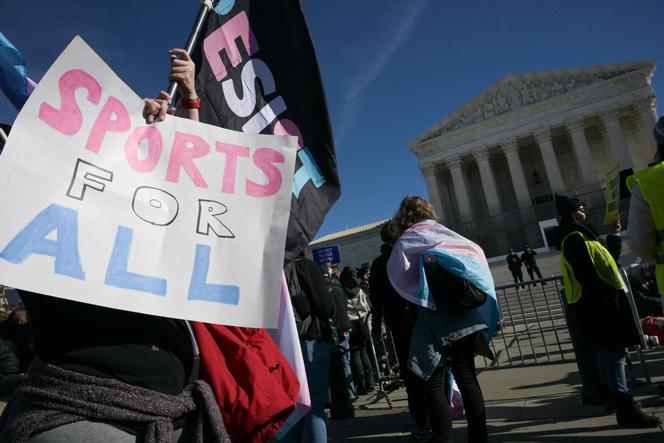
Despite the electoral success of Democrats last week, ballot measures barring transgender women and girls from competing on female sports teams were approved in four US states.
The measures passed in Arizona, Nebraska, Washington, and Colorado demonstrated that transgender rights face significant obstacles even in traditionally Democratic strongholds.
Following these ballot defeats, civil society organisations advocating for transgender athletes are preparing the ground for future campaigns by planning fresh public information initiatives.
Speaking to The Hill newspaper, Shelby Chestnut, executive director of the Transgender Law Center, said: “I certainly do not think the fight for trans kids in sports is over, but I do believe this election clearly showed that people still have a long way to go to understand what it means to support trans rights, including the right to participate in sports.”
The four statewide approved measures introduced new restrictions or expanded existing curbs on transgender athletes at primary, secondary, and collegiate levels.
Opinion polls also show that the public continues to broadly support such bans.
According to April data from the Siena College Research Institute, 59% of respondents opposed transgender athletes competing on high school teams that align with their gender identity.
In the same poll, 58% of respondents opposed transgender athletes competing on women’s teams at the collegiate level.
In Siena College’s 2025 data, the share of respondents opposing transgender athletes competing on their preferred teams stood at 65% across both high school and collegiate levels.
The narrow margins of victory for the measures in certain states provided a source of hope for transgender rights advocates.
The ballot measure in Colorado passed with 52% support.
Advocates emphasised that although the outcome was disappointing, the close result demonstrated meaningful progress in shifting public opinion.
Shannon Minter, legal director of the National Center for LGBTQ Rights, said: “Under the pressure of these measures being put to a public vote in the states, we managed to transform public opinion quite significantly in a relatively short period of time.”
Placing the issue directly before voters represented a new tactic for groups seeking to restrict transgender athletes.
Previously, 27 US states had passed laws against transgender athletes, while two states had taken similar steps through administrative regulations.
The strategy of taking the issue directly to the ballot proved successful for proponents of the restrictions.
Beth Parlato, legal counsel for the Independent Women’s Forum, said: “I think this is ingenious, and a brilliant way to protect girls’ sports.”
Noting her hope that the strategy will be used in more states, Parlato stated that their ultimate goal is the passage of federal legislation on the matter.
Activists defending transgender athletes believe they can win this fight over time.
While less than 1% of athletes in the US are estimated to be transgender, advocates argue that the issue should be addressed at the local level.
Minter noted that the matter is not an irreconcilable dilemma, stating:
“When the public gets the opportunity to understand that this is not an all-or-nothing issue, that reasonable rules can be established depending on the child’s age, the sport, and the level of competition, they are supportive; because people generally do not want to exclude anyone. Another factor people are beginning to realize, and which led to such close votes, is seeing that the real impact of these policies is subjecting all girls to scrutiny, potentially including invasive examinations or testing that many would find objectionable.”
Brian K. Bond, chief executive of the LGBTQ rights organisation PFLAG, said engaging with communities and addressing challenging topics is essential to defending transgender people.
“That means moving beyond our familiar circles and stepping outside the echo chambers created by our algorithms,” Bond said.
Rights advocates plan to challenge the restrictions in court and increase pressure on elected officials.
Outlining their strategy, Chestnut said:
“I know some groups are pointing to litigation, and there are administrative avenues being pursued as well. What is clear for us is holding newly elected members of Congress accountable, whether at the federal or local level, to ensure their policies are inclusive of transgender people.”
The ballot results reminded advocates of the measures enacted in the early 2000s to restrict same-sex marriage.
Pointing to those historical parallels, Bond said: “In the 1990s and 2000s, ballot measures were one of the primary tools used to divide communities over the rights of LGBTQ+ people. But ballot outcomes, including losses, only capture a snapshot in time; they are not a final verdict on the future of rights or what can be achieved. We believe that people ultimately value fairness and respect the diversity that strengthens our communities.”

Democrats in the US House of Representatives are reacting with anger after Republicans blocked an impeachment push against Defence Secretary Pete Hegseth, aided by the absence of 11 Democratic lawmakers from the vote.
The eight-article impeachment resolution, drafted by Republican Representative Thomas Massie, reached the House floor on Tuesday evening and was rejected by a vote of 211 to 204.
Calculations indicate that had eight of the 11 absent Democrats been present on the floor, the impeachment process could have advanced to the next stage.
The outcome has intensified calls within the Democratic Party to tighten attendance discipline for floor votes.
The situation has also revived demands from Democratic lawmakers who advocate prioritizing Hegseth’s impeachment early next year, when they are set to take control of both chambers of Congress.
This pressure risks creating divisions with party leadership, which favours a more cautious, phased approach to executive oversight.
New York Representative Alexandria Ocasio-Cortez emphasized that losing any vote due to absenteeism was entirely unacceptable: “This is completely unacceptable. We must bring this matter back up as soon as possible and ensure everyone shows up.”
Noting that they have an obligation to do their jobs and be present for votes, Ocasio-Cortez said, “This is what we are here for.”
Offering a similar assessment, California Representative Ro Khanna said, “We must make it clear that members absolutely have to show up for major votes.”
Khanna, who wants a vote on Hegseth’s impeachment held without delay once his party takes the House majority next year, said, “We should do this as quickly as we can.”
Asked whether hearings or an investigation would be required before bringing a resolution to the floor, Khanna replied, “No, we should move forward directly.”
This stance creates the potential for a clash with Democratic leaders, who oppose unprepared and hasty impeachment proceedings.
Although Democratic leaders supported this week’s resolution, they did not bring the measure to the floor themselves.
They state that once they secure the majority next year, they intend to conduct comprehensive inquiries into various officials in Donald Trump’s administration before taking any impeachment steps.
California Representative Pete Aguilar, who is expected to serve as House Majority Leader, stated that party leadership has no plans to revisit Hegseth’s impeachment next year.
Addressing the matter, Aguilar said, “When we are in the majority, we are committed to holding people accountable, and that will begin early on through oversight mechanisms. But there is no such item under discussion at this stage.”
Among the 11 Democrats who missed the vote, Melanie Stansbury and Jonathan Jackson reported that traffic congestion prevented them from reaching the House in time.
The office of former House Speaker Nancy Pelosi stated that she was attending a Veterans Day event in San Francisco, but noted that she supported Hegseth’s impeachment and would have voted against referring the resolution to committee.
Nevada Representative Steven Horsford announced that a personal emergency caused him to arrive late to the floor, adding that he took full responsibility.
Michigan Representative Rashida Tlaib criticized the absent lawmakers, warning that voters who delivered Democrats a majority will expect more from the new Congress.
Acknowledging that an accident had caused travel difficulties around the Capitol, Tlaib said, “However, especially when we are in the majority, we have to stay focused on our work and turn out every single vote.”
Calling for Hegseth’s impeachment early next year, Tlaib said, “I believe allowing someone to act contrary to the country’s fundamental interests would set a dangerous precedent.”
Massachusetts Representative Jim McGovern also pointed out that all lawmakers must attend votes, remarking that everyone needs to be there regardless of whether their presence would alter the outcome.
Every Democrat who took part in Tuesday’s vote opposed referring Massie’s resolution to committee.
New York Representative Joe Morelle argued that Democrats clearly demonstrated their stance against the danger Hegseth poses to the American people, asserting that the secretary is unfit for office.
Morelle noted that the caucus would hold consultations in the coming weeks regarding the path forward.
Massie, the author of the resolution, contends that Hegseth abused his authority by conducting combat operations in Iran without congressional authorization, kidnapping the president of Venezuela from his country, and directing the extrajudicial execution of suspected drug traffickers in international waters.
The Republican lawmaker had launched a similar impeachment push against Hegseth in September, but House Republican leaders averted a vote on the resolution by cancelling votes and sending lawmakers home on an early recess.
In an interview with Politico, Massie said he does not plan to reintroduce the articles of impeachment to the floor.
Holding a press conference on Tuesday, Defence Secretary Hegseth described Massie’s effort as a “political stunt” and a “personal manifesto fuelled by ego and anger.”
In his defence, Hegseth said: “In the 250-year history of the American republic, no secretary of war or defence has ever been impeached for executing lawful military operations, which in our case were successful. War Powers Act or not, it has never happened once. History is abundantly clear. A disgruntled member of Congress wants to disregard that over policy disagreements. This is nothing more than a policy disagreement.”

Journalist Dursunoğlu warns Iran removed missile limits as Gulf risks widen

Nvidia board prepares to remove CEO Jensen Huang amid scandal

CSTO strips Armenia of voting rights over two-year budget debt

US voters approve bans on transgender athletes across four states

US urges Russia to draft proposals for new European security pact
-

 Diplomacy2 weeks ago
Secular dress code dispute exposes deeper Türkiye-Azerbaijan strains
-

 Europe7 days ago
EU urges citizens to prepare 72-hour survival kits for crises
-

 Asia2 weeks ago
China expands Africa arms sales, displacing France and Western rivals
-

 America2 weeks ago
Bolsonaro reportedly leaves Brazil on jet linked to scandal-hit firm
-

 Diplomacy1 week ago
Protesters storm Kyiv site holding soldiers over torture allegations
-

 Russia2 weeks ago
Putin proposes Arctic energy cooperation to US to ease gas sanctions
-
 Europe1 week ago
Pro-Ukraine Republicans in US Congress dwindle after departures
-

 Europe1 week ago
Low EU gas stocks risk stoking global prices, IEA report warns
