
Europe
Emmanuel Todd says West faces collapse amid Ukraine and Iran crises

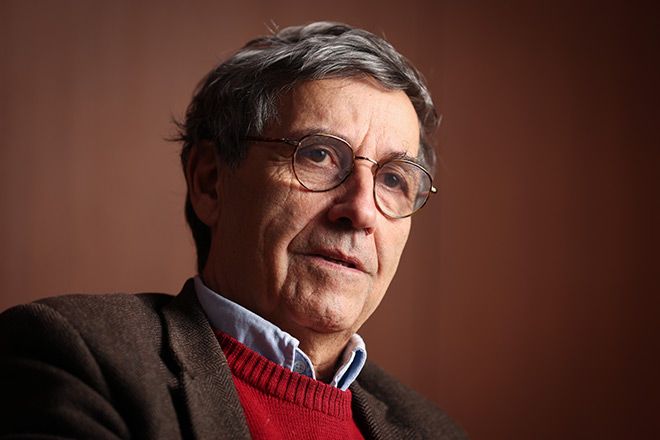
Emmanuel Todd, a French historian, anthropologist, sociologist, and political scientist at the National Institute of Demographic Studies in Paris, stated during a live broadcast on Le Figaro television that the Western world has entered a phase of major collapse and disintegration.
Stating that global balances have been overturned, Todd noted that conflicts in the Ukrainian and Iranian theatres have laid bare the structural weaknesses of the Western system.
Appearing in the studio alongside strategic analyst François Heisbourg, Todd offered assessments drawn from his new book, The Rupture, a sequel to his earlier work, The Defeat of the West.
Discussing the work, which comprises extensive interviews conducted with journalist Diane Lagrange, the French thinker shared the global ramifications of institutional erosion across the European and US axis.
“European leaders live in an absolute kingdom of illusions”
Expressing that the Russian threat articulated in European capitals lacks an objective basis, Todd stated that continental politicians have succumbed to a psychological illusion. The French anthropologist remarked that Europe is generating artificial fears by projecting its own internal crises outward.
Todd offered the following assessment regarding the posture of decision-makers in Europe: “European leaders appear to harbour a desire for open war with Russia. To put it bluntly, the picture before us shows that Europe has turned into a veritable kingdom of illusions. This entire narrative suggesting that Russia wants to invade Europe is nothing more than a fantasy detached from reality.”
Emphasising that the military objectives of the Moscow administration remain limited, the historian clearly delineated Russia’s strategic boundaries. Recalling that Russia seeks to advance as far as the Dnieper river and secure control over the port of Odesa, Todd noted that it lacks the demographic and logistical power to push beyond.
Todd used the following phrases regarding Russia’s intentions: “I defined Russia’s war objectives very clearly in my book. They want to reach the Dnieper line, take Odesa, and perhaps turn the remainder of Ukraine into a satellite state. However, they will stop there because they have no intention of going further. They possess neither the demographic resources to achieve that nor such a strategic objective.”
“Russia is a target onto which our deep internal pain is projected”
Emphasising that the dominant discourse in Europe must be analysed, Todd stated that the mindset of decision-makers reflects a societal anxiety. He expressed that Europe and the US have lost their internal cohesion, a condition that has poisoned their perception of the external world.
Noting that the disintegration of Western civilisation lies at the root of the problem, Todd spoke as follows: “It is possible to explain this threat rhetoric partly in psychiatric terms, because a significant proportion of those who articulate it are entirely sincere. Yes, there is a serious paranoia that has seized the mechanisms of control. The real issue is the internal disintegration not only of Europe, but of Germany, France, the general Western system, and the US. This process of disintegration produces an outlook that views the world paranoically. Russia is therefore merely a target onto which our deep internal pain and unease are projected.”
Referring to topics to which he dedicated substantial space in his book, Todd stated that the reality of the West losing its own identity lies at the centre of the global system. He stressed that xenophobia and security paranoia are the direct consequence of the internal loss of values.
“Trump is the defeated party in this war, not the victor”
Stating that the conflict in Ukraine has reached a point of no return for the West, Todd noted that the reality on the ground cannot be obscured through propaganda. Expressing that the course of the conflict will become definitive within this year, the thinker drew attention to the acceleration along the frontline in Russia’s favour.
Reporting that European leaders have grown anxious over the fear of accountability as the end of the war nears, Todd said: “This year will be the period when the picture in Ukraine becomes clear. Balances on the frontlines are shifting rapidly, and the gap is closing. This conflict is taking on an increasingly dirty character. This is precisely why European leaders are acting with such panic. Everyone will have to confront their own record once the war ends. History will write what we actually did for the Ukrainians: whether we drove them to suicide or genuinely helped them.”
Entirely rejecting claims of a covert partnership between US President Donald Trump and Vladimir Putin, Todd pointed to Washington’s failure on the ground. He emphasised that the American military industry has failed to produce the ammunition required to sustain Kyiv’s army, which is why the conflict has been lost.
Todd conveyed the condition of the White House in the following words: “The narrative that the US and Europe are divided into two opposing camps, and that the US and Russia are friends seeking to fleece the Europeans, is an utter illusion. Donald Trump is a president of defeat. The Americans lost this war because they could not provide sufficient weapons to the Ukrainian army. The American military-industrial complex is in an extremely dire state. The Trump administration is attempting to make people forget this American defeat; that is why it browbeats Europeans, stages political theatre, and embarks on diversionary operations.”
“Germany has entered a rearmament process in the Merz era”
Stressing that the most fundamental rupture within the Western alliance has occurred in Germany, Todd expressed that Berlin has abandoned its cautious foreign policy line to adopt a confrontational stance. He stated that the government led by Christian Democrat Friedrich Merz has focused on armament policies.
Noting that German industry was mobilised to close the American military shortfall, Todd spoke as follows: “The primary development on the scene since my previous book, The Defeat of the West, has been Germany’s mobilisation for war. Following the cautious line of the Social Democrats, the accession to power of the Christian Democrats led by Merz directly propelled Germany, the continent’s leading industrial power, into a process of rearmament. When American industry proved inadequate, German industry stepped in, and this gave Trump renewed hope. Since Merz came to power, Trump has authorised the Central Intelligence Agency to direct Ukrainian missiles directly at Russian targets. Therefore, the notion that Trump and Putin are walking hand in hand is complete nonsense.”
“Russians are strategic realists who do not impose values”
Expressing that Russia acts out of motives of state security and sovereignty rather than expansionist ambitions, Todd said Moscow does not recognise a Western-centric hierarchy of values. Arguing that Russia’s strategic approach coincides with American realism, the thinker noted that moral sermons in international relations have lost their validity.
Stating that Russian statecraft is based on the vision of a multipolar world, Todd offered the following assessment: “Russia’s strategic theory runs in almost the exact same direction as the approach of the American John Mearsheimer. They are strategic realists thinking through national sovereignty and raison d’etat. Their most distinctive characteristic is the principle of not imposing their own moral or cultural values on their partners. When the Russians speak of a multipolar world, they mean not only a balance of power, but also diversity in the sphere of values. They even explicitly state that Westerners may live as they wish, and that this does not concern them.”
Emphasising in particular that he is no sympathiser of Russia while offering these observations, Todd said: “I feel almost uncomfortable falling into this strange position of appearing to defend Russia. Yet I have no such intention. In my book, I openly confess that I harbour a deep sympathy for the Iranian people, but I have never felt such an affinity towards the Russians.”
“The Iran war is a kind of Vietnam disaster for Washington”
Stating that the Iranian intervention launched by Donald Trump in February 2025 has led to a global economic impasse, Todd expressed that the surge in natural gas and oil prices has choked Western economies. Expressing that Washington acted with strategic blindness, the author stated that this decision has culminated in a major failure.
Relating that the Iran operation was a diversionary manoeuvre designed to cover up the debacle in Ukraine, Todd continued his remarks: “A dynamic of systematic failure exists here. Following the American defeat experienced in Ukraine, the Washington administration continually resorted to diversionary moves. First they dreamt of acquiring Greenland, applied pressure to Europeans, tried to bring Venezuela to its knees, and sought to encircle Cuba and Iran. Relative success in Venezuela pulled the wool over the eyes of the Americans. They turned towards Iran to make people forget the Ukraine defeat, yet Iran is an entirely different country. It is a society packed with engineers, undergoing extremely rapid cultural change.”
Emphasising that the resistance the American administration encountered in Iran has transformed global balances, Todd said: “For the Americans, this war is a first-order strategic disaster. It resembles a Vietnam War, which was lost over five or six years, lost this time within a few days. This is a complete fiasco, and in truth everyone except Trump is aware of it.”
“Ukraine and Iran have now turned into a single war”
Expressing that a deep chasm has opened between the discourse constructed by the media and the material balance of power on the front, Todd noted that the Western industrial base has eroded. He stated that the Ukrainian and Iranian fronts have practically merged, turning anti-Western forces into a unified bloc.
Todd explained the military reality on the ground with these words: “The most striking element in the process we are experiencing is the profound divergence between the debates in the media and the concrete reality of the war on the ground. There is a demographic in the West that speaks and comments constantly, yet war is conducted through military-industrial capacity on the ground. At this stage, the Ukraine War and the Iran War have effectively turned into a single war. On both fronts, the inadequacy of the West’s military-industrial capacity has been exposed. While a missile shortage is experienced on one side, ammunition is running out on the other. These acts of aggression, which initially appeared disconnected, have bonded a tripartite power comprising Russia, Iran, and China. These countries are conducting extraordinarily close cooperation. While the Americans direct Ukrainian missiles, the Russians designate the targets of Iranian missiles.”
Recalling that the exhaustion of American arsenals is not limited to the Iran war, Todd added that reports by the Pentagon and the think tank Rand Corporation documented the air defence crisis long before the attack on Iran.
“Our constant aggression hardened the conservative line in Iran”
Examining from an anthropological perspective the form assumed by the Iranian political system in the face of Western pressure, Todd expressed that external interventions played a decisive role in the hardening of the Tehran regime. Conveying his own observations, the thinker recounted the contacts he has maintained with Iranian diplomats since the early 2000s.
Sharing an assessment conveyed to him during the era of Mahmoud Ahmadinejad by a diplomat, Todd said: “At that time, a young Iranian embassy counsellor spoke these words to me: ‘Every irrational step taken by the Americans strengthens Iran’s strategic hand in the region. On the other hand, however, American attacks unite Iranian national consciousness around conservatism, consolidating the position of hardliners in the administration.’ The situation I describe in the book is precisely this long-term dynamic.”
Explaining the differences in societal structure between Russia and Iran through anthropological family models, Todd said: “In my capacity as an anthropologist, I examine the links between family systems, political ideology, and political temperament. Russian and Iranian political temperaments are fundamentally different from one another. Russia possesses an authoritarian culture where power is organised vertically. Putin did not create the system; this communitarian Russian family culture created Putin. In contrast, the Iranian family possesses a nuclear and individualistic structure. Individualism raises individuals open to debate and negotiation, as seen in the tradition of Shia thought. Had it not been for the unending aggression of the West, this dynamic could have evolved along its natural course. Our interventions reversed the process.”
Expressing that he is a Westerner of the older generation, the thinker offered the following evaluation: “I am an old Westerner who believes in an environment of free debate and pluralism. I am a researcher trained in Cambridge and living in Paris. Yet what we call the West today has severed itself entirely from the values of the past, turning into a mechanism that generates intolerance towards the world. A historian does not look at issues through who is at fault; he analyses historical dynamics.”
“The rise of the far right in Germany is a historic danger”
Expressing that nation states have returned to their ancient reflexes during the disintegration of the Western alliance, Todd stated that the political transformation in Germany has reached alarming proportions. Criticising the radicalisation and war rhetoric in German politics, the historian stressed that memory is being targeted for erasure.
Evaluating electoral dynamics in Germany, Todd said: “I devoted a very detailed chapter to Germany in my book. Truly bizarre developments are taking place there. A far-right party, an extension of the National Socialist heritage, has reached levels of 45%. No one can say that I am the only person concerned by this. On the other side is a Chancellor who is losing ground yet rapidly dragging his country into direct conflict with Russia. In his speeches, he characterises the Russians as barbarians. Yet they forget the fact that the force which slaughtered 25 to 27 million Soviet citizens in the past was the German military. We are witnessing the return of historical dynamics, and we must manage to see ourselves as we truly are.”
“Gross domestic product figures are an empty universe of signs”
Finding the growth narrative driven by US economic supremacy and leadership in artificial intelligence misleading, Todd noted that economic indicators do not reflect genuine societal prosperity. He argued that despite American gross domestic product rising on paper, decay is occurring across fundamental indicators.
Emphasising that economic indicators do not match reality on the ground, Todd shared the following observations: “A large proportion of the minds working in the field of artificial intelligence in the US are not of American origin; they are reliant on highly skilled labour coming from outside. American gross domestic product appears to be growing constantly, yet these measurement methods do not reflect reality. Life expectancy in the US has fallen behind Europe. We saw that Ukrainian refugee children arriving in France surpassed local pupils in mathematics classes in French secondary schools. We live in a universe of signs that has entirely no substance behind it. The awakening from this illusion will be quite shocking, alongside the impending energy crisis and the collapse of the European economy.”
Expressing that the American economy remains afloat through its trade deficit, the thinker used these phrases: “The most concrete proof of the unreality of the American economy is the incessantly growing trade deficit. America can no longer produce what it consumes. It has even begun to run a trade deficit in agriculture. They are dependent on their allies in Europe and Asia for food products; in other words, it is we who feed the Americans. Through irresponsible energy policies, Washington is also crashing the peripheral economies that it needs in order to survive.”
“Elderly electoral dominance has produced a gerontocracy in France”
Expressing that population ageing in Western societies represents an indicator of strategic collapse, Todd drew attention to demographic rupture in France. He stated that infant mortality rates in France have begun to climb again, resembling the final era of the Soviet Union.
Emphasising that France’s political structure has been shaped according to the interests of the elderly population, the author said: “While preparing for my discussions with Diane Lagrange, I examined demographic statistics in depth. Infant mortality rates in France have begun to rise again. This datum recalls the collapse process of the Soviet Union. On the other hand, while Europe is retreating in births and child numbers, it reaches high figures in life expectancy for individuals aged over 60. The metabolism of society is slowing, and the values of the elderly are becoming dominant.”
Reporting that political power has been held hostage by older generations, Todd concluded his words as follows: “When France does not have a population as old as Italy or Germany, how did it surrender to such an elderly-oriented system? Because the primary power of the elderly is the ballot box, the votes they cast. If you remove democracy and the voting mechanism, you would see that the elderly would not pour into the streets to protect their privileges. A strong liberal democratic tradition allowed the older generation to make maximum use of its ballot power, and France drifted into a gerontocratic regime.”
Expressing that market capitalism and the individualistic concept of economic man have destroyed the family, the French thinker stated that the global decline in birth rates stems from economic selfishness. He added that having children demands self-sacrifice and devotion, whereas market values destroy this instinct.
Stating that artificial intelligence represents one of the greatest ruptures in human history, Todd warned that this technology carries existential risks that threaten the continuity of the species, much like nuclear weapons.







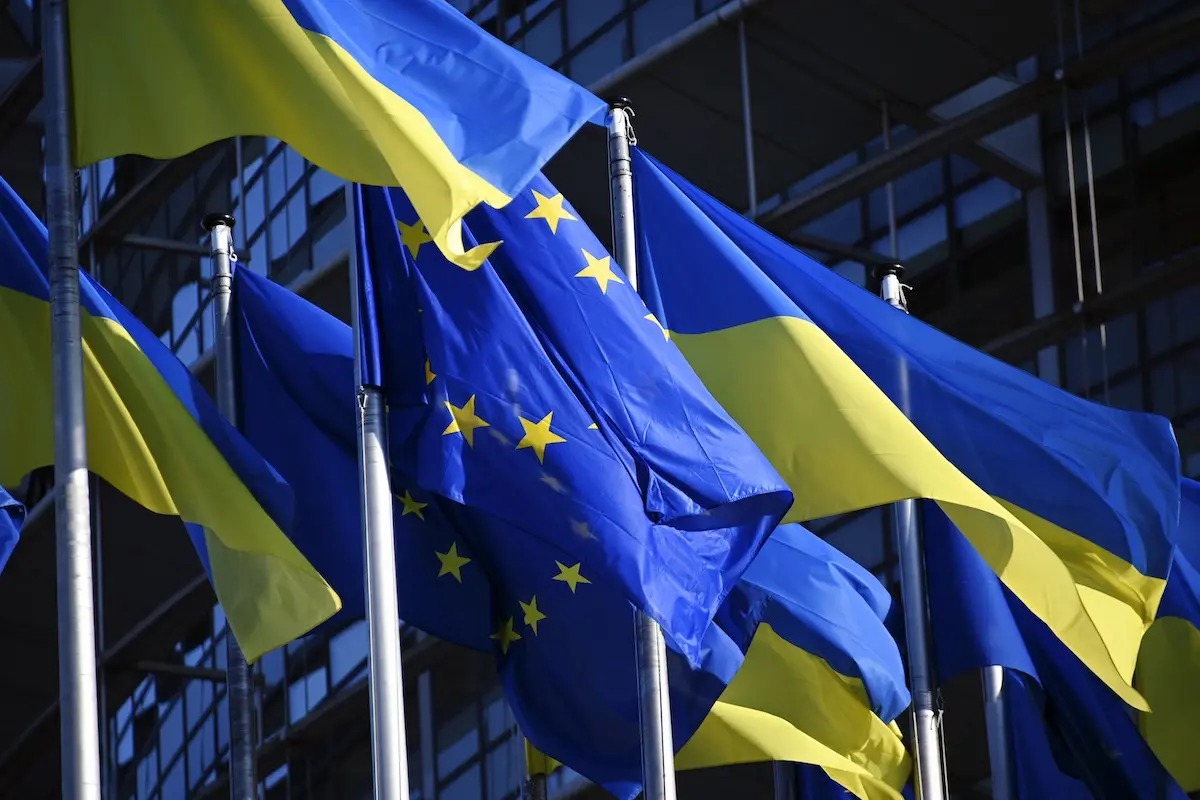
An opinion survey conducted across the European Union has revealed that 53% of bloc citizens oppose admitting Ukraine to the EU through an accelerated process in the coming years.
According to the study carried out by the Bertelsmann Foundation, 47% of EU residents support the idea of fast-track membership.
The most pronounced opposition to rapid accession was recorded in Romania at 60%, followed by Germany at 59%, and France and Poland at 57% each.
The lowest resistance to Ukraine’s accelerated membership was found in Sweden at 31%. This figure stood at 37% in Spain and Portugal, and remained at 43% in the Netherlands.
Domestic support for the process remains exceptionally high; 83% of the public in Ukraine want to join the bloc as soon as possible.
Europeans differ over defence contributions and strategic benefits
The survey also examined perceptions regarding the defence of the continent. Some 58% of Ukrainians believe that their “resistance against Russia’s military campaign protects the entire continent and the EU as a whole.”
In contrast, 29% of bloc citizens share the view that the EU and its member states contribute more to defending the union than Ukraine does.
While 23% of participants view the efforts of both sides as equal, the share of those who consider Ukraine to be the bloc’s “primary protector” remains at 16%.
The study also indicates that low expectations concerning the tangible benefits Ukraine would provide to the bloc contribute to the limited support for its membership.
Only 14% of surveyed Europeans believe that this accession will make the EU stronger and more influential on a global scale. Meanwhile, the proportion of respondents who anticipate that Ukraine’s entry will increase the bloc’s resilience was measured at 11%.
Timetable debate persists in the negotiation process
Ukraine applied for membership immediately after Russia’s military intervention and gained candidate status in 2022.
The accession process encompasses a 33-chapter reform package organised under six clusters, which aims to guarantee democratic and economic standards.
Formal accession talks began in June 2024. The negotiation process, which had long been blocked by Hungary, made progress after Peter Magyar took office as the country’s prime minister.
Magyar also succeeded in having the term “accelerated accession” for Ukraine removed from EU texts.
Magyar argued that a contrary approach would send the wrong message to Western Balkan nations, such as Serbia, Albania, Montenegro, and North Macedonia, which have worked towards membership for years.
Ukrainian President Volodymyr Zelenskyy has called for the membership process to be completed by 2027, stating that this would provide a fundamental security guarantee for both Ukraine and Europe.
On the other hand, circles within the bloc that oppose rushing the process insist on the complete fulfilment of all conditions, including anti-corruption measures.
Meanwhile, the EU Ambassador to Ukraine, Katarina Mathernova, points to 2030 as a likely accession date.
For membership to take place following the completion of negotiations, all 27 EU member states must grant unanimous approval.
So far, only the first of the six chapter clusters, covering fundamental values and principles such as the rule of law, human rights, and the judiciary, has been opened for Ukraine.
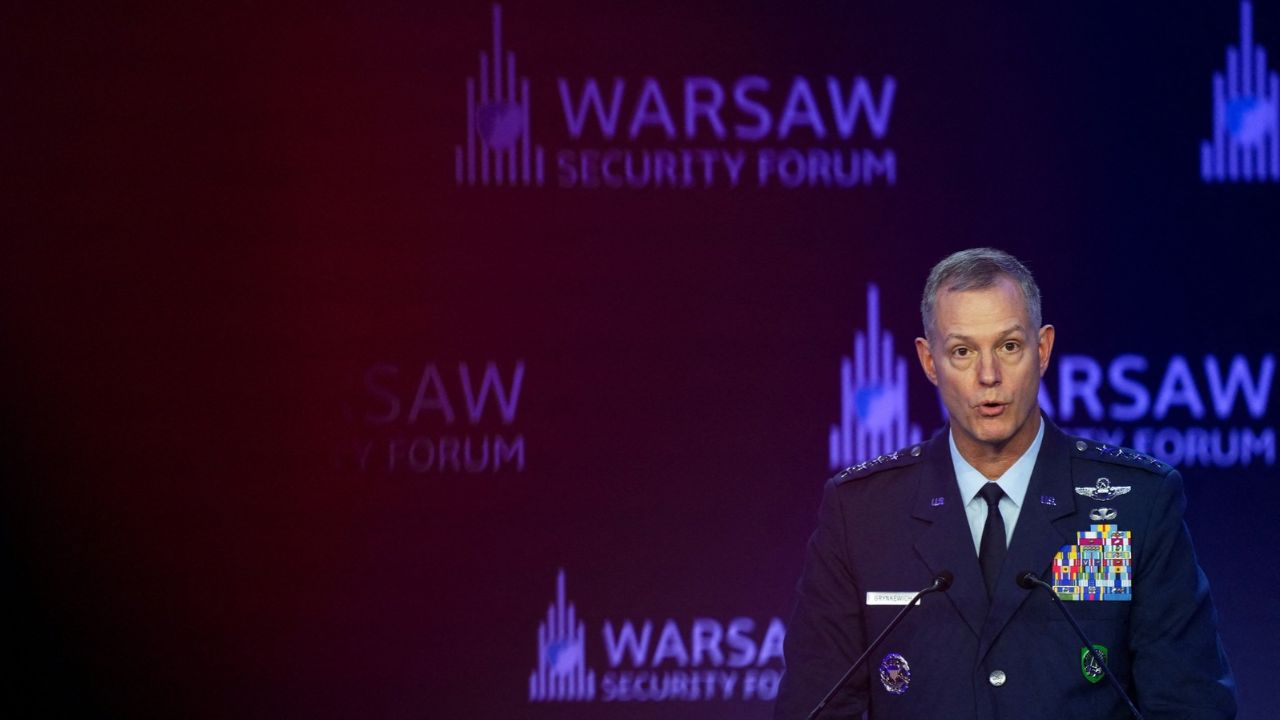
NATO Supreme Allied Commander Europe (SACEUR) Alexus Grynkewich has unveiled a new defence strategy aimed at rendering any attack against an alliance member entirely futile.
Speaking at the Warsaw Security Forum, Grynkewich said the concept, titled the “Theory of War”, is designed to prevent hostile elements from infiltrating NATO territory and waging conflict there.
Arguing that they aim to reassure the one billion people living within the alliance’s borders, Grynkewich maintained that they also wish to send a message to adversaries such as Russia that NATO is prepared for a potential invasion.
“If we are attacked, we are ready to fight even tonight,” Grynkewich said.
Three-stage defence plan enters into force
Approved by all 32 alliance members, the plan combines land forces and conventional weapons systems with advanced technologies such as unmanned aerial vehicles, counter-drone systems, and artificial intelligence.
Lessons drawn from ground and air combat in Ukraine, as well as current conflicts in the Middle East, play a decisive role in shaping the strategy.
According to Grynkewich, the new defence doctrine rests on three fundamental phases that form the core of NATO’s approach:
The first pillar of the plan, the “block” phase, focuses on preventing hostile forces from seizing allied territory.
In this context, NATO ground components will engage directly with attacking units, restrict their manoeuvrability, and neutralise forces attempting to breach alliance borders.
Should the assault continue, the second phase (“blunt”) will come into play, deploying autonomous systems requiring minimal human intervention alongside advanced sensor networks to slow the momentum of the attack and wear down advancing forces.
These systems will detect threats in real time, combining capabilities across different operational domains to halt the adversary’s advance.
The final stage, the “break” phase, will target not the attacking units directly, but the operational warfighting system that sustains them.
Command centres, supply chains, and logistics routes will be struck using long-range precision strike systems and sensor networks, eliminating the adversary’s ability to sustain military operations.
“Enemy commanders will not be able to direct their troops, their supply lines will be severed, and their logistics vehicles will be destroyed,” Grynkewich said.
Strategy aims to defend borders rather than gain territory
Noting that NATO has no intention of acquiring territory and that the strategy is entirely defence-oriented, Grynkewich said, “We have no plan, intention, or ambition beyond protecting our citizens and our territory.”
Stating that he considers the likelihood of a direct attack on alliance territory to be low, the commander nevertheless stated that they would respond without hesitation to any attempt targeting allies.
Addressing questions regarding US commitment to the alliance, Grynkewich recalled that Washington reaffirmed its adherence to Article 5 at the NATO summit in July.
Article 5, which forms the cornerstone of NATO’s collective defence principle, stipulates that an armed attack against one ally is considered an attack against all members.
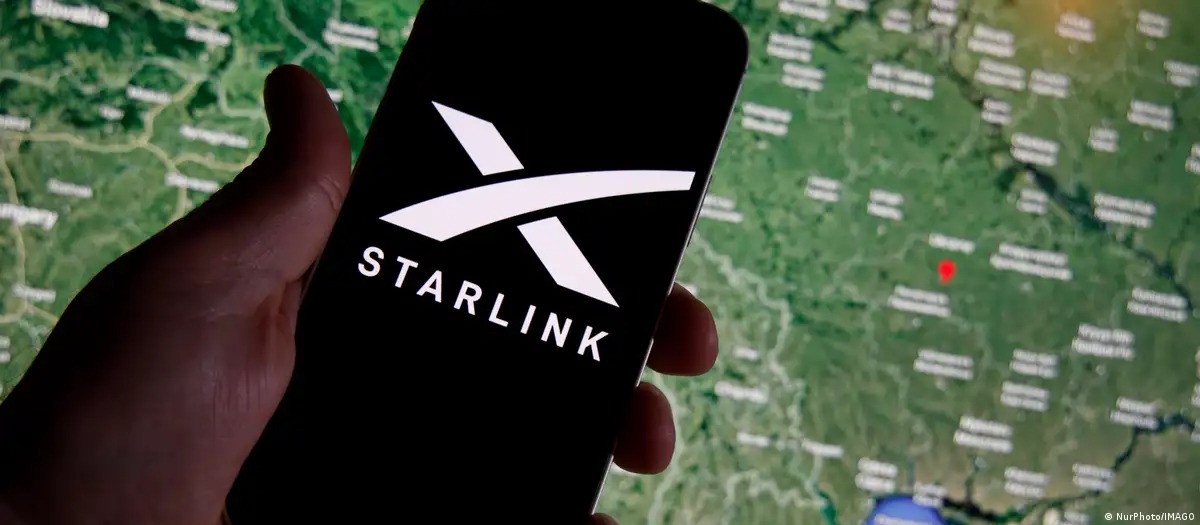
Polish authorities have announced that German police detained two Turkish citizens suspected of setting fire to a Starlink station near Warsaw last month.
Tomasz Siemoniak, Poland’s minister coordinating the special services, told a news conference in Warsaw on Monday that Poland has requested the suspects’ extradition and has “no doubt” that Russian secret services were behind the arson attack.
“It should also be noted that Russian intelligence agencies are increasingly turning to people linked to the criminal underworld,” Siemoniak said at the press conference.
In a post on X, Prime Minister Donald Tusk described the incident as another “act of hybrid warfare” and said those responsible for the sabotage would be brought to justice in Poland.
Interior Minister Marcin Kierwinski said the two Turkish citizens would be charged in Poland with carrying out an act of sabotage on the orders of a foreign intelligence agency.
Power supply equipment at a Starlink ground station serving Eastern Europe, including Poland and Ukraine, caught fire on the night of 23 September.
The incident did not cause a major disruption to internet service. The blaze, however, completely destroyed the station’s electrical system and backup generator.
Poland, a key transit route for Western aid to Ukraine, has faced a series of suspicious incidents recently.
Numerous cyberattacks have targeted public utilities, including water and energy infrastructure as well as hospitals.
In addition, damage to a railway line between Warsaw and the Ukrainian border was attributed by officials to Russian sabotage.
In late July, a Russian missile also landed in Poland.

Ex-BND head Hanning tied to former Mossad chief amid spy inquiry

Iran war costs US economy $265 billion as household burden mounts

Trump dismisses US envoy to Greece Kimberly Guilfoyle

Most EU citizens reject fast-track Ukraine accession, poll finds

Ex-US official says air defences fail against Yemeni airport strike
-

 Europe2 weeks ago
German interior ministers drop unanimity rule to counter AfD veto
-
 Europe2 weeks ago
Key European allies excluded from US-led NATO meeting in Poland
-
 Diplomacy2 weeks ago
While the West breeds crises, Eurasia weaves peace and development, says Prof. Zhang Weiwei
-

 Middle East2 weeks ago
Netanyahu holds secret UAE talks with Saudi Arabia and Arab officials
-

 Diplomacy2 weeks ago
The European Union’s peace project has collapsed, MEP von der Schulenburg says
-

 Opinion2 weeks ago
A new world in the East, old dogmas in the West
-
 America2 weeks ago
Musk appointed co-director of Pentagon future warfare initiative
-
 Asia2 weeks ago
South Korea plans $120B spend on eight US nuclear power plants
