
Europe
Bundesbank signals potential relaxation of Germany’s debt rules


Germany’s typically “hawkish” central bank governor, Joachim Nagel, has shifted from discussing technical adjustments to proposing more significant reforms to the country’s constitutional budget deficit rule.
Germany’s stringent constitutional rule on new borrowing, known as the “debt brake,” has been a focal point of political debate in recent years. The rule restricts the federal government’s structural deficits to 0.35% of GDP, while regional governments (states) are entirely barred from running structural deficits.
Disagreements over the debt brake contributed to the collapse of the previous three-party government coalition in November. However, it now appears that a major overhaul is possible.
“We have to work on the overall concept of the debt brake,” Bundesbank President Nagel stated during a side event at the annual meeting of the World Economic Forum (WEF) in Davos, as reported by the German daily FAZ.
Traditionally, the Bundesbank has been known for its “hawkish” stance on both monetary and fiscal policy, emphasizing price stability. However, the bank has recently shifted its position, proposing a “stability-oriented reform” that would permit increased public investment if the overall public debt level falls below the EU’s target of 60% of GDP.
In Davos, Nagel emphasized that the reform should extend beyond “small changes.”
German political parties, however, hold differing views on such a debt rule change. The left-leaning factions advocate for a major reform to enable greater public investment. In contrast, the Christian Democrats (CDU/CSU) support maintaining the status quo in their election manifesto. Nevertheless, party leader and likely next Chancellor Friedrich Merz has recently expressed openness to reform, albeit with strict conditions on how additional debt should be allocated.
Meanwhile, Chancellor Olaf Scholz suggested that a “moderate” reform of the debt brake could allow for additional investments of 5 to 10 billion euros annually. However, he cautioned that this would still fall short of addressing Berlin’s broader spending needs.
According to Eurostat data, Germany’s public debt currently stands at 62% of GDP, 20 percentage points below the EU average and significantly lower than other G7 economies, all of which have public debt exceeding 100% of GDP.











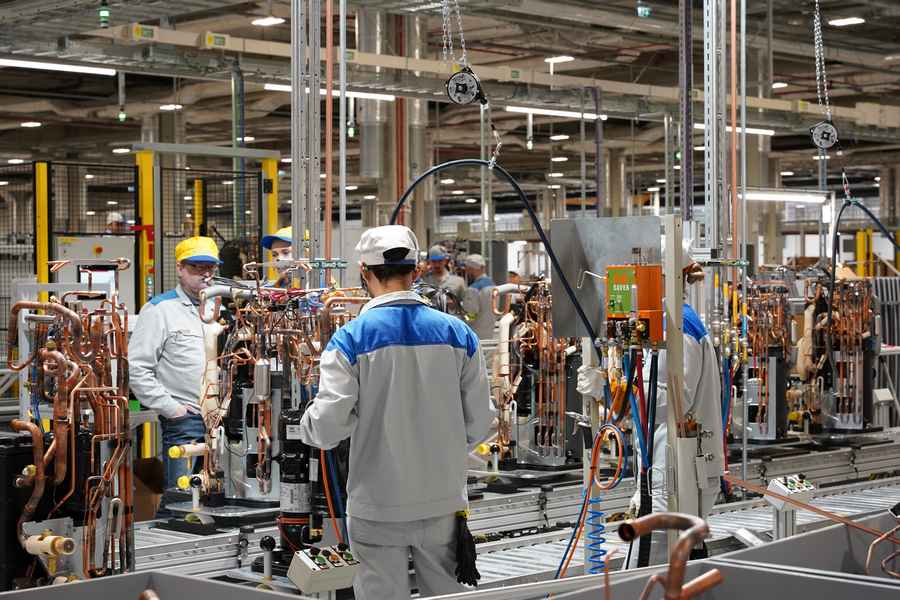
Rising Chinese industrial exports and Beijing’s growing control over supply chains are putting pressure on Poland’s manufacturing sector, particularly household appliances and automotive production.
As Chinese-made industrial goods flood the European market and European manufacturers lose ground in China, Polish industrialists warn they may struggle to cope with the competition.
Wojciech Konecki, president of the Polish Association of Home Appliance Employers (APPLiA Polska) and vice-president of the National Chamber of Commerce, told Business Insider Polska: “The Polish household appliance industry has fallen into a very difficult situation. Five factories have already closed in Poland in a relatively short period. The main reasons are falling consumption and competition from China. Chinese appliances are no longer always much cheaper, but in many segments their quality has reached an acceptable level for European consumers. As a sector, we have rapidly run into major difficulties.”
Konecki added: “China is taking over entire supply chains. A factory closure does not only mean job losses at that facility. Behind the household appliance industry stand thousands of subcontractors, mostly small family businesses, as well as logistics firms, research and development centres, and local services.”
Similar pressure is visible in other sectors, such as Poland’s automotive supply industry.
China expands industrial export share in Europe
In 2025, industrial goods accounted for 97% of China’s exports to the European Union (EU).
Last year, EU imports of goods from China rose 6.4% year-on-year to €559.4 billion, while EU companies’ exports to China fell 6.5% to €199.6 billion, widening the bloc’s trade deficit to €359.8 billion.
Compared with 2015, imports from China increased by 89%, whereas export growth was more limited at 37.1%.
Machinery and vehicles made up 54.4% of shipments, other industrial goods accounted for 33%, and chemicals represented about 10%, as Europe now imports products from more advanced links in the value chain rather than textiles and toys.
According to Eurostat data, Europe’s imports from China rose 7.9% in the second quarter of 2026 compared with the same period a year earlier.
Data from the Polish Development Fund (PFR) show that China overtook Germany for the first time this year to become Poland’s largest supplier of goods.
PFR calculations show that imports from China reached €6.15 billion in July 2026, while imports from Germany stood at €6.06 billion. A year earlier, Poland imported €4.78 billion worth of goods from China and €6.17 billion from Germany.
The European Central Bank (ECB) notes that China’s share of the European market is growing rapidly, particularly in electronics, automotive, and other advanced industrial sectors, and that its delivery structure is shifting from final products to intermediate goods and components.
“Rebuilding industry is much harder than sustaining it,” Konecki said. “Once factories, competencies, suppliers, and research and development infrastructure disappear, it is not possible to recreate them with a single political decision.”
Automotive and supply sectors face order losses
Unlike the first wave following China’s accession to the World Trade Organization in 2001, this process, which companies in Germany call “China shock 2.0”, affects medium- and high-technology sectors and is also hitting plants in Poland.
In the first five months of 2026, Germany’s imports from China rose 6.2% to €72.4 billion, while its exports fell 14.5% to €29.6 billion.
Bartosz Mielecki, director general of the Polish Automotive Group (PGM), said: “Chinese brands are taking up more and more space in the European market, and the Polish sector is feeling it. The crisis among European carmakers means reduced order volumes directed to factories operating in our country, which indirectly hits Polish suppliers.”
According to data from the Automotivesuppliers.pl platform, exports of parts and accessories in the automotive sector, which accounts for about 8% of Poland’s gross domestic product, fell to €9.42 billion in the first half of 2026 from €9.45 billion in the same period a year earlier.
Noting that authorised dealer and service networks are also expanding as vehicle sales rise, Mielecki said: “The next step for Chinese manufacturers could be moving parts and components production to Europe. We are not observing this on a large scale at the moment, but the situation is developing very dynamically. This is a scenario the Polish automotive industry must be prepared for.”
Mielecki noted that factories in Poland are more diversified and resilient than commonly thought, but added that if car production across the continent continues to fall, plants and suppliers in Poland will be affected more strongly.
Industry representatives demand protective measures
According to an analysis by the Centre for Economic Policy Research (CEPR), China’s global surplus in goods trade hit a record $1.2 trillion in 2025.
Behind this expansion lie subsidies and technological progress, alongside weak domestic demand pushing Chinese companies to seek buyers abroad, industrial deflation, and an exchange rate that boosts exporters’ price competitiveness.
Stressing that tariffs on electric cars alone may not be enough in the automotive sector, Mielecki said: “There is increasing talk of ‘local content’ rules that would reward cars with a higher share of components produced in Europe. Such a solution would support not only vehicle sales, but also European factories and the entire supply chain.”
Konecki, meanwhile, argued that the Carbon Border Adjustment Mechanism (CBAM) proposed for the household appliance sector falls short of expectations.
“Europe adopts protective measures with great delay and often does so selectively,” Konecki said. “The CBAM mechanism is set to cover some final appliances, but the relevant regulations will only enter into force in 2028. For some companies, waiting three years could mean there is nothing left to protect. Moreover, while the regulations cover washing machines, refrigerators, and dryers, dishwashers, ovens, hobs, and extractor hoods have been excluded. As a result, a bureaucratic decision could determine which factory survives and which closes.”
Noting that some Western companies, as seen in the cases of Philips and IBM, have withdrawn from the consumer market to focus on higher-margin corporate or medical devices, Konecki added that it is difficult to point to an easy way out of the current situation in the household appliance industry.
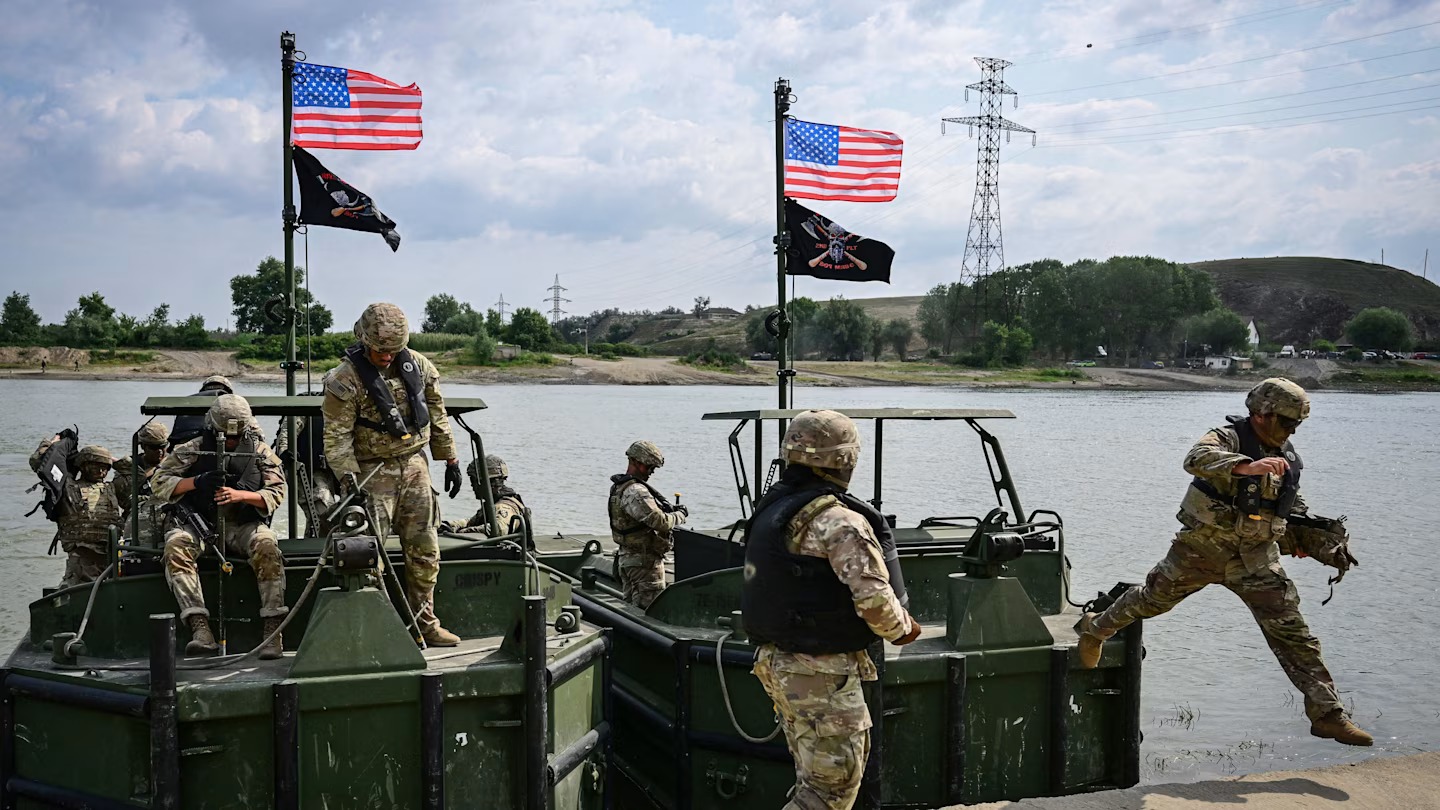
Romanian President Nicușor Dan has offered to pay the US to keep its troops stationed in the country.
The Romanian leader’s proposal comes as security concerns grow in the Black Sea region and the Trump administration moves to reduce the number of US troops in Europe.
Speaking to the Financial Times (FT), Dan said he had proposed “some figures on troops and cost-sharing…”, echoing an earlier offer made by Poland.
In September, Warsaw offered to pay Washington $15,000 a year for each US soldier stationed at a planned military base dubbed “Fort Trump”.
“We want more American troops and more lethal capabilities,” the Romanian leader said.
Dan’s office said the number of US troops in Romania has fallen from a previous contingent of 1,700 to 1,172 currently, implying that Bucharest is considering a figure similar to Poland’s offer.
Dan’s remarks came just days after he presented his proposal to US Under Secretary of Defense Elbridge Colby, who visited Poland and Romania, the two most populous countries on NATO’s eastern flank, to assess regional security challenges.
Colby has previously advocated a “more limited and focused” US military presence in Europe. The Defense Department under Pete Hegseth has also repeatedly said it wants to significantly reduce its presence on the continent.
According to Romanian media, Colby did not give a definitive answer on whether the US would maintain its current troop presence in Romania.
Instead, according to G4media.ro, he will present several possible scenarios to Hegseth, who will forward the options to President Donald Trump for a final decision. Colby said Trump is expected to decide in early December.
The US currently has about 10,000 troops in Poland spread across a dozen bases. Warsaw is pushing for the construction of a permanent base named after Donald Trump.
Polish Defence Minister Władysław Kosiniak-Kamysz, who met Hegseth on Tuesday, said the US official told him “everything is moving in the right direction”, which he interpreted as the Pentagon giving “the green light for establishing a permanent US military base in Poland”.
Dan said his country has a foreign policy “very, very similar” to that of Poland, which takes a tough stance against Russia.
“We understand the threat posed by Russia and how the war in Ukraine [threatens] our security,” the Romanian president said.
The war in neighbouring Ukraine has also affected the Black Sea country, with Russian drones repeatedly crashing on its territory and commercial ships being hit off its coast.
Dan continued: “The Russians… are trying to change the mindset of European countries supporting Ukraine. As with the drones entering our territory, we have received [help] and are now much better protected. We plan to do the same in the Black Sea, to strengthen our equipment and be more prepared, but we will not escalate the situation.”
Dan noted that Romania is gradually increasing its defence budget. However, a huge public deficit prevents Bucharest from catching up with Poland’s military spending, which is already close to 5% of GDP.
This is a Trump target that NATO allies agreed to meet by 2035.
Dan said the US air base at Mihail Kogălniceanu near the Black Sea coast and the port of Constanța are of major strategic importance to the US.
The Romanian president noted that this year, when other EU capitals did not allow the US to use their facilities, Bucharest permitted US forces to use the air base during Trump’s war against Iran.
Former Romanian naval commander and military expert Sandu-Valentin Mateiu stressed that the current US military personnel stationed in the country are primarily there to “ensure the functionality” of American bases.
Besides the air base, the US has also deployed personnel and ballistic missile defence systems at a second base in Deveselu, in southern Romania near the Bulgarian border.
Mateiu said it is not yet clear whether the US is willing to send combat units to Romania.
Dan said relations with the Trump administration improved immediately after the 2024 Romanian presidential election, which was annulled over allegations of Russian interference.
In 2025, US Vice President JD Vance cited Romania as an example of Europe’s alleged crackdown on right-wing politicians and described the evidence of Russian interference as “weak”.
However, Dan, who was elected president in last year’s rerun election, downplayed the initial tensions: “In the US, there was a new administration that did not have all the information regarding our bilateral cooperation. Soon after, I think they understood the situation.”
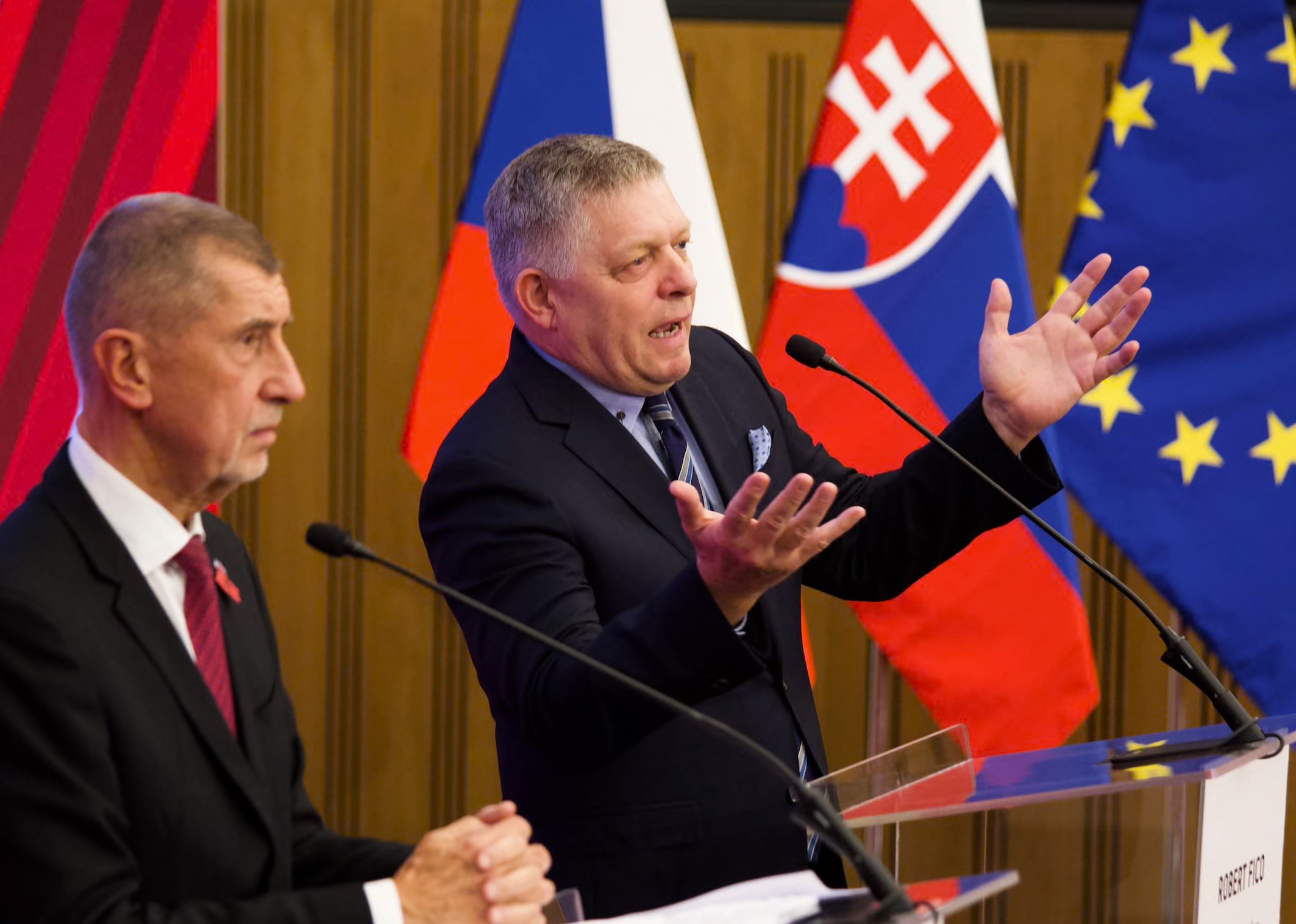
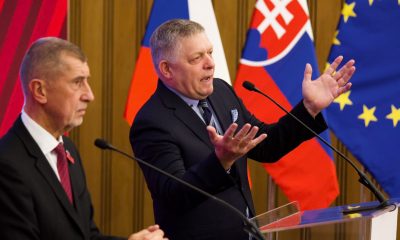
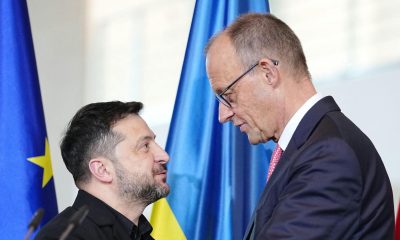
Slovak Prime Minister Robert Fico has hit back after German Chancellor Friedrich Merz threatened to veto the EU budget unless funding for Ukraine is secured.
Merz said he would block the EU’s seven-year budget if no agreement is reached on financial assistance for Ukraine.
The chancellor’s intervention has angered Central European leaders who are net beneficiaries of EU funds but do not want to take part in the next round of funding to support Ukraine’s war effort.
“What the chancellor is doing is typical blackmail, and I will not bow to it,” Fico told reporters in Bratislava.
Fico spoke alongside his Czech counterpart, Andrej Babiš, whose government has refused to participate in a future loan to Ukraine.
“I do not know why he said this,” Babiš said, referring to Merz’s stance.
Merz wants EU leaders to discuss Ukraine’s financing needs at a summit in Dublin on Friday.
In a letter to European Council President António Costa, who will chair the meeting, obtained by The Guardian, Merz wrote:
“We must maintain our support for Ukraine in its struggle to defend itself. This is our shared vital interest. Yet bilateral aid provided to Ukraine is distributed unevenly, with the burden shouldered mostly by only a few member states.”
The EU agreed last year to provide a €90 billion loan to Ukraine, intended to cover two-thirds of its military and civilian spending for 2026 and 2027.
Since then, however, Russia’s relentless bombardment has placed a heavier financial burden on Kyiv, prompting President Volodymyr Zelenskyy to ask for €70 billion to plug the budget deficit.
The EU has endorsed Zelenskyy’s figures and pledged to find €45 billion. Ukraine’s other allies, such as Britain and Canada, are expected to cover the rest.
Last year, Merz launched an initiative to tap €210 billion in frozen Russian state assets held in the EU, but the plan fell through due to opposition led by Belgium, which holds most of the funds in Brussels.
The €90 billion loan was the backup plan. Having opted out of that loan, Hungary, Slovakia, and Czechia indicated that they would not take part in the next round either.
Bulgaria joined these three member states following the election of Prime Minister Rumen Radev last April.
The question of funding for Ukraine is now spilling over into the fraught negotiations on the 2028-34 EU budget.
Germany, the largest net contributor, wants substantial cuts to the proposed budget and opposes the EU providing generous funding to member states that refuse to contribute to Ukraine’s financial needs.
Merz states in his letter that a “collective commitment without exceptions” is a “fundamental prerequisite” for closing Ukraine’s financing gap and for “discussing other matters, particularly those with financial implications.”
He also notes that, in the context of the EU’s next seven-year budget, known as the Multiannual Financial Framework, all member states must contribute to a “robust” financial perspective for Ukraine from 2028 onwards.
A German government official said:
“For the Multiannual Financial Framework (MFF) to be successfully concluded, it is vital that all EU member states provide financial support to Ukraine.”
Berlin is also aiming to shift decision-making on funding for Ukraine from unanimity to qualified majority voting, in an effort to prevent a single government from blocking EU decisions.
The letter reflects mounting frustration among the EU’s northern member states, Ukraine’s most generous backers, over lower contributions from other EU countries in Central and Southern Europe.
The task of brokering an agreement on the budget falls to Costa, the former Portuguese prime minister.
Costa wants a deal by the end of the year, ahead of elections in France, Poland, and Italy in 2027 that could complicate the process.
A spokesperson for Costa confirmed receipt of the letter without elaborating on details. “President Costa will dedicate time to the Ukraine issue at the informal European Council meeting in Dublin this week,” the spokesperson said, adding that funding for Ukraine would be addressed at a dedicated summit on the EU budget scheduled for 26-27 November.

Polish manufacturers seek EU protection against Chinese competition

Trump removes Vance from Iran policy, shifts focus to domestic politics

White House weighs Lutnick dismissal after Nvidia scandal

Romania offers to pay US to keep troops stationed in the country

Democrats prepare corruption probes into Trump’s $2bn income
-

 Diplomacy2 weeks ago
Secular dress code dispute exposes deeper Türkiye-Azerbaijan strains
-
 Europe7 days ago
EU urges citizens to prepare 72-hour survival kits for crises
-
 Asia2 weeks ago
China expands Africa arms sales, displacing France and Western rivals
-

 Diplomacy1 week ago
Protesters storm Kyiv site holding soldiers over torture allegations
-
 Russia2 weeks ago
Putin proposes Arctic energy cooperation to US to ease gas sanctions
-
 Europe1 week ago
Pro-Ukraine Republicans in US Congress dwindle after departures
-
 Europe1 week ago
Low EU gas stocks risk stoking global prices, IEA report warns
-
 Europe2 weeks ago
Vučić scrapped plan to hold power after phone warnings, report says
