
Diplomacy
Steinmeier seeks to de-escalate German-Chinese tensions on visit

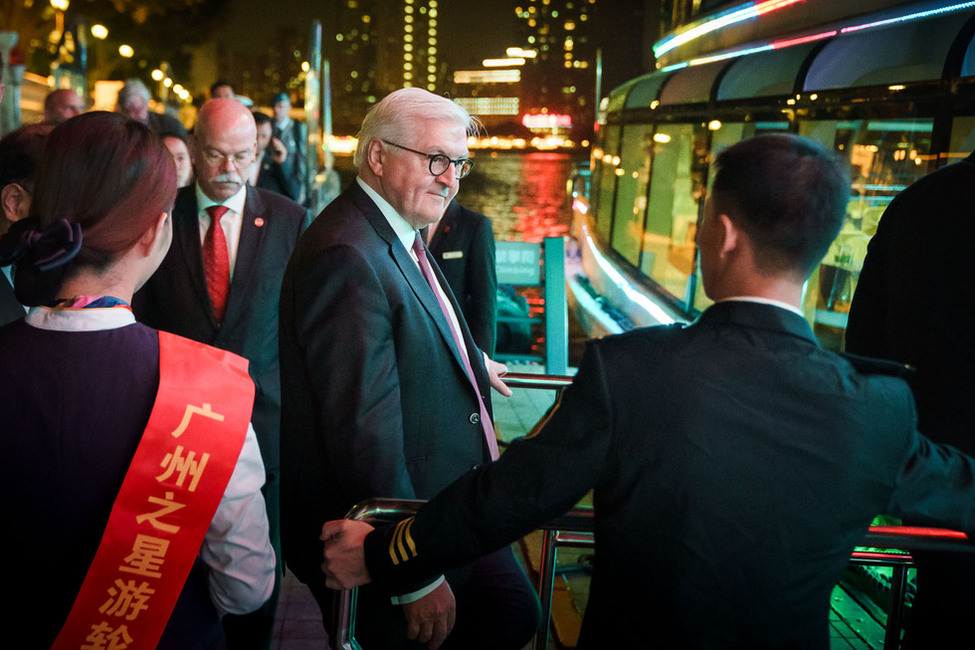
German President Frank-Walter Steinmeier is seeking to prevent further escalation in tensions during his latest official visit to China.
China remains exceptionally important for key sectors of the German economy. The Asian giant is the second most critical foreign location for German companies.
As reported by German Foreign Policy, investments by these companies in China total over 110 billion euros. By comparison, German investment volumes are higher only in the US and Luxembourg, with investments in Luxembourg largely driven by tax advantages.
German companies also continue to invest in China. In the first half of 2026, they carried out investments of around 5.6 billion euros, surpassing even the 4.3 billion euros invested in the US.
In addition, automotive groups, among others, are increasingly conducting research and development activities in the People’s Republic of China.
According to a recent assessment by an expert from the Cologne Institute for Economic Research (IW), some companies are using this fast-developing country as a “fitness centre”.
At the same time, however, China’s importance as a sales market is declining sharply: German exports to China fell from 107 billion euros in 2022 to just 81 billion euros in 2025.
Above all, China’s exports to Europe and particularly to Germany are surging, threatening to erode the market share of the flagship sectors of German industry on their domestic market, especially automotive, mechanical engineering, and the chemical industry.
EU prepares moves against China
The EU is responding with defensive measures, but this remains a sensitive issue.
Should China retaliate, it could cause severe damage, particularly to German industry, given its substantial presence in the country.
In October 2024, Brussels imposed high tariffs on electric car imports. As Chinese manufacturers subsequently began exporting hybrid models to Europe on a large scale, debate quickly emerged over introducing high tariffs on these vehicles as well.
Meanwhile, measures targeting machinery and chemical imports are also being prepared, as European Commission President Ursula von der Leyen announced at the latest EU summit held in Brussels in mid-October.
The EU is additionally working on a package known as the “second-strike instrument”. German Chancellor Friedrich Merz and French President Emmanuel Macron recently called for the deployment of this mechanism in a joint letter to the Commission.
The objective of this tool is to enable robust measures in situations of intense economic power struggles, including the partial or even total exclusion of third-country companies from the EU single market within just a few days.
Under the proposal, the European Commission would be able to decide on such measures on its own initiative. In that scenario, member states insisting on the adoption of the measures would reportedly be less easily identifiable, allowing them to hope to avoid Chinese retaliation.
Hybrid vehicle compromise
According to German Foreign Policy, doubts about whether the EU could survive an open economic war against China rest on solid ground.
In mid-June, the Financial Times reported that experts from think tanks and academia had simulated escalating economic clashes between the two sides in a tabletop exercise.
In that simulation, Brussels failed to bring Beijing to its knees; on the contrary, it would probably have lost an open economic war.
Against this backdrop, the EU agreed to settle the dispute over Chinese hybrid car imports through negotiations.
A few days before the mid-October EU summit, EU Trade Commissioner Maroš Šefčovič managed to outline such a resolution during talks in Beijing with Commerce Minister Wang Wentao.
Under the agreement, the volume of hybrid cars exported from China to the EU, which stood at around 302,000 units in 2025, will be capped from December at an annual 350,000 units; more precisely, 350,000 units plus 6% per year.
This arrangement is envisaged to remain in effect for four years, granting EU carmakers some breathing space to catch up with their Chinese rivals.
Similar arrangements are being discussed in mechanical engineering and the chemical industry, as well as potentially in pharmaceuticals.
China counter-moves: Export controls
While the EU pursues this track and prepares its economic “second-strike instrument”, the People’s Republic of China is taking steps to secure leverage in current economic power struggles.
These measures are directed primarily at a potential escalation of the economic war with the US, which is currently more or less frozen, but in a worst-case scenario they could also be deployed against the EU.
Specifically, Beijing is preparing new export controls that go beyond the restrictions on rare earth elements with which China succeeded in blunting an unprecedented US tariff and sanctions offensive.
As reported early last week, the People’s Republic of China plans to subject exports of roughly 40 technologies, spanning artificial intelligence (AI), biotechnology, and photovoltaics, to strict licensing conditions, or even prohibit them outright.
The stated rationale is that the country merely wishes to take steps to “safeguard national security”, in an overt mirror of the primary justification invoked by the US for a wide array of embargo measures.
With critical technologies subject to restricted export or barred entirely, relocating the production of certain goods such as photovoltaic cells away from China to foreign locations will become harder, a shift that could also affect European firms.
Steinmeier visits China: Can he defuse tensions?
Against this background, German President Frank-Walter Steinmeier arrived in China on Monday for his latest official visit.
On the first day of his trip, Steinmeier visited the Volkswagen Group facility in the metropolis of Hefei.
Volkswagen operates a research centre there employing around 3,000 engineers, designed to keep pace with the rapid development of electric mobility in the People’s Republic of China.
Innovations developed in Hefei are transferred at times to facilities in Germany, helping prevent them from falling further behind internationally.
Hefei has transformed into a high-tech hub on the back of heavy investment in emerging sectors such as artificial intelligence, semiconductors, and new energy vehicles.
VW plans to supply Central Asian and particularly South-East Asian markets from its Chinese facilities to preserve competitiveness across these regions.
Marking the Federal President’s trip, the Office of the Federal President stated that the goal was not “decoupling from China”, but rather sustaining “close and resilient economic relations”.
According to reports, Steinmeier coordinated not only with Federal Chancellor Friedrich Merz, who is currently visiting Japan, but also with EU Trade Commissioner Maroš Šefčovič, who is pursuing robust trade policy alignment with the People’s Republic of China in line with German industrial interests.
Steinmeier is eager to support this effort and is accompanied notably by Peter Leibinger, president of the Federation of German Industries (BDI).
The president will then travel to Beijing to hold talks with top leaders, including his Chinese counterpart Xi Jinping and Premier Li Qiang, before concluding his visit.
His office noted that the visit seeks to “address Germany’s multifaceted and complex relations with China and the challenges confronting them”, while his time in Anhui will highlight “China at the turn of the century around 1900 and the significance of this era in the history of German-Chinese relations”.
According to the South China Morning Post, the selection of Anhui underscores Berlin’s emphasis on dialogue despite deteriorating bilateral ties amid rising trade tensions, driven by German concerns that fierce Chinese competition could erode Germany’s manufacturing core.
German leader’s packed China itinerary
Before heading to Beijing, Steinmeier will also visit the historic village of Hongcun and Mount Huangshan, sites that the German presidency noted bring together “nature, architecture, and philosophy”.
In the capital, Steinmeier will tour the Institute of Atmospheric Physics under the Chinese Academy of Sciences to evaluate climate cooperation, followed by an address at Peking University. Xi is subsequently expected to receive him with full military honours.
Visiting leaders’ regional engagements extend well beyond Anhui, with China’s financial capital, Shanghai, remaining one of the most sought-after stops.
In January alone, the city hosted South Korean President Lee Jae Myung and British Prime Minister Keir Starmer, while a visit in August by King Abdullah II of Jordan further cemented Shanghai’s standing as a gateway to Chinese technology and consumer markets.
Just south of Shanghai, Hangzhou has emerged as a similarly vital diplomatic destination. Once renowned primarily for the classical scenery of West Lake, the capital of Zhejiang province has evolved into an innovation hub drawing foreign heads of state with itineraries centred on robotics, e-commerce, and advanced manufacturing.





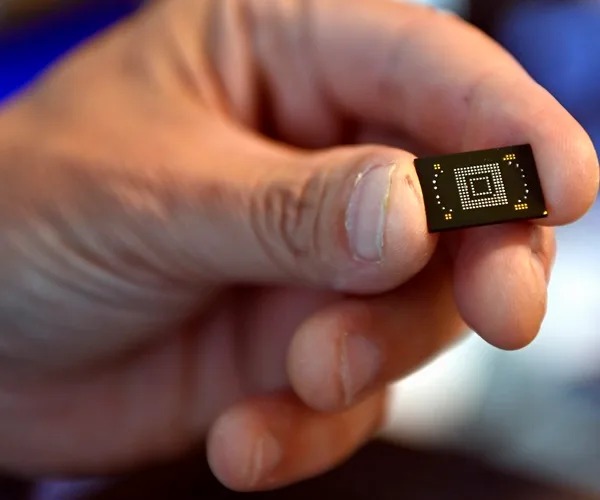
The US and several countries, including Japan, Australia, Israel and the United Kingdom, have agreed to establish a joint list of critical technologies and supply chains supporting artificial intelligence.
US Under Secretary of State for Economic Affairs Jacob Helberg told the Financial Times (FT) that South Korea, India, Qatar and the United Arab Emirates have also signed the “San Francisco Declaration on the Secure Foundations of Lasting Prosperity”.
Germany, Sweden, the Netherlands and the European Commission are also expected to sign the declaration next week.
The declaration forms part of the US-led “Pax Silica” initiative, which aims to strengthen AI-related supply chains, including semiconductors, critical minerals and energy infrastructure, as Washington and its partners seek to reduce vulnerabilities and deepen cooperation amid growing competition with Beijing.
Helberg said the agreement recognizes that the technologies and infrastructure supporting AI development often span multiple countries, making supply chain security a shared responsibility.
The initiative emerged as President Donald Trump prepares to meet Chinese President Xi Jinping at the Asia-Pacific Economic Cooperation summit to be held in Shenzhen, China.
Washington accuses Beijing of failing to fulfil its commitments under a trade truce the leaders reached in late 2025.
Helberg said the agreement would help participating countries identify the sensitive technologies and critical infrastructure needed to develop what Trump calls “superintelligence” and enable information sharing on areas where supply chains need to be diversified.
The declaration states that economic security is fundamental to national security and calls for stronger safeguards against the theft or unauthorized transfer of technologies that could give adversarial actors a military or intelligence advantage.
The agreement also provides for the establishment of working groups to address vulnerabilities in AI supply chains and develop economic hubs to attract investment into related sectors.
The initiative is part of a broader US effort to reduce reliance on China for critical materials, particularly rare earth elements, as Washington seeks to diversify supply sources for itself and its allies.
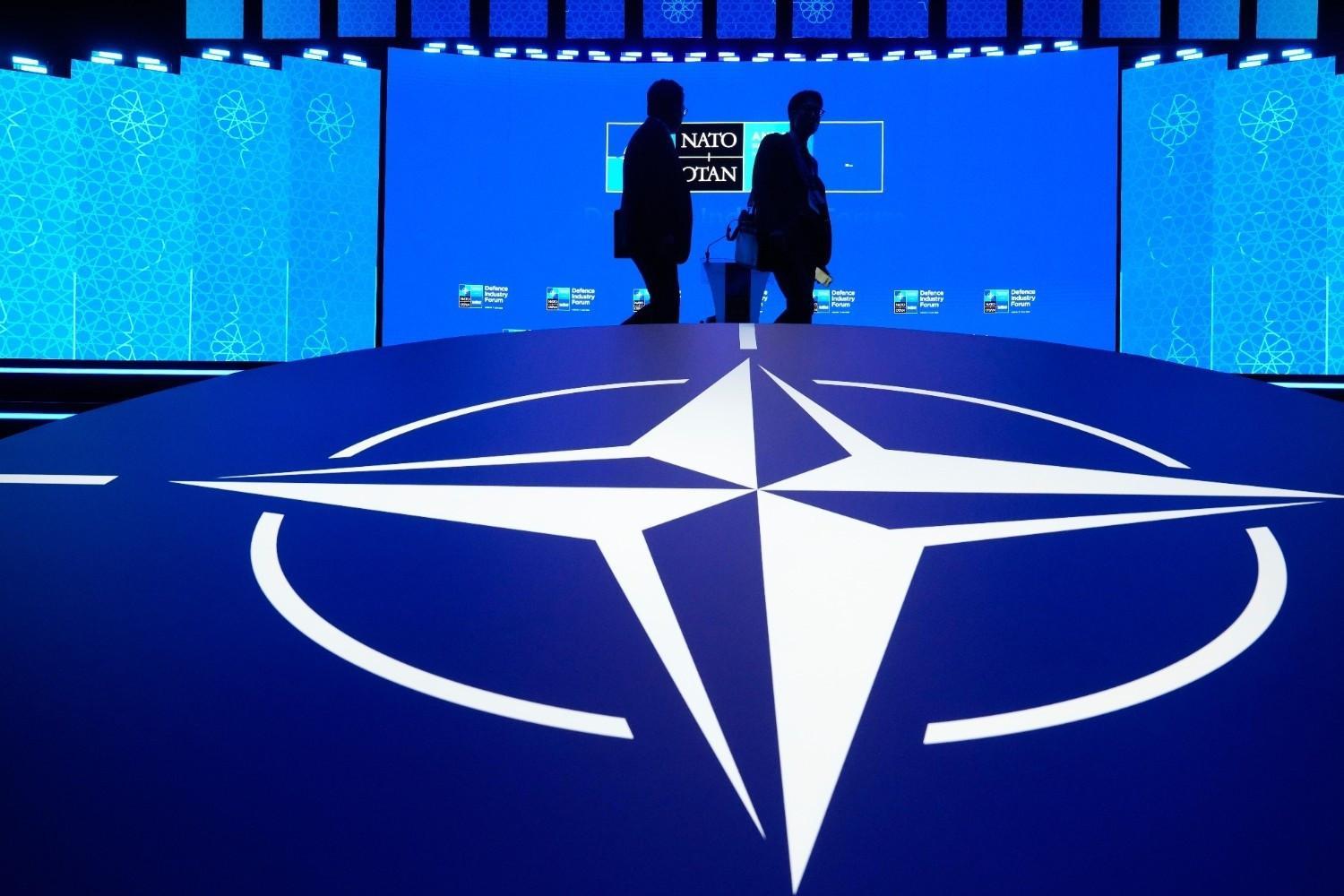
NATO is cancelling its 2027 leaders’ summit planned for Albania due to disagreements over defence spending and the wars in Iran and Ukraine, the Associated Press (AP) reported.
Albanian Prime Minister Edi Rama said alliance countries have not yet agreed on a date for the next summit, but confirmed the meeting will not take place in 2027.
NATO Secretary General Mark Rutte also confirmed that the alliance is not bound to a fixed schedule and that leaders meet “when necessary”.
NATO is also reducing the number of ministerial-level meetings.
No defence ministers’ meeting was held in October this year, and none is planned for October 2027.
Alliance foreign ministers will meet only once next year instead of twice.
NATO explains these changes as “restructuring”.
US policies and Iran war divide the alliance
One reason for the disagreements has been US policies under President Donald Trump.
The US administration is demanding that allies increase defence spending, criticizing them for not sufficiently supporting the war against Iran, and questioning Washington’s previous commitments to European security.
At the summit held in Ankara in July, allies agreed on a 70 billion euro aid package for Ukraine for 2026 and pledged to maintain a similar level in 2027.
However, Italy opposed the second point.
The NATO Secretary General also proposed making military support spending for Kyiv mandatory at 0.25% of gross domestic product, but this initiative failed.
According to The Telegraph’s sources, only seven of the 32 NATO countries backed the proposal, while countries including the UK, France, Spain, Italy, and Canada opposed it.
Divisions grow over Ukraine aid and membership
Furthermore, in November, Bulgaria refused to provide military support to Ukraine and join the European Union’s (EU) new aid package, while Poland suspended financing for purchasing US weapons for the Ukrainian Armed Forces.
Negotiations conducted by Trump’s special envoys with Moscow behind allies’ backs are also causing an additional rift in the alliance.
The US and Europe also hold different views on Ukraine’s prospects of joining NATO.
While the Trump administration and Trump himself oppose this accession, the Ukrainian President stated on 14 November that the Americans had asked him whether he was ready to give up Donbas in exchange for alliance membership.
In contrast to Washington’s shifting line, some European politicians insist on Kyiv’s unconditional integration.
French President Emmanuel Macron said on 15 November: “Ukraine’s place is inside the alliance.”
Some countries, such as Lithuania, Latvia, and Estonia, share the same stance.
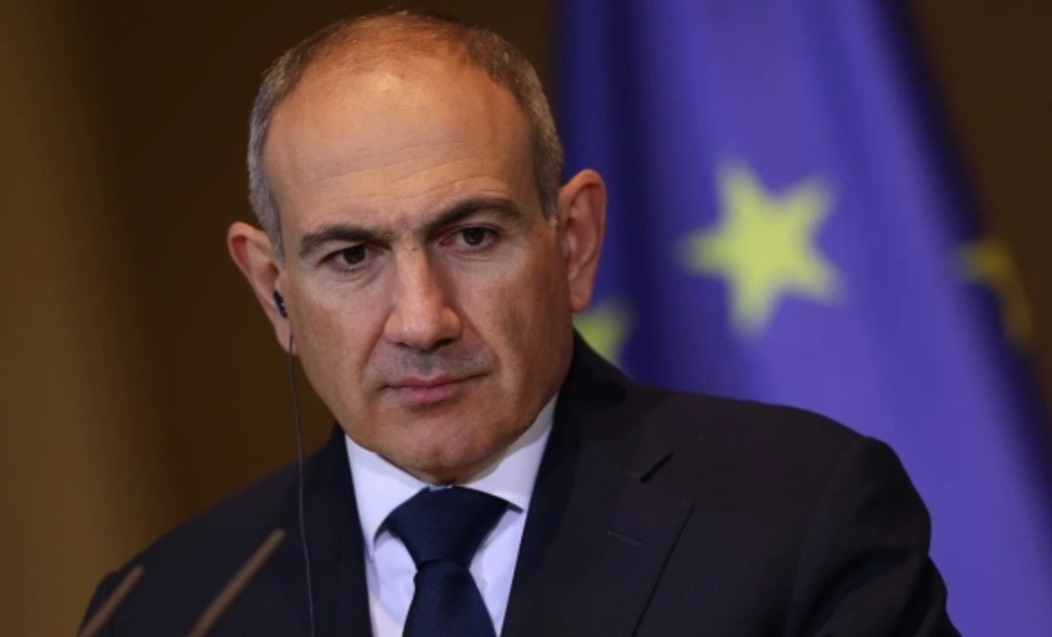
Members of the Collective Security Treaty Organization (CSTO) have stripped Armenia of its voting rights and its ability to appoint representatives to official positions due to a two-year debt to the organization’s budget.
Kremlin Spokesman Dmitry Peskov said, “This decision was taken based on the organization’s charter due to Armenia’s failure to fulfil its obligations for several years.”
Prior to the CSTO leaders’ summit in Moscow, Peskov had stated that member states would “react” to the Caucasus country’s non-participation in the organization’s activities.
Ahead of the Moscow summit, Armenian Prime Minister Nikol Pashinyan said his country’s “interest has run out” regarding the CSTO. Through his press spokesperson, he announced that he would travel to Türkiye on 11 November to attend the United Nations Climate Change Conference (COP31) instead of going to Russia.
The CSTO leaders’ meeting was held with the participation of Russian President Vladimir Putin alongside the leaders of Belarus, Kazakhstan, Kyrgyzstan, and Tajikistan.
The leaders jointly took the decision to revoke Armenia’s voting rights.
At the conclusion of the meeting, the participants also signed a joint declaration.
The declaration stated: “We confirm our unconditional commitment to the goals set out in the CSTO treaty and charter towards creating favourable and stable conditions for the comprehensive development of member states.”
Pashinyan had frozen Yerevan’s de facto participation in the CSTO in February 2024, citing the organization’s failure to aid the Armenian side during the armed clashes in Nagorno-Karabakh in September 2023.
Having referred to the CSTO as a “soap-bubble alliance” since that time, Pashinyan accused the organization’s members of “planning war” together with Baku. He stated that Armenia would not return to active work within the alliance at least “over the next five years”, adding that he would welcome it if the country were expelled from membership.
Relations between Armenia and Russia grew tense once again in the spring of 2026, after Yerevan moved closer to the European Union (EU) and the Kremlin responded with a trade war.
In May, Pashinyan refused to travel to Moscow to attend the Victory Day parade and declared that he did not support Russia on the Ukraine issue.
In response, Putin called on Yerevan to determine its foreign policy course through a referendum, advising Armenian authorities not to forget the fate of Ukraine.

APEC Summit: How China Uses the Art of “Emotional Value” to Deal with Trump

Crimean Bridge traffic suspended after consecutive Ukrainian attacks

EU links UK energy market access to cohesion budget contributions

Jensen Huang exit aids Anthropic and OpenAI as open models suffer

Five EU nations announce plan to deport migrants to Rwanda hub
-
 America1 week ago
US midterms see 97 young winners as Gen Z representation triples
-
 Europe2 weeks ago
EU urges citizens to prepare 72-hour survival kits for crises
-
 Diplomacy2 weeks ago
Protesters storm Kyiv site holding soldiers over torture allegations
-
 Europe2 weeks ago
Pro-Ukraine Republicans in US Congress dwindle after departures
-
 Europe2 weeks ago
Low EU gas stocks risk stoking global prices, IEA report warns
-
 Europe2 weeks ago
Brussels sees little hope of better US ties even if Trump loses
-

 Diplomacy2 weeks ago
Ukraine faces demographic collapse as fertility rates slide
-
 America2 weeks ago
Paraguay President Peña resigns over catastrophic bank collapse
