
Diplomacy
Ukraine plans new business model to end street recruitment drives

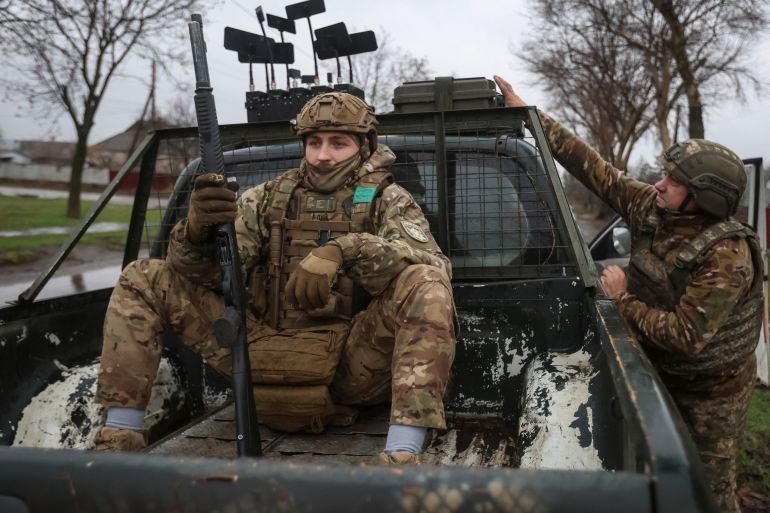
The Ukrainian government is preparing a new mobilization model that fundamentally alters military deferrals, requiring businesses to systematically supply personnel to the armed forces in exchange for shielding other employees from service.
Prime Minister Serhiy Koretskiy announced that under the draft framework, which is scheduled for completion by 1 December, enterprises will pledge to send a designated quota of staff into the ranks of the Armed Forces of Ukraine to secure exemptions for remaining workers.
Speaking at the Kyiv International Economic Forum, as reported by the Interfax-Ukraine news agency, Prime Minister Koretskiy said the objective is to end the practice of drafting men off the streets.
Describing the projected structure as an idealistic social contract, Koretskiy said: “Let us establish a social model where employees are safeguarded, but businesses also commit to providing a predictable flow of mobilization for the military. If we can devise such a formula, the necessity of searching for people on the streets will also be eliminated.”
Koretskiy noted that deferrals will be renewed for over 90% to 95% of staff in critical sectors such as fuel, energy, and the defence industry. He emphasized that the criteria defining an enterprise as critical will be decoupled from economic exemption standards.
The prime minister stated that this regulatory change will curb unjustified deferrals, prevent an economic collapse, and bring certainty to the rotation expectations of soldiers serving on the front lines.
In separate remarks delivered the previous week, Koretskiy noted that the government intends to preserve exemption rights for companies that sustain national defence capacity and vital everyday services, while simultaneously increasing criminal penalties for unauthorized absence from military units and draft evasion.
Immediately following these statements, the official resolution overhauling the mobilization deferral system was published on the Ukrainian government website.
According to details reported by the UNIAN news agency, state institutions and regional administrations will review existing criteria and audit every business previously granted “critical” status within 10 days of the regulation entering into force.
Enterprises that no longer satisfy exemption conditions or whose justifications have lapsed may have the status rescinded prematurely.
A new coordination centre is being established to administer the process. This body will issue advisory decisions regarding the granting or revoking of critical enterprise status, as well as requests to raise exemption quotas.
The bureaucratic procedure limits the initial review to a maximum of 7 working days, after which the coordination centre will have up to one month to assess the file. A final decision must then be rendered within 3 working days of the recommendation reaching the commission.
For select enterprises operating in the energy and defence sectors, the ceiling for staff exemptions has been capped at 95%. However, this entitlement will apply strictly to personnel directly engaged in production processes.
Authority to raise the exemption quota above the 95% threshold will depend entirely on special approval issued by either the Ukrainian Defence Ministry or the Energy Ministry.
The compliance history of company leadership will directly influence the procedure; quota increase requests may be rejected outright if executives have violated military registration requirements two or more times in the preceding 12 months, or if they have received administrative fines on those grounds.
Companies granted quota increases will have 10 working days to conclude the required formalities.
If an enterprise fails to formalize worker deferrals through Diia, Ukraine’s digital public services portal, within this timeframe, the supplemental quota allocation will be revoked entirely. All approved exemption quotas will remain valid for a maximum duration of one year.
Martial law and general mobilization, which were declared in Ukraine on 24 February 2022, have been extended at regular intervals ever since.
On 26 October, the Ukrainian parliament renewed these measures for the 21st time, approving a 90-day extension that runs until 29 January 2027.
Under current legislation, men aged between 25 and 60 who are deemed fit for military service are directly subject to mobilization.
Men under the age of 25 are classified under conscription call-up status and are not dispatched to the front line through general mobilization.
Individuals in this age bracket retain the right to travel abroad between the ages of 18 and 22 via an age-based exception, but they lose this entitlement upon turning 23.
Front-line manpower deficits have long prompted authorities in Kyiv to pursue reforms to the military recruitment framework and to tighten deferral requirements.
The Defence Ministry announced in February that extensive measures were planned, including the automation of deferral procedures and adjustments to the operations of Territorial Recruitment and Social Support Centres (TZK), which function as enlistment offices.
In April, Member of Parliament Roman Kostenko stated that the ministry planned to separate the recruitment duties of draft centres from their social assistance responsibilities, while the possibility of transferring certain mobilization enforcement checks to the police was also raised.
By August, Kostenko reported that the Defence Ministry was examining radical measures, including potential alterations to the mobilization age.
Shortly before that, Minister of Digital Transformation Oksana Ferchuk announced that oversight over exemptions, particularly in the information technology sector, would be significantly restricted.
Meanwhile, the Ukrainian military’s requirement for front-line reinforcements grows on a daily basis.
In an assessment delivered on 31 August, Head of the Office of the President of Ukraine Kyrylo Budanov stressed that the military must enlist at least 30,000 individuals each month to sustain its combat effectiveness.
As forced mobilization for the front lines accelerates, objections to heavy-handed practices by recruitment centre personnel have multiplied.
Official complaints concerning draft office personnel stood at just 18 in 2022, before surging to 514 in 2023 and 3,312 in 2024. The influx of grievances continued unabated, peaking at 6,127 official complaints according to 2025 figures.









The US and several countries, including Japan, Australia, Israel and the United Kingdom, have agreed to establish a joint list of critical technologies and supply chains supporting artificial intelligence.
US Under Secretary of State for Economic Affairs Jacob Helberg told the Financial Times (FT) that South Korea, India, Qatar and the United Arab Emirates have also signed the “San Francisco Declaration on the Secure Foundations of Lasting Prosperity”.
Germany, Sweden, the Netherlands and the European Commission are also expected to sign the declaration next week.
The declaration forms part of the US-led “Pax Silica” initiative, which aims to strengthen AI-related supply chains, including semiconductors, critical minerals and energy infrastructure, as Washington and its partners seek to reduce vulnerabilities and deepen cooperation amid growing competition with Beijing.
Helberg said the agreement recognizes that the technologies and infrastructure supporting AI development often span multiple countries, making supply chain security a shared responsibility.
The initiative emerged as President Donald Trump prepares to meet Chinese President Xi Jinping at the Asia-Pacific Economic Cooperation summit to be held in Shenzhen, China.
Washington accuses Beijing of failing to fulfil its commitments under a trade truce the leaders reached in late 2025.
Helberg said the agreement would help participating countries identify the sensitive technologies and critical infrastructure needed to develop what Trump calls “superintelligence” and enable information sharing on areas where supply chains need to be diversified.
The declaration states that economic security is fundamental to national security and calls for stronger safeguards against the theft or unauthorized transfer of technologies that could give adversarial actors a military or intelligence advantage.
The agreement also provides for the establishment of working groups to address vulnerabilities in AI supply chains and develop economic hubs to attract investment into related sectors.
The initiative is part of a broader US effort to reduce reliance on China for critical materials, particularly rare earth elements, as Washington seeks to diversify supply sources for itself and its allies.
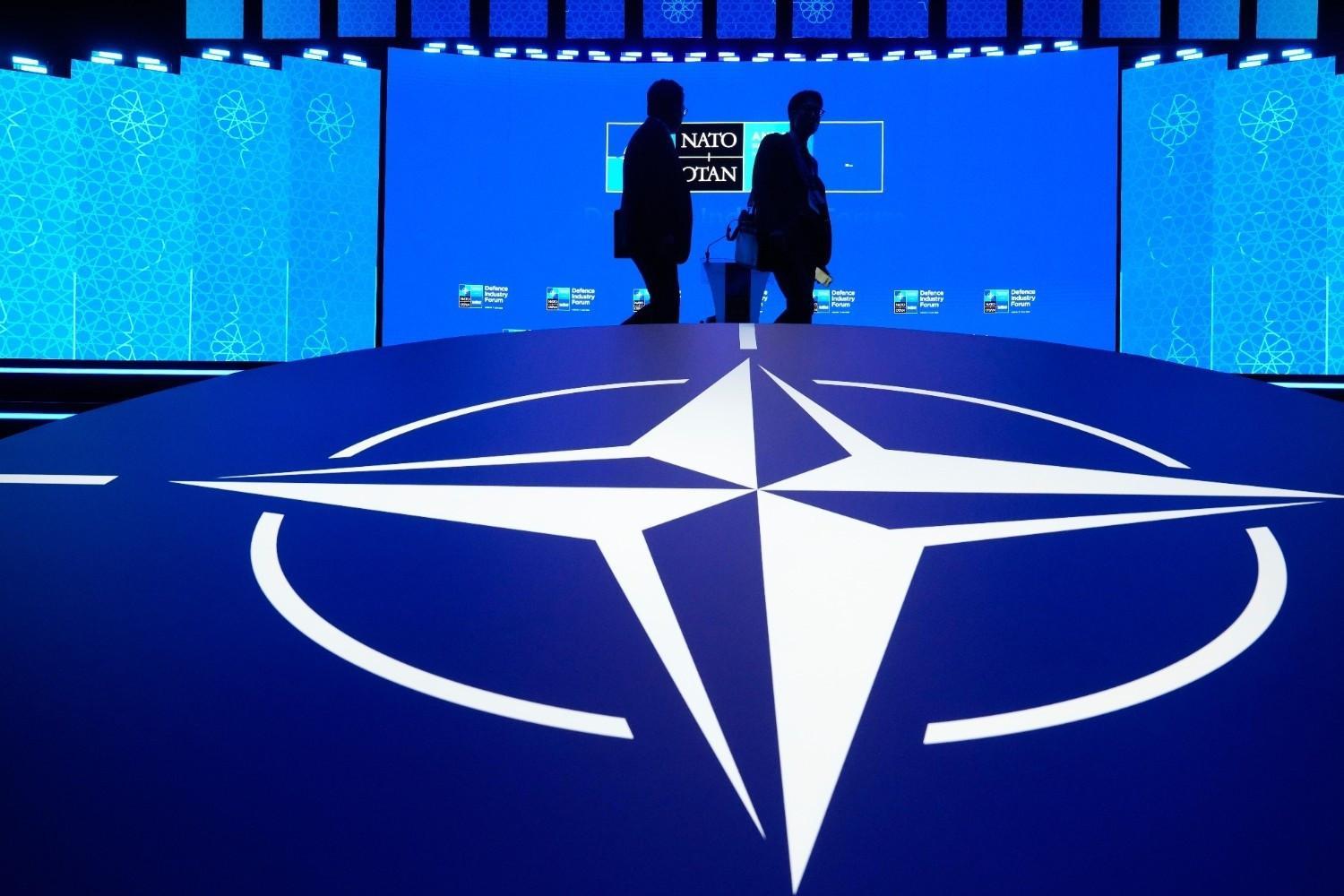
NATO is cancelling its 2027 leaders’ summit planned for Albania due to disagreements over defence spending and the wars in Iran and Ukraine, the Associated Press (AP) reported.
Albanian Prime Minister Edi Rama said alliance countries have not yet agreed on a date for the next summit, but confirmed the meeting will not take place in 2027.
NATO Secretary General Mark Rutte also confirmed that the alliance is not bound to a fixed schedule and that leaders meet “when necessary”.
NATO is also reducing the number of ministerial-level meetings.
No defence ministers’ meeting was held in October this year, and none is planned for October 2027.
Alliance foreign ministers will meet only once next year instead of twice.
NATO explains these changes as “restructuring”.
US policies and Iran war divide the alliance
One reason for the disagreements has been US policies under President Donald Trump.
The US administration is demanding that allies increase defence spending, criticizing them for not sufficiently supporting the war against Iran, and questioning Washington’s previous commitments to European security.
At the summit held in Ankara in July, allies agreed on a 70 billion euro aid package for Ukraine for 2026 and pledged to maintain a similar level in 2027.
However, Italy opposed the second point.
The NATO Secretary General also proposed making military support spending for Kyiv mandatory at 0.25% of gross domestic product, but this initiative failed.
According to The Telegraph’s sources, only seven of the 32 NATO countries backed the proposal, while countries including the UK, France, Spain, Italy, and Canada opposed it.
Divisions grow over Ukraine aid and membership
Furthermore, in November, Bulgaria refused to provide military support to Ukraine and join the European Union’s (EU) new aid package, while Poland suspended financing for purchasing US weapons for the Ukrainian Armed Forces.
Negotiations conducted by Trump’s special envoys with Moscow behind allies’ backs are also causing an additional rift in the alliance.
The US and Europe also hold different views on Ukraine’s prospects of joining NATO.
While the Trump administration and Trump himself oppose this accession, the Ukrainian President stated on 14 November that the Americans had asked him whether he was ready to give up Donbas in exchange for alliance membership.
In contrast to Washington’s shifting line, some European politicians insist on Kyiv’s unconditional integration.
French President Emmanuel Macron said on 15 November: “Ukraine’s place is inside the alliance.”
Some countries, such as Lithuania, Latvia, and Estonia, share the same stance.
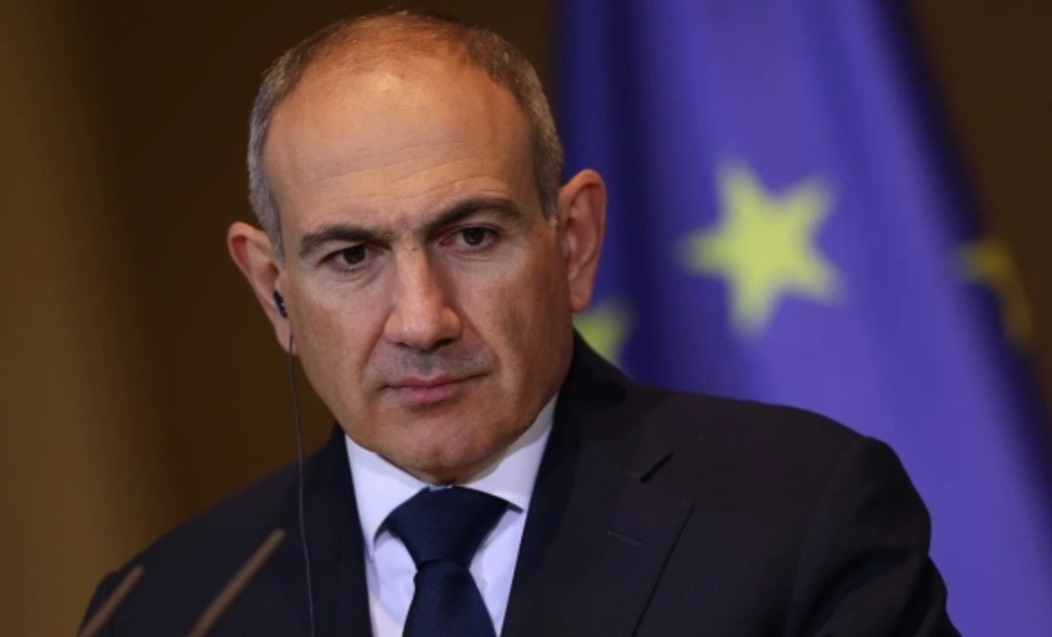
Members of the Collective Security Treaty Organization (CSTO) have stripped Armenia of its voting rights and its ability to appoint representatives to official positions due to a two-year debt to the organization’s budget.
Kremlin Spokesman Dmitry Peskov said, “This decision was taken based on the organization’s charter due to Armenia’s failure to fulfil its obligations for several years.”
Prior to the CSTO leaders’ summit in Moscow, Peskov had stated that member states would “react” to the Caucasus country’s non-participation in the organization’s activities.
Ahead of the Moscow summit, Armenian Prime Minister Nikol Pashinyan said his country’s “interest has run out” regarding the CSTO. Through his press spokesperson, he announced that he would travel to Türkiye on 11 November to attend the United Nations Climate Change Conference (COP31) instead of going to Russia.
The CSTO leaders’ meeting was held with the participation of Russian President Vladimir Putin alongside the leaders of Belarus, Kazakhstan, Kyrgyzstan, and Tajikistan.
The leaders jointly took the decision to revoke Armenia’s voting rights.
At the conclusion of the meeting, the participants also signed a joint declaration.
The declaration stated: “We confirm our unconditional commitment to the goals set out in the CSTO treaty and charter towards creating favourable and stable conditions for the comprehensive development of member states.”
Pashinyan had frozen Yerevan’s de facto participation in the CSTO in February 2024, citing the organization’s failure to aid the Armenian side during the armed clashes in Nagorno-Karabakh in September 2023.
Having referred to the CSTO as a “soap-bubble alliance” since that time, Pashinyan accused the organization’s members of “planning war” together with Baku. He stated that Armenia would not return to active work within the alliance at least “over the next five years”, adding that he would welcome it if the country were expelled from membership.
Relations between Armenia and Russia grew tense once again in the spring of 2026, after Yerevan moved closer to the European Union (EU) and the Kremlin responded with a trade war.
In May, Pashinyan refused to travel to Moscow to attend the Victory Day parade and declared that he did not support Russia on the Ukraine issue.
In response, Putin called on Yerevan to determine its foreign policy course through a referendum, advising Armenian authorities not to forget the fate of Ukraine.

Israeli unity government talks stall between Eisenkot and Likud

US and allies sign pact to shield AI supply chains from China

US general forced to resign could face trial over leak allegations

EU proposes reviving 2008 association agreement with Syria

Germany grants BND and BfV broad surveillance and covert action powers
-
 America1 week ago
US midterms see 97 young winners as Gen Z representation triples
-
 Diplomacy2 weeks ago
Secular dress code dispute exposes deeper Türkiye-Azerbaijan strains
-
 Europe2 weeks ago
EU urges citizens to prepare 72-hour survival kits for crises
-
 Asia2 weeks ago
China expands Africa arms sales, displacing France and Western rivals
-
 Diplomacy2 weeks ago
Protesters storm Kyiv site holding soldiers over torture allegations
-
 Europe2 weeks ago
Pro-Ukraine Republicans in US Congress dwindle after departures
-
 Europe2 weeks ago
Low EU gas stocks risk stoking global prices, IEA report warns
-
 America2 weeks ago
ICE contractors steer over $12m to US campaigns ahead of midterms
