
Europe
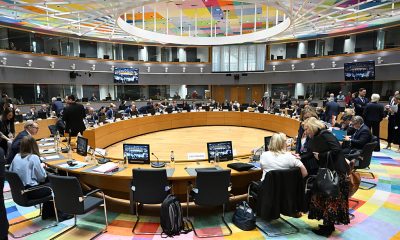
Last-minute delay in decision to split German and French electricity markets


A controversial recommendation on whether and how to split the German and French energy markets has been postponed.
ENTSO-E, the association of grid operators, confirmed to Euractiv that the position being discussed between Central European grid operators, which was originally expected to be published next Monday, is now “scheduled for spring 2025.”
For the time being, this delay avoids an expected conflict between the Central European countries, which are increasingly affected by the functioning of their neighbors’ electricity grids.
ENTSO-E stated that the last-minute delay was due to “a dialogue with the European Commission regarding the scope of the offer zone study.”
Network operators were originally tasked with writing the report in autumn 2022. It was supposed to be published in the third quarter of 2024 and then on January 27.
The delay in making the decision may reflect the political sensitivity of the issue.
France, with a highly centralized energy system, resists the idea of splitting its energy markets. In Germany, the electricity-hungry south, with few wind turbines, fears having to pay a premium for wind power from the north.
One region, one price
Electricity markets in Europe need to reflect the physical capacity of the grid to transport electricity. EU rules state that there should be a single price for electricity in geographical areas where electricity can flow freely.
In 2022, the EU energy regulator ACER found that this was not the case for France and Germany, and that electricity flows in Central Europe were disrupted as a result.
Unlike other EU countries, such as Sweden and Italy, where electricity prices vary by region according to the capacity of the grid, the bloc’s largest countries have a single electricity price.
This leads to large intra-country electricity flows that sometimes spill over into neighboring countries’ grids and cause blackouts. It is argued that smaller regional pricing zones, instead of larger national regions, would solve this problem.
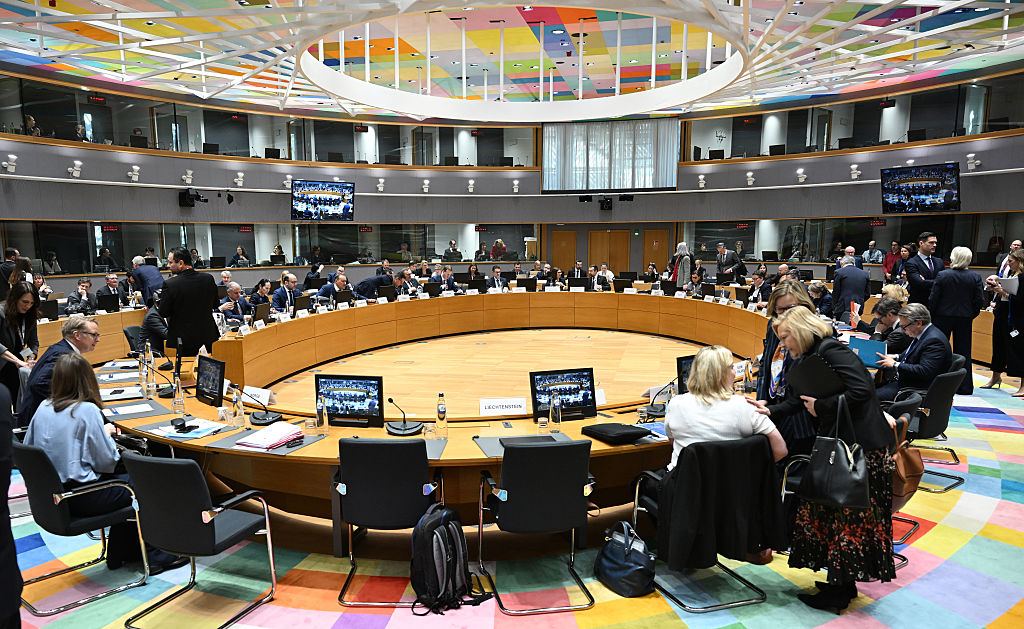
The 16 grid operators from 12 EU countries, ranging from France to Poland and Slovenia, will make a recommendation on whether the French and German markets should be split. Afterward, the concerned EU countries would have to unanimously agree, with the European Commission making the final decision.








European governments are being asked to formally consider a “comprehensive review” of the EU’s migration and asylum rules next year.
This could pave the way for changes just six months after the new system took effect.
According to an internal diplomatic note obtained by Rapporteur, Ireland, which currently holds the rotating presidency of the EU Council and chairs the negotiations, is testing whether capitals would support reviewing all legal instruments of the EU Migration Pact, including those not formally due for their first evaluation until 2028.
The migration pact was adopted in May 2024 after years of long and difficult negotiations and entered into force last June.
The reassessment could come as elections in France, Greece, Italy and Poland next year are expected to push migration high up the political agenda.
The review could lead to changes to some of the agreement’s most politically contentious elements, including the solidarity mechanism, the system for sharing migration responsibility among EU countries, and the rules determining which country is responsible for examining an asylum application.
In September, ministers from a broad group of EU countries met in Munich for informal talks on possible changes to the Pact on Migration and Asylum.
Top of the agenda were efforts to call on the European Commission to prepare a “simplification” legislative package by mid-2027.
“The aims of the review should be simplification and improvements in the implementation of the Pact, as well as clarification of legal texts where necessary,” the note said.
However, a senior official told Rapporteur: “Everyone knows this is a window of opportunity.”
Representatives of the capitals will also be asked whether they agree that the review should preserve the Pact’s “delicate balance between solidarity and responsibility” and avoid changes that would affect its basic structure and principles.
EU capitals have already backed a tougher migration agenda during the current Commission’s term, including a new deportation framework that allows for the establishment of return hubs in non-EU countries.
Several governments are currently considering this option and are expected to announce an agreement next week with a third country to host such facilities.
The Commission has also proposed new rules for Frontex, the EU’s border agency, aiming to make it the bloc’s “main operational arm” for returns.
Under the proposals, the agency would deploy officers during border crises, monitor online threats and take on a greater role in organizing and carrying out deportations.
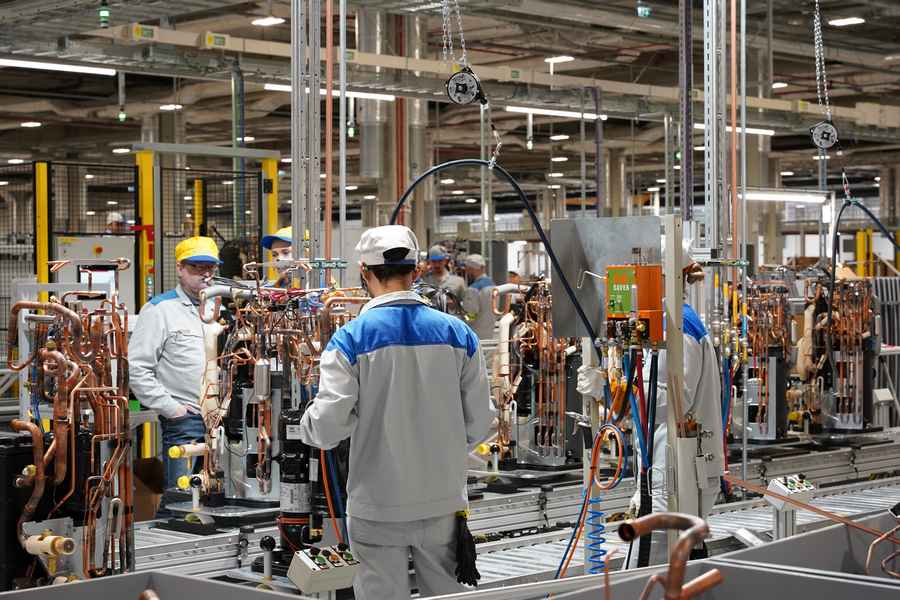
Rising Chinese industrial exports and Beijing’s growing control over supply chains are putting pressure on Poland’s manufacturing sector, particularly household appliances and automotive production.
As Chinese-made industrial goods flood the European market and European manufacturers lose ground in China, Polish industrialists warn they may struggle to cope with the competition.
Wojciech Konecki, president of the Polish Association of Home Appliance Employers (APPLiA Polska) and vice-president of the National Chamber of Commerce, told Business Insider Polska: “The Polish household appliance industry has fallen into a very difficult situation. Five factories have already closed in Poland in a relatively short period. The main reasons are falling consumption and competition from China. Chinese appliances are no longer always much cheaper, but in many segments their quality has reached an acceptable level for European consumers. As a sector, we have rapidly run into major difficulties.”
Konecki added: “China is taking over entire supply chains. A factory closure does not only mean job losses at that facility. Behind the household appliance industry stand thousands of subcontractors, mostly small family businesses, as well as logistics firms, research and development centres, and local services.”
Similar pressure is visible in other sectors, such as Poland’s automotive supply industry.
China expands industrial export share in Europe
In 2025, industrial goods accounted for 97% of China’s exports to the European Union (EU).
Last year, EU imports of goods from China rose 6.4% year-on-year to €559.4 billion, while EU companies’ exports to China fell 6.5% to €199.6 billion, widening the bloc’s trade deficit to €359.8 billion.
Compared with 2015, imports from China increased by 89%, whereas export growth was more limited at 37.1%.
Machinery and vehicles made up 54.4% of shipments, other industrial goods accounted for 33%, and chemicals represented about 10%, as Europe now imports products from more advanced links in the value chain rather than textiles and toys.
According to Eurostat data, Europe’s imports from China rose 7.9% in the second quarter of 2026 compared with the same period a year earlier.
Data from the Polish Development Fund (PFR) show that China overtook Germany for the first time this year to become Poland’s largest supplier of goods.
PFR calculations show that imports from China reached €6.15 billion in July 2026, while imports from Germany stood at €6.06 billion. A year earlier, Poland imported €4.78 billion worth of goods from China and €6.17 billion from Germany.
The European Central Bank (ECB) notes that China’s share of the European market is growing rapidly, particularly in electronics, automotive, and other advanced industrial sectors, and that its delivery structure is shifting from final products to intermediate goods and components.
“Rebuilding industry is much harder than sustaining it,” Konecki said. “Once factories, competencies, suppliers, and research and development infrastructure disappear, it is not possible to recreate them with a single political decision.”
Automotive and supply sectors face order losses
Unlike the first wave following China’s accession to the World Trade Organization in 2001, this process, which companies in Germany call “China shock 2.0”, affects medium- and high-technology sectors and is also hitting plants in Poland.
In the first five months of 2026, Germany’s imports from China rose 6.2% to €72.4 billion, while its exports fell 14.5% to €29.6 billion.
Bartosz Mielecki, director general of the Polish Automotive Group (PGM), said: “Chinese brands are taking up more and more space in the European market, and the Polish sector is feeling it. The crisis among European carmakers means reduced order volumes directed to factories operating in our country, which indirectly hits Polish suppliers.”
According to data from the Automotivesuppliers.pl platform, exports of parts and accessories in the automotive sector, which accounts for about 8% of Poland’s gross domestic product, fell to €9.42 billion in the first half of 2026 from €9.45 billion in the same period a year earlier.
Noting that authorised dealer and service networks are also expanding as vehicle sales rise, Mielecki said: “The next step for Chinese manufacturers could be moving parts and components production to Europe. We are not observing this on a large scale at the moment, but the situation is developing very dynamically. This is a scenario the Polish automotive industry must be prepared for.”
Mielecki noted that factories in Poland are more diversified and resilient than commonly thought, but added that if car production across the continent continues to fall, plants and suppliers in Poland will be affected more strongly.
Industry representatives demand protective measures
According to an analysis by the Centre for Economic Policy Research (CEPR), China’s global surplus in goods trade hit a record $1.2 trillion in 2025.
Behind this expansion lie subsidies and technological progress, alongside weak domestic demand pushing Chinese companies to seek buyers abroad, industrial deflation, and an exchange rate that boosts exporters’ price competitiveness.
Stressing that tariffs on electric cars alone may not be enough in the automotive sector, Mielecki said: “There is increasing talk of ‘local content’ rules that would reward cars with a higher share of components produced in Europe. Such a solution would support not only vehicle sales, but also European factories and the entire supply chain.”
Konecki, meanwhile, argued that the Carbon Border Adjustment Mechanism (CBAM) proposed for the household appliance sector falls short of expectations.
“Europe adopts protective measures with great delay and often does so selectively,” Konecki said. “The CBAM mechanism is set to cover some final appliances, but the relevant regulations will only enter into force in 2028. For some companies, waiting three years could mean there is nothing left to protect. Moreover, while the regulations cover washing machines, refrigerators, and dryers, dishwashers, ovens, hobs, and extractor hoods have been excluded. As a result, a bureaucratic decision could determine which factory survives and which closes.”
Noting that some Western companies, as seen in the cases of Philips and IBM, have withdrawn from the consumer market to focus on higher-margin corporate or medical devices, Konecki added that it is difficult to point to an easy way out of the current situation in the household appliance industry.

Romanian President Nicușor Dan has offered to pay the US to keep its troops stationed in the country.
The Romanian leader’s proposal comes as security concerns grow in the Black Sea region and the Trump administration moves to reduce the number of US troops in Europe.
Speaking to the Financial Times (FT), Dan said he had proposed “some figures on troops and cost-sharing…”, echoing an earlier offer made by Poland.
In September, Warsaw offered to pay Washington $15,000 a year for each US soldier stationed at a planned military base dubbed “Fort Trump”.
“We want more American troops and more lethal capabilities,” the Romanian leader said.
Dan’s office said the number of US troops in Romania has fallen from a previous contingent of 1,700 to 1,172 currently, implying that Bucharest is considering a figure similar to Poland’s offer.
Dan’s remarks came just days after he presented his proposal to US Under Secretary of Defense Elbridge Colby, who visited Poland and Romania, the two most populous countries on NATO’s eastern flank, to assess regional security challenges.
Colby has previously advocated a “more limited and focused” US military presence in Europe. The Defense Department under Pete Hegseth has also repeatedly said it wants to significantly reduce its presence on the continent.
According to Romanian media, Colby did not give a definitive answer on whether the US would maintain its current troop presence in Romania.
Instead, according to G4media.ro, he will present several possible scenarios to Hegseth, who will forward the options to President Donald Trump for a final decision. Colby said Trump is expected to decide in early December.
The US currently has about 10,000 troops in Poland spread across a dozen bases. Warsaw is pushing for the construction of a permanent base named after Donald Trump.
Polish Defence Minister Władysław Kosiniak-Kamysz, who met Hegseth on Tuesday, said the US official told him “everything is moving in the right direction”, which he interpreted as the Pentagon giving “the green light for establishing a permanent US military base in Poland”.
Dan said his country has a foreign policy “very, very similar” to that of Poland, which takes a tough stance against Russia.
“We understand the threat posed by Russia and how the war in Ukraine [threatens] our security,” the Romanian president said.
The war in neighbouring Ukraine has also affected the Black Sea country, with Russian drones repeatedly crashing on its territory and commercial ships being hit off its coast.
Dan continued: “The Russians… are trying to change the mindset of European countries supporting Ukraine. As with the drones entering our territory, we have received [help] and are now much better protected. We plan to do the same in the Black Sea, to strengthen our equipment and be more prepared, but we will not escalate the situation.”
Dan noted that Romania is gradually increasing its defence budget. However, a huge public deficit prevents Bucharest from catching up with Poland’s military spending, which is already close to 5% of GDP.
This is a Trump target that NATO allies agreed to meet by 2035.
Dan said the US air base at Mihail Kogălniceanu near the Black Sea coast and the port of Constanța are of major strategic importance to the US.
The Romanian president noted that this year, when other EU capitals did not allow the US to use their facilities, Bucharest permitted US forces to use the air base during Trump’s war against Iran.
Former Romanian naval commander and military expert Sandu-Valentin Mateiu stressed that the current US military personnel stationed in the country are primarily there to “ensure the functionality” of American bases.
Besides the air base, the US has also deployed personnel and ballistic missile defence systems at a second base in Deveselu, in southern Romania near the Bulgarian border.
Mateiu said it is not yet clear whether the US is willing to send combat units to Romania.
Dan said relations with the Trump administration improved immediately after the 2024 Romanian presidential election, which was annulled over allegations of Russian interference.
In 2025, US Vice President JD Vance cited Romania as an example of Europe’s alleged crackdown on right-wing politicians and described the evidence of Russian interference as “weak”.
However, Dan, who was elected president in last year’s rerun election, downplayed the initial tensions: “In the US, there was a new administration that did not have all the information regarding our bilateral cooperation. Soon after, I think they understood the situation.”

EU governments asked to consider reviewing migration pact next year

Polish manufacturers seek EU protection against Chinese competition

Trump removes Vance from Iran policy, shifts focus to domestic politics

White House weighs Lutnick dismissal after Nvidia scandal

Romania offers to pay US to keep troops stationed in the country
-

 Diplomacy2 weeks ago
Secular dress code dispute exposes deeper Türkiye-Azerbaijan strains
-
 Europe7 days ago
EU urges citizens to prepare 72-hour survival kits for crises
-
 Asia2 weeks ago
China expands Africa arms sales, displacing France and Western rivals
-

 Diplomacy1 week ago
Protesters storm Kyiv site holding soldiers over torture allegations
-

 Europe1 week ago
Pro-Ukraine Republicans in US Congress dwindle after departures
-

 Europe1 week ago
Low EU gas stocks risk stoking global prices, IEA report warns
-

 Diplomacy2 weeks ago
Canada pursues closer EU partnership as summit opens
-

 America2 weeks ago
Congress poised to block Trump team’s $1.5 trillion defence budget bid
