
Europe
EU unveils Arctic plan targeting military corridors and resources

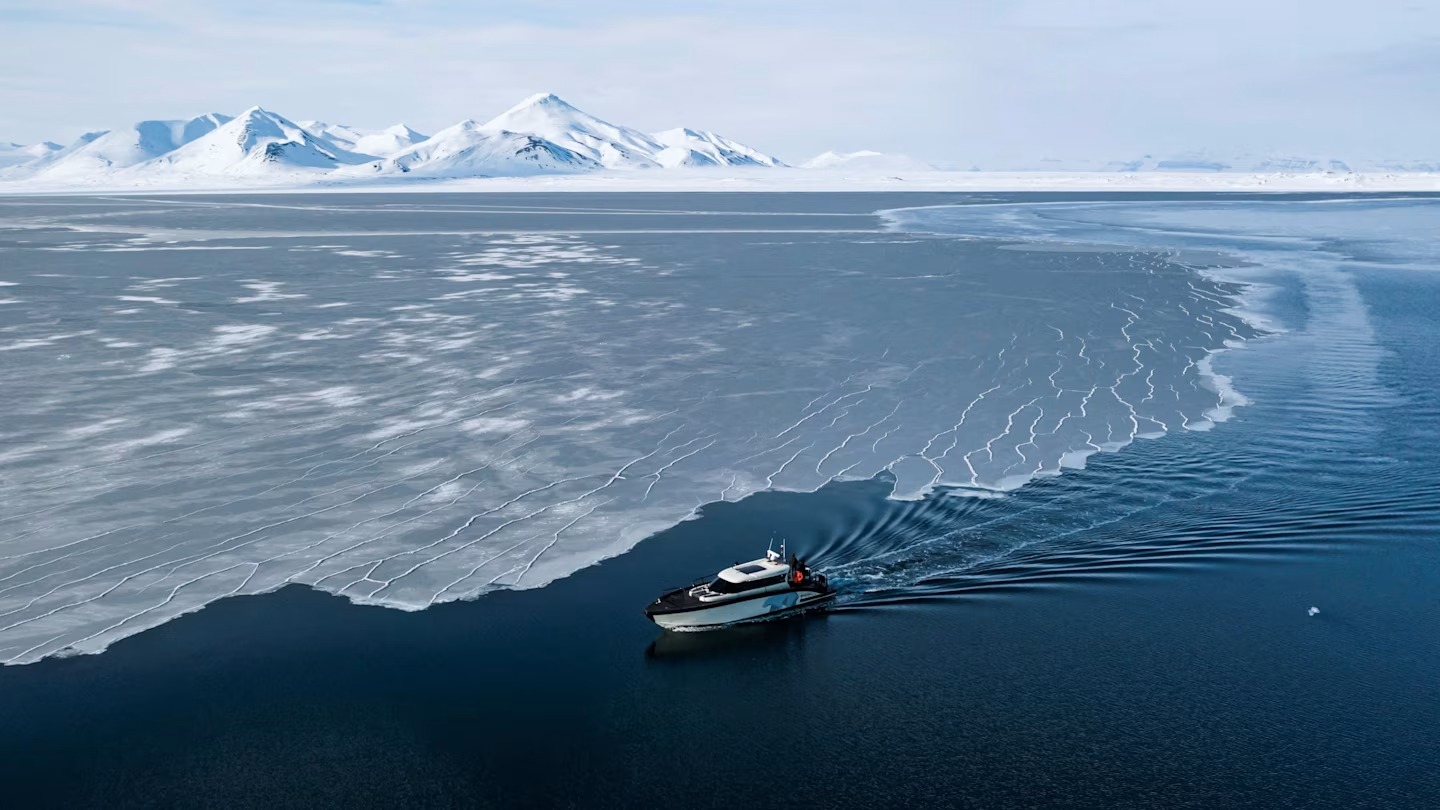
The EU is developing plans to enhance its military mobility in the Arctic and aims to establish “multimodal military movement corridors” across the High North.
According to a report by German Foreign Policy, this initiative was outlined in the EU’s new Arctic strategy presented by the European Commission in Brussels on Tuesday.
Under the strategy, a complex logistics network consisting of “ports, airports, and their inland connections” will be created across the Arctic, designed to “remain operational even under adverse weather conditions.”
The strategy paper also announces that “exercises or stress tests” will be conducted to ensure the smooth deployment of military forces and capabilities to the Arctic.
Through this strategy, the EU is responding to the reality that climate change-driven Arctic ice melt is facilitating access to regional natural resources while opening new sea routes, such as the Northeast and Northwest Passages, which can now be used for both commercial and military operations.
The Arctic strategy aims for greater independence from the US and envisages laying a “pan-Arctic” submarine cable running from Europe through the polar region to East Asia.
Arctic natural resources
The EU’s new Arctic strategy addresses, among other topics, the natural resources located in the Arctic, both beneath the seabed and on land.
Due to thawing ice, these resources are already accessible or will soon become easier to reach, and Brussels supports their extraction.
Specific projects highlighted include a rare earth element extraction venture near Kiruna in northernmost Sweden and a plan to mine molybdenum in eastern Greenland.
Departing from its previous 2021 Arctic strategy, the Commission no longer advocates an outright ban on oil, gas, and coal extraction in the Arctic within a multilateral framework.
This policy shift comes as Norway has emerged as the bloc’s most vital natural gas supplier, providing approximately 30% of all its natural gas imports following the EU’s phased reduction of Russian energy imports.
However, production from Norway’s existing fields is expected to decline in the 2030s. Consequently, Norway plans to explore new deposits in the Barents Sea, where vast reserves are estimated to lie.
Dependent on raw material supplies from Norway as well as strategic cooperation with Oslo, the EU no longer opposes these exploration plans.
New sea routes opened by melting ice
The EU is also turning its attention to the gradual opening of new Arctic shipping routes.
For instance, the Northeast Passage, running along Russia’s northern coastline from East Asia to Europe, is now open to navigation between August and October.
This route is considerably shorter than the conventional transit via the Indian Ocean, significantly reducing shipping costs, especially in light of current oil prices.
A Chinese shipping firm launched regular services via the Northeast Passage this summer, while a South Korean vessel recently returned to the port of Busan after completing its maiden commercial voyage along the corridor.
Although used by few vessels to date, the Northwest Passage has also come into operation as a route extending from the North Atlantic through Canada’s northern archipelago and north of Alaska toward East Asia.
Experts believe that, during the summer months, this passage could offer advantages over the traditional route via the Panama Canal “for certain vessel types and transport routes.”
The emergence of new military capabilities was underscored in September when four Russian warships navigated the Shokalsky Strait between two Russian Arctic islands for the first time in history.
Military mobility in the High North
This development represents another driver behind the EU’s new Arctic Strategy placing particular emphasis on military aspects.
Russia has been strengthening its Arctic military positions for some time, partly because the headquarters of its Northern Fleet, which hosts part of its second-strike capability, is located on its north-western coast, and partly because its exceptionally long northern coastline remains strategically vulnerable.
NATO has likewise been expanding its activities in the Arctic considerably, holding numerous exercises across northern Finland, Sweden, and Norway, as well as in Iceland and Greenland, alongside its new “Operation Arctic Sentry.”
The strategy document states that the EU must now strengthen its own posture in the Arctic.
This objective is to be pursued both in cooperation with NATO and through independent EU measures.
For example, situational awareness must be enhanced, including by leveraging EU satellite systems, particularly Copernicus and Galileo.
Additionally, the planned IRIS2 satellite constellation, conceived as Europe’s counterpart to Starlink, should be expanded to cover the Arctic to improve communications.
To coordinate these initiatives, the EU plans to establish a Maritime Security Centre.
The EU places special emphasis on military mobility in the Arctic. According to the document, rapid and large-scale troop deployments must be feasible in the region at any time if required.
To this end, “multimodal military movement corridors” incorporating ports, airports, and their inland connections need to be established.
These facilities will be designed as a unified, complex logistics system “capable of remaining operational even under adverse weather conditions.”
Realising this plan will require preparation for “ice clearance,” “the handling of heavy and oversized military vehicles on frozen ground,” and “the rapid repair of damaged infrastructure.”
Looking ahead, the EU is urged to organize “exercises or stress tests focused on the smooth deployment of forces and military capabilities to and within the Arctic” in cooperation with NATO or like-minded partners.
Viewing these capabilities as vital for “credible deterrence,” the EU also underscores the need for its own icebreaker fleet to clear pathways through the ice for warships.
The Arctic’s role in “strategic autonomy” vis-a-vis the US
Throughout this process, the EU is not only adopting a clear stance toward Russia, but is also pursuing greater independence from the US.
On one hand, the strategy encourages deepening ties with Greenland, which is part of Denmark, does not belong to the EU, and has faced threats of US annexation. The document designates this relationship as a cornerstone of the new Arctic strategy.
On the other hand, the text calls for intensifying cooperation as part of a “Northern Neighbourhood” strategy with Norway, Iceland, and Canada, as well as with the UK, which occupies a strategically advantageous position despite not being an Arctic coastal state.
The EU maintains a security and defence dialogue with Norway, holding its fifth session this past April, alongside launching an “Arctic Dialogue” with Oslo this year.
Canada is classified by the European Commission as a “natural ally” in the Arctic. Observers note that while Canada is mentioned dozens of times throughout the strategy, the US is cited only a handful of times.
This contrast is seen as evidence that the EU is seeking independence from Washington in the High North.
Accordingly, the document explicitly references “European strategic autonomy” as an “integral component of the Arctic.”
Pan-Arctic cable plan extending to Japan
The EU Arctic Strategy also identifies Japan and South Korea as cooperation partners in the region.
This partnership is linked to plans to connect Greenland to the EU via a submarine cable, which would subsequently be extended across the Bering Strait to Japan and South Korea.
Berlin has advocated the construction of such a “pan-Arctic cable” for some time.
According to a statement issued in early July by the Berlin-based German Institute for International and Security Affairs (SWP), such an infrastructure project is highly desirable for multiple reasons.
First, data traffic between Europe and Asia, 90% of which currently passes through the Red Sea and the strait between Djibouti and Yemen (Bab el-Mandeb), “suffers from a high failure rate and a lack of redundancy.”
Furthermore, the Arctic route is “significantly shorter,” resulting in reduced latency and fewer transmission delays.
International equity trading in particular stands to benefit from “real-time data transmission” enabled by a new polar cable link.
SWP outlines two potential routes for the cable: one running west of Greenland and the other running east.





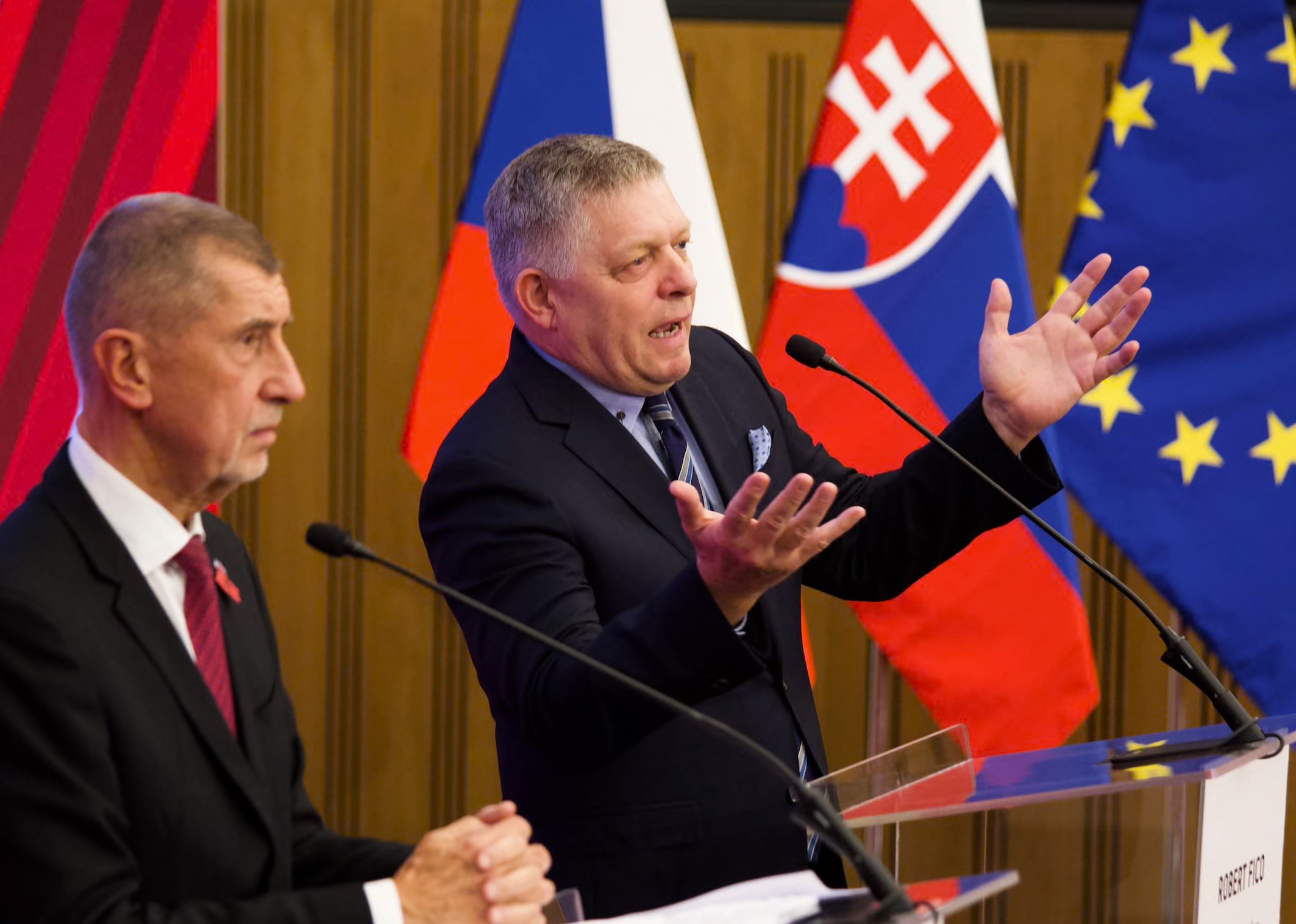
Slovak Prime Minister Robert Fico has hit back after German Chancellor Friedrich Merz threatened to veto the EU budget unless funding for Ukraine is secured.
Merz said he would block the EU’s seven-year budget if no agreement is reached on financial assistance for Ukraine.
The chancellor’s intervention has angered Central European leaders who are net beneficiaries of EU funds but do not want to take part in the next round of funding to support Ukraine’s war effort.
“What the chancellor is doing is typical blackmail, and I will not bow to it,” Fico told reporters in Bratislava.
Fico spoke alongside his Czech counterpart, Andrej Babiš, whose government has refused to participate in a future loan to Ukraine.
“I do not know why he said this,” Babiš said, referring to Merz’s stance.
Merz wants EU leaders to discuss Ukraine’s financing needs at a summit in Dublin on Friday.
In a letter to European Council President António Costa, who will chair the meeting, obtained by The Guardian, Merz wrote:
“We must maintain our support for Ukraine in its struggle to defend itself. This is our shared vital interest. Yet bilateral aid provided to Ukraine is distributed unevenly, with the burden shouldered mostly by only a few member states.”
The EU agreed last year to provide a €90 billion loan to Ukraine, intended to cover two-thirds of its military and civilian spending for 2026 and 2027.
Since then, however, Russia’s relentless bombardment has placed a heavier financial burden on Kyiv, prompting President Volodymyr Zelenskyy to ask for €70 billion to plug the budget deficit.
The EU has endorsed Zelenskyy’s figures and pledged to find €45 billion. Ukraine’s other allies, such as Britain and Canada, are expected to cover the rest.
Last year, Merz launched an initiative to tap €210 billion in frozen Russian state assets held in the EU, but the plan fell through due to opposition led by Belgium, which holds most of the funds in Brussels.
The €90 billion loan was the backup plan. Having opted out of that loan, Hungary, Slovakia, and Czechia indicated that they would not take part in the next round either.
Bulgaria joined these three member states following the election of Prime Minister Rumen Radev last April.
The question of funding for Ukraine is now spilling over into the fraught negotiations on the 2028-34 EU budget.
Germany, the largest net contributor, wants substantial cuts to the proposed budget and opposes the EU providing generous funding to member states that refuse to contribute to Ukraine’s financial needs.
Merz states in his letter that a “collective commitment without exceptions” is a “fundamental prerequisite” for closing Ukraine’s financing gap and for “discussing other matters, particularly those with financial implications.”
He also notes that, in the context of the EU’s next seven-year budget, known as the Multiannual Financial Framework, all member states must contribute to a “robust” financial perspective for Ukraine from 2028 onwards.
A German government official said:
“For the Multiannual Financial Framework (MFF) to be successfully concluded, it is vital that all EU member states provide financial support to Ukraine.”
Berlin is also aiming to shift decision-making on funding for Ukraine from unanimity to qualified majority voting, in an effort to prevent a single government from blocking EU decisions.
The letter reflects mounting frustration among the EU’s northern member states, Ukraine’s most generous backers, over lower contributions from other EU countries in Central and Southern Europe.
The task of brokering an agreement on the budget falls to Costa, the former Portuguese prime minister.
Costa wants a deal by the end of the year, ahead of elections in France, Poland, and Italy in 2027 that could complicate the process.
A spokesperson for Costa confirmed receipt of the letter without elaborating on details. “President Costa will dedicate time to the Ukraine issue at the informal European Council meeting in Dublin this week,” the spokesperson said, adding that funding for Ukraine would be addressed at a dedicated summit on the EU budget scheduled for 26-27 November.
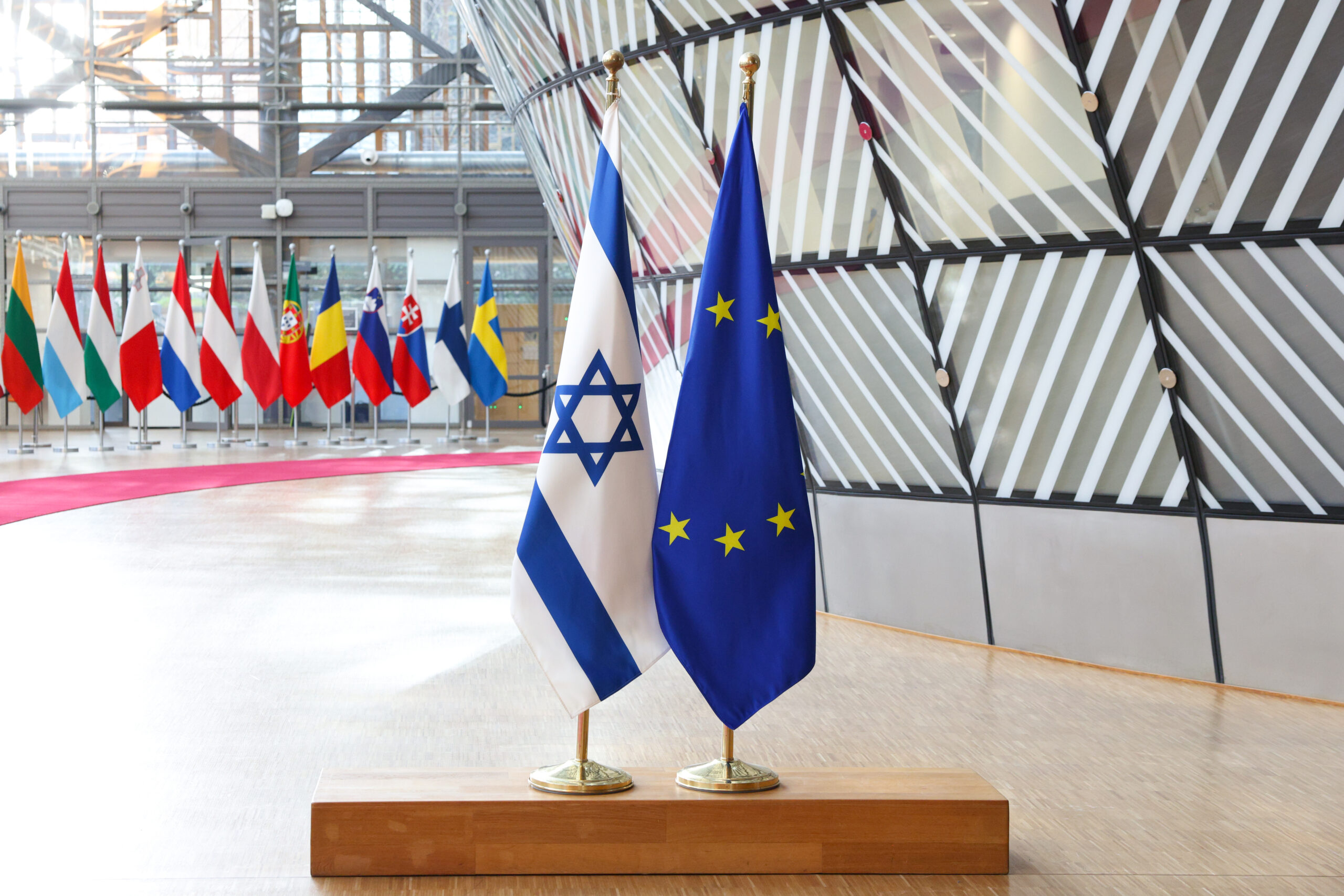
The EU expects the next Israeli government to mend its “difficult relationship” with Brussels and adopt a more constructive approach toward Gaza and illegal settlements.
Israeli President Isaac Herzog tasked Gadi Eisenkot, the leader of the anti-Netanyahu bloc, on Sunday with forming a government.
Eisenkot stated that the country faces a “catastrophic diplomatic crisis” as traditional allies begin to reassess their relations with Israel.
Speaking to Rapporteur, several European diplomats stationed in Tel Aviv said they expect ties to get back on track.
“Whatever government comes in, we can try to revitalize relations because Israel is clearly a very important partner,” one European diplomat said, adding that Brussels expects the next administration to be “less aggressive”.
The diplomat noted that relations with Europe are currently “not very good”.
Israel cut off communication with Kaja Kallas, the EU high representative for foreign affairs and security policy, after Rapporteur revealed in June that she had compared Israel to apartheid-era South Africa during a visit to Mexico.
The diplomat stated that this decision, taken ahead of elections, was political in nature. A second European diplomat based in Brussels explained that the announcement came only a few days before an official visit by Dubravka Šuica, the European commissioner for the Mediterranean.
“This could have been interpreted as a tactic to divide Europe, but Israel had asked Kallas to deny the report; she did not do so,” the second diplomat said.
Brussels has repeatedly voiced its frustration with Israel over the humanitarian crisis in Gaza and the expansion of West Bank settlements.
However, EU governments blocked almost all sanctions proposed by the European Commission.
A third diplomat said opposition parties would “almost certainly take the issue more seriously” when it comes to tackling violence by West Bank settlers:
“We see Palestinians being expelled from their homes and new illegal settlements being built in the West Bank. There is a reluctance on the part of the current government to address this issue, which causes problems in our relations.”
The new government is expected to ease pressure on Palestinians and halt construction of the E1 settlement project, a controversial plan to build settler housing in the West Bank east of Jerusalem.
“They will probably try to deal with the problem of extremist settlers in the West Bank,” the diplomat added.
On Gaza, the diplomat described the situation as “a complete nightmare”, with two million Palestinians crowded into an area that accounts for roughly 35% of the territory.
“There are not enough tents for the winter, and not enough vaccines are reaching the area despite an increase in diseases,” the diplomat said.
The European official argued that Donald Trump’s peace plan met all the conditions for Europe. Although the EU had much to offer, neither the US nor Israel appeared interested in EU involvement in the process.
“We are currently training Palestinian police in the West Bank, and if permitted, we could do the same in Gaza,” the diplomat said.
The diplomat disclosed that Israel had agreed with Šuica that Europe would finance two projects aimed at improving sewage and water infrastructure in Gaza, continuing:
“However, none of these projects has started yet because there is a serious problem with dual-use goods. Getting materials into Gaza is very difficult because the Israelis say they could be misused if they fall into the wrong hands of Hamas.”
Israel insists that Hamas must be disarmed before subsequent phases of Trump’s plan can proceed.
With disarmament unlikely to happen in the near term, the EU argues that certain measures can be carried out in parallel.
“We can begin rebuilding sanitation systems in Gaza. We can start building desalination plants. We can begin providing energy and water to Gaza,” one diplomat said.
While Brussels hopes for progress on Gaza and the West Bank, it maintains that expectations regarding the establishment of a Palestinian state need to be “managed”.
The EU continues to advocate a two-state solution, yet most leading Jewish parties oppose the creation of a Palestinian state.
The diplomat noted that the next Israeli government will likely have “a very slim majority and not much room for manoeuvre”.
There is also a “major misunderstanding” between the EU and Israel that must be addressed. According to the diplomat, Europeans fail to recognize the “psychological impact” of 7 October on Israelis.
“This event changed the country and made the two-state solution even more distant than before,” the diplomat said.
In return, some Israeli politicians believe Europe has betrayed Israel despite what they view as a fight against “Islamist terrorism”.
“Their argument is that European politicians are somewhat afraid of the Muslim population in Europe,” the European diplomat said.
Europe strongly opposes Iran and the possibility of Tehran acquiring nuclear weapons, imposing sanctions in response.
However, the diplomat argued that the EU would not participate in a war because it lacks a common army:
“We are a diplomatic and economic power, which is why we resort to sanctions and diplomacy. The expectation that we would take part in a military operation is unrealistic.”
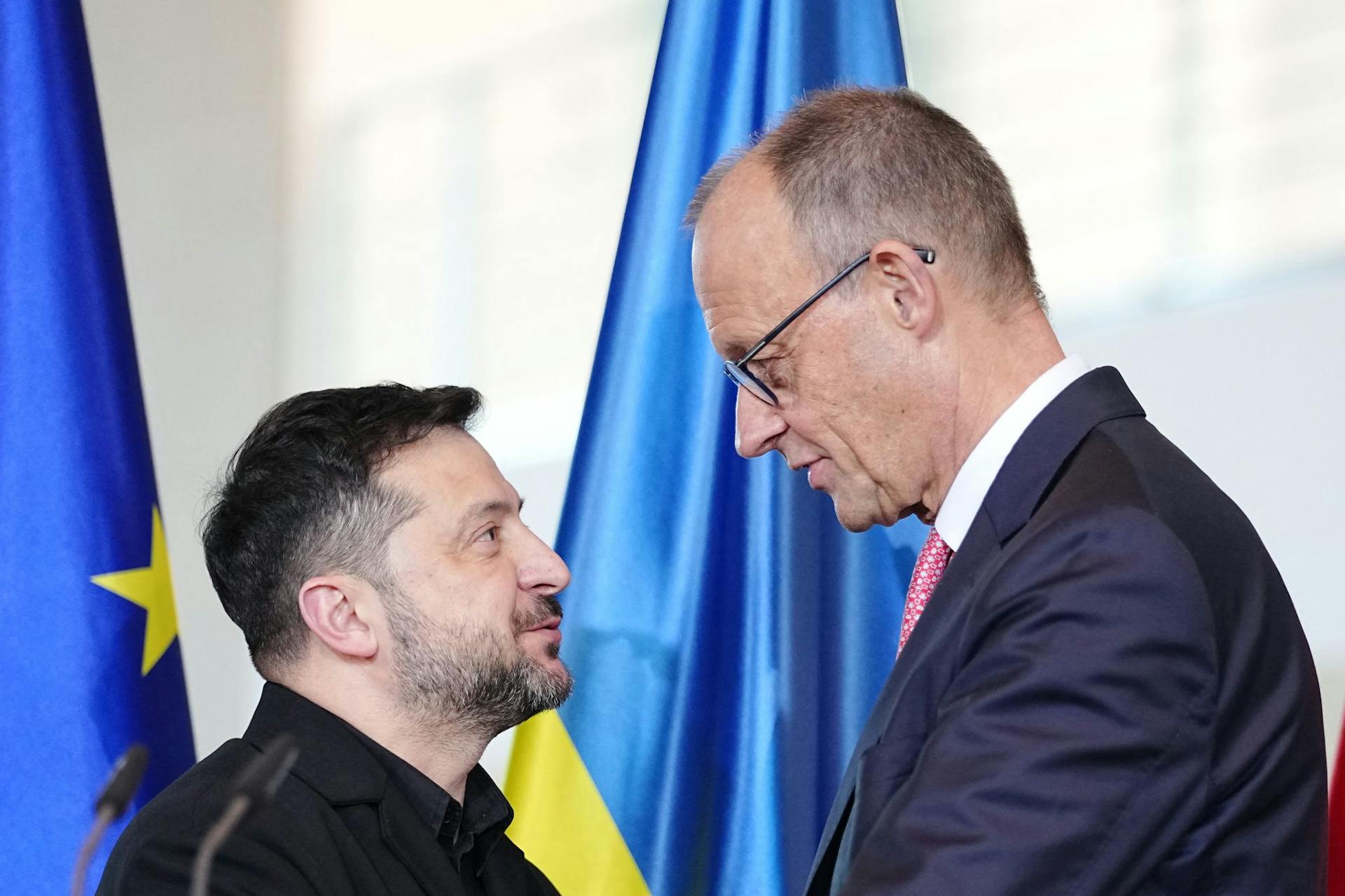
Germany has threatened to veto the European Union’s joint budget for the 2028-2034 period, which is currently under negotiation, unless every member state commits to providing financial support to Ukraine in 2027 and subsequent years, German Chancellor Friedrich Merz warned.
According to a report by the Financial Times (FT), Chancellor Merz set out Berlin’s condition for the budget talks in a letter addressed to European Council President António Costa.
In his letter, Merz wrote: “A collective commitment that every single one of us, without exception, will make a fair contribution to closing Ukraine’s budget deficit is an indispensable prerequisite for resolving this budget issue and, in particular, for addressing subsequent matters that carry financial implications.”
The German Chancellor stressed that a formula backed by all member states must be established to provide Ukraine with a reliable, multi-year financial perspective starting from 2028.
Merz also insisted that any agreed solution must cover the interest payments on debts incurred to finance the assistance provided to Kyiv.
Conversely, several countries within the bloc have cut financial aid to Ukraine, and the number of capitals adopting this stance is projected to rise next year.
In December 2025, Hungary, Slovakia, and the Czech Republic approved the EU’s 90 billion euro loan package for Kyiv only on the condition that they would not contribute to its costs themselves.
Alongside these three countries, Bulgaria has also stated that it does not plan to participate in subsequent financial assistance packages for Ukraine.
In France, far-right leader Marine Le Pen, who could potentially win the presidential election scheduled for spring 2027, recently told the FT that Paris has run out of funds.
Le Pen assessed: “The honest approach is to tell Mr Zelensky clearly, and even warn him: ‘Look, we cannot do more. We have already allocated the 90 billion euro EU loan, in which France’s share amounts to 18 billion euros. 18 billion euros is genuinely a huge amount of money.'”
The EU’s 90 billion euro loan, covering the 2026-2027 period, aims to meet two-thirds of Ukraine’s financing requirements.
Brussels expects the remaining 45 billion euros to be covered by other partners, including Canada, the UK, Norway, Japan, South Korea, and Australia.
Germany remains the largest net contributor to the EU budget.
In contrast, the four Eastern European countries seeking to avoid financing Ukraine rank among the largest net beneficiaries of the bloc’s budget.
Leveraging this balance, Chancellor Merz aims to use his influence in the EU budget negotiations to secure uninterrupted support for Kyiv in 2027 and the years beyond.
According to the FT, Berlin is also demanding that future aid packages be decided by qualified majority voting rather than unanimity, which is required under the current system.
A German government spokesperson told the newspaper:
“The issue of Ukraine’s financial needs must be resolved within the framework of the next EU budget. Financial support for Ukraine from all EU members is decisive for the successful conclusion of the budget talks.”

Journalist Dursunoğlu warns Iran removed missile limits as Gulf risks widen

Nvidia board prepares to remove CEO Jensen Huang amid scandal

CSTO strips Armenia of voting rights over two-year budget debt

US voters approve bans on transgender athletes across four states

US urges Russia to draft proposals for new European security pact
-
 Diplomacy2 weeks ago
Secular dress code dispute exposes deeper Türkiye-Azerbaijan strains
-
 Europe7 days ago
EU urges citizens to prepare 72-hour survival kits for crises
-
 Asia2 weeks ago
China expands Africa arms sales, displacing France and Western rivals
-

 America2 weeks ago
Bolsonaro reportedly leaves Brazil on jet linked to scandal-hit firm
-
 Diplomacy1 week ago
Protesters storm Kyiv site holding soldiers over torture allegations
-
 Russia2 weeks ago
Putin proposes Arctic energy cooperation to US to ease gas sanctions
-
 Europe1 week ago
Pro-Ukraine Republicans in US Congress dwindle after departures
-
 Europe1 week ago
Low EU gas stocks risk stoking global prices, IEA report warns
