
Russia
Patrushev urges assertive Russian naval presence to counter NATO encirclement strategy

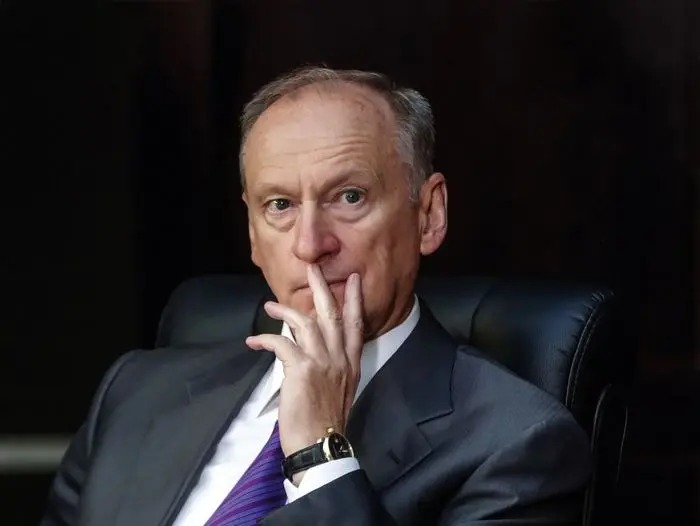
Nikolai Patrushev, Assistant to the President of the Russian Federation and Chairman of the Maritime Board, has outlined a sweeping strategic vision for Russia’s global naval power while issuing sharp warnings to NATO, the Baltic states, and European governments.
In an extensive interview with Ivan Yegorov of the state-run newspaper Rossiyskaya Gazeta, the former Director of the Federal Security Service (FSB) also disclosed previously classified operational details from his tenure heading the domestic intelligence agency and shared personal family histories from World War II.
Speaking ahead of the 85th anniversary of the beginning of the Great Patriotic War, Patrushev emphasized the geopolitical imperative of preserving historical memory as a geopolitical shield.
“The Great Patriotic War is the cornerstone of our national historical memory and an inseparable part of our culture,” Patrushev said. “In Russia, regardless of nationality, it is impossible to imagine a normal citizen who does not hold the memory of the war sacred. Fighting uncompromisingly to preserve this memory is everyone’s duty. This is the most effective antidote against the new wars being fomented on earth today.”
Patrushev criticized Western societies for what he characterized as a profound ignorance of history. “If people in the West knew the history of the Second World War deeply enough and learned the full truth about the atrocities of Hitlerism, they would shrink back in horror from their governments, which today support neo-Nazism,” he said.
He asserted that during World War II, the proportion of Nazi collaborators in Europe far outnumbered those in active resistance movements, describing this as an established historical fact.
“This is not an assertion, but a fact accepted by European historians,” Patrushev said. “In France, with a population of 40 million, approximately 3.5 million people served the occupiers. I emphasize: they did not merely sympathize; they directly and actively served. In contrast, the number of participants in the French Resistance was around 250,000. These figures are not even comparable. Indeed, the last defenders of the Reichstag were French SS soldiers.”
Evaluating France’s post-war status, Patrushev added: “Nevertheless, France was included among the victorious allied nations and obtained a seat on the United Nations Security Council due to the anti-fascist movement of the Allies and the personal respect that Joseph Stalin himself held for General Charles de Gaulle.”
“Descendants of those who besieged Leningrad are now aiding Kyiv”
Turning to the German occupation of the British Channel Islands, Patrushev stated: “There, such an agreement was reached between the British and the Germans that British police patrolled alongside German soldiers. However, many ordinary residents of the islands acted more courageously than the British authorities, hiding Soviet prisoners of war, whom the Germans had brought for forced labor, in their homes.”
Patrushev emphasized that, in his view, the whole of Europe consciously waged war against the Soviet Union.
“Nearly half of the SS divisions were formed from elements coming from Italy, Romania, Hungary, Finland, Slovakia, France, Croatia, Spain, Denmark, the Netherlands, and other countries,” he said. “Eleven states participated in the siege of my hometown, Leningrad. Alongside Germans and Finns, Italians, Norwegians, Spaniards, Romanians, Belgians, Dutch, and those from the Baltic countries attempted to destroy the people of Leningrad. Now, their descendants are hypocritically aiding Kyiv in attacking St. Petersburg with unmanned aerial vehicles.”
He dismissed the historical neutrality of certain European states as “merely formal.”
“The Swedes provided strategic raw materials and industrial products to the Germans; the Portuguese sold tungsten,” Patrushev said. “The neutrality of Switzerland is an entirely different matter. Gold bars melted down from the jewelry and gold teeth of prisoners murdered in concentration camps are still stored in the vaults of Swiss banks. Meanwhile, Irish Prime Minister Eamon de Valera went to the German embassy in May 1945 to offer his condolences following the death of Hitler.”
Patrushev characterized the decisions of Finnish leader Carl Gustaf Emil Mannerheim and King Michael I of Romania to withdraw their countries from the Axis alliance as strictly pragmatic, forced steps.
“Mannerheim and Michael made forced decisions to switch to the side of the Soviet Union when Soviet troops reached the borders of their countries,” Patrushev said. “On our territory, the Finns acted in a more bloodthirsty manner than the Germans. Despite this, the Soviet Union showed magnanimity; the political regime in Finland was preserved, and the King of Romania was honored with the Order of Victory, the highest military decoration of the Soviet Union. Of course, the steps of these leaders were not sincere repentance, but pragmatic decisions. Yet, it must be acknowledged that they chose the path of saving their countries from complete destruction. Today’s Europeans need to learn at least common sense from them.”
“Watching Baltic states pull the whiskers of a cat with nuclear claws”
When asked whether similar pragmatic leaders would emerge in contemporary Europe, Patrushev warned of potential catastrophe.
“Either these leaders will be found, or Europe will be dragged into a disaster,” he replied. “For now, events are developing according to the second scenario, and some European countries are practically unable to sit still. It may be a somewhat crude expression, but when I watch the mice in the Baltic states pulling the whiskers of a cat that has nuclear claws, this is precisely the impression I get.”
Patrushev described aggressive statements from Lithuanian officials regarding the Russian exclave of Kaliningrad as the work of “pathologically troubled people.”
“It is clear that Lithuanian politicians want to drag the whole of Europe into this adventure,” Patrushev warned. “However, they cannot fail to understand that in the event of an attack, Lithuania’s peaceful, carefree life and sovereignty will come to an end first. Nevertheless, the Vilnius administration is deliberately pouring oil on the fire.”
Patrushev noted that he maintains contact with several childhood friends living in Lithuania. “I meet with my friends, and they all say with one voice that their own government does not represent national interests, but is instead rapidly turning the country into a colony of Brussels.”
Asserting that ordinary Europeans do not harbor hatred toward Russia, Patrushev urged the Baltic populations to study their own history.
“Europeans, especially the British, are the founders of racism,” Patrushev said. “The first racists did not consider the Baltic peoples to be human beings and practiced hatred against them. Do you think something has changed today? A graduate of Eton College in Britain will never view an Estonian or a Latvian as an equal.”
“Rescuing our brothers under neo-Nazi occupation in Ukraine”
Patrushev accused modern Europe of participating in the destruction of the Slavic population by backing Ukrainian forces, whom he characterized as neo-Nazis. “In fact, European neo-Nazis are making every effort to create a kind of Fourth Reich out of the European Union,” he said, adding that the deaths of children in Ukraine under the current administration remain a stain on the conscience of their Western supporters.
Describing the humanitarian situation in Ukraine as critical, Patrushev said:
“As part of the special military operation, we are also fighting for the future of the Ukrainian people. The Ukrainian population has literally been brought to the brink of survival. Half of the country has been turned into a massive barracks, and the other half into a concentration camp. The population has fallen from 52 million to 22 million. The majority of Ukrainians do not want to fight and do not view Russia as an enemy, but they have no right to make their voices heard. Neo-Nazi groups supported by London and Brussels keep the population in fear and completely control Zelenskyy. Today, we are fulfilling the mission of saving our brothers who have come under neo-Nazi occupation in Ukraine. Of course, the heirs of Goebbels habitually turn everything upside down, telling tales that Moscow has supposedly occupied Ukraine.”
Patrushev rejected historical assertions that the Soviet Union occupied Eastern Europe, arguing instead that the USSR brought peace and stability to the region. He claimed that many countries within the socialist bloc enjoyed higher living standards than the Soviet Union itself and built modern industries with Soviet assistance.
Addressing Western criticism of Soviet military interventions in Hungary in 1956 and Czechoslovakia in 1968, Patrushev said: “The Soviet Union resorted to force only in response to terror. In Hungary, angry crowds were tearing their own citizens apart in the streets. In Czechoslovakia, any loss of life among the civilian population was prevented. By contrast, I have not heard a single word of thanks from the West for the fact that the Soviet Union voluntarily permitted the reunification of Germany without bloodshed and without demanding any reparations.”
“We must be under the enemy’s nose without waiting for NATO ships”
Turning to Russia’s geopolitical position in a multipolar world, Patrushev emphasized maritime strength as a prerequisite for great-power status.
“In the world, there will be as many poles as there are great maritime powers,” Patrushev said. “If we want Russia to remain a great power and a true center of power, we must strengthen our positions on the seas. The experience of recent years shows that the security of maritime trade and our maritime borders is a primary condition for our country’s prosperity and stability. I believe that Russia will always be a great maritime power.”
Patrushev highlighted Russia’s unique geography as a critical asset. “Russia is the largest country in the world by surface area. However, we cannot develop and protect these vast territories without securing strong positions on the seas, developing distant maritime routes, and ensuring robust cabotage and inland waterway transport. Russia simultaneously faces the Atlantic, the Arctic, and the Pacific Oceans. We also open up to the Indian Ocean via the Caspian Sea and the North-South corridor, which is currently being developed. No other country in the world possesses this unique geography. Therefore, we can and must be a bridge in maritime trade between four oceans.”
He recalled that during World War II, the Soviet Baltic and Black Sea fleets were blockaded, but argued that strategic defeat was averted due to the sacrifices of Soviet sailors.
To prevent the Baltic Fleet from facing a similar containment strategy today, Patrushev called for an active maritime posture.
“Western strategists have analyzed the experience of world wars well and hope to pin our fleet back to its bases again, blockading it and forcing it to break through this blockade at the cost of heavy losses. This must not be allowed to happen again. The Baltic and Black Seas carry the main volume of our maritime trade. We have indications that the West is working not only on blockade scenarios but also on preemptive strike scenarios against our bases. Therefore, it is extremely important for the navy to be combat-ready and capable of combating threats such as mines, unmanned vehicles, and cyberattacks. We are detecting and neutralizing magnetic mines placed under some merchant ships arriving at our ports. We suspect these mines were attached in European ports.”
Patrushev advocated for an assertive naval doctrine based on historical precedents.
“Our navy, through its training and determination, must seize the initiative and impose its will on adversaries on opposing shores,” Patrushev said. “Remember the famous testament of Admiral Ushakov: ‘Close range to the enemy is the best tactical method.’ We must not wait for NATO ships, aircraft, and unmanned vehicles to arrive at our borders. On the contrary, we ourselves must be located right under the potential enemy’s nose. A good example of this was when our navy escorted merchant ships in the English Channel, off the coast of Britain. At that time, no British ship or aircraft dared to obstruct our convoy.”
To project Russia’s historical maritime role globally, Patrushev announced that the Maritime Humanitarian Research Center had been established within the Russian State University for the Humanities by presidential decree.
He described the Northern Sea Route as the product of a century of national effort, while acknowledging the contributions of foreign sailors who delivered aid to the Soviet Union via Arctic convoys.
“In 2017, when a monument in memory of the Arctic convoy sailors was unveiled in Iceland, our family was invited,” Patrushev said. “My brother Viktor and his wife Tatyana traveled to the capital, Reykjavik, where they were received with great respect. A few kilometers north of the Icelandic capital, in Hvalfjörður, where the allies formed their convoys, stands a monument called the Hope of Peace.”
Patrushev shared that World War II left deep scars on his own family. During the siege of Leningrad, his infant sister, Larisa, died of starvation.
His mother, Antonina Nikolayevna, served as a nurse during the Soviet-Finnish War and World War II, treating wounded soldiers in the hospitals of the 23rd Army, for which she was awarded the Order of the Patriotic War, Second Class, and four medals.
His father, Platon Ignatyevich, served as an officer on destroyers and warships in the Baltic and Northern fleets, participating in convoy escorts. He was awarded the Order of the Patriotic War, First Class, and two Orders of the Red Star.
His father, who retired with the rank of Captain First Class, miraculously survived the sinking of the destroyer Deyatelny, which was torpedoed by a German submarine near the end of the war. Patrushev noted that his own decision to study shipbuilding engineering was heavily influenced by these family ties and his father’s career.
After graduating from the Leningrad Shipbuilding Institute, which Patrushev described as offering world-class instruction, he worked in a specialized design bureau developing projects for Soviet military intelligence.
“In the nineties, Russia was indeed on the verge of collapse”
Reflecting on his career in Soviet and Russian intelligence, particularly during the 1990s, Patrushev described the post-Soviet transition as exceptionally perilous.
“The West was preparing to feast on the ruins of our country,” Patrushev said. “They believed that following the collapse of the Soviet Union, Russia would also disintegrate. They decided to achieve this using the forces of international terrorism. In all the positions I held, I had to fight this threat first and foremost.”
Patrushev accused Western intelligence services of systematic interference in Russian internal affairs during that era.
“They financed thousands of non-governmental organizations, media outlets, provocateurs, and outright traitors; they rewrote history and attempted to pit brotherly peoples, especially Slavs, against one another,” he said. “They aimed to divide and destroy not just the country, but the entire Russian world. We had to exert truly colossal efforts to preserve Russia. In the nineties, Russia was indeed on the verge of collapse.”
Regarding his decoration as a Hero of the Russian Federation by President Boris Yeltsin in 1999, Patrushev remarked: “I view this high award as an acknowledgment of the massive contribution made by thousands of my colleagues to preserve the existence, state structure, and territorial integrity of our country.”
Patrushev recalled that the counter-terrorism campaign in the North Caucasus entered its active phase in 1999, asserting that Western powers backed militants seeking to fragment Russia.
As Director of the FSB, Patrushev said he received real-time intelligence reports identifying the locations of militant training camps, their financial pipelines, and the names of dozens of European intelligence officers supplying weapons to the insurgents.
By 2001, coordination of the counter-terrorism operations in the region was fully transferred to the FSB.
Citing the operation to clear Gudermes of militants, Patrushev said: “Military officials at the time proposed a direct assault on the city, but in the end, our plan was accepted. The city was cleared of terrorists without a single shot being fired, preventing heavy casualties and saving the city from destruction.”
He stated that intelligence operations and negotiation efforts led several key figures, including the Yamadayev brothers, to lay down their arms and join the federal forces. Patrushev praised the role of the late Mufti of Chechnya, Akhmad Kadyrov, in ending the conflict, adding that Kadyrov had raised his son, Ramzan Kadyrov, to be a patriot.
Patrushev also highlighted the role of the FSB Special Purpose Center in operations that neutralized high-profile militant commanders, including Aslan Maskhadov, Arbi Barayev, Shamil Basayev, and Khattab, as well as the capture of Salman Raduyev.
Addressing criticisms surrounding the response to the 2002 Moscow theater hostage crisis, Patrushev said:
“Yes, there should have been no loss of life. Of course, the situation was extremely complex. The terrorists had penetrated almost to the center of our country; they were well-armed and had received instructions from their Western handlers to carry out maximum acts of terror to create instability and execute a coup in Russia. We immediately established an operational headquarters, and I reported every step to the President. We located a building in Moscow with a layout similar to the theater building and conducted hostage rescue rehearsals there with Special Purpose Center units. Following these preparations, the operation was launched. The operation was successfully executed, and the terrorists were neutralized before they could detonate any bombs. However, lives were lost. While the FSB units worked with extreme professionalism, there was a lack of similar coordination among other agencies. After the terrorists were neutralized, the rescue teams tasked with assisting the hostages failed to coordinate as they entered the hall. Consequently, panic ensued, and the antidote could not be administered to everyone in time, while some hostages received a double dose. This is why the casualties occurred.”
Patrushev added that necessary lessons were drawn from the tragedy, noting that the Ministry of Emergency Situations, currently led by Aleksandr Kurenkov, operates with significantly higher professionalism today.
Concluding the interview, Patrushev summarized his core personal philosophy: “In every post, I believe one must be useful to one’s country and people. We must preserve the memory of our great history and look to the future. In building the future, we must care for the new generations and pass on our experience to them. The greatest happiness is for young people to choose maritime professions and, through this path, acquire love for the motherland. The greatest spiritual value of the Russian person has always been love for the motherland.”







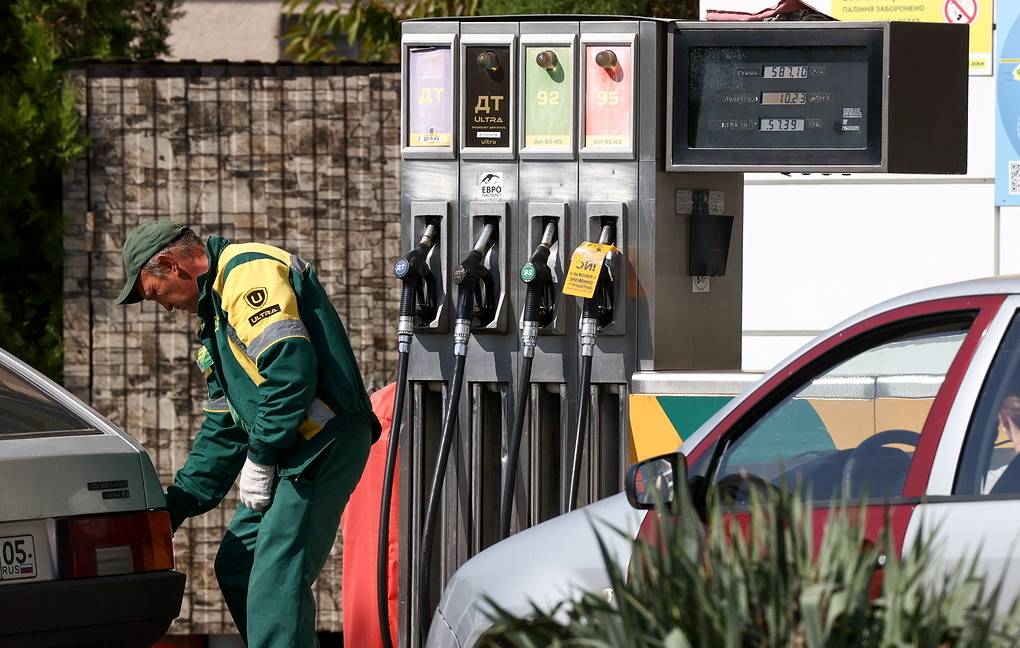
Russia has announced that it will ship 500,000 tonnes of diesel fuel to the global market under a partial lifting of its diesel export ban, enacted as part of measures concerning the Ukraine crisis and energy markets.
A statement from the Russian government said the decision was implemented in accordance with understandings reached between Russian President Vladimir Putin and US President Donald Trump.
Under the decision, which came into effect on 10 October, an initial phase of 500,000 tonnes of diesel fuel will be supplied to the global market.
“Following the rescinded decision, Russian oil companies, in coordination with the government, will immediately begin signing diesel fuel supply contracts with foreign business partners,” the government statement said.
Assessing the matter, Deputy Prime Minister Aleksandr Novak stressed that the decision would not affect the interests of Russian consumers.
Noting that diesel fuel is produced from Russian crude at domestic refineries, Novak stated that production volumes are sufficient both to meet all domestic market requirements in full and to ship the specified quantities to the global market.
The ban on diesel fuel exports in Russia was initially put into effect on 31 January 2026, covering only non-producing companies.
The government tightened the restrictions on 9 July by expanding them to include direct producers. Previously announced to remain in place until the end of October, the ban was partially relaxed in light of current developments.
Vladimir Putin and Donald Trump held a telephone conversation on 9 October. Following the call, US President Trump announced that an agreement had been reached on the supply of Russian diesel.
Trump said Russia had agreed to send more than 300,000 tonnes of fuel to American and global markets in the initial phase, 500,000 tonnes in November, and 1 million tonnes thereafter.
Trump also stated that an additional shipment of 3 million tonnes could follow at a later stage, adding that they expect this agreement to reduce diesel fuel prices rapidly.
Following the conversation, the US Department of the Treasury, on Trump’s instructions, issued a temporary general licence exempting Russian diesel fuel transactions and shipments to the US—previously prohibited under sanctions—until 7 April 2027.
Putin, in a statement after the call, confirmed Russia’s readiness to supply crude oil and petroleum products to American and global markets, noting that this would have a positive impact on the world economy.
Putin also noted that the two leaders discussed prospects for resolving the conflict in Ukraine, the situation surrounding Iran, and bilateral relations, agreeing to maintain contacts through presidential envoys, intelligence agencies, and other institutions.
A statement issued by Novak’s office after the call said Russia was prepared to ship diesel to the US within October.
Novak stated that export volumes could be increased in November and December as refineries emerge from scheduled maintenance.
Novak also conveyed that Moscow views positively Washington’s steps towards stabilising the global energy market and normalising energy trade.
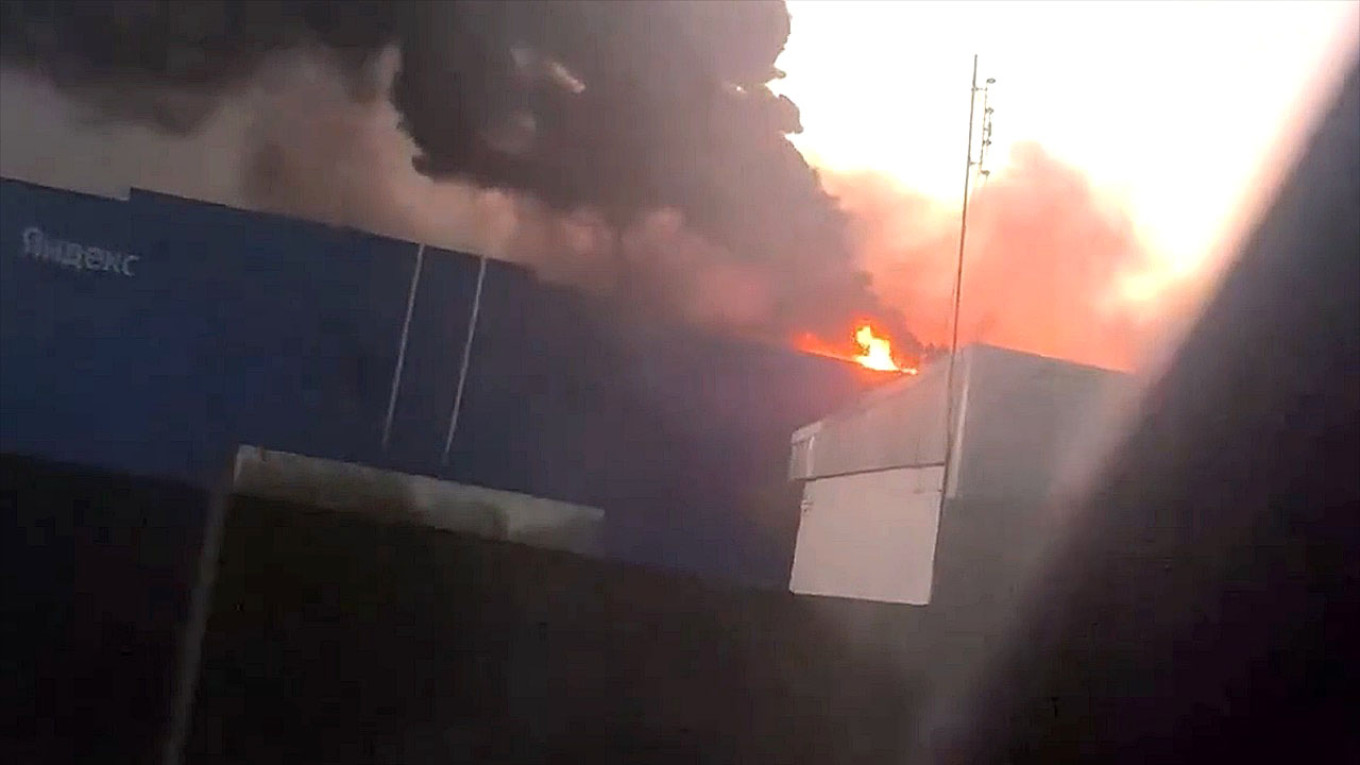
A drone strike has hit a data centre belonging to Russian internet company Yandex in the town of Sasovo, located in the Ryazan region.
The company announced that a fire triggered by the attack damaged part of the infrastructure and resulted in a complete shutdown of the facility’s operations. No casualties or injuries were reported in the incident.
In a statement, Yandex said competent authorities and relevant teams were working at the scene to remediate the damage.
Owing to the facility being knocked offline, it was noted that some of the company’s online services might temporarily become inaccessible to users.
The company provided no details regarding the financial scale of the damage or when the data centre would be brought back into service.
Shares slide, cloud infrastructure curbs introduced
Following the developments, Yandex shares fell by more than 3.4% as of 10:10 Türkiye time.
A drone threat alert was reportedly communicated to residents of the Ryazan region at 23:48 on the night of 7 October, with the alarm lifted at 02:46 on the morning of 8 October. The facility in Sasovo had commenced operations in 2014.
In an advisory issued via the Yandex Cloud Alerts channel, it was reported that power issues were occurring in the system’s “ru-central1-b” availability zone.
The company stated that efforts to transfer data workloads to other availability zones had been completed and that services in other zones continued to operate normally.
However, it was noted that temporary restrictions could be imposed on the creation of new resources within the cloud infrastructure. According to data from outage-monitoring platform Downdetector, an increase in user complaints concerning Yandex, Yandex Cloud, and the real estate platform CIAN was recorded on the morning of 8 October. Reports were observed to have originated predominantly from Moscow and surrounding regions.
Data centre targeted for first time after logistics warehouses
Whether the attack directly targeted the data centre remains unconfirmed. Nevertheless, as of 8 October, this went on record as the first drone strike directed at data centres in Russia.
Beginning in the summer months of 2026, warehouses belonging to Russia’s leading e-commerce platforms had faced drone attacks.
Fires at several warehouses owned by the company Wildberries caused hundreds of billions of roubles in losses for sellers, after which logistics centres belonging to the company Ozon were also targeted.
Both companies amended their contractual terms, shifting liability for damages arising from attacks onto sellers.
Yandex facilities had previously experienced a widespread outage on 30 March 2025 due to a transformer failure, which temporarily disabled services including Yandex Cloud, Yandex Music, and Yandex Lavka.

Senior officials from Russia and the US have reportedly discussed involving an American investor in the Nord Stream natural gas pipelines.
According to a report by the Reuters news agency based on five sources, those taking part in contacts included Kirill Dmitriyev, head of the Russian Direct Investment Fund (RDIF) and the Russian president’s special representative for investment and economic cooperation with foreign states, and Jared Kushner, son-in-law of the US leader.
Two sources providing information on the scope of the discussions said that while it remains unclear how detailed the consideration of the Nord Stream topic was, the matter nevertheless remains on the agenda.
Kushner reportedly views business-oriented cooperation as an instrument in initiatives aimed at ending the war in Ukraine.
A potential agreement could reportedly offer US investors an opportunity to profit from energy shipments to Europe once the war ends.
White House states no recent contacts have taken place
A White House official told Reuters that no negotiations regarding Nord Stream have been conducted recently.
The official emphasised that any agreement with Russia would require approval from the US International Development Finance Corporation (DFC) and the US Department of the Treasury, adding that such steps must yield benefits for US taxpayers and companies.
Another US official described reaching an understanding in the medium term as unlikely due to existing obstacles.
The natural gas pipelines are subject to US and European Union sanctions. A spokesperson for the German Federal Ministry for Economic Affairs and Energy stated that the approval of the German federal government is mandatory for the pipelines to be brought back into service, adding that the Berlin administration does not support such a step.
The spokesperson also recalled that Germany has secured alternative supplies to Russian gas.
The ownership structure of Nord Stream also features among the issues complicating the ground for negotiations.
In the consortium operating the project, Russian energy giant Gazprom holds a 51% stake, while the combined share of two German partners stands at 31%.
The remaining shares are held by France- and Netherlands-based companies.
A source speaking to the agency stated that the German partners wish to retain their stakes in order to preserve their influence in the project should Gazprom’s shares be sold.
What had American investor Lynch proposed?
The concept of involving a US financier in the Nord Stream projects had also surfaced in 2024.
American investor Stephen Lynch, founder of Monte Valle Partners, who conducted commercial activities in Russia for 20 years, had applied to the US administration for a licence allowing him to bid if the Nord Stream 2 pipeline were put up for auction.
Lynch described this potential move as an opportunity to keep Europe’s energy supply under control until the fossil-fuel era ends, as well as leverage against Russia in peace negotiations.
The Alternative for Germany (AfD) party described the possibility of transferring the pipeline to Lynch as an illustration of the German government’s irrational policy.
Separately, The New York Times (NYT) reported earlier this month that Ukraine-related contacts between Russia and the US were expanding to include a multi-billion-dollar oil deal covering Lukoil’s foreign assets.
The assets in question included Lukoil’s refineries in Eastern Europe as well as filling stations in the US.
NYT sources reported that discussions in this framework were also addressed during a meeting between Russian President Vladimir Putin, Steven Witkoff, and Kushner.
The sabotage of the Nord Stream pipelines took place in September 2022, with three of the four lines damaged by explosions.
One string of the Nord Stream 2 pipeline, which had not yet been commissioned at the time, remained intact.
The Federal Security Service of the Russian Federation (FSB) classified the incident as an act of international terrorism, while Putin claimed that “Anglo-Saxons” were behind the attack.
In investigations into the incident, judicial proceedings were pursued against several Ukrainian citizens, including professional diver Vladimir Juravlyov, suspected of planting explosives off the island of Bornholm, and Sergey Kuznetsov, who allegedly skippered the yacht Andromeda.

German officials urge fighter jet alliance with Sweden and Spain

US wealthy demolish multimillion-dollar mansions for land

US and Israel weigh Iran strikes after midterm vote, reports say

Pentagon plans covert spy ring for economic war on China, report says

EU reopens debate on naming envoy for Ukraine talks with Putin
-

 Europe2 weeks ago
Berlin Left Party backs Israel’s right to exist for coalition pact
-

 America2 weeks ago
How will Brazil’s presidential runoff work?
-
 Diplomacy2 weeks ago
The West is preparing for war not with Russia, but with its own people, French analyst Georges Kuzmanovic insists
-
 Russia2 weeks ago
71 EU lawmakers demand closure of Russian Houses in 15 member states
-
 Europe2 weeks ago
MI6 investigates potential leaks after former BND chief is detained
-

 Russia2 weeks ago
US and Russian figures discuss American stake in Nord Stream lines
-

 Russia2 weeks ago
Drone strike shuts down Yandex data centre in Russia’s Ryazan region
-

 America2 weeks ago
Trump weighs presidential memorandum to cut surging US diesel prices
