
Europe
Serbian president accuses Türkiye of illegally arming Kosovo

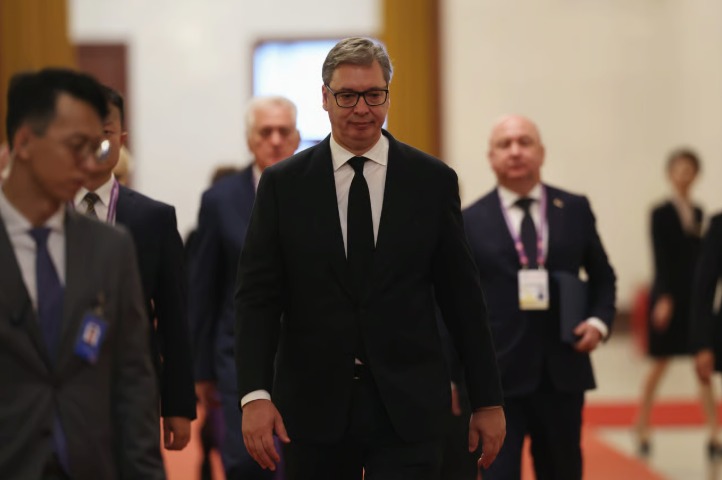
Serbian President Aleksandar Vučić has accused Türkiye of violating international laws and destabilizing the Western Balkans by supplying arms to Kosovo.
“I am horrified by Türkiye’s conduct, its brutal violation of the UN Charter and UN Security Council Resolution 1244, and its continued supply of arms to the Pristina authorities,” Vučić said in a social media post on Wednesday.
The Serbian leader argued it is now completely clear that Türkiye “does not want stability” in the Western Balkans and “once again dreams of re-establishing the Ottoman Empire,” adding, “Serbia is a small country, but we have understood the message clearly!”
Although a 1998 UN Security Council resolution prohibits the sale or supply of arms to Kosovo, the following year’s UN Security Council Resolution 1244 states that this prohibition “shall not apply to the sale or supply of arms and related materiel for use by the international civil and security presences.”
Belgrade and Ankara maintain complex relations, balancing deep historical and political tensions with economic cooperation. Türkiye remains one of Kosovo’s strongest allies and was among the first countries to recognize its declaration of independence from Serbia in 2008.
Vučić’s comments follow his accusation in March that Albania and Croatia were fueling an “arms race” in the region after signing a joint declaration on defense cooperation with Kosovo.
The latest accusations come amid escalating tensions in northern Kosovo, where occasional clashes between Serb communities and Kosovo security forces in recent years have reignited regional security concerns.
Ankara has not yet officially responded to Vučić’s statements, but Turkish officials have previously defended military cooperation with Pristina as part of efforts to strengthen regional defense capabilities.
In January 2024, Defense Minister Yaşar Güler and his Kosovar counterpart, Ejup Maqedonci, signed a military framework agreement in Ankara, expanding cooperation in arms sales, joint exercises, and training programs.


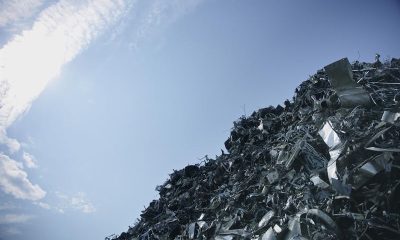




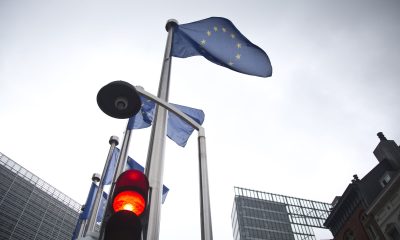

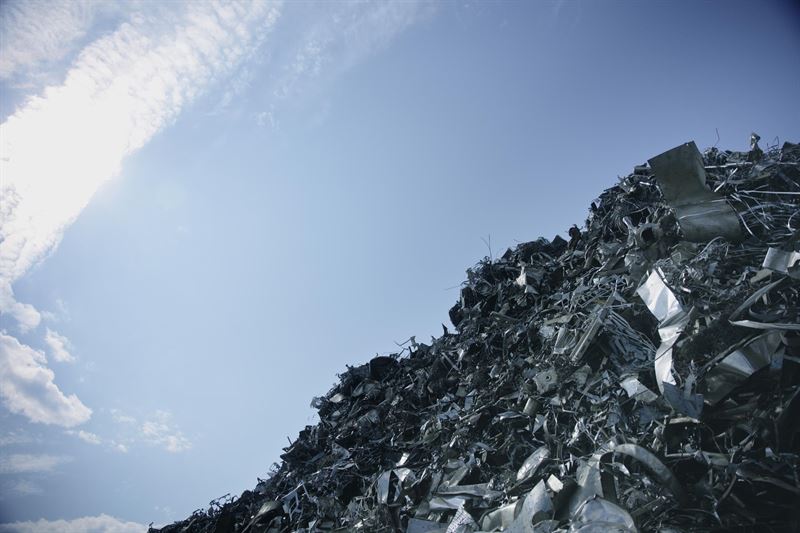
Europe exported 32 million tonnes of waste in 2025, with Türkiye emerging as the largest buyer, amid an escalating scrap metal dispute that pits recyclers against industrial manufacturers as India and Egypt lobby to keep importing and smelting European scrap.
Recycled steel and aluminium, once treated as mere rubbish, are becoming increasingly valuable as industries from automotive manufacturing to construction seek cleaner production methods.
European Union legislation adopted in 2024 aimed to restrict waste exports, keep recycled metal within the bloc, and reduce dependence on imported raw materials.
From May 2027, the EU will ban waste exports to countries outside the Organisation for Economic Co-operation and Development (OECD), a grouping made up mostly of wealthy economies.
Countries able to prove they meet specific environmental standards can obtain exemptions from the ban, an outcome that India and Egypt, two major buyers of European scrap metal, are actively trying to secure.
Brussels had been expected to publish its initial list of approved countries this month, but the decision has been postponed until late 2026.
Countries excluded from the initial roster will be permitted to reapply at a later stage.
The dispute has split European industry, setting recyclers dependent on foreign markets against steelmakers who require scrap to power their green transition.
Recyclers argue domestic demand remains insufficient
Recyclers contend that exports offer an essential outlet for materials Europe cannot always smelt, warning that shutting out foreign buyers will not automatically generate domestic demand.
“You cannot create demand by closing borders,” said Emmanuel Katrakis, an official representing industry groups Federrec and Recycling Europe.
Katrakis noted that approximately 80% of recycled steel and aluminium already remains in Europe, with only one-fifth being exported.
Arguing that the fundamental problem lies in key European clients such as the construction and automotive sectors not being “in good shape”, Katrakis stressed that India, by contrast, is expanding rapidly and hungry for raw materials.
Steelmakers cite green standards and material scarcity
European steelmakers reject that view, arguing that the bloc should think twice before shipping overseas a resource vital to green industry.
Industry body Eurofer told AFP that both India and Egypt still fall short of EU environmental standards.
The association stated that Egypt had failed to demonstrate “adequate control” over “scrap storage, sorting, quality, or air emissions”.
In India, Eurofer pointed out, EU assessments identified “shortcomings in the control of heavy metal emissions and wastewater treatment”.
Steelmakers also stress that scrap metal is no longer merely waste.
French firm ArcelorMittal told AFP that recycled metals have turned into a “strategic resource” that Europe cannot afford to squander.
“European steelmakers are already seeing supply tighten,” the company said, warning that demand will surge as the sector shifts to low-carbon production.
Brussels seeks compromise between competing factions
The drive toward so-called “green steel” lies at the centre of EU targets to cut emissions while rebuilding its industrial base.
Throughout this process, European producers must cope with energy costs far higher than those borne by most foreign competitors.
For now, Brussels remains caught between recyclers seeking open export markets and manufacturers demanding that more scrap metal stay in Europe.
“We are trying to bridge these opposing views, and it is by no means easy,” an European Commission source said.
The same source added: “It would be easy to see recyclers as the villains making money from waste exports, but the issue is more complex than that. They also have valid arguments.”
In 2025, the EU exported 32 million tonnes of waste, with Türkiye serving as the primary destination, while approximately 40% of shipments went to non-OECD countries.
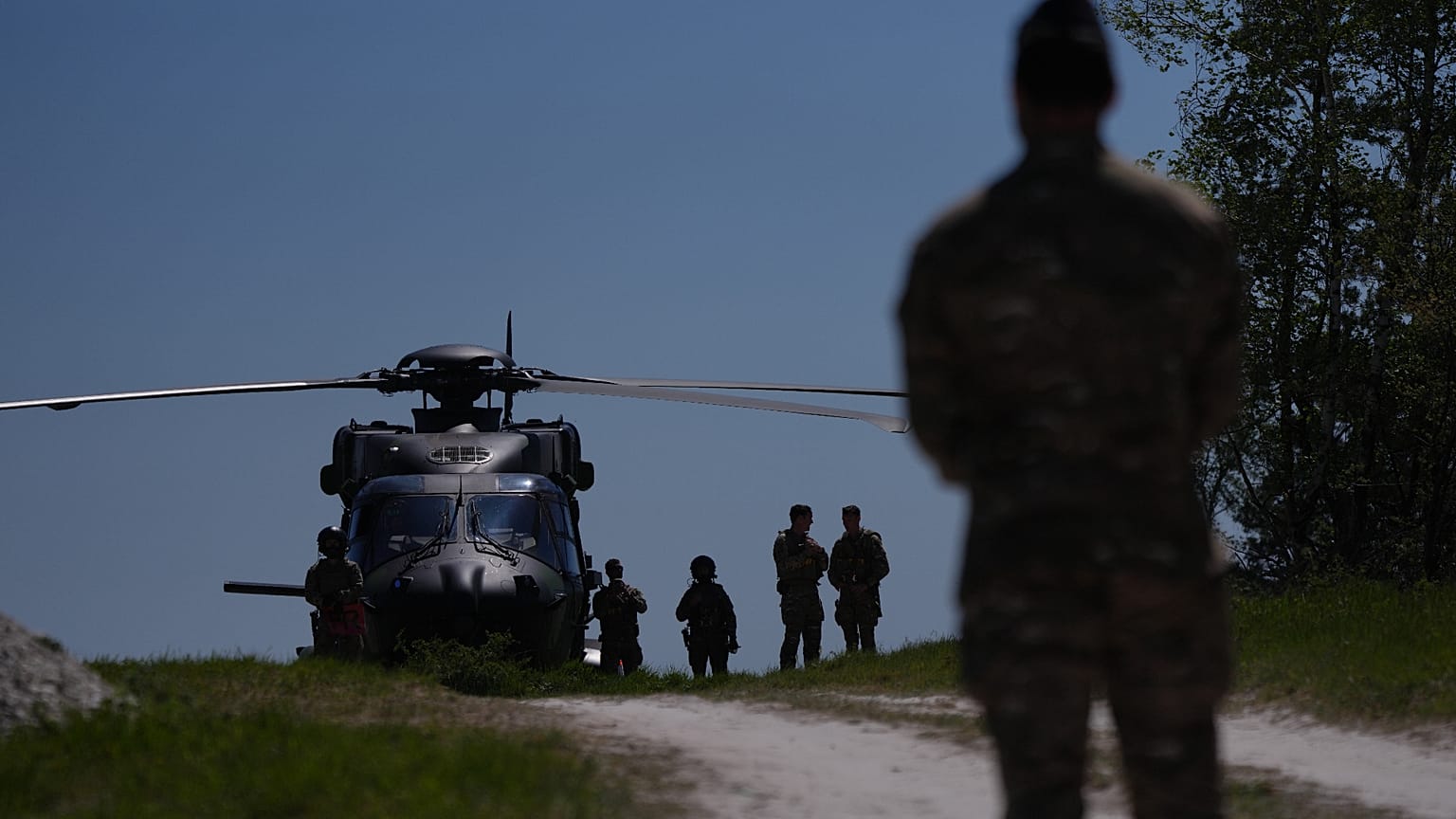
French Deputy Minister for the Armed Forces Alice Rufo has stated that French military personnel deployed in Ukraine operate under the embassy and that there are no French combat troops in the country.
Speaking on RMC radio, Rufo said: “A military mission is operating in Ukraine. This is not a sensation. It works within the embassy. In addition, this military mission includes several soldiers and specialists, among them weapons engineers.”
According to Rufo, this personnel oversees the maintenance of military equipment, including Mirage fighter jets and Caesar self-propelled howitzers.
Emphasising that France has no combat troops in Ukraine, Rufo said: “A combat troop is, above all, an organised military formation directly participating in hostilities. Given that we are not at war with Russia, these are not combat troops.”
Rufo noted that the French personnel stay away from the front lines and travel into the field to carry out specific assignments.
The minister had also confirmed a day earlier that French troops were serving on Ukrainian soil, stressing that they do not participate directly in the fighting.
Details of covert Volia mission revealed in RFI report
According to a report by RFI radio, French military personnel have been operating covertly in Ukraine at least since the summer of 2026.
The report stated that the secret mission, named Volia and led by a French general, consists of “small groups established for short-term tasks” such as training Ukrainian troops and maintaining equipment.
RFI reported that the personnel in question operate under the cover of France’s Gerfaut training mission, which has been conducted in Poland since February 2023 under Europe’s EUMAM Ukraine mission.
Russian Foreign Minister Sergey Lavrov said that Moscow is aware of the presence of foreign troops in Ukraine.
Lavrov stated that Russia had conveyed its concerns to the relevant countries, warning that this no longer represents support for Kyiv, but rather direct participation in the conflict.
The Russian Embassy also contends that Paris has become “de facto” involved in the conflict on Kyiv’s side by deploying not only weapons but also soldiers to Ukraine.
In 2024, Lavrov described French troops in Ukraine as legitimate targets for the Russian military, “in whatever capacity they serve”.
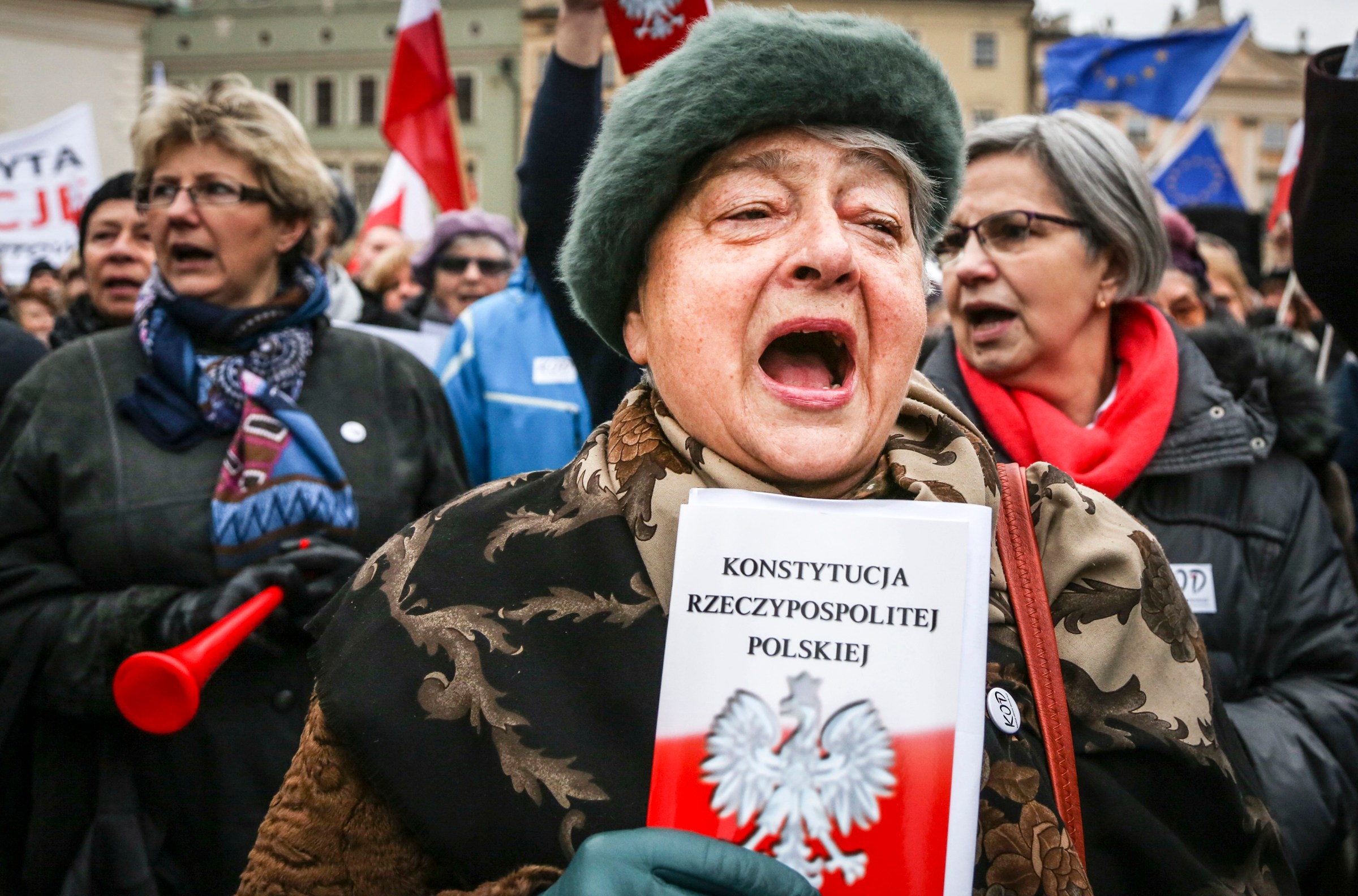
The judicial immunity of the President of Poland’s Constitutional Tribunal, Bogdan Święczkowski, has been lifted to allow criminal proceedings to be launched against him.
The decision was taken by the general assembly of Constitutional Tribunal judges.
The same measure was applied to the tribunal’s deputy president, Bartłomiej Sochański.
Święczkowski had his salary cut by 50%, while Sochański’s salary was reduced by 25%.
The general assembly did not authorise Święczkowski’s detention or arrest.
Poland’s Minister of Justice and Prosecutor General, Waldemar Żurek, assessed the judges’ ruling on his X account:
“The Constitutional Tribunal has made its decision. The prosecutor’s office can now press charges. No one is above the law.”
Święczkowski and Sochański reject the allegations, describing them as absurd.
The pair do not recognise the legality of Judge Anna Korwin-Piotrowska’s 30 October decision to suspend them from duty, and they challenge the authority of the general assembly of judges convened at her call.
Prosecution accuses two judges of abuse of office
At the beginning of November, the national prosecutor’s office requested the lifting of the judges’ immunity so that both could face criminal liability.
Charges can now be brought against Święczkowski in connection with multiple matters.
The prosecutor’s office suspects that Święczkowski exceeded his authority and violated the labour rights of nine prosecutors during his tenure as Poland’s National Prosecutor between 2016 and 2022.
The allegations also include abuse of office in overseeing operational investigative activities and disclosing advocate-client privilege.
Święczkowski also faces accusations of obstructing the work of Constitutional Tribunal judges elected by the Sejm in 2026, violating their labour rights, and breaching the physical integrity of one of the judges.
Sochański is suspected of dereliction of duty in connection with preventing the newly appointed judges from hearing cases.
Poland’s judicial crisis has continued since 2015
The dispute surrounding Poland’s Constitutional Tribunal has been ongoing since 2015.
The crisis began when the Law and Justice (PiS) party came to power, challenged judicial appointments made by the previous parliament, and elected replacement candidates.
The European Union repeatedly criticised judicial reforms introduced during the PiS era, voicing concerns over the country’s judicial independence.
The government of Donald Tusk, which took office in 2023, began reviewing these reforms.
Tensions escalated after President Karol Nawrocki, who is politically close to PiS, refused in October 2026 to swear in four of the six new Constitutional Tribunal judges elected by the Sejm.
The judges were sworn in without the president, but Święczkowski refused to recognise their authority or allow them to hear cases.
On 30 October, one of the new judges, Anna Korwin-Piotrowska, temporarily suspended Święczkowski and Sochański, announcing that she had assumed the administration of the tribunal as its most senior judge.
Korwin-Piotrowska stated that she took this decision to restore the court’s functioning and ensure that the judges elected by parliament could participate in its work.
Describing the developments as a coup, Święczkowski refused to recognise Korwin-Piotrowska’s authority.
As the dispute continued, protests were staged outside the tribunal building in Warsaw.
Stating that the constitutional order had been violated, President Nawrocki cut short his overseas trip and returned to Poland.

Elon Musk says he feels pretty stupid after $442m midterm spending

Europe exports 32M tonnes of waste as Türkiye leads buyers

France outlines role of military mission stationed in Ukraine

Polish Constitutional Tribunal chief stripped of judicial immunity

Anthropic IPO set to turn seven co-founders into billionaires
-
 America1 week ago
US midterms see 97 young winners as Gen Z representation triples
-
 Europe2 weeks ago
EU urges citizens to prepare 72-hour survival kits for crises
-

 Diplomacy2 weeks ago
Ukraine faces demographic collapse as fertility rates slide
-
 America2 weeks ago
Paraguay President Peña resigns over catastrophic bank collapse
-
 Europe1 week ago
UK and Germany expand military pact with focus on Russian frontier
-
 America2 weeks ago
Elon Musk loses $29 billion after Democratic US midterm sweep
-
 America1 week ago
Nvidia investigates CEO Jensen Huang over link to Chinese spy
-
 Diplomacy2 weeks ago
Putin approves standard-gauge rail link on China border
