
Diplomacy
Ethiopia’s Renaissance Dam inauguration reignites Nile River tensions

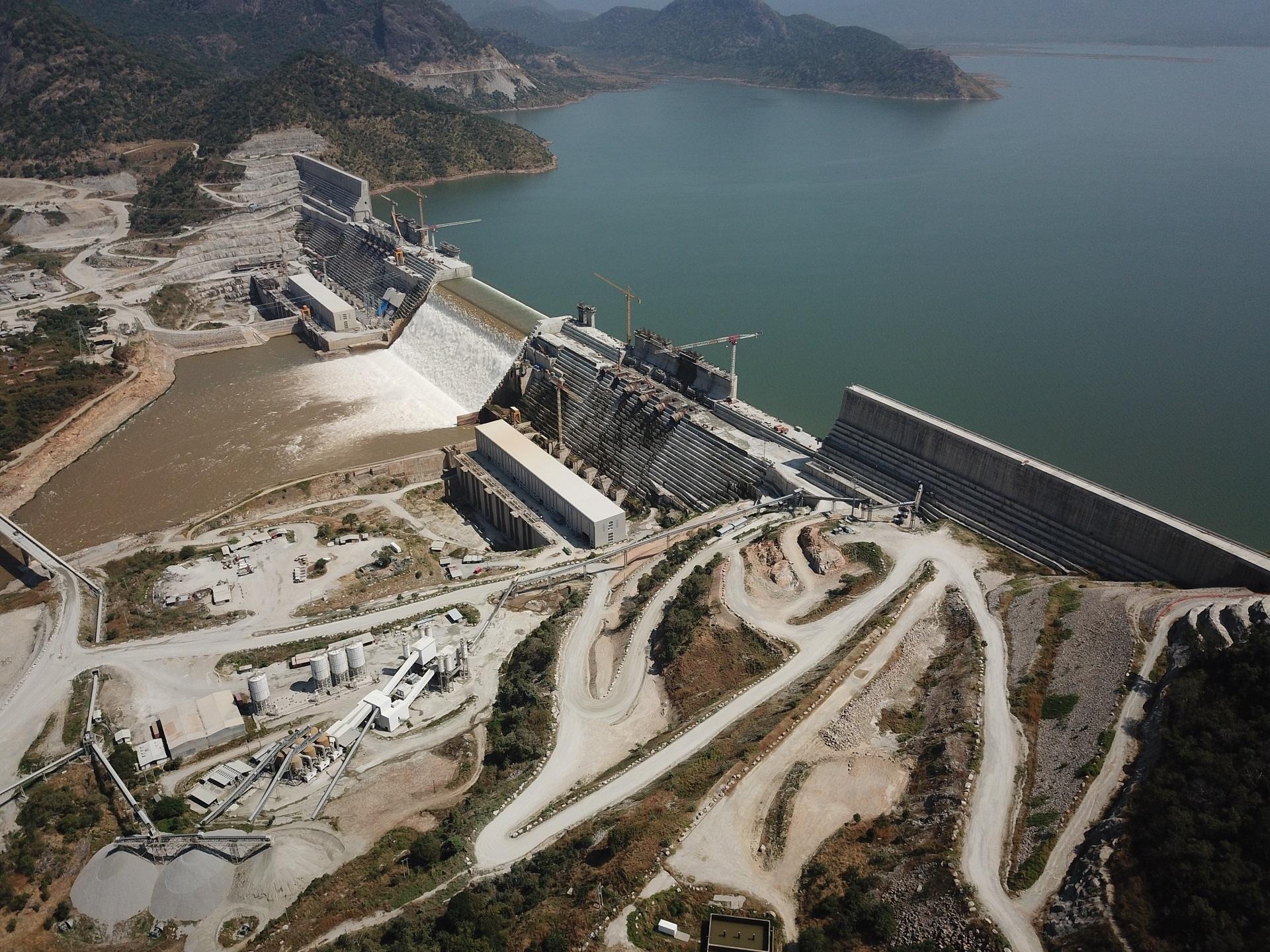
With Ethiopia’s inauguration of the Renaissance Dam last Tuesday, Addis Ababa has entered a new period of tension in its relations with the downstream countries of Egypt and Sudan.
Cairo and Khartoum have long expressed their complete opposition to any “unilateral steps” that would harm water resources in the Eastern Nile basin, emphasizing that their water security is inextricably linked.
The Nile River originates in the tropical region of East Africa and consists of two main tributaries: the White Nile, which rises from Lake Victoria, and the Blue Nile, which rises from Lake Tana in Ethiopia.
These two rivers merge in Khartoum, the capital of Sudan, and flow northward, eventually emptying into the Mediterranean Sea.
While Ethiopia focuses on the potential benefits of the dam, the calculations in Khartoum and Cairo are becoming more complex.
Sudan’s Roseires Dam concern
For Sudan, the ecosystem of the Blue Nile will be negatively affected if approximately 300 cubic meters of water per second are not released. The size of the Renaissance Dam and its direct impact on the Roseires Dam, located about 100 kilometers away, are sources of serious concern.
The Roseires Dam, a hydroelectric power station, is situated on the Blue Nile in the Sudanese city of Ed-Damazin. Constructed between 1961 and 1966, the dam is used for irrigation and electricity generation, featuring a plant with a capacity of 280 megawatts.
Upgrades were made in 2013 to increase the dam’s storage and power generation capacity. This dam is considered the backbone of Sudan’s electricity grid, providing the country with clean and cheap electricity.
The safe filling and operation of both the Renaissance and Roseires dams depend on full compliance with the daily exchange of data between the two facilities.
Although this was stipulated in the 2015 Framework Agreement, the absence of a signed binding agreement means that commitments are not being fulfilled.
This situation jeopardizes the operation of the Roseires Dam due to a lack of information regarding discharge data, the safety status of the Renaissance Dam, emergency plans, and other technical operational matters.
Sudan argues that the necessary coordination must be based on a written agreement that guarantees the sharing of data on the filling and discharging of the dams.
Such an agreement should include a commitment to full cooperation to ensure the two dams operate in harmony, as the filling rules for the Roseires Dam depend on the amount of water released from the Renaissance Dam and the flood season.
Egypt’s search for alternatives
Egypt, meanwhile, continues to reject Addis Ababa’s policies regarding the dam, its future, and its negative impacts on the country’s water resources.
Egypt’s annual share of water from the Nile River is approximately 55 billion cubic meters, 80% of which is used in agriculture. Since Ethiopia began constructing and impounding water at the dam, the Egyptian government has resorted to various policies to reduce water consumption.
Chief among these measures are reducing the cultivation area for rice and focusing on crops that consume less water, such as corn, potatoes, and clover.
The government has also turned to projects like seawater desalination plants, wastewater treatment facilities, and the rehabilitation of thousands of kilometers of water canals to prevent water waste.
However, these measures and projects have not stopped Cairo from pursuing political and diplomatic efforts to compel Ethiopia to sign a binding legal agreement that secures the historical water shares of the downstream countries.
The historical roots of the dispute
The water dispute between Egypt and Ethiopia is not rooted solely in the Renaissance Dam but in the Nile waters themselves and whether Ethiopia recognizes Egypt’s 55.5 billion cubic meter share, established by the 1929 and 1959 agreements.
Ethiopia does not recognize these historical agreements, particularly the 1902 agreement signed between the then-Ethiopian Emperor Menelik II and Great Britain, which colonized Egypt and Sudan.
Addis Ababa argues that these agreements were signed during the colonial era and therefore cannot be inherited, while Egypt strictly adheres to the theory of state succession to international treaties.
This deep disagreement led to Egypt’s refusal to join the Nile Basin Countries Framework Agreement, signed in 2010 and known as the Entebbe Agreement. While Ethiopia and other countries ratified the agreement starting in 2013, Egypt, Sudan, Eritrea, and the Democratic Republic of Congo did not become parties to it.
Egypt’s reservations at the time centered on Article 14b concerning water security and Article 8 regarding prior notification for projects. Egypt demanded that it and Sudan be informed and their approval obtained before the implementation of any project.
At the Kinshasa meeting in May 2009, Egypt insisted that the legal framework of the agreement include text in Article 14b on water security, explicitly stating that Egypt’s historical water share would not be touched.
Furthermore, it demanded that Article 8, concerning the principle of prior notification for downstream countries (Egypt and Sudan) to object before any project begins, be included in the main body of the agreement rather than in the annexes; however, these demands were not met regarding the Renaissance Dam.
Complex political conditions and a long negotiation process
In February 2011, the Ethiopian government announced the start of construction on the Renaissance Dam. Some observers viewed this move as taking advantage of the critical political situation in Egypt following the January 25th Revolution and the resignation of President Hosni Mubarak.
In Sudan, the government of President Omar al-Bashir was overthrown in April 2019, but the country quickly descended into political tension and has been the scene of a bloody conflict between the army and the Rapid Support Forces since April 2023. This situation has weakened Khartoum’s negotiating position on the water issue.
While Egypt was preoccupied with its internal affairs, then-Ethiopian Prime Minister Meles Zenawi laid the foundation stone for the project in April 2011, initially named “Millennium” and later changed to the “Grand Ethiopian Renaissance Dam.”
Zenawi later proposed the establishment of a tripartite technical committee composed of the water ministers of Egypt, Sudan, and Ethiopia to study the dam issue and reach a common vision and agreement that would satisfy all parties.
The committee was formed in September 2011 and began its meetings two months later. This marked the beginning of a long negotiation process that included dozens of technical and ministerial-level meetings but failed to produce any solution.
In December 2023, Egypt announced the end of the negotiation process related to the dam due to, according to a statement from the Egyptian Ministry of Irrigation at the time, “Ethiopia’s persistent refusal for years to accept any technical or legal middle-ground solution that would safeguard the interests of all three countries.”
Is there a solution to the conflict?
Last Tuesday, coinciding with the inauguration celebrations for the Renaissance Dam in Ethiopia, Cairo lodged a formal protest by sending a letter to the Security Council condemning a “unilateral act” contrary to international law.
In the letter from the Egyptian Ministry of Foreign Affairs, Cairo stated that the giant dam is a “unilateral act contrary to law and international customs.”
Egypt emphasized that it “will not allow Ethiopia’s attempts to unilaterally dominate the management of its water resources and reserves the right to take all measures guaranteed by international law and the UN Charter to defend the existential interests of its people.”
However, Egypt has not yet specified what these measures will be.
It is evident that the period after the dam’s commissioning will not be like the one before, especially since the dam has now become a fait accompli and given the political and economic challenges facing Ethiopia, Egypt, and Sudan.









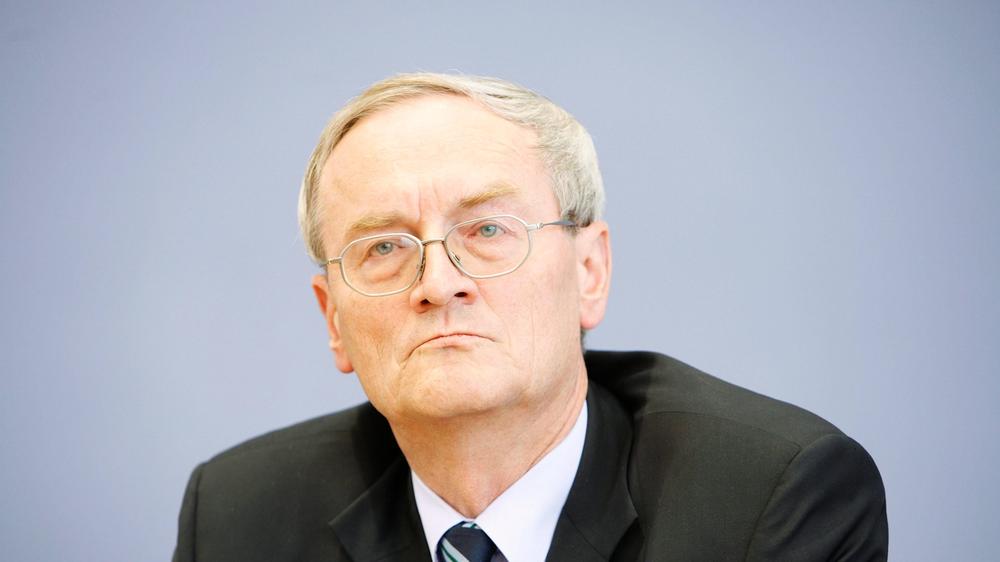
August Hanning, who led Germany’s Federal Intelligence Service (BND) between 1998 and 2005, was arrested on 6 October on allegations that he obtained roughly 2,000 classified agency documents and used them during contacts with intelligence officers from a foreign state.
Accused of high treason and espionage on behalf of a foreign intelligence agency, the former spy chief is alleged to have procured the documents from former BND employee Manfred D.
Prosecutors stated that the leaked records included internal briefing notes presented to senior German officials, though the Berlin government has not yet publicly disclosed which country received the classified data.
According to an exclusive report by Jake Green for The Cradle, seized email exchanges revealed extensive ties between the arrested Hanning and former Mossad director Danny Yatom.
The correspondence shows that the two former intelligence directors built an ongoing network of contacts following their public service, combining commercial ventures, efforts to secure political influence, and intelligence links.
This dynamic has triggered debate that using personal connections and official access for private gain has left Germany’s intelligence apparatus vulnerable.
Intelligence notes for 10,000 euros and campaign proposals
According to the reviewed emails, Hanning told Yatom in a 2018 message that he could prepare an “overall assessment based on information obtained from senior German officials and intelligence agencies” concerning an unidentified candidate.
The former BND head committed to completing the report by 13 July in exchange for 10,000 euros.
Contacts between the two men subsequently expanded to cover domestic political processes in Germany. Ahead of the September 2021 federal election, Yatom asked Hanning to approach leading candidates.
Describing CIY Global as a “political campaign company”, the former Mossad chief noted that he aimed to introduce its capabilities to German politicians, and he mentioned his intention in the same exchange to transfer documents concerning a cybersecurity firm.
Cybersecurity partnership and surveillance operations across Europe
The partnership between Yatom and Hanning reached beyond political lobbying initiatives into the cybersecurity sector.
Hanning reportedly served as a consultant for World Health Energy Holdings, a cybersecurity company linked to Yatom.
Firms of this type, established or managed by former intelligence personnel, provide commercial platforms on the international market for Israeli-origin surveillance, cyber intelligence, and political influence capabilities.
The operational presence of private Israeli-based surveillance technologies across Europe has recently entered judicial records through scandals in Poland, Spain, and Greece.
Polish prosecutors announced on 12 October that data collected under the previous government via Pegasus spyware against political opponents had been transferred out of the country, adding that manufacturer NSO Group maintained access to the technical infrastructure.
In Spain, the 2022 CatalanGate investigation established that at least 65 people, including politicians, lawyers, and civil society representatives, were targeted using Pegasus or Candiru software, with Citizen Lab researchers publishing strong evidence linking the operation to Spanish authorities.
In Greece, the surveillance operation targeting journalist Thanasis Koukakis and Member of the European Parliament Nikos Androulakis was determined to have used Predator software, linked to Intellexa, a company founded by former Israeli intelligence officer Tal Dilian.
In the German espionage investigation, the traffic between Hanning and Yatom involving paid reporting, contacts with electoral candidates, and commercial partnerships does not yet provide conclusive legal evidence regarding the final destination of the roughly 2,000 classified documents.
Nevertheless, the disclosed correspondence gives German investigators a concrete line of inquiry to assess whether classified state secrets reached commercial networks tied to Israeli intelligence.

US President Donald Trump has dismissed Kimberly Guilfoyle, the US ambassador in Athens, following serious press reports concerning her conduct.
White House Press Secretary Katie Zacharia told reporters during her first briefing that Guilfoyle had been asked to resign.
“She was doing a good job, but we didn’t like what we read in the press,” Trump said. “She was not a member of my family. I think she dated my son a long time ago.”
In a social media post, Guilfoyle stated: “These claims are unfounded, and I will resolutely defend my name, reputation, and integrity.” She added that she was particularly proud of the embassy’s work.
According to Kathimerini, her removal came as no surprise in Washington. Days of successive disclosures and vigorous exploitation of the matter by Democrats had been inflicting political damage on the White House ahead of the sensitive midterm elections.
The US State Department was instructed not to comment, with crisis management transferred entirely to the White House.
Reports indicate that most of the president’s team swiftly favoured Guilfoyle’s dismissal, while Secretary of State Marco Rubio was reportedly uneasy with the demonstratively warm public welcome she had staged for him.
Democrats on the House Foreign Affairs Committee have called for an investigation.
“Her resignation does not absolve her of responsibility,” the lawmakers wrote, adding: “While American families struggled to make ends meet, she used her position as a Trump administration official to enrich herself.”
Chargé d’Affaires Josh Huck will assume ambassadorial duties until a successor is chosen.
Meanwhile, Guilfoyle’s departure is expected to cause delays in agreements between Greece and the US.
These include the so-called “Rubio package”, comprising approximately $4 billion in arms deals finalised only days before the secretary of state’s arrival.
Several procedural steps still remain before the contracts can be signed.
In Athens, opposition parties are demanding answers. Dimitris Mantzos of PASOK called for a detailed briefing on the agreements reached during Rubio’s visit.
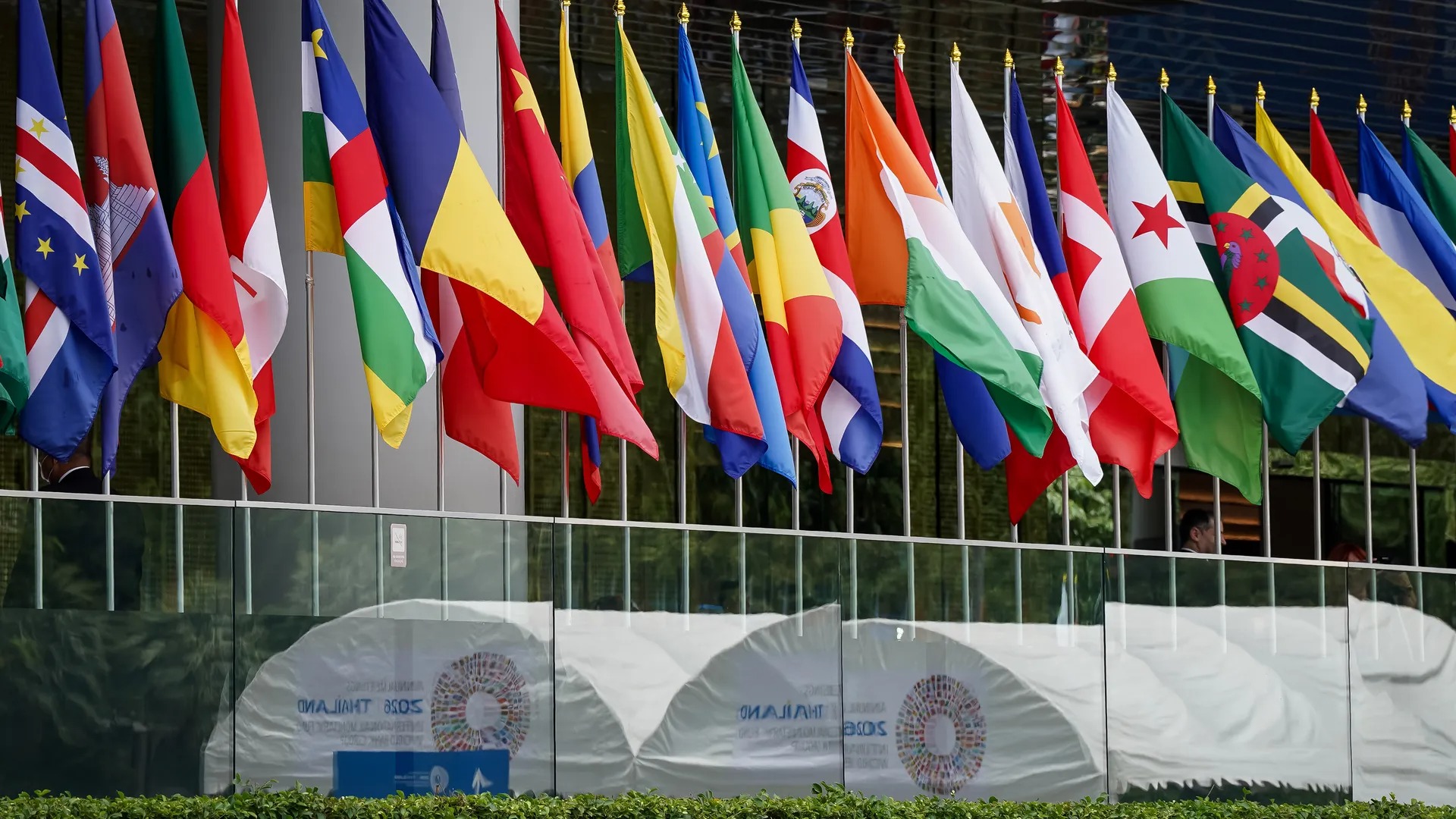
The International Monetary Fund (IMF) has warned that the global economy’s capacity to withstand fresh shocks is coming under strain.
Worldwide growth has exceeded expectations and maintained stability despite the war in the Middle East and surging oil prices.
However, some policymakers worry that dwindling energy reserves, rising debt burdens, and a growing reliance on the artificial intelligence boom will leave the world increasingly vulnerable.
In a blog post, IMF economic counsellor Silvana Tenreyro wrote: “Without strengthening supply capacity and rebuilding policy buffers, the global economy may soon test the limits of its resilience.”
Tenreyro added:
“While tech-related investments are an important advantage against the energy shock, they concentrate risks, making global growth excessively dependent on a small number of companies, sectors, and economies.”
The artificial intelligence (AI) boom has helped offset the economic fallout of the war.
Yet a sharp reversal could leave global GDP 1.1% below the IMF’s baseline forecast by 2028.
US GDP could take an even larger hit of 1.8%.
This scenario assumes that the productivity gains promised by AI fail to materialise, triggering a pullback in investment and a correction in financial markets.
Continued investment in artificial intelligence could also fuel inflation, leading to renewed interest rate increases.
Conversely, a stronger AI investment boom coupled with faster productivity gains could lift global GDP 0.6% above the baseline forecast by 2029.
The IMF largely maintained its global growth projections despite prolonged energy disruptions stemming from the Middle East war.
However, it now expects higher inflation both this year and next year.
The IMF projects global growth of 3.1% in 2026, unchanged from its April forecast, and anticipates 3.4% in 2027, representing a 0.2 percentage point upward revision.
The fund projects that the US economy will expand by 2.3% in both years, marking the fastest growth among G7 economies. The 2027 forecast was revised upwards by 0.2 percentage points.
Global inflation is expected to reach 4.7% in 2026 before easing to 4.1% in 2027.
Driven by the adverse impact of surging energy and food prices, both inflation projections were revised upwards compared with April.
The world had managed the energy shock partly by drawing down oil reserves and rerouting supply sources.
According to the IMF, global oil inventories are declining by approximately 2.7 million barrels per day, elevating the risk of a sharp price spike.
These projections provide the backdrop for global finance officials and central bankers gathering in Bangkok this week for the annual meetings of the IMF and the World Bank.
The IMF underestimated global growth projections for three consecutive years, raising questions over whether economies have become better at weathering shocks.

Macron rejects interior minister’s resignation over violent unrest

EU Arctic strategy targets Russia and China while sparing US

Egypt delays parliamentary vote on deploying troops to Saudi Arabia

AfD leader Weidel calls funding lost Ukraine war a grave mistake

Sally Rooney UK book shipments halted over Palestine Action terror ban
-

 Europe2 weeks ago
Le Pen proposes German-style debt rule to soothe French bond market
-

 Europe2 weeks ago
France and Germany urge EU market kill switch against trade threats
-
 Russia2 weeks ago
US and Russia hold multi-billion-dollar talks on Lukoil foreign assets
-

 America2 weeks ago
US AI spending needs 9% of GDP by 2032 to justify capital boom
-
 Europe2 weeks ago
Bill to drop NATO membership goal submitted to Ukrainian parliament
-

 America2 weeks ago
Flavio Bolsonaro leads Lula as Brazil election heads to run-off
-

 Europe2 weeks ago
Over 500 former European diplomats urge EU sanctions on Israel
-

 Middle East2 weeks ago
CIA report warns Israel faces growing risk of civil conflict
