
Europe
EU demands HTS to expel Russian and Iranian influence

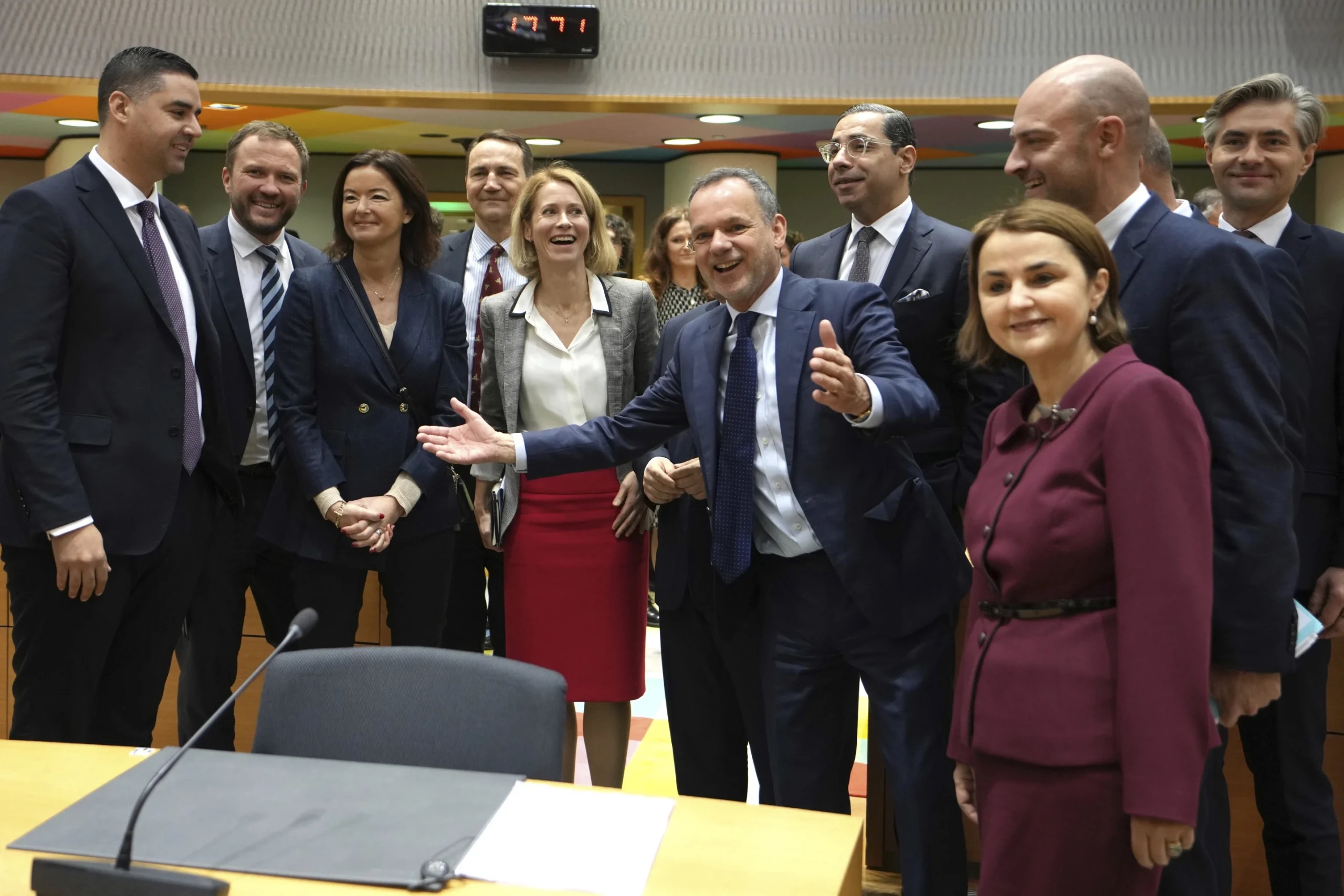
The European Union (EU) has called on Syria’s interim leadership, headed by Hayat Tahrir al-Sham (HTS), to ensure the country’s future is inclusive, free of extremism, and independent of Russian and Iranian interference, according to senior European diplomats on Monday.
The Associated Press (AP) reported that following the fall of Damascus on 8 December, incidents of reprisals, revenge killings, or sectarian violence have been minimal. Looting and destruction were largely brought under control shortly thereafter.
The interim government, formed by opposition forces led by HTS, is deemed a terrorist organization by both the EU and the United States. Critics note that the new leadership has yet to articulate a comprehensive vision for governing Syria.
The EU plans to dispatch an envoy to Damascus for discussions with the new authorities, aiming to assess the direction of Syria’s political transition. EU foreign policy chief Kaja Kallas emphasized the bloc’s demand for a stable, peaceful, and inclusive government, acknowledging that clarity on Syria’s new trajectory could take weeks or months.
“Syria is facing an optimistic yet uncertain future. We need assurances that progress is moving in the right direction. This is not just about words—we need tangible actions,” Kallas stated during an EU foreign ministers’ meeting.
French Foreign Minister Jean-Noël Barrot outlined specific conditions for lifting sanctions or providing EU development aid. These include that a political transition ensuring representation for all Syrian minority groups, adherence to human rights and women’s rights, and a firm rejection of terrorism and extremism.
Similarly, Spanish Foreign Minister José Manuel Albares underscored the importance of respecting EU “red lines.” These include safeguarding Syria’s territorial integrity and eliminating foreign interference.
“If these issues are adequately addressed, we can open discussions about lifting sanctions,” Albares said.
Dutch Foreign Minister Caspar Veldkamp reinforced the EU’s demand for the removal of Russian military bases from Syria. “We want the Russians out,” he declared.
In a pointed statement, Kallas warned Syria’s new leaders against relying on Russia and Iran. “Russia and Iran are not your friends. They abandoned the Assad regime and are now weakened, preoccupied with their own challenges,” she asserted.
The EU remains cautious but hopeful as it navigates relations with Syria’s interim government, advocating for a peaceful political future rooted in democracy, human rights, and freedom from external manipulation.



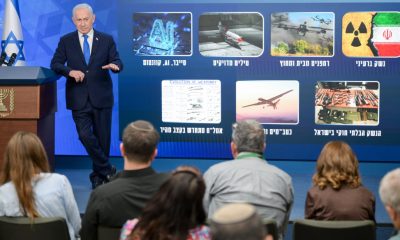



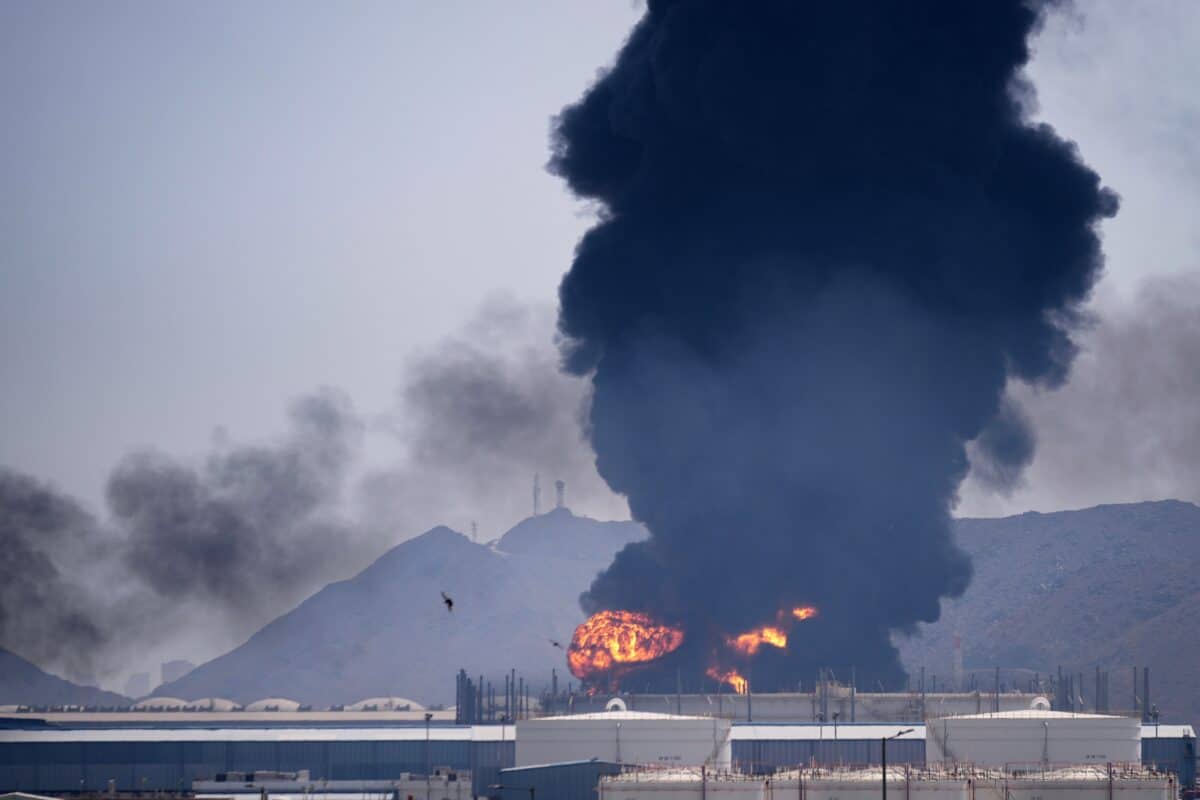
A comprehensive military operation planned by the Israeli military for 10 October did not take place because US President Donald Trump chose to avoid a broad conflict before the 3 November congressional midterm elections.
Preparations had been made on the orders of Prime Minister Benjamin Netanyahu for an aerial bombardment meant to last several days, according to a report by the Financial Times citing sources familiar with the matter.
The list of targets included nuclear facilities and locations associated with the Iranian leadership, along with power stations and other civilian infrastructure sites.
The planned strikes were projected to exceed the joint operation launched by the US and Israel in February in terms of intensity.
White House Deputy Press Secretary Anna Kelly told the newspaper: “The United States is not going to strike Iran at any point before the midterms.”
Kelly argued that the administration in Tehran was in distress both economically and militarily, adding that the blockade imposed on Iranian ports and US efforts to secure oil shipments through the Strait of Hormuz were producing results.
Speaking to the newspaper, one source addressed the possibility of strikes resuming in the coming weeks, saying: “There’s either going to be a deal or a strike.”
The same source reported that Washington aims for a comprehensive settlement that resolves the conflict over both the Strait of Hormuz and the nuclear programme, although it remained unclear whether the US would have participated directly in the cancelled operation.
Another source said the preparations for the operation might have served as leverage to pressure Tehran in negotiations, adding that the final decision on any new military step rests with the US president.
Hegseth reviews updated target list in Israel
An Israeli official said US Secretary of War Pete Hegseth visited Israel on 19 October to meet with Netanyahu and senior representatives.
Another source stated that the Israeli side presented an updated target list to its American counterparts, compiled with fresh intelligence and incorporating civilian infrastructure sites that had not been struck earlier this year.
The Pentagon did not respond to questions regarding the meetings, while Netanyahu’s office and the Israeli military declined to comment.
Despite the postponement of the operation, Trump and Netanyahu continued to issue military warnings to Iran in public.
In a video released on 19 October, Netanyahu addressed Trump, saying: “Donald, you said we need to finish this, and we will finish it together.” Speaking on speakerphone, Trump responded: “You’re a great warrior, and we’re going to prove it very soon.”
These engagements between the leaders coincide with critical election cycles in both countries.
Parliamentary elections in Israel are scheduled for 27 October, one week before the vote in the US.
Most public opinion polls in the country show the opposition bloc holding a narrow lead over Netanyahu’s coalition, though neither side commands a clear majority.
Axios, a US-based news outlet, previously reported that the Pentagon instructed military planners to finalize strike plans against Iran, though the directive specified no date and Trump had not reached a final decision.
On 15 October, CNN reported on plans to use the GBU-43/B munition, known as the “mother of all bombs”, against Iranian nuclear facilities, with US officials who spoke to the broadcaster expressing scepticism about the weapon’s ability to destroy deep bunkers.
While Tehran announced that it remains open to a diplomatic solution, it declared that any potential operation would draw a fierce response.
Iranian Foreign Minister Abbas Araghchi stressed that if its adversaries chose military conflict, the response would be “much harsher than before”.
Following the joint operation launched by the US and Israel on 28 February, Iran retaliated by striking targets across the region and restricting maritime passage through the Strait of Hormuz.
Although the parties reached an agreement in June covering a ceasefire and negotiations to lift the blockade in the strait, reciprocal strikes between the US and Iran have not ceased.
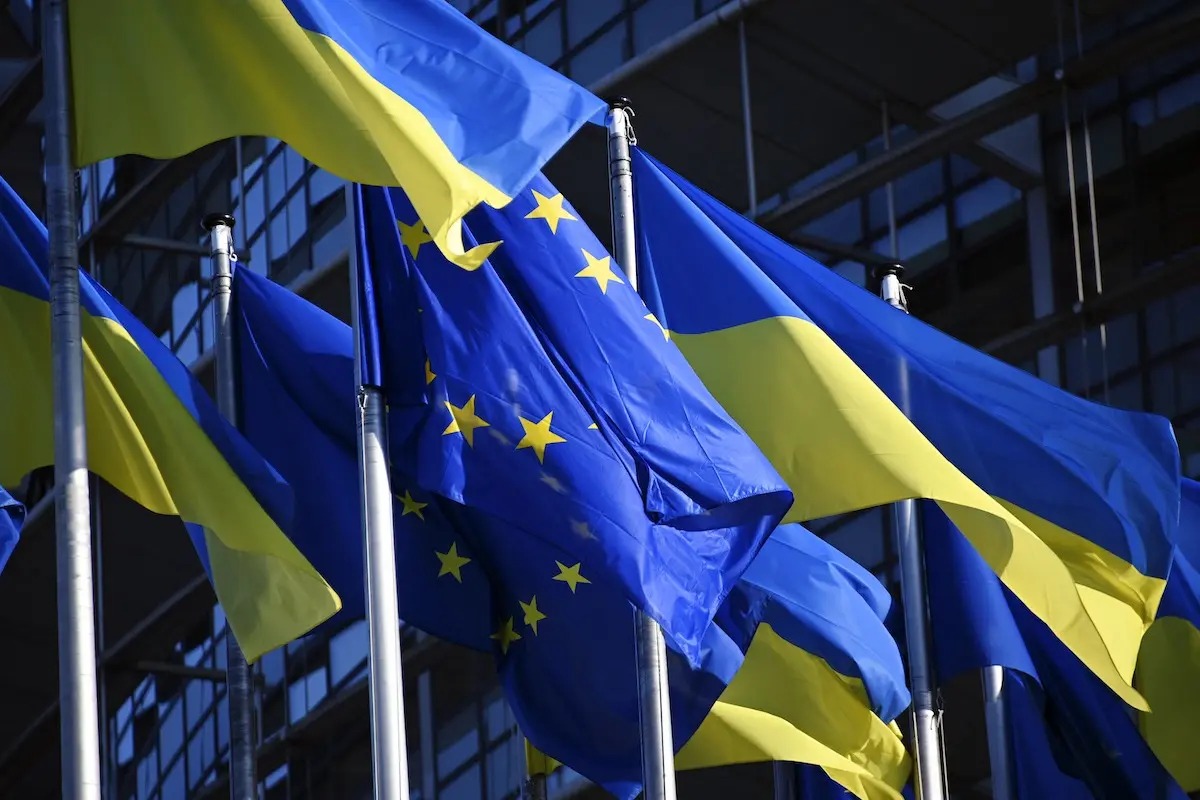
The European Union plans to persuade Britain and Canada to step up their assistance to close Ukraine’s projected 70 billion euro funding deficit in 2027.
Brussels aims to raise the issue during summits with Canada on 29-30 October and with Britain on 20 November, according to a Politico report citing European officials and diplomats.
Ukrainian President Volodymyr Zelenskyy, speaking at a summit in Brussels earlier this month, said the country’s military expenditure would reach 155 billion euros in 2027, requesting an additional 70 billion euros from European leaders.
The administration in Brussels wants to bring other allies into play, noting that a previously approved 90 billion euro loan is insufficient to meet all the costs.
European Commission President Ursula von der Leyen recalled that the EU and its member states have shouldered 80% of external aid provided to Ukraine, saying: “We urgently need our other partners to step up their efforts.”
According to bloc data, the EU and member states have transferred more than 231 billion euros in resources to Ukraine so far.
Brussels will not tie aid plea to trade conditions
European officials emphasise that the call to increase aid does not constitute a criticism directed at Britain or Canada.
Speaking to the publication, a European diplomat said Brussels would not directly link support for Ukraine to conditions on trade or defence cooperation, adding: “The EU is not going to pull a Trump and openly make its goodwill toward partners contingent on what they give to Ukraine.”
The EU had previously taken part in a commitment to provide 90 billion euros in loans to meet roughly two thirds of Ukraine’s requirements in the 2026-2027 period.
The Brussels administration also expected to raise 45 billion euros from partners such as Canada, Japan, South Korea, Australia, and Norway, though a portion of these funds has not yet been allocated.
The government in London states that it has committed 25 billion pounds to Ukraine, while Canada has pledged military aid valued at 5.4 billion euros alongside 8.2 billion euros in direct financial support.
Emphasising that her country is an unwavering supporter of Ukraine, Privy Council of Canada spokesperson Catherine Séguin stated that they have committed roughly 26 billion Canadian dollars for military, financial, humanitarian, and development assistance.
Brussels is also urging Japan to increase its aid volume.
A source familiar with Tokyo’s position stated that Japan has provided around 20 billion dollars to Kyiv and could allocate additional funds in line with Ukraine’s request.
National Bank of Ukraine Governor Andriy Pyshnyy announced in a statement during the summer that about 200 billion dollars in direct budget financing had been provided by the West since the start of the conflict.
At the end of June, the Ministry of Finance of Ukraine calculated the country’s external financing requirements for the 2026-2029 period at 145.9 billion dollars.
Finance Minister Serhiy Marchenko stated that, despite the assistance coming from the West, the country’s financing needs continue to remain elevated.
The European Commission has rejected a peace plan proposal from the US administration that entails resuming Russian natural gas purchases via Ukraine.
Commission spokesperson Paula Pinho stressed that Brussels has not changed its stance.
Pinho recalled that European Commission President Ursula von der Leyen had previously stated clearly that no restrictions on Russia would be lifted until the conflict comes to an absolute end.
The New York Times reported that the US president’s new peace proposal includes Europe returning to large-scale Russian gas purchases through Ukraine.
According to the report, Special Envoy Steve Witkoff and Jared Kushner raised the matter during talks in Kyiv last month with Ukrainian and European officials, including Ukrainian President Volodymyr Zelenskyy.
Sources contacted by the newspaper noted that some European and Ukrainian officials believe Washington would seek to secure a share of Russian gas exports.
Under this plan, the objective is to channel a share of the profits to American companies or the US government.
Russian President Vladimir Putin had said Moscow was ready to work on supplying fuel to European nations, but noted that a signal must come from the other side.
Putin stated that Moscow must evaluate the feasibility and necessity of fuel flows to the Western market, adding that they would not wait for Europe to shut the door ostentatiously on energy supplies.
Kremlin spokesperson Dmitry Peskov remarked that European nations rejecting Russian gas would make them dependent on the US and deprive them of the ability to diversify their supply sources.
Peskov noted that the US sells gas at very high prices and that if European nations pay more for energy, their industries will suffer.
The EU plans to halt liquefied natural gas imports from Russia entirely by 1 January 2027 and pipeline gas by 30 September 2027.
Von der Leyen had previously announced that the bloc would reduce Russian gas imports to zero by the end of 2027.
Russia halted gas flows to Europe via Ukraine as of 1 January 2025, when the five-year contract between Gazprom and Naftogaz of Ukraine expired.
Putin had stated that Kyiv refused to extend the transit agreement. Following the closure of the Ukrainian route, the TurkStream pipeline remained the only operational corridor carrying Russian pipeline gas to Europe.

Japan plans curbs on short-term home sales to cool urban prices

Trump midterms calculus halts Israeli strike plan against Iran

EU urges Britain and Canada to help close Ukraine’s €70bn budget gap

Anthropic posts $80.7bn loss ahead of IPO as computing costs soar

Netanyahu trails Eisenkot in Israeli polls despite Trump backing
-
 Europe2 weeks ago
Bill to drop NATO membership goal submitted to Ukrainian parliament
-
 Europe2 weeks ago
Marine Le Pen unveils fiscal programme pledging French budget cuts
-

 Europe2 weeks ago
Berlin Left Party backs Israel’s right to exist for coalition pact
-
 America2 weeks ago
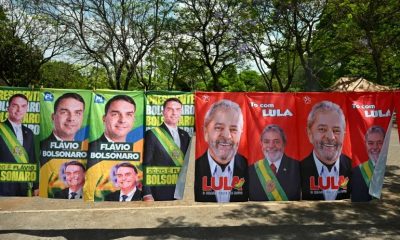
How will Brazil’s presidential runoff work?
-
 Europe2 weeks ago
EU seeks Chinese trade signal in Beijing as surplus widens
-
 Diplomacy2 weeks ago
The West is preparing for war not with Russia, but with its own people, French analyst Georges Kuzmanovic insists
-
 Middle East2 weeks ago
Eisenkot ties Syria pact to withdrawal of Russian and Turkish forces
-
 Diplomacy2 weeks ago
Europe has been under US occupation since World War II, Italian journalist and author Thomas Fazi says
